

"All the world's a stage," William Shakespeare wrote more than four centuries ago. He might have found the spectacle of our times rather familiar. Money, sex, betrayal, spies, ambition and war. The plots have scarcely changed. Only the pace has become dizzying.
In Richard III, a king consumed by ambition declares, "Conscience is but a word that cowards use." It is a chilling line, spoken with the confidence of a man who sees little reason to question himself.
It is also a line that feels strangely at home in the age of artificial intelligence.
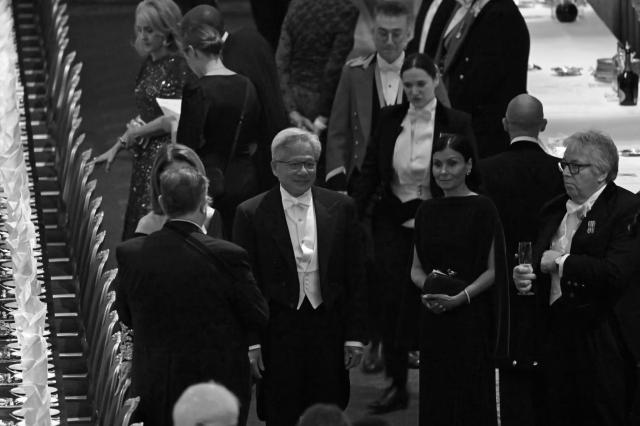
Last week, the stage belonged to Jensen Huang, the Nvidia founder whose dazzling rise helped make AI the greatest technological and financial phenomenon of our time. A story that began with revelations about his private relationships grew into a tale of suspected Chinese espionage, secretive business arrangements and Washington's struggle to contain the flow of advanced chips to China.
The New York Times and The Wall Street Journal chronicled a world where business, pleasure and politics had become difficult to separate. Huang's resignation brought an extraordinary corporate career to an abrupt end, leaving Nvidia and much of the AI industry to contemplate life without its most recognizable champion.
There were moments when the unfolding drama seemed almost farcical. Denials, confessions, hurried board meetings and political intrigue followed one another with theatrical precision.
Yet the audience could hardly afford to laugh.
Nvidia's share-price swings erased enormous sums of market value. Behind those figures were ordinary investors, pension funds and retirement accounts tied to a company that had become almost synonymous with the future. A personal scandal had become a market event, touching the savings of people far removed from Silicon Valley.
And before the dust could settle, another AI drama unfolded in South Korea.
On Sunday, the top scorer in the country's national tax accountant examination admitted using a miniature camera, a smartphone and generative AI to cheat. He had answered 159 of 160 questions correctly in the first round and gone on to finish first overall. His confession prompted a police investigation and a government review of national qualification examinations.
For students who had spent years preparing for the test, the revelation was crushing. Some spoke of the sacrifices they had made, the opportunities forgone and their growing doubts about the fairness of the system.
It was a smaller drama, perhaps, but a deeply unsettling one.
The technology had not cheated on its own. Someone had chosen to use it that way. What once required an accomplice, considerable ingenuity or elaborate preparation could now be attempted with a tiny camera and a machine capable of producing answers in seconds.
The scandal broke just four days before South Korea's annual college entrance examination, the Suneung, when hundreds of thousands of young people will put years of study to the test. Authorities are preparing to scrutinize smart glasses and other devices that might conceal AI assistance.
One wonders what passes through the minds of those students who have played by the rules. What does achievement mean when the answers can be obtained without the learning?
Shakespeare might have recognized the temptation. His characters regularly mistake cleverness for wisdom and success for virtue. Their undoing often begins long before they recognize it themselves.
The next stage moves to Shenzhen.
On Thursday, U.S. President Donald Trump, Chinese President Xi Jinping and Russian President Vladimir Putin are expected to meet for talks involving nuclear arms control and the war in Iran. Ukraine, according to U.S. officials, is not formally on the agenda, although the meeting inevitably raises questions about how great powers might shape the future of smaller nations.
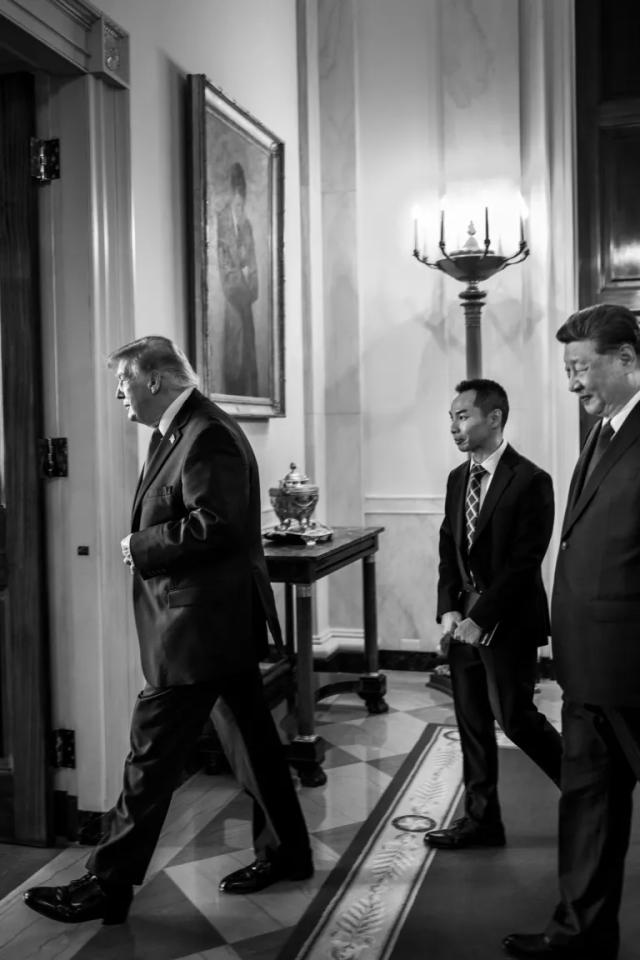
The prospect recalls another ancient voice, that of the Greek historian Thucydides.
Harvard scholar Graham Allison, who popularized the idea of the "Thucydides Trap," warned in an interview published Sunday that the rivalry between a rising China and an established United States still carries a grave risk of war.
The ancient parallel is the conflict between Athens and Sparta, in which the rise of one power stirred fear in the other. Allison sees the danger of a similar collision between Beijing and Washington, potentially far more destructive in a nuclear age.
Yet there was a gentler possibility in his warning. War, he suggested, is not inevitable. Escaping the trap may require a different kind of diplomacy, one that recognizes the other's power rather than seeking endlessly to diminish it.
It is perhaps the most hopeful thought in this week's gathering of troubling news: history may incline us toward certain mistakes, but it does not compel us to repeat them.
Still, the distance between the world's grand performances and ordinary life seems to be growing.
For Ukrainians living under the threat of bombardment, geopolitical calculations are measured in ruined homes and interrupted lives. For families facing another expensive winter, the consequences of war and energy disruption appear in heating bills and difficult household choices.
Across Europe, students have taken to the streets over the rising cost of education and living. Communities have protested against sprawling data centers, questioning the growing demand for electricity and water in the name of an ever more powerful AI.
The promise of technology was to make life easier, perhaps even give humanity more time for itself. Yet there seems to be less room than ever for quiet thought.
There is always another development to follow, another scandal to absorb, another market movement to explain. Even outrage has become fleeting. Yesterday's astonishing revelations are overtaken by today's, and tomorrow promises something more extraordinary still.
The suffering of war is hardly comparable to a stock-market loss or an examination scandal. But each scene offers a glimpse of the distance that can open between a decision and the people who must live with its consequences.
Shakespeare still speaks to us. He understood the vanity of power, the frailty of judgment andd the ease with which people become absorbed in their own desires. His plays rarely offer simple lessons. They allow characters to reveal themselves, sometimes too late, and leave the audience to consider what might have been different.
Even Richard III, who so confidently dismissed conscience, eventually finds himself troubled by it. His cleverness cannot rescue him from the consequences of his choices.
For all our technological brilliance, we remain much the same creatures Shakespeare placed upon his stage. We may be able to process more information, predict more outcomes and generate answers faster than ever before. Whether we have become any better at asking the right questions is less certain.
As another crowded week begins, perhaps there is something to be said for the brief silence between acts.
Richard III closes after a bloody struggle for the English crown. Its final words belong not to the fallen king but to the hope that a divided country might find peace again.
"Now civil wounds are stopped, peace lives again.
"That she may long live here, God say amen."
*The writer is the managing editor of AJP.
**The views expressed are those of the author and do not necessarily reflect the editorial position of AJP.

Copyright ⓒ Aju Press All rights reserved.
Related News
-
 Trump Faces Conflict of Interest Controversy Over Nvidia Stock Purchases
Donald Trump, the President of the United States, is facing a conflict of interest controversy after reportedly purchasing a significant amount of Nvidia stock just before easing export restrictions on advanced artificial intelligence (AI) semiconductors.According to reports from The Guardian and Yonhap News on November 14, Trump bought between $1 million and $5 million worth of Nvidia shares just days before the Biden administration announced plans to repeal AI semiconductor export controls established by the previous administration.An analysis by the anti-corruption group DeClaptoCracy, cited by The Guardian, indicated that Trump also acquired shares in other tech companies, including Apple, Meta, and Microsoft, during this period.In January of last year, the Biden administration implemented an 'AI Diffusion Framework' to limit the overseas export of advanced AI semiconductors, categorizing countries into allies, general nations, and those of concern, such as China and Russia, to impose differential export controls.However, the Trump administration announced plans to repeal these regulations in May, arguing that they hindered innovation among U.S. companies and imposed excessive regulatory burdens. The Guardian noted that had the regulations remained in place, Nvidia's sales to China, a key market, would have been restricted. Following the announcement of the repeal, Nvidia's stock price rose.After Trump announced in December that he would allow exports of Nvidia's AI semiconductor H200 to China, he reportedly made at least three additional stock purchases.This controversy surrounding Trump's potential conflict of interest is expected to intensify following revelations about Jensen Huang, the former CEO of Nvidia, who has been linked to allegations involving a Chinese spy.Huang is suspected of facilitating the large-scale circumvention of Nvidia's advanced semiconductors to China through his relationship with Ellice Huang, who is suspected of being a Chinese spy, raising concerns about the potential leakage of Nvidia's trade secrets or U.S. national security information.Meanwhile, claims have emerged suggesting that Huang's resignation amid the spy allegations may have been influenced by his ethnic background. Hu Xijin, the former editor-in-chief of the Chinese state-run Global Times, stated on social media on November 13 that Huang's case serves as a warning to Chinese elites in the U.S., arguing that his Taiwanese-American heritage may have worked against him. He compared Huang's situation to that of Elon Musk, the CEO of Tesla, who continues his activities despite personal controversies, suggesting that American society is wary of the semiconductor industry being dominated by individuals of Chinese descent.* This article has been translated by AI.
-
Trump buys Nvidia shares before easing chip exports to China
SEOUL, November 14 (AJP) -U.S. President Donald Trump bought between $1 million and $5 million worth of Nvidia shares just before his administration moved to ease restrictions on advanced AI chip exports in May 2025, raising fresh questions about potential conflicts of interest, according to an analysis by anti-corruption research group DeKleptocracy. In another transaction raising conflict-of-interest concerns, Trump's investment portfolio sold shares in 15 AI-related companies a day before he threatened steep tariffs on China on Oct. 10, 2025. DeKleptocracy, citing public financial disclosures, identified 2,100 trades across 68 AI-related companies during the year, including 159 within three days of major policy decisions. The White House explained independent financial managers oversee Trump's investments and denied any conflicts of interest.
-
 Trump to meet Xi, Putin in China, no plans for Kim summit
U.S. President Donald Trump (right) and Russian President Vladimir Putin walk together at Joint Base Elmendorf-Richardson in Anchorage, Alaska on Aug. 15, 2025. U.S. Department of Defense photo by Benjamin Applebaum SEOUL, November 14 (AJP) - U.S. President Donald Trump will hold a historic three-way summit with Chinese President Xi Jinping and Russian President Vladimir Putin in China next week, but has no plans to meet North Korean leader Kim Jong-un during his Asia trip, the White House said Friday. The three leaders are scheduled to meet on Nov. 19 on the sidelines of the Asia-Pacific Economic Cooperation (APEC) summit in Shenzhen, marking the first trilateral meeting between the leaders of the United States, China and Russia. White House spokesperson Olivia Wales told reporters that Trump intends to discuss reducing global nuclear arsenals, warning that the proliferation of nuclear weapons poses serious dangers. The ongoing war in Iran is also expected to feature prominently in the discussions, according to senior U.S. officials. However, the war in Ukraine is unlikely to be addressed during the trilateral meeting. A senior U.S. official, speaking on condition of anonymity, said Washington maintains a separate negotiation channel with Russia and Ukraine, making it inappropriate to involve China in those discussions. U.S. officials also cautioned against expectations of an immediate breakthrough on nuclear arms control, describing the meeting as an initial opportunity for dialogue rather than negotiations expected to produce an agreement. China has long resisted joining nuclear arms reduction talks with Washington and Moscow, arguing that the two countries possess significantly larger nuclear arsenals. Meanwhile, a U.S. official said that Trump is not expected to meet Kim Jong-un during his upcoming visits to the Philippines and China. Trump is scheduled to attend the Association of Southeast Asian Nations (ASEAN) summit in Manila before traveling to Shenzhen for the APEC summit on Nov. 18 and 19. The announcement dampens speculation about a possible meeting between Trump and Kim, particularly after the U.S. president previously expressed interest in meeting the North Korean leader before the end of the year. Trump and Kim last met in June 2019 at the inter-Korean border, following their earlier summits in Singapore in 2018 and Hanoi in February 2019.