

Journalist
Kim Yeon-jae김연재
duswogmlwo77@ajupress.com
ReporterBank of Korea & Market, Macroeconomics
Kim Yeon-jae is a journalist at AJU Press (AJP's English platform),
covering macroeconomics, international finance, and geopolitics.
He closely tracks central bank monetary policies, global energy supply chains,
and the Korean defense industry. "Peering into the risks behind the euphoria."
covering macroeconomics, international finance, and geopolitics.
He closely tracks central bank monetary policies, global energy supply chains,
and the Korean defense industry. "Peering into the risks behind the euphoria."
Latest by Kim Yeon-jae
-
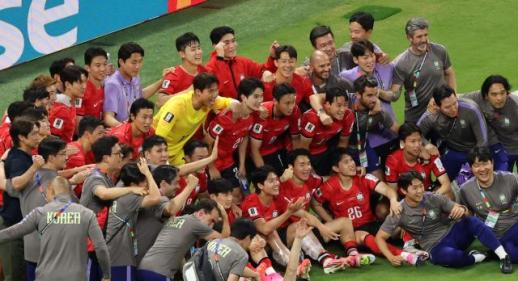 World Cup 26: Asia stays unbeaten, Africa makes early mark SEOUL, June 15 (AJP) - The opening week of the 2026 FIFA World Cup has delivered an early message: the gap between traditional soccer powers and emerging nations is narrowing. Teams from the Asia-Pacific region remain unbeaten, while several African sides have shown they can challenge higher-ranked opponents, suggesting the tournament may no longer be dominated exclusively by Europe and South America. Japan produced the biggest statement so far, fighting back twice to secure a 2-2 draw against the Netherlands, one of the pre-tournament favorites, in Arlington, Texas, on Sunday local time. Captain Virgil van Dijk gave the Dutch an early lead, but Keito Nakamura quickly equalized for Japan. Crysencio Summerville restored the Netherlands' advantage before Daichi Kamada grabbed a late equalizer after Koki Ogawa's header deflected off him. The result reinforced Japan's growing reputation as Asia's benchmark team. Ranked 18th in the world, Japan entered the tournament after beating Brazil 3-2 and England 1-0 in warm-up matches. Holding the 10th-ranked Netherlands added further evidence that Hajime Moriyasu's side belongs among the tournament's dark horses. Perhaps more importantly, Japan finished the stronger side after spending long stretches defending, validating Moriyasu's pre-tournament pledge that his team would impose its own style rather than simply react to opponents. Australia also delivered a notable result, defeating Turkey 2-0 at BC Place in Vancouver. Despite facing a squad led by Arda Guler and Hakan Calhanoglu, the Socceroos remained disciplined before capitalizing on their opportunities. Nestory Irankunda opened the scoring in the first half before Connor Metcalfe doubled the advantage after the break. The victory marked Australia's first opening-match win at a World Cup since Germany 2006. South Korea had already contributed to Asia's impressive start by overcoming Czechia 2-1 on opening day. After Ladislav Krejci put Czechia ahead early in the second half, Hwang In-beom sparked the comeback with a composed finish before setting up Oh Hyeon-gyu's winner. Unlike previous generations, the continent's leading teams arrived with legitimate expectations. Japan's starting lineup consisted entirely of Europe-based players, while both South Korea and Australia entered the tournament ranked above their opening opponents. The most unexpected result, however, came from Qatar. The Gulf nation earned the first World Cup point in its history by drawing 1-1 with 19th-ranked Switzerland. Switzerland took the lead in the 17th minute when Breel Embolo converted a penalty after goalkeeper Mahmoud Abunada was adjudged to have fouled Remo Freuler. The decision quickly became one of the tournament's first major controversies, with Qatar arguing Freuler had been offside before chasing Embolo's initial header. Qatar nevertheless found an equalizer deep into stoppage time when captain Boualem Khoukhi's header took a deflection before crossing the line. Asia's performance could improve further, with Iran, Saudi Arabia, Iraq, Jordan and Uzbekistan yet to play their opening matches. Africa has produced a more mixed start but has also shown signs of growing competitiveness. Morocco held Brazil to a 1-1 draw after Ismael Saibari's opener before Vinicius Jr. rescued a point for the five-time champions. Ivory Coast then secured Africa's first victory of the tournament, defeating Ecuador 1-0 thanks to Amad Diallo's dramatic 90th-minute winner. There have also been setbacks. South Africa suffered a 2-0 defeat to hosts Mexico after being reduced to nine men, while Tunisia endured a heavy 5-1 loss to Sweden. Yet Africa's strongest contenders are still to come. Senegal, Algeria and Ghana have yet to make their tournament debuts, while Egypt will seek its first-ever World Cup victory despite being Africa's most successful nation in Africa Cup of Nations history. If the opening week is any indication, the 2026 World Cup may become a showcase for a broader shift in global football. Europe and South America remain the favorites, but teams from Asia-Pacific and Africa increasingly look capable of turning matches that once seemed predictable into genuine contests. 2026-06-15 15:29:50
 -
 Korea's permanent payroll falls for the first time in 26 years on youth job crisis SEOUL, June 15 (AJP) -South Korea's permanent payroll fell for the first time in more than 26 years in May, underscoring a deepening employment crisis among younger workers as demographic decline, industrial restructuring and the early impact of artificial intelligence weigh on hiring. The number of permanent employees stood at 16.74 million in May, down 7,000 from a year earlier, according to the Ministry of Data and Statistics. It marked the first year-on-year decline since December 1999, when the economy was still reeling from the Asian financial crisis. Permanent employees are wage workers expected to remain employed for at least one year and are widely regarded as the closest proxy for stable, regular employment. The decline ended a 316-month expansion streak that had continued uninterrupted since January 2000, surviving even the COVID-19 pandemic. The deterioration was concentrated among younger age groups. The number of permanent jobs held by people in their 20s fell by 164,000 from a year earlier, while those held by workers in their 30s declined by 34,000. Their combined loss of 197,000 marked the steepest decline since December 2020, when the labor market was under severe pandemic pressure. Manufacturing remained the biggest drag. Permanent manufacturing jobs held by workers in their 20s and 30s fell by a combined 92,000, while overall manufacturing employment dropped by 140,000 from a year earlier, extending its decline to a 23rd consecutive month. The latest data also suggested that labor market weakness is no longer confined to traditional factory sectors. Among workers in their 20s, permanent jobs in the information and communications sector fell by 57,000, a larger decline than in manufacturing. By contrast, permanent jobs among workers in their 30s in the same sector rose by 26,000, suggesting that hiring in software development, computer programming and other IT-related fields may be shifting away from entry-level positions toward more experienced workers. The professional, scientific and technical services sector also showed pronounced weakness. Permanent jobs among workers in their 30s in the sector fell by 76,000, the largest decline among major industries for that age group. The category includes research and development, engineering, architecture, legal services and accounting, raising concerns that artificial intelligence may already be weighing on hiring in white-collar and professional occupations, particularly for younger job seekers. The government, however, has stopped short of directly attributing the slowdown to AI. Officials say employment typically lags broader economic conditions and that earlier shocks this year may now be feeding through to hiring decisions. The Ministry of Economy and Finance has also pointed to the prolonged Middle East conflict as a growing risk, citing higher raw material costs and elevated uncertainty for businesses. "We will place the highest policy priority on improving employment conditions for young people and make every possible effort," Deputy Prime Minister and Finance Minister Koo Yun-cheol said during an emergency economic headquarters meeting and a meeting of economy-related ministers last Friday. Koo said the government would closely analyze employment trends by age group and industry, implement immediate measures where necessary and pursue broader institutional reforms over the medium and long term. Earlier this year, the government projected that total employment would increase by 160,000 in 2026, expecting job losses in construction and manufacturing to moderate. The latest figures, however, suggest the recovery is becoming increasingly fragile, with stable jobs for younger Koreans deteriorating across both manufacturing and white-collar industries. Korea's shrinking youth population, rapid automation and accelerating AI adoption are beginning to converge, threatening what had long been considered the safest segment of the labor market: permanent employment. 2026-06-15 09:53:47
 -
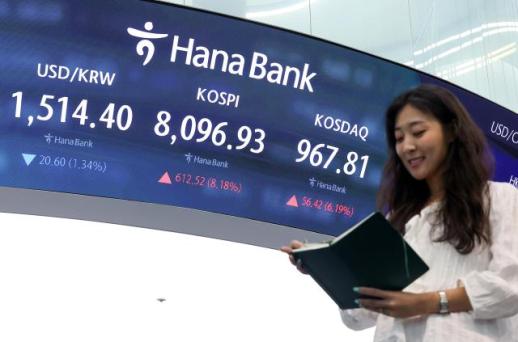 Won, bonds rally on U.S.-Iran peace hopes SEOUL, June 12 (AJP) - The South Korean won and government bonds strengthened sharply Friday as hopes for an end to the U.S.-Iran conflict eased pressure from oil prices, the dollar and foreign equity outflows. The won-dollar exchange rate closed at 1,519.8 won, down 9.1 won from the previous session, in Seoul’s foreign exchange market. The rate opened 10.9 won lower at 1,518.0 won before trimming part of its decline, but still ended in the 1,510-won range. The move came as investors priced in a possible easing of geopolitical tensions in the Middle East. U.S. President Donald Trump said he had canceled planned strikes on Iran and suggested that talks to end the conflict were in their final stage. The return of foreign investors to Korean equities also helped the won. Foreign investors bought a net 2.1 trillion won worth of shares on the main KOSPI market, turning net buyers for the first time in 25 trading sessions. The shift eased one of the main sources of recent pressure on the Korean currency, as sustained foreign selling of local stocks had added to dollar demand and weighed on the won. The bond market also strengthened sharply. The yield on the three-year government bond fell 9.6 basis points to 3.808 percent, while the 10-year yield dropped 10.5 basis points to 4.195 percent. The declines were the steepest since April 8, when the three-year government bond yield fell 13.6 basis points to 3.315 percent and the 10-year yield dropped 12.6 basis points to 3.628 percent, as hopes for a U.S.-Iran ceasefire combined with foreign buying of Korean bonds following the start of Korea’s World Government Bond Index (WGBI) inclusion. Market reports cited lower oil prices and a decline in U.S. Treasury yields as factors behind Friday’s drop in Korean bond yields. During the session, they sold a net 4,017 contracts of three-year government bond futures while buying a net 3,436 contracts of 10-year government bond futures. 2026-06-12 17:31:45
 -
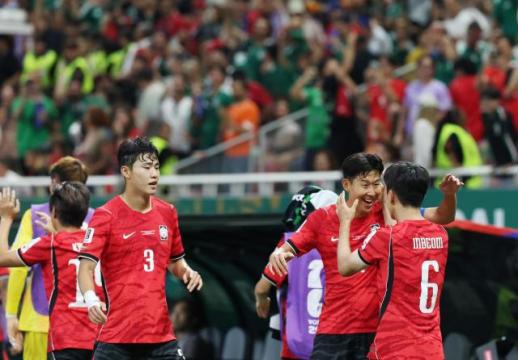 World Cup 26: Veterans steady, newcomers shine in Korea's first win SEOUL, June 12 (AJP) — South Korea's 2-1 comeback victory over Czechia in its opening Group A match at the 2026 FIFA World Cup was not the work of a single star. It was a victory built on balance — experienced leaders delivering in decisive moments while a new generation showed it was ready for football's biggest stage. Head coach Hong Myung-bo's side fell behind in the 58th minute when Ladislav Krejci powered home a header, but recovered through Hwang In-beom's equalizer in the 67th minute before substitute Oh Hyeon-gyu completed the turnaround in the 79th. The result gave South Korea its first World Cup opening-match victory since 2010 and offered an encouraging glimpse of a squad capable of combining experience with emerging talent. At the center of the comeback was Hwang. Questions lingered before the tournament after an injury-interrupted season at Feyenoord limited his playing time, but the midfielder answered them emphatically with a goal and an assist. For the equalizer, Hwang timed his run perfectly onto Lee Kang-in's through pass before showing composure to beat both the defender and goalkeeper. Twelve minutes later, he delivered a low cross from the right that Oh converted for the winner. The performance carried historical significance. Hwang became the first South Korean player to record both a goal and an assist in a World Cup match since Hong himself achieved the feat at the 1994 World Cup in the United States — 32 years before guiding Korea from the touchline in Guadalajara. FIFA later named Hwang Player of the Match. Behind him, goalkeeper Kim Seung-gyu provided the foundation for victory. After conceding from a set-piece situation, Kim recovered to produce a series of crucial saves as Czechia pushed for an equalizer. His sharp reflex stop from close range in the closing stages preserved Korea's lead and effectively secured all three points. The save left such an impression that Czechia coach Miroslav Koubek highlighted it afterward as one of the decisive moments of the match. While the veterans provided stability, several younger players delivered performances that suggested Korea's future may be arriving sooner than expected. Few carried greater responsibility than Lee Gi-hyuk. The defender entered the match with only three senior international appearances, two of them in pre-World Cup friendlies, yet found himself starting alongside Kim Min-jae and Lee Han-beom in a back three against Czechia's physically imposing attack. An early mistake briefly threatened to hand Czechia an opportunity, but Lee recovered quickly and never appeared overwhelmed by the occasion. Facing a barrage of crosses and long balls, he competed aggressively in the air, recorded eight headed clearances and showed composure in possession, helping Korea build attacks from the back under pressure. If Lee represented Korea's future in defense, Oh delivered the moment that may define the opening match. Introduced in the second half in place of Son Heung-min, the striker needed little time to justify the decision. In the 79th minute, Oh attacked Hwang's low cross and finished decisively to complete Korea's comeback. Against a Czech side that relied heavily on height and physicality, his movement inside the penalty area and instinctive finishing provided Hong with another valuable attacking option heading into the rest of the tournament. Kim Min-jae, meanwhile, quietly played the role expected of him. The Bayern Munich defender organized Korea's back line, guided his younger defensive partners and helped absorb the aerial pressure that Czechia generated throughout the match. Lee Han-beom also passed a significant test. Tasked with handling the intensity of a World Cup opener, the young defender held his ground and contributed to a defensive effort that recovered from an early setback to secure victory. World Cups often reveal whether a team has enough depth beyond its established stars. Against Czechia, South Korea received an encouraging answer. Its veterans delivered when the match demanded leadership. Its younger players responded when the pressure rose. For Hong, that combination may be the most valuable result of all as Korea prepares for a far sterner challenge against Mexico. 2026-06-12 16:59:53
 -
 World Cup 26: Korea faces first real test against Mexico SEOUL, June 12 (AJP) - South Korea's opening victory over Czechia brought relief, belief and three valuable points. It also brought a reality check. The 2-1 comeback in Guadalajara showed Hong Myung-bo's side possesses the resilience and attacking quality to survive difficult moments. The next match against Mexico will reveal whether it can thrive against a team many expect to challenge for top spot in Group A. Both nations opened their World Cup campaigns with victories on Thursday. Korea recovered from a goal down to defeat Czechia, while Mexico dispatched South Africa 2-0 with the efficiency expected of a host nation playing before a partisan crowd. The reward is an early heavyweight clash. When the teams meet at Guadalajara Stadium on June 18 local time (10 a.m. KST on June 19), the winner will take a commanding position in the group and move within touching distance of the knockout stage. For Korea, the Czechia match provided a blueprint as well as a warning. Hong's side struggled whenever the game became physical. Czechia's aerial threat, long throw-ins and set pieces repeatedly tested a Korean defense that looked uncomfortable when forced into direct confrontations. Ladislav Krejci's opening goal, arriving from a long throw and a powerful header, exposed a vulnerability that stronger opponents will have noted. Yet Korea's response revealed its greatest strength. Rather than matching Czechia's physicality, Korea accelerated the game. Hwang In-beom's equalizer came from a penetrating run and quick combination play. Oh Hyeon-gyu's winner followed another swift attacking move, with Korea exploiting space before Czechia could reorganize. The lesson was clear: Korea is at its most dangerous when the ball moves quickly and defenders are forced to turn and chase. Mexico presents an entirely different challenge. Where Czechia sought to dominate through size and aerial pressure, Mexico prefers to control territory, possession and tempo. Against South Africa, the hosts looked comfortable dictating where the game was played, stretching the field through wide areas before striking at decisive moments. Julian Quinones opened the scoring after a South African error, and Raul Jimenez sealed the victory with a trademark header. It was not a spectacular performance, but it was a professional one — the kind often associated with teams that expect to advance deep into tournaments. For Korea, that changes the defensive equation. The concern is no longer long throw-ins arriving every few minutes. Instead, it is Mexico's ability to pin opponents back, circulate possession and create overloads in wide areas. Jimenez remains a dangerous target in the penalty area, but the greater threat may come from the movement around him. If Mexico can stretch Korea's shape and force the back line to retreat toward its own goal, the hosts will gradually gain control of the match. There is, however, an opening. Mexico will be without central defender Cesar Montes after his late red card against South Africa. Montes is one of the side's defensive leaders and an important presence in both penalty areas. His absence forces coach Javier Aguirre to reshuffle a back line that looked settled in the opening match. Should defensive midfielder Edson Alvarez drop into central defense, Mexico would retain experience and physicality but potentially lose some authority in midfield. That is precisely where Korea's most influential players operate. Lee Kang-in's creativity between the lines, Hwang In-beom's late runs and Lee Jae-sung's intelligent movement could become increasingly important if Mexico's midfield structure is altered. Son Heung-min, meanwhile, will relish any opportunity to attack space behind an unfamiliar defensive partnership. The tactical question facing Hong may be whether to embrace caution or ambition. A compact mid-block would help Korea remain organized and invite opportunities to counterattack through Son, Hwang and Lee Kang-in. Yet surrendering territory to Mexico carries obvious risks, particularly against a side comfortable building pressure over long stretches. An open game, on the other hand, could favor Korea's pace and movement but would expose a defense that occasionally looked vulnerable against Czechia. The balance between those two approaches may decide the match. History suggests Mexico should be favored. The hosts are playing in familiar conditions, backed by enormous support and carrying greater tournament expectations. Opta gives Mexico a 49.2 percent chance of victory, compared with Korea's 25.8 percent. But World Cups are rarely decided by probabilities. Korea arrives with momentum, confidence and the knowledge that it has already overcome adversity once in Guadalajara. Against Czechia, it showed character. Against Mexico, it will discover how far that character can take it. By Friday morning in Seoul, Group A may look very different. 2026-06-12 15:59:11
 -
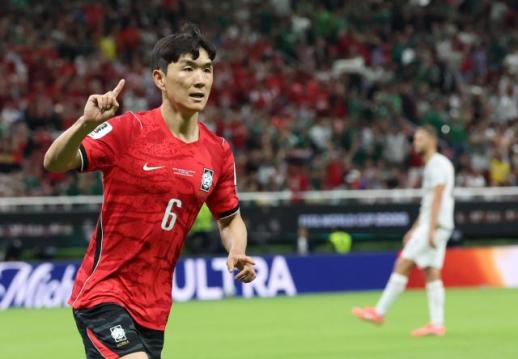 World Cup 26: Korea rallies past Czechia in World Cup opener SEOUL, June 12 (AJP) - South Korea came from behind to defeat the Czechia 2-1 in its opening Group A match of the 2026 FIFA World Cup on Thursday, taking a major step toward the knockout stage after a spirited second-half comeback in Guadalajara, Mexico. Hong Myung-bo's side fell behind in the 58th minute when Czech defender Ladislav Krejci powered home a header from a set piece. But South Korea responded quickly as midfielder Hwang In-beom equalized nine minutes later before setting up substitute Oh Hyeon-gyu for the winner in the 79th minute. The victory earned South Korea three points and left it level with co-host Mexico, which defeated South Africa 2-0 in the tournament's opening match earlier in the day. After a cautious first half dominated by Korean possession and several half-chances for captain Son Heung-min, the match sprang to life after the break. Czechia repeatedly threatened through its aerial strength and was rewarded when Krejci rose above the Korean defense to head home the opener. South Korea responded through Hwang, who calmly finished after a well-worked move involving Lee Kang-in. Moments later, the Czechs thought they had regained the lead when Tomas Soucek found the net, only for the goal to be ruled out for offside. The momentum shifted decisively in Korea's favor. Hwang burst beyond the Czech back line before delivering a low cross that Oh converted from close range to complete the turnaround. Goalkeeper Kim Seung-gyu, criticized for failing to stop Krejci's header and nearly gifting away possession earlier in the half, redeemed himself with two crucial saves in the closing stages. The veteran goalkeeper produced a pair of full-stretch stops, including a dramatic save from Michal Sadilek in stoppage time, to preserve the lead. Hwang was widely regarded as the player of the match after contributing both a goal and an assist. The victory marked South Korea's fourth opening-match win in World Cup history and its first since the 2010 tournament in South Africa. South Korea, appearing in its 12th World Cup finals, is seeking a third appearance in the knockout stage at an overseas World Cup following runs in South Africa in 2010 and Qatar in 2022. The Koreans will next face Mexico on June 19 before concluding Group A play against South Africa on June 25. 2026-06-12 13:19:17
 -
 BOK governor urges timely rate hikes as inflation, housing risks build SEOUL, June 12 (AJP) - Bank of Korea Governor Shin Hyun-song said Friday the central bank needs to raise interest rates “without delay,” sending his clearest signal yet that South Korea is moving closer to monetary tightening as inflation, housing prices and leveraged stock investment risks build at the same time. Speaking at a ceremony marking the BOK’s 76th founding anniversary, Shin said growth, inflation and financial stability conditions are pointing “relatively clearly in one direction” from a monetary policy perspective. “Monetary policy often faces trade-offs among policy variables, but such trade-offs are not large at the moment,” Shin said. “Therefore, it is necessary to place priority on price stability and raise interest rates without delay.” The remarks sharpened expectations that the BOK could begin raising rates as early as next month, after keeping its benchmark rate unchanged at 2.50 percent in May. Shin said Korea’s economy has expanded sharply despite heightened uncertainty from the prolonged Middle East conflict, supported by robust semiconductor exports tied to the global spread of artificial intelligence. The economy grew 1.8 percent from the previous quarter in the first quarter, far exceeding earlier expectations, while nominal growth reached an unusually strong 10.5 percent as higher chip prices improved the country’s terms of trade. He said the economy is expected to maintain solid growth as the semiconductor upcycle continues and higher nominal GDP supports tax revenue, income, investment and domestic demand, but warned that the recovery remains heavily dependent on the information technology sector. Inflation has become a more urgent concern, with consumer inflation rising into the 3 percent range in May as higher global oil prices filtered through to domestic prices. Core inflation, which had previously shown signs of stabilization, also moved up to the mid-2 percent range, while prices of daily necessities rose faster than headline inflation and raised the risk that inflation expectations could become more entrenched. “Inflation is expected to remain above the target level for a considerable period,” Shin said, noting that supply shocks are spreading and demand-side price pressure is also increasing despite government efforts to ease upward pressure. Shin framed preemptive action on inflation as a measure that also protects lower-income households, saying the burden of rising prices falls relatively more heavily on them. He acknowledged that higher interest rates would increase debt-servicing costs for households and companies, but said targeted relief for vulnerable borrowers would be more effectively handled through fiscal policy because monetary policy affects the market broadly. Financial stability risks also featured prominently in Shin’s remarks, as housing prices and rents in the Seoul metropolitan area continued to rise sharply and expectations for further increases strengthened again. He also warned that the rapid increase in leveraged stock investment, often referred to in Korea as “bittoo,” or borrowing to invest, could amplify individual losses and deepen market volatility when prices correct. On the foreign exchange market, Shin said the won-dollar exchange rate has remained elevated in the 1,500 won range despite a rising stock market and a large current account surplus, as foreign investors continued to pull money from Korean equities. Still, he said market participants expect the won to gradually stabilize as the large current account surplus increases demand for the local currency through corporate tax payments and domestic investment. Shin said the BOK will work with relevant authorities to deepen the local foreign exchange market through 24-hour trading and a future offshore won settlement system, aiming to absorb more offshore non-deliverable forward trading demand into the onshore market. The BOK’s shift comes as a growing number of central banks are turning more hawkish in response to renewed inflation pressure from higher energy costs, currency weakness and financial market volatility. The European Central Bank raised its three key policy rates by 25 basis points on Thursday, while Bank Indonesia lifted its benchmark BI-Rate by 25 basis points earlier this week to 5.50 percent. The Bank of Japan is also expected to join the tightening cycle next week, with markets widely expecting it to raise its short-term policy rate to 1.0 percent from the current 0.75 percent at its two-day meeting starting Monday. Financial markets gave a mixed response to Shin’s renewed tightening signal. The won-dollar exchange rate opened Friday at 1,518.0 won per dollar, down 10.9 won from the previous session, signaling some relief for the local currency but still leaving it above the psychologically sensitive 1,500 won level. The KOSPI opened 499.90 points, or 6.44 percent, higher at 8,263.85 and extended gains of more than 7 percent in early trade, with foreign investors purchasing more than 1 trillion won worth of shares as improved risk appetite outweighed rate-hike concerns. In the bond market, the yield on three-year government bonds fell 5.5 basis points to 3.849 percent, while the 10-year yield dropped 6.0 basis points to 4.240 percent by the morning close. 2026-06-12 12:37:21
 -
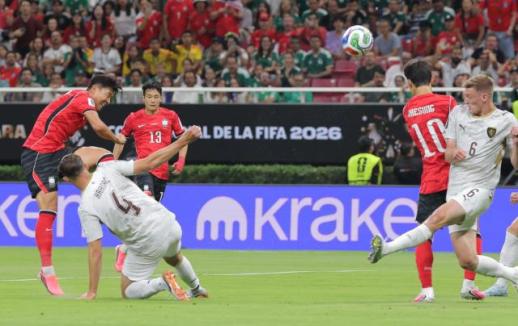 World Cup 26: Korea, Czech Republic goalless at halftime in World Cup opener SEOUL, June 12 (AJP) - South Korea went into halftime locked at 0-0 with the Czech Republic on Thursday in its opening Group A match of the 2026 FIFA World Cup. Korea made a brighter start than it had in recent warm-up matches, but could not turn its early pressure into a goal against a physically strong Czech side at Guadalajara Stadium in Mexico. Son Heung-min started up front, with Lee Kang-in and Lee Jae-sung playing just behind him. Hwang In-beom and Paik Seung-ho anchored the midfield, while Lee Tae-seok and Seol Young-woo operated as wing-backs. Lee Ki-hyuk, Kim Min-jae and Lee Han-beom formed the back three, with Kim Seung-gyu starting in goal. The Czech Republic lined up with Patrik Schick as its main striker, supported by Pavel Sulc, Lukas Provod, Tomas Soucek and Alexandr Sojka. Korea carved out the first clear opening in the 12th minute, when Lee Kang-in lifted a pass into the box for Lee Jae-sung’s run. The ball eventually dropped to Son, whose left-footed effort was blocked by a Czech defender. From the resulting corner, Lee Han-beom rose well but headed over the bar. Lee Kang-in then tested goalkeeper Matej Kovar in the 14th minute with a left-footed strike from distance, Korea’s only shot on target of the first half. The Czech Republic responded almost immediately after Korea lost the ball on the right, but Kim Min-jae muscled his way across to break up the danger before Patrik Schick could get a clean look at goal. Korea dictated much of the tempo early on, but the Czech Republic began to settle after the hydration break, using its size and set-piece threat to push Korea back. A Czech set piece caused problems in the 22nd minute, with the ball glancing off Tomas Soucek before drifting wide of the post. Son had two chances late in the half, sending a right-footed shot over the bar in the 37th minute before cutting inside and curling a left-footed effort just wide three minutes later. The Korean captain had one more chance in stoppage time after arriving in the box for a cutback, but he failed to make clean contact as the first half ended scoreless. 2026-06-12 12:36:49
 -
 World Cup 26: Mexico beats South Africa in opener SEOUL, June 12 (AJP) - SEOUL, June 12 (AJP) — The 2026 FIFA World Cup opened in Mexico City on Thursday with a lavish ceremony blending Mexican cultural imagery, global pop performances and the increasingly commercial face of the expanded 48-team tournament. Shakira and Burna Boy performed “Dai Dai,” the official song of the tournament, while the broader opening lineup included J Balvin, Maná, Los Ángeles Azules, Alejandro Fernández, Belinda, Danny Ocean, Lila Downs and Tyla. The ceremony highlighted pre-Hispanic themes and Mexico’s football heritage, with Estadio Azteca returning to the global stage after hosting matches at the 1970 and 1986 World Cups. The spectacle also showed how heavily commercialized this World Cup has become. One striking example around the tournament has been Labubu, the monster character from Chinese toy company Pop Mart, which has been turned into official FIFA World Cup merchandise. The collaboration, described in Chinese state media as FIFA’s first partnership with a designer toy intellectual property for official World Cup merchandise, underlined the growing visibility of Chinese consumer brands around global sports events. Outside the stadium, the celebratory mood was more complicated. Mexico City opened the tournament amid protests by teachers and other civic groups, while many local residents criticized high ticket prices and public spending on World Cup-related beautification projects. The opening match then delivered an equally dramatic start on the pitch, as Mexico beat South Africa 2-0 in a chaotic Group A curtain-raiser marked by three red cards. Julián Quiñones scored the first goal of the tournament in the ninth minute, punishing a South African defensive error before sliding the ball past goalkeeper Ronwen Williams. Raúl Jiménez doubled the lead in the 67th minute with a header from Roberto Alvarado’s cross, giving the co-hosts a winning start. The match spiraled into disciplinary drama after halftime. South Africa midfielder Sphephelo “Yaya” Sithole was sent off shortly after the restart for bringing down Brian Gutiérrez near the edge of the penalty area. Substitute Themba Zwane was also shown a red card in the 84th minute after raising his hand toward Alvarado following a challenge. Mexico defender César Montes was dismissed in stoppage time after fouling Khuliso Mudau as South Africa broke forward, leaving the match to finish with Mexico on 10 men and South Africa on nine. Teboho Mokoena received the first yellow card of the tournament in the 17th minute, according to live match reports. The three dismissals made the opener one of the most unusual first matches in World Cup history. A World Cup opening match had last seen multiple red cards in 1990, when Cameroon had André Kana-Biyik and Benjamin Massing sent off in a shock 1-0 win over defending champion Argentina in Milan. No previous World Cup opener is widely recorded as having produced three red cards, making Thursday’s match a likely first. For Mexico, the night ended with three points and a powerful start to a group that also includes South Korea and the Czech Republic. South Korea will open its Group A campaign against the Czech Republic at Guadalajara Stadium in Zapopan, near Guadalajara, Mexico. The match kicks off at 8 p.m. Thursday local time, or 11 a.m. Friday in South Korea. 2026-06-12 06:34:10
 -
 Korea's defense of won tested by SpaceX frenzy and foreign exodus SEOUL, June 11 (AJP) - South Korean authorities battling to defend the won near global financial crisis-era levels appeared to move to contain a retail rush into the blockbuster SpaceX listing on Friday, as surging demand for U.S. assets threatens to add pressure on the currency alongside a record foreign capital exodus. The Financial Supervisory Service (FSS) on Thursday summoned auditors from 12 major brokerages and urged them to strengthen internal controls over overseas investment brokerage and advertising, amid heightened volatility in domestic financial and foreign-exchange markets. The meeting came as controversy mounted over domestic participation in the highly anticipated SpaceX initial public offering. Mirae Asset Securities recently allowed investors who subscribed to the SpaceX IPO to withdraw their orders by noon after concerns emerged over settlement procedures. According to people familiar with the matter, differences between U.S. IPO practices and Korea's settlement system could prevent domestic investors from selling their allotted shares on the first day of trading. Investors may have to wait at least two business days after the listing before they can trade the stock, leaving them exposed to potentially sharp price swings without the ability to exit positions. There were also market reports that institutional subscriptions had been capped at roughly 30 percent of requested allocations. The developments fueled speculation among market participants that financial authorities were seeking to curb excessive overseas subscriptions at a time when rising demand for dollars is adding pressure on the won. The FSS did not mention any specific brokerage or the SpaceX subscription issue in its press release. The regulator also declined to immediately comment on whether it was examining the subscription dispute or reports of institutional allocation limits. The FSS held an internal audit meeting at its Seoul headquarters on Thursday morning with auditors from 12 major brokerages. Participants included Seo Jae-wan, assistant governor in charge of the financial investment sector, the heads of the regulator's three financial investment inspection bureaus, auditors from 10 comprehensive financial investment firms, and auditors from Toss Securities and Kakao Pay Securities. The watchdog said brokerages should review their overall internal procedures to prevent investor damage from excessive marketing related to overseas investments, especially as heightened global uncertainty has increased volatility in stock and foreign-exchange markets. It also urged brokerages to conduct preemptive self-inspections of risks stemming from concentrated demand for specific products or transactions. Seo said in opening remarks that investor confidence in the resilience of Korea's capital market becomes increasingly important when volatility rises in stock and foreign-exchange markets. He added that the regulator would not tolerate market-disruptive conduct that illegally exploits volatility or unlawful sales practices that neglect investor protection. Seo also warned that the FSS would take strict action against irresponsible sales practices that advertise or recommend high-risk crowded trades while emphasizing only potential returns. The FSS said marketing of overseas investment products aimed at retail investors has shown signs of overheating and called on brokerages to ensure that investors are not excessively exposed to foreign-exchange risks. The regulator highlighted several internal-control concerns, including improving investor-protection indicators in performance evaluations, strengthening pre-screening of investment events and advertisements, enhancing oversight of overseas brokerage partners, and rationalizing the calculation of interest rates on foreign-currency deposits. The FSS also called on brokerages to monitor excessive trading in overseas stocks in the same manner as domestic equities and strengthen alerts for accounts suffering heavy losses so investors can respond more quickly. The regulator asked brokerages to share the discussions with senior management, including chief executives, and said it plans to send a letter outlining key internal-control precautions related to overseas investment brokerage and marketing. The meeting came as Korea's financial markets remain under intense pressure. Investor deposits, a gauge of cash waiting on the sidelines of the stock market, fell to 127.6 trillion won as of Wednesday, down 2.5 trillion won from the previous session and the lowest level this month. Compared with the 139.7 trillion won recorded on June 4, investor deposits have shrunk by more than 12 trillion won in just four trading sessions, suggesting substantial capital has flowed into stocks, overseas investments and other risk assets. The KOSPI ended Thursday up 33.13 points, or 0.43 percent, at 7,763.95, but only after one of its most volatile trading sessions in recent years. The benchmark index opened down 2.86 percent and at one point plunged 4.35 percent to 7,394.46 before rebounding sharply and briefly topping the 7,800 mark. The KOSPI swung from negative to positive more than 50 times during the session, with an intraday range exceeding 406 points. The Korea Volatility Index (VKOSPI), often referred to as the market's fear gauge, closed at 87.30. Although down 1.19 percent from the previous session, it remained above 80 for a third consecutive trading day and briefly climbed to 89.47 during the session. The won weakened further to 1,528.9 per dollar as of 3:30 p.m. in Seoul, up 4.7 won from the previous session and hovering near levels associated with past financial crises. Foreign investors continued their relentless selling streak, unloading a net 1.48 trillion won worth of KOSPI shares on Thursday. They have now been net sellers for 24 consecutive trading sessions. Foreigners have sold nearly 30 trillion won worth of KOSPI stocks during the first eight trading sessions of June, following net sales of 51.5 trillion won in May. The sustained outflows have helped drive the benchmark index down nearly 9 percent this month despite aggressive buying by retail investors. 2026-06-11 17:50:52