

Journalist
Park Sae-jin박세진
swatchsjp@ajupress.com
Assistant EditorForeign embassies in Seoul & Geopolitics, Diplomacy, Policy
Experienced journalist and editor at AJU PRESS specializing in multilingual news. I cover international diplomacy, geolpolitics, and policy, consistently delivering highly accurate, compelling reporting for a worldwide audience.
"Reporting the facts. Shaping the narrative. Every second counts."
Latest by Park Sae-jin
-
 Researchers develop device to cut data center energy use SEOUL, June 23 (AJP) - As the explosive growth of artificial intelligence services drives up power consumption and creates heavy data traffic jams in global computing facilities, finding ways to process more information with less electricity has become a pressing global challenge. To tackle this infrastructure problem, a team of South Korean researchers has developed a new optical modulator, a key communication component that converts electrical signals into light waves to transmit data efficiently, the Korea Advanced Institute of Science and Technology said Tuesday. Conventional computing facilities rely on standard silicon optical modulators, which generate high heat and are vulnerable to temperature shifts. The optical modules suffer from a physical limitation where boosting energy efficiency inevitably slows down data transmission speeds. The newly engineered device bypasses these existing barriers by bonding a highly sensitive compound semiconductor material onto a traditional silicon base, allowing the hardware to simultaneously achieve high transmission speeds and low power consumption in a much smaller physical footprint. The press release detailing the technological development was issued from Daejeon, South Korea, on June 23, 2026. The announcement outlines a collaborative research initiative involving academic researchers, major national scientific centers, and the semiconductor packaging division of Samsung Electronics. The research team was led by the Korea Advanced Institute of Science and Technology (KAIST) School of Electrical and Electronic Engineering's Professor Kim Sang-hyun. The joint project incorporated the technological expertise of researcher Han Jae-hoon from the Korea Institute of Science and Technology (KIST), researcher Kim Jong-min from the Korea Advanced Nano Fab Center (KANC), and engineers from Samsung Electronics. Together, they successfully fabricated an ultra-small modulator measuring just 500 micrometers in length, making the component dozens of times smaller than the thickness of a human hair. To build the device, the team layered an indium gallium arsenide phosphide thin film, which reacts strongly to light and electricity, over a standard silicon path while maintaining a stable structural design that resists temperature changes. The researchers combined two specific physical manipulation techniques to prevent electrical charges from accumulating inside the component, an issue that typically causes operational slowdowns. This structural approach allowed the hardware to demonstrate a high energy efficiency rating of 0.146 volt-centimeters alongside a rapid processing bandwidth of 26.3 gigahertz. Inside modern data centers, countless computing servers and semiconductor chips continuously exchange massive quantities of information in real time. Because optical modulators dictate both the speed and the electrical drain of these exchanges, improving their performance directly impacts the overall capability of the facility. The compact, low-power nature of the new component makes it well-suited for future co-packaged optics, an advanced manufacturing design that integrates optical communication parts and computer chips directly inside a single shared package to save space and power. "We have been developing various optical device technologies, such as silicon photonics and micro-light-emitting diodes, to solve the power consumption and data transmission bottlenecks of data centers, which are the core infrastructure of the AI era," Professor Kim said, adding: "This achievement simultaneously improves the efficiency and speed of optical modulators, and we expect it to be used in next-generation artificial intelligence data centers and ultra-high-speed optical communication systems." The collaborative study was led by KAIST doctoral candidate Kang Dong-gil as the first author. The research findings were formally presented to the international semiconductor community at the VLSI Symposium on Technology and Circuits on June 17, 2026. (Reference Information) Journal/Source: VLSI Symposium on Technology and Circuits Title: Depletion-Mode III-V/Si SISCAP Mach-Zehnder Modulator Breaking the Efficiency-Bandwidth Trade-Off for Co-Packaged Optics Link/DOI: https://vlsi26.mapyourshow.com/8_0/sessions/session-details.cfm?scheduleid=202 2026-06-23 15:35:17
-
 Kookmin University signs sports safety agreement SEOUL, June 23 (AJP) - Protecting athletes and crowds from physical harm during major international sporting events is a growing global priority. To meet this critical need, the Asia Olympic Academy at Kookmin University and the Sports Safety Foundation have agreed to jointly research venue risk management and train professional safety staff, the university said Monday. Conventional sports management programs have historically focused on event marketing, ticket sales, and athletic performance, often leaving crowd security and accident prevention to outside contractors. This new partnership shifts that standard by treating physical safety as a core academic subject. Rather than teaching students how to react after an incident happens, the updated curriculum will train future sports administrators to analyze field data and design policies that prevent hazards before events begin. Kookmin University (KMU) said that a joint signing ceremony was held on June 19, at the university's main administration building in Seoul. Under the agreement, the Asia Olympic Academy (AOA) and the Sports Safety Foundation (SSF) will expand their educational cooperation to link international sports administration directly with safety standards. The two organizations plan to host joint academic conferences aimed at improving safety policies in South Korea and abroad. They will also build a shared database of past sports accidents and research materials to help identify practical safety solutions for workers in the field. The initiative is designed to move away from theoretical study and focus on practical skills that can be applied immediately in sports venues. By combining the academic resources of KMU with the field experience of the SSF, the program aims to prepare students for sudden changes in the global sports environment. "Sports safety is an essential element for the sustainable development of sports," AOA Director Na Chang-soon said, adding: "Taking this agreement as an opportunity, we will actively link the expertise and networks held by both institutions to foster professional talent who can lead the international sports and sports safety sectors, and further expand our educational and research cooperation." SSF Chairman Park Jang-soon emphasized the broader impact of the agreement on the global athletic community. "It is very meaningful to cooperate with the Asia Olympic Academy at Kookmin University, which is a center for nurturing professional talent in the international sports sector. Through this cooperation, we expect sports safety to spread further as a core value across the international sports field," Park said. 2026-06-23 11:21:51
-
 Mandatory facial recognition to exempt foreign residents SEOUL, June 23 (AJP) - South Korea will mandate facial recognition for all new mobile phone subscriptions starting in July to combat financial crimes, but the system will launch entirely without foreign residents. The exclusion creates an immediate regulatory loophole, as foreign-registered accounts make up nearly half of all illegal burner phones used in the country's voice phishing networks. By pushing ahead with a domestic-only rollout, the Ministry of Science and ICT risks driving criminal syndicates directly toward the demographic bypass it failed to close. The phased approach also sets up the country's legal foreign population for severe administrative bottlenecks later this year, as telecommunications workers warn the delayed infrastructure will be deployed without adequate field testing. Data submitted to the National Assembly illustrates the scale of the blind spot. Between 2020 and 2024, law enforcement seized 124,889 illegal burner phones registered to South Korean nationals and 106,018 registered to foreign nationals, meaning non-citizens accounted for roughly 46 percent of the illicit market. The identity verification policy requires telecommunications operators to match a customer's official identification photo against a real-time facial scan during the sign-up process. Government officials attributed the exclusion of non-citizens to technical delays in linking the scanning software with separate foreign identification databases, promising a sequential rollout for foreign residents in the second half of the year. A Ministry of Science and ICT official defended the split timeline as a necessary operational compromise. The official stated that while launching the system simultaneously for both groups was the preferred option, the ministry determined it was more practical to get the domestic framework operational first while accelerating the secondary software development. The overarching crackdown is squarely aimed at budget mobile carriers, whose non-face-to-face online registration options have made them the primary vehicle for identity theft. According to the National Police Agency, budget carriers accounted for 92.3 percent of all seized burner phones in 2024, a sharp escalation from 76.5 percent in 2022. While South Korean consumer watchdogs have spent months debating the broader privacy implications of storing biometric data, the foreign community faces a strictly practical threat. Mobile retail workers predict that when the non-citizen system eventually goes live, the lack of a standardized pilot period will subject regular foreign residents to systemic verification failures, forced secondary paperwork, and long processing delays at store counters. Critics within the telecommunications sector argue that launching an incomplete framework defeats the core objective of the crackdown. 2026-06-23 10:05:58
-
 S, Korea warns chip boom could spark property speculation SEOUL, June 20 (AJP) - A historic semiconductor-driven economic boom in South Korea risks triggering widespread real estate speculation and widening wealth inequality unless fiscal policies are reformed, the presidential policy chief warned on Saturday. The influx of wealth driven by global demand for artificial intelligence chips has pushed economic indicators to record highs but threatens to distort the domestic economy. The warning highlights growing government concern that massive corporate windfalls are failing to benefit the broader public and instead risk overheating localized property markets. This structural imbalance comes as South Korea's stock market growth has become heavily concentrated in just two major chipmakers, Samsung and SK hynix, masking stagnation in other domestic sectors. With corporate bonuses and export revenues set to flood the domestic market by the end of the year, policymakers are moving swiftly to prevent these gains from fueling unearned property income. Failure to manage this liquidity could leave vulnerable economic segments exposed to severe financial strain when monetary tightening begins. Kim Yong-bum, the Blue House presidential chief of staff for policy, stated that indicators such as stock prices, operating profits, tax revenue, and the current account all point toward double-digit nominal gross domestic product growth for South Korea this year. However, he noted that regular citizens have yet to experience these positive figures as a reality in their daily lives. "When bonuses are paid, wage increases materialize, and export funds begin to flow into the country in earnest, people's behavior changes," Kim wrote in a social media post on June 20. "Looking back at the past, this money has repeatedly tended to flow back into the real estate market." To counteract this trend, Kim called for an immediate normalization of property taxation through rational adjustments to holding and capital gains taxes. He cautioned that traditional regulatory measures would be insufficient if investors remain convinced that real estate speculation guarantees profitable returns even after taxes are paid. The policy chief expressed concern that the fruits of the semiconductor super-cycle are moving upward while the pain of monetary tightening will fall squarely on lower income tiers. Self-employed business owners and variable-rate debtors who have missed out on the tech windfall are expected to face immediate financial pressure if interest rates rise to cool the economy. The domestic market has increasingly reflected this structural division, with Samsung Electronics and SK hynix acting as the primary engines of the KOSPI index advance. Driven by the global artificial intelligence boom and strong earnings upgrades, the two chipmakers saw sharp gains in the first half of 2026, including a 13.67 percent surge for Samsung in April alone. According to market reports, the combined weight of Samsung Electronics and SK hynix now accounts for more than 35 percent of the total KOSPI market capitalization. This marks a significant increase from nearly 25 percent recorded in 2025, underscoring how heavily the headline index depends on the semiconductor pair. Kim warned that the current economic expansion cannot be sustained if national wealth is absorbed into unearned real estate income rather than future industries. In May, the policy chief proposed a national dividend system to return excess tax revenues to the public, stating that the fruits of the artificial intelligence infrastructure era are not the result of a single company's efforts alone. 2026-06-20 14:07:27
-
 National Museum names RM as global ambassador SEOUL, June 20 (AJP) -The National Museum of Korea appointed BTS leader RM as its first global ambassador on Saturday to promote South Korean cultural heritage to an international audience. The appointment comes as South Korea aggressively leverages its global pop culture dominance to convert commercial entertainment fandom into institutional high-art diplomacy. The decision aligns with an unprecedented surge in international interest that has propelled the Seoul-based institution into the top tier of global cultural tourism. According to the 2025 Global Museum Visitor Survey published by the United Kingdom-based art magazine The Art Newspaper, the museum drew over 6.5 million visitors to rank third worldwide, surpassing both the British Museum and the Metropolitan Museum of Art. This growth has accelerated into 2026, driven primarily by an influx of foreign tourists seeking the historical roots of contemporary South Korean culture. Data from the museum shows that foreign attendance jumped 57.8 percent during the first five months of 2026 compared to the same period last year, totaling 122,024 visitors. Kim Nam-joon, the 31-year-old BTS leader, was selected for the role due to his established profile as a prominent art collector and financial patron of cultural preservation. The rapper and songwriter previously made consecutive annual donations of 100 million won in 2021 and 2022 to the Overseas Korean Cultural Heritage Foundation, an affiliate of the state-run Korea Heritage Service, to fund the restoration of South Korean artifacts located outside the country. His personal involvement in the international art scene includes an upcoming special exhibition of his private collection at the San Francisco Museum of Modern Art in October. In his new institutional role, RM will participate in various international campaigns and promotional activities to introduce South Korean history and traditional arts to global audiences. Ahead of the official announcement, the musician visited the museum on Friday to meet with Director Yoo Hong-jun. The two toured the calligraphy and painting gallery to view an exhibition titled "Danwon Kim Hong-do, Painting the Era," which showcases iconic traditional artwork. Following the tour, museum officials presented Kim with a special scroll edition of the Daedongyeojido, a scaled-down reproduction of the landmark 19th-century map of the peninsula. "I am very pleased," RM said in a statement released by the museum. "I will work together to ensure that the beauty and value of our cultural heritage are transmitted to more people." 2026-06-20 12:35:12
-
 Household debt bottlenecks S. Korean corporate lending SEOUL, June 20 (AJP) - South Korea's major commercial banks face a critical bottleneck in expanding corporate credit due to a heavy structural over-reliance on household loans. A report released Saturday by the Korea Institute of Finance warned that domestic lenders lack the capital agility of global competitors, leaving them poorly positioned to support national economic growth just as regulators freeze traditional consumer lending channels. This systemic vulnerability collides with an aggressive government campaign to suppress South Korea's record 1,993.1 trillion won household debt bubble and halt speculative, debt-fueled investing. Financial authorities have implemented a strict weekly monitoring system that forces both traditional and digital platforms to drastically cut consumer credit lines. Because banks are being legally blocked from their primary retail mortgage revenue engines, they must urgently pivot to corporate finance to sustain profitability. The scale of this structural trap becomes evident when compared directly to global financial institutions. Data from the state-run think tank shows that household loans account for an average of 27.8 percent of total assets at South Korea's top four lenders, which comprise KB Kookmin, Shinhan, Hana, and Woori. This exposure is nearly double the 14.5 percent recorded at United States giant JP Morgan and dwarfs the 3.1 percent maintained by Japan's Mitsubishi UFJ Financial Group. Conversely, major international banking groups insulate their balance sheets by holding massive reserves of ultra-low-risk assets like government bonds and central bank deposits. These secure holdings make up 41.8 percent of total assets at Mitsubishi UFJ and 29.2 percent at JP Morgan. In contrast, South Korea's four leading commercial banks hold an average of just 11.8 percent of their portfolios in these risk-free vehicles. A large pool of low-risk assets lowers a financial institution's overall risk-weighted assets, which eases the burden of global capital adequacy regulations. This capital cushion provides foreign lenders with the regulatory freedom to aggressively deploy funds into riskier, high-yield sectors such as corporate loans, project financing, and investment banking. Without this buffer, any attempt by South Korean banks to rapidly expand corporate credit would inflate their risk-weighted assets and trigger restrictive regulatory capital penalties. The urgency of this structural constraint has intensified following a sweeping credit contraction across South Korea's internet-only banking sector to comply with the state debt management drive. Kakao Bank announced it will lower its maximum overdraft account limit from 240 million won to 100 million won on June 22. The digital lender also plans to reduce existing underutilized credit lines by up to 20 percent for borrowers who fail to meet minimum usage thresholds. South Korean online bank Toss Bank took similar action on June 18, slashing its new personal credit loan limit from 300 million won to 100 million won and capping new overdraft lines at 50 million won. Concurrently, K-Bank completely halted the issuance of all new overdraft accounts until the end of July. The Financial Services Commission has reinforced these pullbacks by launching an emergency administrative system to audit individual financial firms on a weekly basis if they exceed their allocated debt growth targets. These severe administrative interventions respond to central bank indicators showing that consumer debt remains resilient against localized regulatory pressure. Bank of Korea data from May revealed that while strict lending restrictions successfully shrank commercial bank household credit by 200 billion won in the first quarter, total national household credit still rose by 14 trillion won. Borrowers bypassed mainstream banking curbs and migrated to non-bank depository institutions, pushing credit at mutual credits and savings banks up by 8.2 trillion won. A dramatic spike in retail investment borrowing has further accelerated government anxiety. Data presented by Lee Hye-young, the head of the Bank of Korea's financial statistics team, showed that credit extended by domestic securities firms surged by 7.3 trillion won during the first quarter, marking the third-highest quarterly increase on record. Lee noted that continuous monitoring is required because housing-related credit also expanded as buyers rushed to complete property transactions before the expiration of capital gains tax relief for multi-home owners. To address these long-term vulnerabilities, the Korea Institute of Finance advised traditional lenders to adopt a portfolio strategy that builds safety buffers while selectively expanding higher-yield business investments. In his report, Senior Research Fellow Kim Seok-ki stated that South Korea's lopsided reliance on household debt directly restrains productive finance. "There is a need to review a strategy that expands high-yield asset management while simultaneously increasing the proportion of safe assets," Kim said. 2026-06-20 12:01:30
-
 Trump pressures Iran to complete peace deal SEOUL, June 20 (AJP) - United States President Donald Trump has issued a stark ultimatum to Tehran, warning that Washington could resume military actions if a final agreement is not reached within a strict 60-day window. Speaking at Joint Base Andrews on Friday (local time), Trump pressured Iran to solidify a recent memorandum of understanding into a permanent treaty or face severe consequences. The remarks signal a high-stakes push by Washington to conclude denuclearization talks following the recent halt in direct military conflict. For South Korea and major Asian economies, a failure to secure a permanent deal within these two months threatens to instantly trigger an energy crisis by choking off vital crude oil shipments through the Strait of Hormuz. Because Asian industrial powerhouses rely heavily on Middle Eastern oil imports, a collapse in negotiations could disrupt regional supply chains through severe maritime bottlenecks and soaring fuel costs. Economists warn that a prolonged blockade would heavily impact South Korea's export-reliant manufacturing sectors. The current fragile truce follows a broader U.S.-Iran war that disrupted global shipping lines earlier this year. The 60-day negotiation timeline officially began on Thursday after both sides signed an interim memorandum of understanding to temporarily halt hostilities. This makes the current period of relative calm a temporary window rather than a guaranteed long-term peace resolution for the region. During his address introducing the new Air Force One presidential aircraft, Trump made it clear that Washington is prepared to employ maximum pressure if the upcoming talks stall. If no deal is reached within 60 days beginning Thursday, "we will do things that won't make them happy," Trump said. He quickly tempered the warning by adding, "But I don't think it's going to get to that." Trump elaborated on the economic consequences of a diplomatic failure, noting that military escalation would immediately disrupt global energy corridors. He warned that a return to hostilities would mean oil will not flow out of the Strait of Hormuz very quickly. According to Trump, individuals who own billion-dollar ships do not want missiles flying over their vessels or maritime mines scattered throughout the waters. The urgency of the timeline is underscored by immediate diplomatic hurdles, as working-level talks scheduled in Switzerland on Friday were postponed without an official explanation. Multiple media reports indicated that Iran withdrew from the scheduled sessions in response to recent Israeli airstrikes targeting the Hezbollah militant group in Lebanon. Trump downplayed the regional friction, highlighting his recent discussions with Israeli leaders to secure a ceasefire with Hezbollah. In a phone interview with NBC News, Trump described the development as a positive step toward broader regional stability. "It's a positive," Trump said, adding that the ceasefire was "a little icing on the cake." The American president also expressed gratitude toward Beijing for its diplomatic stance during the underlying conflict. Trump stated that he had previously requested Chinese President Xi Jinping to refrain from intervening or engaging with Iran. The Chinese leader reportedly agreed to the request and maintained that position, a move that Trump described as a very good thing. The U.S. State Department announced that a new round of talks between Israel and Lebanon will be held in Washington next week to further stabilize the region. The text of the memorandum of understanding states that the 60-day negotiation period can only be extended through the mutual consent of both the United States and Iran. 2026-06-20 11:06:29
-
 Montenegro seeks to adopt Kazakh digital governance model SEOUL, June 20 (AJP) - Montenegrin President Jakov Milatovic met with Kazakh President Kassym-Jomart Tokayev in Astana on June 19 to discuss adopting the digital transformation technologies of Kazakhstan to modernize his country's public administration. According to the Kazakhstan Ministry of Foreign Affairs, the talks mark a significant shift in international diplomacy as European nations increasingly seek administrative blueprints from emerging technological hubs outside the West. The summit provides a clear window into how advanced digital infrastructure is redefining global statecraft and institutional reform. This meeting underscores how smaller states are bypassing traditional bureaucratic evolution by directly importing established digital architecture from rising tech leaders. Digital transformation has become an essential mechanism for small and medium-sized countries aiming to optimize their state operation. Shifting public registries, tax collections, and corporate licensing online allows these governments to drastically lower operational overhead and limit institutional corruption without expanding physical infrastructure. Kazakhstan is currently executing a broad economic pivot to transition away from its historic reliance on natural resources toward high-tech sectors. The Central Asian nation, which has a population of 20.5 million people, has traditionally depended on its vast oil reserves and mineral extraction to drive domestic growth. The government in Astana has utilized recent constitutional referendums to reshape its state institutions and foster a modern regulatory environment. As part of this digital push, the country enacted a comprehensive AI law in January 2026 to accelerate local technical capabilities and secure foreign tech investments. Montenegro operates a significantly smaller, service-based economy supported by a population of approximately 630,000 people. The Balkan country relies heavily on international tourism, which generates roughly 30 percent of its gross domestic product, alongside smaller export operations in aluminum and energy. This heavy reliance on seasonal tourism and foreign visitors requires Montenegro to maintain a highly agile and transparent public administration. The government in Podgorica is looking to Kazakhstan because it requires a proven, scalable digital framework that can upgrade its national systems within a highly constrained budget. Beyond technological cooperation, the two leaders focused on expanding physical trade corridors and logistics networks connecting Central Asia with Europe. Milatovic and Tokayev highlighted the strategic value of the Trans-Caspian International Transport Route, a shipping corridor gaining prominence as an alternative global supply pipeline. Ministries from both nations are preparing binding legal agreements covering justice and broader economic cooperation to formalize the expanding bilateral relationship. Officials also signed memorandums of understanding between their respective chambers of commerce and national broadcasting companies during the talks. "These documents represent an important step towards creating more favorable conditions for business cooperation, increasing trade exchange and stronger connections between institutions, businessmen and citizens of Montenegro and Kazakhstan," the Montenegrin presidential office said in a statement. 2026-06-20 10:06:49
-
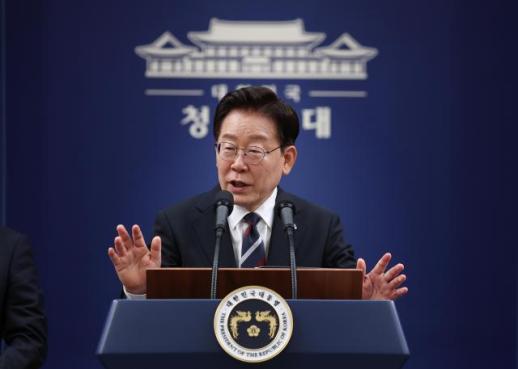 Lee pitches phased North Korean nuclear plan to Trump SEOUL, June 19 (AJP) - Aiming to lower immediate geopolitical pressure on Pyongyang and prevent Washington from enforcing a rigid, all-or-nothing diplomatic denuclearization campaign, President Lee Jae Myung proposed a flexible, phased diplomatic framework to United States President Donald Trump at the Group of Seven summit to manage the North Korean nuclear threat, the South Korean president said during a press briefing on Friday. The proposal comes as North Korea continues to produce fissile materials and enters the final development stages of an intercontinental ballistic missile. President Lee warned that conventional diplomatic containment is no longer viable because treating a nuclear-armed state like a standard non-nuclear adversary risks escalating regional hostility. By seeking a step-by-step approach that allows room for pauses and negotiations, South Korea is attempting to carve out a distinct security strategy separate from past Western models used in the Middle East. This calibrated effort to manage alliance friction coincides with a broader diplomatic push by Seoul to mobilize global arbiters like the Vatican and actively contest European economic barriers. During a press briefing at the presidential Blue House in central Seoul, following his return from a ten-day European tour, the South Korean leader revealed that Trump expressed regret over past international failures to stop Pyongyang before it realistically acquired nuclear weapons. When presented with the step-by-step initiative, Trump responded favorably to the alternative approach. "That could be one way," Trump said, according to the South Korean leader. "I will fully consider it." The first phase of the South Korean framework requires North Korea to cap its current nuclear material production, ban the export of fissile resources, and suspend all intercontinental ballistic missile testing. Lee emphasized to the US president that merely stopping these advancements would provide an immediate security benefit to the international community. Under the proposal, complete denuclearization remains a long-term goal that can be pursued only after mutual security assurances reduce regional threats. However, the South Korean president rejected a direct application of recent American diplomatic templates to the peninsula. "It is clear that it should not be done in the way the Middle East issue was resolved," the South Korean president said. The South Korean leader also sought broader global backing for regional peace during his eight-night tour, meeting with Pope Leo XIV at the Vatican on June 15. Lee Jae-myung requested the pontiff to visit North Korea and the Demilitarized Zone next year during the scheduled World Youth Day in Seoul to help build diplomatic momentum. According to the president, the pontiff responded that he would "actively consider and pursue" the itinerary to support peace initiatives on the Korean peninsula. Lee Jae-myung noted that the interaction reflected heightened international expectations for the global diplomatic role of South Korea. On the economic front, the president addressed trade tensions by relaying the firm opposition of South Korea to shifting European Union steel tariff policies that heavily cut into export quotas. He informed European officials that "such measures must not become a barrier to trade." 2026-06-19 15:44:20
-
 Kookmin undergraduate publishes major robot vision paper SEOUL, June 19 (AJP) - Self-driving cars and robots must accurately understand their physical surroundings to operate safely, making the development of better spatial recognition systems a key focus in modern engineering. Addressing this need, an undergraduate student has led a research team to publish a new paper on artificial intelligence technology that helps machines see blocked objects, Kookmin University said Friday. Conventional visual systems for robots often fail to map an area correctly if a large object blocks the view of things behind it. The newly developed technology solves this problem by using mathematical probability models to calculate and fill in the missing spatial data. This allows the system to build a reliable three-dimensional map of an area regardless of visual obstructions, unlike traditional sensors that rely entirely on a clear and direct view. Kookmin University said that the paper detailing this technology has been accepted for presentation at the 2026 IEEE/RSJ International Conference on Intelligent Robots and Systems (IROS). The research was conducted at the university's Computer Intelligence Lab under the guidance of Professor Lee Seong-won from the School of Electrical Engineering. Undergraduate student Kim Jun-ho served as the lead author of the paper, taking charge of the research design, implementation, and experiments. This marks his second lead-author publication at a major robotics conference. He previously published a paper on visual geometry that was accepted at the IEEE International Conference on Robotics and Automation (ICRA) earlier in 2026. The university noted that having an undergraduate student publish consecutive lead-author papers at major international robotics conferences demonstrates its growing research capabilities in artificial intelligence. "I find it very meaningful that the research I participated in during my undergraduate studies has been recognized at IROS, following ICRA," Kim said. "Based on the experience of conducting the research from design to implementation and experimentation, I want to continue artificial intelligence research that can contribute to actual robots and autonomous driving systems in the future." The newly accepted paper will be formally presented when the IROS conference takes place in Pittsburgh in September 2026. 2026-06-19 14:39:32