

Journalist
Park Sae-jin박세진
swatchsjp@ajupress.com
Assistant EditorForeign embassies in Seoul & Geopolitics, Diplomacy, Policy
Experienced journalist and editor at AJU PRESS specializing in multilingual news. I cover international diplomacy, geolpolitics, and policy, consistently delivering highly accurate, compelling reporting for a worldwide audience.
"Reporting the facts. Shaping the narrative. Every second counts."
Latest by Park Sae-jin
-
 KAIST works on brain-to-robot system for paralysis patients SEOUL, June 25 (AJP) - People with quadriplegia currently depend on clinical settings and human assistance to carry out basic physical tasks. A South Korean research consortium has begun developing a system intended to connect the human brain directly to a full-body robotic exoskeleton and route sensations captured by the robot back to the user's nervous system, the Korea Advanced Institute of Science and Technology said Thursday. Brain-computer interface technology has already reached human clinical trials, with companies including Neuralink and Synchron demonstrating systems that allow users to control cursors or smartphones through neural signals. But those platforms share a critical limitation: development has focused on decoding brain signals without clearly defining what the signals should control or what sensory information should return to the user. The system now in development targets that gap directly, assigning a full-body exoskeleton as the designated control target and establishing simultaneous pathways to relay ground-reaction force, joint torque, and tactile data from the robot back into the user's brain, a fully closed loop that has not been demonstrated anywhere in the world. The project is a flagship initiative under South Korea's multi-ministry advanced medical device research and development program, running from April 2026 to December 2032. It is led by professors Kong Kyoung-chul and Kim Jung at the Korea Advanced Institute of Science and Technology (KAIST) Department of Mechanical Engineering, in consortium with Angel Robotics, a wearable robotics firm founded by Professor Kong. KAIST is designated as the lead research institution for AI signal processing within the consortium. Professor Kong, who led Angel Robotics to back-to-back gold medals at Cybathlon, an international assistive technology competition, will direct the development of the wearable robot control systems and AI-based movement-intent interpretation. His team will also design a somatosensory interface to relay sensory data from the robot to a brain-signal-processing chip. Professor Kim, whose robotic skin research earned him South Korea's Scientist of the Month award, will lead the development of robotic skin capable of registering physical sensations on behalf of a user with paralysis, alongside AI-based systems to decode that sensory information. The core engineering challenge is the development of AI-based encoding and decoding algorithms that translate cortical signals from hundreds of channels into robot commands in real time while simultaneously converting sensory data from the robot back into signals the brain can interpret. This process is all carried out within a closed-loop control structure that must sustain extremely low latency to function reliably. Commercialization will be handled by Angel Robotics, which plans a full-cycle path to market, including regulatory approval from South Korea's Ministry of Food and Drug Safety through to broad distribution. The research team noted that the project's complexity requires safety validation, clinical testing, and regulatory framework development to advance in parallel with core research and that global market entry will additionally require accumulated clinical evidence, risk management systems, neural data protection, and ethical review. "If this technology succeeds, a new rehabilitation paradigm will open where people with quadriplegia can walk on their own in daily life beyond hospitals, pick up objects, and even feel the touch of their fingertips," said KAIST professor Kong. 2026-06-25 16:11:11
-
 KMU forum tells leaders AI era needs more humanity, not less SEOUL, June 25 (AJP) - Kookmin University's Graduate School of Business gathered academics, executives, and coaches in Seoul on June 19 for its third annual Leadership and Coaching Conference, where the central argument was direct: as artificial intelligence takes over more analytical and operational work, the distinctly human dimensions of leadership matter more, not less. The timing reflects a live tension running through South Korean corporate life. According to Microsoft's 2026 Work Trend Index, 78 percent of South Korean office workers who use AI on the job fear falling behind if they cannot adapt quickly, yet only 16 percent say their leaders provide adequate training. A separate survey by Korean recruitment platform WantedLab, published in April 2026, found that 92 percent of office workers already use AI in their daily tasks, while only 5 percent of companies have formally adopted the technology at an organizational level. The conference, titled "Human-AI Co-Evolution," drew more than a dozen speakers across parallel tracks on leadership and coaching. Organizers framed the day not as a technology showcase but as an examination of what human leaders and coaches must do differently as AI handles more of what they once did alone. The keynote was delivered by Lee Byeong-nam, a former president of LG Inwhawon, LG Group's corporate education institute. Lee argued that companies and markets are better understood as ecosystems of interconnected stakeholders than as machines to be optimized. A leader's core function, he said, is to create conditions in which people can develop their potential, grow on their own terms, and produce results rather than simply follow instructions. The leadership track addressed questions of organizational design and the changing role of management. Participants argued that the traditional model of leaders as controllers and resource allocators no longer fits a world where AI agents handle much of the information processing. What emerged was a vision of the leader as an orchestrator, someone who designs the context in which people and AI systems work together, and who enables teams to apply existing skills while simultaneously exploring new possibilities. Speakers used the term "ambidextrous organization development" to describe this dual mandate. The coaching track focused on behavior change and individual performance. Participants converged on the view that genuine change begins not with instruction but with self-awareness and personal accountability. As AI becomes faster at generating answers and solutions, speakers argued, the coach's job grows more distinct: building psychological safety, asking questions that challenge assumptions, and helping people think independently rather than defer to machine output. In the closing session, Kim Na-jeong, a professor at Kookmin University's Graduate School of Business, drew the conference's threads together. She described the core task of leadership and coaching in the AI era as designing what she called a "Think, Feel, Act" environment, one that helps people develop new perspectives, builds the emotional energy required to take on challenges, and connects those insights to concrete actions and repeatable organizational routines. "AI expands intelligence, but leaders must expand humanity," Kim said. "The more AI generates good answers and strategies, the more important it becomes to ask deeper questions grounded in human experience, philosophy, values, and context, and to design environments where meaningful actions can be repeated." 2026-06-25 14:56:28
-
 Kazakhstan signs €100 million deal with Damen to build Caspian shipyard SEOUL, June 25 (AJP) - Kazakhstan and Dutch shipbuilder Damen Shipyards Group signed a framework agreement in Brussels on Tuesday (local time) to develop a €100 million ($113.6 million) shipyard in the Mangystau region, the province home to Kazakhstan's two main Caspian ports, targeting what analysts have consistently identified as the weakest link in the Trans-Caspian International Transport Route. Cargo volumes crossing the Caspian surged more than 63 percent in 2024, reaching 4.1 million tons, an eightfold increase from the 500,000 tons recorded before Russia's invasion of Ukraine, according to the Carnegie Endowment for International Peace. Container traffic climbed a further 36 percent in 2025 to approximately 77,000 twenty-foot containers. The European Union pledged €12 billion to Central Asia's infrastructure development at the 2025 EU-Central Asia Summit in Samarkand and designated the corridor a flagship project under its Global Gateway strategy, the bloc's global infrastructure investment program. Kazakhstan has no meaningful domestic capacity to build the vessels that move cargo across its own sea. The shipyard deal is a direct response to that gap. The Trans-Caspian International Transport Route, known as the Middle Corridor, runs roughly 4,000 kilometers, connecting China's eastern coast to Eastern Europe by rail and sea. Cargo moves by rail across Kazakhstan to the port of Aktau on the Caspian Sea, crosses by ship to Baku in Azerbaijan, then continues by rail through Georgia and Turkey to European markets. At approximately 3,000 kilometers shorter than the route through Russia, transit times run around 15 days, compared with 45 to 55 days for traditional sea shipping. Costs are higher, moving a 40-foot container on the Middle Corridor runs $3,500 to $4,500 against $2,800 to $3,200 via the northern route, but European companies seeking to reduce exposure to Russian transit have broadly accepted that premium. The Caspian crossing is where constraints are sharpest. The sea is landlocked, meaning no vessel can be sailed in from elsewhere in the world. Every ship operating on the Caspian was either built at one of the region's aging facilities or assembled in pieces transported overland. Kazakhstan relies heavily on Azerbaijan's Baku Shipyard for vessel construction and maintenance, adding cost and time to an already complex chain. When cargo demand spikes, as it has repeatedly since 2022, Astana has limited means to respond. The Caspian Sea is also shrinking. Water levels have been dropping by an average of up to 30 centimeters annually since 2020, driven by reduced inflows from Russia's dammed Volga River and accelerating evaporation. Rail tank car ferry transport on the Baku-Kuryk route, one of the main trans-Caspian passages, fell 22 percent as shallowing began to restrict vessel movement. Ports built for a deeper sea now require continuous dredging to stay open. Damen already has a stake in that problem: the company signed a contract with Azerbaijan's Baku Shipyard last year to build a dedicated dredging vessel for Baku's main port. That prior work gives Damen direct knowledge of the Caspian's physical conditions that a new entrant to the region would not have. Founded in 1927 in Gorinchem in the Netherlands, Damen Shipyards Group is one of the world's largest commercial shipbuilders, with a portfolio spanning ferries, tankers, tugs, dredgers, and offshore support vessels. The company has long supplied Caspian operators. Caspian Offshore Construction, a regional client, operates a fleet in which half the vessels are Damen-built. Operating in the Caspian requires vessels with a shallow draft, meaning they sit close to the water's surface and extend only minimally below it, unlike standard ocean ships, engineering choices Damen has already had to make. A local shipyard in Mangystau would let Kazakhstan build, maintain, and expand its Caspian fleet without depending on yards in Baku or further afield. The vessels most immediately needed are ferries, tankers, and support craft, the categories that determine how fast and how much cargo crosses the sea in any given week. The deal was one of more than 30 commercial agreements totaling over €10 billion signed during President Kassym-Jomart Tokayev's official visit to Brussels on June 22 and 23. Tokayev met European Council President Antonio Costa and European Commission President Ursula von der Leyen, and the joint statement issued by all three leaders explicitly highlighted the Trans-Caspian route. The European Investment Bank separately agreed to finance road rehabilitation along the Middle Corridor. The European Bank for Reconstruction and Development signed a transport digitalization agreement with Kazakhstan. "Kazakhstan is a global gateway, and so is Central Asia," von der Leyen said at the summit. "We are ready to turn that gateway into a pathway for jobs, business opportunities, and common prosperity." The agreement carries significant caveats. It is a framework, not a signed contract. The €100 million figure is an estimate, not committed financing. Site selection, permitting, detailed engineering, and financial close all remain ahead. Past Caspian shipyard announcements in Kazakhstan, including a joint project by Italian energy company Eni and Kazakhstan's national oil company KazMunaiGas at Kuryk, which entered planning more than a decade ago, took years to advance and ran into repeated delays. The Middle Corridor faces pressures beyond the Caspian. Georgia's Anaklia deep-water port, widely seen as the most important missing piece of western infrastructure on the route, remained stalled in 2026, with its Chinese developer's commitment in question and state funding sharply reduced. The Baku-Tbilisi-Kars railway, the main land link from Azerbaijan to Turkey, has effectively reached physical capacity. The corridor currently carries roughly 4.1 million tons annually, around six percent of the 100 million tons that once moved along the northern route through Russia. 2026-06-25 14:48:02
-
 World Cup rivals cheer as one in central Seoul SEOUL, June 25 (AJP) - Gwanghwamun Square turned red on Thursday morning. Some 11,000 fans packed the plaza in South Korean football jerseys, scarves around their necks and cheering sticks in hand, their chants filling the air around the iconic statue of King Sejong the great. Among them stood South Africa's ambassador to South Korea, Sindiswa Ntombolimo Mququ, dressed in the green and yellow of her national team, and dozens of South Africans, also wearing their national color, mingling with South Korean supporters. The match took place on June 25, the 76th anniversary of the Korean War. Seoul Mayor Oh Se-hoon made the connection before kick-off. South Africa, he told the crowd, was the first country to send a combat air squadron to the Korean peninsula in 1950, a fact commemorated in the Garden of Gratitude, a memorial park just steps from the square. "The South African team is a wonderful rival on the pitch," he said, "but we must win today. And when South Africa plays well, please give them generous applause and cheers too." The jersey swap had come moments earlier. Oh wore his South Korean uniform kit, Red Devils scarf around his neck, cheering stick in hand, on as fans around them waved Taegukgi, South Korea's national flag, and South African flags side by side across the square. South Africa took all three points. The winning goal came in the 63rd minute. South Korea dominated possession, 69 percent to South Africa's 31, but managed just 2 shots on target. Lee Kang-in came closest in the eighth minute, his effort sliding wide of the post. 2026-06-25 13:46:13
-
 Spiritual Asia (19): How Confucianism became spirit of East Asia This is the nineteenth installment of AJP's Spiritual Asia series exploring the religious traditions, philosophical ideas and moral foundations that have shaped Asia's civilizations. This chapter turns to Zoroastrianism, one of the world's oldest living faiths, and examines how its teachings on truth, free will and moral responsibility continue to resonate in an age increasingly shaped by artificial intelligence. From the teachings of Confucius to the culture of East Asian civilization In the history of humanity, there are not many instances where the ideas of a single person transcended a nation to alter the politics, education, culture, and lifestyles of several countries over thousands of years. The Confucianism of Confucius is a prime example. Beginning amidst the chaos of the Spring and Autumn and Warring States periods in the 5th century BCE, the teachings of Confucius became the governing ideology of the state in the Han Dynasty, were systematized into Neo-Confucianism in the Song Dynasty, and firmly established themselves as the foundation of social ethics, education, administration, and culture through the Goryeo and Joseon periods. Reaching across China and Korea, as well as Japan and Vietnam, Confucianism became the common language of East Asian civilization, and its profound influence remains to this day. However, Confucianism was not the ideology of the state from the very beginning. Confucius spent his life trying to realize his ideal politics but ultimately failed to achieve his ambitions. He traveled to various states preaching kingly rule governed by virtue, but the monarchs of his time were more interested in the competition for hegemony. Even after Confucius passed away, for hundreds of years, Confucianism was merely passed down as the scholarship of his disciples. The decisive turning point was the Han Dynasty of China. In particular, Emperor Wu of Han determined that a unified ideology was necessary to govern the empire stably. At this time, Confucian scholars developed the ideas of Confucius into principles of state operation, and finally, Confucianism was adopted as the official ideology of the nation. The era commonly known as the exclusive veneration of Confucianism had opened. Thereafter, as the civil service examination system for selecting officials was also operated centering on Confucian classics, Confucianism became both a scholarly pursuit and a path to worldly success, growing into an ideology that bound politics and education as one. In this process, Confucianism went beyond simple philosophy to become a complete system of civilization. It demanded benevolence and righteousness in politics, required propriety in administration, and emphasized self-cultivation for the individual, filial piety in the family, and trust in society. It connected the morality of the individual and the order of the state into a single system. Thus, Confucianism is evaluated as a civilizational philosophy practiced in daily life, distinct from Western political philosophy and different from religion. Reaching the Song Dynasty, Confucianism met another massive transformation. Absorbing the influences of Buddhism and Taoism, Neo-Confucianism emerged, equipped with a deeper metaphysics. Explaining principle as the order of the universe and material force as the physical world, Neo-Confucianism attempted to connect the human mind with the order of the cosmos. Scholarship was no longer merely the act of learning knowledge but became an ascetic practice to restore human nature. This current was later transmitted to Korea during the late Goryeo and early Joseon periods. Joseon was a nation that placed Confucianism at the center of state operation, a rare case even in world history. Not only the political system but also education, law, rituals, family life, ancestral rites culture, village codes, academies, and the civil service examination system were operated centering on Confucianism. The king had to rule the people with virtue, officials were required to have integrity and moderation, and the common people took filial piety and propriety as the norms of life. Of course, the Neo-Confucianism of Joseon left behind both light and shadow. On the positive side, it created a world-class zeal for education, civilian rule, a culture of upright officials, the ethics of family communities, and a tradition of respecting scholarship. On the other hand, a climate of excessive adherence to justification, factional strife, the rigidity of the class system, restrictions on women, and an emphasis on formality over reality also appeared. The limitations that can manifest when a single ideology dominates an entire nation were firmly left in history. Nevertheless, Confucianism played a decisive role in forming the spiritual world of East Asians. The traces of Confucianism are still alive in the family culture of the Chinese, the educational zeal of the Koreans, the community consciousness of the Japanese, and the Confucian administrative culture of Vietnam. Even after industrialization, not a few scholars point to Confucian culture as one of the backgrounds that enabled East Asian countries to maintain high educational levels and organizational power. The core of Confucianism, ultimately, is a scholarship that makes a person. The philosophy of Confucius was that to change a country, one must first change the people, and to change the people, one must cultivate the mind. Therefore, the Great Learning spoke of cultivating oneself, regulating the family, governing the state, and bringing peace to the world; the Analects taught the life of a noble person; and Mencius spoke of the innate goodness of human nature. And at the pinnacle of all this Confucianism stands the Doctrine of the Mean. The Doctrine of the Mean is often understood merely as a life that does not lean to one side, but its depth is far greater. The Mean does not speak of compromise. Nor does it mean the middle ground between good and evil. The Mean speaks of the most upright center where the principle of heaven and the human mind become one. A state where emotions are neither excessive nor lacking, a state where desires do not overwhelm reason, a state where self and others, individual and community, reality and ideals achieve balance; that is exactly the Mean. Therefore, the Doctrine of the Mean is also a book of spirituality. It is the process of restoring the original mind within humans, speaking of a life where conscience precedes desire. Confucius emphasized the Mean as the highest virtue that a noble person must practice throughout their life, and later Neo-Confucian scholars also viewed this as the completion of human cultivation. The Korean thinker Daseok Ryu Young-mo also held a special love for the Doctrine of the Mean. Daseok saw that the essence of religion lies not in fighting one another, but in restoring the true center within humans. The Mean as he understood it was not eclecticism but a sense of balance toward truth. It was the path of emptying the mind that rushes to extremes and practicing the will of heaven within one's own life. Thus, Daseok understood the Mean of Confucianism, the Middle Way of Buddhism, the love of Christianity, and the Tao of Laozi as a single truth connecting with one another. His thought that truth is one, but the paths to look upon it are many, also stemmed from this integrative spirituality. Today, even in the age of artificial intelligence, the Mean holds an even greater significance. Technology develops dazzlingly, but human desires are growing alongside it. Information overflows, but wisdom is lacking; connections have multiplied, but trust is weakening. The more we live in an era where extreme politics, fake information, hatred, and division shake the world, the Mean can serve not simply as a classic but as the ethical compass of future society. The reason Confucianism has survived to this day lies here as well. Confucianism was not a philosophy for power, but a philosophy for humans; it was not a scholarship for systems, but a scholarship for people. Though systems may change with the times, that spirit of cultivating the human mind and building communities never grows old. As I conclude this Confucianism trilogy, I bring Confucius to mind once again. He was not an emperor who built an empire, nor was he a patriarch who founded a massive religion. However, as a single teacher, he nurtured the spirit of East Asian civilization over thousands of years. Emphasizing virtue over martial force, character over knowledge, and an upright life over success, his teachings still ask us today. "A civilization that fails to nurture people cannot last long." The true legacy of Confucianism lies not in ancient etiquette or formalities, but in the spirit that builds the person first, cultivates the mind first, and looks back at oneself before changing the world. And in the deepest part of that spirit, the balance of the Mean, the warmth of benevolence, the dignity of propriety, and the practice of self-cultivation are always flowing together. That is the greatest legacy left by Confucius, and the deepest root of spirituality through which East Asian civilization has continued to this day. 2026-06-25 10:49:26
-
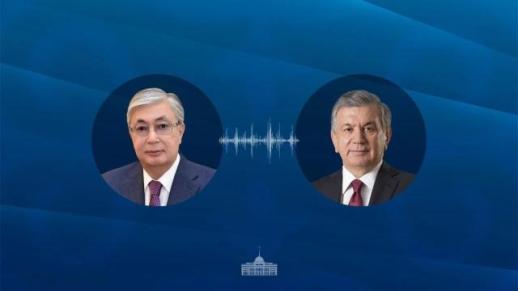 Kazakh and Uzbek leaders discuss strengthening bilateral relations SEOUL, June 25 (AJP) - To strengthen their decades-old close friendship and bilateral relations, the leaders of the two largest countries in Central Asia have engaged in a meeting via a phone call on Wednesday (local time) that extends from their April Bukhara meeting, where strategic cooperation in trade, logistics, and energy sectors was discussed. Kazakhstan's Presidential Office said that the Kazakh President Kassym-Jomart Tokayev and the Uzbek President Shavkat Mirziyoyev spoke on the phone to discuss issues regarding the enhancement of the bilateral cooperation and expressed satisfaction with the development momentum that the Kazakh-Uzbek relations have gained. Built on a shared history and deep mutual trust, the two largest countries in Central Asia are accelerating their partnership to become much closer and stronger. Kazakhstan and Uzbekistan established their modern diplomatic relations in November 1992, and their friendship was fortified by a series of events, including the historic Treaty of State Border Delimitation in 2022. Since 2023, both informal and formal meetings between the leaders have been held frequently, providing opportunities for the Kazakhstan President Kassym-Jomart Topkayev and the Uzbekistan President Shavkat Mirziyoyev to discuss various issues, while working-level engagements also took place on the sidelines of the high-level meetings. Kazakhstan and Uzbekistan, the countries that rely heavily on exports of natural resources such as gas, oil, and mined minerals to make money, are also working fast to transform into modern, technology-driven economies. Astana named 2026 the "Year of Digitalization and Artificial Intelligence," while its neighbor is pushing the "Uzbekistan 2030" plan to bring together online services, digital banking, and tech jobs. In March, Kazakhstan's foreign minister Yermek Kosherbatev met with his Uzbek counterpart Bakhtiyor Saidov in Tashkent and agreed to increase bilateral trade to $ 10 billion by 2030 from last year's $ 5 billion. The two countries also chose cooperation over competition. They have teamed up on big practical projects such as road infrastructure establishment, sharing of water supplies during hot summers, and providing support for businesses that operate across both borders. 2026-06-25 10:14:30
-
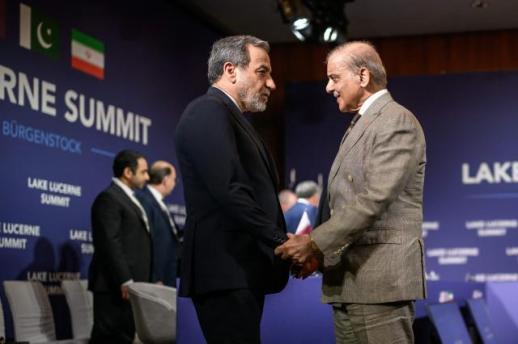 OPINION: Bürgenstock proves Pakistan's new place in world This opinion piece was contributed by Dr. Imran Khalid, a Karachi-based geostrategic analyst and senior fellow at Foreign Policy In Focus - USA. His work centres on international affairs and global security. KARACHI, June 24 (AJP) - Early Monday morning, as Lake Lucerne reflected the first light over the Bürgenstock resort, something unusual happened in the history of American foreign policy. Foreign Minister Abbas Araghchi of Iran declared publicly that "tireless Pakistani and Qatari mediation has delivered major progress to end the Lebanon War." Iran, which has spent decades treating Washington with contempt and suspicion, publicly credited a third country for narrowing the gap. That country was not France, not Germany, not the United Nations. It was Pakistan. The conventional media narrative this week frames the Bürgenstock summit as an American diplomatic triumph. Vice President JD Vance flew to Switzerland, sat across from Iran's parliamentary speaker Mohammad Bagher Ghalibaf, and the two sides agreed to a 60-day roadmap toward a final deal, with nuclear, sanctions, and dispute-resolution working groups to follow. The headline writes itself: Trump delivers where Biden failed. But that reading misses the structural story. The real shift at Bürgenstock was not American leverage. It was Pakistani credibility, built painstakingly over twelve months by two men who spent the past year transforming their country's place in the world: Prime Minister Shehbaz Sharif and Field Marshal Asim Munir. Washington supplied the political weight. Islamabad supplied the trust. Without that combination, there would have been no summit to attend. To understand Bürgenstock, you have to start in May 2025. When India launched Operation Sindoor on May 7, striking targets inside Pakistan and Pakistan-administered Kashmir, the assumption in many capitals was that Islamabad would absorb the blow, absorb the humiliation, and quietly de-escalate. Instead, Pakistan responded with precision in what became a four-day conflict that ended only after US-brokered backchannel diplomacy secured a ceasefire on May 10. Pakistan's National Assembly formally celebrated the outcome as a national victory. General Asim Munir was elevated to the five-star rank of Field Marshal, a distinction last held in Pakistan in the 1960s. The significance was strategic, not ceremonial. Pakistan did not simply emerge from the India conflict intact. As analysts have noted, it emerged emboldened. Field Marshal Munir moved immediately to convert that military credibility into geopolitical currency. He made multiple visits to Washington – including one-one-lunch with President Trump - developing what American officials describe as a direct and trusted line to the White House. In September 2025, Prime Minister Sharif and Field Marshal Munir met President Trump at the White House, signing a mutual defence agreement with Saudi Arabia along the way and repositioning Pakistan as an active, constructive presence in Gulf security architecture. This is the twelve-month arc that produced Bürgenstock. It was not accidental. It was engineered. When the US-Iran conflict began in February 2026 and the world searched for a credible intermediary between Washington and Tehran, the answer was already clear to those who had watched Pakistan's trajectory. Pakistan hosts no US military bases and maintains functional diplomatic ties with Tehran. In a conflict ecosystem where every major power is perceived as partisan, Islamabad occupied the rare middle position: close enough to Washington to carry credibility, trusted enough by Tehran to carry messages. Field Marshal Munir and Prime Minister Sharif worked this channel with relentless discipline. Munir made multiple personal trips to Tehran, sitting across from Iranian President Masoud Pezeshkian and Parliamentary Speaker Mohammad Bagher Ghalibaf. Interior Minister Mohsin Naqvi visited the shrine of Imam Reza in Mashhad hours before the Bürgenstock meeting, a gesture of cultural seriousness that no Western envoy could credibly replicate. Foreign Minister Ishaq Dar shuttled between capitals. The ceasefire that took hold on April 8, 2026, and the subsequent first round of direct talks hosted in Islamabad, were the direct product of this sustained, unglamorous effort. The White House noticed. When a Republican senator attempted to cast doubt on Pakistan's role in May, President Trump was unequivocal: "They're great. I think the Pakistanis have been great. The field marshal and the prime minister of Pakistan have been absolutely great." On May 7, Trump reinforced the point publicly: "Pakistan has been fantastic. And its leaders have been fantastic — the marshal and the prime minister." The White House issued a formal statement confirming that "Prime Minister Shehbaz Sharif and Field Marshal Asim Munir have been helpful mediators, and the United States is grateful for Pakistan's efforts to bring an end to the conflict." At Bürgenstock on Sunday, Vance went further. Speaking publicly at the opening ceremony, he made a personal remark that captured the depth of the working relationship he had built with Field Marshal Munir over the preceding months. "I have joked that I have two very, very important people in my life. An Indian and a Pakistani. The Indian is my wife, and the Pakistani is Field Marshal Munir," Vance said, adding that he had "probably talked to Field Marshal Munir more than anyone else over the last few months." That is not diplomatic courtesy. That is a senior American official publicly confirming that the most consequential back-channel of a major geopolitical crisis ran through a Pakistani general and a Pakistani prime minister. The formal framework for last weekend's talks was the Islamabad Memorandum of Understanding, signed on June 17, 2026, with Prime Minister Sharif as co-signatory representing the mediating party. That framing matters legally and politically. Pakistan is not merely a go-between; it is a named party to the foundational document governing this negotiation. When the summit nearly collapsed Saturday — Israel struck Lebanon, Iran threatened to close the Strait of Hormuz again, and Vance originally cancelled his attendance — the Pakistani team, led by Prime Minister Sharif and Field Marshal Munir, held bilateral sessions with both the American and Iranian delegations through the night, threading through the disagreements that threatened to derail everything. The Pakistan-Qatar joint statement confirmed the outcome: a High Level Committee with political oversight, IAEA inspectors invited back into Iran, oil and petrochemical waivers for Tehran, the lifting of port blockades, and a reconstruction plan. Both sides left the table claiming progress. That is the hardest thing to achieve in any mediation. It is craft, not luck. And it was delivered by the same duo that had spent twelve months building the conditions that made it possible. Pakistan's transformation over the past year carries implications that extend well beyond this one negotiation. Before May 2025, Islamabad was frequently dismissed in Western foreign policy circles as a security liability, a country defined by internal fragility rather than regional ambition. That framing is now empirically obsolete. Pakistan today maintains its strategic partnership with China, sustains functional ties with Iran, operates a mutual defence agreement with Saudi Arabia, and holds a direct working channel to the Trump White House simultaneously. This is the definition of a middle power that has learned to operate across otherwise incompatible geopolitical spheres. Pakistan is fast emerging as a "third pillar" alongside Saudi Arabia and Turkey in southwest Asian security architecture, a shift that was inconceivable before the May 2025 conflict and the diplomatic sprint that followed it. The work is unfinished. Iran's enrichment capacity, the stockpile of highly enriched uranium, the future of Lebanon, the Strait of Hormuz's long-term status, and the sanctions architecture all remain contested. Israel, absent from the talks and explicitly hostile to the accord, retains the ability to disrupt the process at any moment. The High Level Committee and the technical working groups now provide the structure. Pakistan and Qatar provide the trusted channel. Two months from now, if a final agreement takes shape, the world will credit the leaders who signed it. It will not automatically credit the two men who made the signing possible: the Prime Minister who flew to Zurich on a Saturday night and the Field Marshal who had spent months earning the trust of both Washington and Tehran before that flight was ever scheduled. That invisibility is, in some ways, the mark of effective mediation. The mediator succeeds when the principals take the credit. Pakistan, and the Sharif-Munir partnership that built this moment, should take its own. 2026-06-24 16:40:43
-
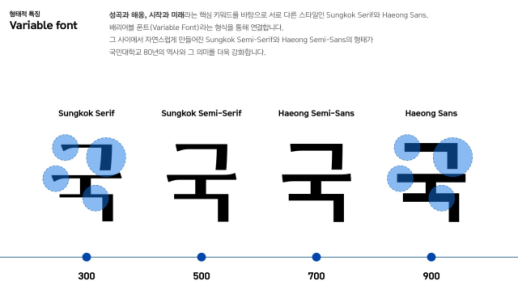 KMU captures 80-year history in free custom fonts SEOUL, June 24 (AJP) - Digital typography acts as the unspoken visual voice of an institution, meaning the subtle shape of a written letter projects an organization's deeper philosophy to anyone reading it. To ensure its eighty-year heritage serves as a living tool for everyday human communication rather than a static monument, a Seoul institution has translated its core identity into two custom digital fonts to be shared with the world, Kookmin University said Wednesday. Conventional corporate fonts force everyday users to choose between two rigid categories: traditional styles with decorative little footings known as serifs, or modern, blocky styles without them. The newly developed typefaces bypass this standard limitation by utilizing a variable font system, allowing a single digital file to transform fluidly between a classic brush-like look and a sharp contemporary layout without requiring users to install dozens of separate style packages. Kookmin University (KMU)'s announcement on June 24 marks the formal public rollout of the visual identity projects tied to the school's upcoming eightieth anniversary. The project, which required roughly one year of research and design, resulted in two distinct font families named "Sungkok" and "Haeong." Each family is engineered to carry a specific half of the institution's historical narrative. Sungkok derives its name from the pen name of Kim Sung-gon, the historic figure who led the university's mid-twentieth-century revival, with letterforms designed to convey traditional institutional roots, sincerity, and a fundamental trust in people. Conversely, Haeong takes its name from Kim Suk-won, Kim Sung-gon's eldest son and the former chairman of SsangYong Group, utilizing a sleek modern aesthetic to represent a spirit of global challenge and technological innovation. Rather than keeping the typefaces as an exclusive institutional asset, KMU released both under a Creative Commons license that permits free public use, provided the original designs remain unmodified. On campus, the fonts will provide a unified look across official anniversary banners, websites, and promotional videos. Outside the gates, the school views the open distribution as a public service, allowing everyday digital writers to utilize the professional-grade typefaces for their own daily work. The human philosophy driving the software was articulated by the academic who led its creation. "This font development was not simply the work of making a new typeface, but a process of organizing the eighty-year history KMU has walked, and the future direction it will move toward, into a single visual language," Professor Park Yoon-jung at the Department of Convergence Design at KMU's Graduate School of Techno Design said. "To naturally capture the meanings held by Sungkok and Haeong within the structure and impression of the typeface from the perspective of the university's spirit and history, we reviewed materials for a long time and refined the draft designs many times," the professor said, adding: "We will continue to develop typefaces that contain the university's history and tradition into cultural assets with public value." The typographic launch anchors a broader institutional strategy titled "KMU VISION 2035: EDGE," an initiative designed to secure a competitive advantage in the higher education sector. The strategy's title operates as an acronym for four stated development pillars -- entrepreneurship, digital transformation, global competence, and environmental, social, and governance standards. The university's leadership emphasized that the typefaces serve as a bridge between the school's heritage and its upcoming decade. "Font development is one of the ten major projects for the eightieth anniversary that looks back on the time KMU has walked and freshly presents the direction to move forward," KMU President Jeong Seung-ryul said. "The development of these unique typefaces will deliver KMU's own identity and vision in a differentiated way and contribute to raising the sense of belonging and pride among our members." Both the Sungkok and Haeong typeface packages are available for free download on the official KMU website. The single-file downloads are formatted to work immediately without requiring the installation of supplementary style packs. 2026-06-24 10:48:28
-
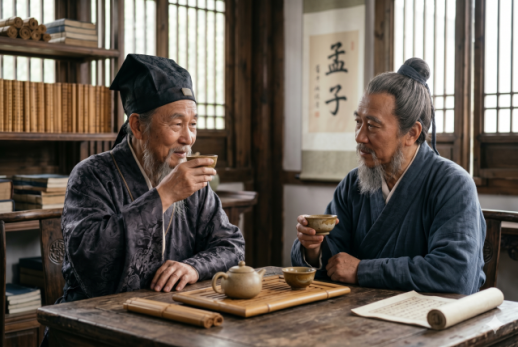 Spiritual Asia (18): Mencius and Xunzi, are humans good or evil? This is the eighteenth installment of AJP's Spiritual Asia series exploring the religious traditions, philosophical ideas and moral foundations that have shaped Asia's civilizations. This chapter turns to Zoroastrianism, one of the world's oldest living faiths, and examines how its teachings on truth, free will and moral responsibility continue to resonate in an age increasingly shaped by artificial intelligence. East Asian Political Philosophy Created by Theories of Human Nature as Good and Evil After Confucius passed away, China entered an even greater upheaval. The order of the Spring and Autumn period collapsed, and the wars of the Warring States period were incessant. Feudal lords vied to conquer the world, and the people suffered amidst war and poverty. People began to ponder how to stabilize the nation and create a humane world. Against this historical backdrop, Confucianism developed beyond a philosophy of personal cultivation into a political philosophy for operating states and organizing society. At the center of this transformation stood two great thinkers, Mencius and Xunzi. If Confucius presented the Tao that humans ought to walk, Mencius and Xunzi posed a more fundamental question: what exactly is a human being? Are humans inherently good, or are they driven by desire? This question was not a simple philosophical debate. An understanding of human nature was an understanding of politics, an understanding of education, and an understanding of how a state should be operated. If humans are inherently good, the role of politics is to help that goodness blossom; if humans are inherently swayed by desire, laws and institutions must control them. Ultimately, the debate between Mencius and Xunzi became the starting point of East Asian political philosophy, leaving a profound impact on the modern philosophies of democracy, the rule of law, education, and management. Mencius was a thinker with deep trust in humanity. He believed that human nature is inherently good. This is the famous theory of original goodness. Mencius explained that if people walking down a road saw a young child about to fall into a well, anyone would feel alarmed and distressed. That feeling does not arise to gain profit or honor. It is a feeling that naturally arises in any human being. Mencius saw that the true essence of human nature is contained within this very heart. He explained that four good sprouts exist within the human mind. The feeling of commiseration, which feels pity for others, is the beginning of benevolence; the feeling of shame and dislike, which feels ashamed of unrighteousness, is the beginning of righteousness; the feeling of deference and compliance, which yields and shows consideration, is the beginning of propriety; and the feeling of right and wrong, which judges right from wrong, is the beginning of wisdom. Mencius called these the Four Sprouts. He believed that everyone is born with these good possibilities and can cultivate them through education and self-discipline. Mencius's philosophy extended to political thought. He viewed the people as the foundation of the state. His famous saying, "Min wei gui, she ji ci zhi, jun wei qing," means that the people are the most precious, the state comes next, and the ruler is the lightest. It is truly remarkable that such an argument emerged 2,500 years ago during an era ruled by absolute monarchs. Mencius valued the hearts of the people over the power of the ruler. He believed that a ruler who lost the support of the people could no longer retain legitimacy. He advocated kingly governance based on virtue over hegemonic governance based on force, asserting that the purpose of politics is to make the people prosperous and comfortable. Mencius's ideas are significantly reflected in the core concepts of modern democracy, such as popular sovereignty, the welfare state, and human dignity. Although institutional democracy developed in the West, the people-oriented philosophy that placing the people at the center of the state was already proposed in the East long ago. In that sense, Mencius can be evaluated not merely as a Confucian scholar, but as one of the pioneers in the history of human political thought. On the other hand, Xunzi viewed humanity more dispassionately. Experiencing the fierce reality of the late Warring States period, he concluded that human nature could not be viewed solely with optimism. Humans are born with desires. They covet wealth, demand power, and prioritize their own interests. He believed that leaving these desires unchecked would inevitably plunge society into chaos. Therefore, he argued that "human nature is evil." This is the theory of original evil. However, Xunzi's theory of original evil should not be understood simply as a doctrine that views humans negatively. The evil Xunzi spoke of does not mean crime or depravity. It is an acknowledgment of the fact that humans are beings driven by desire. It meant that everyone possesses a self-centered tendency, and failing to govern this properly leads to conflict and confusion. Therefore, he argued that what humans need is education and training, and what society needs is laws and institutions. Xunzi especially emphasized the importance of learning. He viewed humans not as complete beings at birth, but as beings that must constantly learn and cultivate themselves. He highlighted the power of acquired education by stating, "If one does not learn, one cannot become a Junzi." This realism of Xunzi heavily influenced the later Legalist thought of China. Han Feizi and Li Si, who transformed the Qin Dynasty into a unified state, are representative figures who absorbed Xunzi's academic influence. If Mencius believed in human conscience, Xunzi believed in the power of institutions. If Mencius was the philosopher of morality, Xunzi was the philosopher of order. An interesting fact is that most successful nations and organizations throughout human history have utilized the philosophies of both Mencius and Xunzi in tandem. A nation that lacks trust in its citizens easily slides into dictatorship, while a nation without laws and institutions easily falls into disorder. The same principle applies to corporations. Members must be respected and trusted, but fair evaluations and clear discipline are simultaneously required. Schools must respect student autonomy while teaching basic norms and responsibilities. Ultimately, a healthy community becomes possible when Mencius's idealism and Xunzi's realism achieve equilibrium. Here we discover another profound dimension of Confucianism. Confucianism did not exclusively assert human goodness nor exclusively assert human evil. Rather, it observed human potential and limitations simultaneously. Mencius saw the hope within humanity, while Xunzi saw the danger within humanity. These two perspectives did not collide, but served as two windows enabling a more multi-dimensional understanding of human existence. The Doctrine of the Mean, one of the core scriptures of Confucianism, emphasizes precisely this spirit of balance. Achieving harmony without leaning toward either extreme is the exact Tao that humans and society should pursue. In fact, the enduring debate between original goodness and original evil ultimately forms one complete picture within the philosophy of the Mean. It brings the realization that humans are beings with good potential yet simultaneously beings with desires, making education and cultivation necessary while making institutions and laws equally necessary. Today we live in an era of artificial intelligence and digital revolution. Technology advances daily and rapidly replaces human capabilities. Yet no matter how much technology develops, fundamental questions about human nature do not disappear. AI can calculate, but it cannot possess a conscience. Algorithms can predict, but they cannot bear moral responsibility. Even if superintelligence emerges, the sustaining force of human society will ultimately remain timeless values such as trust, responsibility, conscience, and moderation. In that regard, Mencius and Xunzi are becoming even more crucial today. Mencius urges us not to lose hope in humanity, while Xunzi warns us to guard against human desire. Mencius emphasizes a warm heart, while Xunzi emphasizes a cool-headed system. And the Doctrine of the Mean teaches us to integrate the two harmoniously. Perhaps the greatest challenge confronting humanity in the 21st century is preserving human dignity amidst technological advancement. The debate between Mencius and Xunzi that began on the Chinese mainland 2,500 years ago is not over yet. It lives on today within our politics, within our education, within corporate management, and within our families and communities. The question of whether humans are good or evil ultimately leads to the question of what kind of human beings we should become. And the most vital teaching Confucianism offers is the conviction that humans can become better beings through ceaseless cultivation and introspection. If Confucius opened the Tao, Mencius planted hope, and Xunzi established order, the spirit of East Asian civilization that blossomed upon that foundation was ultimately human dignity. What matters more than the size of a nation is the dignity of its people; what matters more than technological advancement is human morality; and what matters more than the strength of power is the responsibility of leaders. Mencius and Xunzi were already teaching us this truth 2,500 years ago, a truth that will remain unchanged even in the AI era. 2026-06-24 09:54:37
-
 Korea launches specialized copyright police division SEOUL, June 23 (AJP) - South Korea will launch a permanent law enforcement division on June 30 specifically designed to investigate international copyright infringement and protect its rapidly growing digital export economy. The Ministry of Culture, Sports and Tourism said Tuesday that a cabinet-approved decree officially upgrades its existing anti-piracy task force into the permanent Copyright Special Judicial Police Division, reinforced by eight newly assigned investigators. The overhaul is intended to shield South Korea's flagship cultural exports, which have experienced massive global financial growth over the last five years but face systemic threats from sophisticated online piracy networks. According to market tracking data from the state-backed Korea Creative Content Agency, the global market size for South Korean digital web cartoons, known as webtoons, more than tripled from roughly $3.5 billion in 2020 to an estimated $11.8 billion in early 2026, expanding at an average annual growth rate of nearly 30 percent. The television and drama sector has followed a similar trajectory, expanding into an $11.5 billion global industry over the same five-year period as international streaming hours for South Korean series surged by more than 35 percent, according to figures published by global media trackers. Because overseas criminal syndicates siphon hundreds of millions of dollars from these creative sectors by operating proxy servers outside South Korean jurisdiction, the government is moving to permanently institutionalize its cross-border tracking and asset confiscation mandates. The culture ministry first granted its officials special policing powers for copyright enforcement in 2008 before grouping them into a scientific crime unit in October 2023. Operating under formal intelligence-sharing pacts with the National Police Agency and Interpol, the investigators previously dismantled Noonoo TV, the country's largest illegal streaming site, and arrested illicit broadcast operators running localized syndicates in Indonesia, Vietnam, and the Philippines. Demonstrating the unit's expanding reach, investigators secured the physical extradition of a naturalized Japanese citizen who operated a massive illegal manga-sharing platform earlier this month. The suspect was repatriated from Tokyo to South Korea on June 11 following extensive diplomatic and forensic coordination between South Korean authorities and Japanese law enforcement. Under the expanded structure, the dedicated division will focus on identifying the complete financial and technical architectures of international piracy rings to trace, freeze, and claw back criminal profits. Minister of Culture, Sports and Tourism Choi Hwi-young noted that the previous administrative setup severely compromised operational efficiency, as staff were forced to manage general copyright promotion policy and active criminal pursuits simultaneously. "With this strengthened copyright protection organization, the Ministry of Culture, Sports and Tourism will track down infringers to the very end to eradicate the copyright violations that pose a major obstacle to the development of South Korea's core cultural industry," Choi said. 2026-06-23 17:58:51