

Journalist
Park Sae-jin박세진
swatchsjp@ajupress.com
Assistant EditorForeign embassies in Seoul & Geopolitics, Diplomacy, Policy
Experienced journalist and editor at AJU PRESS specializing in multilingual news. I cover international diplomacy, geolpolitics, and policy, consistently delivering highly accurate, compelling reporting for a worldwide audience.
"Reporting the facts. Shaping the narrative. Every second counts."
Latest by Park Sae-jin
-
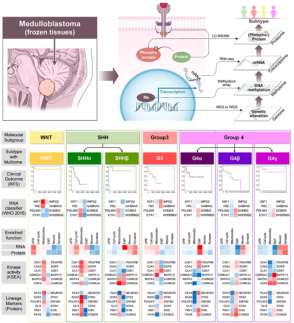 Kookmin team identifies seven medulloblastoma subtypes SEOUL, July 03 (AJP) - A research team led by Kookmin University's Department of Applied Chemistry Professor Kyung-Hee Kim has identified seven distinct molecular subtypes within medulloblastoma, the most common malignant brain tumor in children, a finding that points toward treating the disease with drugs matched to each tumor's specific biology rather than a single standard protocol. The work, conducted with researchers from seven other institutions in South Korea and the United States, expands the four subtypes doctors have used since 2012 to classify medulloblastoma, splitting two of those categories into finer groups that better predict how a tumor will behave. The findings were published in Experimental & Molecular Medicine, a journal under the Nature Portfolio, which Kookmin University said carries an impact factor of 17.5 and ranks in the top one point eight percent of journals in its field. Medulloblastoma is treated today with surgery followed by radiation and chemotherapy, a regimen that can leave lasting side effects in growing children. The bigger problem is what happens after relapse. Kookmin University said patients whose tumors return face a survival outlook that drops sharply, and doctors have lacked a fine-grained enough picture of each tumor's molecular makeup to know which drug might work for which patient. The research team analyzed tumor samples from more than 100 medulloblastoma patients using proteogenomics, a method that layers together five kinds of biological data, the genome, the transcriptome, DNA methylation patterns, the full set of proteins in a cell and the subset of those proteins that carry phosphate tags marking them as active. Combining these layers gives a functional picture of what a tumor is actually doing, not just which genes it carries. Since 2012, doctors have grouped medulloblastoma into four subtypes known as WNT, SHH, Group 3 and Group 4, each defined by different genetic drivers and different survival odds. The team's proteogenomic analysis split the SHH subtype into two groups, SHHα and SHHβ, and divided Group 4 into three, G4α, G4β and G4γ, bringing the total to seven. Patients with the SHHβ and G4γ subtypes showed strong activity in genes tied to neuron formation and had comparatively favorable outcomes, while those with the SHHα, G4α and G4β subtypes carried a higher risk of relapse and disease progression. The team also mapped which protein signaling pathways were switched on in each subtype and identified genes that could serve as drug targets specific to the more aggressive groups. These included CDK1 and CDK2, enzymes that control cell division, PARP, a protein involved in repairing DNA damage, CLK1, which regulates how genetic instructions are spliced together, and MET, a receptor that can drive tumor growth when overactive. Because inhibitors already exist for several of these targets, the researchers said the findings offer a possible starting point for subtype-specific treatment rather than the one-size-fits-all approach now in use. The study was carried out under the National Cancer Center's cancer proteogenomics research program, a long-running initiative that applies the same multi-layered molecular analysis to hard-to-treat cancers. Joining Kim's Kookmin University team were Jong Bae Park of Kyung Hee University, Seung-Ki Kim of Seoul National University Hospital, Jong Hyuk Yoon of the Korea Brain Research Institute, Jason K. Sa of Korea University, Youngwook Kim of the National Cancer Center, Harim Koo of the University of Ulsan, and Antonio Iavarone of Columbia University in the United States. Kim said, in comments translated from Korean, "By comprehensively analyzing cancer proteogenomic data that reflects the actual function of tumors, we have presented a new classification system that allows for a more precise understanding of the molecular diversity of medulloblastoma." She added that the results are expected to serve as foundational data for developing patient-tailored treatment strategies and targeted therapies. 2026-07-03 16:05:09
-
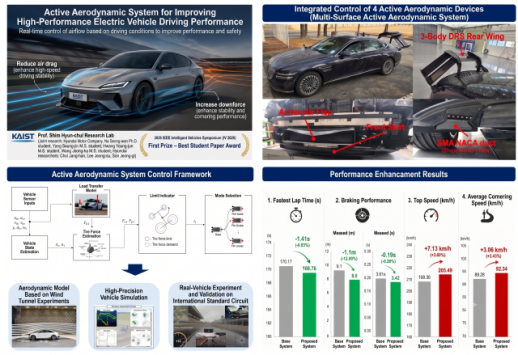 KAIST develops airflow tech for future EVs SEOUL, July 03 (AJP) - A research team at the Korea Advanced Institute of Science and Technology has built a system that adjusts the flow of air around an electric vehicle in real time, adapting to how the car is being driven to improve speed, braking and cornering. The work, developed with support from Hyundai Motor Company, won the top student paper prize at one of the world's leading conferences on intelligent vehicles, a result that signals South Korea's growing reach in the technology shaping the next generation of high-performance cars. According to the Korea Advanced Institute of Science and Technology (KAIST) on Friday, its team, led by Professor Shim Hyun-chul in the Department of Electrical and Electronic Engineering at KAIST, received the First Prize Best Student Paper Award at the IEEE Intelligent Vehicles Symposium (IV 2026), held in Detroit, Michigan, in June this year. KAIST said the paper was one of only about eight and a half percent of accepted submissions chosen for an oral presentation, a session reserved for papers the conference organizers judge strongest, before going on to win the top prize among those presented. The research centers on what engineers call active aerodynamics, technology that automatically adjusts a vehicle's airflow depending on how it is being driven. In fast, high-performance cars, air moving around the body of the vehicle generates downforce, a pressing force that helps tires grip the road and keeps the car stable through turns. But the same shapes that generate downforce also increase drag, which slows a car down and hurts acceleration. Active aerodynamics is designed to resolve that trade-off by changing shape on the fly, cutting drag on straightaways to boost top speed and increasing downforce under braking or cornering to improve grip and stability. Variants of the technology are already used in Formula One racing and in some production supercars, including adjustable wings and spoilers and the overtaking aid known as the Drag Reduction System, or DRS. Most previous research into active aerodynamics has been confined to wind tunnel testing, computer modeling or scaled-down prototypes, KAIST said, with few public studies validating a fully integrated system on an actual production vehicle at a professional racetrack. The KAIST team said its work was different because it moved beyond simulation and tested a complete system on a real car under racing conditions. The system developed by Na Seong-won, a PhD student who served as first author on the paper, combines four separate aerodynamic components into one integrated setup. These include an active air flap and front skirt at the front of the car, a rear wing split into three independently controlled sections functioning as a DRS, and ducts built from shape memory alloy, a material that changes form in response to temperature or electrical signals. Each part can shift the balance of drag, downforce, and side-to-side load distribution depending on driving conditions. To make the system respond automatically, the researchers built a control algorithm that reads a car's speed, steering angle, acceleration, and other real-time data, then selects the aerodynamic setup best suited to the moment, whether that is a straightaway, a hard brake, or a tight corner. The team first modeled the system using wind tunnel data and simulation software, including CarSim, MATLAB, and Simulink, then mounted it on a Genesis G80 Electrified and tested it on the track using a dSPACE MicroAutoBox III real-time control unit and RT3000 GNSS and INS sensors, which track a vehicle's position and motion with high precision. The physical testing took place at the Korea International Circuit in Yeongam, a track built to FIA Grade 1 specification, the highest certification level a circuit can hold and the standard required to host Formula One races. KAIST said testing on a track of that caliber, rather than relying solely on simulation, was central to demonstrating that the technology works under real racing conditions. The results showed the active system outperformed a fixed aerodynamic setup on lap times, braking distance, cornering performance and overall vehicle stability, with the simulation and real-world results lining up consistently. Na has experience with high-speed vehicle control that predates this project. Since 2021, Professor Shim's lab has taken part in the Indy Autonomous Challenge, an international competition for self-driving race cars, and Na has served as team leader of KAIST's entry, called EURECAR, which has driven autonomously at speeds up to 290 kilometers per hour. KAIST said that the background in extreme-speed vehicle control fed directly into the aerodynamic control work. Shim said the recognition reflected years of accumulated experience from high-speed autonomous racing. "I think it is very meaningful that active aerodynamic control technology based on an actual vehicle, drawing on the experience our lab has gained through high-speed autonomous racing competitions such as the Indy Autonomous Challenge, was selected as the best student paper at a top-tier international conference," Shim said, according to KAIST. He added that he expects the research to develop into a core technology that improves both performance and safety in future vehicles, not just high-performance electric cars. The paper, titled "Development of an Active Aerodynamic System for Improving Circuit Driving Performance of High-Performance Electric Vehicles," lists Na as first author, with master's students Yang Seung-jin, Hwang Young-jun and Wang Jeong-ha as co-authors. Three Hyundai researchers, principal researchers Choi Jang-han, Lee Jeong-su and Son Jeong-gi, also contributed to the work. (Reference Information) Journal/Source: IEEE Intelligent Vehicles Symposium (IV 2026) Title: Development of an Active Aerodynamic System for Improving Circuit Driving Performance of High-Performance Electric Vehicles Link: https://drive.google.com/file/d/1H68vDCwL9LJT-aONUHOOTmePxC14phC8/view 2026-07-03 14:42:18
-
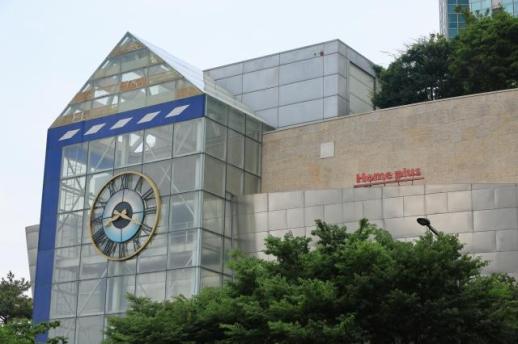 Court terminates Homeplus rehabilitation bid SEOUL, July 03 (AJP) - The Seoul Bankruptcy Court terminated the corporate rehabilitation proceedings of Homeplus on Friday, putting South Korea's second-largest retail chain on a path toward bankruptcy unless a buyer steps forward in the coming weeks. Rehabilitation Division 4 of the court, headed by Jung Jun-young, president of the Seoul Bankruptcy Court, who presided over the case, ruled that the revised restructuring plan Homeplus submitted on June 30 was unlikely to succeed. The plan called for narrowing operations to 67 core hypermarkets to restore profitability, but it offered no concrete way to raise the two hundred billion won, about 130 million dollars, that the company needed to carry out the overhaul. The court had already pushed back the original March deadline to May 4 and then once more to July 3, and it judged that a further extension would serve no purpose. Homeplus is South Korea's second-largest discount retail chain by store count, trailing only E-Mart. Private equity firm MBK Partners has controlled the company since 2015. The retailer filed for court-led rehabilitation, a process similar to Chapter 11 bankruptcy protection in the United States that allows a financially distressed company to keep operating while it restructures its debts under court supervision, on March 4 last year. The filing followed a sudden downgrade of Homeplus's credit rating that left the company unable to roll over short-term debt, and it sent shockwaves through South Korea's retail and financial sectors as a measure the company described at the time as a precautionary step to ease its short-term debt burden. Since entering court protection, Homeplus closed dozens of underperforming stores, sold its Homeplus Express supermarket division to NS Shopping, an affiliate of the Harim Group, and cut its workforce by roughly half through attrition and voluntary retirement. The company's headcount fell 17.4 percent, from 19,924 employees in February last year to 16,450 by this past April. Even so, the restructuring failed to stabilize its finances. Annual revenue dropped 17.1 percent year on year to 5.8 trillion won, or about 3.8 billion dollars, while operating losses jumped 73.9 percent to 546.4 billion won, or roughly 356 million dollars, and the company's debt ratio soared to 2,955 percent. The funding standoff that ultimately sank the rehabilitation plan centered on a dispute between MBK Partners and Meritz Financial Group, Homeplus's largest creditor. MBK asked Meritz to provide the full two hundred billion won in emergency operating funds, while Meritz offered only half that amount and demanded that MBK and its chairman, Kim Byung-ju, put up personal guarantees first. Neither side moved from its position before the court's deadline, even as Homeplus and its labor union jointly warned that bankruptcy would be unavoidable without the funds and appealed directly to the government to intervene. Under South Korean insolvency law, a rehabilitation plan must win court approval within twelve months of the process beginning, though judges may grant up to six additional months for unavoidable delays. Since Homeplus entered rehabilitation on March 4 last year, the statutory deadline would not have expired until September. The court nonetheless chose not to extend the case further, concluding that another delay would not change the outcome. Friday's ruling also lifted the comprehensive injunction that had shielded Homeplus from lawsuits, asset seizures, and auctions by its creditors since the rehabilitation process began. With that protection now gone, creditors are free to pursue individual claims against the company, a step that typically precedes formal bankruptcy proceedings unless a rescue buyer emerges first. 2026-07-03 11:43:39
-
 Turkiye marks 10th anniversary of National Day with events SEOUL, July 02 (AJP) - Turkiye will hold thousands of commemorative events across all 81 provinces and in cities on four continents this month to mark 10 years since a faction of the Turkish military tried to seize power on the night of July 15, 2016. The scale of the campaign reflects how deeply that night is woven into the country's modern identity, remembered less as a crisis than as the moment ordinary citizens stood between their government and a takeover. The Presidency's Directorate of Communications, the government body that manages President Recep Tayyip Erdogan's public messaging and coordinates state media strategy, said in a statement on Wednesday (local time) the anniversary program will include commemoration tents in all 81 provinces, a 253-vessel maritime procession on the Bosphorus, the strait that splits Istanbul between Europe and Asia, and panels held abroad in Berlin, Tirana, Brussels, Sarajevo, Jakarta, Pretoria, The Hague, Bern and Abuja. Burhanettin Duran, the Presidency's head of communications, laid out the plan to reporters in Ankara, describing a National Memory Project built on public and private submissions that has already drawn more than 3,000 entries. The events trace back to a single night. On July 15, 2016, soldiers loyal to a faction inside the Turkish armed forces closed two bridges over the Bosphorus, sent tanks into the streets of Istanbul and Ankara, and bombed the parliament building in the capital. Erdogan, on vacation on the Aegean coast when the coup began, reached the public by calling into CNN Turk on FaceTime and urging citizens to head into the streets and squares. Large numbers answered that call. Some stood in front of tanks. Mosques broadcast the sela, a call to prayer normally reserved for funerals, to pull people outdoors. Within about 24 hours, the coup had collapsed, undone largely by that civilian response rather than by any rival military faction. More than 250 people were killed. Ankara blamed the plot on a network loyal to Fethullah Gulen, a Turkish cleric who had lived in exile in rural Pennsylvania since 1999 and died there last year. Gulen was once a close ally of Erdogan's government, building influence through schools, media outlets and business associations before the alliance broke apart around 2013 amid corruption investigations that touched officials close to the president. The government calls Gulen's network the Fethullahist Terror Organization, usually shortened to FETO, and says it had spent decades placing loyalists inside the military, police, courts and civil service. Gulen denied any role in the coup until his death. What stood out that night, in the government's telling and in much of the country's own memory of it, was that the coup was stopped by people rather than by rival soldiers or foreign intervention. The Republican People's Party (CHP), Turkiye's main secular opposition party, condemned the coup within hours, as did the Peoples' Democratic Party (HDP), which represented Kurdish and other minority interests in parliament at the time and has since been succeeded by the DEM Party. That early, cross-partisan rejection is central to why July 15 is remembered less as a partisan event and more as a moment of national convergence. Duran told reporters the 10th anniversary should be treated as a turning point in how deeply that night is fixed in the country's memory. "We regard 15 July as our nation's resistance, heroism, and victory," he said, framing the events as three overlapping acts of will: Erdogan's decision to call the country into the streets, the public's decision to answer, and the state's institutions moving to defend the government once the coup was underway. The commemorative program leans heavily on state media and public installations. TRT, the Turkish Radio and Television Corporation and the country's public broadcaster, produced a drama series and a television film about the coup along with 19 documentaries, 13 for domestic audiences and six aimed at viewers abroad. Anadolu Agency (AA), the state-run news agency, published a photo and document collection titled "15 July: Witnesses to That Night." In Istanbul, the program includes a Quran recitation at Hagia Sophia with 253 reciters, one for each person the government counts among the dead, and 3D projection shows at the Galata Tower and the Maiden's Tower. Duran said the events are aimed partly at reaching young Turks who were small children or not yet born when the coup happened. Of the more than 3,000 submissions to the National Memory Project, 120 came from applicants between 18 and 35 years old, a figure Duran cited as evidence that a new generation had, in his words, taken ownership of the July 15 victory. In the months after the coup, Turkish authorities also dismissed or detained hundreds of thousands of soldiers, teachers, judges and civil servants suspected of ties to Gulen's network, a process some Western governments criticized as too broad. Ankara has consistently defended the scope of that response as necessary to dismantle a network it says had burrowed into the state for decades. "We will not forget 15 July, nor will we allow it to be forgotten," Duran said. 2026-07-02 17:28:43
-
 Kookmin University claims 8th at Formula SAE SEOUL, July 02 (AJP) - Kookmin University's student-run motorsports club finished eighth overall out of roughly 100 teams at the 2026 Formula SAE Electric world championship, delivering the strongest result in the club's short history with an electric race car built entirely by undergraduates. The competition ran from June 16 to 20 at Michigan International Speedway in Brooklyn, Michigan, the birthplace of Formula SAE and still its largest venue. SAE International, the professional body that oversees engineering standards across the automotive and aerospace industries, organizes the annual event and this year drew roughly 100 university teams from around the world, according to the organization's own registration records. Teams design, build, and race their own electric formula cars, and are scored across categories that test both engineering rigor and on-track performance. Kookmin University's team, called Kookmin Racing (KORA), entered the competition for only the second time. Its car, the F-26, was built around a goal the team described as stability paired with strong performance across every event on the schedule. That balance showed up most clearly in the Endurance Event, which tests how well a car holds up over a long, demanding run. KORA finished third in that category, aided by fast lap times and a car that held its performance steady from start to finish. The team also placed ninth in the Skidpad Event, which measures a car's cornering grip, and 11th in the Autocross Event, a timed run through a tight course designed to test handling and driver control. In the Design Event, where judges evaluate how well a car was engineered, built, and refined, KORA advanced to the final round and finished 12th. Kookmin University, led by President Jeong Seung-ryul, has been building up its automotive and mobility programs as part of a longer-term academic strategy called KMU VISION 2035: EDGE, which names mobility as one of eight fields the university wants to become known for. The KORA program fits squarely into that push. Students on the team handle every stage of building a race car themselves, from initial design through manufacturing, testing, and on-track troubleshooting, giving them hands-on engineering experience before they graduate. Cho Hyun-sung, a fourth-year automotive engineering student who served as project manager for the F-26 team, said the competition gave the team a chance to prove itself on an international stage. "This competition lets us show the world the quality of Kookmin University's automotive engineering program," Cho said, adding: "It was a valuable experience that broadened our perspective and taught us so much. I am grateful to Kookmin University, our sponsor companies, and every teammate who shared this journey with us." Shin Sung-hwan, dean of Kookmin University's College of Automotive Engineering and Mobility and the club's faculty adviser, framed the result as a marker of how far the young program has come. "I am proud of the KORA students, who competed against leading universities from around the world in the electric formula category and earned an eighth-place finish overall only two years after joining the competition," Shin said. The professor added that he was grateful to the university administration for its support and to the students for their dedication, and vowed to continue working to develop talent for the future of the automotive industry. 2026-07-02 13:54:51
-
 China races past Japan, eyes 10 million car exports SEOUL, July 02 (AJP) - China is on pace to export nearly ten million vehicle units this year, according to global consulting firm AlixPartners' 23rd annual Global Automotive Outlook, released June 25. The expected export volume would be a jump from 7.1 million units in 2025, marking the fastest expansion yet for the Chinese automobile industry that, for most of its history, built cars almost entirely for its own drivers. For decades, exports were an afterthought in China's car industry. As recently as 2018, only about three percent of the passenger cars made in the country ever left it, and vehicle exports accounted for less than one percent of China's total export value that year. Throughout the late 2010s, annual exports hovered around one million units, most of them bound for Russia and a handful of other emerging markets. Chinese industry researchers have described the 2009 to 2020 period as a time when carmakers turned inward, not outward, as a fast-growing domestic middle class bought vehicles faster than factories could find buyers abroad. That market trend changed quickly. Exports climbed from roughly one million to two million between 2020 and 2021, then kept accelerating to 3.1 million in 2022, to nearly 5 million in 2023, the year China passed Japan to become the world's largest car exporter, 6.4 million in 2024, and 7.1 million in 2025. If the AlixPartners forecast holds, 2026 would push that trajectory into territory no country has reached before in a single year. Two forces are driving the shift, and both point away from China's home market rather than toward it. The first is domestic overcrowding. China Association of Automobile Manufacturers (CAAM) data show total vehicle sales inside China fell 2.1 percent in May compared with a year earlier, even as new energy vehicle sales, a category covering both battery-electric and plug-in hybrid cars, rose 14.4 percent. Automakers have been cutting prices to hold onto market share in a pattern the industry itself calls involution, a term for competition so intense that companies exhaust themselves fighting over the same customers without growing the overall market. Industry margins in China have been squeezed to around 3.2 percent as a result. The second force is a global one. Oil prices have spiked amid the conflict between the United States and Iran, and the resulting rise in fuel costs has made electric vehicles a more attractive purchase for buyers outside China, particularly in Europe. Morgan Stanley recently raised its 2026 forecast for Chinese EV export growth by 50 percentage points, to 88 percent, citing the energy shock as an offset to soft demand at home. "China's intense local competition and ongoing involution are also expected to drive Chinese automakers to seek growth in new markets," AlixPartners said in its June 25 report. Europe has become the main battleground for that growth. Chinese EV maker BYD's first-quarter sales in Europe more than doubled from a year earlier, Leapmotor's surged more than 800 percent, and a Chery model topped Britain's monthly sales chart for the first time. A pricing agreement between the European Union and China on minimum EV prices, reached in January, has removed some of the uncertainty that had clouded the region for Chinese brands. The export boom has been closely tied to a separate contest playing out between BYD and American EV maker Tesla for the title of the world's top seller of EVs. BYD delivered 557,090 battery-electric vehicles in the second quarter of 2026, according to figures compiled by Bloomberg, while Tesla is expected to report around 396,500 for the same period once it releases official numbers. That reverses the first quarter, when Tesla narrowly reclaimed the lead with 358,023 deliveries against BYD's 310,389, a gap driven mainly by a drop in BYD's domestic sales after Beijing scrapped its EV purchase tax exemption earlier this year. BYD has told analysts it expects overseas sales to reach 1.5 million vehicles in 2026, above its earlier official target of 1.3 million. Chinese automakers are increasingly moving beyond shipping finished cars and building factories overseas instead. AlixPartners forecasts that Chinese brands will boost overseas production to 3.4 million vehicles by 2030, up from 1.2 million last year, with new plants planned in at least sixteen countries. BYD's passenger car plant in Hungary is scheduled to begin mass production in the current quarter, joining existing factories in Thailand and Brazil, with sites in Indonesia and a second European location expected online by April 2026. "It's clear that Chinese automakers and suppliers have even bigger plans in store, starting with more local production," said Andrew Bergbaum, global co-leader of the automotive and industrial practice at AlixPartners. That localization push is already reshaping how global parts suppliers operate. Stephen Dyer, AlixPartners' Asia-Pacific leader for its automotive and industrial practice, said Chinese automakers building or buying capacity abroad tend to bring their own supply base with them. "These Chinese automakers' preference is for their existing supply base, and internal suppliers, to join them abroad," Dyer said, adding that the pattern makes it difficult for traditional suppliers already established in those markets to win new contracts with Chinese customers. BYD's plant in Hungary, once operational, will give the company its fourth overseas manufacturing base after Thailand, Brazil, and a facility already under construction in Indonesia. 2026-07-02 11:03:54
-
 KAIST turns Alzheimer's toxin into treatment switch SEOUL, July 02 (AJP) -Researchers at the Korea Advanced Institute of Science and Technology have developed a drug that activates only inside diseased brain tissue, using a toxic molecule long blamed for worsening Alzheimer's disease as the trigger that switches the treatment on. The molecule is hydrogen peroxide, a reactive form of oxygen that damages cells and builds up at abnormally high levels in the brains of Alzheimer's patients. Scientists have traditionally viewed it purely as a threat to be cleared out. The team behind this study flipped that logic, engineering a drug that stays dormant in healthy tissue and only turns active when it encounters the excess hydrogen peroxide found in a diseased brain. In animal testing, mice treated with the compound showed measurable improvements in memory and navigation, offering an early signal for a new approach to dementia treatment. Korea Advanced Institute of Science and Technology (KAIST) said in a statement on Thursday that the work was led by chemistry professor Lim Mi-hee and carried out jointly with professor Kim Min-geun from Chonnam National University, along with Lee Cheol-ho and Kim Kyung-sim from the Korea Research Institute of Bioscience and Biotechnology (KRIBB), and Lee Young-ho of the Korea Basic Science Institute (KBSI). The drug belongs to a class called prodrugs, compounds with no therapeutic effect on their own that convert into an active medicine only under specific conditions inside the body. In this case, that condition is direct contact with elevated hydrogen peroxide, effectively turning a marker of disease into the key that unlocks treatment. The result is a compound designed to act like a targeted switch, largely inert in healthy brain tissue and activated only where the disease is already underway. The researchers created two prodrug candidates, named BE-1 and BE-2. In tests, both showed little to no reaction in healthy brain conditions. When exposed to the elevated hydrogen peroxide levels typical of a brain affected by dementia, they converted into active compounds called AP-1 and AP-2. That conversion did two things at once. It reduced hydrogen peroxide and related reactive oxygen molecules, and it interfered with amyloid beta, a protein that accumulates in the brain and damages neurons, from clumping into the large, toxic aggregates considered a central driver of Alzheimer's disease. Using advanced analytical techniques, the team confirmed that the activated compounds altered the structural shape of amyloid beta in a way that blocked it from growing into these larger, more damaging clusters. The team then tested the approach in a mouse model of Alzheimer's disease. The drug crossed the blood-brain barrier, the protective membrane that controls which substances from the bloodstream are allowed to reach the brain, and converted into its active form once inside. Mice given the drug over an extended period showed reduced oxidative stress in the hippocampus, the brain region responsible for memory, along with lower buildup of amyloid beta. The animals also performed better on behavioral tests measuring their ability to recognize new objects and find their way through mazes, both standard measures of cognitive function in mouse studies. Most existing Alzheimer's drugs are built to target a single protein. The researchers said their approach is different because it uses the diseased environment itself, rather than one specific molecular target, to determine where and when the drug activates. That design, they said, could increase treatment effectiveness while reducing side effects, since the compound remains inactive in healthy tissue. The team also pointed to potential applications beyond Alzheimer's disease, including Parkinson's disease and other neurodegenerative conditions that involve similar patterns of oxidative stress. Lim Mi-hee, the KAIST chemistry professor who led the research, said in a statement translated from Korean that the significance of the work lies in using hydrogen peroxide, previously treated only as a substance to eliminate, as the signal that activates the drug. She said the technology, which activates medicine only in diseased tissue, is expected to serve as a new platform for treating complex diseases such as Alzheimer's disease more safely and effectively. KAIST doctoral students Lee Ji-min and Hong Eun-seo, both from the university's chemistry department, served as co-first authors of the study. The findings were published online on May 31, 2026, in the journal Small, which ranks in the top 10 percent of chemistry publications by impact factor, under the title "A Prodrug Approach for Activity-Based Chemical Modulation toward Multiple Pathological Targets in Alzheimer's Disease." Reference Information Journal/Source: Small (Impact Factor 12.1, top 10% in chemistry) Title: A Prodrug Approach for Activity-Based Chemical Modulation toward Multiple Pathological Targets in Alzheimer's Disease Link/DOI:10.1002/smll.74013 2026-07-02 10:05:37
-
 Kazakhstan's new constitution opens reform era SEOUL, July 01 (AJP) - Kazakhstan's new Constitution entered into force on Wednesday, replacing the charter that had governed the country since 1995 and marking the culmination of a reform process that began nearly four years ago. President Kassym-Jomart Tokayev, in a statement from the presidential office, called the moment "a truly epochal moment" and the start of what he described as a new era of progress, reform, and modernization. The document was approved by referendum on March 15, when, according to official results, close to eighty-seven percent of voters backed the new charter on a turnout of seventy-three percent, the highest for any national vote in Kazakhstan since 2019. It was the fifth referendum the country has held since gaining independence in 1991, and the third focused on constitutional change since 2022. Tokayev signed the document into law two days after the vote, and it consists of a preamble, eleven sections, and 104 articles. Kazakhstan's first post-Soviet constitution, adopted in 1995 under founding president Nursultan Nazarbayev, established a strong presidency and a two-chamber parliament. That system carried Kazakhstan through three decades of rapid economic growth built largely on oil, gas, and mineral wealth, but it also concentrated decision-making power tightly around the presidency. In 2022, following unrest early that year, Tokayev pushed through a first round of amendments intended to loosen that concentration and expand the space for political competition. The Constitution that took effect this week goes considerably further, touching the bulk of the previous text rather than a narrow set of articles. The most visible change is structural. Kazakhstan's parliament, long split between an upper and lower chamber, becomes a single legislative body called the Kurultai, a term drawn from the historical councils once used across the steppe to deliberate and decide matters collectively. Alongside it, the new Constitution creates a vice presidency, a position that did not exist before, and establishes the Halyk Kenesi, or People's Council, a consultative body meant to bring representatives from ethnic and cultural organizations, local governments, and civil society into the policymaking process. Officials in Astana have framed these changes as tools for faster, more accountable governance, replacing an arrangement that often left responsibility for legislative gridlock unclear. Tokayev linked the reform explicitly to national identity as well as institutional design. He tied Constitution Day, now observed each year on March 15, to the start of the Nauryznama decade, connecting the country's spring renewal traditions to a set of stated civic values, among them Law and Order, Diligence and Progress, and Environmental Care. He described the goal as building what the presidential office calls a "Fair Kazakhstan," a state offering equal opportunity and development to all citizens, and said the country's unity as a nation would allow it to compete among the world's advanced states. That last point, competing among advanced states, is where the reform's significance extends beyond Kazakhstan's borders. A more predictable legal framework, with clearer lines of institutional authority, is precisely the kind of signal that trade partners and foreign investors look for when deciding where to commit long-term capital. And few relationships illustrate what is at stake more clearly than the one Kazakhstan has been building with South Korea. The numbers already tell a growing story. Trade between the two countries passed $3 billion in 2025, and South Korean companies have invested a total of $8 billion in Kazakhstan over the past decade, spanning manufacturing, energy, and mechanical engineering. In June, the eleventh meeting of the Kazakhstan-South Korea Joint Commission on Trade, Economic, and Scientific-Technical Cooperation convened in Astana, where officials from both sides discussed a comprehensive economic partnership agreement still under negotiation. "The sides underscored the importance of the Joint Commission," Kazakhstan's state-operated news agency Qazinform reported citing government officials, adding that both countries confirmed their readiness to deepen the partnership and carry joint initiatives forward. Nuclear energy has become one of the more concrete areas of cooperation. Kazakhstan, which holds the world's largest uranium reserves, has been in talks with South Korean partners over the deployment of small modular reactors (SMRs), a newer generation of nuclear technology built at a fraction of the size of conventional plants, along with workforce training and a memorandum of understanding still being finalized. Deputy Energy Minister Sanzhar Zharkeshov has called energy a cornerstone of the bilateral relationship, and South Korean firms have also been invited to help modernize Kazakhstan's existing power plants under the country's Electric Power Industry Development Plan through 2035. Critical minerals and rare earth metals, materials essential to batteries, electronics, and clean energy technology, featured prominently in the June discussions as well, with both governments exploring joint processing projects. So did the Trans-Caspian International Transport Route, often called the Middle Corridor, a rail and sea network that moves goods from Central Asia across the Caspian Sea toward Europe while bypassing Russian territory. As Kazakhstan continues to build out this corridor, it becomes a more direct link between South Korean industry and European markets, a role few countries in the region are positioned to play. None of this cooperation depends on constitutional reform in a narrow, mechanical sense. But investors and diplomatic partners alike tend to read institutional signals closely, and a government that can point to a rewritten legal foundation, clearer accountability structures, and a stated commitment to the rule of law has an easier case to make at the negotiating table. Tokayev has accepted an invitation to visit Seoul and is expected to take part in the Central Asia-South Korea Summit later this year, a gathering that will bring the region's leaders together with President Lee Jae-myung's government at a moment when Kazakhstan is actively presenting itself as a stable, reform-minded partner. Gabidulla Ospankulov, chairman of Kazakhstan's Investment Committee, described the country's position at a Seoul roundtable in May as Central Asia's largest economy and a transport and logistics hub connecting Asia and Europe. Representatives from Korea Eximbank, Doosan Energy, and other South Korean firms discussed investment opportunities in Kazakhstan directly with the Kazakh delegation, according to the Ministry of Foreign Affairs press service. 2026-07-01 16:52:46
-
 KAIST AI reads mouse gestures as language SEOUL, July 01 (AJP) - A research team at the Korea Advanced Institute of Science and Technology has built an artificial intelligence model that treats an animal's body movements the way a language model treats words, and the system used that approach to find, entirely on its own, the core social deficit in a mouse model of autism. The result points toward a new class of AI tool for brain research, one whose reasoning scientists can actually inspect rather than take on faith. The model, called BehaVERT, outperformed the previous best systems on five international benchmarks covering social interaction, multi-animal behavior, three-dimensional motion analysis and autism-related behavior, according to the research team. It was developed by a group under professor Kim Dae-soo in the Department of Brain and Cognitive Sciences, with Shin Seung-jae as first author, and the findings were published in the International Journal of Computer Vision (IJCV), one of the leading journals in computer vision research, on March 24, 2026. KAIST announced the results on July 1, 2026. Autism spectrum disorder involves a wide range of social and behavioral traits, and researchers have long relied on mutations tied to human cases to build mouse models that mimic those traits in the lab. One such mutation, in a gene called SHANK3, disrupts a protein that anchors connections between brain cells and is linked to roughly 0.5 to 2 percent of autism and intellectual disability cases in humans, according to prior published research. Mice missing this gene show the same pattern seen in some autism patients: their instinct to approach others stays intact, but the quality of their social contact once they get there falls apart. That distinction, subtle and easy to miss with the naked eye, became the test case for what BehaVERT could do. The KAIST team built the model by converting the skeletal movements of a mouse, tracked at the nose, ears, spine, limbs and tail, into tokens, the same kind of basic unit a language model uses to represent a word. Those tokens were then fed into a transformer network built on BERT, an architecture widely used in natural language processing, and trained without being told in advance what any given movement meant. Rather than simply sorting behaviors into preset categories, the researchers said, the model learned to track how the meaning of a movement shifted over time, much as a word's meaning shifts with the sentence around it. When the researchers set BehaVERT loose on a group of mice carrying the Shank3B mutation alongside typical mice, the model zeroed in on one detail: contact between the mouths of two mice during social encounters. It flagged that specific behavior as the clearest marker separating the two groups, a finding that lines up precisely with earlier studies showing that Shank3B mice approach other mice normally but falter in the actual exchange that follows. BehaVERT reached that conclusion without ever being told what autism looks like in a mouse. It found the pattern by watching. The system also lets researchers see its reasoning, rather than simply handing over a verdict. Shin said the project began with a basic question about whether animal movement might carry a structure similar to language. The team trained the model without supplying correct answers in advance, letting it work from behavioral data alone, and found that a version trained on rat movement could be applied successfully to mice as well, a sign that a single model might eventually generalize across species. Kim, the professor who led the study, said BehaVERT goes beyond sorting behavior into categories and can grasp what a behavior actually means. He said the team expects the model to become a core tool for new discoveries across drug development, psychiatric research and behavioral genetics. The KAIST group has built this kind of work before. Kim's lab previously developed AVATAR, a system that reconstructs a mouse's movements in a virtual, three-dimensional space, and spun that technology into a company, Actnova, which now sells automated animal behavior analysis software used in dementia and Parkinson's disease drug research. BehaVERT extends that line of work from tracking motion to interpreting it, a step the researchers describe as a foundation for what they call a behavior foundation model, a general-purpose AI system trainable on one species and adaptable to others. Every author on the BehaVERT paper trained originally in life sciences rather than computer science or engineering, a detail the research team pointed to as evidence that the tools of AI have become accessible enough for biologists to build their own, purpose-built models instead of relying on off-the-shelf systems built for other tasks. "BehaVERT is a new AI model that goes beyond classifying behavior to understanding what that behavior means," Kim said, adding that he expects the tool to drive new discoveries across the life sciences. 2026-07-01 11:22:42
-
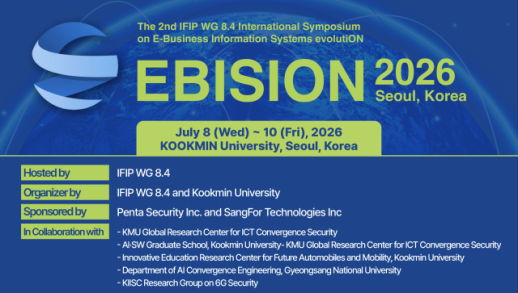 Kookmin University hosts global ICT security symposium SEOUL, July 1 (AJP) - Kookmin University will host researchers and industry officials from 11 countries next week week as the school stages the second International Federation for Information Processing (IFIP) Working Group 8.4 International Symposium, known as EBISION 2026, from July 8 to 10 in Seoul, the university said Tuesday. The conference, held at Kookmin University's main administration building near central Seoul, is the official flagship event of IFIP Working Group 8.4, a research body under the International Federation for Information Processing that focuses on e-business information systems. Delta Electronics, the Taiwan-based power and thermal management company whose annual revenue has climbed past 17 billion dollars on the back of data-center and artificial intelligence demand, will send its chief technology officer, Tei-Wei Kuo, to deliver one of three keynote addresses. The company posted consolidated revenue of NT$554.9 billion in 2025, a 32 percent increase from the previous year, as artificial intelligence-related applications drove exports and investment. Yoo Il-sun, a professor in Kookmin University's Department of Information Security, Cryptology and Mathematics and director of the school's Global ICT Convergence Security Innovation Research Center, serves as general chair of the symposium. The conference will draw participants from South Korea, Denmark, Japan, Taiwan, Hong Kong, Greece, Spain, Thailand, Bangladesh, the Philippines and Indonesia, with foreign researchers making up more than 50 percent of presenters, organizers said. A total of 91 papers will be presented over the three days, including 50 oral presentations and 41 poster sessions, covering e-business, ICT convergence, information security and data-driven digital transformation. Three keynote speakers will open the technical program. Tei-Wei Kuo, a former vice president of National Taiwan University who now serves as chief technology officer at Delta Electronics, will speak on the company's research priorities. Nicola Dragoni, a professor at the Technical University of Denmark who leads cybersecurity research across the Nordic region, will present on threats facing networked systems. Antonio F. Skarmeta, a professor at the University of Murcia in Spain who has led major European Union security projects, will round out the keynote sessions. An invited session will feature Manos Varvarigos, vice president of the National Technical University of Athens, who will discuss next-generation network architecture and security for high-performance computing, the powerful clustered systems used for large-scale scientific and artificial intelligence workloads. Speakers in that session are expected to focus on artificial intelligence-driven digital transformation, cyber threat intelligence, data security and trust-based information sharing, themes organizers describe as central to how digital infrastructure will be defended in the coming years. The conference will also include an industry track, where eight companies will present new technologies and demonstrations. KT, the telecommunications carrier that built much of South Korea's wired and wireless network infrastructure, will present its vision for what it calls a four-layer network security architecture designed for the artificial intelligence and quantum computing era. The session is intended to connect academic research with practical industry applications. Other industry participants include ZenmuTech, a Japanese firm specializing in secret-sharing technology, a method of splitting sensitive data into fragments stored separately so that no single breach can expose the full information. Sangfor Technologies, a Chinese cybersecurity and cloud computing firm founded in 2000 and headquartered in Shenzhen, will also take part. Sangfor operates in cybersecurity, cloud computing and enterprise IT infrastructure and is publicly listed on the Shenzhen Stock Exchange. The company has built a global footprint of more than 70 branch offices and over 100,000 customers while committing at least 20 percent of its annual revenue to research and development. AI Data Brushing, a Taiwanese security technology firm, will also present. Yoo, the general chair, said the symposium brings together people working at the intersection of business and security research. "EBISION 2026 is a venue where researchers and industry experts in e-business information systems and ICT convergence security gather together to discuss the core issues of the future digital environment," Yoo said. "We hope this conference will serve as an opportunity to showcase South Korea's and Kookmin University's global ICT convergence security research capabilities and expand international industry-academic cooperation networks," he added. 2026-06-30 16:22:30