

Journalist
Park Sae-jin박세진
swatchsjp@ajupress.com
Assistant EditorForeign embassies in Seoul & Geopolitics, Diplomacy, Policy
Experienced journalist and editor at AJU PRESS specializing in multilingual news. I cover international diplomacy, geolpolitics, and policy, consistently delivering highly accurate, compelling reporting for a worldwide audience.
"Reporting the facts. Shaping the narrative. Every second counts."
Latest by Park Sae-jin
-
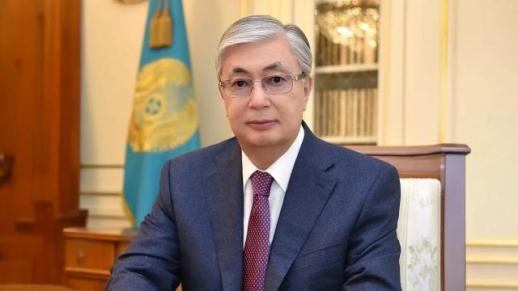 New constitution frames Kazakhstan's Capital City Day SEOUL, July 06 (AJP) - President Kassym-Jomart Tokayev congratulated Kazakhstanis on Capital City Day on Monday, using the holiday message to spotlight the country's new constitution, which entered into force on July 1 and marks the most sweeping overhaul of Kazakhstan's political system since independence. The new charter, which Tokayev calls the People's Constitution, was approved by 87.15 percent of voters in a national referendum on March 15, with turnout of about 73 percent, according to Kazakhstan's Central Referendum Commission. It replaces the 1995 constitution, abolishes the two-chamber parliament in favor of a single 145-seat legislature called the Kurultai, and restores the office of vice president. In his message, carried by the Kazakh state news agency Qazinform, Tokayev tied the constitutional milestone directly to the capital's holiday, calling Astana a symbol of the country's independence and the place where the decisions shaping the nation's destiny are made. "Astana has become a driving force behind major historical developments," Tokayev said. "Our capital has earned the status of a smart city, where advanced governance systems have been introduced." It was symbolic, the president said, that the People's Constitution entered into force on the eve of Capital City Day, an event he described as opening a new and historic chapter for the state and modernizing its key institutions of government and society. Tokayev also pointed to a new Constitutional Law on the Status of the Capital, which he said strengthened Astana's leading role as the country's political, administrative, economic, and cultural center. He noted that new parks, public squares, and children's playgrounds had been built for residents and visitors, and said the city's international standing was growing as it increasingly hosts talks on regional and global issues. The president said the capital was destined to become a vivid example of a new civic ethic built on responsible citizenship, the values of Law and Order, and the Taza Qazaqstan initiative, a nationwide cleanliness and public culture campaign he launched in 2024. He added that he was assured Astana would continue to prosper and remain at the forefront of building a Just Kazakhstan. Astana, formerly known as Akmola and briefly renamed Nur-Sultan between 2019 and 2022 after former president Nursultan Nazarbayev, became Kazakhstan's capital in 1997 when the government moved from Almaty. Capital City Day, marked every July 6, has been a national holiday since 2008. The constitutional transition now moves to its next stage. The outgoing bicameral parliament held its final session on June 30, and elections to the new Kurultai are scheduled for Aug. 23, ahead of a Sept. 1 deadline for the new legislature to convene. 2026-07-06 17:08:15
-
 World Cup fiasco fells Chung Mong-gyu after 13 years atop KFA SEOUL, July 06 (AJP) - South Korean football lost its most powerful figure Monday, eight days after losing its World Cup. Chung Mong-gyu resigned as president of the Korea Football Association, ending 13 years and five months in charge and completing the collapse that had already consumed his hand-picked national team coach, Hong Myung-bo, whose group-stage failure turned him into a national pariah and has now claimed the man who put him there. The scale of the failure explains the speed of the fall. South Korea entered the tournament with what local media called a golden generation, headlined by captain Son Heung-min, in an expanded 48-team format where even a third-place group finish could be enough to advance. The team beat the Czech Republic 2-1, then lost 1-0 to Mexico and 1-0 to South Africa, finishing third in Group A, and its elimination was confirmed on June 28 Korean time when DR Congo beat Uzbekistan 3-1. Hong resigned the next day. Chung lasted one more week. His departure was supposed to look different. Chung, who is also chairman of construction conglomerate HDC Group, submitted his resignation letter after presiding over a final meeting of executives at Korea Football Park in Cheonan, the association said. First elected in January 2013 and re-elected three times, he announced on May 29, two weeks before the tournament began, that he would step down after the World Cup ended on July 19, calling support for the national team his final duty. The elimination pushed him out two weeks early. "All glory and achievements belong to the players and the fans, and all shortcomings and faults are entirely my responsibility," Chung said in a farewell statement translated from Korean. "I now step down from the presidency and return to being a passionate football fan." The fall did not stop with the two men. President Lee Jae Myung wrote on X after the elimination that he was baffled by the exit, blamed personnel decisions that put factionalism and loyalty over competence, and ordered the sports ministry to investigate the national team program. The ruling Democratic Party has been planning a parliamentary hearing into the failure and the management of the Korea Football Association (KFA), and the ministry plans a fresh audit of the federation. A failure years in the making The coach who oversaw the failure was Chung's most contested decision. The KFA appointed Hong in July 2024 after firing German coach Jurgen Klinsmann barely a year into his contract. Hong was not among the two final candidates originally under consideration, and the federation bypassed the final interview and presentation stage before confirming him. The backlash was immediate and came from inside the game. Park Joo-ho, a former national team midfielder who sat on the KFA committee handling the search, said the federation had disregarded proper vetting procedures. Former captain Park Ji-sung and 2002 World Cup veterans Lee Young-pyo and Lee Dong-gook echoed him. The criticism carried extra weight because Hong had failed in the job before. He coached South Korea at the 2014 World Cup in Brazil, where the team also went out in the group stage, and a petition posted on the government's Petition 24 site late last year argued he had already been proven a failure and predicted the tournament would go badly. The state agreed the process was broken. In October 2024, the Ministry of Culture, Sports and Tourism concluded the KFA had breached its own rules in hiring both Hong and Klinsmann, finding that a meeting between Hong and the federation's technical director did not constitute a proper interview, and demanded disciplinary action against Chung and other senior officials. The KFA fought the demand in court, and in April a ruling against the federation found flaws in the appointment process and insufficient board deliberation. The KFA has appealed, and the legal battle was still running when Chung resigned. Betrayed trust Chung survived all of it politically, winning a fourth term in February last year with 85.6 percent of the vote from an electorate of football insiders, on a mandate that ran through 2029. What he could not survive was the public. Many fans had been willing to give Hong a second chance despite 2014. "Although he messed up the 2014 World Cup, I still had huge trust in Hong. People learn from mistakes, you know," Kim Ji-hoon, a 42-year-old office worker living in Seoul, told AJP. "But I was wrong. I took a day off from work to join the supporters at Gwanghwamun Square on June 25, and I disappointed my whole family, who came with me. It was just terrible." Song, a 32-year-old freelancer, shared similar feelings of disappointment. "My hopes were high because this national team was the strongest dream team we have ever had, full of powerful players. I was devastated to see how poorly Hong managed them," Song said, adding: "I think I could have managed the team better than Hong." Banned from entry That disappointment turned into open mockery. On June 26, the day after the South Africa loss, a photo spread across Korean social media showing an A4 notice on a GS25 convenience store door reading "Hong Myung-bo is unacceptable." Within days, near-identical signs were photographed on a donut shop in Daejeon, a pasta restaurant in Seoul's Hongdae district, a Korean beef restaurant in Gimje, a traditional medicine clinic, and the front gates of private homes, according to the Financial News and other Korean outlets. The anger followed Hong across the Pacific. Two days after fans jeered the returning team at Incheon International Airport, where one banner read "Hong Myung-bo! Spit out the money and get out! Dismantle the KFA," Hong flew to Los Angeles to join his family. On July 5, a video circulated on X showing the owner of a Korean restaurant in Los Angeles taping a bilingual version of the sign to his door, the English line reading "Hong Myung Bo (KOREAN HEAD COACH) IS BANNED FROM ENTRY." "I do have something to say, but that story will come out someday," Hong told reporters at Incheon before departing, in remarks translated from Korean. What comes next Chung's exit does not end the reckoning, it opens the succession. Under the KFA's articles, one of the federation's four vice presidents will serve as acting president after confirmation by the Korean Sport and Olympic Committee, and federation bylaws require an election for a new president within two months of the vacancy. 2026-07-06 15:58:02
-
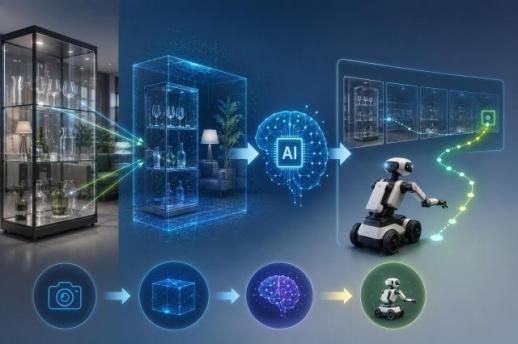 Korean researchers build future-predicting AI SEOUL, July 06 (AJP) - Artificial intelligence that can see through a window, judge how light bounces off a surface, and think a step ahead before acting, arrived this week from a Korea Advanced Institute of Science and Technology research team. The four new technologies, unveiled together, push AI systems beyond recognizing what is in an image and toward understanding and reacting to the physical world the way a person does, a shift researchers call "physical AI." The work matters because it targets a problem that has held back self-driving cars, humanoid robots, and other machines meant to operate in real spaces. Those systems still struggle with basic physical realities like glass, changing light, and unfamiliar surroundings. The four papers were accepted at two of the field's most competitive conferences, the International Conference on Learning Representations (ICLR) 2026 and the Conference on Computer Vision and Pattern Recognition (CVPR) 2026, two as oral presentations and two as highlight papers, a distinction reserved for standout research. KAIST said the oral presentations ranked among the top 1.13 percent of ICLR submissions and the top 0.8 percent of CVPR submissions. The Korea Advanced Institute of Science and Technology (KAIST)'s Yoon Sung-eui, a professor in the School of Computing, led the research. KAIST said Monday that the four projects connect into a single technical chain, an AI system that sees, understands what it is looking at, predicts what happens next, and plans its own actions accordingly. The first technology, called GLINT, tackles a problem that has quietly frustrated computer vision for years: glass. People instinctively separate what they see reflected in a window from what lies beyond it. Most AI systems cannot make that distinction, and they process both as a single, confusing image. Yoon's team built GLINT to split the reflection from the transmitted scene, allowing the AI to correctly interpret spaces filled with windows, mirrors, or other transparent surfaces. The paper, "GLINT: Modeling Scene-Scale Transparency via Gaussian Radiance Transport," was presented orally at CVPR 2026 on June 5. The second technology, RadioGS, focuses on light itself. The same object looks different in sunlight than it does under indoor lighting, and that variation has long thrown off AI vision systems. RadioGS trains an AI to understand how light reflects off and scatters across a surface, so it can recognize an object's true material and surroundings even as the surrounding lighting changes. The paper, "Radiometrically Consistent Gaussian Surfels for Inverse Rendering," was presented orally at ICLR 2026 on April 23. The third technology, called Visual-RRT, gives robots a way to navigate using only a photograph. Conventional robots need exact coordinates to find their way somewhere. Visual-RRT instead lets a robot compare what it currently sees with a single target image and figure out its own path there. In physical tests, the robot reached its destination successfully using nothing more than that one photo, a result the team said could apply to service robots and self-driving delivery robots alike. The paper, "Visual-RRT: Finding Paths toward Visual-Goals via Differentiable Rendering," was selected as a CVPR 2026 highlight paper on March 27. The fourth technology, CLaD, addresses planning. Before people act, they tend to think a step ahead, asking what will happen if they move a certain way. CLaD gives AI systems the same habit, having them forecast the likely outcome of an action before choosing the best one to take. KAIST said the approach lets AI complete tasks with a higher success rate even in complex environments, which the team expects to make it a core technology for the next generation of autonomous robots. The paper, "CLaD: Planning with Grounded Foresight via Cross-Modal Latent Dynamics," was also selected as a CVPR 2026 highlight paper. Yoon said the four results mark a shift in what AI is capable of. "This research shows that AI is evolving beyond simply seeing with its eyes, toward understanding the real world and predicting what will happen next in order to decide its own actions," he said. "We hope this achievement contributes to the advancement of physical AI technologies that operate in real environments, including self-driving cars and humanoid robots." (Reference Information)\ Journal/Source: Conference on Computer Vision and Pattern Recognition 2026 Title: GLINT: Modeling Scene-Scale Transparency via Gaussian Radiance Transport Link/DOI: https://arxiv.org/abs/2603.26181 Journal/Source: International Conference on Learning Representations 2026 Title: Radiometrically Consistent Gaussian Surfels for Inverse Rendering Link/DOI: https://arxiv.org/abs/2603.01491 Journal/Source: Conference on Computer Vision and Pattern Recognition 2026 Title: Visual-RRT: Finding Paths toward Visual-Goals via Differentiable Rendering Link/DOI: https://arxiv.org/abs/2604.16388 Journal/Source: Conference on Computer Vision and Pattern Recognition 2026 Title: CLaD: Planning with Grounded Foresight via Cross-Modal Latent Dynamics Link/DOI: https://arxiv.org/abs/2603.29409 2026-07-06 14:03:29
-
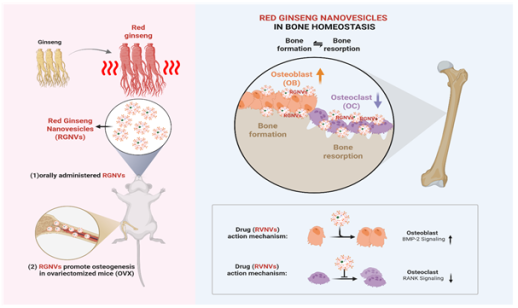 Sookmyung scientists find bone benefit in ginseng SEOUL, July 06 (AJP) - Mice with weakened bones got stronger after being fed particles extracted from red ginseng, according to a new study out of Sookmyung Women's University. The finding is early, but it gives South Korean researchers a concrete lead on turning the country's best-known health root into an actual osteoporosis drug. The particles are called red ginseng-derived nanovesicles, or RGNVs. Think of them as microscopic delivery pouches, roughly 200 nanometers wide, wrapped in a fatty double membrane and stuffed with ginsenosides, the active compounds that give ginseng its reputation. There are functional proteins in there too. The researchers checked the particles under an electron microscope and ran nanoparticle tracking to confirm what they had. Bone health comes down to a constant tug-of-war. Osteoblasts lay down new bone. Osteoclasts break down old bones. When a person loses estrogen, as happens at menopause, the osteoclasts start winning, and bone density drops. That is osteoporosis. In lab tests, the ginseng nanovesicles tipped the fight the other way, pushing osteoblasts to build while dialing back osteoclast activity. To see if that held up in a living animal, the team removed the ovaries of mice to replicate postmenopausal bone loss, then fed some of them RGNVs. Those mice lost less bone overall. Their thigh bones came back denser, the spongy internal bone structure looked healthier under the microscope, and blood tests showed lower levels of the markers that signal active bone breakdown. Professors Mun Se-hwan and Yang Young at Sookmyung Women's University's Department of Biological Sciences led the work. Cho Young-eun of Gyeongkuk National University (GKNU) also contributed. The paper ran in June 2026 in the Asian Journal of Pharmaceutical Sciences, a journal with an impact factor of 12.6. Ginseng has been used in Korean medicine for centuries, mostly on faith and tradition. What this study adds is a mechanism, a specific set of nanoscale particles doing a specific job in bone cells, the kind of detail a drug developer could actually work with. Mun said: "Through joint research that included bone microstructure analysis and histological evaluation in an osteoporosis animal model, we confirmed the actual bone-protective effect of RGNVs. We expect this study to become a foundation for developing natural-product-based nanobio materials for the prevention and treatment of bone diseases." (Reference Information) Journal/Source: Asian Journal of Pharmaceutical Sciences (IF 12.6, JCR top 1.9%) Title: Red ginseng-derived nanovesicles to modulate osteoblast and osteoclastogenesis for osteoporosis therapy Link/DOI: https://doi.org/10.1016/j.ajps.2026.101168 2026-07-06 13:42:33
-
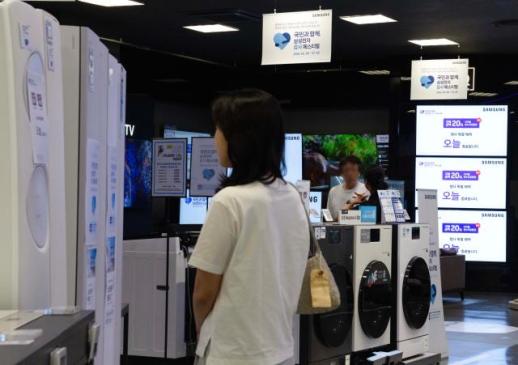 Samsung rebate festival nets $1.3 billion in sales SEOUL, July 05 (AJP) - Samsung Electronics' monthlong "Gratitude Festival" promotion generated an estimated 2 trillion won, about $1.3 billion, in device sales before the event ended July 5, according to industry estimates, a haul that is expected to lift the company's consumer electronics division in its upcoming second-quarter earnings. The estimate is based on the value of digital Onnuri gift certificates Samsung issued during the campaign, which industry sources put at approximately 400 billion won ($261.4 million). Onnuri certificates are government-backed vouchers that can be spent only at traditional markets and small local merchants, a mechanism designed to route large-company spending toward small businesses. Since the promotion refunded 20 percent of each purchase in certificates, the total certificate value implies roughly 2 trillion won in underlying sales. The scale of the rush was visible on the ground. At a mobile phone store near Wangsimni Station in central Seoul that typically sees one or two customers waiting at a time, about 20 people were in line the day before the promotion closed, with five staff members working to process purchases and registrations. "The number of customers usually goes up and down, but this week has been unusually busy," said an employee in his 40s at the store. "It got so crowded when we were taking customers as they came in that we switched to reservations only." Asked what was driving the surge, he said, "I think it is because of the Samsung Gratitude Festival." Samsung launched the "Gratitude Festival, Together with the People" campaign on June 8 to share the results of its recent performance with consumers, refunding 20 percent of purchase amounts in digital Onnuri certificates on Samsung products bought during the event. The company funded the rebates using profits from its Device Solutions (DS) division, the semiconductor business that has posted strong results in recent quarters, according to industry sources. Samsung said visits to its Samsung Store retail locations nationwide rose an average of 75 percent compared with the same period last year, with some stores seeing foot traffic double. Traffic to Samsung's own e-commerce site, Samsung.com, climbed more than 200 percent over the same stretch. Smartphones, washing machines, refrigerators, televisions, and air conditioners were the most popular purchases during the event. The Bespoke AI Steam robot vacuum, a device often bought by newlyweds furnishing a first home, drew particular interest because customers who purchased it through a subscription plan received both the 20 percent certificate rebate and up to twelve months of subsidized subscription fees. Samsung also reported that customers buying multiple appliances together frequently opted into its AI Subscription Club, a financing program that spreads out the upfront cost of large purchases, with new subscription sign-ups tripling compared with the period before the event began. The sales bump is expected to matter most for Samsung's Device Experience (DX) division, the unit that houses the company's consumer electronics and mobile businesses, because most of the estimated 2 trillion won in transactions took place in June and will be booked in second-quarter results. Within DX, the Digital Appliances and Visual Display (DA and VD) businesses, which rely heavily on domestic sales, stand to benefit most, while the Mobile eXperience (MX) division, whose revenue depends primarily on overseas markets, is likely to see a smaller effect. The timing comes as Samsung's appliance and television businesses work through a prolonged stretch of weak global demand. The DA and VD businesses posted a combined annual operating loss of roughly 200 billion won, about $130.7 million, last year before returning to profitability in the first quarter of 2026 with operating income of about 200 billion won on revenue of 14.3 trillion won, or roughly $9.35 billion. Market forecasts had placed second-quarter revenue for the businesses at around 14 trillion won, or about $9.15 billion, before the Gratitude Festival figures emerged, and some in the industry now expect the final total to come in above that forecast. 2026-07-05 16:32:09
-
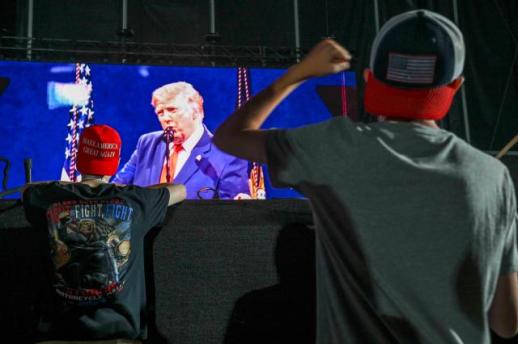 Trump targets domestic left in July 4 anniversary speech SEOUL, July 05 (AJP) - United States President Donald Trump used the country's 250th Independence Day address on July 4 (local time) to brand domestic political opponents as communists, in remarks that major American news outlets compared to the anti-communist hysteria of the 1950s. Speaking at the National Mall in Washington after a two-hour weather delay caused by severe thunderstorms, Trump returned repeatedly to communism across a roughly 40-minute address, framing the November midterm elections as a contest between American values and an ideology he said posed an existential threat to the republic. The National Mall speech followed a similar address the previous evening at Mount Rushmore in South Dakota, where Trump had called communism a "mortal threat to American liberty." The language evoked the Red Scare of the 1950s, when alleged communists were persecuted and blacklisted from jobs across America, from Washington to Hollywood. What set Trump's remarks apart from Cold War-era presidential rhetoric was the target. Where presidents from Eisenhower to Reagan pointed at the Soviet Union as the communist threat, Trump pointed inward, at elected American politicians and a domestic political movement gaining ground in his own country. The backdrop is a string of recent primary victories by democratic socialist candidates. New York City elected Zohran Mamdani, a democratic socialist, as mayor earlier this year, and similar candidates have won primaries in Colorado and Texas. Trump said there is now "a resurgence of the communist menace in our land, including from newcomers to our country who embrace ideas totally opposed to our way of life," calling communism "the enemy of the Constitution." At the National Mall, he reached for a starker image. "Our warriors did not fight communism on battlefields across the world, only to have that menace rear its ugly head right back here in America. We're not going to let it happen," he said. "It's like a cancer, you've got to cut it out." Those warriors were on the stage with him. Trump thanked "veterans of the war on communism," including Marine Corporal Pat Finn and Private First Class Rudy Meekins, who fought in the Battle of Chosin Reservoir during the Korean War. The Battle of Chosin Reservoir, fought in the bitter winter of November and December 1950, saw United States and United Nations forces encircled and nearly overwhelmed by Chinese People's Volunteer Army troops in the mountains of northeastern Korea. The Marines who broke out of that encirclement are among the most decorated in the history of the Corps. For South Korea, the battle is not a historical footnote. It was fought on Korean soil, and the Chinese intervention it represented extended the war by nearly three years. "Because of heroes like these, our flag will always be a symbol of liberty and justice for all," Trump said. The occasion itself made the tone remarkable. Independence Day addresses have traditionally served as moments of national unity, with presidents of both parties setting aside partisan conflict in favor of shared history. The Associated Press assessed that Trump mixed partisan politics and patriotic appeals in a manner unusual for an Independence Day address, and NPR noted the speeches marked a departure from the typically unifying tone past presidents like Gerald Ford and Ronald Reagan had set on the holiday. Trump also used the address to push for passage of the SAVE America Act, his proposed election overhaul requiring voter identification and proof of citizenship at the polls and prohibiting mail-in ballots in most circumstances. The bill faces an uncertain path in Congress. The celebrations unfolded under punishing conditions. Temperatures reached a record 103 degrees Fahrenheit in Washington, an all-time high for July 4, with 160 million Americans under extreme weather warnings according to the National Weather Service. The thunderstorms that delayed Trump's address also forced thousands of attendees to evacuate the Mall and be rescreened by security before returning. In New York, Mamdani delivered his own Independence Day address without mentioning Trump by name. "Those ideals upon which our nation was built are strong enough to endure any authoritarian regime, but only if we reach for them," he said. 2026-07-05 15:04:41
-
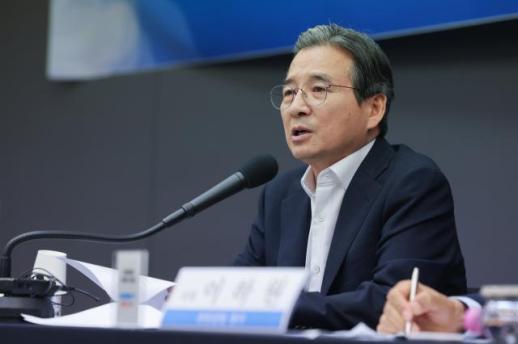 Blue House policy chief calls AI production revolution SEOUL, July 05 (AJP) - Kim Yong-beom, director of the Blue House policy office, said Sunday that artificial intelligence represents a production revolution rather than a technology one, and that national power in the AI era will be decided by a country's ability to organize production systems rather than by technological strength alone. Kim made the remarks in a Facebook post on July 5, giving the clearest articulation yet of the governing philosophy behind South Korea's most ambitious industrial push in a generation. His statement comes less than a week after President Lee Jae Myung unveiled the Three Mega Projects at a June 29 briefing at the Blue House, a sweeping program covering semiconductors, AI data centers, and physical AI, anchored by a pledge of 800 trillion won ($522.8 billion) in corporate investment over the coming decade. Kim leads the policy office responsible for designing that program. "If the internet was a revolution of information, AI is a revolution of production," Kim wrote in the post. "If the winners of the internet era were companies that owned platforms, the winners of the AI era are likely to be nations that own production systems." He argued that what is scarce in the age of AI is not technology but productive capacity, and that competition has moved beyond companies to become a contest between states. The Three Mega Projects are the most concrete expression of that contest South Korea has mounted. For semiconductors, Samsung Electronics and SK hynix have each pledged 400 trillion won to build new fabrication facilities in southwestern Jeolla Province, creating what the government describes as a second major chip cluster alongside the existing base in the Seoul metropolitan area. Samsung will invest 56 trillion won in high-bandwidth memory fabs in Cheonan and Onyang. SK hynix will complete its fourth Yongin fab by 2033, twelve years earlier than its previous 2045 target. The Chungcheong region is set to receive an 81 trillion won advanced packaging hub. The announcement marked the government's answer to what industry and policymakers have long identified as a strategic vulnerability. South Korea's semiconductor base, home to more than 40 percent of global memory chip output, has been concentrated in the capital region, leaving it exposed to power and water constraints that could limit further expansion. Spreading production to the southwest also addressed a political calculation. The Jeolla and Gyeongsang regions have historically competed for industrial investment, and the announcement was calibrated to signal that the Lee administration intended to benefit. Kim's Facebook post supplied the ideological frame that the June 29 briefing left largely implicit. He described three roles the state must now play -- connecting the fruits of production back into production, building production infrastructure, and reproducing productive capacity across generations. Data centers cannot operate without power grids, he wrote. Semiconductors cannot be produced without water. Physical AI cannot function in the real world without manufacturing, logistics, and urban infrastructure. "Companies can build AI," he said in the post, "but building power grids, developing industrial sites, and organizing supply chains is the work of the state." He also addressed the distributional question that critics of large-scale industrial policy tend to raise first. "Welfare is not an institution on the opposite side of production," he wrote. "Welfare is an investment that connects the surplus profit created by the production revolution to the productive capacity and social trust of the next generation. Production is the precondition for distribution, and good distribution makes greater production possible again. The state is the entity that designs that virtuous cycle." The framing is directed as much outward as inward. South Korea's semiconductor companies are simultaneously navigating pressure from Washington to expand their American manufacturing footprint, a tension the Jeolla announcement has sharpened. Samsung has committed $37 billion to a foundry complex in Taylor, Texas, scheduled to begin production in the second half of 2026, and SK hynix has committed $3.87 billion to an advanced packaging facility in West Lafayette, Indiana. Both companies are weighing whether those commitments will be enough to satisfy the Trump administration, which has threatened 100 percent tariffs on chips made outside the United States. Kim made no direct reference to that pressure. His post closed by returning to the historical register he opened with. "The AI production revolution will make the nation that has organized the best production system the center of the next era," he wrote. "South Korea is now standing on that historical turning point." 2026-07-05 12:19:21
-
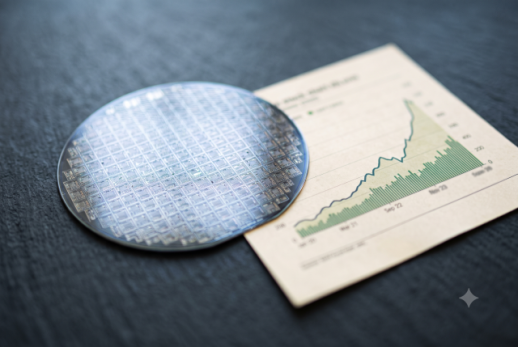 US tariff threat looms over Samsung, SK hynix expansion SEOUL, July 05 (AJP) - South Korea's top chipmakers, Samsung Electronics and SK hynix, are bracing for renewed pressure from Washington to expand their United States manufacturing footprint, days after the two chipmakers committed 800 trillion won, about $522.8 billion, to a sweeping expansion of South Korea's domestic semiconductor base. Industry sources said Sunday that both companies are weighing how to respond to what they expect will be a fresh push from the administration of United States President Donald Trump, which has used the threat of tariffs to press foreign chipmakers into building on American soil. The concern is that the scale of the Korean announcement, unveiled at a June 29 briefing by President Lee Jae Myung, will invite comparison with the more modest sums the two firms have committed to United States projects. The lever is a familiar one. In August 2025, Trump said he would impose a tariff of approximately 100 percent on chips and semiconductors, with an exemption for companies building in the United States. The measure has not taken effect, but neither has it been formally withdrawn, leaving it available as a bargaining tool. Memory producers without American fabs would be the most exposed, a category that includes Samsung and SK hynix. Samsung's largest United States project is in Taylor, Texas, a 37 billion dollar complex built around 2-nanometer foundry production. The company held an equipment move-in ceremony at the Taylor fab in April, closing a nearly two-year delay on the facility Samsung broke ground on in late 2022, and the plant is scheduled to begin operations in the second half of 2026. A Tesla contract signed in July 2025, worth 16.5 billion dollars, runs through 2033 and covers AI5 and AI6 autonomous-driving processors. SK hynix has committed an estimated 3.87 billion dollars to build an advanced packaging and research facility in West Lafayette, Indiana, its first production site in the United States, dedicated to high bandwidth memory for artificial intelligence products. Mass production is expected in the second half of 2028. The smaller footprint leaves the company more exposed to Washington's demands, and the timing sharpens the point. SK hynix plans to begin trading American depositary receipts on the Nasdaq on July 10, raising up to 29.65 billion dollars through 17.79 million new shares in what would be one of the largest United States listings of the year. Landing that debut smoothly gives the company an added reason to avoid friction with the Trump administration. Both companies are expected to accelerate rather than reopen their United States plans. For Samsung, that could mean firming up a second Taylor fab already contemplated on the same campus. For SK hynix, industry sources said the question is whether to add memory production in the United States alongside the Indiana packaging base. The domestic drive that triggered the pressure is on a different scale. Under the June 29 plan, Samsung will invest 400 trillion won in new fabs in the southwestern city of Gwangju and 56 trillion won in high bandwidth memory fabs in Cheonan and Onyang, while SK hynix will invest 400 trillion won in a new production base in the southwest and complete its fourth Yongin fab by 2033, twelve years earlier than the previous 2045 target. The plan is the semiconductor pillar of what the government calls the Three Mega Projects, alongside physical artificial intelligence and AI data centers. An industry official said the companies were navigating two demands at once. "Samsung and SK have to keep pace with the government's regional development drive while also weathering the pressure from the United States to expand investment there," the official said. "With the midterm elections approaching, the Trump administration is expected to push harder on local investment, and we are watching closely." 2026-07-05 10:44:25
-
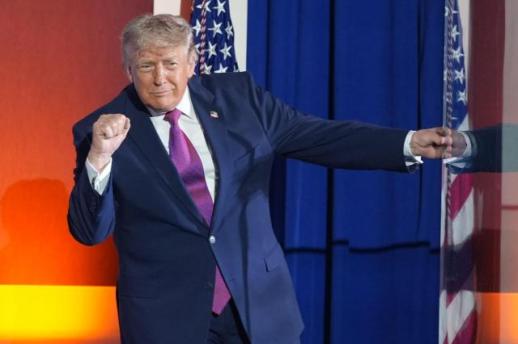 Trump filings show Coupang trades amid scandal SEOUL, July 05 (AJP) - United States President Donald Trump bought and sold shares of Coupang, the most-popular ecommerce service operator in South Korea, in the months surrounding the e-commerce giant's massive data breach, according to financial disclosure reports filed with the U.S. Office of Government Ethics. Three reports released in May and this month show 18 trades in Coupang Inc. shares between October 9 last year and May 22, conducted through two investment accounts run by money managers. The filings suggest Trump likely holds Coupang shares worth up to $130,000 on the books. The annual report, released Tuesday by the U.S. Office of Government Ethics (OGE), runs 927 pages and lists transaction values in ranges rather than exact figures, as is standard for such filings. The trades themselves are modest by the standards of a portfolio that includes multimillion-dollar positions in technology giants. What draws attention is the calendar. The transactions bracket the key moments of a scandal that has grown from a corporate security failure into a diplomatic dispute between Seoul and Washington. According to the filings, Trump purchased Coupang shares on October 9, in two transactions worth between 1,001 and 15,000 dollars and between 50,001 and 100,000 dollars, followed by a smaller purchase on October 16. Sales came on October 16, November 10 and November 17. Coupang says it detected unauthorized access to customer data on November 18, one day after the last of those sales. The company initially estimated about 4,500 affected accounts before further review showed the breach may have exposed personal information of as many as 33.7 million customers, more than half of South Korea's population. Trump then bought back in on December 11, with purchases worth between 1,001 and 15,000 dollars and between 50,001 and 100,000 dollars, and added more shares on December 18. By that point, parliamentary hearings in Seoul over the breach were drawing notice in Washington. This year, he purchased shares valued between 100,001 and 250,000 dollars in February before selling in May, a period during which the stock slid from around 18 dollars to the 15-dollar range. The disclosed returns appear to be minimal. His 2025 filing showed he earned nothing or only small amounts through the Coupang trades, and this year's positions may have produced a loss. Coupang is no ordinary foreign stock in an American portfolio. Founded in 2010 by Kim Bom-suk, known in the United States as Bom Kim, the company began as a Groupon-style deals site before rebuilding itself around its own warehouses and delivery fleet. Its Rocket Delivery service, launched in 2014, promised overnight or next-day shipping nationwide, with orders placed by midnight arriving the following day. That promise, unusual even by the standards of American e-commerce, made the company a fixture of daily life in South Korea. The COVID-19 pandemic turned that fixture into a lifeline. With much of the country avoiding stores, office workers and homebound families came to rely on Coupang for groceries, household staples and nearly everything else, delivered to the door before breakfast. The surge carried the company to a New York Stock Exchange debut in March 2021, raising more than 4.5 billion dollars in the largest United States listing by a South Korean company. It also concentrated an enormous share of the nation's personal data, including names, addresses and door entry codes, in a single firm, which is why the breach cut so deep. There is no indication the trades were directed by the president personally. The White House has said Trump's assets are held in a trust managed by his children. Presidents are not prohibited from holding or trading stocks while in office, but they are required to report their transactions. The timing lands in a charged moment. A House Judiciary Committee staff report and a White House official recently criticized South Korea's investigations into the breach as discriminatory, and South Korea's Personal Information Protection Commission fined Coupang a record 624.7 billion won ($408.3 million)in June, citing internal management failures rather than an outside attack. Seoul's foreign ministry has expressed regret over the House report, saying it reflects only Coupang's side of the story. Coupang, whose parent company is incorporated in the United States and listed on the New York Stock Exchange, has spent more than $ 1 million on lobbying in Washington since the scandal erupted in November, including efforts involving the White House and Congress, according to Lobbying Disclosure Act reports. 2026-07-05 10:22:07
-
 Samsung, SK, Hanwha, Hyundai bet $194 bln on southeastern Korea SEOUL, July 03 (AJP) - South Korea's ambition to build a "Chip Republic" expanded well beyond semiconductors on Friday, as four of the country's largest conglomerates pledged a combined 297 trillion won ($194.3 billion) to build artificial intelligence data centers, robot factories, defense systems and aerospace infrastructure across Korea's southeastern province of Gyeongsang. SK Telecom pledged the largest share at 140 trillion won, followed by Samsung at 60 trillion won, Hanwha at 55 trillion won, and Hyundai Motor Group at 42 trillion won. The announcements came at a state-backed investment briefing in Jinju, South Gyeongsang Province. The pledges build on a broader blueprint President Lee Jae Myung unveiled on June 29, when Samsung Electronics and SK hynix committed to an 800 trillion-won semiconductor expansion initiative centered on four new fabrication plants in Jeolla Province, an advanced packaging hub in the central Chungcheong region, and a supply chain cluster in Gyeongsang Province. Friday's briefing filled in that Gyeongsang piece and expanded it out to sectors including AI data centers, robotics, defense technology, and aerospace across a region that has long been the heart of South Korea's heavy industry. SK Telecom presented the most infrastructure-focused blueprint, framing Ulsan as the starting point for what it called Asia's largest AI infrastructure hub. The company will build a 100-megawatt hyperscale data center in the city by the fourth quarter of 2027, then scale up toward five gigawatts of AI data center capacity nationwide starting in 2029 and 15 gigawatts over the medium to long term, backed by about 140 trillion won, including foreign capital it is still working to attract. "The core elements of AI data center infrastructure are semiconductors, energy solutions, and the capability to build and operate data centers," said Jung Jae-heon, president of SK Telecom. "SK not only possesses all of these capabilities but already has experience building and operating AI data centers." Samsung Electronics, together with Samsung SDI, Samsung Electro-Mechanics and Samsung Heavy Industries, pledged 60 trillion won toward what it called a global Physical AI innovation cluster, spanning humanoid robot manufacturing in Gumi, solid-state batteries in Ulsan, AI server components in Busan and high-value vessels in Geoje. "To overcome the slowdown in our existing manufacturing growth engines, we will pursue an AI-driven factory in Gumi by building a humanoid mass-production system and carrying out a manufacturing AI transformation," said Roh Tae-moon, Samsung Electronics' chief executive and head of its DX division. Hanwha pledged 55 trillion won through 2040 for space and AI, aiming to build what Vice Chairman Kim Dong-kwan called integrated space infrastructure spanning independent launch vehicles, satellite networks and a defense AI data center in Changwon. "Securing space sovereignty starts with developing an independent launch vehicle," Kim said, adding that South Korea "can leap into becoming a country with world-class defense AI, not simply a country strong in hardware alone." Hyundai Motor Group pledged 42 trillion won over the next 10 years to convert its Ulsan plant, the world's largest single automobile factory, into a base for AI-based highly autonomous vehicles built toward Level 4 autonomy, the threshold for robotaxi service, while expanding into aerospace and energy projects across the region. "By making additional investments in new business areas in Gyeongsang Province, the origin of Hyundai Motor Group, we will cultivate it into a core hub for future advanced industries," said Vice Chairman Jang Jae-hoon. 2026-07-03 17:26:16