

Journalist
Park Sae-jin박세진
swatchsjp@ajupress.com
Assistant EditorForeign embassies in Seoul & Geopolitics, Diplomacy, Policy
Experienced journalist and editor at AJU PRESS specializing in multilingual news. I cover international diplomacy, geolpolitics, and policy, consistently delivering highly accurate, compelling reporting for a worldwide audience.
"Reporting the facts. Shaping the narrative. Every second counts."
Latest by Park Sae-jin
-
 Istanbul purrs with beloved cats SEOUL, July 20 (AJP) - They sleep on the warm hoods of parked taxis and in the display windows of carpet shops. They wait outside fish restaurants with the patience of regulars. They stroll into mosques, curl up on prayer rugs, and no one moves them. In Istanbul, a city of some 16 million people, the cats behave less like strays and more like citizens who happen to have four legs, and the city, for the most part, treats them accordingly. Nobody knows exactly how many there are. Estimates run from more than a hundred thousand to well beyond, and any count would be out of date by morning. What is certain is that they are everywhere, and that they have been for a very long time. The story begins, as so many Istanbul stories do, at the water. For more than two thousand years, first as Byzantium, then Constantinople, then Istanbul, the city sat at the meeting point of the Mediterranean, the Black Sea, Europe, and Asia, one of the busiest crossroads of trade in the world. Ships arrived loaded with grain, and grain drew rats, and rats made a ship's cat as essential a crew member as a navigator. When the ships docked, some of the cats went ashore to explore the quays and never reported back for duty. The city, full of granaries, markets, and wooden houses that sheltered rodents by the thousand, gave them every reason to stay. They were not pets. They were workers, and Istanbul had endless work. Faith gave the arrangement its warmth. In Islamic tradition, cats are regarded as clean animals, permitted to wander freely where dogs are often kept at a distance, and stories of kindness toward them run deep. One of the most prolific narrators of the Prophet Muhammad's sayings is known to history as Abu Hurairah, literally "father of the kitten," a nickname earned from the small cat he carried with him. A beloved tale holds that the Prophet once cut off his sleeve rather than wake the cat sleeping on it. The story's origins are hazy, and scholars debate its authenticity, but its power was never really about the paperwork. It taught generations of Muslims that disturbing a sleeping cat was something even a prophet would not do. Ottoman Istanbul turned that sentiment into institutions. Residents endowed charitable foundations to feed street animals. Vendors known as mancaci walked the streets selling scraps of offal and liver so that passersby could buy a portion and feed the neighborhood cats in the name of God, an early form of subscription-based animal welfare. Sultan Abdulhamid II, who ruled from 1876 to 1909, kept well over a thousand cats at Yildiz Palace. European travelers wrote home, sometimes charmed and sometimes baffled, about a city that fed its animals as a matter of routine piety. That habit never died. It modernized. Today, the care of Istanbul's street cats is a shared enterprise between the government and roughly everyone else. District municipalities run veterinary clinics and mobile units that sterilize, vaccinate, tag, and release street animals, a policy anchored in Türkiye's 2004 animal protection law, which required that strays be returned to where they were found after treatment. Feeding stations and small wooden cat houses, some municipal, some built by residents on their own initiative, appear on sidewalks and in parks, often freshly stocked. Solar-powered vending machines developed by a Turkish company dispense kibble and water when someone deposits a plastic bottle for recycling, a contraption that pays for the food with the value of the recovered plastic. The animals learned where the machines stood and began waiting beside them. But the infrastructure is only half the system. The other half is habit, distributed across millions of people. The fishmonger who sets aside trimmings. The office worker who keeps a bag of dry food in a desk drawer. The shopkeeper who lets a tabby claim the cash counter as her personal territory because the customers like her and, frankly, so does he. Water bowls appear outside apartment buildings each summer without anyone organizing them. Feeding the cats is not charity in Istanbul so much as etiquette. The result is a species that lives in the seam between wild and owned. Istanbul's cats belong to no one and to everyone. They have names, usually several, one per street they patrol. They have favorite ferries and preferred pews. For years, a cross-eyed cat named Gli lived inside Hagia Sophia itself, dozing beside the imperial door through the building's years as a museum and into its reconversion to a mosque, photographed by presidents and tourists alike until she died in 2020. When a portly street cat named Tombili died in 2016, her neighborhood in Kadikoy erected a bronze statue of her in her signature pose, reclining against a step like a retiree watching traffic. Tens of thousands had signed the petition. It is tempting to leave the story there, sun-warmed and purring. But the compact between Türkiye and its street animals has been under real strain, and the cats came closer to the edge of it than most visitors realize. In July 2024, Türkiye's parliament passed a law requiring municipalities to remove stray dogs from the streets and hold them in shelters, with euthanasia permitted for animals that are terminally ill, in pain, or judged a danger to people. The government, citing an estimated four million stray dogs nationwide and a series of attacks, some involving children, framed the measure as overdue public safety. Opponents called it the "massacre law." Animal welfare groups pointed out that the country's shelters had capacity for only a fraction of the dogs the law ordered off the streets, and warned that cash-strapped municipalities might find euthanasia cheaper than care. Tens of thousands protested in Istanbul and other cities. In late 2025, the Constitutional Court rejected the main opposition party's bid to annul the law, ruling that animals are not subjects of rights under the constitution. Several judges dissented, arguing the law contradicted values of compassion toward animals rooted in the same Islamic legal tradition that had sheltered Istanbul's strays for centuries. The cats were spared, but narrowly. An early draft of the bill included them. The article was removed after public outcry, before the law reached its final vote. So the cats of Istanbul remain where they have always been, on the steps and the windowsills and the warm stones of the mosque courtyards, protected by fifteen centuries of habit and, for now, by a single deleted clause. A 55-year-old juice stall owner near Hagia Sophia, who declined to give his name, said the animals were woven into the life of the city itself. "We consider cats as our family and neighbors. Their elegance and companionship bring us joy and happiness. Istanbul will never be the same without them," he said. 2026-07-20 09:58:34
-
 Ten years on, Türkiye's fallen answer roll call ANKARA, July 15 (AJP) - The name of a dead man rang out over a sunbaked park in Ankara on Wednesday, and thousands of voices answered for him. "Burada!" the crowd shouted. Here. Present. Another name followed, and another answer. It went on 253 times, once for each person killed on the night of July 15, 2016, when a faction of the Turkish military tried to seize the state and the public walked into gunfire to stop it. To a foreign ear, the word sounded uncannily like "brother," and for several minutes, it felt as if the crowd was claiming kinship with the dead. A Turkish official seated nearby corrected me. The word means "here," she explained. When the names of martyrs are read aloud in Türkiye, the living answer the roll call on their behalf. The dead are not absent. They are present. That conviction, that the fallen of July 15 remain on duty, was the emotional engine of the ceremony held Wednesday at Baskent Millet Bahcesi, a vast public park in central Ankara, to mark the 10th anniversary of the failed coup. The government has designated the date July 15 Democracy and National Unity Day, and this year's program carried the theme "The Will Is Ours, The Victory Is Ours." The coup attempt began on the evening of July 15, 2016, when rogue military units seized bridges in Istanbul, sent tanks into the streets and bombed government buildings in Ankara, including the parliament and the police headquarters. President Recep Tayyip Erdogan, vacationing on the Aegean coast, escaped an assassination attempt and called on citizens by video link to resist. They did, in numbers that stunned the plotters. Civilians lay down in front of tanks and stormed occupied installations. By morning the coup had collapsed. The night left 253 people dead and 2,737 wounded, figures the state has since enshrined as a national epic. Ankara blames the network of Fethullah Gulen, a US-based cleric whose followers had spent decades embedding themselves in the military, police and judiciary. The government designates the movement the Gulenist Terror Organization, or FETO. Gulen, who denied involvement, died in Pennsylvania in October 2024. The choice of venue on Wednesday was not incidental. The park, opened in 2023 on the grounds of the capital's old hippodrome, sits directly across the road from the Ankara Provincial Police Directorate, one of the buildings pounded by tanks, helicopters and F-16s on the night of the coup. Erdogan pointed to it from the stage. "The Ankara Provincial Police Department building right across from us became the target of tanks, helicopters and F-16s," he said. "In these attacks, seven police officers and six civilians, a total of 13 heroes, marched to martyrdom in front of the Ankara Police Department." In Ankara alone, he said, 149 people were killed that night and 1,508 wounded. The ceremony unfolded under a hard July sun. Attendees entered through a park gate, crossed a stretch of grass and gathered on a broad asphalt clearing where heat rose visibly from the ground. The crowd numbered in the thousands and spanned generations: elderly men and women who lived through the night itself, parents with children on their shoulders, and kids who were not yet born in 2016 shouting "Burada!" with everyone else, answering for the dead of a night they never saw. The stage carried its own history lesson, flanked on one side by soldiers bearing the flags of the 16 Turkish states of history and on the other by guards in Ottoman janissary dress. From a seat some 30 meters away, Erdogan was close enough to watch, but the crowd stretched back far beyond the reach of any single pair of eyes. The sound carried everything. After the roll call came prayer. Tayyib Hos, imam of the Bestepe Millet Mosque at the Presidential Complex, recited verses from the Quran in the melodic style familiar from mosque loudspeakers across the Muslim world. Safi Arpagus, head of Türkiye's Directorate of Religious Affairs, then led a prayer for the fallen. Thousands of people raised their hands, palms open to the sky, in the Muslim posture of supplication. Then Erdogan spoke, and he spoke less like a head of state than like a man reading letters from the dead. He told the crowd about Varol Tosun, a police officer killed outside the headquarters across the road. "His wife would sometimes ask him, are you not afraid of anything? Our martyr would answer his wife like our Master Hamza: I fear nothing that my eyes can see." He told them about Omer Ipek, who left his house that night knowing what was coming. "As he left the house that night, he told his older sister, I want to leave a beautiful country for my children," Erdogan said. "To his father, he said, I am going to become a martyr, my children are entrusted to you." He told them about Volkan Canoz, killed at 29, and Muhammed Oguz Kilinc, a police officer's son who died at 26. "I have countless memories of that night for every single one of our 253 martyrs and 2,737 veterans," Erdogan said. "If we tried to tell them one by one, believe me, our hearts could not bear it." The president framed the night of the coup as a resurrection of the spirit of Türkiye's War of Independence a century earlier, and the plotters as instruments of foreign powers. "That night, against the Hashashin gang serving imperialism, we said, just as we did a century ago," he declared, before reciting lines from the national poet Mehmet Akif Ersoy: "I have lived free since the beginning and will live free. What madman will put me in chains?" He reserved his harshest language for the plotters themselves, calling those who have betrayed the nation throughout history "a herd of mankurts," invoking a Central Asian literary figure of a slave stripped of memory and identity. "They are sellouts who dagger their state and nation in the back for the sake of worldly interests," he said. The speech was also a message to the present. Erdogan credited the endurance of his governing coalition, the People's Alliance with the Nationalist Movement Party, whose leader Devlet Bahceli he greeted from the stage, with keeping the country safe from a repeat. "I believe that, by Allah's leave, as long as the People's Alliance remains strong, Turkey will no longer experience dark times," he said. "As long as this nation remains awake, locked together, and protects its unity and solidarity, no one will be able to chain its will." Critics at home and abroad have long noted that the decade since the coup also brought sweeping purges, with tens of thousands of soldiers, police officers, judges and teachers dismissed or jailed over alleged Gulenist ties, and a broad concentration of presidential power. None of that shadow reached the park on Wednesday. What filled the asphalt clearing instead was grief organized into ritual, a state liturgy in which the dead are summoned by name and the living answer for them. Erdogan closed with a warning drawn from the coup night itself, quoting a man who faced down soldiers on Istanbul's Fatih Sultan Mehmet Bridge. "A person dies only once. But they die like a man," he said. "Our state has the power to eliminate any threat directed at it, and to crush the heads of the traitors who try to raise them. Everyone should make their calculations and keep their books accordingly." 2026-07-16 06:26:39
-
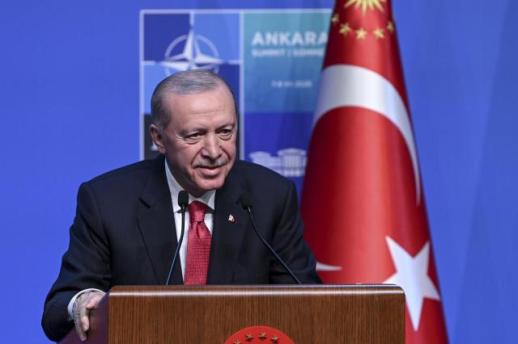 Erdoğan calls July 15 resistance unparalleled in democratic history SEOUL, July 15 (AJP) - Turkish President Recep Tayyip Erdoğan said the popular resistance that defeated the July 15, 2016 coup attempt stands unmatched in the history of world democracy, crediting the nation's willingness to die for its independence with powering Türkiye's rise as a global actor over the past decade. "The Turkish nation's prudence, courage, and foresight on the night of 15 July are also unprecedented in the history of world democracy," Erdoğan said in a written statement marking the 10th anniversary of the failed coup, released Wednesday. The statement comes as Türkiye holds commemorations in all 81 provinces and at its diplomatic missions abroad for Democracy and National Unity Day, the national observance established after the events of 2016. On the night of July 15 that year, a faction within the Turkish military attempted to seize power, bombing the parliament in Ankara and deploying tanks onto the Bosphorus bridge in Istanbul. Erdoğan, speaking by video call on a news anchor's phone, urged citizens into the streets. Crowds surrounded military units and climbed onto tanks, and the coup collapsed before dawn. At least 251 people were killed and more than 2,000 wounded; official commemorations now honor 253 victims, a figure Erdoğan cited in his statement. Ankara attributes the attempt to the network of Fethullah Gülen, a cleric who lived in self-imposed exile in Pennsylvania from 1999 until his death in October 2024 and who denied involvement until the end. The Turkish government designates the network a terrorist organization, calling it the Fethullahist Terrorist Organization, or FETÖ. The years after the coup attempt saw tens of thousands of soldiers, judges, prosecutors, teachers, and civil servants dismissed or detained in one of the largest purges in the republic's history, a crackdown Western governments criticized for its scale. In his statement, Erdoğan described the attempt as "far more than a conventional coup attempt" and called it "an all-out act of invasion directed against our country's independence." He said the resistance of that night underpins Türkiye's current international standing. "If Türkiye is now regarded as a country whose contribution is sought, whose word carries weight, and who is consulted on regional and global matters, behind this success lies the will of our august nation, who stood up for their independence and future at the cost of their lives on the night of 15 July," he said. The president pointed to the decade's gains in the defense, aviation, and space industries under the National Technology Move, naming the TOGG electric car, the KAAN fighter jet, national corvettes, and Turkish drones among the country's globally recognized products. Erdoğan also warned that FETÖ remains active despite what he described as an accelerating internal disintegration of its overseas network over the past two years, and accused unnamed countries of covertly supporting the organization and harboring its members. "Our primary expectation from the global community is to support Türkiye's legitimate struggle," he said. "Global peace, security, and prosperity can only be achieved through a resolute and uncompromising fight against terrorist organisations without any distinction and through sincere cooperation." The full text of the statement follows. "Resistance of 15 July is unparalleled in the history of world democracy" One of the most brutal coup attempts in Türkiye's political history took place exactly ten years ago, on 15 July 2016. Orchestrated by a terrorist network that had insidiously infiltrated the institutions of our state, this coup attempt sought to plunge Türkiye into years of chaos and subjugate the future of our nation. By standing up for their independence and future to confront the coup plotters, our august nation asserted to the entire world through their heroic resistance that the will of the people can never be subjugated on these lands. Undoubtedly, the Turkish nation's prudence, courage, and foresight on the night of 15 July are also unprecedented in the history of world democracy. This treacherous insurrection by the Fetullahist Terrorist Organisation (FETO) was far more than a conventional coup attempt; it was an all-out act of invasion directed against our country's independence. The primary targets of the putschists were the emblematic institutions that embody the national will and our nation's independence, namely the Presidential Complex and the Grand National Assembly of Türkiye. On the night of 15 July, I underlined in my public statement that I had never recognised any power greater than that of the people. I made that statement in full confidence that the Turkish nation would stand firm in defence of its own will. Indeed, that very night, our people took to the streets with unwavering faith and determination, refusing to submit to the domination of this terrorist organisation. Risking their lives to defend the independence of their country, its democratic achievements, and its free will, our nation repelled the putschists and inscribed an epic of national will that shall be remembered with pride for generations to come. Inspired by the brave stance of our nation, we acted swiftly to eliminate any negative consequences of this treacherous insurrection. We promptly introduced comprehensive structural reforms to eliminate from all state institutions any anti-democratic formations that could threaten democratic governance through extra-political means. We subsequently attained critical achievements through operations conducted both at home and abroad as part of our strategy to eliminate the other terrorist organisations we have been combating. Ultimately, we launched the Terror-Free Türkiye initiative, marking a new chapter in our nation's story of unity and solidarity. This process, one of the essential cornerstones of our 'Century of Türkiye' vision, is, praise be to Allah, advancing firmly towards its destination with an all-encompassing and inclusive approach through the diligence of our security forces and the support of the political establishment. I believe the success of the 'Terror-free Türkiye' process will contribute not only to the peace and tranquillity of our country but also to that of our region. As a result of our struggle against those who attempted this coup and also targeted our country's economic prosperity and development, we have taken significant steps towards a more prosperous future through the projects we have launched in sectors such as energy, transport, healthcare, agriculture, technology, and defence. With the National Technology Move, we have made significant strides in the defence, aviation, and space industries over the past decade. We have developed electric and smart transport systems, and through substantial investment in the health and agriculture sectors, we have strived to live up to the sacrifices of our people. During this process, we have also developed our brand products, which have gained worldwide recognition. Among these, our electric automobile, the TOGG; our national fighter aircraft, the KAAN; our national corvettes; and our unmanned aerial vehicles are the first that spring to mind. On the other hand, over the past 10 years, Türkiye has emerged as an effective actor in the resolution of crises and conflicts at both regional and global levels, guided by an enterprising foreign policy approach. In all crisis regions, we have not hesitated to assume responsibility for maintaining peace and tranquillity by supporting the oppressed and the righteous, rather than the powerful. Wherever there is oppression or injustice, we have been the voice of international law, justice, and conscience. If Türkiye is now regarded as a country whose contribution is sought, whose word carries weight, and who is consulted on regional and global matters, behind this success lies the will of our august nation, who stood up for their independence and future at the cost of their lives on the night of 15 July. The fight against terrorism, in which international cooperation is essential, retains its prominent place on our foreign policy agenda. As is well known, the process of internal disintegration within FETO's overseas network has accelerated over the past two years. That said, we are aware that some countries are covertly providing support to this organisation and are harbouring its members. I would like to take this opportunity to underscore the necessity of maintaining vigilance against FETO, which considers all means permissible to achieve its ambitions, adopts every possible guise, and does not hesitate to exploit every concept, including democracy, freedom, and human rights. As a nation that saw 253 of its sons and daughters martyred by the putschists on the night of 15 July, our primary expectation from the global community is to support Türkiye's legitimate struggle. Global peace, security, and prosperity can only be achieved through a resolute and uncompromising fight against terrorist organisations without any distinction and through sincere cooperation. Recep Tayyip ERDOĞAN President of the Republic of Türkiye 2026-07-15 09:00:00
-
 Most Korean trade firms say foreign workers help business SEOUL, July 13 (AJP) - Nearly three in four South Korean trade companies that employ foreign workers say those workers have a positive effect on their business, and most see them filling jobs Koreans avoid rather than taking jobs from them, a large industry survey showed Monday. The Korea International Trade Association (KITA) released the findings at a forum in Seoul on reshaping the country's foreign workforce and immigration policy, as a shrinking working-age population pushes labor shortages up the list of threats to the South Korean economy. The country recorded the world's lowest fertility rate for years running, and its pool of workers aged 15 to 64 has been contracting since 2020. The survey of 10,040 trade companies, conducted with the Korea Sanhak Foundation from December last year to February, found that 73.4 percent of firms employing foreign workers said the workers benefited their operations. Asked about the workers' role, 44.2 percent said foreign staff complemented their workforce by taking on processes and tasks that Korean workers shun, while only 16.2 percent said they substituted for local hires. Companies named faster and simpler visa procedures, better matching of workers to jobs, and systems for training and retaining skilled workers long term as their top requests. KITA Chairman Yoon Jin-sik told the forum that the issue reaches beyond filling vacancies. "Foreign workforce and immigration policy is a task directly tied to industrial competitiveness and the foundation for sustainable growth of the Korean economy," Yoon said, calling for institutional groundwork that lets companies secure the talent they need and allows skilled workers to keep contributing. The forum, held at Trade Tower in southern Seoul, drew about 100 participants, including Kang Min-hwi, head of the International Organization for Migration (IOM) office in South Korea, along with foreign scholars invited to compare how other economies manage the same demographic squeeze. Their diagnoses converged on a single point: what matters is not how many workers a country admits, but what happens after they arrive. Anna Maria Mayda, a Georgetown University economist, described the American model of drawing in talent through study and temporary work visas, then filtering workers into long-term residence according to labor market demand. Gracia Liu-Farrer, a professor at Waseda University, said Japan never branded itself an immigration country but built a system in which company-based training turns foreign workers into skilled long-term residents, a linkage she said South Korea should replicate. Yun-Hsiang Hsu, an associate professor at Taiwan's National Central University, pointed to the downside of Taiwan's reliance on private brokers, which delivers workers quickly but saddles them with high fees and drives turnover. He argued for combining private-sector speed with public oversight, and for connecting skill and tenure to longer stays. Herbert Brücker, a professor at Humboldt University of Berlin, called immigration a core answer to workforce decline and stressed integrated settlement systems that tie qualification recognition to vocational training, language education and job support. Drawing on the survey, Lee Kyu-yong, a senior research fellow at the Korea Labor Institute, urged South Korea to move away from managing inflows, the question of whom to admit and in what numbers, toward a utilization strategy that designs skill formation, career development, visa transition and regional settlement as a single package. KITA said it has been preparing policy recommendations based on studies of major economies, the company survey and expert consultations, and plans to publish the full proposal in August after gathering further input from the forum. 2026-07-13 11:41:33
-
 Pyongyang pledges full expansion of China friendship SEOUL, July 13 (AJP) - North Korean Premier Pak Thae-song has pledged to work with China to expand bilateral relations across all fronts, sending a message of thanks to Chinese Premier Li Qiang after wrapping up a three-day official visit to Beijing, the North's state media reported Monday. The visit, timed to the 65th anniversary of the treaty that binds the two countries in a mutual defense pact, capped a month of unusually rapid diplomatic traffic between Pyongyang and Beijing following Chinese President Xi Jinping's summit with North Korean leader Kim Jong-un last month. In the message, sent as he departed China on Sunday, Pak thanked Li for the hospitality extended to his delegation and said he was satisfied with the results of the trip, according to the Korean Central News Agency (KCNA). He expressed a willingness to "work together with Chinese comrades to comprehensively expand and develop the traditional DPRK-China relations of friendship and cooperation in line with the demands of the new era," the agency said. Pak led a party and government delegation to China from July 10 to 12 to attend events marking the anniversary of the Treaty of Friendship, Cooperation and Mutual Assistance. The pact, signed in Beijing on July 11, 1961 by North Korean founder Kim Il-sung and Chinese Premier Zhou Enlai, obliges each side to provide military support if the other comes under armed attack, a clause that has made it the bedrock of the relationship for more than six decades. The reception Pak received signaled how much weight Beijing placed on the occasion. He paid a courtesy call on Xi on July 10, held talks with Li the following day, and met Zhao Leji, chairman of the National People's Congress Standing Committee and the party's third-ranking official, as well as Cai Qi, a Politburo Standing Committee member ranked fifth in the hierarchy. South Korea's unification ministry said the trip marked the first time in seven years that Pyongyang had dispatched a government delegation to Beijing for a treaty anniversary, and noted that the North raised the rank of its chief delegate to premier from the parliamentary vice chairman it sent in 2019. On the final day of the visit, the delegation toured the Museum of the Communist Party of China and a subway control center in Beijing, after inspecting a green low-carbon circular economy demonstration site run by China Resources Recycling Group in the port city of Tianjin. In the museum's guest book, Pak wrote that he hoped the Chinese people would "continue to achieve new successes in building a modern socialist country under the leadership of the Communist Party of China," KCNA reported. The delegation flew home Sunday, seen off at the airport by Chinese officials including State Council Secretary-General Wu Zhenglong and Wang Yajun, China's ambassador to North Korea. First Vice Premier Kim Tok-hun greeted the delegation on arrival in Pyongyang. The trip built on momentum from Xi's visit to Pyongyang last month, his first since 2019, where the two leaders reaffirmed their commitment to strengthening strategic communication and expanding cooperation in a summit and joint statement. At those talks, Xi proposed that the two countries grandly commemorate the treaty's 65th anniversary, according to Chinese state media. 2026-07-13 11:02:15
-
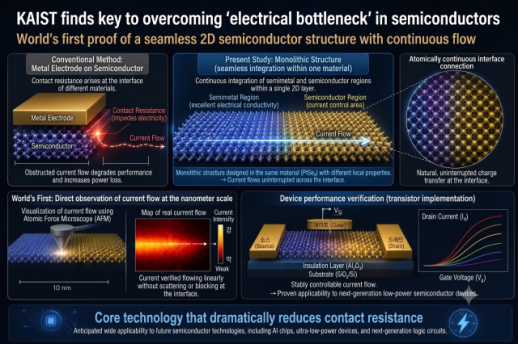 KAIST clears power-wasting bottleneck in chips SEOUL, July 13 (AJP) - South Korean researchers have found a way to remove one of the biggest hidden bottlenecks inside computer chips, a discovery that could make future artificial intelligence processors faster and far less power-hungry. Every chip loses energy at the point where metal wiring meets the semiconductor material that does the actual computing. This so-called contact resistance works like a tollgate on a highway: electricity slows down, heat builds up, and power is wasted. The smaller the chips become, the worse the problem gets, which is why the industry regards it as one of the hardest obstacles to building the next generation of processors. The Korea Advanced Institute of Science and Technology (KAIST) said Monday that a team led by materials science professor Hong Seung-bum, working with KAIST colleague Kang Ki-bum and Sungkyunkwan University professor Cho Sung-beom, had built a chip structure in which electricity flows across that troublesome boundary without any blockage, and observed it happening for the first time at the scale of a nanometer, one billionth of a meter. The trick was to get rid of the boundary altogether. Instead of attaching a metal electrode on top of a semiconductor, as chipmakers have always done, the team used a single sheet of platinum diselenide, a material only one or two atoms thick. Within that one sheet, they created a region that conducts like a metal and a region that behaves like a semiconductor, joined seamlessly with no gap, glue, or residue in between. Because both regions belong to the same continuous material, current passes from one to the other as if driving on an uninterrupted road. Using an atomic force microscope, an instrument that traces surfaces with a needle fine enough to map individual atoms, the researchers watched electric charge cross the junction. The current flowed straight through without stalling or bending, the first direct experimental proof that such a seamless interface does not resist the flow of electricity. The team then went a step further and tested whether the structure could do real work. By applying an electric field to the semiconductor region, they switched the current on and off in a stable way, the basic operation of a transistor, the building block of every processor and memory chip. The practical implications are significant. Contact resistance is a major reason data centers running AI models consume enormous amounts of electricity and generate so much heat. A chip architecture that eliminates the bottleneck could translate into AI processors that run faster on less power, longer battery life in phones and laptops, and ultra-low-power chips for sensors and wearable devices. The technique also gives chip designers a testing platform to evaluate electrode structures before committing them to production. The work remains laboratory science for now, and the team plans to extend the method to other ultrathin materials in the same family before it can move toward commercial use. "This is the first time anyone has directly observed current flowing across a two-dimensional semiconductor interface at the nanometer scale," Hong said. "Since we have experimentally proven that a seamless interface does not obstruct the flow of current, we expect it to serve as a core technology for solving contact resistance problems in a wide range of next-generation semiconductors." KAIST doctoral candidate Kim Yeon-gyu, KAIST researcher Gyeon Min-seung and Sungkyunkwan University doctoral candidate Hong Ji-hoon were co-first authors of the study, which was published in the July 2026 issue of the materials science journal Matter. (Reference Information) Journal/Source: Matter Title: Nanoscale imaging of charge transport across the semimetal-semiconductor interface in monolithic platinum diselenide Link/DOI: https://doi.org/10.1016/j.matt.2026.102873 2026-07-13 10:23:02
-
 Türkiye rises from failed coup to global bridge SEOUL, July 13 (AJP) - Ten years ago this Wednesday, fighter jets bombed the Turkish parliament and tanks rolled onto the bridge spanning the Bosphorus. The coup attempt of July 15, 2016, was designed to break the Turkish state in a single night. Instead, it collapsed by morning, defeated by ordinary citizens who walked toward the tanks, and the decade that followed turned the country that survived it into one of the few states trusted to stand between the world's warring powers. Türkiye marks the anniversary as Democracy and National Unity Day, with commemorations in all 81 provinces and at diplomatic missions abroad under the theme "The Will Is Ours, Victory Is Ours." In Istanbul, 253 boats will sail the Marmara Sea and a Quran recitation by 253 memorizers will be held at Hagia Sophia, one for each person the state counts among the dead. The main ceremony takes place in the Saraçhane district, where some of the heaviest civilian casualties occurred. What happened that night was rare in the history of coups. Most are settled among elites, and the public learns the outcome on the morning news. In Türkiye, the outcome was decided in the streets. After President Recep Tayyip Erdoğan called on citizens to resist, speaking by video link on a news anchor's phone, crowds surrounded military units in Istanbul and Ankara. Unarmed men and women climbed onto tanks. Some were shot doing so. At least 251 people were killed and more than 2,000 wounded in a single night, and the coup was finished before dawn. Ankara attributes the attempt to the movement of Fethullah Gülen, a cleric who lived in self-imposed exile in Pennsylvania from 1999 until his death in October 2024. Gülen was once an ally of Erdoğan, and his movement ran schools, media outlets, and businesses in dozens of countries while its followers rose through the Turkish judiciary, police, and military over decades. The two men broke publicly in 2013, and after the coup attempt, the government designated the network a terrorist organization, calling it the Fethullahist Terrorist Organization, or FETÖ. Gülen denied any role until his death. The years that followed brought one of the largest purges in the republic's history, with tens of thousands of soldiers, judges, prosecutors, teachers, and civil servants dismissed or detained, a crackdown whose scale drew criticism from Western governments. But the deeper legacy of July 15 is not the purge. It is what the night proved about the country itself. A state that survives a coup through the will of its own people acquires something most nations never get to test, a certainty about where legitimacy lives. The crowds that filled the squares that night came from across Türkiye's political spectrum, secular and religious, left and right, government supporters and opponents, united on the single point that soldiers do not decide who governs. That unity became strategic capital, and Ankara has spent 10 years converting it into power. The conversion is measurable. Türkiye concluded after 2016 that its security could not be outsourced and built a defense industry that has moved from near dependence on foreign suppliers to ranking among the world's significant arms exporters, with its drones fielded in conflicts from North Africa to Ukraine. It pursued an independent foreign policy that kept channels open to actors its allies refused to touch, absorbing American sanctions over its purchase of Russian air defense systems rather than backing down. The bet was that a nation confident in its own cohesion could afford to stand between blocs rather than inside one. In the disorder of the 2020s, that bet is paying off. Consider the world of July 2026. The war in Ukraine grinds through its fifth year. A war between the United States, Israel, and Iran has shaken the Middle East and rattled energy markets. The transatlantic alliance is strained over burden-sharing as Washington draws down forces in Europe. In this landscape, Türkiye is the only NATO member that talks regularly to both Kyiv and Moscow. It brokered the Black Sea grain deal that moved more than 30 million tons of grain through the blockade, hosted the Istanbul talks that produced prisoner exchanges of 1,000 captives on each side, and has repeatedly offered to host leader-level negotiations. When the Iran war broke out, Turkish Foreign Minister Hakan Fidan flew between Gulf capitals arguing that the region must own its security, and Ankara positioned itself as a channel between Washington and Tehran. Geography underwrites the diplomacy. Türkiye sits on the strait that separates Europe from Asia and controls, under the Montreux Convention, the only maritime passage into the Black Sea, a power it has used to keep Russian warships from reinforcing their fleet. It anchors the Middle Corridor, the overland trade route linking China and Central Asia to Europe that has grown sharply in importance as the northern route through Russia became untenable. Goods, gas, grain, and refugees all pass through or past Turkish territory. In calm times this makes Türkiye a transit country. In chaotic times it makes Türkiye a gatekeeper, and the times are chaotic. The symbolism of this month made the point plainly. NATO held its summit in Ankara on July 7 and 8, the first ever in the Turkish capital, one week before the coup anniversary. Ten years ago, jets flown by putschists bombed the parliament. This month, leaders of all 32 allied nations gathered a few kilometers away, and US President Donald Trump praised his host and pledged to lift the sanctions imposed over the Russian air defense purchase. The summit's defense industry forum was the largest in the alliance's history, held in a country that a decade earlier was purging its own officer corps. Among the guests was South Korean President Lee Jae-myung, one of only two non-NATO heads of state invited alongside Ukraine's Volodymyr Zelenskyy. His presence was itself evidence of Türkiye's pull. South Korea, a trading nation at the far end of Asia whose prosperity depends on open sea lanes and functioning supply chains, has been investing steadily in the connector country. Lee made a state visit to Ankara last November, the first by a South Korean president in 13 years, marking the 75th anniversary of Türkiye's entry into the Korean War, in which some 21,000 Turkish troops fought and more than 900 died. The two presidents met for 103 minutes, upgraded the strategic partnership through a joint statement, and signed agreements covering nuclear power, veterans affairs, and infrastructure, giving South Korea a foothold in Türkiye's planned second nuclear plant at Sinop. For Seoul, whose defense firms are pushing into European markets, Türkiye is both a partner and a proof of concept, a country that built an arms industry from dependence to global reach within a generation. None of this settles the arguments about Türkiye's internal politics, which remain contested at home and abroad. But the trajectory since July 15 is difficult to dispute. The night that was meant to break the Turkish state instead fused it, and the country that emerged has converted that cohesion into a position no rival can easily replicate, the indispensable middle, holding the door between Europe and Asia at the moment the world needs someone to hold it. On Wednesday night in Saraçhane, where crowds faced gunfire a decade ago, the names of the dead will be read aloud, as they have been every July 15 since 2016. One week earlier and a few hundred kilometers away, the leaders of 32 nations stood on Turkish soil to plan the defense of two continents. The distance between those two gatherings is 10 years, and the same crowds made both possible. 2026-07-13 09:21:20
-
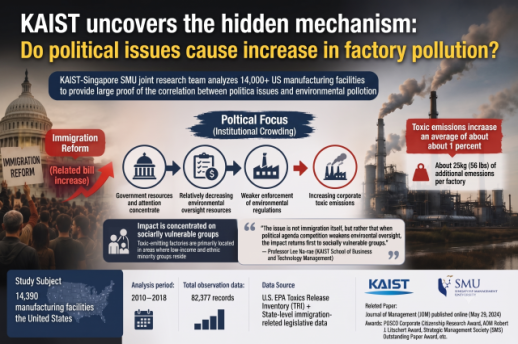 Immigration politics linked to rising factory pollution, KAIST study finds SEOUL, July 10 (AJP) - When immigration dominates political debate, factories quietly release more toxic chemicals. That is the finding of a new study by researchers in South Korea and Singapore, who traced the connection to a simple constraint: governments have only so much money and attention to go around. The Korea Advanced Institute of Science and Technology (KAIST) said Friday that a research team led by Lee Na-rae, a professor in its School of Business and Technology Management, and Heli Wang of Singapore Management University analyzed immigration-related legislation and environmental data across the United States. They found that as immigration rose on the political agenda, government environmental oversight weakened and toxic emissions from manufacturers increased. The researchers examined 82,377 records from 14,390 manufacturing facilities across the United States between 2010 and 2018, combining the Environmental Protection Agency's Toxics Release Inventory with state-level immigration legislation data. Each additional immigration-related bill was associated with an average 1 percent increase in toxic releases per facility, roughly 25 kilograms, or 56 pounds, of additional toxic chemicals per plant. The team calls the mechanism "institutional crowding." When a politically charged issue such as immigration demands government attention and enforcement resources, less visible policy areas like environmental monitoring get pushed aside. Firms, sensing looser oversight, cut back on costly pollution abatement and toxic waste management. The researchers stressed that environmental regulations themselves did not change during the period studied. What changed was how closely anyone was watching. The effect was strongest where money was tightest. In states carrying heavy debt or fiscal burdens, environmental oversight deteriorated further when political attention shifted to new issues, suggesting that cash-strapped governments funnel resources toward whatever is politically urgent first. Although the study used immigration as its test case, the researchers said the mechanism is general. Any issue that consumes government resources, from a public health crisis to a security scare, could crowd out enforcement elsewhere. The findings carry implications for environmental justice, since pollution burdens tend to fall hardest on poorer communities that are least equipped to push back. The Korea Advanced Institute of Science and Technology (KAIST) said the study offers new grounds for designing safeguards that keep environmental enforcement insulated from political swings. The paper, titled "There's More Than Meets the Eye: Assessing the Impact of Immigrants on Firm Environmental Performance," was published online in the Journal of Management on May 29, with Lee as first author. It has received the POSCO Corporate Citizenship Research Award, the Academy of Management's Robert J. Litschert Award, and a best paper award from the Strategic Management Society. "This study does not argue that immigration causes environmental pollution, but shows that shifts in the political agenda can weaken environmental oversight and increase corporate pollution," Lee said. "Even when the government's limited resources are concentrated on a particular issue, environmental oversight needs institutional protection so that it does not falter." (Reference Information) Journal/Source: Journal of Management Title: There's More Than Meets the Eye: Assessing the Impact of Immigrants on Firm Environmental Performance Link/DOI: https://doi.org/10.1177/01492063261442451 2026-07-10 10:35:13
-
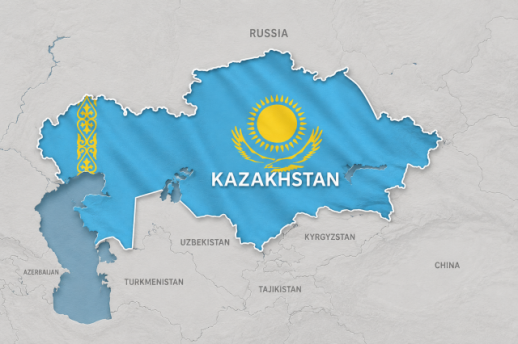 Kazakhstan defies regional slowdown in ADB outlook SEOUL, July 10 (AJP) - Kazakhstan's economy is set to keep growing at a steady pace over the next two years even as the Asian Development Bank trims forecasts for much of the surrounding region, according to the bank's Asian Development Outlook released this week. The Asian Development Bank kept its projections for Kazakhstan unchanged in the July edition of the report, with gross domestic product expected to expand 4.8 percent in 2026 and 4.5 percent in 2027. The economy grew 6.5 percent in 2025, lifted by a surge in oil output after the expansion of the Tengiz field, Kazakhstan's largest, came online ahead of schedule. The unchanged outlook stands out in a subregion where the bank lowered several forecasts. The Asian Development Bank (ADB) cut its 2026 projections for Armenia, Turkiye and Turkmenistan, citing Russian trade restrictions, weak first-quarter growth and the higher cost of rerouting trade around Iran. Forecasts for Kazakhstan, Azerbaijan, Georgia, the Kyrgyz Republic, Tajikistan and Uzbekistan were left untouched for both years. The wider region is under strain. The ADB projects developing Asia and the Pacific, a grouping of 43 economies that excludes Japan, South Korea and Singapore, will grow 4.9 percent in 2026, below the 5.1 percent it forecast in April. The bank blamed the conflict in the Middle East, saying it has caused prolonged disruption to energy markets and supply chains, raised production costs and dampened economic activity. Growth is expected to recover to 5.1 percent in 2027. Kazakhstan's expansion is slowing from last year's pace for reasons the bank flagged in April. Oil production is running near capacity after the Tengiz ramp-up, leaving little room for further gains, while tighter lending conditions, higher taxes and slower real income growth are expected to cool private spending. Government investment continues to support activity. Inflation remains the country's main weak spot. The ADB expects consumer prices to rise 10.4 percent in 2026 before easing to 9.5 percent in 2027, down from 11.4 percent in 2025 but still among the highest rates in Central Asia. The bank attributed the pressure partly to government-regulated utility tariff increases and a new tax code that raised value-added tax, prompting businesses and consumers to bring purchases forward. Across the Caucasus and Central and West Asia, the ADB revised its 2026 inflation forecast up to 22.0 percent, a figure driven largely by Turkiye, as the Middle East crisis slows disinflation and pushes fuel prices higher across the subregion. The report warned that the projections carry elevated uncertainty. The main risks to the regional outlook include renewed geopolitical tensions, tighter global financial conditions, higher commodity prices and trade uncertainty, the ADB said. 2026-07-10 10:19:27
-
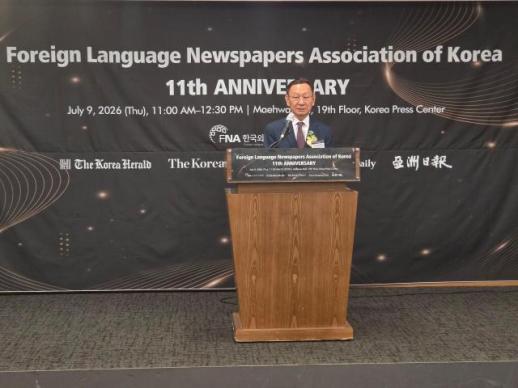 Foreign language press association marks 11 years in Seoul SEOUL, July 09 (AJP) - South Korea's foreign-language newspapers marked 11 years of working under a single banner on Thursday, with their association pledging to expand international exchanges and prepare member outlets for an era reshaped by artificial intelligence. The Foreign Language Newspapers Association of Korea held its 11th anniversary ceremony at the Korea Press Center in central Seoul, drawing guests including Chinese Ambassador Dai Bing, Reform Party floor leader Cheon Ha-ram, Seoul Vice Mayor for Political Affairs Park Chan-gu and James Kim, chairman and chief executive of the American Chamber of Commerce in Korea. The United States Embassy sent a spokesperson on behalf of the ambassador, who could not attend due to scheduling. Association chairman Yang Kyu-hyun, who also heads Aju Ilbo, addressed the contrast directly in his opening remarks, delivered in Korean. "The fact that both countries value our association and the role of foreign-language media is by no means a small thing," he said. Founded in 2015, the Foreign Language Newspapers Association of Korea (FLNAK) brings together the country's English-language and other foreign-language news outlets, including Aju Ilbo, The Korea Herald, The Korea Times and the Korea JoongAng Daily, whose representatives attended Thursday's ceremony. The group positions its members as a bridge between South Korea and international audiences. Yang said the past 11 years had tested member outlets through the decline of print, the digital transition and shifts in the international order. This year's event was deliberately smaller than last year's 10th anniversary celebration, prepared as a family-like occasion that put substance over scale. "The AI era is both a crisis and a new opportunity for journalism," Yang said. "The value of foreign-language media equipped with accuracy, trust and an international perspective will only grow larger." He said FLNAK would expand international exchanges, develop joint projects among member companies and work to secure policy support. In a congratulatory speech, Dai called China "the biggest victim" of disinformation and urged foreign-language media to report on the country objectively, saying "one important origin of fake news is ideological bias and political manipulation." He said the exchange of state visits between President Lee Jae Myung and Chinese President Xi Jinping had opened "a new chapter" in bilateral relations, and invited journalists to visit China and "tell the story of a real, multi-dimensional, and comprehensive China." Kim said artificial intelligence only reinforced the value of trusted journalism, telling the audience that "technology can generate content, but it cannot replace sound judgment, editorial integrity, or the credibility that professional journalists have built over many years." He noted that of the 14 companies worldwide valued at more than $1 trillion, two are Korean, a sign of South Korea's rising global profile. 2026-07-09 14:34:36