

Journalist
Park Sae-jin박세진
swatchsjp@ajupress.com
Assistant EditorForeign embassies in Seoul & Geopolitics, Diplomacy, Policy
Experienced journalist and editor at AJU PRESS specializing in multilingual news. I cover international diplomacy, geolpolitics, and policy, consistently delivering highly accurate, compelling reporting for a worldwide audience.
"Reporting the facts. Shaping the narrative. Every second counts."
Latest by Park Sae-jin
-
 Kookmin University students win AI self-driving hackathon SEOUL, July 24 (AJP) - Undergraduates programmed scale-model cars to judge forks in the road and dodge moving obstacles by describing what they wanted in plain language and letting generative AI write the code, at a three-day autonomous driving hackathon that ended with Kookmin University teams sweeping the top three prizes. The 2026 SEA:ME Hackathon drew 117 undergraduates in 27 teams from seven universities nationwide to Park Habio in Seoul's Songpa district from July 14 to 16, Kookmin University said Friday. The university's SMT team took the grand prize for stable driving performance and a polished algorithm, with fellow Kookmin teams SKY and KUUVe claiming the top excellence prize and the gold prize. Teams from Keimyung University, Chungbuk National University, and Sunmoon University took silver, bronze, technology, and design awards. Now in its fourth year, the competition is jointly organized by the future automobile project group at Kookmin University's Convergence and Open Sharing System (COSS) and the intelligent robotics project group at Hanyang University ERICA, with backing from the Volkswagen Group WE: Foundation, a nonprofit funded by Volkswagen Group Korea and its four brands, Volkswagen, Audi, Lamborghini, and Bentley. SEA:ME, short for Software Engineering in Automotive and Mobility Ecosystems, is the foundation's flagship program for training automotive software talent. This year's contest ran under the theme of an AI-native scale-car autonomous driving challenge, built to let students experience how mobility software is developed when AI sits at the center of the process. Telechips, a leading South Korean fabless chip designer, joined as technology partner and supplied scale cars built on its high-performance TOPST single-board computer platform. Each participant also received access to Claude Code Max 20x, a generative AI tool specialized for coding. Students worked in the style known as vibe coding, issuing instructions in natural language and letting the AI generate the code, then refining the results. Their missions simulated demanding urban driving conditions, including deciding which way to go at forks and avoiding obstacles that moved. "Every team practiced on the track late into the night," members of the winning SMT team said. "We learned a great deal turning ideas into working results with AI, and it was a valuable experience." Shin Sung-hwan, who heads Kookmin University's future automobile project group, said the event lifted students' mobility software skills a full step in a short time, and thanked the foundation, Telechips, and the faculty and staff who ran the competition. Kim Jong-chan, deputy head of the project group and the hackathon's director, said this year's event was designed around two ideas, applying AI-native development methods and using domestically produced automotive semiconductors. "It was a valuable opportunity for students to tackle the kind of advanced autonomous driving problems that carmakers are actually wrestling with," he said. The hackathon adds to a strong year for the SEA:ME program. A South Korean university coalition team trained through the program won the Bosch Future Mobility Challenge 2026, an international autonomous driving and connectivity competition held in Cluj-Napoca, Romania, in May, beating 57 teams from around the world. Kookmin University, marking its 80th anniversary this year, has designated mobility as one of eight specialization fields under its long-term development strategy, KMU VISION 2035: EDGE, and says it will continue expanding industry partnerships with automakers at home and abroad. 2026-07-24 15:00:26
-
 KAIST, NVIDIA open joint lab to build AI for Korean industry SEOUL, July 24 (AJP) - NVIDIA will pour $300 million into a joint research laboratory with the Korea Advanced Institute of Science and Technology to develop artificial intelligence built specifically for the Korean language and South Korea's industries, in one of the largest corporate commitments to AI research at a Korean university. The NVIDIA-KAIST Joint AI Research Lab will be housed at the Kim Jaechul Graduate School of AI on the Seoul campus of the Korea Advanced Institute of Science and Technology (KAIST), the university said Friday. The collaboration runs for an initial five years and includes AI computing resources worth $50 million a year, supplied through NVIDIA's cloud partners in South Korea. KAIST's announcement on Friday came as NVIDIA moves to finalize a separate joint research lab with Seoul National University, a sign that the world's dominant AI chipmaker is anchoring its Asian research strategy in South Korea's two leading research universities at once. The KAIST lab will focus on agentic AI, systems that go beyond answering questions to planning and carrying out multi-step tasks on their own, such as analyzing information, selecting tools, and executing work with little human supervision. Researchers will build agentic models and agent systems tuned to the Korean language and to domestic industries including manufacturing, semiconductors, biotechnology, and services. The work will draw on NVIDIA's full-stack AI technology, the company's integrated platform spanning chips, computing systems, software, and models, along with Nemotron, a family of open AI models NVIDIA has released for companies and research institutions to adapt freely. The lab plans to use Nemotron as a base for models with stronger Korean-language capability. Beyond infrastructure, the partnership targets talent. The lab will fund at least 10 KAIST researchers each year and provide each of them with an internship at NVIDIA. The company also plans to hire top Korean AI researchers into full-time research positions, linking funding, internships, and permanent jobs into a single pipeline intended to keep ambitious researchers building careers in South Korea. "Korea is home to world-class AI researchers and one of the most advanced technology ecosystems in the world," said Bill Dally, NVIDIA's chief scientist and senior vice president of research. "The NVIDIA-KAIST joint lab will accelerate the development of AI models and agent systems for Korea's industries, language, and future, and serve as a foundation for pioneering next-generation AI research." Kim Hyun-woo, an NVIDIA researcher who joins the Kim Jaechul Graduate School of AI as an assistant professor next month, will direct the lab, setting its research agenda and coordinating joint work between KAIST teams and NVIDIA's global research organization. Kim, currently a postdoctoral researcher at NVIDIA working with AI researcher Yejin Choi and NVIDIA vice president Jan Kautz, won the Outstanding Paper Award at the EMNLP 2023 natural language processing conference for research on knowledge distillation, a technique for transferring capabilities between AI models. He recently released Nemotron-Personas-Korea, the first large-scale Korean persona dataset, which topped Hugging Face's trending dataset rankings for 10 days. KAIST president Bae Choong-sik called the partnership "the starting point of a strategic partnership combining world-class AI research capability with cutting-edge AI infrastructure," and said the university would build "a global AI research hub representing the Republic of Korea." Research topics will include large AI models optimized for Korean, industry-specific models, next-generation AI with reasoning and planning capability, and cooperation and verification among multiple AI agents. Both sides said they intend research results to flow into companies, public institutions, and national AI systems rather than remain academic. The two organizations are still finalizing details of research selection, researcher support, and infrastructure provision, and said the lab's start date and operating plan will be announced once negotiations conclude. The lab at Seoul National University (SNU) is taking shape on a separate track. The university and NVIDIA plan to sign a memorandum of understanding this month covering joint research in physical AI and AI semiconductors, Aju Press has learned, with 10 to 20 research teams to be selected for an initial term of about three years. The plan includes NVIDIA internships for top students, a dedicated collaboration space on campus for visiting NVIDIA researchers, and jointly developed curricula, with SNU courses to be shared worldwide through NVIDIA's Deep Learning Institute education platform. A joint steering committee and a symposium in September are expected to follow the signing. The agreement follows months of contact between the two sides, capped by Jensen Huang's visit to the university in June, when the NVIDIA chief executive toured its AI research center and robotics lab and met with students. NVIDIA has run joint research labs with major universities in Singapore and Hong Kong. The Seoul push is widely seen in the industry as an effort to make South Korea a core Asian research base, secure AI talent, and counterbalance China's AI industry. 2026-07-24 14:47:09
-
 Asia's Gen Z do not wait for permission anymore SEOUL, July 24 (AJP) - A canceled exam in New Delhi. A social media ban in Kathmandu. A housing allowance in Jakarta. A job quota in Dhaka. None of these, on its own, reads like the beginning of a national crisis. Yet each one sent hundreds of thousands of young people into the streets, and in two of those countries the government did not survive. Something has shifted in how Asia's youngest adults deal with power. The region's leaders are finding out the hard way. The latest lesson is unfolding in India. For more than three weeks, students have held a protest site near Parliament in New Delhi, and smaller demonstrations have spread to Mumbai, Bengaluru, Hyderabad and dozens of other cities. The spark was the leak of a national medical school entrance exam in May, which forced millions of students to retake their tests. Prime Minister Narendra Modi, now in his 13th year in office, waited until this week to respond, posting on social media that nothing matters more than the welfare of the youth and promising fast-track tribunals for the leakers. Protesters called it late and lame. Their demands widened the next day. Why does an exam leak shake a government? Look underneath it. India's economy is growing at a healthy pace on paper. Still, nearly 40 percent of young degree holders are unemployed, according to the State of Working India 2026 report from Azim Premji University. Families pour savings and debt into an education system that routinely fails to prepare graduates for work. Then the one gateway that promised fairness, the entrance exam, turns out to be crooked too. The same sequence has been playing out across the region for four years. In Bangladesh in June, 2024, students protested a quota system that reserved a large share of government jobs for descendants of independence war veterans. In a country where a stable public sector job is one of the few reliable paths to a middle-class life, the quota felt like a rigged game. Then Prime Minister Sheikh Hasina dismissed the protesters with a slur, her security forces opened fire, and the movement stopped being about quotas at all. More than 1,000 people died, according to the interim government's health ministry. In August, Hasina fled to India by helicopter, ending 15 years in power. Nepal came next, in September 2025. The government of K.P. Sharma Oli banned 26 social media platforms, including Facebook, YouTube and X, citing registration rules. Young Nepalis read it as censorship, and the tinder was already dry. Videos contrasting the luxury vacations of politicians' children with the grinding poverty of ordinary families had gone viral under hashtags mocking the "nepo kids" of the elite. Within days, parliament was burning and at least 19 protesters were dead. Oli resigned. The ban itself was lifted almost immediately, and it changed nothing. The ban was never the story either. In Indonesia, the fuse was a report in August 2025 that all 580 members of parliament were collecting a monthly housing allowance of about $3,000, roughly 10 times the minimum wage in Jakarta. Protests turned into riots after a police armored vehicle ran over and killed Affan Kurniawan, a 21-year-old motorcycle delivery driver who was not even demonstrating. He was trying to complete a food order. In a country where the gig economy has become the holding pen for millions of young people the formal economy cannot absorb, his death needed no explanation. President Prabowo Subianto revoked the perks within days. At least eight people had died by then. Sri Lanka started it all in 2022, when an economic collapse sent young protesters into the presidential palace, some swimming in its pool, and President Gotabaya Rajapaksa fled the country. What makes this wave remarkable is where it is happening. These are societies where age confers authority, where enduring hardship quietly is treated as a virtue, where the young have long been told their turn would come if they studied and waited. Protest itself is nothing new in Asia. Students drove South Korea's democratization in 1987 and filled Indian streets long before independence. But even those movements had structure the state could recognize. Umbrella coalitions, dissident elders, opposition politicians ready to carry street demands to the negotiating table. The new thing is a generation that skips all of it, organizing itself, naming its own enemies, and bringing down governments run by men twice and three times its age. The waiting is over. Governments keep misreading these movements, and the errors follow a pattern of their own. Leaders respond to the trigger. They cancel the ban, revoke the allowance, promise tribunals for the exam leakers. Each time the concession lands as an insult, because the protesters were never asking for the small thing. They were asking why an entire generation did what it was told, studied harder than any cohort before it, and arrived at adulthood to find the jobs missing, the exams rigged, and the officials' children shopping in Paris. No tribunal answers that. The next instinct is to look for someone to arrest, buy off, or sit across a table from. There is no one. India's protests are fronted by the Cockroach Janta Party, which is not a party at all but a satirical movement named after an insult delivered by the chief justice of the Supreme Court. Nepal's protesters organized on Discord, a gaming chat app. Indonesian demonstrators flew a pirate flag from a Japanese comic. To men who came up through party machines, this all looks unserious, and that is exactly the miscalculation. A movement with no head cannot be decapitated. The old strongman playbook was written against opposition parties and union bosses. It has no page for a hashtag. What remains is force, and force is the fastest way to lose. Hasina's men fired on students, and she lost the country. Nepal's crackdown killed 19, and the government fell within five days. In India, the batons and tear gas deployed on Monday turned a protest about exam accountability into something much larger. Watching from Seoul, it is tempting to treat all this as someone else's weather. South Korea's young people do not burn parliaments. But the underlying inventory should sound familiar. Brutal exam competition. Credential inflation. Youth unemployment concentrated among the educated. Housing priced out of reach. A raw, almost forensic sensitivity to fairness. The fury that followed South Korea's own hiring scandals struck the same nerve. Korean youth have so far channeled that anger through ballots and online mobilization rather than street occupations, and they have swung elections doing it. The difference between Seoul and Dhaka is not the grievance. It is whether institutions still offer a believable way out. That is the real warning in this wave. The Gen Z across Asia are not more radical than the generations before them. It is less patient with theater, and it no longer accepts a system's promises as payment. These young people watched their parents defer, and they watched deference go unrewarded. 2026-07-24 14:02:33
-
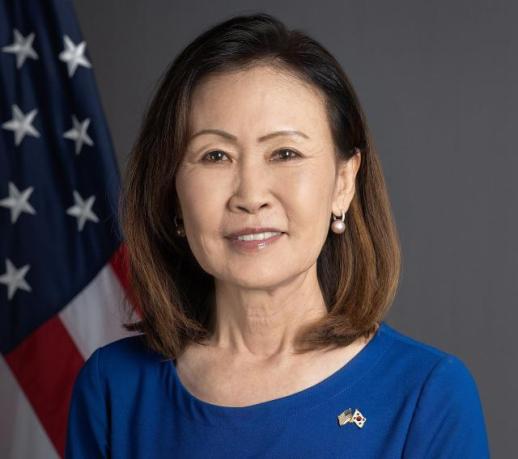 US ambassador to Korea Steel will arrive in Seoul next week SEOUL, July 24 (AJP) - The new United States ambassador to South Korea will arrive in Seoul next week, ending a vacancy of about 18 months at the top of the American mission and putting a confirmed envoy on the ground just as the two governments try to turn a sweeping trade and investment deal into actual projects. Michelle Steel gave the timing Thursday (local time) in response to a question from Yonhap News Agency at the opening of the Korea-U.S. Shipbuilding Partnership Center in Washington. "Next week," she said, referring other questions to the State Department. She called the work of strengthening the Seoul-Washington alliance her "top priority." Yonhap reported that she is widely expected to fly out around Wednesday. The post has had no confirmed occupant since Philip Goldberg left in January 2025, one of the longest gaps in the modern history of the embassy. James Heller has run the mission as chargé d'affaires ad interim, the title given to the senior diplomat who holds an embassy together when no ambassador is in place. A chargé can manage the building and pass messages. What a chargé cannot do is speak with the authority of a presidential appointee, and that distinction has mattered over the past year and a half. It has mattered because almost everything of consequence between the two countries has been decided somewhere else. The tariff and investment package that now defines the relationship was negotiated by cabinet ministers flying back and forth, instead of the embassy in Seoul. U.S. President Donald Trump on Thursday signed a memorandum directing the U.S. Trade Representative to impose tariffs of 10 percent to 12.5 percent on imports from 60 trading partners, including South Korea, following Section 301 investigations into whether they failed to prohibit or effectively enforce bans on imports made with forced labor. Rather than imposing a flat 12.5 percent tariff on Korean goods, however, the White House created a separate category for South Korea, Japan and Switzerland. Under the presidential memorandum, products from South Korea whose existing most-favored-nation (MFN) tariff is below 12.5 percent will be subject to an additional Section 301 duty sufficient to raise the total tariff to 12.5 percent. Products already facing MFN duties of 12.5 percent or higher will pay no additional Section 301 tariff. The White House said capping the total duty at 12.5 percent was "feasible, consistent with the terms of the Agreements on Reciprocal Trade or similar arrangements," and was intended to encourage Korea and the other economies to fulfill commitments on forced-labor import prohibitions. Steel arrives into that. She is 70, born in Seoul in 1955, and moved to the U.S. with her family in 1975. She speaks Korean. Her career before Congress was built on tax and local government in California, first on the California State Board of Equalization, which administers state taxes, and then on the Orange County Board of Supervisors, where she served as chair. She won a House seat in 2020, held it in 2022, and lost it narrowly to Democrat Derek Tran in 2024. Her husband, Shawn Steel, has been the Republican national committeeman for California since 2008 and led the state party from 2001 to 2003. That background points in a clear direction. Steel is a Republican operator with a business and tax orientation and a long-standing personal network in the Korean-American community, not a career Foreign Service officer. Trump nominated her in April, and the Senate confirmed her on June 17 by 55 votes to 39, close to a party-line result. During her time in the House, she pushed the Korean American Divided Families National Registry Act, which sought to help Korean Americans trace relatives separated in North Korea since the 1950~53 Korean War, and she served on Trump's advisory commission on Asian Americans and Pacific Islanders during his first term. Her confirmation hearing on May 20 before the Senate Foreign Relations Committee showed what she is likely to press on. Senator Bill Hagerty of Tennessee told her American technology firms and the e-commerce company Coupang appeared to be treated unfairly in South Korea and asked her to make sure that stopped. Senator Pete Ricketts of Nebraska raised trade barriers on American farm goods and cut quotas for American soybeans. Steel said she would take those cases to Seoul officials directly. The venue for her remarks on Thursday fit the same pattern. The Korea-U.S. Shipbuilding Partnership Center (KUSPC) is funded and staffed by Seoul and sits in Washington as the working base for the shipbuilding side of the package, known in both capitals by the slogan MASGA, or Make American Shipbuilding Great Again. It came out of a memorandum signed on May 8 between South Korea's Ministry of Trade, Industry and Resources and the U.S. Department of Commerce. Commerce Secretary Howard Lutnick attended Thursday's opening alongside Kim and executives from HD Korea Shipbuilding and Offshore Engineering, Samsung Heavy Industries and Hanwha Ocean, which bought the Philly Shipyard in Philadelphia in December 2024 and has committed $5 billion to expanding it. Steel will be the second Korean American to hold the Seoul post, after Sung Kim, who served from 2011 to 2014, and the second woman, after Kathleen Stephens, who served from 2008 to 2011. What she told the Senate in May was blunt. "American companies operating in Korea deserve the same market access that Korean companies enjoy in the U.S.," she said. 2026-07-24 08:11:25
-
 Kookmin University joins World Design Capital exhibition in Frankfurt SEOUL, July 23 (AJP) - A South Korean university design team was invited to Germany this month to show its work on public transportation for people who struggle to get around, one of a set of campus research projects gathered for an exhibition tied to the world's biennial design capital program. Kookmin University's Department of Automotive and Transportation Design took part in the World Design Capital Campus Exhibition 2026 Frankfurt on July 3 at the Museum Angewandte Kunst. The event is organized by the World Design Organization (WDO), which selects a World Design Capital every two years. Frankfurt holds the title for 2026, and Busan in South Korea was chosen for 2028. The Frankfurt exhibition is built around university research rather than commercial products. It gathers next-generation design projects from campuses worldwide and pairs the displays with presentations and a lecture program. The invitation came out of a project Kookmin completed in 2025 with the Genesis Design Innovation Division at Hyundai Motor, titled "Human-Centered Public Mobility Service Design Based on Future Smart Cities." The university shared those results with Hyundai Motor's European design center, the University of Art and Design Offenbach and WDO officials, who cited the project's originality in extending the invitation. At the museum, the department showed a concept video and panels explaining the project, along with scale models and a three-dimensional terrain map of the target area. Kookmin's Noh Jae-seung, who led the research, walked through the project's aims, its development and its outcome during a Design Talk session held the day after the opening. The work centers on what transportation planners call the last mile, the short final stretch of a journey that public transit often fails to cover. For older riders, people with disabilities and residents of areas with thin transit service, that gap can decide whether a trip happens at all. Hyundai Motor's Genesis Design Innovation Division said it wanted to deliver mobility solutions that could actually be used by people who have difficulty moving around and by communities cut off from transit. "In order to create a city where anyone can move freely, we sought to improve not only mobility design but also physical and digital infrastructure, and even the invisible service experience," the division said. It described the collaboration as a valuable chance to search for answers alongside Kookmin students, and said it would continue projects aimed at free mobility for everyone, including those inconvenienced on last-mile trips. Dorothée Bolade, membership engagement manager at the WDO, said Kookmin's participation showed the value of design schools communicating and connecting across borders, together with the involvement of international educational institutions working with the organization. She said the group works so that universities worldwide can share ideas, sustain academic exchange and cooperation, and consider the future of design together. She added that she hoped such exchange would carry through to the World Design Assembly in Seoul in 2027 and to Busan as the 2028 World Design Capital. Noh called the invitation meaningful recognition of the joint work with Hyundai. He said the company's active support allowed designers and students to stay in close contact through repeated feedback and design reviews while shaping user-centered mobility scenarios for future megacities. "Since Busan has been selected as the 2028 World Design Capital, it would carry even greater meaning if we could build on this project and present a more developed outcome tailored to the regional characteristics of Busan," Noh said. The project is also documented on Open Design Lab, the platform Hyundai Motor uses to publish its future mobility design research, where the theme, process and final results are available in detail. 2026-07-23 13:48:41
-
 North America trade shake-up rattles Korean firms: Survey SEOUL, July 23 (AJP) - Nearly half of the South Korean companies with operations in North America expect a coming overhaul of the region's main trade pact to disrupt their business, according to a survey released this week, after Washington declined to renew the agreement in its current form and opened a decade of uncertainty across one of South Korea's biggest export markets. The finding comes from a poll of 43 South Korean firms with a presence in the United States, Mexico or Canada, conducted in early June by the Korea International Trade Association (KITA). Those three countries took in $145 billion of South Korean exports last year, more than a fifth of the national total and up from $81 billion a decade earlier, a rise of 79 percent. South Korean direct investment there grew almost as fast, reaching $28.6 billion in 2025, up 85 percent from 2016. At issue is the United States-Mexico-Canada Agreement (USMCA), the deal that governs tariff-free commerce among the three countries. On July 1, the United States told its two partners it would not extend the pact in its present shape. The decision stopped short of ending the agreement, but it set the region on course for years of annual renegotiation. USMCA took effect in 2020, replacing the North American Free Trade Agreement (NAFTA), the 1994 accord that first bound the three economies into a single tariff-free market. Unlike NAFTA, the newer pact carries what is known as a sunset clause. It requires the partners to review the deal every six years and decide whether to keep it, and it expires in 2036 unless all three governments agree to renew. July 1 was the first of those reviews. Because Washington withheld its consent, the pact now faces a review every year until 2036, and each round is a chance to reopen its core rules. The agreement stays fully in force in the meantime, and a renewal remains possible at any time, but companies across the continent must now plan around an unsettled decade. The report, from the trade research arm of the Korea International Trade Association (KITA), set out the main points of contention. Support for keeping the deal runs strong across the three countries, but the United States has pushed for changes in several areas, a stance the report linked to the trade agenda of the second Trump administration. Mexico and Canada have leaned toward preserving the pact as it stands. The largest of the disputed issues is a tightening of rules of origin. These are the requirements that decide how much of a product must be made within North America for it to move across borders tariff-free. Washington wants a higher share of a car and its parts built in the region to qualify, along with a new standard for steel, which would have to be melted and poured in North America rather than merely finished there. Other flashpoints include tighter curbs on goods from non-market economies, a label widely understood to target China, which the United States says routes products through Mexico to reach the North American market. The talks also cover cooperation on economic security and critical minerals, stricter customs and certification checks, tougher labor and environmental enforcement, and changes to digital trade rules. South Korea is not a party to the agreement. Its exposure runs through the many Korean manufacturers that build cars, batteries and other goods in North America, or that supply parts and materials to factories there. A tighter rules-of-origin regime could force those firms to buy more of their inputs locally or lose their tariff-free treatment. In the survey, companies named the rules of origin as their leading concern. Stricter content requirements for automobiles and parts drew the most worry, cited by 27.9 percent, followed by steel and aluminum at 20.9 percent and other manufactured goods at 9.3 percent. Almost half, 48.8 percent, said the reviews would have a considerable effect on how they operate. Firms are already weighing how to respond. The most common plan, cited by 41.9 percent, was to build alternative supply chains inside North America. About a third said they would look to step in as new suppliers as the regional supply map is redrawn, and 27.9 percent were considering fresh investment in the United States. The agreement is unlikely to collapse outright, because it anchors North America's industrial supply chains, said Jeon Yoon-sik, a senior researcher at the association, but a drawn-out review makes wider uncertainty in the local business environment unavoidable. "The stronger rules on origin and supply chains raise the threat of higher costs," he said, "but the chance to move in as an alternative supplier could also grow, so companies need to examine the origin and supply chain of each product and build a response system in advance." 2026-07-23 11:00:00
-
 S. Korea courts Turkmenistan with water technology SEOUL, July 23 (AJP) - South Korea spent three days this week showing Turkmenistan how it manages water, hosting a government delegation from one of the world's driest countries as Seoul works to turn its water industry into an export business across Central Asia. The visit, which ran Tuesday through Thursday in Seoul, brought officials from Turkmenistan's State Committee for Water Resources, the body overseeing the country's water policy and projects, along with its foreign ministry and the state institute handling water design and engineering. The Ministry of Foreign Affairs and the Ministry of Climate, Energy and Environment jointly hosted the program. The two sides make an unlikely but logical pair. Turkmenistan is roughly four-fifths desert, covered by the Karakum, one of the largest sand deserts on earth, and depends for most of its water on a single river, the Amu Darya, shared with its neighbors. The Soviet-era Karakum Canal, among the longest irrigation canals in the world, carries that water more than 1,300 kilometers across the country, and much of it is lost to seepage and evaporation along the way. Climate change is tightening the squeeze. For a government in that position, technology that tracks canals, cuts losses and treats water is not an abstraction. South Korea, for its part, has spent two decades building exactly that toolkit. K-water, the state water corporation, runs the national water system through a centralized digital operations center, and the country has pushed into AI-assisted purification, smart metering and remote monitoring. The delegation saw the showcase items: K-water's integrated operations center, the AI water purification plant in Hwaseong, south of Seoul, and the Gyeongin Ara Waterway connecting the Han River to the sea. The visitors also toured Korean companies specializing in canal monitoring and water treatment to examine how the technologies work in the field and discuss possible cooperation. The trip follows the first Korea-Turkmenistan water industry mission, a public-private delegation the government sent last year, its first of the kind. That visit confirmed there was room to work together, the ministries said, and this week's program was designed to make the cooperation concrete. Seoul is thinking beyond one country. The Turkmen visit ran alongside a smart water management training program for officials from all five Central Asian states, Kazakhstan, Kyrgyzstan, Tajikistan, Turkmenistan and Uzbekistan, a region where water is both scarce and a chronic source of tension between upstream and downstream neighbors. The week included a multilateral meeting of the five governments on water industry cooperation, a seminar where each country shared its water policies and discussed sustainable management and climate response, and a business roundtable pairing Korean water companies with Central Asian government agencies. The commercial intent is explicit. Kim Ho-eun, director general for water use policy at the climate ministry, said cooperation built up with Central Asian countries is now producing visible results, including supplies of Korean equipment and construction of facilities. "We will continue to lead the way in supporting our water companies' expansion overseas," Kim said. The diplomatic runway extends to September, when South Korea plans to hold a summit with the five Central Asian states. Opening the multilateral meeting, Kyun Jong-ho, the foreign ministry's ambassador for climate change, said cooperation on sharing water policy and management experience matters more than ever, and expressed hope the discussions would carry into deeper cooperation at the summit. The two ministries said they expect the week's program to deepen water cooperation with Turkmenistan and widen policy networks across Central Asia, and that they will keep supporting Korean water companies abroad while developing practical joint projects. 2026-07-23 10:38:01
-
 Seoul, Washington, Tokyo tighten diplomatic tempo SEOUL, July 23 (AJP) - The foreign ministers of South Korea, the United States and Japan met Wednesday for the second time in just over two weeks, a pace the three governments framed as the point itself, a show of alignment staged in front of Southeast Asia's assembled diplomats in Manila. Foreign Minister Cho Hyun sat down with US Secretary of State Marco Rubio and Japanese Foreign Minister Motegi Toshimitsu on the margins of the ASEAN-related foreign ministers' meetings, the annual cluster of talks that draws the region's major powers to one venue. The three discussed regional and global affairs, economic security and the Korean Peninsula, the Ministry of Foreign Affairs said. The trilateral format has become the main vehicle for coordinating policy among the three allies. South Korea and Japan are each bound to the United States by mutual defense treaties. Still, the two neighbors have no such treaty with each other, and their cooperation has historically swung with the state of bilateral relations. The three-way framework, elevated to leader level at the Camp David summit in 2023, was built to keep that coordination running regardless. Cho said holding the meeting only two weeks after the first trilateral of the year, on the sidelines of the NATO summit on July 7, showed the weight all three countries place on the format. Convening again at the ASEAN meetings, where the region's main players gather, allowed the three to send a united message about strengthening cooperation, he said. Rubio and Motegi welcomed the short interval and agreed to keep tightening coordination, the ministry said. On North Korea, the three reaffirmed long-standing positions. They will hold to the principle of denuclearizing the peninsula while maintaining firm deterrence, keep their North Korea policies closely coordinated, and continue communication and cooperation aimed at preserving peace and stability through dialogue and diplomacy. The language on the wider region was more pointed, if never explicit. The ministers exchanged views on attempts to change the status quo unilaterally, and reaffirmed their commitment to maritime security and to international law as reflected in the United Nations Convention on the Law of the Sea, including freedom of navigation and overflight in the Indo-Pacific, Southeast Asia included. None of that names a country. In diplomatic usage, however, those phrases are the standard vocabulary for China's assertiveness in the South and East China seas, and delivering them in Manila, in the region where those disputes play out, gives them their edge. Economic security took up a substantial share of the agenda. The term covers the newer terrain where trade and national security overlap, from who controls supplies of critical minerals to who can be cut off from advanced technology. The three ministers agreed that cooperation among trusted partners has never been more essential amid continued volatility in the global economy, and committed to deepening work on nuclear power, critical minerals and critical and emerging technologies. They also agreed to expand cooperation on protecting advanced technology, diversifying supply chains and building their resilience, and responding to economic coercion, another phrase without a named target that governments in all three capitals have used to describe Chinese trade pressure on countries that cross Beijing politically. One entry on the list was newer for this format: Arctic security, an area of growing attention as melting ice opens shipping routes and resource competition in the far north. Beyond security, the three noted that their cooperation has been widening into transnational crime response, disaster relief and humanitarian assistance, and agreed to push for concrete, visible results. The ministers agreed to activate consultations across sectors and levels on the momentum of Wednesday's meeting and to work toward outcomes that deliver benefits their citizens can feel, the ministry said. They reaffirmed their intention to meet as often as possible, including at multilateral gatherings. 2026-07-23 09:46:51
-
 Seoul pitches AI partnership to ASEAN SEOUL, July 23 (AJP) - South Korea placed artificial intelligence at the center of its offer to Southeast Asia on Wednesday, unveiling a new initiative to help the region build AI ecosystems, train researchers and spread the technology safely, drawing on what Seoul calls its full-stack capability spanning chips, models and services. The pitch came as Foreign Minister Cho Hyun co-chaired the ASEAN Post-Ministerial Conference with the Republic of Korea in Manila, the 29th session of the annual talks that have brought Seoul together with the Association of Southeast Asian Nations (ASEAN) every year since 1997. Thailand, the current coordinator of the relationship, shared the chair, with all 11 ASEAN members and the bloc's secretariat attending. The AI program, named the Korea-ASEAN AI Companion Initiative, aims to apply the technology to social problems across the region while building a sustainable AI ecosystem, according to the Ministry of Foreign Affairs. Demand for AI cooperation runs high among ASEAN members, the ministry said, and detailed projects will follow. South Korea is one of the few countries that produces the full chain of AI inputs, from the memory chips that train models to homegrown models and the services built on them, which is the capability Seoul is now marketing to a region of 680 million people caught between American and Chinese technology offerings. The initiative leads a wider package. Cho introduced a new program to sharpen the competitiveness of Korean and ASEAN cultural and creative industries in the digital era, and two security projects breaking new ground for the relationship. The first, a cooperation project against scam-related crime, is the first police and coast guard undertaking between the two sides. It will run working group meetings, discuss operations to rescue victims, visit national anti-scam centers, work toward a shared database of scam crimes and conduct training. Scam compounds across Southeast Asia have drawn global attention for detaining trafficked workers, including South Koreans, and defrauding victims worldwide. The second project, a maritime safety academy, will train regional officers in maritime law enforcement, search and rescue, and pollution response. All of it falls under the Korea-ASEAN CSP Vision, the roadmap Seoul drew up after the two sides upgraded ties to a comprehensive strategic partnership, ASEAN's highest tier of relationship, in 2024. The vision entered full implementation this year. Its three pillars carry the initials: contributor for dreams and hope, springboard for growth and innovation, and partner for peace and stability. The numbers attached are ambitious. Seoul wants two-way people exchanges to reach 15 million and annual trade to reach $300 billion, up from about $200 billion in recent years, helped by an upgrade of the Korea-ASEAN free trade agreement now under negotiation. Cho told the meeting the vision would move in step with ASEAN Community Vision 2045, the bloc's own 20-year strategy adopted in May last year, and said South Korea and ASEAN had become indispensable partners as global supply chains reorganize and technology shifts accelerate. ASEAN members welcomed the vision and noted expanding cooperation in the economy, trade, AI, digital affairs, cybersecurity and cultural industries under the five-year action plan adopted last year, the ministry said. They also expressed hope for close cooperation with South Korea as the vision is put into practice. Cho separately explained Seoul's efforts toward a Korean Peninsula where the two Koreas coexist peacefully and grow together, and asked for ASEAN's continued attention. The members reaffirmed support for the government's peninsula policy, the ministry said, and agreed that peace and stability on the peninsula matter for the region as a whole. Cho also asked ASEAN members to support holding a special summit in South Korea in 2029, marking 40 years since the two sides established dialogue relations. 2026-07-23 09:11:48
-
 Seoul denies receiving US Hormuz warship request SEOUL, July 22 (AJP) - No request has come from Washington for South Korea to send any specific military asset to the Strait of Hormuz, South Korea's presidential Blue House said Wednesday, pushing back against reports that a formal demand for a naval deployment was close. The denial is narrow, and the wording matters. The presidential office said the government has not been asked recently to dispatch a particular asset in connection with the safety of international sea lanes and freedom of navigation. It did not say that talks about a South Korean contribution have stopped. "We have continued to discuss related cooperation measures with the United States side," the office said, adding that Seoul is weighing practical ways to contribute to freedom of passage through the strait while taking into account readiness on the Korean Peninsula, domestic legal procedures and other factors. It declined to go further. Specific details of military and security communications between South Korea and the United States cannot be disclosed publicly, the office said. The strait carries about 20 percent of the world's oil and liquefied natural gas, and its effective closure since fighting between the United States and Iran began in March has driven up energy prices worldwide. South Korea, which imports almost all of its crude and buys much of it from Gulf producers, has more exposure to the waterway than most of the countries being asked to help police it. The pressure has been building since March 14, when President Donald Trump named South Korea, China, Japan, France and Britain in a post on Truth Social and demanded they send warships to secure the passage. Trump has since accused allies who declined of ingratitude. The domestic legal procedures the presidential office referred to are the central obstacle. Defense Minister Ahn Gyu-back told a parliamentary hearing in March that sending a warship or troops to the Strait of Hormuz would require approval from the National Assembly, a step that would turn a military decision into a political one. Any deployment would most likely involve the Cheonghae Unit, the antipiracy task force South Korea has maintained near the Gulf of Aden since 2009. The unit rotates a destroyer to the region roughly every six months with about 260 personnel and an attack helicopter aboard. There is precedent for expanding its remit. In January 2020, the government widened the unit's area of operations to include the Strait of Hormuz while stopping short of joining the US-led maritime coalition then operating there. Foreign Minister Cho Hyun has repeatedly declined to say in public whether Washington has made a request. Pressed at a parliamentary committee in March, he said only that responding to an ally's demand was an important question and that the government would act in accordance with the constitution and the law. Japan and Australia have both said they do not plan to send ships to escort vessels through the strait. 2026-07-22 14:29:58