

Journalist
Park Sae-jin박세진
swatchsjp@ajupress.com
Assistant EditorForeign embassies in Seoul & Geopolitics, Diplomacy, Policy
Experienced journalist and editor at AJU PRESS specializing in multilingual news. I cover international diplomacy, geolpolitics, and policy, consistently delivering highly accurate, compelling reporting for a worldwide audience.
"Reporting the facts. Shaping the narrative. Every second counts."
Latest by Park Sae-jin
-
 OPINION: South Korea needs its own Iran policy Iran's Ministry of Foreign Affairs issued its warning to South Korea in Korean. Esmaeil Baqaei, the ministry's spokesman and the official who states Iran's positions to the outside world, posts in English nearly every day. On Monday, he put up a statement on X, written in Korean, addressed to a public whose president had landed in Nice the evening before. It opens warmly. "The relationship between Iran and the Republic of Korea has a history spanning more than 64 years, and the ties between our two countries have developed throughout on a foundation of mutual respect," he wrote. "Iran places great importance on its friendly relations with the Republic of Korea." The warning sits in the middle. Any other country that stations forces in the Persian Gulf and the Strait of Hormuz, or joins operations there, cannot be regarded as anything other than a direct supporter of the party committing aggression, and it will bring about serious consequences. The statement ends on sovereignty. "No state possessing sovereignty and responsibility should submit to American pressure and intimidation and join in complicity with acts of aggression and appalling crimes against the great people of Iran." Nowhere in it does Baqaei write South Korea, or navy, or deployment. The middle paragraph says "another country." Writing the whole thing in Korean did the naming for him. Lee Jae Myung spent Monday in Saint-Paul-de-Vence, co-chairing a film summit with Emmanuel Macron. He arrives in Paris on Tuesday for lunch at the Élysée, a summit and a state dinner. A Cheong Wa Dae official said last week the agenda could take in nuclear power cooperation and a South Korean troop deployment to the Strait of Hormuz. Tehran wrote to South Koreans in Korean. Seoul will work out its reply over lunch in Paris, which would not be a first. Twice already this year, South Korea has taken a position on Iran, and both times it did so inside a text somebody else had drafted. On March 19, the leaders of Britain, France, Germany, Italy, the Netherlands and Japan condemned Iranian attacks on commercial shipping and the closure of the strait, and told Tehran to comply with Security Council Resolution 2817. Seoul's name went onto the document afterward. So did more than 30 others. Two weeks later, Lee and Macron stood together at Cheong Wa Dae and announced that South Korea and France would work to secure safe maritime routes through Hormuz. Neither explained how, and they took no questions. There is a precedent for what happens when Seoul enforces an Iran policy it did not write. The Hankuk Chemi was carrying 7,200 tons of chemical products when the Islamic Revolutionary Guard Corps boarded it on Jan. 4, 2021, and took it into Bandar Abbas. Iran said the tanker had been polluting the Gulf. Its owner said it had not. What Tehran wanted was the roughly $7 billion of Iranian oil money sitting in two South Korean banks, frozen there under American sanctions. Most of the crew flew home in early February, after Seoul agreed to unblock $1 billion. The ship and its captain stayed until April 9. The remaining money was not released until August 2023, and then only because Washington and Tehran had struck a prisoner deal. Iran had no way to reach the government that wrote those sanctions, so it took a ship belonging to the government that enforced them. Four weeks ago, the Iranian embassy in Seoul put a softer version of the same argument to AJP. Mohammad Esmaeil Passandideh, counselor and deputy head of mission, said the postwar period would be a good moment to rebuild. He also said Iran had given South Korean shipping free and secure passage right through the war, and had expected Seoul to speak up in return. That second claim is his, and it has not been verified. He said something else in that interview. Iran, he told AJP, was not looking to close or blockade the strait once the war ended. On Sunday, Mohsen Rezaei, who runs Iran's Supreme National Security Council, said a restricted zone would be declared around the strait and parts of the Gulf, with any ship entering it added to a sanctions list. An assurance from Tehran is worth what the receiving government can test it against. Testing takes people who know the file, channels that do not run through a third capital, and a settled view of your own. South Korea is thin on all three. The standard reply is that Seoul cannot afford to freelance on this. In March, that held up. Before the war, roughly 70 percent of South Korean crude came through Hormuz. Middle Eastern barrels are now about half of imports, down from two-thirds a year earlier, with American, African and Latin American oil taking the rest. The dependency that justified the silence has shrunk considerably, though nobody in Seoul appears to have revisited the silence. None of this settles whether South Korean ships should sail. That argument is worth having, and serious people in Seoul are on both sides of it. What is not worth having is a third year in which this country's Iran policy amounts to whatever Washington asks for and Paris helps phrase. Passandideh said it in August, weeks before any of this week's messages went out. "It will be too late for Korea to wait for the green light from the United States," he said. *The author is the assistant editor of AJP. 2026-09-07 17:24:24
 -
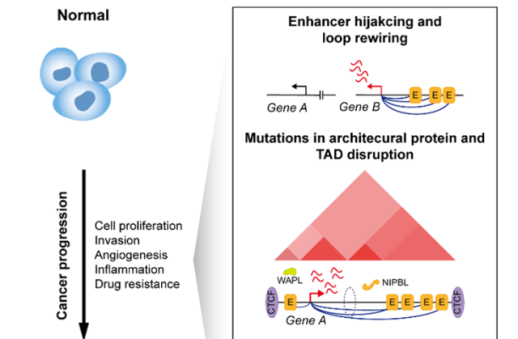 Researchers propose treating cancer by refolding genome SEOUL, September 07 (AJP) - How the genome is folded inside a cell can drive cancer without any change to the DNA sequence itself, and a review by two South Korean researchers argues that the folding should be treated as a target for cancer drugs. The review appeared in June in Experimental & Molecular Medicine, a journal published by the Korean Society for Biochemistry and Molecular Biology. Its authors, Jang Sun-young and Yoo Kyung-hyun, work in the Laboratory of Biomedical Genomics at Sookmyung Women's University. The paper reports no new experiments. It surveys what the field has established about the shape of the genome in tumors and proposes what might be done with that knowledge. The proposal rests partly on the same laboratory's earlier results. Working with liver cancer cells, the Sookmyung group reported in July last year in the journal Cancer Communications that an activated form of the protein STAT3 pulls distant stretches of DNA into new points of contact, switching on genes that drive invasion and the growth of blood vessels that feed a tumor. When STAT3 inhibitors were applied, the drug reached its target, but the rearranged structure stayed where it was. A tumor whose architecture outlasts the drug can keep the same genes running. That is one reason a treatment can work on paper and fail in a patient. Folding matters because there is so much DNA and so little room for it. A human cell carries roughly two meters of DNA inside a nucleus about six micrometers wide, less than a tenth the width of a human hair. The molecule is more than 300,000 times longer than the space that holds it, and the way it is packed determines which genes a cell can read. That packing follows a rough order. At the largest scale the genome sorts itself into two broad territories, one where active genes cluster together and one where silenced regions do. Within those territories the DNA is divided into neighborhoods, called topologically associating domains, that behave something like walled blocks. A gene inside a block can be reached by the control switches inside the same block and is largely shielded from switches next door. Inside the blocks, the strand loops back on itself to bring particular switches into contact with particular genes. Two proteins do much of the building. CCCTC-binding factor, usually written as CTCF, marks the boundaries, and a ring-shaped protein complex called cohesin draws the strand through itself to form the loops. When either is damaged or lost, walls come down. What follows is the part that makes the folding a cancer problem. A broken boundary lets a control switch from one neighborhood reach a gene in the next, a process researchers call enhancer hijacking. Some of these switches are unusually powerful stretches of DNA known as super-enhancers, and when one of them is redirected onto a gene that promotes cell growth, the gene can be driven hard without a single letter of its sequence changing. Seeing any of this required instruments that did not exist a generation ago. Hi-C, the technique that opened the field, chemically locks together pieces of DNA that are physically touching, then sequences them to build a map of which parts of the genome are in contact with which others. HiChIP narrows that map to contacts involving a particular protein. Single-cell methods apply the same logic one cell at a time, which matters in tumors, where no two cells are quite alike. Applied across tumor types, these tools have found spatial reorganization to be widespread rather than exceptional. The review's therapeutic argument turns on plasticity. Structure, unlike a mutation, is not fixed. Boundaries that have collapsed in a cancer cell might be restored, and the review points to CRISPR-based tools that can already move or rebuild specific contacts in the laboratory. A second proposed lever is phase separation, the tendency of certain proteins to gather into dense liquid droplets inside the nucleus, much as oil separates from water. Those droplets concentrate the machinery that switches genes on, and in some cancers they form where they should not. Dissolving or restraining them is one way the review suggests the architecture might be pushed back toward normal. Jang, who took her undergraduate degree at Sookmyung and then completed a master's and doctorate there under Yoo's supervision, said understanding three-dimensional genome structure "explains the mechanism of cancer in a new way and will be an important foundation for patient-tailored precision medicine and the development of next-generation cancer treatments." None of it has been tried as a treatment. Restoring a collapsed boundary and controlling phase separation are proposals, not results. CRISPR tools that edit genome architecture are laboratory instruments used on cells in a dish, and neither the review nor the work it draws on identifies a compound that could do the same thing in a person. No drug designed to target the shape of the genome rather than its sequence has entered a clinical trial. Journal/Source: Experimental & Molecular Medicine (IF=17.5, JCR 2.9%) Title: 3D chromatin architecture in cancer: mechanisms of dysregulation and emerging therapeutic strategies Link/DOI: https://pubmed.ncbi.nlm.nih.gov/42249089/ AJP Takeaways - Sookmyung Women's University researchers Jang Sun-young and Yoo Kyung-hyun argue in Experimental & Molecular Medicine that the folded shape of the genome inside a cell nucleus drives cancer independently of mutations in the DNA sequence, and that the folding itself should be treated as a drug target. - The same laboratory reported in Cancer Communications in July last year that in liver cancer cells, structural rearrangements caused by the protein STAT3 persisted after STAT3 inhibitors were applied, a possible mechanism for why a targeted drug can reach its target and still fail. - The June paper is a review rather than original research, and the strategies it proposes, restoring collapsed structural boundaries and controlling the formation of protein droplets in the nucleus, have not been tested as treatments in patients. - No drug designed to target genome architecture rather than genetic sequence has entered a clinical trial. 2026-09-07 14:10:46
 -
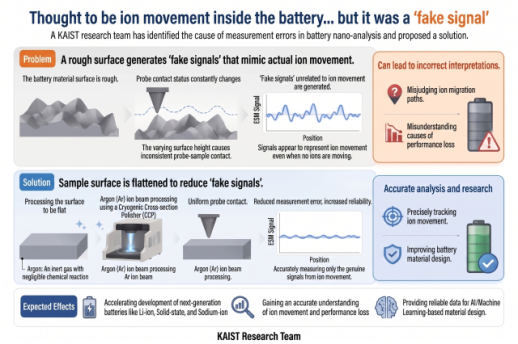 Battery scans read bumps as ion movement: KAIST SEOUL, September 07 (AJP) - Some of the signals that battery researchers read as ions moving inside a material are produced by nothing more than an uneven surface, a team at the Korea Advanced Institute of Science and Technology found, and the correction is as simple as polishing the sample flat. The team tested the effect on single-crystal silicon, a material in which no ions travel, after machining fine trenches into its surface, and a signal resembling ion movement appeared anyway. The same behavior showed up in a graphite anode of the kind used in lithium-ion batteries and in a sodium solid electrolyte. The Korea Advanced Institute of Science and Technology (KAIST) announced the findings Monday. Batteries work by shuttling lithium or sodium ions back and forth inside the cell as they charge and discharge. How fast and how freely those ions travel determines how quickly a battery can be refilled and how long it survives, so laboratories building the next generation of cells spend much of their effort mapping where inside a material ions flow easily and where they stall. One of the main tools for that mapping is electrochemical strain microscopy. The instrument drags an extremely fine probe across the surface of a battery material and applies a small alternating voltage through the tip. The voltage nudges the ions nearby, the material swells or contracts by an amount far too small to see as they crowd or thin out, and the probe registers the flexing. Ion traffic is never observed directly, only inferred from it. That is what leaves the measurement exposed. A change in the height of the surface alters how firmly the tip presses against the sample, and that shift alone moves the reading. The instrument's control system, which adjusts continuously to keep the probe tracking the surface, lags a fraction behind a sudden step or dip, and during the lag the contact stiffens or softens. The result looks much like ions on the move. To separate the two, the researchers needed a sample incapable of producing a real signal. Silicon in single-crystal form conducts no ions, so anything the instrument picked up had to come from the shape of the surface. Cutting trenches into it reproduced the grooves and steps found on a sliced battery electrode, and the height changes on their own generated a response. The mechanism resembles what happens to a car on a rutted road. The body rises and falls with the surface and the load on the tires changes with it. A probe crossing a ridge on an electrode behaves the same way, and the varying pressure feeds straight into the measurement. Real materials behaved no differently. In a graphite anode and in a sodium solid electrolyte known as Na2Zn2TeO6, the reading tracked the shape of the surface, which pointed to a problem that follows the instrument rather than any one class of material. The sharpest case appeared at grain boundaries, the seams where the small crystals making up a battery material meet, similar to the lines between laid tiles. Ions are widely thought to move quickly along those seams, and before the samples were smoothed the signal there was strong. After smoothing, the extra signal was gone. Smoothing was done with a cooling cross-section polisher, a machine that trims the cut face of a sample with a beam of argon ions. Argon reacts with almost nothing, which lets the beam shape a surface without changing the chemistry underneath. Roughness fell sharply, and the false readings fell with it. The work stops short of showing that published measurements of fast ion movement along grain boundaries were wrong. It establishes that surface shape by itself can generate a comparable signal, and that in these samples the extra signal at the seams vanished once the face was flattened. How much earlier work carries the same error has not been tested, and the polishing method was demonstrated on a small set of materials. Accurate readings at this scale also feed a second line of research, in which artificial intelligence and machine learning systems are trained on nanoscale data to predict how a new battery material will perform before anyone builds it. Those predictions are only as reliable as the measurements behind them. Three groups at KAIST ran the study together. Hong Seung-bum and Yuk Jong-min, both in the Department of Materials Science and Engineering, worked with Choi Nam-soon in the Department of Chemical and Biomolecular Engineering. Hong said he expects the result to help researchers "understand and design the operating principles of next-generation battery materials," including solid-state cells that replace liquid electrolyte with a solid and sodium-ion cells that swap lithium for a cheaper and far more plentiful metal. The paper appeared online June 11 in the journal Small Methods. Dongyan Chen, a doctoral researcher in the Department of Materials Science and Engineering, is its first author. Journal/Source: Small Methods Title: Quantitative Analysis of Topographic Crosstalk in DART-ESM Arising from Feedback-Loop-Delay-Induced Contact Stiffness Variations in Battery Materials Link/DOI: 10.1002/smtd.70763 AJP Takeaways - KAIST said a widely used nanoscale imaging technique can produce signals resembling ion movement when the only thing changing is the height of the sample surface. - KAIST researchers reproduced the effect on single-crystal silicon, which conducts no ions, and again in a graphite anode and the sodium solid electrolyte Na2Zn2TeO6. - KAIST reported that the strong signal seen at grain boundaries disappeared once the sample face was flattened with an argon ion beam, and the team did not test how much earlier work carries the same error. - Small Methods published the paper online June 11, three months before the announcement, tracing the false readings to a lag in the instrument's tracking system that changes how firmly the probe presses on the surface. 2026-09-07 09:53:35
 -
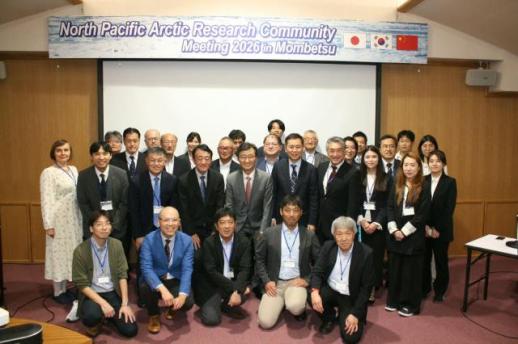 South Korea backs rules-based Arctic order at Japan research meeting SEOUL, September 04 (AJP) - Cooperation on the Arctic among South Korea, China and Japan matters more as the region warms and its politics harden, South Korea's ambassador for polar affairs told a research meeting in northern Japan this week. None of the three countries holds territory above the Arctic Circle. All three were admitted as observers to the Arctic Council, the main intergovernmental forum for the region, at a ministerial meeting in Kiruna, Sweden, in May 2013, alongside India, Italy and Singapore. Observers may attend meetings and contribute to working groups, but they do not vote. Lee Tae-woo attended the 12th meeting of the North Pacific Arctic Research Community, held in Monbetsu, Hokkaido, from Sept. 2 to 4, and delivered congratulatory remarks, South Korea's foreign ministry said. Lee credited the network with growing into a platform for concrete and practical cooperation across a range of fields. He also stressed that the South Korean government seeks a peaceful, sustainable and open Arctic, and said it would continue to contribute to international cooperation on the region grounded in international norms. This year's session of the North Pacific Arctic Research Community (NPARC) took up the state of Arctic cooperation by countries outside the region and where the three neighbors might work together next. Participants presented on Arctic policy, natural science, Arctic shipping routes and the participation of Indigenous peoples in decisions affecting the region. Those taking part included Japan's ambassador for Arctic affairs, the head of the Shanghai Institutes for International Studies, the president of the Korea Maritime Institute and experts drawn from industry, universities and research institutes. On the margins of the meeting, Lee met Takahashi Katsuhiko, Japan's ambassador for Arctic affairs, and the two discussed major Arctic issues and ways for the two countries to cooperate in the region. The ministry said South Korea would keep contributing to international cooperation on Arctic peace and sustainable development as a responsible Arctic Council observer. NPARC has been held every year since 2014, rotating among the three countries. The Korea Maritime Institute, the Hokkaido University Arctic Research Center and the Shanghai Institutes for International Studies serve as the national secretariats. AJP Takeaways - Lee Tae-woo, South Korea's ambassador for polar affairs, told the 12th North Pacific Arctic Research Community meeting in Monbetsu, Hokkaido, on Sept. 2 to 4 that Arctic cooperation among South Korea, China and Japan matters more as the region warms and its politics harden. - South Korea's foreign ministry said the government seeks a peaceful, sustainable and open Arctic and would keep contributing to cooperation grounded in international norms as an Arctic Council observer. - Takahashi Katsuhiko, Japan's ambassador for Arctic affairs, met Lee on the margins of the session, where the two discussed major Arctic issues and bilateral cooperation in the region. - The Arctic Council admitted South Korea, China and Japan as observers at its Kiruna ministerial in May 2013, alongside India, Italy and Singapore, giving them attendance and working-group roles but no vote. 2026-09-04 17:08:34
 -
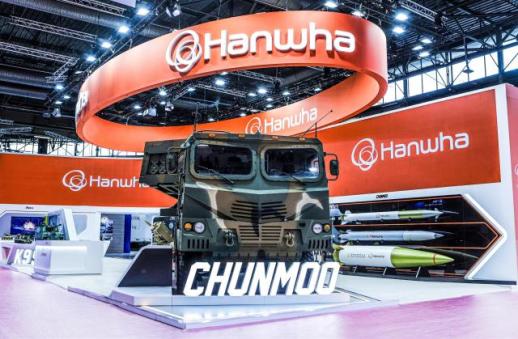 Croatia turns to S. Korean rockets as U.S. blocks long-range munitions SEOUL, September 04 (AJP) - Eighteen truck-mounted rocket launchers able to strike targets more than 300 kilometers away are set to enter Croatian service, bought from South Korea after the United States suspended deliveries of the long-range rockets Zagreb had already contracted for. The Croatian government was scheduled to approve the purchase of 18 K239 Chunmoo self-propelled multiple rocket launchers (MRLS) and their munitions at a cabinet session on Friday, the Zagreb daily Jutarnji list reported on Thursday (local time). The price is 435.2 million euros ($505.9 million) excluding value-added tax. Croatia contracted with the U.S. in late 2024 for eight HIMARS launchers. Washington has since halted deliveries to allies of rockets capable of reaching 300 kilometers because of its own stockpile requirements, and rockets capable of reaching 500 kilometers are barred from sale. That left Croatia holding launchers without access to the deep-strike ammunition that justified buying them. According to Croatia's Defense Minister Ivan Anušić, a deal with Hanwha Aerospace is expected to be signed shortly. A separate agreement covers Poland's WB Group, which will install the command and control system on the Croatian launchers. 85 percent of the order is due for delivery by 2028, with payments spread across 2026 to 2029. Talks between the Croatian defense ministry and its South Korean counterpart began about a year ago. The Chunmoo also fires a larger salvo than the American system, carrying two pods holding 12 rockets against one pod holding six. Approval would make Croatia the fourth European buyer, after Poland, Estonia and Norway. Both Prime Minister Andrej Plenković and President Zoran Milanović backed the purchase. Milanović announced new arms buying two months ago in Ankara, after a NATO summit, framing it as an answer to Serbia's acquisition of PULS, an Israeli rocket artillery system built by Elbit Systems. Croatia and Serbia fought a war between 1991 and 1995 and have both expanded their arsenals in recent years. "As a state we will have to counter that in some way, by equipping ourselves with something similar," Milanović said at the time, according to Jutarnji list's report. The K239 Chunmoo entered South Korean service in 2015 as a replacement for the K136 Kooryong, a 130mm rocket system fielded in 1986. Development began in 2009 under a program funded by the Defense Acquisition Program Administration (DAPA), South Korea's arms procurement agency, and finished in 2013, with production starting the following year. More than 350 have been built. What sets the launcher apart is how it loads. Each vehicle carries two sealed pods on an eight-wheel truck chassis, and the two pods can hold different calibers at the same time. A commander can fire an area-saturation rocket and a precision-guided rocket from the same launcher without swapping hardware or returning to a depot. A typical Chunmoo vehicle carries a mixed load of four 280mm rockets in one pod and six guided 239mm rockets in the other. The 239mm rocket, steered by satellite and inertial navigation, reaches about 80 kilometers. A full load of 12 can be fired in under a minute. Unguided 130mm rockets pack 20 to a pod and reach roughly 36 kilometers, designed to blanket an area rather than hit a single point. The longest reach comes from one missile at a time. The CTM-290, a 600mm ballistic missile derived from the Korean Tactical Surface-to-Surface Missile (KTSSM) family, fills an entire pod on its own. After launch, it climbs to between 25 and 40 kilometers of altitude before diving on the target. The KTSSM's range is estimated to be more than 300 kilometers. Hanwha Aerospace and open technical references list it at about 290 kilometers, the figure its designation reflects. Newer guided rockets for the system have reportedly been offered at ranges up to 500 kilometers. The launcher weighs about 31 tons, travels at up to 80 kilometers per hour on road, and is run by a crew of three. Each launcher is paired with an ammunition resupply vehicle built on the same chassis. Poland opened the export run in 2022, signing a framework agreement for 288 systems in October of that year and a firm contract for 218 in November worth about $3.5 billion. Polish launchers ride on domestic Jelcz trucks and carry the Topaz fire control and Fonet communications systems made by WB Group, the same company now contracted for Croatia's command and control fit. Hanwha Aerospace has since set up a joint venture in Poland to build Chunmoo rockets in Europe. Estonia signed a defense cooperation agreement in Seoul in October 2025 to field the system alongside the American HIMARS it already operates. Norway signed in Oslo on Jan. 30 for 16 launch vehicles, a precision-guided missile package and logistics support, a contract Hanwha Aerospace valued at about $922 million inside a long-range fires program budgeted at roughly $2 billion. Saudi Arabia and the United Arab Emirates bought earlier and smaller batches. The Croatian contract covers launchers, rockets, logistics support, and six weeks of training. Operating all 18 launchers will take about 100 soldiers. Where they will be based within the Croatian Army has not been disclosed. AJP Takeaways - The Croatian government was set to approve the purchase of 18 K239 Chunmoo self-propelled multiple rocket launchers and munitions from Hanwha Aerospace for 435.2 million euros excluding VAT at a cabinet session Friday, Jutarnji list reported. - The United States has suspended deliveries to allies of rockets reaching 300 kilometers and barred sale of those reaching 500 kilometers, leaving Croatia with eight HIMARS launchers it contracted in late 2024 and no access to the deep-strike munitions behind the purchase. - President Zoran Milanović framed the new buy as an answer to Serbia's acquisition of the Israeli PULS system, announcing it in Ankara two months ago after a NATO summit. - Hanwha Aerospace signed a separate Chunmoo contract with Norway in Oslo on Jan. 30 covering 16 launch vehicles for about $922 million, following earlier orders from Poland and Estonia that would make Croatia the fourth European operator. 2026-09-04 14:21:08
 -
 KAIST method cuts 87 % of AI query errors and token costs SEOUL, September 04 (AJP) - When an artificial intelligence system writes a database query that will not run, the database that rejected it already knows what is wrong with it. Most systems treat that rejection as a plain failure signal and hand the whole query back to the AI to be written again from scratch. A team at the Korea Advanced Institute of Science and Technology has built software that reads the rejection as a set of directions and repairs only the broken piece. Tested on BIRD, a benchmark researchers use to compare systems of this kind, the software cleared up to 87.4 percent of the execution errors in queries the AI produced on its first attempt, and raised execution accuracy, the share of questions that come back with the right answer, by up to 5.8 percentage points over the strongest previous method. Measured against systems that regenerate the query from scratch, it consumed up to 15.1 times fewer tokens, the units of text a language model is billed by, and finished its repairs up to 29.6 times faster. The software is called SafeQL. It was built at the Korea Advanced Institute of Science and Technology (KAIST), South Korea's state-funded science and technology university, by a School of Computing team led by Kim Min-soo. Doctoral student Lee Geon-ho was the first author on the paper, and Kim was the corresponding author. The work was published in the Proceedings of the VLDB Endowment and listed in the program of the International Conference on Very Large Data Bases, which ran from Aug. 31 to Sept. 4 in Boston. Databases answer only in SQL, short for Structured Query Language, a command language that requires every table and column to be named exactly as it exists in the system. Text-to-SQL tools remove that requirement. A manager can ask which product sold best last year, or which items are running low in stock, and the AI converts the question into SQL and returns the figures. The conversion goes wrong often enough to matter. A language model querying a company's sales records may invent a column that does not exist, call a function the database does not support, or link two tables in a way the underlying structure does not permit. The query fails to execute, and the AI comes back with nothing. Until now, the standard remedy has been to send the error message back to the model and ask for a replacement. Rewriting an entire document because one word in it is wrong carries an obvious cost, and query repair works the same way. Parts that were already correct can change, new errors can appear in place of the old one, and every round trip to the model spends more tokens and more time. SafeQL keeps the query the AI wrote and works from it. Reading the error the database reports alongside the schema it can inspect directly, the software locates the element that failed and replaces it, swapping a nonexistent column for a real one, adding a missing table link, or correcting a function or a search value. A single error usually has several plausible fixes, and testing all of them across a chain of repairs would multiply the candidates beyond any useful limit. KAIST defined the set of queries the database can actually execute as a safe query space, then searched toward it by trying first the candidates closest in structure and meaning to what the model originally wrote. Candidates whose data types do not match are discarded before they are tested. Kim and Lee proved mathematically that the search arrives at the safe query space within a finite number of steps. Rather than sit alongside the database, SafeQL runs inside PostgreSQL, the open source database system used across much of the software industry. Working from the parse tree PostgreSQL builds for every incoming command, it can pinpoint the failure even in long and heavily nested queries. Repeated similarity calculations are held in a cache and a vector index to keep the search cheap. When the first query is too badly broken to patch, the software calls the language model back for a fresh one and resumes the search from there. KAIST said the approach should reduce the cost and time of running AI on company data, and bring closer the point at which AI agents can handle sales, customer and inventory records reliably enough to be trusted with the work. Errors at the data access stage carry forward, since everything an agent does next rests on figures it was unable to retrieve in the first place. "For AI to take on real work at a company, accurately finding the data it needs is what matters," Kim said. On Spider, an older benchmark drawn from databases across many different fields, SafeQL reached 91.7 percent execution accuracy while using up to 96.5 times fewer tokens than regeneration methods and cutting repair time by up to 34.5 times. Title: SafeQL: Search-based Refinement for Safe and Efficient LLM-based Text-to-SQL Link/DOI: 10.14778/3819518.3819545 AJP Takeaways - KAIST's SafeQL repairs only the failed element of an AI-generated database query rather than regenerating the entire query, clearing up to 87.4 percent of execution errors on the BIRD benchmark. - Kim Min-soo's team reported token use down by up to 15.1 times and repair time down by up to 29.6 times against regeneration methods, with 91.7 percent execution accuracy on the Spider benchmark. - PostgreSQL hosts the software directly, giving it the database's own parse tree to locate failures inside long and heavily nested queries. - The VLDB Endowment published the paper in its Proceedings, and the International Conference on Very Large Data Bases listed it in a program that ran Aug. 31 to Sept. 4 in Boston. 2026-09-04 10:35:48
 -
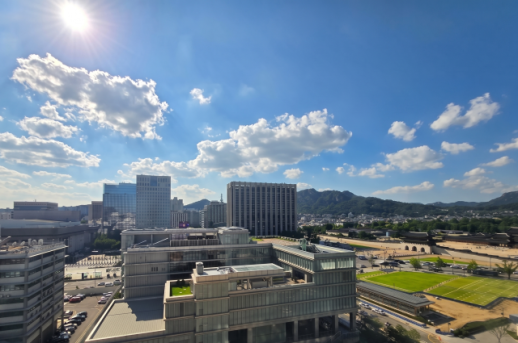 S. Korea to move ministries and state bodies out of Seoul SEOUL, September 03 (AJP) - Central government ministries and about 350 public institutions will start leaving the Seoul metropolitan area in 2027, advancing a project the Constitutional Court forced South Korea to scale back more than two decades ago. Prime Minister Han Seong-sook said Thursday the government would publish its list of institutions to be moved in the fourth quarter of this year and begin relocating them the following year. The list will be built under what she called a principle of minimum retention, meaning an institution stays in the capital region only if there is a compelling reason to keep it there. The 350 figure covers public institutions, a South Korean category running from state-owned energy and housing corporations to research institutes and small licensing bodies. About 525 exist nationwide with an authorized headcount of roughly 432,000. Han said they would be placed in clusters rather than parceled out across provinces. "We will avoid a share-the-spoils distribution and instead gather the energy of regional growth like a bonfire, concentrating institutions around the innovation cities to maximize the strength of regional hubs," she said at Government Complex Seoul. Innovation cities are planned districts built outside the capital region from 2005 to house institutions moved out of Seoul in the first relocation round. The ministries are the harder half of the announcement, because moving them requires changing the law. Interior and Safety Minister Yun Ho-jung said the Ministry of Justice and the Ministry of Gender Equality and Family would go to the central city of Sejong from the first half of 2027, ahead of other ministries, because their size and the ripple effects of their departure are large. Both are currently barred from moving. Article 16 of the Special Act on the Construction of the Multifunctional Administrative City in the Yeongi-Gongju Area, the 2005 law that created Sejong, names five ministries as excluded from relocation. They are Foreign Affairs, Unification, Justice, National Defense, and Gender Equality and Family. All five were held in the capital region on the argument that their work is bound tightly to the president, the National Assembly, and the judiciary. Yun said the government would push an amendment striking those ministries from the exclusion list. "We will also pursue a revision of the act that deletes the relevant institutions from the list of bodies excluded from relocation," he said. The route has been used before. The Interior and Safety Ministry was itself written into the exclusion list in a 2014 revision, removed by a further amendment in 2017, and relocated to Sejong afterward. Yun said the Ministry of Foreign Affairs and the Ministry of Unification would be considered for relocation in step with the presidential office move in 2030 and the opening of the National Assembly's Sejong chamber in 2033. That leaves the Ministry of National Defense as the only one of the five with no timetable attached to it. Agencies needing purpose-built accommodation will move later. Yun said the indictment agency and the serious crime investigation agency, along with the Korean National Police Agency, would relocate only after new buildings are finished. The first two launch on Oct. 2, when Korea abolishes its 78-year-old prosecution service and splits investigation from indictment. Institutions left unnamed on Thursday, including the Financial Services Commission, have not been ruled out. Yun said the final list would be confirmed and formally notified during the fourth quarter. The plan closes a fight running since the late President Roh Moo-hyun campaigned in 2002 on moving Cheong Wa Dae, the presidential office, and the ministries to the Chungcheong region in the center of the country. His New Administrative Capital Act was promulgated on Jan. 16, 2004. Ten months later, on Oct. 21, the Constitutional Court voided it, holding that Seoul's status as the capital forms part of an unwritten customary constitution built on some 600 years of practice, and that moving it would require a constitutional amendment or a national referendum. The Roh government returned in 2005 with a version that left the president in Seoul and sent the ministries alone. That became Sejong, and that is the version the court allowed to stand. President Lee Myung-bak tried to undo it. His government abandoned the ministry relocation in January 2010 and proposed converting Sejong into a self-sufficient education and business city. The National Assembly rejected the revision on June 29, 2010. Of 275 members present, 105 voted for it and 164 against, with six abstentions. Prime Minister Chung Un-chan, who had led the effort, resigned weeks later. Sejong launched as a special autonomous city on July 1, 2012, with a population of about 100,700. The presidential office planned there is due for completion in August 2029, nine months earlier than the original target, with groundbreaking set for 2027. The National Assembly's Sejong chamber is scheduled for 2033. Land, Infrastructure and Transport Minister Kim Yun-duk said the second round would not repeat the pace of the first, which took more than seven years from announcement to actual relocation. Institutions will move into leased private buildings starting next year rather than wait for new complexes to be finished. Kim said the criteria used to justify staying in Seoul during the first round would be reviewed in full, and that support would be weighted toward institutions that move farther and move sooner. He also said the first round failed to pull anchor companies and research institutes along with the relocated institutions, and that the second would group them by the strategic industry of the innovation city receiving them. Han said the government would cover relocation and housing costs for staff and improve schools and hospitals in the receiving areas. She acknowledged the plan would meet resistance. "It will not be without some disagreement and walls of competing interests," she said, promising to listen to local governments and labor groups. The government argues the concentration itself is the problem. Han said the capital region is saturated with people, capital, companies and infrastructure while other regions face depopulation. "Balanced growth is not a matter of choice. It has become a survival strategy for a sustainable Republic of Korea," she said. Seoul and the surrounding region will be redirected toward economic, cultural and international exchange functions, Han added. Kim set out the standard the fourth-quarter list will be measured against. "Unless an institution absolutely must remain, we will include it in the relocation in principle," he said. AJP Takeaways ● South Korea will start moving central government ministries and about 350 public institutions out of the Seoul metropolitan area in 2027, with the relocation list published in the fourth quarter of this year. ● The Ministry of Justice and the Ministry of Gender Equality and Family go first, from the first half of 2027, but the National Assembly must first amend the 2005 law that bars them from moving. ● That law exempted five ministries from relocation. Foreign Affairs and Unification are now tied to the 2030 presidential office move and the 2033 National Assembly Sejong chamber, leaving National Defense as the only one without a timetable. ● The plan revives a project the Constitutional Court struck down in October 2004, ruling that Seoul's status as capital is part of an unwritten customary constitution. ● Institutions will move into leased private buildings rather than wait for new complexes, after the first relocation round took more than seven years to get underway. 2026-09-03 16:12:15
 -
 S. Korea targets physical AI, expert warns against imitation SEOUL, September 02 (AJP) - South Korea can reach the top tier of physical artificial intelligence by pairing its factory base with the data those factories generate, Prime Minister Han Seong-sook told a technology forum in Seoul on Wednesday. Physical AI refers to systems that act in the world rather than on a screen, driving robots, machines and vehicles through real space. It is the industry's next frontier after generative AI, and the competition for it has pulled in national governments. "If semiconductors are the brain of AI, physical AI is the body that moves in the real world, and the heart supporting all of it is the AI data center," Han said. The government intends to link the three through a set of mega-projects so that each one feeds the others. She pointed to the San Francisco AI Declaration that President Lee Jae Myung issued in July during a trip to the United States and South America, which set out a plan to make South Korea a global production base for AI and a core link in the AI supply chain. Movement and process data logged on Korean factory floors, combined with the manufacturers already using it, is the government's answer to the question of what South Korea brings that its rivals do not. The forum, the 2026 GGGF, opened Wednesday at The Plaza in central Seoul and runs through Friday under the theme "KOREA, State of AI." Aju News Corporation hosts it with the Global Economic and Financial Research Institute. Roughly 200 lawmakers, academics, students and industry executives attended the opening, where National Assembly Speaker Cho Jung-sik also spoke. The keynote went to Dennis Hong, a professor at the University of California, Los Angeles and director of its Robotics and Mechanisms Laboratory, known as RoMeLa, on whether AI civilization arrives at all without physical AI competitiveness. Hong had made his case days earlier in an interview ahead of the forum, and it cuts against the ambition the government laid out from the same stage. The United States holds the software ecosystem and the capital. China holds supply chain scale, price and the speed to mass-produce. South Korea loses if it competes on either. "What matters in physical AI is iteration speed, actually building robots, deploying them, getting data, learning, then building better robots," he said. Not who designs the best brain or body, he added, but who evolves fastest. He named semiconductors, automobiles, batteries, electronics and precision manufacturing as the base South Korea already has, and warned against the alternative. "We should not get into a numbers race, building the same humanoids just because the United States and China are building humanoids," Hong said. Samsung, Hyundai Motor and LG hold something the internet cannot supply, which is data from real production sites, and the companies best placed to use it are the ones that already own the plants, the products and the customers. Two problems sit in the way. Workers asked to teach their skills to a machine have no guarantee the job survives the lesson, and no country has settled who owns the resulting data or how its value gets shared. Hong said rules on ownership, consent and compensation need to come first. He was also blunt about the gap between what physical AI demonstrates and what it delivers. "Succeeding once in a demonstration and running reliably in the field all day are completely different problems," he said. "Technological progress and a bubble exist at the same time." 2026-09-02 17:31:56
 -
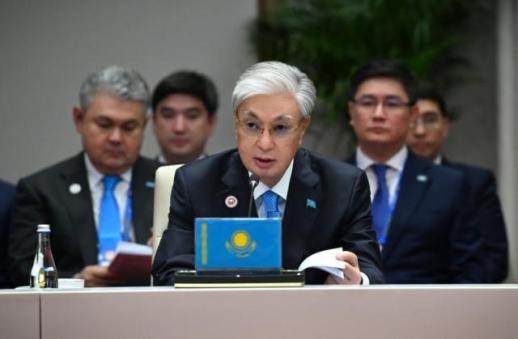 Kazakhstan offers to host SCO Development Bank headquarters SEOUL, September 02 (AJP) - A development bank that the Shanghai Cooperation Organization has not yet agreed to create already has a country volunteering to house it. Kazakhstan's President Kassym-Jomart Tokayev told the Shanghai Cooperation Organization (SCO) Council of Heads of State in Bishkek on Sept. 1 that Kazakhstan would take the lender and its headquarters if the bloc's members reached agreement on building it. He backed the proposal, which China has pushed, and said the money should go first to infrastructure, technology and industrial projects. "And if the member states reach consensus, Kazakhstan could host this institution, its headquarters," the Kazakh president said. The bank does not exist yet. Tokayev attached his offer to a condition the bloc has not met, and the leaders left Bishkek without a founding document for the institution. The SCO groups 10 member states, including China, Russia, India, Pakistan, Iran and four Central Asian countries, and has run for a quarter century without a development lender of its own. Tokayev built the offer on trade numbers. He said commerce among SCO countries was approaching $1 trillion, then argued that the bloc's economic connections still fall well short of what its members could manage together. Kazakhstan wants what he called a broad SCO trade and investment space with minimal barriers, digital procedures and developed transport and logistics links. To get there, he proposed a workaround for the bloc's habit of moving at the pace of its slowest member. "We propose introducing a mechanism of pilot industrial consortia, which will allow states to carry out projects as they become ready for them, without waiting for all participants to join," he said. "Successful undertakings can be scaled up across the whole Organization." He also proposed launching SCO cross-border trade zones on the basis of existing border cooperation centers, describing them as a testing ground for simplified goods exchange, digital customs procedures and modern settlement mechanisms. Transport came next, and here Kazakhstan has the most direct stake. The country sits on the overland routes between China and Europe, and Tokayev listed the Belt and Road Initiative, the Trans-Caspian International Transport Route and the North-South corridor as networks the SCO should knit together. He asked members to build a single digital transit platform that would follow cargo from departure point to final recipient, and to adopt a Transport Connectivity Strategy of the Shanghai Cooperation Organization through 2035. On technology, Tokayev argued that artificial intelligence is moving too fast for member states to simply adapt to it. He said SCO countries should shift from trading experience to building technology together, and proposed a network of AI centers under SCO auspices drawing on member states' universities, research institutions and technology companies. Kazakhstan already signed on to a parallel Chinese project in this area. On July 16 in Shanghai, it became one of 29 founding members of the World Artificial Intelligence Cooperation Organization, an intergovernmental body headquartered in the Chinese city and created on Beijing's initiative to set common approaches to AI governance. Security occupied the first section of his speech. Tokayev proposed an SCO ministerial conference on strategic stability and confidence-building measures in Eurasia, with an agenda covering the reduction of military risks, restraint of a new arms race, and the prevention of dangerous incidents. He warned that the effects of armed conflict are no longer contained where the fighting happens. "Of particular concern is the fact that the consequences of armed conflicts are already spreading beyond the immediate combat zones, affecting international markets, commercial shipping and the stability of energy and transport links," he said. Kazakhstan backed the aims of two bodies the bloc is standing up, the SCO Universal Center for Countering Security Challenges and Threats and the SCO Anti-Drug Center, saying their work would lift coordination among member states' agencies to a different level. Tokayev also asked that the question of reforming the SCO be handed to member states' foreign ministries. The session continued in the SCO Plus format, where Tokayev turned to the wider international system and made an unusual argument for a leader in that room. He defended the United Nations. "A good deal of criticism is directed at the U.N.," he said. "Even if this criticism is partly justified, it does not cancel out the main point, that there is no alternative to this Organization." He said the U.N. Charter should remain the universal foundation of international law, praised Secretary-General Antonio Guterres for defending it, and said the reform Guterres began would succeed only if member states supplied the political will. Tokayev then made a case for countries in Kazakhstan's own weight class. Responsible middle powers, he said, can broker between competing centers of power and should have their positions reflected in global governance mechanisms. He pointed to Kazakhstan's decision in July to join the Convention on the Establishment of the International Organization for Mediation, another Chinese initiative, as evidence of that approach. He proposed fixing the SCO's core principles in a special U.N. General Assembly resolution timed to the International Day of Multilateralism and Diplomacy for Peace. Water took up the longest passage of the second speech. Tokayev said dozens of U.N. structures handle water issues without any single intergovernmental organization holding a comprehensive mandate, and repeated Kazakhstan's call for an International Water Organization under U.N. auspices, with an SCO water analysis center as its regional counterpart. On technology governance, he cited a project already approved. The Asia-Pacific Digital Solutions Center for Sustainable Development, established in Almaty on Kazakhstan's initiative under the U.N. Economic and Social Commission for Asia and the Pacific, should help spread working digital solutions to developing countries, he said. He used the SCO Plus floor to report on changes at home, telling the leaders that Kazakhstan's new constitution took effect July 1 and that a new unicameral legislature, the Kurultai, has begun work. Kyrgyz President Sadyr Japarov, Belarusian President Alexander Lukashenko, Indian Prime Minister Narendra Modi, Iranian President Masoud Pezeshkian, Chinese President Xi Jinping, Pakistani Prime Minister Shehbaz Sharif, Russian President Vladimir Putin, Tajik President Emomali Rahmon and Uzbek President Shavkat Mirziyoyev also addressed the session. The leaders closed the meeting by signing the Bishkek Declaration marking the organization's 25th anniversary, along with decisions approving the regulations of the SCO Universal Center for Countering Security Challenges and Threats and the executive committee of the SCO Anti-Drug Center. No document establishing the development bank was among them. 2026-09-02 17:00:59
 -
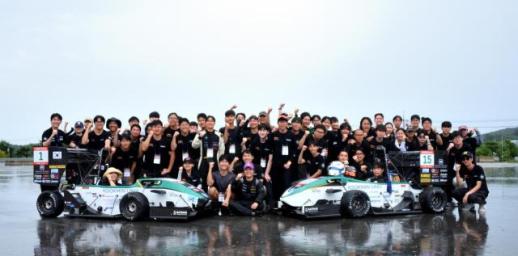 Kookmin University grabs 10th Formula Student Korea win SEOUL, September 02 (AJP) - Two electric race cars built by undergraduates finished first and second at South Korea's biggest student car-building competition last weekend, giving Kookmin University a 10th straight overall title in the event's Formula division. About 1,800 students from 43 universities competed at Formula Student Korea 2026, which ran from Aug. 27 to 30 at the Korea Automotive Technology Institute's vehicle and driver safety research center in Yeonggwang County, Jeonnam-Gwangju Special Metropolitan City. The Korean Society of Automotive Engineers organized the event with the institute. The overall title went to KEF-26, one of two cars entered by the university's student car-building club, Kookmin Racing. The team also received an award from the Ministry of Trade, Industry and Resources. The club's second car, F-26, took gold in the electric formula class. The competition has run every year since 2007. Teams spend roughly a year designing and fabricating a single-seat open-wheel car, and judges score both the quality of the design and how well the students can account for the choices they made. The cars then run timed events measuring acceleration, cornering and durability. The Korean Society of Automotive Engineers (KSAE) frames the event as workforce training. Students who finish a car have worked through suspension geometry, battery packaging, and manufacturing cost, the kind of full-vehicle problem that engineers at automakers rarely touch in their first years on the job. KSAE gives its top award, the KSAE Grand Prix Formula, to the team with the highest combined score across every event. Rain fell through the driving events. KEF-26 placed at or near the top of all of them and completed the endurance race with the fastest lap time in the field. Kookmin teams also swept the individual awards for acceleration, for the skidpad, a figure-eight course that measures how much cornering grip a car can hold, and for the written design report. Formula Student Korea accepts both combustion and electric entries. Kookmin ran two electric cars this year, as it did in 2025, the first season the club fielded a pair of them. F-26 had already been on track this summer. At Formula SAE Electric, run by SAE International from June 16 to 20 at Michigan International Speedway, the car finished eighth overall in a field of about 100 university teams. It placed third in the endurance event, ninth in the skidpad and 11th in autocross, and reached the design final, where it finished 12th. It was only Kookmin's second entry in the electric class. That left the club about nine weeks between Michigan and Yeonggwang. "There was a lot of pressure in preparing for the domestic competition right after the world event," said Cho Hyun-sung, an automotive engineering student who managed the F-26 project. "Winning the overall title for a 10th straight year and raising Kookmin University's standing makes me proud." Shin Sung-hwan, dean of the university's College of Automotive and Mobility and the club's faculty adviser, said the streak reflects both the students' work and sustained backing from the university, and pledged continued support for training engineers who will lead the future auto industry. Kookmin Racing was founded in 2001. Its best result at Formula SAE remains a fourth-place finish in 2015, the highest placing by an Asian team that year. 2026-09-02 15:55:51