

Journalist
Park Sae-jin박세진
swatchsjp@ajupress.com
Assistant EditorForeign embassies in Seoul & Geopolitics, Diplomacy, Policy
Experienced journalist and editor at AJU PRESS specializing in multilingual news. I cover international diplomacy, geolpolitics, and policy, consistently delivering highly accurate, compelling reporting for a worldwide audience.
"Reporting the facts. Shaping the narrative. Every second counts."
Latest by Park Sae-jin
-
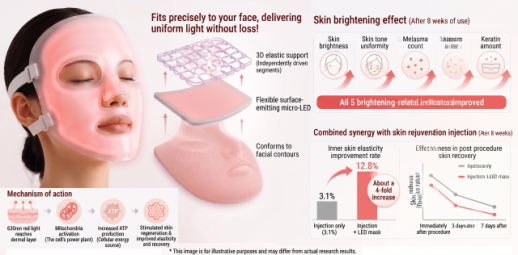 KAIST LED mask quadruples skin injection gains SEOUL, September 02 (AJP) - A wearable LED mask that conforms to the face's contours has made a common dermatology injection about four times more effective at restoring skin elasticity in a clinical trial. This result points to home beauty devices as a way to carry the benefit of a clinic visit into daily use, the Korea Advanced Institute of Science said Wednesday. According to the Korea Advanced Institute of Science and Technology (KAIST), the project was led by Lee Keon-jae, a professor in the Department of Materials Science and Engineering, and was carried out with researchers at the cosmetics group Amorepacific. The researchers found that deep skin elasticity improved by 12.8 percent on the side of the face that received both the injection and the mask, compared with 3.1 percent on the side treated with the injection alone. Thirty-three people took part, using the mask on one side of the face for eight weeks. Home skin care devices have sold well in South Korea and abroad, but the rigid LED masks on the market cannot press against the nose and the hollows under the eyes at the same time. Wherever a gap opens between the light and the skin, more of the light reflects away, and heat that pools in one spot raises the risk of a low-temperature burn. The mask tested here has two parts. Thousands of tiny LEDs sit under a diffusing layer so that light leaves the device as an even sheet rather than a scatter of bright points, and the whole panel rests on a three-dimensional elastic frame whose sections move independently to follow the nose, the cheeks and the jaw. That frame lifted the share of the mask in contact with skin to 78.1 percent from 46.9 percent and cut the distance between the light source and the skin to 1.8 millimeters. Across eight measurement points on the face, the red light arrived at 93.83 percent uniformity. In a 2024 study, a KAIST team reported that the same class of mask improved deep skin elasticity by as much as 340 percent compared with conventional LED masks. The new trial extends the work to skin brightening and to what happens after a needle procedure. The injection used in the trial delivers polynucleotide, a DNA-derived material, into the dermis, the layer beneath the skin's surface that holds the collagen and elastic fibers responsible for firmness. Dermatologists use it to prompt regeneration, and it has become one of the more popular treatments in South Korean clinics. On its own it has no established effect on skin tone. Every participant received the injection across the entire face. The mask went on one side only, a design known as a split-face trial, which lets researchers compare two treatments on the same person and remove differences in individual skin type from the result. No group used the mask without the injection, so the trial measures what the light adds rather than what it does alone. The mask side scored better on all five brightening measures the team tracked, covering skin brightness, evenness of tone, dead skin buildup, and the number and area of melasma patches, the brown discoloration that spreads across cheeks and foreheads with sun exposure and hormonal change. Skin tissue taken from human donors and treated in the laboratory showed the same pattern. Expression of MITF and TYR, two markers that govern how much melanin skin cells produce, fell in the tissue exposed to the LEDs, and new collagen formation ran about 15 percent higher than with the injection alone. The light itself was red, at a wavelength of 630 nanometers, or 630 billionths of a meter. The researchers attribute the effect to mitochondria, the structures inside cells that generate energy, which respond to red light by producing more ATP, the compound cells burn to repair and rebuild tissue. Recovery after the needle went faster as well. Three days on, water loss through the skin had dropped 20.8 percent on the mask side against 12.4 percent on the other, a sign that the skin barrier had rebuilt more quickly, and redness was lower. "This study confirms clinically that a home LED mask can go beyond regeneration to deliver a brightening effect, and it shows how much it matters to press the light against the skin," Lee said. He added that he expects the approach to grow into a platform linking clinic treatment to home care. Amorepacific, whose researcher is a co-corresponding author on the paper, plans to bring a product based on the technology to Japan in the fourth quarter of this year and the United States in the first quarter of 2027. Journal/Source: Nano Energy Title: Clinical validation of skin brightening and rejuvenation enabled by a skin-conformable surface-emitting micro-LED mask with injection Link/DOI: 10.1016/j.nanoen.2026.112288 2026-09-02 14:16:13
 -
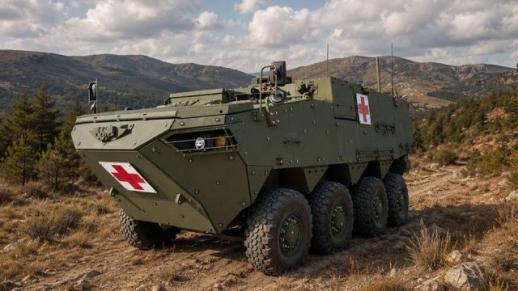 S. Korea builds armored ambulance for combat evacuation SEOUL, September 02 (AJP) - South Korea has completed development of an armored ambulance built to reach wounded soldiers in areas its current field ambulances cannot enter. Hyundai Rotem said Tuesday it had finished system development of the vehicle under a program run by the Defense Acquisition Program Administration (DAPA). Design, prototype construction, and test and evaluation were carried out with domestic technology over about two years beginning in 2024. The program cost 14.5 billion won ($10.6 million). The vehicle carries wounded soldiers from the front line to hospitals in the rear, and medics can treat them during the drive. South Korea has been doing that work with the military's standard-issue ambulance and with commercial ambulances. DAPA said both have low mobility and are limited in protection, rough-terrain performance, and cross-country driving, which left them unable to support evacuation close to combat units. That gap matters most for mechanized formations and amphibious landing forces, which push deep into enemy-held ground on offensive maneuvers. DAPA said casualties in those units need evacuation support that can come to them, and it set the standard at treatment within 60 minutes of injury, the interval known as the golden hour. The new vehicle is built on the wheeled command post vehicle, a design already in South Korean service with proven protection and mobility. Hyundai Rotem said it chose that platform because its interior is taller than a standard wheeled armored vehicle, giving enough room for medical equipment and for medics to work. With two medics aboard, the vehicle carries up to six walking wounded or four patients on litters. The compartment holds a litter loading device that moves a patient in and out lying flat, an oxygen supply, an automated external defibrillator, patient monitoring equipment, and a stock of medicines. High-intensity light-emitting diode (LED) lamps in the ceiling light the space. Medical personnel can treat a patient while the vehicle is moving and can draw on remote medical support during the run. The vehicle keeps its interior at a pressure above the outside air to block contaminated air from entering, a measure against chemical and biological attack. DAPA said the vehicle will also be used to evacuate civilian casualties from disaster sites that ordinary vehicles cannot reach. The armored ambulance adds to Hyundai Rotem's wheeled armored vehicle line, which was designed in modules so variants can be built for different missions. The wheeled command post vehicle came out of the same approach. Hyundai Rotem said the completed vehicle should let the military move field casualties more safely and quickly, and that the company would "lead innovation in defense technology that can protect the safety and lives of the public as well as military personnel." DAPA has begun preparing for mass production and said it aims to deliver on schedule. Ko Hyung-seok, the Army brigadier general who heads the agency's maneuver systems bureau, said the vehicle combines mobility, protection and medical equipment in a way that makes it "a core capability for preserving our military's combat power." "We will push ahead with mass production and field deployment without setbacks, so that soldiers can carry out their missions under the firm protection of the state," he said. 2026-09-02 10:21:03
 -
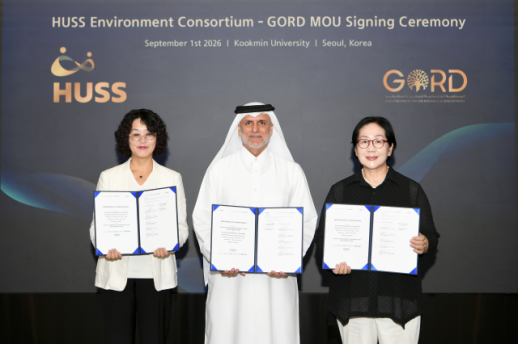 Kookmin signs Qatar deal on carbon market training for students SEOUL, September 01 (AJP) - Students from five South Korean universities will train inside the international carbon market under an agreement signed Tuesday in Seoul, opening a route into a Qatari crediting program whose credits airlines buy to meet United Nations emissions obligations. That program, the Global Carbon Council, won full approval from the International Civil Aviation Organization in October 2024 to supply credits under the Carbon Offsetting and Reduction Scheme for International Aviation, the U.N. body's global offsetting system for air travel. In May it added eligibility under the Core Carbon Principles set by the Integrity Council for the Voluntary Carbon Market. The council says it is the only carbon crediting program based in the Global South holding both accreditations. What makes the arrangement unusual is who is being sent. The consortium that signed the deal is funded under a Ministry of Education program for humanities and social sciences students, not for engineers or climate scientists. The agreement was signed at Kookmin University's main administration building by the environment consortium of the Humanities Utmost Sharing System, a program run by the ministry and the National Research Foundation of Korea that pays universities to build joint degree tracks across institutional and departmental lines. Kookmin leads the consortium, which was selected in the program's environment category. Officials from the four other member universities attended, those being Duksung Women's University, University of Ulsan, Inha University and Chosun University. Carbon markets reward a humanities background more than the label suggests. A carbon credit represents one ton of greenhouse gas emissions reduced or removed, and its price depends less on the technology behind the reduction than on whether the reduction can be verified, whether it would have happened anyway, and whether two countries have both claimed it. Those are questions of rule-writing, auditing, contract law and public policy. Article 6 of the Paris Agreement, named in the agreement as one of the training areas, governs how countries trade emissions reductions among themselves and count them toward national targets. Its operating rules were settled only at the 2024 U.N. climate conference in Baku, after years of deadlock over double counting, and the market built on them is still taking shape. The other party is the Gulf Organization for Research and Development, a Doha non-profit established in 2009 by Yousef Alhorr at Qatar Science and Technology Park and held under Qatari Diar Real Estate Investment Company. Its work runs from applied research in carbon, energy efficiency, renewable energy and water to professional training and carbon neutrality advisory services, framed around Qatar National Vision 2030, the development plan the government launched in 2008. The Gulf Organization for Research and Development (GORD) also operates the Global Sustainability Assessment System, a green building rating scheme adopted this year as the regional Gulf standard. Every stadium built for the 2022 World Cup was certified under it. The carbon council began in 2016 as the Global Carbon Trust and is one of two affiliates GORD operates alongside its accreditation bureau. Under the agreement the two sides will expand training and practical experience in the voluntary carbon market and Article 6, run teaching and research exchanges with GORD and Qatari universities, link student research and startup projects in climate technology, and build career networks in the Middle East. Internships and hands-on programs tied to the carbon council sit at the center of the plan. Kookmin said it expected students to see the international carbon market directly and build professional skills through them, and that cooperation would later widen to Qatari universities and related bodies through joint teaching programs, research and overseas links for student ventures in climate technology. Qatar has been building climate technology into a national strategic industry, and Kookmin cast the agreement as a way both to widen student access to the region and to push South Korean environmental teaching and research outward. The environment consortium works under the theme of coexistence and shared growth in an age of climate crisis, developing coursework that crosses departments and campuses so that students trained in the humanities and social sciences can read environmental problems through those disciplines and propose workable answers. Kookmin has designated water, energy and environment as one of eight fields marked for concentrated investment under its long-term development strategy, KMU VISION 2035: EDGE. 2026-09-01 17:53:44
 -
 Airbility raises 6.5 billion won to shoot down drones with drones SEOUL, September 01 (AJP) - A Seoul aerospace startup has closed a Series A round to build small aircraft that hunt other aircraft, betting that the cheapest way to stop an incoming attack drone is another drone rather than a missile. Airbility said Tuesday that the 6.5 billion won ($4.7 million) round was led by Sazze Partners, a Silicon Valley venture capital firm, with existing backer Stonebridge Ventures returning and the Industrial Bank of Korea joining as a new shareholder. Cumulative funding now stands at 10.5 billion won. The company declined to disclose its valuation. The round lands in the middle of the largest funding boom the defense technology sector has seen. Defense tech startups raised $14.6 billion in the first five months of 2026 alone, already ahead of the full-year record of $9.6 billion set in 2025. Airbility builds what the industry calls air-to-air hard kill, meaning an interceptor aircraft physically strikes or captures a hostile drone in flight rather than jamming its signal. Soft-kill methods fail against drones that fly preprogrammed routes and never need to talk to an operator. Three interceptors are planned. In the company's account, the AB-U10 fires a net at its target at speeds up to 180 kilometers per hour, the AB-U2 is a payload-sized drone carried aloft by a larger mothership aircraft and released to strike directly, and the AB-U4L is a fixed-wing model launched from a tube at up to 300 kilometers per hour. All three sit on the same high-speed electric vertical takeoff and landing platform, an airframe that rises like a helicopter and then transitions to winged forward flight. Airbility said the AB-U10 will reach the market by the end of this year and the other two in the first half of 2027. The economics are the pitch. In Ukraine, air defense crews have repeatedly spent multimillion-dollar surface-to-air missiles on Iranian-designed Shahed attack drones that cost a small fraction of that. Airbility puts the Shahed at roughly $35,000 a unit against about $4 million for a Patriot missile, and says a single engagement using its method costs between $50 and $3,000. The company argues the same arithmetic works abroad. Foreign systems from suppliers such as Anduril of the United States face origin controls and procurement reviews that slow deliveries, Airbility said, while the AB series is built on Korean technology, can be sold into a wider set of countries and is priced at roughly one-tenth of the alternatives. Discussions are under way with more than nine countries across the Middle East, Southeast Asia and Latin America, according to the company, with four memorandums of understanding and two joint ventures in progress. The engineering comes out of South Korea's state weapons laboratory. Airbility was founded in November 2023 by researchers from the Agency for Defense Development who led work on domestic aircraft including the T-50 supersonic trainer and the KF-21 fighter, together with staff from Hyundai Motor and LG Electronics. Of 26 employees, 80 percent work in research and development. In December 2025 the company said it flew three prototypes through transition, the passage from vertical lift into winged flight and the hardest phase of an eVTOL envelope to prove. Government money has followed. Airbility was recently selected for the Korea AeroSpace Administration's 2026 Scale-up TIPS program, worth 3 billion won in research funding, and is building a domestic record through projects with the Marine Corps and the Defense Acquisition Program Administration. Sazze Partners has invested in more than 100 artificial intelligence, software and consumer companies since 2018, including the South Korean AI firm Upstage. Airbility said the round is the firm's first investment in defense. "What caught our attention was a company solving the cost asymmetry problem in the counter-drone market, where blocking a single drone can cost hundreds of times more than the drone itself," said Lee Ki-ha, managing partner at Sazze Partners. "If they can convert the rapidly rising global demand for counter-drone systems into contracts, we expect them to grow into a company that represents South Korea's defense sector." Co-chief executive Lee Jin-mo said the goal is to widen the business from selling airframes to selling integrated systems and to reach 50 billion won in cumulative revenue by 2028. South Korea's defense industry has crossed $10 billion in annual orders, and the government has made becoming one of the world's four largest arms exporters a national policy goal. Anduril closed a $5 billion Series H in May at a $61 billion valuation, and Shield AI raised at $12.7 billion in March. Airbility has raised 10.5 billion won since it was founded. 2026-09-01 17:23:19
 -
 Moreno named temporary Korean national football team manager SEOUL, September 01 (AJP) - Former Spain head coach Robert Moreno was named temporary manager of South Korea's men's national football team Tuesday, taking over a side still dealing with the fallout from its early World Cup exit and a long-running scandal over the appointment of his predecessor. The Korea Football Association (KFA) approved Moreno's appointment during a board meeting at Korea Football Park in Cheonan, about 90 kilometers south of Seoul. Moreno, 48, will take charge of South Korea's next six international matches. The Taegeuk Warriors will host Ecuador on Sept. 24, Uruguay on Sept. 28, Venezuela on Oct. 2 and Uzbekistan on Oct. 6. The KFA is also seeking to arrange two more matches during the Nov. 9-17 FIFA international window. Moreno's contract runs through Nov. 27, but the KFA said he could be considered for the full-time job for the Asian Football Confederation Asian Cup in Saudi Arabia in January depending on the team's performance this fall. The national team has been without a permanent coach since Hong Myung-bo resigned June 28 after South Korea failed to advance from the group stage of the 2026 FIFA World Cup. South Korea opened the tournament with a 2-1 win over Czechia before suffering successive 1-0 defeats to co-host Mexico and South Africa. Hong stepped down after the team failed to qualify for the round of 32 as one of the best third-place finishers, saying he took full responsibility for the result. His departure, however, revived a controversy that had followed him virtually throughout his two-year tenure. Hong was appointed in July 2024 after a five-month KFA search for a successor to Jurgen Klinsmann. The association interviewed several foreign candidates before technical director Lee Lim-saeng approached Hong, then coach of K League club Ulsan HD, during a brief meeting near Hong's home. The manner of his appointment immediately drew accusations of favoritism and a lack of transparency. Critics questioned why foreign candidates underwent formal interviews while Hong was offered the position through a markedly different process. Hong denied receiving preferential treatment. A subsequent Culture Ministry audit found the KFA had violated its own rules and procedures in appointing both Hong and Klinsmann. It concluded that Lee did not have the proper authority to make the final recommendation and that the board approval of Hong came only after his selection had effectively been decided and announced. The ministry's final audit identified 27 cases of improper or unlawful practices at the KFA and called for disciplinary action against senior officials, including then-President Chung Mong-gyu. The controversy has continued well beyond Hong's resignation. Hong and Chung, who has since stepped down as KFA president, were summoned to a National Assembly hearing on July 30 as lawmakers examined the association's management, Hong's appointment and South Korea's World Cup failure. Police then raided KFA offices in Cheonan and Seoul on Aug. 6 as part of an investigation into allegations that senior officials improperly intervened in Hong's appointment. Hong had been questioned as a suspect two days earlier. Against that backdrop, the KFA has opted against rushing into another permanent appointment, giving Moreno a six-match audition before deciding who will lead the team into the Asian Cup. Moreno has experience with precisely that kind of temporary assignment. He coached Spain for nine matches in 2019 after Luis Enrique stepped away from the national team for personal reasons. Moreno later managed AS Monaco in France, Granada in Spain and FC Sochi in Russia, where he remained through last year. Earlier in his career, he worked as a scout for FC Barcelona and served as an assistant to Enrique at AS Roma, Celta Vigo and Barcelona. AJP Takeaways Robert Moreno takes temporary charge: The former Spain coach will lead South Korea through six friendlies from September to November, with a possible full-time appointment for the Asian Cup at stake. Hong scandal still hangs over KFA: A government audit found procedural violations in Hong Myung-bo's controversial 2024 appointment, which triggered parliamentary scrutiny and an ongoing police investigation. KFA avoids another rushed permanent hire: After Hong resigned following South Korea's 2026 World Cup group-stage exit, the association is giving Moreno a six-match trial before choosing its next long-term coach. 2026-09-01 12:52:42
 -
 South Korea sends 44 rescuers to Nepal at Kathmandu's request SEOUL, September 01 (AJP) - An emergency South Korean relief team was set to fly to Nepal late Tuesday to search for nine workers missing since a massive flash flood engulfed a Himalayan valley last week. South Korea's Ministry of Foreign Affairs announced the deployment in a statement released Tuesday. Nepal had asked Seoul to send a team to support search and rescue work in the flood zone, and a public-private council approved the mission the same day under South Korea's overseas emergency relief law. The nine missing workers, six from Doosan Enerbility and three from Korea South-East Power, were at the Upper Trishuli-1 hydropower construction site in Rasuwa district when the flood hit on the morning of Aug. 26. Their offices and living quarters sat low in the valley and are believed to have been swept away. Tuesday was the seventh day without contact. Kathmandu had spent most of the past week turning down foreign search and rescue teams, telling governments its own army and police would handle the operation. The request to Seoul is the first sign of that position loosening. Lee Kyu-ho, director general of the ministry's Development Cooperation Bureau, leads the team, whose members come from the ministry, the Korea International Cooperation Agency and the National Fire Agency. They were scheduled to leave Tuesday night on a KC-330 Cygnus military transport for about 10 days of work with Nepali authorities. South Korea assembles the Korea Disaster Relief Team for large disasters abroad. Past Korea Disaster Relief Team (KDRT) missions include Türkiye after the 2023 earthquake, Laos after the 2018 dam collapse and Nepal after the 2015 earthquake. Seoul had already pledged $1 million on Aug. 27. Nepal was accepting money and supplies through the Prime Minister's Relief Fund. Foreign personnel were another matter. That caution dates to 2015. After the magnitude 7.8 earthquake that killed nearly 9,000 people, 4,050 rescue workers from 34 countries arrived in a country whose airport, roads and bureaucracy could not absorb them, and within about 10 days Information Minister Minendra Rijal was asking them to go home. A senior Nepali foreign ministry official told the Kathmandu Post last week that the influx and the competition among countries had caused significant coordination problems, and that the government weighed that experience this time. Foreign ministry spokesperson Lok Bahadur Chhetri said on Aug. 28 that offers from India, China, the United States, the United Kingdom, Japan, South Korea, Sri Lanka and Bangladesh were understandable but unnecessary. "Our security agencies are doing the search and rescue operation. For now we do not require such help," he told Reuters. The policy left the South Korean effort stuck. A joint rapid response team of about 20 officials has been in Nepal since the middle of last week, and its six chartered helicopters sat grounded while Nepali authorities withheld clearance over fears of further flooding. On Aug. 29, South Korea was the only country granted a flight permit. The next day, nobody was. On Monday the team stopped waiting. Nine National Fire Agency personnel left the embassy in Kathmandu at 7:20 a.m. and drove north through Nuwakot, reaching Dhunche about 11 hours later. Dhunche sits roughly 30 kilometers from the site. The Nepali army agreed to cooperate on the overland search. Ten other Doosan Enerbility workers cut off elsewhere were pulled out earlier. Nine landed in South Korea on Monday afternoon. The site manager stayed behind. Monsoon rain did not cause this flood. An avalanche of ice and rock came off a glacier near the Nepal-Tibet border, dammed the Lhende Khola River and then gave way. Jeffrey Kargel, a senior scientist at the Planetary Science Institute, calculated that the surge covered its first 22 kilometers at an average of 193 kilometers per hour. Downstream, the Trishuli River rose nine meters in half an hour. Nepali disaster authorities counted at least 903 dead and 4,247 missing as of Monday. Nationals of more than 30 countries are among them, partly because the flood tore through a Hindu pilgrimage route and a trekking corridor. Foreign Minister Cho Hyun asked his Nepali counterpart, Sisir Khanal, for particular help in finding the nine during a call Monday afternoon, their second since the disaster. At Upper Trishuli-1, 576 people are out of contact and about 300 of them are thought to be trapped inside the headrace tunnel, according to Mohan Kumar Dangi, who chairs Nepal's Independent Power Producers' Association. A Chinese tunnel rescue team pushed roughly 300 meters into that tunnel on Monday and recovered one body. The nationality has not been confirmed, and the Ministry of Foreign Affairs said it was checking through its embassy in Kathmandu. AJP Takeaways ● Nepal's government asked Seoul to send a search and rescue team, reversing a week of refusing foreign personnel, and the 44-member Korea Disaster Relief Team was set to leave Tuesday night on a military transport. ● Nepali foreign ministry spokesperson Lok Bahadur Chhetri had told Reuters on Aug. 28 that offers from eight countries were unnecessary, a stance traced to 2015, when 4,050 rescue workers from 34 countries overwhelmed the country and Information Minister Minendra Rijal asked them to go home. ● Mohan Kumar Dangi of Nepal's Independent Power Producers' Association put 576 people out of contact at the Upper Trishuli-1 site, with about 300 believed trapped in the headrace tunnel where a Chinese rescue team recovered one unidentified body on Monday. ● Jeffrey Kargel of the Planetary Science Institute measured the surge at an average 193 kilometers per hour over its first 22 kilometers, and the U.S. Geological Survey revised its initial earthquake reading to conclude the seismic signal came from the landslide itself. 2026-09-01 10:58:06
 -
 New Kazakh parliament opens with 109 first-time deputies SEOUL, August 31 (AJP) - Of the 145 members of Kazakhstan's new single-chamber legislature, 109 have never held a seat in the national parliament. Within four days of taking their seats, they had elected a speaker, confirmed a vice president and returned a prime minister to office. The Kurultai opened on Aug. 28, replacing the Mazhilis and the Senate under the constitution that took effect July 1. Its members were elected on Aug. 23 in the first national vote held under that constitution. Adilet took 110 of the 145 seats on 71.17 percent of the vote. The party was registered on June 1 and absorbed Amanat, which had governed the outgoing lower house. Four other parties cleared the 5 percent threshold, according to Kazakhstan's Central Election Commission. Auyl took 10 seats on 6.26 percent, Respublica nine on 5.56 percent, Ak Zhol eight on 5.21 percent and the Nationwide Social Democratic Party eight on 5.11 percent. The People's Party of Kazakhstan, which won 6.8 percent in 2023, dropped to 3.11 percent and lost every seat. Baitaq took 1.07 percent. The against all option drew 2.51 percent, more than either party. Turnout was 74.08 percent of an electorate of 12,623,289, against 54.21 percent at the last parliamentary election in 2023. Women hold 49 seats, or 33.8 percent, compared with 18 of 98 in the old Mazhilis. Eighteen deputies fall into the youth category and members range in age from 27 to 65, according to figures released by the Kazakh government. "This stage is not a time for empty promises, false speeches and populist slogans," President Kassym-Jomart Tokayev told the deputies at the opening session. "Our society is reaching maturity." The international observation mission for the election was made up of the OSCE Office for Democratic Institutions and Human Rights together with the OSCE and Council of Europe parliamentary assemblies. It found the election technically well prepared but held in an environment lacking political pluralism. Political choice was narrowed because all seven contesting parties supported the president's policies, the mission said, and Adilet had an undue advantage. The same statement described the campaign as orderly and said the parties were given equal campaign conditions. Tokayev nominated Aibek Dadebay as speaker and deputies approved him. Dadebay founded Adilet in May, days after stepping down as head of the presidential executive office. On Monday the chamber confirmed Erlan Karin as vice president, a post created by the new constitution, with 141 of 145 deputies voting in favor. Karin has advised Tokayev since 2019 and served as state counselor. Deputies also approved the reappointment of Olzhas Bektenov as prime minister. Adilet holds more than two thirds of the seats, enough to amend the constitution on its own. "The party that secured the support of the largest number of voters won the election and formed a constitutional majority in the Kurultai," Tokayev said. "High responsibility therefore rests on this party, and we associate particular hopes with it." The legislative program he set out for the first session covers bringing sectoral law into line with the new constitution, a government bill barring children under 16 from registering on social media, and a Golden Visa aimed at attracting foreign specialists and capital. Deputies are also to overhaul migration policy, pass measures on energy resilience and alternative energy, and draft a law on comprehensive support for children with disabilities. He asked them to use artificial intelligence in drafting legislation and to adopt an E-Parliament system, while warning that technology cannot replace legal expertise. "States, especially large countries, have essentially stopped trusting one another, which has had a damaging effect on the work of the UN and its institutions," he said. "The UN Security Council has ceased to carry out the mission entrusted to it of ensuring global and regional peace, stability and security." He said regional organizations and what are commonly called middle powers had become more prominent, and placed Kazakhstan in that category. He also noted a forecast that artificial intelligence tools would replace nuclear weapons within the foreseeable future. The pace and scale of the reforms had reached the point of irreversibility, he said, adding, "Simply put, there is no reverse gear." "Our history and literature are not a chronicle of endless victims, suffering and tragedies," he said near the end of the address. "The suffering our people endured cannot be the foundation of our national identity." Tokayev said the Kazakhstan Halyk Kenesi, or People's Council, will be formed in the second half of September as the country's first supreme consultative body, with the right to initiate legislation. 2026-08-31 16:37:03
 -
 Sookmyung maps titanium nanomaterials for cancer treatment SEOUL, August 28 (AJP) - Porous crystals built around titanium can carry a cancer drug through the bloodstream, hold it shut until they reach a tumor, and then be switched on from outside the body to attack the cells around them. That range of jobs, long divided among separate materials, is converging on a single compound, according to a review article led by Sookmyung Women's University professor Lee Jung-bok. The paper appeared this month in Coordination Chemistry Reviews. Sookmyung said the journal carries an impact factor of 25.6 and ranks first in chemistry in the Journal Citation Reports, the citation database used to rank academic publications. The materials at the center of the review are metal-organic frameworks, crystalline solids assembled from metal ions and organic molecules that link them together. The result is a rigid scaffold shot through with pores, and those pores can be packed with drug molecules. Metal-organic frameworks (MOFs) are already being tested as drug carriers and as probes for medical imaging. Titanium versions draw attention for a plain reason. The bond between titanium and oxygen is unusually strong, which makes the structure hold its shape in the body, keeps toxicity low and lets tissue tolerate it. Researchers also count titanium MOFs as environmentally benign to produce. Lee and his co-authors compared the methods used to build these materials, then sorted the medical research into three groups. The first is targeted drug delivery. Tumors sit in a chemical environment unlike healthy tissue, more acidic and loaded with reactive oxygen species, unstable oxygen molecules that damage cells from within. Carriers tuned to those conditions stay closed as they travel and open once they arrive, which concentrates a chemotherapy dose where it is needed and spares the rest of the body. The second is repair. Bone graft materials and wound dressings made with titanium MOFs release antibiotics and nitric oxide slowly over time, holding infection down while new tissue grows into the site. Nitric oxide is a gas the body produces itself to prompt blood vessels to form, which is why a dressing that supplies it can speed healing rather than merely protect a wound. The third is a family of treatments that turn the material into a weapon. In photodynamic, sonodynamic and microwave dynamic therapy, the framework works as a sensitizer, a substance that sits inert until light, ultrasound or microwaves reach it, at which point it floods the surrounding area with reactive oxygen and kills the cells there. Because the trigger arrives from outside the patient, clinicians can confine the damage to wherever the beam is aimed. Recent work surveyed in the review pushes that effect further by doping the crystals, meaning small amounts of silver or manganese are worked into the structure. The additions improve charge separation, the step in which energy from the trigger splits into the electrical charges that generate reactive oxygen. Cleaner separation produces a stronger kill. Taken together, the authors argue, the field is widening from delivery alone toward theranostics, platforms that diagnose and treat in the same operation. None of it has reached a patient. The review sets out three obstacles standing between the laboratory and the clinic. No one has developed a manufacturing process that is both clean enough to be called green and reliable enough at industrial scale to guarantee the material is safe in the body. The mechanisms by which titanium MOFs break down and leave the body remain unmapped. And regulators have no framework written for nanoscale medicines, which leaves approval pathways undefined. The authors expect artificial intelligence to shape what comes next, with data analysis used to design titanium MOF formulations matched to individual patients rather than to a general population. Lee served as co-corresponding author alongside Hanyang University's Kim Ki-su and Pusan National University's Han Dong-wook. Three Pusan National University researchers, Elif Beyza Demiray, Kang Moon-sung and Jang Hee-jeong, shared first authorship. The work was supported by the National Research Foundation of Korea. Journal/Source: Coordination Chemistry Reviews (IF:12.5, JCR top 4.5%) Title: Ti-based metal-organic frameworks as versatile platforms primed for nanomedicine, a mini-review Link/DOI: https://doi.org/10.1016/j.ccr.2026.218397 2026-08-28 10:42:12
 -
 Sookmyung team tunes coating strength by adjusting CO2 pressure SEOUL, August 27 (AJP) - A coating material built from discarded plastic bottles and carbon dioxide can be made soft and rubbery or firm and glassy by changing one setting in the reactor, researchers at Sookmyung Women's University found. The team traced how the molecular structure of the starting material shapes the behavior of the finished film, turning a single laboratory result into something closer to a recipe with dials. The range they measured is wide. Glass transition temperature, the point at which a plastic shifts from stiff and glassy to soft and rubbery, moved from minus 36.4 degrees Celsius to 17.5 degrees Celsius depending on how the material was made. Tensile strength, a measure of how hard a film can be pulled before it tears, reached 13.6 megapascals, roughly the range of the flexible plastic films used in packaging. Because that temperature span crosses ordinary room temperature, the same feedstock can yield a film that behaves like rubber on a desk or one that behaves like a hard shell. The material belongs to a family called UV-curable coatings, which harden in seconds under an ultraviolet lamp rather than being baked or left to dry with solvents. They appear on phone screens, wood flooring, furniture, printing inks and optical film. Most of them start from polyols, a class of liquid building blocks that the chemical industry draws almost entirely from petroleum. The Sookmyung work replaces part of that petroleum input with two things normally treated as waste. Polyethylene terephthalate, the plastic used in beverage bottles and better known as PET, supplies one half. Carbon dioxide supplies the other. The team broke down waste PET chemically to recover an intermediate compound called BHET, reacted that compound with carbon dioxide to build a polyol, then converted the polyol into a polyurethane acrylate, the UV-curable material tested in the study. Control came from two variables. By changing the pressure at which carbon dioxide was fed into the reaction and by changing the proportions of the starting materials, the researchers adjusted how much carbonate structure derived from CO2 and how much aromatic structure derived from PET ended up in the polyol. Those two features then shaped the crosslinked network that forms when the material cures, and the network determined the thermal and mechanical properties of the film. The aromatic rings inherited from the bottle plastic did most of the stiffening. They restricted the movement of the polymer chains, raising the rigidity and the mechanical performance of the material. The university said the significance lies in connecting the molecular structure of the raw material to the network formed during curing and then to the properties of the finished product, a relationship it calls structure, network and property. The team expects the material to find use in coatings, films and adhesives. The paper extends work the same group published earlier, in which PET-derived feedstock and carbon dioxide were combined into polyols and used to make flexible polyurethane foam. The new study carries that chemistry into UV-cured materials, which cure differently and go into different products. The findings appeared in Chemical Engineering Journal, volume 547. Chae Ji-young was the first author, Kim Ye-in, Lee Da-young, and Kim Ha-rin were co-authors, and Sookmyung's Baik Joon-hyun was the corresponding author. "We plan to expand the research toward developing high-value materials that use waste plastic and carbon dioxide," Baik said. Journal/Source: Chemical Engineering Journal (IF: 12.5, JCR top 4.5%) Title: Integrated upcycling of waste PET and CO2 into UV-curable polyurethane acrylates via CO2-based polyols Link/DOI: https://doi.org/10.1016/j.cej.2026.180657 2026-08-27 12:56:52
 -
 Seoul races to find 9 Koreans in Nepal flood SEOUL, August 27 (AJP) -South Korea is sending an emergency response team to Nepal after nine Korean workers at a hydropower construction site went missing in a catastrophic Himalayan flash flood that killed at least 160 people across Nepal and Tibet, with scientists pointing to a massive glacier collapse as the likely trigger. Foreign Minister Cho Hyun convened an emergency task force meeting at 10:30 p.m. Wednesday after contact was lost with the nine employees of Korea South-East Power Co. (KOEN) and Doosan Enerbility working in Nepal's northern Rasuwa district. The Foreign Ministry said officials from the Korean Embassy in Kathmandu, the National Police Agency, the Ministry of Land, Infrastructure and Transport and other agencies joined the meeting. Cho ordered officials to mobilize all available resources for the search and rescue effort following an emergency directive from President Lee Jae Myung that the lives and safety of Korean citizens be given top priority. "The ministry headquarters and our embassy should make every effort for the swift and safe search and rescue of our citizens while maintaining close communication with related agencies," Cho said, according to the ministry. A joint rapid-response team made up of Foreign Ministry, police and fire officials is scheduled to leave Incheon International Airport at 1:40 p.m. Thursday and arrive in Kathmandu at 9:45 p.m. after transiting through Hong Kong. The team will be led by Lim Sang-woo, the government's representative for overseas nationals' protection and consular affairs. Cho also plans to speak with Nepal's foreign minister Thursday to request cooperation in the search. He instructed embassy officials to maintain close contact with the families of the missing workers and keep them informed of developments. The Koreans were working on the Upper Trishuli-1 hydropower project, a 216-megawatt run-of-river power plant under construction in Rasuwa, roughly 70 kilometers north of Kathmandu. KOEN is a major sponsor of the project and Doosan Enerbility is its engineering, procurement and construction contractor. The plant, being developed by Nepal Water and Energy Development Company, is designed to generate electricity for Nepal's domestic grid. South Korea's embassy in Nepal described the project in May as a flagship example of energy cooperation involving Korean companies and international financial institutions. Commercial operation had been expected to begin next year. The disaster struck around 9 a.m. Wednesday as a huge surge of water, mud, rocks and other debris swept through the Bhote Koshi and Trishuli river systems near Nepal's border with China's Tibet region. Nepalese police reported at least 157 deaths by Thursday, while Chinese authorities said at least three people had died and 265 were missing in Tibet's neighboring Gyirong County. Hundreds of tourists, workers and residents were also unaccounted for in Nepal. The flood destroyed villages, roads, bridges and power infrastructure across steep Himalayan valleys that serve as important trade, tourism and pilgrimage routes between Nepal and Tibet. At least 19 bridges and nearly 40 kilometers of roads were swept away, complicating rescue operations in already difficult mountain terrain. Hundreds of foreigners were among those reported missing, including visitors from India, the United States, Australia, Britain and Canada. Many were traveling toward Mount Kailash in Tibet, a major Hindu pilgrimage destination, or trekking around Nepal's Gosaikunda Lake area. Scientists are increasingly focusing on the high mountains above the Lhende Khola, a tributary of the Bhote Koshi, for an explanation of how such a large flood developed so rapidly. The Kathmandu-based International Centre for Integrated Mountain Development (ICIMOD) said preliminary evidence points to a large ice-rock avalanche from a high-altitude glacier. A mass of ice and rock appears to have plunged into the Lhende Khola valley, possibly temporarily blocking the river before water and debris burst downstream. Hydrological measurements illustrate the extraordinary force of the resulting flood wave. The Trishuli River at Galchhi rose by as much as nine meters in about 30 minutes, according to ICIMOD, while the water level at Malekhu climbed around seven meters over a similar period. The precise reason for the collapse remains under investigation. High temperatures and long-term ice loss are receiving particular scrutiny because Himalayan glaciers have been retreating rapidly as temperatures rise. Nepal has lost nearly one-third of its glacier ice over the past three decades, with the rate of melting accelerating sharply during the past decade, and recent high temperatures may also have increased snow and ice melt before Wednesday's collapse. Scientists caution, however, against attributing the individual disaster directly to climate change before the investigation is complete. ICIMOD said warming is already altering glaciers, snow cover, permafrost and mountain slopes throughout the Hindu Kush Himalaya, increasing concern over so-called cryosphere hazards. But researchers said it remains too early to determine precisely how much climate change contributed to Wednesday's event. A flash flood struck the same Nepal-China border region in July 2025 after a glacial lake in Tibet overflowed amid unusually high temperatures, killing nine people and damaging critical infrastructure, including the bridge linking the two countries. Wednesday's disaster was far larger and again exposed the vulnerability of hydropower plants, roads and settlements built along narrow Himalayan river valleys. AJP Takeaways Nine South Korean workers are missing in Nepal's Rasuwa district after a massive Aug. 26 flash flood struck the construction area of the 216-MW Upper Trishuli-1 hydropower project involving KOEN and Doosan Enerbility. Seoul is dispatching a joint emergency team to Nepal, while Foreign Minister Cho Hyun plans to seek direct cooperation from Nepal's government in the search and rescue operation. At least 160 people have been reported dead across Nepal and Tibet, with hundreds more missing as floods destroyed roads, bridges, villages and power infrastructure near the China-Nepal border. 2026-08-27 07:29:16