

Journalist
Park Sae-jin박세진
swatchsjp@ajupress.com
Assistant EditorForeign embassies in Seoul & Geopolitics, Diplomacy, Policy
Experienced journalist and editor at AJU PRESS specializing in multilingual news. I cover international diplomacy, geolpolitics, and policy, consistently delivering highly accurate, compelling reporting for a worldwide audience.
"Reporting the facts. Shaping the narrative. Every second counts."
Latest by Park Sae-jin
-
 Kazakhstan puts AI to work as Tokayev heads to Seoul SEOUL, September 11 (AJP) - Kazakhstan's president says the country has finished the first stage of building a digital state and is now on the second, putting artificial intelligence to work for ordinary citizens. The United Nations' most recent E-Government Survey, published in 2024, bears out the first part of that claim. It ranked Kazakhstan 24th of 193 countries, up from 28th two years earlier, and placed it in the top 10 for online services alongside South Korea, Denmark and Estonia. Among landlocked countries, Kazakhstan came first. President Kassym-Jomart Tokayev drew the line between the two stages on Aug. 23, after voting in the first election for the Kurultai, the single-chamber parliament created under the country's new constitution. "We are now at the second stage, and I have instructed the government not to remain at the so-called presentation stage or focus solely on international negotiations," he told reporters in Astana. "We must now put digitalization and artificial intelligence at the service of the people, all citizens of our country." He measured that service in income, saying digital tools should help people earn money and run businesses, and that farmers in particular should be able to do so without leaving their home regions. "Simply put, a smartphone is not just a toy," Tokayev said. "Nor is it merely a device for endlessly watching TikTok. A smartphone is a tool for making money." Tokayev first set the goal of a fully digital state within three years in his Sept. 8, 2025, State of the Nation Address, titled "Kazakhstan in the Era of Artificial Intelligence." On Sept. 18, he signed a decree creating the Ministry of Artificial Intelligence and Digital Development, and later that month he put Zhaslan Madiyev in charge of it with the rank of deputy prime minister. Central Asia's first AI law followed in November 2025 and took effect Jan. 18. It holds the owners, holders and users of AI systems responsible according to the role each plays, and it gives legal footing to a national AI platform for developing, training and piloting models. In his New Year address, Tokayev declared 2026 the Year of Digitalization and Artificial Intelligence. By then the Alem.Cloud supercomputer in Astana had been running for half a year. Built on 512 Nvidia H200 graphics processors, it entered the TOP500 list of the world's most powerful machines in 86th place in November 2025 and trains the country's own large language models in Kazakh and Russian. In June, the government signed agreements worth $10 billion with Nvidia and Firebird, a U.S. AI infrastructure company, to build Data Center Valley, a campus near Ekibastuz that could eventually hold as many as 100,000 graphics processors. Its first 125-megawatt facility is due in 2027. Freedom Holding Corp. had signed its own deal with the ministry in November 2025 to develop a $2 billion sovereign AI hub on Nvidia infrastructure. On the former EXPO 2017 grounds in Astana, Qazaq AI Research University began its first academic year this month with 400 bachelor's students, 308 of them on state grants, and 100 master's students. Its bachelor's degrees take three years and are taught entirely in English. Samruk-Kazyna, the national sovereign wealth fund, is sending 100 of its own employees through the university's MBA AI+X program. Universities across the country updated 1,983 degree programs this year to match emerging professions, Science and Higher Education Minister Sayasat Nurbek told a government meeting in September, compared with seven in 2022. At Kazakhstan Temir Zholy, the national railway company, 113,000 employees received training in AI last year, according to figures presented to the government the same month. In January, Kazakhstan became the first Central Asian country to join OpenAI's Education for Countries program. The deal, financed by Freedom Holding, puts 165,000 free ChatGPT Edu licenses in the hands of schoolteachers, university faculty and staff, and members of the Astana Hub technology park community. The government's broader goal is to train one million people in AI skills over five years. A decree Tokayev signed on May 12 carries AI into secondary education from 2026 through 2029, beginning with pilot schools in the Pavlodar and Kyzylorda regions. The government expects the program to narrow the gap in quality between urban and rural schools. Education officials said more than 350,000 teachers have completed training in digital tools, including AI assistants for the classroom. At the first meeting of his Council for the Development of Artificial Intelligence last year, Tokayev warned that algorithms can produce inaccurate or oversimplified material. "It is people, not machines, who should be responsible for the quality and content of education," he said. At the National Kurultai, a presidential advisory assembly that met in Kyzylorda in January, he linked the digital push to national identity. "The reality is that in the new era, only those nations and states that succeed in digitizing their history and culture and integrating them into the global digital civilization will retain their agency," he said. In August, Astana hosted the third International Olympiad in Artificial Intelligence, where more than 500 high school students from 106 countries competed after Tokayev opened the event on Aug. 3. At the previous edition in Beijing, students from Kazakhstan won three gold, one silver and three bronze medals. Tokayev arrives in Seoul on Sept. 14 for a state visit at the invitation of President Lee Jae Myung. Talks on strengthening the enhanced strategic partnership between the two countries are set for Sept. 15, and he will also meet executives of leading South Korean companies. At that first AI council meeting, he had cited South Korea's use of AI in language learning as an example of personalized education, which he said carries special meaning for a multiethnic country like Kazakhstan. On Sept. 16, he will join the leaders of Uzbekistan, Kyrgyzstan, Tajikistan and Turkmenistan at the first Korea-Central Asia Summit. *The author is the assistant editor of AJP. 2026-09-11 18:39:49
 -
 Korea pledges policy funds for Uzbek regional partnerships SEOUL, September 11 (AJP) - South Korea will put state financing behind partnerships between its local governments and Uzbekistan's regions, Deputy Prime Minister Koo Yun-cheol told a forum in Seoul on Friday, five days before the city hosts South Korea's first summit with the five Central Asian nations. Speaking at the same event, Uzbek Deputy Prime Minister Jamshid Khodjaev put bilateral trade at nearly $2 billion last year and said the two governments aim to raise it to $5 billion. Korean investment in Uzbekistan has passed $8 billion in recent years, he added, and more than 700 companies with Korean capital now operate in the country. Koo, who is also minister of finance and economy, named two of the financing tools the government would link to regional projects, the Economic Development Cooperation Fund and the Supply Chain Stabilization Fund. The government would also "take the lead in resolving any difficulties" the regions ran into on the ground, he said. The Economic Development Cooperation Fund (EDCF), created in 1987, provides long-term, low-interest loans to developing countries. The finance ministry owns the fund, and the state-run Export-Import Bank of Korea manages it. The bank also runs the supply chain fund, launched in 2024 to back South Korean companies in industries the government considers vital to stable supply chains. Uzbekistan is already the EDCF's largest partner in Central Asia. It accounts for about 86 percent of the fund's approvals in the region, and a framework agreement signed in 2024 allows up to $2 billion in EDCF loans to the country through 2027, according to the Export-Import Bank of Korea (Korea Eximbank). Koo said local governments were already producing results. He cited cooperation on special economic zones between Incheon and Uzbekistan's Fergana Region, industrial workforce partnerships between South Gyeongsang Province and Tashkent Region, and smart agriculture initiatives linking South Chungcheong Province with Namangan Region. Incheon and Fergana have been friendship cities since 2022, according to the Incheon city government, and Incheon Mayor Park Chan-dae met Fergana Gov. Khayrullo Bozorov on the sidelines of the forum. Park also chairs the Governors Association of the Republic of Korea, which organized the event with the Uzbek Embassy in Seoul. Delegations came from nine of Uzbekistan's 14 provincial-level administrations, including the governors of Fergana, Namangan and Tashkent regions, according to the Governors Association of the Republic of Korea (GAROK). Uzbekistan is divided into 12 regions, the autonomous Republic of Karakalpakstan and the capital, Tashkent. "When the central government's diplomacy opens the road, exchanges between local governments get people traveling along it," Park said in a statement released by GAROK. South Korean and Uzbek local governments have formed about 30 sister-city and other partnerships, Park told the forum. He proposed identifying at least one project for each of them and creating a single channel for investment information and consultations. Incheon and Fergana have already agreed to form a working group that will review project progress every quarter, he said. Koo built his speech around Homer's Odyssey, comparing the hero's voyage through storms to a world economy facing geopolitical fragmentation, the artificial intelligence revolution and the restructuring of supply chains. If the central government sets "the broad direction," Koo said, "the true navigators who steer the ship and breathe vitality into local communities are the local governments and governors of both nations." Seoul plans to use the summit to expand economic cooperation with Central Asia sharply, he said, concentrating on critical mineral supply chains, energy and bio-industry, and transportation, logistics and human resources development. "Naturally, Uzbekistan will be at the center of this initiative," Koo said. Khodjaev tied his pitch to economic reforms under President Shavkat Mirziyoyev. Uzbekistan rose 14 places in this year's Index of Economic Freedom and entered the "moderately free" category for the first time, he said. The index, published by the Washington-based Heritage Foundation, ranks the country 86th, according to Uzbekistan's Ministry of Investment, Industry and Trade. He proposed five areas for Korean investment and asked for joint ventures in the first of them, critical minerals. Uzbekistan holds rich reserves of copper, gold and tungsten, he said, and plans to raise its critical mineral extraction and processing to $1 billion while bringing in technology for enrichment and deep processing. In technology, he pitched the incentives Tashkent offers. Information and communications technology companies pay no corporate tax until 2040 and receive simplified visas, Khodjaev said, and a program called Zero Risk covers their operating expenses. More than 12,500 such companies work in Uzbekistan, 1,500 of them foreign, employing over 100,000 specialists. He invited Korean firms to open software development, information technology services and business process outsourcing centers across the regions, and named transport and logistics, tourism and health care, and agriculture as the other three areas. Uzbekistan exports 2 million tons of fruit and vegetables a year, he said, and aims by 2030 to double food production and triple the value-added share of its exports. Khodjaev also pointed to Korean projects already running. High-speed trains built by Hyundai Rotem, the first Korean-built high-speed trains sold overseas, began service this year between Tashkent and Khiva. Incheon International Airport Corporation is modernizing Urgench International Airport and taking part in building a new airport in Tashkent, and Khodjaev thanked Korea Eximbank for consistently backing Uzbek projects. The next step, he said, is to "expand this experience to the regional level and attract new companies and local entrepreneurs into our cooperation." Work has begun on a portfolio of joint projects for each region, he added. The governors then made their own pitches. Bozorov said 48 companies with Korean capital operate in Fergana, whose trade with South Korea reached $70 million in the first half of the year. The region is targeting $1.5 billion in investment involving more than 400 enterprises this year, he said, and wants more Korean participation in smart agriculture, electronics and auto parts. Tashkent Region Gov. Zoyir Mirzayev said 66 companies with Korean capital operate in his region and its trade with South Korea has passed $50 million. About 300 meetings and negotiations with foreign investors this year have produced investment agreements worth more than $2 billion, he said, naming industrial development, pharmaceuticals and agricultural processing as openings for Korean companies. About 150 people filled the conference hall at the JW Marriott Dongdaemun Square hotel, and some who arrived could not get in. Jung Eui-hye, deputy minister for political affairs at the Ministry of Foreign Affairs, cast the regional track as the next stage of a relationship rooted in history. Uzbekistan is home to Central Asia's largest ethnic Korean community, she noted. Many are descendants of Koreans whom Joseph Stalin deported from the Soviet Far East to Central Asia in 1937. The two countries upgraded their relationship to a special strategic partnership in 2019. "The stage for this cooperation must now expand beyond central governments to encompass provinces, cities, and the everyday lives of our citizens," Jung said. She added that leaders on both sides shared a background in local administration. President Lee Jae Myung served as mayor of Seongnam and governor of Gyeonggi Province before taking office, and Mirziyoyev governed Jizzakh and Samarkand regions before becoming prime minister in 2003. Koo made a similar point, saying Mirziyoyev had voiced deep trust in local governments' ability to deliver, drawing on his own years as a governor. Jung said Mirziyoyev's upcoming state visit to South Korea would add substantial depth to bilateral relations. The Korea-Central Asia Summit will be held in Seoul on Sept. 16-17, with the leaders of Kazakhstan, Kyrgyzstan, Tajikistan, Turkmenistan and Uzbekistan confirmed to attend. GAROK plans to carry the forum's results to the third Korea-Central Asia Local Government Cooperation Forum, to be held in Samarkand, Uzbekistan, in November. Gyeongju has proposed hosting the fourth edition next year, building on friendship-city ties with Samarkand that date to 2013. 2026-09-11 16:51:16
 -
 Op-Ed: Uzbekistan's priorities in the new political cycle Editor's Note: The following opinion article was contributed by the Embassy of Uzbekistan in Seoul. The traditional annual Address of the President of Uzbekistan Shavkat Mirziyoyev, delivered on the eve of the New Year, became an important programmatic statement summarizing the results of the outgoing year and outlining the country's strategic development priorities for the period ahead. As the Head of State emphasized, the past year marked a period of steady progress in reforms and the strengthening of Uzbekistan's socio-economic position, despite ongoing instability in the global economy and a complex international environment. In this context, the announcement of the coming year as the "Year of Mahalla Development and Society as a Whole" gained particular significance, signaling a transition toward a deeper focus of state policy on people's quality of life and the development of civil society. In his Address, the President noted that the national economy continued to demonstrate confident growth. The year 2025 concluded with landmark achievements: for the first time, the country's GDP exceeded 145 billion US dollars, exports increased by 23 percent to 33.4 billion dollars, and foreign exchange and gold reserves surpassed 60 billion dollars. Investment inflows totaling 43.1 billion dollars enabled the implementation of dozens of major projects in industry, energy, and infrastructure. International rating agencies upgraded Uzbekistan's sovereign credit rating from BB- to BB, opening more favorable conditions for external financing. It was particularly emphasized that these macroeconomic results were accompanied by positive changes in the social sphere. Owing to active employment policies, the unemployment rate declined from 5.5 percent to 4.9 percent, and around five million people gained sustainable sources of income. Significant attention was devoted to supporting low-income families, developing targeted social assistance mechanisms, and improving access to basic services. The poverty rate decreased from 8.9 percent to 5.8 percent within a year, lifting approximately 1.5 million citizens out of poverty. These outcomes were the result of consistent reforms aimed at enhancing economic resilience and creating a solid foundation for social development. Economic achievements expanded the state's capacity to address social challenges and implement long-term support programs for the population. The President noted that social policy has become more responsive to the concrete needs of citizens, which represents a fundamental achievement of the current reform agenda. Special attention in the Address was devoted to Uzbekistan's foreign policy course, which was characterized as pragmatic, open, and oriented toward long-term national interests. The President emphasized that an active and balanced foreign policy remains a key factor in ensuring sustainable development, expanding economic opportunities, and strengthening Uzbekistan's international standing. It was noted that in recent years the country has significantly expanded the geographical scope of its foreign economic relations, reinforced partnerships both with neighboring states and leading global centers, and consistently continued to promote regional cooperation initiatives. This course reflects Uzbekistan's aspiration to assume a more visible and responsible role in international affairs, guided by the principles of mutual benefit and respect. The Address also addressed the reform of the public procurement system as one of the key elements in enhancing transparency and efficiency in public administration. The President stressed that improving public procurement mechanisms is aimed at creating equal conditions for businesses, fostering competition, and ensuring the efficient use of budgetary resources. These measures are viewed as an important part of Uzbekistan's preparation for accession to the World Trade Organization. In this context, reforms in the field of public procurement acquire not only domestic but also external economic significance, as they contribute to aligning national procedures with international standards and rules. Thus, the outlined steps reflect a systemic approach to Uzbekistan's integration into the global trade and economic system. A separate section of the Address focused on anti-corruption efforts, which were identified as one of the key priorities for further development. The President underscored that the fight against corruption is regarded not as a one-time campaign, but as a long-term state policy aimed at establishing an honest, transparent, and accountable system of governance. "Allowing corruption is a betrayal of our reforms. We declare 2026 a year of 'extraordinary measures' to combat this scourge," the President stated. It was noted that the measures already being implemented-such as the digitalization of public services, increased transparency in decision-making, and strengthened public oversight—are producing tangible results, though they require further deepening. The emphasis on the anti-corruption agenda demonstrates a commitment to strengthening trust among citizens and international partners in state institutions. Considerable attention in the Address was also given to environmental issues and sustainable development. The President noted that the environmental agenda is becoming an integral part of state policy and is directly linked to the quality of life of the population and the country's long-term security. The importance of rational use of natural resources, the expansion of green technologies, and the implementation of programs to improve environmental conditions-especially in the most vulnerable regions-was underscored. Plans were announced to hold the next Assembly of the Global Environment Facility and the Central Asian International Environmental Exhibition in Samarkand in 2026. These events will create valuable opportunities to identify partners for industries, regions, and businesses, and to jointly launch new environmental projects. It was emphasized that environmental initiatives are viewed not only as a social necessity, but also as a key element of economic modernization and enhanced resilience. Taken together, these priorities demonstrate the comprehensive nature of the ongoing reforms. They indicate that the course toward socially oriented development is inseparably linked with institutional transformation and international integration. This approach reflects Uzbekistan's determination to build a balanced development model in which economic growth, social sustainability, and responsible governance mutually reinforce one another. Summarizing the results of the concluding year, the Head of State stressed that all these achievements became possible due to a well-structured reform system and the active participation of society. At the same time, he underlined that further development requires not only economic resources but also a stronger social environment, trust, and solidarity. It was within this logic that the proposal was made to declare the coming year the Year of Support for the Mahalla, as the institution closest to people and their everyday concerns. In the Address, the mahalla was characterized as a unique form of social organization that has absorbed centuries-old traditions of mutual assistance, responsibility, and respect. The President emphasized that the stability of the state begins with the stability of the mahalla, with an atmosphere of harmony and engagement at the local level. "If there is order and trust in the mahalla, there will be stability in society as a whole," this idea became one of the key messages of the Address, logically linking past achievements with future objectives. Support for the mahalla in the coming year is viewed as a systemic measure aimed at further strengthening social policy. The President pointed out that it is precisely at the mahalla level where family issues, employment challenges, education, social protection, and the prevention of social vulnerability can be identified most effectively. In this sense, the development of mahalla structures becomes a tool for increasing the targeting of state assistance and enhancing social justice. The economic achievements discussed earlier thus find their continuation in the social domain. A significant part of the Address was devoted to citizen participation and the development of civil society. The President stressed that a modern state is impossible without active and responsible citizens involved in decision-making and oversight of implementation. In this context, the mahalla is seen as a space for fostering civic initiative and dialogue between authorities and the population. "We must create conditions under which every person feels involved in the destiny of the country," the Head of State noted, outlining a strategic commitment to expanding public participation. Special emphasis was placed on the role of the mahalla in youth education and the strengthening of social values. The President noted that alongside economic indicators, the formation of a moral, educated, and socially responsible individual remains no less important. Support for projects in education, culture, and sports implemented at the mahalla level is regarded as an investment in the country's future. "The future of Uzbekistan depends on the environment we create for our children today." This quotation from the Address clearly reflects the long-term orientation of state policy. Thus, the declaration of 2026 as the "Year of Mahalla Development and Society as a Whole" demonstrates the state's intention to move from macro-level achievements toward deeper engagement with quality of life, human capital, and social institutions. It signifies a concentration of efforts on strengthening local communities, developing social infrastructure, and fostering an active and cohesive society. The President's Address sets a clear development vector for the year ahead: reliance on achieved economic successes, reinforcement of social policy, and the advancement of civil society through support for the mahalla. This approach reflects a strategic understanding that the sustainability of reforms and the country's long-term prosperity are impossible without strong communities, trust, and citizen participation. In this context, support for the mahalla emerges not only as a social priority, but also as a foundation for Uzbekistan's long-term development. The views and opinions expressed in this article are solely those of the contributor and do not necessarily reflect the editorial position, analysis, or views of AJP, its editors, or its parent organization. AJP publishes contributed opinion pieces from governments, diplomatic missions, experts, and other external contributors as part of its commitment to presenting diverse international perspectives. Publication does not constitute endorsement of the opinions or factual claims contained in the article. 2026-09-11 16:05:43
 -
 Sookmyung team secures 1.16 billion won to build AI skills assessment SEOUL, September 11 (AJP) - A research team at Sookmyung Women's University will receive 1.16 billion won in government funding over the next four years to continue building artificial intelligence tools that assess students' skills, after advancing to the final stage of a national research program. The team cleared a stage review with high marks in the Social Science Korea program, which the National Research Foundation of Korea runs to support long-term social science research, the university said Thursday. The new funding covers the period from Sept. 1 this year to Aug. 31, 2030. First selected in September 2020, the team completed the program's first two stages over the following six years. Its project can run for up to 10 years under the program, and the third stage is the last. The team's goal is a system that uses AI to assess the core competencies students need for the future and to support their learning. According to the team's research plan, those assessments are based on how students actually behave and perform. Over the first two stages, the team published multiple papers in leading international social science journals, the university said. It also won best-paper awards from major Korean academic societies, including the Korean Educational Research Association, the Korean Society for the Study of Teacher Education and the Korean Society for the Gifted. The team also carried its research into practice, building an aptitude and character assessment system for aspiring teachers with Sookmyung's teacher training center. With a gifted education center at KAIST, it developed a system that uses AI to evaluate students' competencies. Led by Park, So-Young, a professor in the Department of Education who directs the Education Research Institute at Sookmyung Women's University, the team includes professor Lee, You-kyung at the Department of Education, Dong, Suh-yeon at the Department of AI Engineering, and professors from Kongju National University, KAIST, and the Educational Testing Service, the U.S. nonprofit that runs the TOEFL and GRE exams. By 2030, the team plans to build an AI-based learning system in which people and AI work together while learners stay in charge of their own learning and teachers' professional expertise is protected. It also plans to develop ethics guidelines for the use of AI in education. 2026-09-11 11:28:26
 -
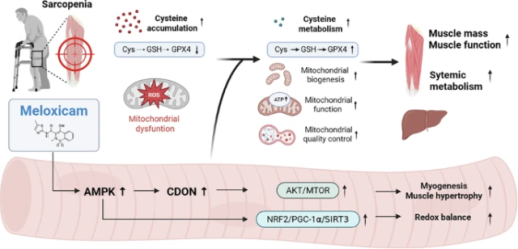 Common painkiller revives fading muscle protein in aging mice SEOUL, September 10 (AJP) - The arthritis painkiller meloxicam slowed muscle wasting in old mice by restoring a protein that muscles lose with age, researchers at two South Korean universities have found. Sarcopenia, the gradual loss of muscle mass and strength that comes with age, contributes to frailty, lost mobility, metabolic problems and higher death rates in older adults, the researchers wrote. The processes that drive it are still not fully understood, they added, which has held back the development of drugs that target it. Bae Gyu-un, a professor in Sookmyung Women's University's Division of Pharmacy, and Kang Jong-sun, a professor at Sungkyunkwan University School of Medicine, led the study, which was published online Aug. 12 in the journal Experimental & Molecular Medicine. The work focused on Cdon, a protein on the surface of muscle cells. Earlier research had shown that it helps muscle stem cells develop into mature muscle and keeps the connections between nerves and muscles stable, but its role in adult muscle and in aging had not been established. The team found that Cdon levels fall in aging human muscle, in people with sarcopenia and in patients with several muscle-wasting diseases, including amyotrophic lateral sclerosis, the nerve disease also known as Lou Gehrig's disease. Across 891 human muscle samples from a public tissue database, lower Cdon went together with higher activity in genes linked to muscle breakdown and with smaller muscle fibers. Muscle cells from a 68-year-old donor carried far less of the protein than cells from a 17-year-old, and old mice showed a similar decline. Bae said in a statement released by Sookmyung Women's University on Monday that the team had confirmed the loss of Cdon as "a major indicator of muscle aging." To look for a way to bring Cdon back, the researchers engineered mouse muscle cells to give off light whenever the Cdon gene switched on. They then tested 2,485 drugs already approved by the U.S. Food and Drug Administration, and the screen singled out meloxicam as a potent activator of the gene. In lab dishes, the drug raised Cdon levels and helped both mouse and human muscle cells grow into larger fibers, including cells from the older donor. The benefit held only within a narrow range, as a dose 100 times higher than the most effective one began to kill cells. Young mice given the drug by mouth every day for two months built more leg muscle, gripped harder and ran farther than untreated mice. Their hearts, livers and kidneys showed no change in weight. The researchers then treated 16-month-old mice for 10 weeks. Untreated old mice kept losing weight over that period, while treated mice lost less and had slightly lower blood sugar. The treated older animals had stronger grips, and nerve signals reached their muscles faster. Their muscles were heavier, with thicker fibers and less scarring, and their livers stored less fat. The drug caused no signs of gut damage at the dose used. The researchers traced part of the muscle damage to cysteine, an amino acid that built up in the muscle and blood of old mice. Previously published data show the same rise in the blood of people with sarcopenia. When the team flooded muscle cells with cysteine, the cells produced less energy and more of the unstable oxygen molecules that damage tissue, a process known as oxidative stress. Meloxicam brought cysteine levels down in old mice and reduced that damage. Meloxicam switched on AMPK, an enzyme that serves as the cell's energy sensor, within five minutes of treatment. When the researchers blocked AMPK, most of the drug's boost to Cdon disappeared, and its protection of mitochondria, the structures that generate a cell's energy, was lost. The mice received 0.02 milligrams of meloxicam per kilogram of body weight each day. At that dose, the drug did not change muscle levels of prostaglandin E2, an inflammation signal that its painkilling action normally suppresses. The researchers said this made it unlikely that the muscle benefits came from the drug's usual painkilling effect. The paper discloses competing interests for Bae and Kang, which it says the two universities reviewed and approved under their conflict-of-interest policies. All of the animal experiments used male mice, and most measurements came from groups of seven or fewer animals. In human samples, the researchers showed an association between low Cdon and muscle decline rather than a direct cause. The authors wrote that they have not yet identified the molecule meloxicam acts on to switch on AMPK, and that the long-term effects and safety of chronic treatment still need study. Whether the same pathway can be restored in aging human muscle will require clinical evaluation, they wrote. Journal/Source: Experimental & Molecular Medicine (IF 17.5, JCR top 2.65%) Title: Meloxicam protects against muscle and metabolic decline in ageing through Cdon restoration and oxidative stress modulation Link/DOI: https://pubmed.ncbi.nlm.nih.gov/42587039/ 2026-09-10 18:11:39
 -
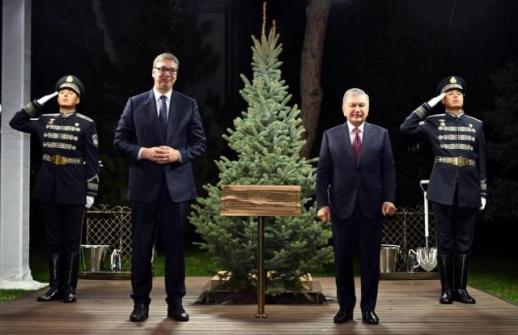 Uzbekistan, Serbia sign environment pact SEOUL, September 10 (AJP) - Environmental protection was written into the package of agreements that lifted relations between Uzbekistan and Serbia to a strategic partnership this week, giving formal shape to environmental contacts that had been building since last year. Shavkat Mirziyoyev and Aleksandar Vucic signed a joint declaration establishing the partnership in Belgrade on Tuesday, at the close of the Uzbek president's first official visit to Serbia. The two sides exchanged 20 bilateral documents covering transport, renewable energy, agriculture, digitalization, labor migration and environmental protection. Bilateral trade reached $41.9 million last year, a record, up 27 percent from $32.9 million in 2024, according to the Serbian Chamber of Commerce. Serbian exports of agricultural and food products to Uzbekistan rose 54.1 percent in the first seven months of this year. The Embassy of Uzbekistan in the Republic of Korea said the environmental track centers on three areas, which are sustainable forest management, biodiversity conservation and cooperation between universities working on climate and environmental science. Forestry is where Serbia has the most to offer. Its Second National Forest Inventory, carried out between 2018 and 2023, put the country's forests and forest land at 3,025,471 hectares, or 39 percent of its territory, an increase of about 5 percentage points over the inventory published in 2009. A large share of that land is privately held, and Serbian forestry authorities have spent years building management arrangements between the state and private owners. Uzbekistan is trying to expand its own tree cover under Yashil Makon, a national planting campaign launched in 2021 with a target of 200 million saplings a year. The government says more than 266 million were planted in 2025. Serbia has granted protected status to 460 natural sites. They include five national parks, 17 nature parks, 20 landscapes of outstanding features, 68 nature reserves, 309 natural monuments and three protected habitats, together covering 583,183 hectares, or about 6.6 percent of the country, according to the International Commission for the Protection of the Danube River. The academic component centers on the Central Asian University of Environmental and Climate Change Studies, known as Green University, which Tashkent has positioned as the region's flagship environmental institution. It was created by presidential decree on May 31, 2023, and opened in Tashkent Region in February 2024, with instruction conducted in English. The opening drew the director general of the International Union for Conservation of Nature, Grethel Aguilar, along with the environment ministers of all five Central Asian states. Uzbekistan wants to link the university with the University of Belgrade and the University of Novi Sad through joint degree programs, research projects and exchanges of students and faculty. The groundwork was laid in Samarkand in early June. Serbia sent a delegation led by Sara Pavkov, who became environment minister in April 2025, to the Eighth Assembly of the Global Environment Facility, held from May 30 to June 6, and to the Eco Expo Central Asia environmental technology exhibition that ran alongside it. Serbian officials took part in a high-level plenary session on green investment and innovation, the embassy said. The exhibition opened on June 2 at the Silk Road Samarkand complex and drew close to 10,000 participants. Its first edition, held in Tashkent in 2025, attracted about 7,500 and launched more than 130 environmental projects with international partners. Uzbekistan has invited Serbia to the next edition, scheduled for June 15 to 17 next year at the CAEx Uzbekistan exhibition center in Tashkent. Both events sit inside an environmental apparatus that Uzbekistan rebuilt last November, when Mirziyoyev removed the Ministry of Ecology, Environmental Protection and Climate Change from the Cabinet of Ministers and reconstituted it as the National Committee on Ecology and Climate Change, reporting directly to the president. Aziz Abdukhakimov, who had been ecology minister, chairs the committee and serves as presidential adviser on the environment. He chaired the Samarkand assembly. Serbia has a platform of its own next year. The United Nations Environment Programme has selected it to host World Environment Day 2027, an event Belgrade intends to run in coordination with Expo 2027. Uzbekistan has confirmed it will take part in that exposition with a national pavilion. 2026-09-10 11:18:22
 -
 Aju chairman joins Shenzhen media forum ahead of APEC summit SEOUL, September 09 (AJP) - South Korean media executives joined more than 400 delegates at a Chinese government-organized media forum in Shenzhen on Sept. 5, two months before the city hosts this year's Asia-Pacific Economic Cooperation leaders' meeting. The Asia-Pacific Media Forum drew representatives from over 40 countries and regions, along with United Nations agencies and other international bodies. It was co-hosted by the Publicity Department of the Communist Party of China Central Committee, the Xinhua News Agency and the Guangdong provincial government, and organized by the Shenzhen city government. China holds the rotating chair of Asia-Pacific Economic Cooperation (APEC) this year, taking it over from South Korea, which hosted the 2025 summit in Gyeongju. Xinhua has reported that roughly 300 APEC-related meetings and events will be held in Chinese cities over the course of the year. Kwak Young-kil, chairman of Aju Media Group, which publishes AJP, sat on a panel titled "Why did APEC choose Shenzhen?" He was joined by Wang Wen, executive dean of the Chongyang Institute for Financial Studies at Renmin University of China, Tan Kar Hing, a Malaysian member of parliament who chairs the Centre of Regional Strategic Studies, and Alexei Ulazov, who handles international cooperation at Russia's National Media Group. The panel discussed Shenzhen's competitiveness and the substance of cooperation under APEC. Kwak gave a series of interviews in Chinese during the forum to China Central Television, Guangzhou Daily, Shenzhen Special Zone Daily and Shenzhen Television. "Shenzhen is a city of reform, opening and inclusiveness, China's Silicon Valley and Asia's Silicon Valley," he said, describing changes he had observed in the city and across the Guangdong-Hong Kong-Macao Greater Bay Area. He also said he expected results from the summit and from further cooperation between South Korea and China. Wang Haina, chief editor of the group's Chinese-language edition, spoke to Guangzhou Television, Shenzhen Television and Foshan Television about Chinese manufacturing, trade between the two countries and exchange among APEC economies. Delegates spent the three days before the opening touring Guangzhou, Foshan, Dongguan, Zhuhai and Zhongshan, visiting technology companies and holding four sub-forums across the province. Li Shulei, a member of the Political Bureau of the Communist Party of China (CPC) Central Committee and head of its Publicity Department, delivered the keynote address at the opening ceremony. Huang Kunming, a CPC Political Bureau member who serves as party secretary of Guangdong, also spoke. The ceremony produced a document the organizers called the Shenzhen Consensus, which described APEC as the most influential economic cooperation mechanism in the region. Sixteen founding organizations from China and abroad formed an organizing committee for a new Asia-Pacific Media Partnership Program. The South China Morning Post reported that the founders include the People's Daily, Xinhua News Agency, Russia's TASS and the Vietnam News Agency. China will host the 33rd APEC Economic Leaders' Meeting in Shenzhen in November, the third time it has hosted the summit after Shanghai in 2001 and Beijing in 2014. 2026-09-09 11:10:03
 -
 Hormuz contribution stays undecided as Iran warns Seoul SEOUL, September 08 (AJP) - The government does not accept the assessment that its own handling of an attack on a South Korean cargo ship in May left an opening for Iran's warning to Seoul this week, the Ministry of Foreign Affairs said Tuesday. That warning came on Sept. 7. Iranian foreign ministry spokesperson Esmaeil Baqaei posted a statement written in Korean on his X account, telling South Korea that any country stationing forces or joining operations in the Persian Gulf and the Strait of Hormuz would be treated as directly backing an act of aggression and would face serious consequences. The post carried an image with a single line in Korean, "dangerous choices carry a price." Baqaei opened by noting that ties between Iran and South Korea run back more than 64 years and have rested on mutual respect. South Korea has consulted every country involved since the crisis began, on passage through the strait and on stabilizing the situation, the Ministry of Foreign Affairs (MOFA) said. It has also continued to discuss what it called practical and military contributions toward that goal. That wording carries weight. MOFA's standing position is that the government is in close consultation with the international community on ways to restore free navigation in the strait and support peace and stability in the Middle East, and that no specific contribution has been decided. The Ministry of National Defense said on Sept. 4 that reports of a decision to deploy were not accurate and that nothing had been settled. MOFA held that same line Tuesday while calling the contributions under discussion military ones. What is under review has been reported in detail. South Korean outlets including Herald Business reported in early September, citing government and military sources, that the government was weighing the P-8A Poseidon maritime patrol aircraft, a navy logistics support ship and an explosive ordnance disposal team. The 11,000-ton Soyang has been named in that reporting as the ship under consideration. A senior Cheong Wa Dae official told reporters on Sept. 4 that combat and non-combat options were being examined together, and that nothing was fixed. A deployment would be South Korea's first at U.S. request since the Zaytun division went to Iraq in 2004. It would need a decision by the National Security Council, a cabinet vote and the consent of the National Assembly. At the center of the criticism is the Namu, a multipurpose carrier operated by HMM. The ship was struck on May 4 while at anchor off Umm Al Quwain in the United Arab Emirates, with six South Korean and 18 foreign crew aboard. None were hurt. Officials first discussed the blast as a possible fire. On May 10, the government announced that a joint investigation had found the vessel was hit from outside by unidentified flying objects. Cheong Wa Dae condemned the strike the next day and said an attack on a civilian ship could never be accepted. It has never named who carried it out. That gap, between the early account and the later finding, is what critics point to. President Donald Trump pressed Seoul directly in the days after the strike. He wrote on Truth Social that Iran had attacked ships belonging to countries with no direct stake in the shipping operation, among them a South Korean cargo ship, and said it was time for South Korea to join. He has said in public remarks since then that Seoul turned down his requests for help on Iran. Countries importing large volumes of Middle Eastern crude, he has argued, should take on the work of keeping the strait open themselves. Japan and other governments carry comparable exposure in the strait. On why the pressure from Washington has fallen most visibly on Seoul, MOFA declined to read American motives, saying a comment on them would not be appropriate. Free passage for all vessels and stability across the region are goals the international community shares, the ministry said, and South Korea is in close contact with other governments to reach them. MOFA took the same position on the argument that friction over investment commitments and commercial disputes with the United States is now returning as a security bill. The two governments consult at every level, it said, and work through each issue as it arises. Tuesday's briefing followed an earlier warning from Tehran. On Sept. 4, a senior Iranian official handling security and political affairs told Iran's Fars news agency and the Lebanese outlet Al Mayadeen that South Korea should not yield to American pressure to cooperate with what he called an illegal military operation. If South Korea acts against Iran in the Strait of Hormuz, he said, Tehran will regard it as direct military participation in a war of aggression against the country. AJP Takeaways - Esmaeil Baqaei, Iran's foreign ministry spokesperson, posted a Korean-language warning on X on Sept. 7 that stationing forces or joining operations in the Persian Gulf and the Strait of Hormuz would be treated as backing an act of aggression. - South Korea's Ministry of Foreign Affairs said Tuesday it disagrees with the assessment that its handling of the May attack on the HMM Namu left an opening for that pressure. - The Ministry of National Defense said on Sept. 4 that reports of a decision to deploy were not accurate and that nothing had been settled. - Cheong Wa Dae condemned the May 4 strike on the Namu and has never named who carried it out. 2026-09-08 16:42:50
 -
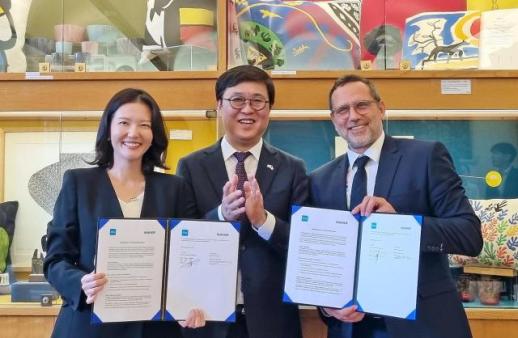 Naver takes AI into France's national broadcast archive SEOUL, September 08 (AJP) - An agreement signed at an international film summit in southern France on Monday (local time) will put South Korean artificial intelligence to work inside France's national broadcast archive. Naver signed a strategic memorandum of understanding with the Institut national de l'audiovisuel, France's national broadcast archive, at the Lumière Summit in Saint-Paul-de-Vence. The two sides will carry out joint research on AI-based preservation and restoration of archive material, develop new digital content and experiences drawn from the holdings, and exchange specialists and seminars, the Ministry of Culture, Sports and Tourism said Tuesday. The ministry described the pairing as an attempt to combine the archive's capacity to preserve and digitize audiovisual heritage with Naver's AI technology and platform capabilities. The deal emerged from a gathering that had spent the day working through what AI is doing to the people who make films. President Lee Jae Myung, who co-chaired the summit with French President Emmanuel Macron, used his opening address to name coexistence between human creativity and AI as one of four priorities for the industry, alongside the crisis facing movie theaters, protecting cultural diversity through support for independent films, and building a mutually beneficial relationship between local and global content businesses. Participants adopted the Lumière Declaration, which frames film as a public good. The Institut national de l'audiovisuel (INA) was created in 1975 when France broke up its state broadcasting monopoly, and it has held the country's audiovisual legal deposit since 1992. That obligation requires it to record 179 television channels and radio stations continuously. Since the deposit was extended to the internet in 2006, it has also collected the contents of more than 14,000 websites and 12,600 social media accounts, according to the institute. For Naver, the agreement arrives in the middle of a year spent selling its AI abroad. The company operates HyperCLOVA X, a family of large language models trained heavily on Korean-language material, and its cloud unit has marketed the technology to overseas governments and institutions as sovereign AI, meaning systems a country can run without depending on foreign providers. Naver signed an infrastructure agreement with Advanced Micro Devices in March to build computing capacity tuned to HyperCLOVA X, and expanded a cloud partnership with Nvidia in June. Neither the ministry nor Naver disclosed what the archive work will cost, when it will begin, or what it is expected to produce. The memorandum names no research program and sets no deadline, and the announcement says nothing about whether Naver will be permitted to train its models on INA material. The summit drew 274 participants from 58 countries, including culture ministers, international organization officials, studio and media executives, directors and actors. Lee and Macron used it to launch a five-year investment program under which South Korea and France will each put 500 million euros into their domestic film and audiovisual industries from 2027 through 2031, a combined 1 billion euros ($1.17 billion). Culture Minister Chae Hwi-young led the South Korean delegation through the day's working sessions. He came to the job from the industry the agreement now involves, having headed the Naver division at NHN Corporation, which was later renamed Naver Corporation, before serving as its chief executive and then as an adviser to the company. He went on to run the travel and ticketing group Interpark. Chae separately signed a film co-production treaty with Italian Culture Minister Alessandro Giuli. Films recognized as joint productions under the treaty will be treated as domestic films in both countries, making them eligible for film fund incentives, tax credits and subsidies, with the movement of crew and equipment guaranteed. Two other South Korean parties signed accords at the summit. The content producer SLL agreed with Mediawan, described by the ministry as Europe's largest media group, to develop remakes of each side's intellectual property formats for Korean and European audiences and to pursue multi-genre co-productions aimed at the global market. The Korean Film Council agreed with the Motion Picture Association to cooperate on discovering and training new talent, exchanging specialists, sharing information and holding screening events. "The South Korean government, as a hub of international audiovisual content production and the most trustworthy partner, will widen the freedom to create and will spare no policy or institutional support," Chae said in his closing address. AJP Takeaways - Naver signed a strategic memorandum with the Institut national de l'audiovisuel at the Lumiere Summit in Saint-Paul-de-Vence to research AI-based preservation and restoration of France's national broadcast archive, which has held the country's audiovisual legal deposit since 1992 and records 179 television channels and radio stations continuously. - Lee Jae Myung, who co-chaired the summit with Emmanuel Macron, named coexistence between human creativity and AI one of four priorities for the industry, and participants adopted the Lumiere Declaration framing film as a public good. - Naver has spent the year marketing its HyperCLOVA X models to overseas governments and institutions as sovereign AI, signing an infrastructure agreement with Advanced Micro Devices in March and expanding a cloud partnership with Nvidia in June. - Naver and the Ministry of Culture, Sports and Tourism disclosed no cost, no timeline, no named research program and no terms on whether Naver may train its models on archive material. 2026-09-08 10:41:33
 -
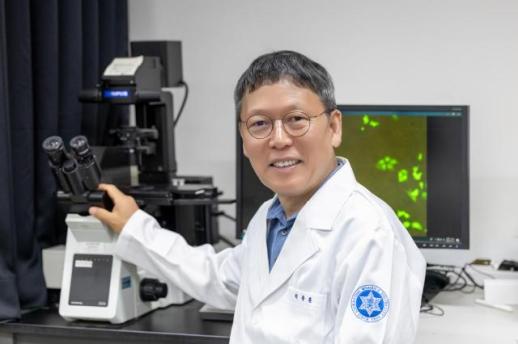 Sookmyung professor wins 5-year grant for kidney disease study SEOUL, September 08 (AJP) - A government program created this year to keep South Korea's most decorated scientists in the laboratory after they reach retirement age will pay for five years of kidney disease research at Sookmyung Women's University. The Ministry of Science and ICT announced the program on April 2 and picked 20 researchers nationwide with the National Research Foundation of Korea. Universities and state-funded institutes could nominate up to three candidates each. Eligibility extended to researchers aged 61 and over who had already retired or who would reach mandatory retirement within three years of the July 1 start date, including those without tenure. The ministry built the program around a problem it named plainly, that a researcher's most productive networks and expertise are cut off on a fixed date regardless of what that researcher is still capable of producing. Among the 20 is Park Jong-hoon, a research professor at Sookmyung's Research Institute of Women's Health. The award is worth up to 1.125 billion won, about $836,000 at 1,345 won to the dollar, over five years. Park spent 23 years teaching in the university's Division of Biological Sciences and retired in August 2024. He received the Innovation Medal of the Order of Science and Technology Merit in 2026, the second of the honor's five grades. The citation credited his basic research and his work on national strategic technology projects, along with his service to scientific societies and government committees. He led the Korean Society for Biochemistry and Molecular Biology as its president in 2022, an organization of more than 17,000 members. Sookmyung said he has published more than 100 papers, including articles in journals indexed in the Science Citation Index Expanded. The funded work centers on polycystic kidney disease, an inherited disorder in which fluid-filled sacs multiply through both kidneys until they crowd out functioning tissue. Patients often live decades without symptoms before the damage forces them onto dialysis or a transplant list. There is no cure. Park plans to run secretome profiling on polycystic kidney disease cell lines. The secretome is the full set of proteins and other molecules a cell releases into its surroundings, the chemical vocabulary cells use to talk to one another. By cataloging what diseased kidney cells send out, he intends to identify the key factors that govern those exchanges, then trace how changes in cell-to-cell signaling line up with the way the disease starts and worsens. The approach breaks with how the field has largely worked. Most research has examined the cyst cell on its own, treating the disease as a failure inside individual cells rather than a breakdown in how cells coordinate. What the project will produce is a proposed mechanism, not a treatment. The work runs in cultured cell lines, not in patients or animals, and identifying a signaling factor is several steps removed from showing that blocking it slows cyst growth in a living kidney. Nothing in the plan tests a drug. "We will move away from research centered on single cyst cells and establish a new paradigm that expands the study of polycystic kidney disease mechanisms around the network between cells," Park said. 2026-09-08 09:24:30