

Journalist
Park Sae-jin박세진
swatchsjp@ajupress.com
Assistant EditorForeign embassies in Seoul & Geopolitics, Diplomacy, Policy
Experienced journalist and editor at AJU PRESS specializing in multilingual news. I cover international diplomacy, geolpolitics, and policy, consistently delivering highly accurate, compelling reporting for a worldwide audience.
"Reporting the facts. Shaping the narrative. Every second counts."
Latest by Park Sae-jin
-
 Tokayev arrives for summit as Kazakhstan eyes AI and minerals deals SEOUL, September 14 (AJP) - Kazakhstan will press South Korea this week to widen a partnership built largely on car plants into artificial intelligence, data infrastructure and processed critical minerals, an agenda President Kassym-Jomart Tokayev carried into Seoul on Monday at the start of a state visit. Deputy Prime Minister and Science and ICT Minister Bae Kyung-hoon met the Kazakh leader at the airport. Tokayev came at the invitation of President Lee Jae Myung, and the two will hold a bilateral summit on Tuesday afternoon. The visit is built around the first South Korea-Central Asia Summit, which Lee will chair in Seoul on Wednesday afternoon. It gathers the leaders of Kazakhstan, Uzbekistan, Turkmenistan, Tajikistan and Kyrgyzstan, and it is the first time South Korea has met the region as a group at the level of heads of state. Seoul and the five capitals have been talking since 2007 through the Korea-Central Asia Cooperation Forum, but that body never rose above the ministerial level. Tokayev is one of three leaders here on a state visit, the highest category of official reception, alongside the presidents of Uzbekistan and Turkmenistan. The leaders of Tajikistan and Kyrgyzstan are making official visits. Lee is meeting all five in turn, starting Monday afternoon and finishing Wednesday morning, before the six of them sit down together. Cheong Wa Dae has set the summit under the theme of cooperation and partnership for stronger innovation, prosperity and connectivity. Presidential spokesperson Kang Yu-jung said the meeting will produce a Seoul Declaration laying out a framework for the medium to long term, turning what has been a series of ministerial conversations into a standing structure at the leader level. What Seoul wants from the region is material. Central Asia holds large reserves of the minerals that go into batteries, semiconductors and electric motors, and South Korea has the exploration and processing technology but almost none of the ore. Cheong Wa Dae said it will use the summit to pair the two, reducing the concentration of supply chains that now run overwhelmingly through China. Beyond minerals, the presidential office wants to open the region to South Korean construction and plant contractors through cooperation tailored to each country's infrastructure needs, and to smooth the customs procedures, regulations and intellectual property rules that trip up companies working there. Talks will also cover artificial intelligence, digital technology, science, climate response, water management and disaster preparedness. Security is on the agenda as well. Seoul will seek the region's backing on Korean Peninsula issues and press for joint work against terrorism, narcotics and cybercrime, an area where cooperation has already produced results. Kazakh and South Korean authorities recently broke up a voice phishing ring, arresting 19 people over fraud worth 5.8 billion won, about $4.3 million. People-to-people ties form the fourth strand. Next year marks 90 years since ethnic Koreans were deported to Central Asia under Stalin in 1937, and the government plans to expand Korean language and cultural education and youth exchange programs across the region ahead of that anniversary. Kazakhstan is home to roughly 120,000 ethnic Koreans. Kazakhstan arrives with a narrower and more specific list. The Kazakh Embassy in Seoul said Astana wants to move the relationship past the automotive assembly that has defined it, using that industry as a template rather than an endpoint. The template is visible on the ground. Hyundai Motor Company assembles vehicles in Almaty, Kia Corporation opened a plant last year in Kostanay, built to turn out 70,000 cars a year, Samsung Electronics runs production in the Karaganda region, and Doosan Enerbility is building a 1,000-megawatt power station in Turkestan. More than 700 companies with South Korean capital operate in the country. Artificial intelligence and data infrastructure sit at the top of what Kazakhstan wants next. The country is expanding its computing capacity, which Astana argues creates openings for South Korean firms in data centers, the power supply those centers require and the cooling systems that keep them running. On minerals, the Kazakh position is that exporting ore is not the goal. Kazakhstan holds significant reserves of uranium, copper, chromium and zinc, and wants processing plants, higher value manufacturing and a place inside South Korean battery and electronics supply chains rather than a role at the bottom of them. A planned research center for rare earth metals is part of that push. Geography is the third argument. Kazakhstan is the largest economy in Central Asia and sits astride the overland routes between Asia and Europe. It is spending heavily on railways and on the Trans-Caspian corridor, which moves freight west across the Caspian Sea and bypasses Russia, a selling point for South Korean exporters looking for alternatives to existing routes. Astana has also signaled that it will judge the summit by what comes after it rather than by the language of the declaration, saying it wants named projects, identified partners, financing arranged and timelines that can actually be met. Kazakhstan and South Korea currently have 46 joint industrial projects at various stages, worth roughly $4 billion, spanning vehicle production, engineering, metallurgy and electronics. Bilateral trade reached $3.17 billion last year. South Korean direct investment in Kazakhstan has totaled about $8 billion over the past decade. The two countries established diplomatic relations in 1992 and upgraded them to a strategic partnership in 2009. AJP Takeaways - Kassym-Jomart Tokayev arrived in Seoul on Monday at the invitation of President Lee Jae Myung, one of three Central Asian leaders here on a state visit, and will hold a bilateral summit with Lee on Tuesday afternoon. - Cheong Wa Dae will chair the first South Korea-Central Asia Summit on Wednesday afternoon with the leaders of Kazakhstan, Uzbekistan, Turkmenistan, Tajikistan and Kyrgyzstan, adopting a Seoul Declaration that raises a cooperation framework running at ministerial level since 2007 to the level of heads of state. - Cheong Wa Dae is pairing Central Asia's mineral reserves with South Korean exploration and processing technology to cut supply chain dependence on China, while also pursuing infrastructure and plant contracts, customs and intellectual property rules, artificial intelligence and digital cooperation, and joint action against terrorism, narcotics and cybercrime. - The Kazakh Embassy in Seoul said Astana wants to move past automotive assembly into artificial intelligence, data center infrastructure and domestic mineral processing, and will measure the summit by named projects, identified partners, arranged financing and workable timelines rather than by the declaration text. - Kazakhstan and South Korea have 46 joint industrial projects worth roughly $4 billion under way, bilateral trade reached $3.17 billion last year, and South Korean direct investment has totaled about $8 billion over the past decade. AJP verified these figures against Kazakh government sources rather than the wire interview that first surfaced them. 2026-09-14 14:09:48
 -
 Uzbekistan seeks tourism pact with Korea before summit SEOUL, September 14 (AJP) - Hours before a South Korea-Uzbekistan summit in Seoul on Monday afternoon, the Uzbek government proposed a dedicated tourism agreement between the two countries' tourism authorities, seeking to turn eight years of visa-free travel into a working commercial relationship. Uzbekistan received about 7.75 million foreign tourists between January and July, up 22.6 percent from a year earlier, and earned roughly $3.9 billion from tourism services over the same period. South Korean travelers accounted for 26,500 of those arrivals. Tashkent placed that figure third among its long-haul markets, behind only China and Türkiye, and said Korean arrivals had already moved past pre-pandemic levels. An intergovernmental tourism agreement between the two countries has been in force since 2012. What Uzbekistan now wants is a narrower document signed directly between the relevant agencies on each side, paired with an action plan setting targets for the number of travelers moving in both directions. The groundwork for that is already in place. South Koreans have been able to enter Uzbekistan without a visa for stays of up to 30 days since February 2018, and the two capitals are linked by direct flights, which together strip out most of the friction from a trip that would otherwise require planning months ahead. Access alone has not been enough. Uzbekistan argued that it needs a working presence inside the South Korean travel trade itself, meaning relationships with tour operators, itineraries and packages built for Korean buyers, sustained destination marketing and service standards that hold up once visitors arrive. Some of that has been attempted. In October 2024, an Uzbek-Korean tourism forum in Seoul drew more than 100 industry figures, with Uzbek tour operators and airlines presenting routes and packages aimed at the Korean market. Business-to-business meetings ran at the center of the program, letting companies negotiate directly rather than through their governments. Uzbekistan wants to continue that work through the Korea Association of Travel Agents, proposing joint industry events and destination promotion campaigns inside South Korea. Korean firms would be pulled in the other direction as well, toward the Tashkent International Tourism Fair. A less visible obstacle sits behind all of it. Uzbekistan does not have enough guides who speak Korean and understand what Korean visitors expect, and expanding their training has been set aside as a separate line of work. That is where Uzbekistan wants South Korea as a partner in building the industry rather than simply a source of customers. Proposals under discussion with the Korea International Cooperation Agency include placing Korean specialists inside Uzbek tourism colleges, running exchanges and training programs in South Korea, and opening a Korean language and culture center at the Silk Road International University of Tourism and Cultural Heritage in Samarkand. Exchanges of that kind have already started. Officials from Uzbekistan's Tourism Committee attended a high-level policy forum in May staged by South Korea's Ministry of Culture, Sports and Tourism under the Korea Partnership Initiative on Sustainable Tourism, the ministry's tourism assistance program for developing countries. An Uzbek entry took first place at the initiative's project competition in June. Uzbekistan counted 35,500 South Korean visitors in 2019, 41,300 in 2024 and 46,300 last year. AJP Takeaways - Uzbekistan proposed a dedicated tourism agreement between the two countries' tourism authorities, paired with an action plan on visitor numbers, putting the proposal out hours before a South Korea-Uzbekistan summit in Seoul on Monday afternoon and on top of an intergovernmental tourism agreement that has been in force since 2012. - Uzbekistan said it drew about 7.75 million foreign tourists between January and July, up 22.6 percent year on year and worth roughly $3.9 billion in tourism service earnings, and placed the 26,500 South Korean arrivals in that period third among its long-haul markets behind China and Türkiye. - Korea International Cooperation Agency is in discussions on placing Korean specialists inside Uzbek tourism colleges, running training and exchange programs in South Korea, and opening a Korean language and culture center at the Silk Road International University of Tourism and Cultural Heritage in Samarkand. - The Ministry of Culture, Sports and Tourism runs the Korea Partnership Initiative on Sustainable Tourism, its tourism assistance program for developing countries, which hosted the May policy forum attended by Uzbekistan's Tourism Committee and the June competition won by an Uzbek entry. The embassy material named the program by acronym only, and AJP established what it stands for and what it does. 2026-09-14 11:10:55
 -
 Alatau City draws S. Korean partners ahead of Seoul summit SEOUL, September 14 (AJP) - Two South Korean technology firms agreed this month to build a digital model of Alatau City, a Kazakh new town that remains largely empty land, in the latest of a series of Korean commitments to the project ahead of Wednesday's first summit between South Korea and five Central Asian countries. The agreement was signed on September 9 at the World Smart City Expo in Busan by AST Holdings, ILJOO GnS and the Alatau City Authority. The following day, in the same convention center, Korea Overseas Infrastructure and Urban Development Corporation briefed Korean firms on a 330-hectare district it intends to develop at the site. President Lee Jae Myung meets the Kazakh president on Tuesday afternoon during three days of bilateral talks, then hosts the leaders of Kazakhstan, Kyrgyzstan, Tajikistan, Turkmenistan and Uzbekistan in Seoul on Wednesday for the first Korea-Central Asia Summit 2026. A business summit drawing about 500 government and corporate officials follows. Alatau City lies 47 kilometers from Almaty and covers 88,000 hectares. The Alatau City Authority (ACA) says it will eventually house 1.87 million residents, a projection that runs a quarter century out. Five anchor plants are operating there now, among them the food manufacturer Mareven Food, the German building materials maker Knauf and the Almaty Fan Plant. PepsiCo is building a $360 million facility expected to employ up to 900 people, and work has started on a Mars Petcare plant. ACA puts the full investment portfolio at 67 projects worth $6.9 billion with the potential to create 55,000 jobs. What has drawn Korean interest, however, is less the construction schedule than the legal regime written around it. Kazakh President Kassym-Jomart Tokayev signed the Constitutional Law on the Special Legal Regime of Alatau City on May 8. It took effect on July 1, with the remaining provisions phasing in through January and July of next year. The law designates Alatau as the country's first city of accelerated development, granting qualifying investors a single-window approval process and tax incentives of up to 30 years. Special economic zone and free customs zone treatment applies for 50 years from January 1, and work permits for foreign specialists are eased. It also allows the city administration to write regulations on the principles and precedents of English and Welsh law, which Kazakh officials say should make the system read as predictable to foreign investors. And it converted ACA, created last year by presidential decree as a state fund, into a government body. The law further permits companies to run artificial intelligence systems, unmanned aircraft, robotics and connected devices inside Alatau under rules that apply nowhere else in Kazakhstan. That provision matters to a sector with almost nowhere to operate. Urban air mobility, the industry built around small electric aircraft carrying passengers across cities, cannot launch on aircraft alone. It needs certification rules, reserved airspace, low-altitude traffic management and landing infrastructure, almost none of which exists in any country. ACA said it is exploring cooperation with Korea Airports Corporation on that set of problems, and that Kazakhstan and South Korea have agreed to keep consulting on company participation in the sector. Only one Korean-linked project at the site has broken ground. A cultural and industrial complex branded K-Park began construction in September last year, led by Kazakhstan's investment agency and the Kazakh conglomerate Caspian Group, which called it the first execution model of the wider city project. The rest remain memoranda, concepts or pilots. The digital twin signed on September 9 is among them. A digital twin is a live software model of a physical place, fed by sensors, used to run utilities and traffic from a single system. In an established metropolis, building one means stitching together decades of incompatible legacy systems. In Alatau the data architecture can be designed alongside the pipes and the roads. AST Holdings chief executive Lee Dong-woo said the city allows digital technology to be built into urban design and operation from the outset, Edaily reported. The three parties have not yet fixed the pilot area or the technical scope and plan to settle both in joint working sessions, with artificial intelligence tools for city operations to follow in stages. Neither firm is large. ACA put AST Holdings' revenue last year at 13.83 billion won ($10.3 million) and ILJOO GnS at 15.65 billion won. AST Holdings has built digital twin platforms for Korea Land and Geospatial Informatix Corporation and worked on the government's Digital Twin National Land program, and it is developing digital twins for five Saudi cities with Naver Cloud. ILJOO GnS has worked on Busan Eco Delta City and on digital manufacturing systems for Hyundai plants. The heavier commitment belongs to Korea Overseas Infrastructure and Urban Development Corporation (KIND), the state body created to move Korean construction and urban development firms into overseas markets. KIND signed a memorandum in Astana on December 11 with Kazakhstan's Ministry of Industry and Construction and ACA, with Deputy Prime Minister Kanat Bozumbayev present. In remarks released by KIND, Bozumbayev called Alatau a national project concentrating demand for energy, water, sewerage and waste treatment as well as housing and industrial estates, and said Kazakhstan welcomed "the active participation of Korean companies with extensive infrastructure experience and technology." KIND's planned district, K-Smart Town, covers 330 hectares and provides for 5.3 million square meters of real estate. A development concept has been prepared. KIND presented the work on September 10 at its K-City Network Global Smart City Partnership Forum at BEXCO, alongside a satellite city planned for Tashkent's new airport and a smart city master plan in Lublin, Poland. The stated purpose was to identify Korean companies willing to join demonstration and investment projects. Questions from the floor ran to local incentives, the point at which smaller firms could enter, and how any of it would be financed. One frequently cited Korean link is less settled than it appears. ACA counts the Qazaqstan Advanced Institute of Science and Technology, a research university modeled on the Korea Advanced Institute of Science and Technology, among Alatau's partnerships, citing an October 2025 agreement involving Kazakhstan's Ministry of Science and Higher Education, KAIST and Alatau City Bank. The project itself dates to 2020 and was formalized by a science and technology memorandum between the two governments in June 2024. Kazakh officials said last year the institute would open in Almaty, with the exact site to be determined by its feasibility study. That study was presented in Astana on July 31, covering the academic model, faculty structure, research priorities and project risks. Two more Korean names appear in ACA's account at the level of intention rather than contract. Doosan Enerbility is under consideration as a partner in Alatau's power infrastructure, with no parameters announced. An agreement to develop a Hyundai Green Food production and logistics complex was announced by the Kazakh government in August. Hyundai Green Food is the catering and food distribution arm of Hyundai Department Store Group and is not part of Hyundai Motor Group. South Korea is not the only country making this argument to Kazakhstan, and it is arriving with smaller numbers attached. The United States signed and announced more than $25 billion in commercial deals at a dealmaking session tied to last year's C5+1 summit, the European Union has put forward an investment package worth 12 billion euros, and Japan has set a target of 3 trillion yen in private-sector projects over five years, Digital Times reported. South Korea's cumulative investment in Kazakhstan through last year stood at $4.38 billion on a declared basis, according to the Ministry of Foreign Affairs. ACA puts the figure far higher, at $11.8 billion since 2005, and says more than 1,000 companies with Korean participation are registered in the country. Two-way trade reached $3.17 billion last year by ACA's count, with Kazakh exports to South Korea still dominated by minerals and metals, the pattern both governments say they want to break. In August, the South Korean government named three priorities for Central Asia: critical minerals and energy supply chains, emerging industries including artificial intelligence and biotechnology, and transport, logistics and human capital. Alatau touches all three, which makes it one place to measure whether Wednesday's summit produces more than signatures. The two sides have met at ministerial level every year since 2007, and Wednesday is the first time their leaders have sat down together. The master plan and feasibility study for K-Smart Town's 330 hectares are due to be completed by the end of this year. 2026-09-14 10:10:56
 -
 New LE SSERAFIM single charts in 24 markets before BlizzCon set SEOUL, September 13 (AJP) - Within a day of its release, the title track from LE SSERAFIM's second single album had climbed into the upper ranks of iTunes song charts in 24 countries and territories, building momentum for the South Korean group as it prepares to close one of the world's largest gaming conventions. "Made My Night," released Sept. 11, drew more than 1.03 million streams on Spotify in its first day and entered the platform's daily top songs chart in five countries and territories, including South Korea, Japan and Hong Kong, according to Source Music, the group's label. On the worldwide iTunes song chart dated Sept. 12, the track placed 11th. It reached No. 1 in Viet Nam and ranked near the top in markets including Japan, Mexico and Taiwan. The song also entered YouTube's trending music rankings in 19 countries and territories, among them Britain, Denmark and Canada. The track is a pop dance number about meeting someone and staying out with them through the night, carried by a bright melody and an upbeat rhythm. LE SSERAFIM debuted in 2022 under Source Music, a label of the entertainment company HYBE. The group has five members, Kim Chae-won, Sakura, Huh Yun-jin, Kazuha and Hong Eun-chae. The group will take the main stage at the Anaheim Convention Center in California on Sept. 13 local time as the closing act of BlizzCon 2026, the annual fan convention staged by Blizzard Entertainment, the American game studio behind Overwatch, Diablo and World of Warcraft. LE SSERAFIM worked with Overwatch on the music video for "Made My Night." The Anaheim appearance will be the group's second at BlizzCon, following 2023, when it became the first K-pop act to perform at the convention. The group will perform "Made My Night" live for the first time anywhere at the show. AJP Takeaways - Source Music said the title track from LE SSERAFIM's second single album drew more than 1.03 million Spotify streams on its first day and entered the platform's daily top songs chart in five countries and territories, including South Korea, Japan and Hong Kong. - LE SSERAFIM ranked in the upper reaches of iTunes song charts in 24 countries and territories within a day of the Sept. 11 release, taking 11th place worldwide and first place in Viet Nam, and entered YouTube trending music rankings in 19 more. - Blizzard Entertainment, the American studio behind Overwatch, Diablo and World of Warcraft, will give the group the closing slot at BlizzCon 2026 in Anaheim on Sept. 13 local time, three years after it became the first K-pop act to play the convention. That framing and the studio's game catalog come from Blizzard's own announcement rather than the label's release. 2026-09-13 17:51:03
 -
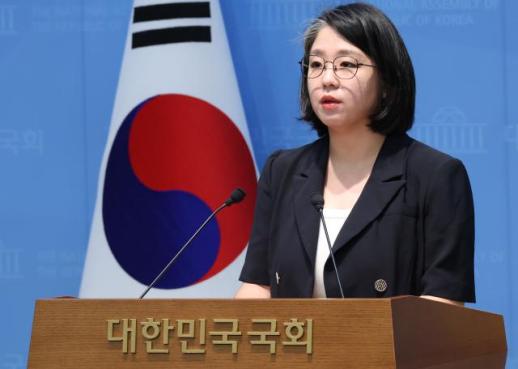 Korea's gender minister nominee quits under pressure SEOUL, September 13 (AJP) - South Korea's nominee for gender equality minister withdrew on Sunday after the governing party asked her to step aside, ending a nomination that had lasted 14 days and, with it, President Lee Jae Myung's first attempt to bring a smaller progressive party into his cabinet. Yong Hye-in announced the decision at a hastily called news conference at the National Assembly, two weeks after Lee named her on Aug. 30 to lead the Ministry of Gender Equality and Family. She never reached a confirmation hearing. What ended the nomination was not opposition resistance. Yong said the Democratic Party of Korea (DP), which governs with the support of her own party, had told her to resolve the matter herself. The message, as she described it, was that the party respected the position she and the Basic Income Party were in, but that public sentiment had not come around to one person holding a proportional seat and a ministry at the same time, and that she should make a decision. "A cabinet member has to connect the National Assembly and the government and draw cooperation out of both," Yong said. "With the governing party also expressing concern, I judged that carrying out the job was realistically difficult." The dual role had been the trouble from the start. South Korean law allows sitting lawmakers to serve as ministers, and district representatives have done so routinely. Proportional representatives, who hold their seats through party lists rather than constituencies, have by custom given the seats up on entering the cabinet. Yong refused, and her reason was arithmetic rather than preference. She is the Basic Income Party's only lawmaker, and she entered parliament in 2020 and again in 2024 through proportional lists run by Democratic Party satellite parties. Had she resigned, the seat would have passed to the next name on the list rather than to her own party, leaving the Basic Income Party with no presence in parliament at all. She tried to defuse the criticism on Aug. 31, writing on Facebook that she had already told her party she would not run as a proportional candidate in the next general election. It changed little, and the complaints kept coming from within the governing camp as well as from the opposition. Allegations about the party itself compounded the problem. Critics pointed to her appointment of her husband to a senior Basic Income Party post and accused her of running the party as a private operation. As recently as Sept. 10, Yong had shown no intention of stepping back. She held a news conference at the National Assembly that day, argued that a lawmaker serving in the cabinet is a principle the law permits, and rebutted the accusations against her one by one. Three days later she explained why that approach had run out of road. "There was nothing I could not stand behind, so I wanted to account for each point before the public and I waited for the confirmation hearing," she said Sunday. "But with false information and speculation pouring in from one side, I had no choice but to convey the truth and my own sincerity to the public directly." The Basic Income Party said the decision was taken over the weekend. Shin Ji-hye, a supreme council member of the party, told reporters after the news conference that the message from the Democratic Party leadership arrived on Saturday and that the final decision followed consultations within the party leadership. Asked whether Cheong Wa Dae had been involved, Shin said that as far as she knew, there had been no contact with the presidential office. Yong also framed the withdrawal as a way of protecting the alliance that had produced the nomination in the first place, saying stopping there was necessary to carry on the spirit of cooperation within the democratic and progressive camp. The ministry now waits again. Won Min-kyong, who took office in September last year and ended a leadership vacancy of one year and seven months, remains in the post until a successor is named. She became the ministry's first head after its Korean name was changed on Oct. 1 to drop the word for women in favor of gender equality. Kang Sun-woo, then a Democratic Party lawmaker, withdrew from the same nomination in July last year over allegations that she mistreated her staff. Yong keeps her National Assembly seat. "I will return to where I started, take a look at myself, and devote myself to my work in parliament with a humble and mature attitude," she said. AJP Takeaways - Yong Hye-in withdrew as South Korea's nominee for gender equality minister on Sunday, 14 days after President Lee Jae Myung named her and before any confirmation hearing was held, ending his first attempt to place a smaller progressive party inside the cabinet. - The Democratic Party of Korea, not the opposition, forced the decision by telling Yong that public sentiment had not come around to one person holding a proportional seat and a ministry at once and that she should decide for herself, three days after she had publicly vowed to fight the accusations point by point. - The Basic Income Party would have lost its only seat in parliament had Yong resigned it, because she entered the National Assembly in 2020 and 2024 through Democratic Party satellite lists and the seat would have passed to the next name on those lists rather than to her own party. AJP established the succession mechanics beyond the original source copy. - Shin Ji-hye said the message from the Democratic Party leadership reached the Basic Income Party on Saturday and that, as far as she knew, Cheong Wa Dae had no contact with the party over Yong's position. 2026-09-13 16:20:14
 -
 Tajikistan bets on hydropower and AI 35 years after independence A country that spent the first years of its independence in civil war now counts about 300 hydropower plants, and the next thing it plans to build is an artificial intelligence center in its capital. Emomali Rahmon set out that agenda on Sept. 8 at the National Theater in Dushanbe, where Tajikistan marked 35 years of independence. The president named industrialization, green energy, digitalization and artificial intelligence as the priorities ahead. The starting point was brutal. Nearly five years of fighting shut down the machinery of government and drove out hundreds of thousands of trained people. Rahmon said families at the time were preoccupied with getting through the day. Poverty stood at 83 percent. It is now 19 percent. Growth has averaged more than 7.7 percent a year over the past 25 years, and S&P Global Ratings raised the sovereign rating last month from B to B+ with a stable outlook. Industry thickened alongside. The 358 industrial enterprises counted in 1991 have grown to more than 4,000. Copper production and export began for the first time since independence, and iron production starts in 2027. Energy is where the government has spent the most. Roughly 300 hydropower plants, the Dushanbe-2 combined heat and power station, and new solar capacity have added more than 2,300 megawatts. Total installed capacity now reaches 6,700 megawatts. The centerpiece is the Rogun hydropower plant. The government expects that once its third unit starts running in 2027, the country will cover the electricity its people and industry need without imports. Two solar plants with a combined 500 megawatts are due to open in the Asht and Jayhun districts by November. The second track is digital, and Tajikistan has pushed that agenda abroad as well. The United Nations General Assembly adopted by consensus in July last year a Tajik-initiated resolution on the role of artificial intelligence in sustainable development across Central Asia. It included a regional artificial intelligence center in Dushanbe to coordinate joint projects. A second Tajik-initiated resolution passed last month, designating Aug. 31 as the International Day of Safe and Trustworthy Artificial Intelligence. It drew 144 votes in favor. The United States and Israel voted against, and Argentina, Canada, and Samoa abstained. The first observance falls in 2027. 2026-09-13 14:37:59
 -
 Uzbekistan bets on IT exports 10 years after scrapping dual exchange rate Until September 2017, any company operating in Uzbekistan had to pick one of two exchange rates, and neither option was good. The government set the official rate at about 4,200 som to the dollar. On the street, a dollar fetched close to 8,000. Foreign firms either took the loss at the official counter or broke the law at the unofficial one. That ended on Sept. 5, 2017, when the central bank stopped pegging the som and lifted limits on foreign currency purchases. The two rates merged at the higher level. It was the first major move by Shavkat Mirziyoyev, who took office in 2016 after the death of Islam Karimov, the country's only leader since independence. The numbers since then tell the rest. Gross domestic product passed $145 billion last year, foreign investment inflows reached $43.1 billion, and credit rating agencies moved the country up from BB- to BB. Geography works against anyone trying to sell Uzbek goods abroad. The country is one of only two in the world that is doubly landlocked, meaning every neighbor it borders is landlocked as well. Liechtenstein is the other. A container leaving Tashkent crosses at least two borders before it reaches a port. So the government bet on something that does not travel by ship. Digital Technologies Minister Sherzod Shermatov said information technology exports were worth less than $1 million in 2017 and now approach $1 billion. The target for 2030 is $5 billion. Companies based at IT Park, the Tashkent technology campus that offers tax breaks and easier hiring rules, exported $191.8 million in services in the first quarter of this year. A presidential decree issued last October set a target of 100 artificial intelligence projects running by the end of this year. South Korea has been part of this from early on. The Ministry of the Interior and Safety opened a Korea-Uzbekistan center for electronic government and the digital economy in Tashkent on Jan. 30, 2020, as agreed at a summit the previous April. Uzbekistan has since climbed 71 places in the World Bank GovTech Maturity Index and now sits in the global top 10. One door remains shut. Uzbekistan first applied to join the World Trade Organization in 1994, let it go dormant, and restarted the process only in 2020. At a working party meeting in July, the Uzbek delegation said again that it intends to finish the accession this year. 2026-09-13 14:05:10
 -
 Korean chips reach US through ASEAN as China route shrinks SEOUL, September 13 (AJP) - More of South Korea's semiconductors and electronic components now reach American buyers through factories in Southeast Asia than through factories in China, according to a Bank of Korea report published Sept. 13 on how trade routes have been redrawn since the U.S.-China conflict began. In 2022, 18.6 percent of the South Korean computer, electronic and optical products that ended up in American consumption or investment had passed through Viet Nam, Indonesia, Malaysia, the Philippines or Thailand. The share that passed through China was 17 percent. What South Korea sends straight to the United States has barely moved. Of all Korean-made value that ends in American final demand, 73.1 percent went directly in 2016 and 72.4 percent in 2022. The change came in everything else. Across all industries, the share routed through China fell to 6.8 percent from 10.7 percent over those six years, while the share routed through the five Southeast Asian economies rose to 8.3 percent from 4.9 percent. The Bank of Korea (BOK) calls the countries absorbing this work connector economies. They sit inside both systems at once, tied to American demand on one side and to Chinese production networks on the other, and they pick up trade that no longer moves between the two directly. Viet Nam, India and Mexico are the clearest cases. The pattern took hold after 2017, when Washington and Beijing began stacking tariffs on each other's goods. Rather than give up either market, manufacturers shifted final assembly to third countries whose exports faced lower barriers, and the components kept arriving from the same suppliers as before. Viet Nam has absorbed the largest share of that work on the South Korean side. Korean value shipped into Vietnamese plants in the computer, electronic and optical sector and ending in American final demand rose to 21 percent in 2022 from 12.8 percent in 2016. The share ending in Chinese final demand rose to 19.4 percent from 11.2 percent. Together the two markets accounted for 40.4 percent, against 24 percent six years earlier. BOK reads the shift as a gain in resilience. More production sites and more shipping routes leave an exporter with options when a geopolitical shock closes one of them. The arrangement carries a bill. Because so much Korean output now reaches the United States through Southeast Asia, trouble in the region travels back to South Korea instead of stopping at a foreign supplier's border. Washington has tools aimed at exactly this kind of routing. Rules of origin decide which country a finished product legally comes from, and therefore which tariff rate it pays. Transshipment investigations test whether goods were actually manufactured where they were shipped from or merely passed through to disguise their origin. Tightening either would hit Korean companies operating plants in Southeast Asia along with the parts makers at home that supply them. BOK recommends treating the connector economies as a buffer while cutting reliance on any single production site or route. The findings rest on the Organization for Economic Cooperation and Development's international input-output tables covering 2016 to 2022, and the trade-routing figures stop at that year. BOK judges that the pattern has held since, citing export strength in Viet Nam and Malaysia, both of which serve artificial intelligence supply chains. Direct goods trade between the United States and China fell 39.9 percent between 2022 and 2025 on American figures. Global goods trade grew over the same period. AJP Takeaways - The Bank of Korea reported that 18.6 percent of South Korean computer, electronic and optical products reaching American final demand in 2022 passed through Viet Nam, Indonesia, Malaysia, the Philippines or Thailand, above the 17 percent that passed through China. - The Bank of Korea found that the share of Korean-made value going directly to the United States held near steady at 73.1 percent in 2016 and 72.4 percent in 2022, with the entire shift occurring in indirect routes, where China fell to 6.8 percent from 10.7 percent and the five Southeast Asian economies rose to 8.3 percent from 4.9 percent. - The Bank of Korea warned that tighter U.S. rules of origin or transshipment investigations aimed at Southeast Asia would reach Korean companies running plants in the region along with the domestic parts makers that supply them, and recommended cutting reliance on any single production site or route. - The Organization for Economic Cooperation and Development supplied the international input-output tables behind the analysis, which cover 2016 through 2022 and leave the trade-routing figures four years old. AJP added the data vintage and the explanation of how rules of origin and transshipment investigations work. 2026-09-13 12:59:01
 -
 Lee Chang-dong takes Silver Lion 24 years after Oasis SEOUL, September 13 (AJP) - South Korea's entry for next year's Academy Awards, Lee Chang-dong's "Possible Love," won the Silver Lion Grand Jury Prize at the 83rd Venice International Film Festival on Saturday (local time), the first South Korean film to take a prize in the festival's competition section in 14 years. The award, second only to the Golden Lion, was announced at the closing ceremony at the Palazzo del Cinema on the Lido. Hours earlier, a separate jury of professional critics had given the film the prize awarded by the International Federation of Film Critics, which judges the competition lineup independently of the festival's own panel. No South Korean film had won the Grand Jury Prize before. The Korean Film Council selected "Possible Love" as the country's official submission for the best international feature Oscar in late August, weeks before it screened for an audience anywhere. A 15-member committee chaired by film critic Jung Sung-il made the choice, citing Lee's record, the film's construction and the level of interest from North American press. Venice has now delivered the first outside verdict on that bet. The 99th Academy Awards will be held on March 14, 2027. A film must open commercially in its own country by Sept. 30 to qualify in the international feature category, a deadline "Possible Love" clears with its South Korean release on Sept. 23. Netflix, which holds worldwide streaming rights, intends to campaign the film for best picture as well, the Korean Film Council (KOFIC) said when it announced the selection. Lee accepted the prize on stage and read out the names of his four leads before thanking the crew. "Everybody on set who gave life to this film, to all the actors and the staff, thank you," he said. "This award belongs to all of you." "We are living in an era where the meaning of labor is fading and human connections are increasingly becoming severed. I made this film to ask what cinema can and should do in times like these," Lee said, adding: "I take this award as a sign that you want me to keep asking these questions." The film follows two married couples whose lives cross over a documentary shoot. Sul Kyung-gu plays Ho-seok, a factory worker who has lost his job, and Jeon Do-yeon plays his wife, Mi-ok. Cho Yeo-jeong plays Ye-ji, a documentary maker filming workers who were laid off, and Zo In-sung plays her affluent husband, Sang-woo. Lee wrote the screenplay with Oh Jung-mi. It is his first feature in eight years, after "Burning" in 2018. The world premiere on Sept. 6 drew a seven-minute standing ovation. Taking the jury award and the critics' award together repeats what Lee managed at Venice in 2002, when "Oasis" won the Silver Lion for best director and the International Federation of Film Critics (FIPRESCI) prize, and Moon So-ri won the Marcello Mastroianni Award for a new young performer. Lee taught high school Korean and published fiction before he began directing in his 40s, and he served as South Korea's culture minister from 2003 to 2004. His earlier films include "Peppermint Candy" in 2000, "Secret Sunshine" in 2007 and "Poetry" in 2010. Jeon won best actress at Cannes for "Secret Sunshine," and "Poetry" won best screenplay there three years later. "Possible Love" is the fourth Lee film to carry South Korea's Oscar submission, after "Oasis," "Secret Sunshine" and "Burning." "Burning" became the first South Korean film to reach the international category shortlist, in the 2019 awards season, and missed the final five. A year later, Bong Joon-ho's "Parasite" became the country's first nominee and first winner in the category, and the first film not in English to win best picture. The Golden Lion for best film went to May el-Toukhy's "Woman Unknown," a Danish drama about a woman hiding a wartime relationship with German soldiers, which also won the Volpi Cup for best actress for Mathilde Arcel. Ilya Khrzhanovsky won the Silver Lion for best director for "DAU," and John Malkovich took the Volpi Cup for best actor for "Wild Horse Nine." Maggie Gyllenhaal chaired the jury. "Possible Love" opens in South Korean theaters on Sept. 23, reaches limited release in the United States on Oct. 23 and streams worldwide on Netflix on Nov. 6. AJP Takeaways - The Venice International Film Festival's competition jury, chaired by Maggie Gyllenhaal, awarded the Silver Lion Grand Jury Prize to Lee Chang-dong's "Possible Love" at the closing ceremony on the Lido on Saturday, the first South Korean film to take a prize in the festival's competition section in 14 years and the first ever to win that award. - The Korean Film Council selected "Possible Love" as South Korea's official submission for the best international feature Oscar in late August, weeks before the film screened for an audience anywhere, and said Netflix intends to campaign it for best picture as well. That selection material comes from the council's own announcement rather than from the festival's awards release. - The International Federation of Film Critics gave "Possible Love" its prize for the competition lineup hours before the closing ceremony, pairing the jury and critics awards in the same way Lee's "Oasis" did at Venice in 2002. - Netflix will stream the film worldwide on Nov. 6, following its South Korean theatrical opening on Sept. 23 and a limited United States release on Oct. 23. 2026-09-13 10:09:11
 -
 Uzbekistan secures SCO security center and bids for AI forum SEOUL, September 12 (AJP) - A new body charged with countering security threats facing the Shanghai Cooperation Organization's member states will be based in Tashkent, handing Uzbekistan a permanent institutional role at the center of the bloc's security work. Leaders approved the regulation establishing the Universal Center for Countering Security Challenges and Threats at the meeting of the Council of Heads of State of the Shanghai Cooperation Organization (SCO) in Bishkek on Sept. 1. The SCO brings together 10 countries across Eurasia, among them China, Russia, India, Pakistan, Iran, Belarus, Kazakhstan, Kyrgyzstan, Tajikistan and Uzbekistan, and it is marking its 25th anniversary this year. Uzbek President Shavkat Mirziyoyev proposed at the same meeting that the organization draw up a conceptual vision called "SCO-2040: A Space for Common Development." "Today, it is important not only to effectively address emerging challenges, but also to have a clear understanding of what we want the organization to become in the long term," he said. "The competitiveness of our states will directly depend on our readiness to combine our potential and create new opportunities for joint development. I am convinced that the enormous human, natural, industrial and intellectual resources of the Shanghai Cooperation Organization countries should serve, first and foremost, to enhance the well-being of our peoples." The vision, he said, should aim to "create an interconnected and sustainable space, where investments, technologies and knowledge can be freely exchanged, major infrastructure and industrial projects can be implemented and direct ties among regions, businesses and people can be expanded." Time has demonstrated the relevance of the SCO platform and the effectiveness of its format, Mirziyoyev said. Uzbekistan has supported the organization since its founding as an open, non-aligned and peace-loving platform for cooperation. "We particularly value the fact that Central Asia, the geographical and strategic core of the Shanghai Cooperation Organization, remains at the heart of our cooperation," he added. Technology was the second area where Tashkent put itself forward. Mirziyoyev welcomed Chinese President Xi Jinping's initiative to establish a World Artificial Intelligence Cooperation Organization, a body meant to coordinate how governments develop and govern the technology. "I believe that the Shanghai Cooperation Organization should be among the first partners of this new technological alliance," he said. He proposed creating an SCO Open Multilingual Data Corpus, a shared pool of language data that AI systems can be trained on, and said Tashkent is ready to host the SCO Forum on Artificial Intelligence and New Digital Solutions next year. On the economy, which he identified as the main indicator of the organization's effectiveness, Mirziyoyev proposed an SCO Industrial Cooperation Map drawing together special economic zones, production processes, markets and logistics. "In effect, this will create a universal digital window for businesses, investors and government agencies," he said. Uzbekistan believes the organization should move from agreeing on general principles for an SCO Development Bank to launching one, the president continued. The work should rest on developed investment proposals of regional significance, and members should begin assembling a portfolio of priority projects in transport, energy, industrial cooperation and digital infrastructure. Climate pressure is reaching into food, water and energy supplies across member states, Mirziyoyev said, and the situation requires a single agenda that treats those problems together rather than separately. He proposed a dedicated mechanism to coordinate programs, technology exchange and the sharing of advanced knowledge, with an SCO Program for Technological Cooperation in Water and Energy Efficiency through 2035 as one step in that direction. He gave similar weight to transport, calling the continued expansion of international transport corridors a matter of critical importance. He urged the creation of a Council for the Integration of the Railway Networks of SCO Member States, with priority given to coordinating logistics infrastructure and knitting national transport systems together. Afghanistan, he said, is fundamental to the security and development of the region. "We all need a prosperous neighboring country integrated into constructive regional processes. The time has come to resume regular dialogue between the Shanghai Cooperation Organization and Afghanistan to discuss a broad range of issues related to security and economic cooperation," he said. Mirziyoyev also proposed a Program for Cooperation on the Preservation and Promotion of Traditional Arts and Intangible Cultural Heritage for 2028~2030, and expressed concern over developments in the Middle East, saying Uzbekistan firmly supports a return to dialogue and de-escalation there. Chairing the meeting was Kyrgyz President Sadyr Japarov. Also at the table were the presidents of Belarus, Iran, Kazakhstan, Russia and Tajikistan, the prime ministers of India and Pakistan, the president of China, the SCO secretary-general and the director of the Executive Committee of the SCO Regional Anti-Terrorist Structure, the counterterrorism arm that has operated out of Tashkent for two decades. The chairmanship passed from Kyrgyzstan to Pakistan. 2026-09-12 16:56:02