

Journalist
Park Sae-jin박세진
swatchsjp@ajupress.com
Assistant EditorForeign embassies in Seoul & Geopolitics, Diplomacy, Policy
Experienced journalist and editor at AJU PRESS specializing in multilingual news. I cover international diplomacy, geolpolitics, and policy, consistently delivering highly accurate, compelling reporting for a worldwide audience.
"Reporting the facts. Shaping the narrative. Every second counts."
Latest by Park Sae-jin
-
 Korea-US research team's AI model wins ASCE journal prize SEOUL, September 30 (AJP) - A joint team of South Korean and American researchers has won the top paper award from a leading engineering management journal for an artificial intelligence model that reads construction contracts and tells each department on a large project which requirements belong to it. The team was led by Ko Tae-woo, a professor in Kookmin University's School of Architecture, and Lee Jee-hee, a professor in Chung-Ang University's School of Architecture, working with Texas A&M University professor David Jeong. Their paper won the 2026 Best Paper Award from the Journal of Management in Engineering, Kookmin said Tuesday. The award ceremony was held Monday at Rice University in the United States. The journal is published by the American Society of Civil Engineers and carries an impact factor of 6, a measure of how often its articles are cited by other researchers. Each year, the American Society of Civil Engineers (ASCE) selects one paper from the journal that it judges strongest in academic and practical contribution, innovation and impact, according to Kookmin. Large construction projects covering buildings, roads and transport infrastructure bring together many departments and partner organizations. What each of them must do is written into contracts and specifications, the detailed technical documents that set out how the work is to be carried out, and finding one's own duties has meant going through those documents page by page. The team built an algorithm that uses an AI language model to sort the requirements in complex contract documents by the department responsible for them. It then linked the results to location data from the construction site, creating what it calls an interactive mapping system that marks each department's tasks on a digital map in a different color. With the system, departments and subcontractors on a road construction site can see on the map where their work is and what they are responsible for, and share related information, without checking lengthy specifications line by line, the university said. Kookmin said the model recorded high classification accuracy in an empirical study, showing it could be applied at actual construction sites. The university did not release the accuracy figures or say whether the system has been used on an active project. Ko said being named best paper by a journal of global standing was "a great honor," calling it "a valuable achievement" of a global research team that had worked closely together for a long time. "I hope this research, which applies AI technology to construction management, will be used as a practical guideline for smart construction that speeds up decision-making on site and reduces the risk of construction delays and work disputes," he said. Journal/Source: Journal of Management in Engineering Title: Project Requirements Assignment Using BERT-Based Multilabel Classification and Interactive Mapping System Link/DOI: https://doi.org/10.1061/JMENEA.MEENG-6311 AJP Takeaways - The Journal of Management in Engineering, published by the American Society of Civil Engineers, gave its 2026 Best Paper Award to a team led by Kookmin University's Ko Tae-woo and Chung-Ang University's Lee Jee-hee, working with Texas A&M University's David Jeong, at a ceremony held Monday at Rice University. - Ko Tae-woo's team built an AI model that sorts requirements in construction contracts by the department responsible and marks each department's tasks in a different color on a digital map linked to site location data, so teams on a road construction site can find their duties without reading specifications line by line, the university said. - Kookmin University claimed the model recorded high classification accuracy in an empirical study but, in its announcement Tuesday, did not release the accuracy figures or say whether the system has been used on an active project. 2026-09-30 08:27:28
 -
 Seoul insists Ukraine requested POW secrecy SEOUL, September 29 (AJP) - Ukraine had asked South Korea to keep the transfer of two captured North Korean soldiers secret, the South Korean government reiterated Tuesday. Seoul insisted that the two sides had agreed to confidentiality, while it waited for an apology from Kyiv for revealing the transfer and then denying that any such agreement existed. The Ministry of Foreign Affairs (MOFA) summoned Andrii Vieshkin, Ukraine's chargé d'affaires in Seoul, on Monday afternoon. First Vice Foreign Minister Park Yoon-joo demanded an official explanation and apology from the Ukrainian government, and urged Kyiv to make sure it would not happen again. No answer had come by Tuesday. "We have not yet received an official explanation from the Ukrainian side," Park Doo-soon, the MOFA spokesperson, said at a regular briefing. "As I see it, Ukraine will review the matter and convey it to us through an appropriate channel." The spokesperson left no room for doubt about the deal itself. "Our government understands that in consultations between South Korea and Ukraine at every level, both sides clearly agreed to handle this matter confidentially, as it concerns the personal safety of the individuals and their families," he said. Seoul has said the request for secrecy came from Kyiv. In a statement late Sunday, Seong Ghi-hong, the presidential Cheong Wa Dae's senior secretary for public relations, said Ukraine had discussed the transfer with Seoul several times through various channels and asked during those talks that it be kept confidential. According to Seong, Kyiv called the matter highly sensitive because sending the soldiers to South Korea could draw criticism at home that Ukraine had given up a chance to exchange them for many of its own prisoners. "Our side, too, agreed to nondisclosure and proceeded with the transfer, considering various aspects including the safety of the prisoners and their families, as well as diplomacy and security," he said. MOFA said Seoul wanted the same outcome for its own reasons. "From the start, we have consistently maintained a nondisclosure position on this matter, because it is a humanitarian issue that concerns the lives and safety of those individuals and their families," the spokesperson said Tuesday. Ukrainian forces captured the two men in January 2025 in Russia's Kursk region, where thousands of North Korean troops were deployed to fight for Moscow. Both later said they wanted to go to South Korea, whose Constitution regards North Koreans as its citizens. Seoul had urged Kyiv not to return them to the North, where they could face punishment. The confidentiality held until Sept. 23, when Ukrainian President Volodymyr Zelenskyy addressed the UN General Assembly in New York. "Recently, we sent two North Korean prisoners of war to the Republic of Korea," President Zelenskyy said. He gave no further details. President Lee Jae Myung responded on X on Sept. 24. He called bringing North Korean prisoners to South Korea a highly sensitive issue that greatly affects diplomacy, security and the situation on the Korean Peninsula. "Considering the many problems disclosure would cause, keeping it confidential was right in every respect, and we agreed to do so," he wrote. Lee added that he did not know Kyiv's circumstances but found the disclosure deeply regrettable. Ukraine's presidential office then said there had been no nondisclosure agreement. Seong said Kyiv issued that statement without consultation, understanding or even prior notice. He added that it had set off a controversy in South Korea over whether the president had lied. Seong said the denial of the president's "legitimate, fact-based public remarks" was an act that "seriously undermines trust between the two governments and causes grave harm to the friendly relations between the two countries." He said the government was reviewing what further steps might be necessary. Park Yoon-joo delivered the same message in person on Monday. Vieshkin listened carefully to Seoul's position and said he would report it accurately to his government, MOFA said. The spokesperson said the summons was meant to put the facts on record. "We have said many times that we clearly agreed to handle this confidentially, and the president has also confirmed this," he said. Rather than serving any other purpose, he added, the meeting conveyed Seoul's "firm and somewhat stern position" to Ukraine, "based on our position and the facts." MOFA did not say what further steps Seoul might take. The spokesperson described the transfer as a humanitarian matter "not tied to any other precondition or issue," and said communication channels with Ukraine remained open. "Watching Ukraine's reaction, its response and various circumstances, we will carefully consider what response to take on this matter, with regard to the humanitarian issue and the development of cooperation between the two countries," he said. 2026-09-29 17:46:14
 -
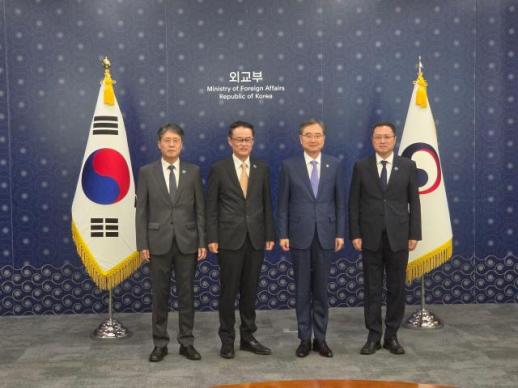 Korea-China-Japan celebrate 15 yrs of cooperation SEOUL, September 29 (AJP) - The new head of the intergovernmental body linking South Korea, China and Japan said Tuesday that cooperation among the three countries had continued without a break for 15 years, even when ties between any two of them turned difficult. Nishioka Tatsushi, who took office this month as secretary-general of the Trilateral Cooperation Secretariat (TCS), remarked at a meeting with South Korea's Foreign Minister Cho Hyun at the foreign ministry in Seoul. The secretariat marks its 15th anniversary this month. The three countries' leaders have not met for a summit since Seoul hosted the last one in May 2024. Looking back over that period, Nishioka said trilateral cooperation activities on the ground were "never suspended." He called it a "not well-known fact among the people" and said it should draw more public attention. He also credited South Korea as more than the host of TCS and a supporter of its work, calling the country "a founding father of the mechanism." The three governments set up TCS in Seoul in September 2011 under an agreement each signed and ratified. It is an intergovernmental organization that gives administrative and technical support to cooperation among the three countries, from the leaders' summit and ministerial meetings to exchange programs for young people and television producers. A board of a secretary-general and two deputy secretaries-general, one from each country, runs the secretariat. The top post rotates among South Korea, Japan and China in that order. In March 2025, the three foreign ministers welcomed the signing of a protocol amending the founding agreement to strengthen the secretariat's longer-term work. Nishioka, a Japanese diplomat who previously held the rank of minister at Japan's embassy in Seoul, leads the eighth board, which he said would serve a three-year term. He succeeded South Korea's Lee Hee-sup, whose board's tenure ended with a farewell reception in Seoul on Aug. 28. The board's two deputies, South Korea's Kim Han-kyu and China's Li Jing, joined him at the meeting. Li said he and his colleague made promoting trilateral cooperation their priority as they took up their new posts. Cho thanked Nishioka for his positive assessment of the secretariat's first 15 years. He acknowledged "ups and downs" but said the three countries "have to continuously work together for the promotion of relationships among our three countries." "This is our destiny," Cho said. 2026-09-29 16:30:23
 -
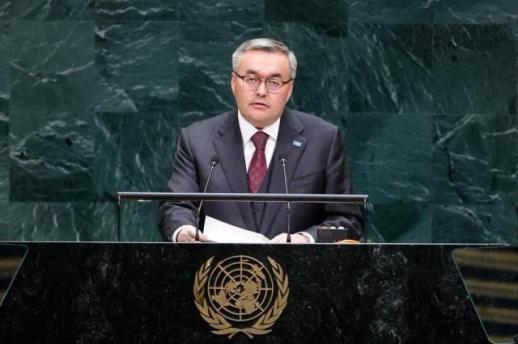 Kazakhstan offers to host nuclear arms talks SEOUL, September 29 (AJP) - The country that gave up the world's fourth-largest nuclear arsenal after the Soviet collapse offered on Sept. 25 to host talks among the nuclear powers, months after the last treaty limiting U.S. and Russian nuclear forces expired. That treaty, the New Strategic Arms Reduction Treaty, or New START, was signed in 2010 and expired on Feb. 5. It capped the long-range nuclear weapons that Washington and Moscow keep ready to strike each other at 1,550 warheads apiece, and it let inspectors from each side check the other's forces. With the treaty gone, no agreement limits the two largest arsenals in the world. The United States and Russia held nearly 10,500 of the estimated 12,187 nuclear warheads that nine countries possessed at the start of 2026, according to the Stockholm International Peace Research Institute, a Swedish research group that tracks global arsenals. "Kazakhstan advocates the relaunch of high-level dialogue among nuclear powers and is ready to host one of their next meetings," Foreign Minister Mukhtar Tileuberdi told the United Nations General Assembly in New York, where world leaders gather each September for their annual debate. His speech also pointed to this year's failed review of the Treaty on the Non-Proliferation of Nuclear Weapons, the pact under which most of the world has agreed not to build nuclear weapons. It allows only the United States, Russia, China, the United Kingdom and France to keep them, in exchange for their promise to work toward disarmament. Member countries meet every five years to review how the treaty is working. This year's monthlong meeting in New York ended on May 22 without a final statement, which requires every member's approval, and it was the third review in a row to end that way, according to the United Nations. "Nuclear weapon states must never confuse the absence of agreement with a vacuum of obligation," Tileuberdi said. "They remain responsible until we secure a world free of nuclear weapons." He did not say which governments would take part, when a meeting could be held or whether any nuclear power had responded. Kazakhstan's offer draws on its own history. The Soviet Union carried out 456 nuclear tests at the Semipalatinsk test site in the country's northeast between 1949 and 1989, and the site was shut on Aug. 29, 1991. When the Soviet Union broke apart months later, Kazakhstan was left holding about 1,400 nuclear warheads. It sent them all to Russia by 1995 and joined the Treaty on the Non-Proliferation of Nuclear Weapons (NPT) as a country without nuclear weapons. Giving up that arsenal "did not weaken our State," Tileuberdi told the assembly, calling disarmament "a responsibility born of national experience" for his country. He noted that this year marks 35 years since Semipalatinsk closed, 30 years since the Comprehensive Nuclear-Test-Ban Treaty, which bans all nuclear test explosions, opened for signature, and 20 years since the region's five countries signed a treaty keeping Central Asia free of nuclear weapons. Astana has hosted sensitive diplomacy before, including rounds of Syria talks among Russia, Iran and Türkiye starting in 2017. In the eastern city of Oskemen, the International Atomic Energy Agency also keeps a reserve of low-enriched uranium, the kind used to fuel nuclear power plants, which countries can draw on if their regular supply is cut off. Tileuberdi, who returned as foreign minister on Sept. 2 after three years as ambassador to Austria, also said global military spending hit a record $2.9 trillion in 2025. He said Kazakhstan would keep pushing its earlier proposal for an International Agency for Biological Security, a body meant to strengthen the Biological Weapons Convention, the treaty that bans germ weapons. 2026-09-29 16:02:45
 -
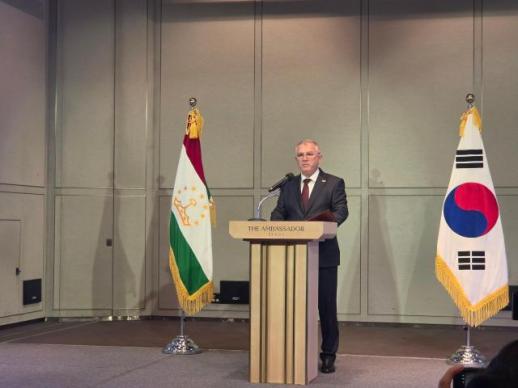 Tajikistan pitches rare metals to S. Korea for chips, EV batteries SEOUL, September 29 (AJP) - Tajikistan offered itself Monday as a long-term supplier of rare and non-ferrous metals for South Korea's semiconductor and electric vehicle battery industries, less than two weeks after the two countries raised their relationship to a comprehensive partnership. The Central Asian country was the world's second-largest producer of antimony in 2024, with 18 percent of global output, according to U.S. Geological Survey figures that exclude U.S. production. Antimony goes into semiconductors, batteries, flame retardants and military hardware. The survey also found that all of Tajikistan's exported antimony ore and concentrate went to China that year. Tajikistan's ambassador to South Korea, Salohiddin Kirom, made the pitch at a reception marking the 35th anniversary of his country's independence, held at the Ambassador Seoul, a Pullman hotel in central Seoul. About 200 guests attended, including diplomats, South Korean government officials, scholars and business leaders. "Tajikistan possesses vast, untapped mineral wealth, including vital reserves of strategic non-ferrous and rare metals," Kirom said. As South Korea works to diversify supply chains for its chip and battery makers, he told guests, Tajikistan "stands ready as a reliable, long-term strategic supplier." The South Korean government's representative at the reception also named minerals as a priority. Nam Jin, director-general for Northeast Asian and Central Asian Affairs at South Korea's Ministry of Foreign Affairs, said the two presidents had agreed to expand cooperation "beyond development assistance" into trade and investment, rail and transport infrastructure, and critical minerals. That agreement came during Tajik President Emomali Rahmon's official visit to Seoul from Sept. 15 to 17, the first by a Tajik leader in 11 years. He came for the inaugural Korea-Central Asia Summit, which also brought the leaders of Kazakhstan, Uzbekistan, Turkmenistan and Kyrgyzstan to Seoul. President Rahmon and President Lee Jae Myung established the comprehensive partnership at their Sept. 16 talks at Cheong Wa Dae, and their governments signed 17 agreements and memorandums of understanding. Those documents "will serve as a practical foundation to translate this vision into concrete results," Nam said. In a written briefing after the summit, Seong Ghi-hong, Lee's senior secretary for public relations and communication, said the leaders saw room to build mineral supply chains by combining South Korea's expertise in exploration and mine development with Tajikistan's resources. He named antimony specifically. Nam also pledged that the Ministry of Foreign Affairs (MOFA) "will work closely with Ambassador Kirom and the government of Tajikistan to ensure that the outcomes of the summit bring real benefits to the lives of our peoples." Kirom pointed to LS Group, GB Innovation and RexGen as South Korean companies already doing business in Tajikistan. Their presence "exemplifies the growing confidence of the Korean business community in our country's economic stability and investment climate," he said. GB Innovation (GBI) has the most advanced mining project of the three. It is developing the Maikhoura tungsten deposit with Tajik Aluminium Company, the state-owned smelter. The company says the deposit holds an estimated 1.92 million tonnes of ore averaging 0.95 percent tungsten, and it plans to produce about 1,400 tonnes of tungsten concentrate a year. Tungsten, one of the hardest metals in industrial use, is used in chipmaking and defense manufacturing. GBI plans to combine the Tajik output with production from its Ssangjeon mine in Uljin, North Gyeongsang Province. The company says China supplies 93 percent of South Korea's tungsten oxide imports. LS MnM, the LS Group's non-ferrous metals affiliate, signed a memorandum of understanding this month with Tajikistan's Ministry of Industry and New Technologies. The deal covers possible mine investments and processing ore into higher-value materials inside Tajikistan. RexGen, based in Anyang, south of Seoul, works in a different field, making traffic-enforcement camera systems that use artificial intelligence to read license plates and flag violations. It lists a public-private partnership agreement in Tajikistan among its business milestones. Mining led Tajikistan's economic growth in 2024. Real GDP rose 8.4 percent that year on gains in mining, services and trade, and the value of mineral extraction climbed 43 percent, according to the U.S. Geological Survey (USGS). Kirom told guests that over 35 years, Tajikistan had "traversed an extraordinary path of state-building, socio-economic progress, and democratic consolidation" under President Rahmon. Tajikistan declared independence on Sept. 9, 1991, as the Soviet Union broke apart. The landlocked country of about 10 million people borders China, Afghanistan, Kyrgyzstan and Uzbekistan, and mountains cover about 93 percent of its territory. Within a year of independence, the country fell into civil war between the government and an opposition alliance of Islamist and democratic groups. The fighting killed tens of thousands of people and drove hundreds of thousands from their homes before a peace agreement was signed in Moscow in 1997. President Rahmon took power in November 1992, in the middle of the war, and has ruled ever since. He is the longest-serving leader among the former Soviet republics. In 2015, parliament gave him the title "Founder of Peace and National Unity, Leader of the Nation," along with lifelong immunity from prosecution. South Korea and Tajikistan established diplomatic relations on April 27, 1992. Kirom also praised the ethnic Korean community in Tajikistan as "a living human bridge between our societies." Both speakers traced the ties back much further, to Hyecho, a Buddhist monk from the Silla kingdom who crossed the Pamir Mountains in the 720s and wrote about the region in his travel record. Kirom also cited archaeological finds in Gyeongju, the Silla capital, as evidence of early contact. Hyecho's manuscript, "Memoir of the Pilgrimage to the Five Kingdoms of India," was discovered in 1908 in the Mogao Caves near Dunhuang, China, and is held by the National Library of France. 2026-09-29 09:38:58
 -
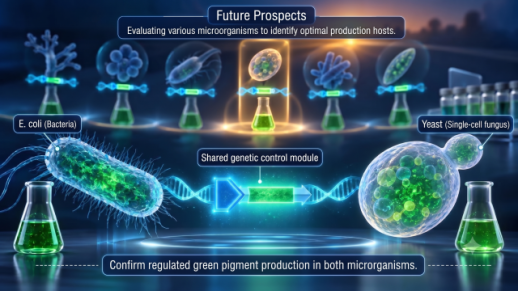 KAIST builds gene switch that works in bacteria and yeast SEOUL, September 28 (AJP) - A South Korean research team has built a set of genetic switches that work in both bacteria and yeast, two microbes that read DNA in ways different enough that a production recipe written for one has to be rebuilt almost from the ground up for the other. The design removes much of that rebuilding, and with it one of the slower steps in turning microbes into factories for drugs, chemicals and materials. Applied to a pathway that makes a green pigment, the strongest version of the switch raised output about 3.1 times over the weakest in the bacterium Escherichia coli, and about 2.6 times in baker's yeast, Saccharomyces cerevisiae. The team built nine versions in all, spanning weak, moderate and strong output, and the ranking held in both hosts. KAIST said Monday that the work was led by Lee Ju-young, an associate professor in its Graduate School of Engineering Biology. Microbes already manufacture insulin, antibiotics, food additives and industrial chemicals. The organism is given the genes for a desired substance, and it produces that substance as it grows. E. coli, a common gut bacterium, and baker's yeast, the same organism used to leaven bread and ferment beer, are the two workhorses of the field. Getting a microbe to make what is wanted is not only a matter of inserting the right genes. Each gene has to run at the right level. The part that sets that level is a promoter, a stretch of DNA sitting in front of a gene that determines how hard it runs, in the way a dial sets the speed of a machine. Bacteria and yeast use entirely different dials. E. coli starts reading a gene from two short sequences known as the minus 10 and minus 35 motifs, and begins building the protein at a marker called the Shine-Dalgarno sequence. Yeast, a more complex kind of cell, uses a structure called a TATA box to start reading and a different marker, the Kozak sequence, to begin building. A promoter tuned for one is often inert in the other. The team's answer was to put both sets of instructions in the same piece of DNA. The hybrid promoter carries the bacterial motifs and the yeast ones side by side, so each organism finds the signals it recognizes and ignores the rest. Three yeast core promoters and three bacterial promoters were combined in every possible pairing to produce the nine variants. Consistency across the two hosts was the point of the exercise. A promoter that ran strongly in E. coli generally ran strongly in yeast as well, which does not mean the two organisms made equal amounts of anything. It means a researcher can predict which setting is high and which is low before switching hosts, instead of measuring everything again. To test whether the switches could drive real production and not just a single gene, the team applied them to prodeoxyviolacein, a green pigment that requires three genes to work in sequence. The pigment is a standard test case because the output is visible and depends on all three genes running in balance. The promoters also worked in Corynebacterium glutamicum, a bacterium used industrially to make amino acids, and in Pichia pastoris, a yeast widely used to produce proteins. The immediate use is screening. Researchers hunting for the best producer of a given substance can run the same genetic design through several microbes at once and compare the results, rather than redesigning the controls for each candidate. That kind of parallel testing is the basic operation of a biofoundry, a facility that automates the design, building and testing of engineered microbes. What the work does not do is raise yields on its own. Consistent relative strength across hosts is not the same as equal production, and squeezing more output from any one organism still requires organism-specific tuning. The study demonstrated control across species, not a finished production process. The paper was published in the Sept. 23 issue of Nucleic Acids Research and released online on Sept. 8. Son So-hee, Moon Soo-young and An Nan-yeong share first authorship. "This study is meaningful in that it presents a common design principle that allows the relative strength of a promoter to be predicted even when the microbe changes," Lee said. She added that she expects it to speed up the development of biomanufacturing by enabling researchers to design and compare a range of microbial cell factories more quickly. Journal/Source: Nucleic Acids Research Title: Modular synthetic cross-kingdom promoters enable coordinated expression in Escherichia coli and Saccharomyces cerevisiae Link/DOI: https://doi.org/10.1093/nar/gkag868 AJP Takeaways - KAIST said Monday that a team led by Lee Ju-young built nine hybrid promoters carrying both bacterial and yeast control signals in a single piece of DNA, letting the same genetic design run in Escherichia coli and baker's yeast without being rebuilt for each host. - Escherichia coli and Saccharomyces cerevisiae produced about 3.1 times and about 2.6 times more of a green pigment under the strongest version of the switch than under the weakest, and the promoters also worked in Corynebacterium glutamicum and Pichia pastoris, though the team said raising actual yields still requires tuning specific to each organism. - Nucleic Acids Research carried the paper in its Sept. 23 issue after releasing it online on Sept. 8, with Son So-hee, Moon Soo-young and An Nan-yeong sharing first authorship, details confirmed against the journal record rather than the university announcement. 2026-09-28 13:46:48
 -
 Sookmyung professor wins PSE-Bruker Award, first outside Europe SEOUL, September 22 (AJP) - The Phytochemical Society of Europe gave its PSE-Bruker Award to a scientist based outside Europe for the first time this month, choosing a pharmacy researcher at Sookmyung Women's University in Seoul, the university said Thursday. Kang Kyo-bin, a professor in the university's Division of Pharmacy, received the award on Sept. 15 at the society's regular conference in Caserta, Italy, which ran through Sept. 18. Sponsored by Bruker, a global maker of analytical instruments, the award goes to senior scientists who have advanced natural products research through new methods, especially those using mass spectrometry. The technique identifies chemical compounds by measuring the mass of their molecules. The Phytochemical Society of Europe (PSE) was founded in Cambridge, England, in 1957 and brings together European researchers who study the compounds plants produce. These natural products have long served as a starting point for new medicines. Kang used his lecture at the PSE conference to present an approach that applies mass spectrometry to the functional metabolomics of natural products, a field that maps the small molecules inside living things and works out what each one does. He credited "the students and researchers who have worked hard with me, and our collaborators at home and abroad." "I will continue to contribute to research that lays the groundwork for discovering and using the diverse compounds nature has created throughout its evolutionary history," Kang said. 2026-09-22 12:02:37
 -
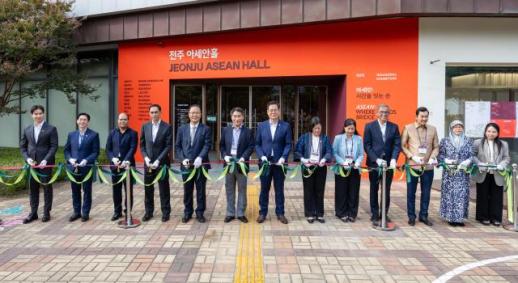 Jeonju ASEAN Hall gathers crafts from all 11 member states SEOUL, September 17 (AJP) - Traditional crafts from all Association of Southeast Asian Nations members, including the newest member, Timor-Leste, were on display Thursday in Jeonju as a new ASEAN cultural hall opened in the southwestern South Korean city. Timor-Leste was formally admitted as the bloc's 11th member on Oct. 26, 2025, at the 47th summit of the Association of Southeast Asian Nations (ASEAN) in Kuala Lumpur. The half-island nation applied in 2011, held observer status from 2022, and its entry marked the group's first expansion since Cambodia joined in 1999. The Jeonju exhibition is the first large-scale show in South Korea to bring together cultural heritage from all 11 member states, according to the ASEAN-Korea Centre, which runs the new hall. The ASEAN-Korea Centre (AKC) is an intergovernmental organization founded by South Korea and the ASEAN member states in 2009 to promote trade, investment, tourism and cultural exchange between the two sides. Titled "ASEAN: Where Hands Bridge Time," the inaugural exhibition presents about 70 objects made and handed down by artisans across Southeast Asia. Masks, textiles, musical instruments and shadow puppets fill the space, and the title refers to the way these traditions have survived from one generation to the next through the skill of their makers. AKC assembled the collection with help from ASEAN embassies in Seoul and cultural agencies in each member state. For Seoul, the hall is part of a wider diplomatic push. In congratulatory remarks read at the ceremony by Kwon Jae-hwan, the foreign ministry's director-general for ASEAN and Southeast Asian affairs, Foreign Minister Cho Hyun tied the opening to President Lee Jae Myung's policy vision for the region. "In fact, Korea intends to do everything short of actual membership under the ASEAN-ROK CSP vision," Cho said. CSP refers to the comprehensive strategic partnership, the highest tier of ties ASEAN extends to outside partners, which South Korea and the bloc adopted in October 2024. Cho described the new hall as a response to "ever-expanding relations and rapidly growing ASEAN communities in Korea," and said he hoped it would "signal more ASEAN Halls down the road in different parts of Korea." Jeonju ASEAN Hall is the center's third, after halls in Seoul and on Jeju Island, and the first in the Honam region, the southwestern part of the country that covers the Jeolla provinces. It sits inside the Korea Traditional Culture Center, about a five-minute walk from Jeonju Hanok Village, a district of traditional tile-roofed houses that ranks among South Korea's most visited cultural destinations. Kim Jae-shin, AKC's secretary general, told guests that the hall was meant for Koreans discovering Southeast Asia and for the region's own people living in the country. He said he hoped it would be "a welcoming space where they can share their cultures and maintain a connection with their home countries." Jeonju Mayor Cho Ji-hun said the city would use exhibitions and arts programs run with AKC to move toward its goal of becoming one of Asia's five leading cultural industry cities. Speaking for the Philippines as ASEAN's chair for 2026, Ambassador Bernadette Therese C. Fernandez credited Kim with pushing to make the bloc's presence known in cities across South Korea, and said the hall would serve as "a physical reminder of why we want lasting peace and stability in the region." Fernandez also acknowledged Timor-Leste's ambassador, António de Sá Benevides, who chairs the ASEAN Committee in Seoul, the group of Southeast Asian ambassadors posted to the South Korean capital. The program also included Heungboga, a work of pansori, the Korean tradition of long-form storytelling through song, performed by the Jeonbuk State Gugak Center. Filipino singer Dorado, who finished second on the JTBC audition show Sing Again 4 in January, was set to sing "Golden" from the animated film KPop Demon Hunters and Cho Yong-pil's "The Dreams." Beyond the exhibition, AKC plans to run the hall with the Jeonju Cultural Foundation as a venue for regular public programs aimed at residents and tourists. One of them, the ASEAN Brunch Box, pairs signature pastries from Lee Sung Dang, a well-known bakery in nearby Gunsan, with specialty coffee from Timor-Leste. An ASEAN Cooking Class will teach participants to make dishes such as Vietnamese bánh xèo, a crisp rice-flour pancake, and Indonesian nasi goreng, or fried rice, under the guidance of a Southeast Asian culinary expert. Both programs will run once a month on selected Saturdays, with schedules and cooking class registration posted on the hall's Instagram account, @aseanhall_akc. AKC also tied the hall to Jeonbuk State's bid to host the 2036 Summer Olympics, saying it expected the venue to raise Jeonju's profile as an international city. Jeonju ASEAN Hall is open from 9 a.m. to 6 p.m., Monday through Saturday, and closed on Sundays and public holidays. 2026-09-17 18:37:51
 -
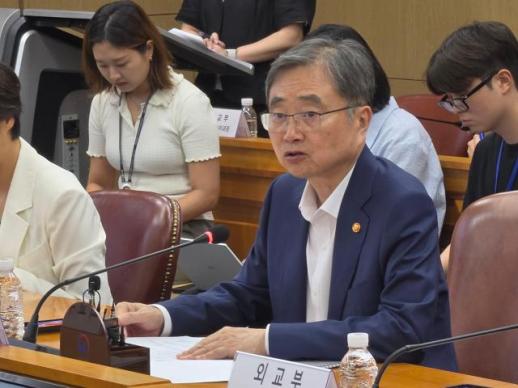 Korea blames domestic procedure for U.S. investment delay SEOUL, September 17 (AJP) - South Korea's delayed announcement of its first investment project in the United States stems from domestic procedure rather than a dispute with Washington, Foreign Minister Cho Hyun said Thursday. The project is the first under a $350 billion package Seoul pledged in a tariff and investment deal with Washington reached at an October 2025 summit. "It is my understanding that this is not so much a disagreement between South Korea and the United States as an effort to firmly settle domestic procedural matters," Cho told reporters at Incheon International Airport before leaving for Washington. Cho is visiting Washington from Sept. 17 to 19, the foreign ministry said, and will hold talks with U.S. Secretary of State Marco Rubio on Sept. 18. The investment issue is likely to surface at that meeting. "It will come up in the course of reviewing the relationship between the two countries as a whole," Cho said. "We will clearly explain to the U.S. side what we can do," he said. On any issue that runs against South Korea's national interest or differs from its position, Cho stressed, Seoul plans to "explain in great detail and maintain a clear position." Cho also reiterated that the government has not decided whether to send forces to the Strait of Hormuz, as the United States requested. The narrow waterway between Iran and Oman is one of the world's main routes for oil shipments. The matter "has not yet been decided and is under review, taking various factors into account," he said. He said he would explain to U.S. officials that South Korea will "take part in international cooperation, while giving priority consideration to the safety of our citizens and to freedom of navigation in the Strait of Hormuz." Seoul has already conveyed that position to Tehran. Referring to his phone call last week with Iranian Foreign Minister Abbas Araghchi, Cho said, "We have already stated our basic position and have also told the Iranian side." The joint fact sheet produced by two South Korea-U.S. summits covers follow-up cooperation that includes nuclear-powered submarines and nuclear energy. Cho said he intends to discuss pushing working-level talks "continuously and quickly" and carrying out the fact sheet "as soon as possible." On dialogue between North Korea and the United States, Cho said, "If some breakthrough is made in North Korea-U.S. relations this time, that would be welcome for our government as well." He added that if such talks take place, "the (South Korean) government will not be passed over, so it seems we should check on that as well." 2026-09-17 11:14:38
 -
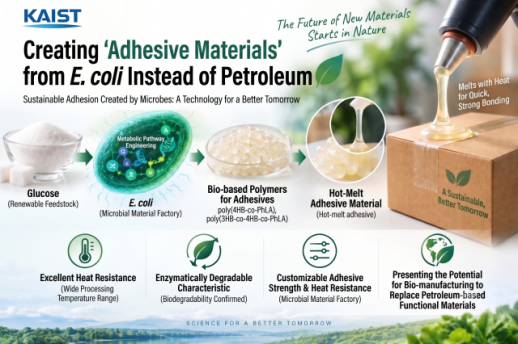 Microbes make adhesive that outgrips petroleum glue on steel SEOUL, September 17 (AJP) - Bacteria fed on sugar have produced an adhesive that held stainless steel together more strongly than the petroleum-based glue now used across industry, offering a way to make a common factory material without oil and with the ability to break down. In a shear test on stainless steel, the bio-made polymer withstood 4.58 megapascals. A commercial adhesive made from ethylene-vinyl acetate, or EVA, withstood 4.20 megapascals under the same test. That works out to about 47 kilograms of force per square centimeter, compared with 43. Shear strength measures how well two bonded surfaces resist being pushed apart sideways. The Korea Advanced Institute of Science and Technology (KAIST) said Thursday that a team led by Lee Sang-yup, a distinguished professor in its Department of Chemical and Biomolecular Engineering, engineered Escherichia coli bacteria to turn glucose into the new material. The findings were published online July 20 in the journal Nature Communications, with doctoral student Kang Min-ju and researchers Lee Young-jun and Kim Gi-bae as co-authors. The work targets hot-melt adhesives, the kind loaded into a glue gun. They melt when heated and harden as they cool, bonding surfaces quickly without chemical solvents. That makes them standard in packaging, furniture, electronics, cars and building materials. Most hot-melt adhesives are made from petroleum-derived plastics such as EVA. They bond well but do not break down easily in nature, which adds to waste and microplastic pollution. KAIST pointed to a practical consequence. A package made of biodegradable material is less green if the glue holding it together does not degrade. To build an alternative, the team turned to polyhydroxyalkanoates, or PHAs. These are biodegradable plastics that microbes can make from renewable feedstocks such as glucose. Their flexibility, strength and heat resistance change depending on which chemical building blocks go into them and in what proportion. The researchers combined two building blocks with opposite strengths. One, 4-hydroxybutyrate, makes the material soft and sticky. The other, phenyllactate, adds stiffness and helps it withstand heat. Changing the ratio between the two changed how the polymer handled heat and how well it bonded. Adhesion was strongest when 4-hydroxybutyrate made up roughly 24 to 34 percent of the building blocks, counted by number of molecules. Getting E. coli to make both building blocks and link them into one chain took several rounds of genetic redesign. Producing multiple components at once threw the cell's chemistry out of balance, so the team adjusted how strongly and when key genes switched on. The researchers also added an enzyme, CoA transferase, that prepares the building blocks for the next step of assembly inside the cell. A computer model of the thousands of chemical reactions running inside the bacterium helped the team find where raw materials ran short or production stalled. Those bottlenecks were then removed. Grown in fed-batch fermentation, a method that feeds nutrients to the microbes continuously, the engineered bacteria produced 10.2 grams of the two-part polymer per liter of culture. When the team added a third building block, 3-hydroxybutyrate, the resulting polymer reached 52.8 grams per liter. The three-part version was tested on wood, where its bonding strength was about the same as the commercial EVA adhesive. The two-part polymer that beat EVA on steel kept a substantial share of its bonding strength after being melted and reapplied several times, and the added phenyllactate improved its heat resistance. To check whether the material breaks down, the team treated it with lipase, an enzyme that digests fats. The polymer's surface was damaged, and both its molecular weight and total mass fell. Those results come from laboratory tests. KAIST did not report how the material degrades in soil, seawater or landfill conditions, and it gave no estimate of production cost or a timeline for commercial use. KAIST said the same approach of designing a microbe's metabolism could be used to tune other properties, such as flexibility and heat resistance, and to produce other functional plastics that are now made through petrochemical processes. "This study shows that by precisely designing microbial metabolism, we can go beyond simply producing polymers and directly produce functional materials," Lee said. With a wider range of unnatural building blocks and engineered microbes, he said, the approach "could expand into a biomanufacturing technology that produces not only petroleum-based adhesives but a range of functional polymers in a sustainable way." Journal/Source: Nature Communications Title: Synthesis of poly(4HB-co-PhLA) and poly(3HB-co-4HB-co-PhLA) as sustainable hot-melt adhesives using engineered Escherichia coli Link/DOI: https://researchgate.net/publication/410617396_Synthesis_of_poly4HB-co-PhLA_and_poly3HB-co-4HB-co-PhLA_as_sustainable_hot-melt_adhesives_using_engineered_Escherichia_coli 2026-09-17 10:57:34