

Journalist
Park Sae-jin박세진
swatchsjp@ajupress.com
Assistant EditorForeign embassies in Seoul & Geopolitics, Diplomacy, Policy
Experienced journalist and editor at AJU PRESS specializing in multilingual news. I cover international diplomacy, geolpolitics, and policy, consistently delivering highly accurate, compelling reporting for a worldwide audience.
"Reporting the facts. Shaping the narrative. Every second counts."
Latest by Park Sae-jin
-
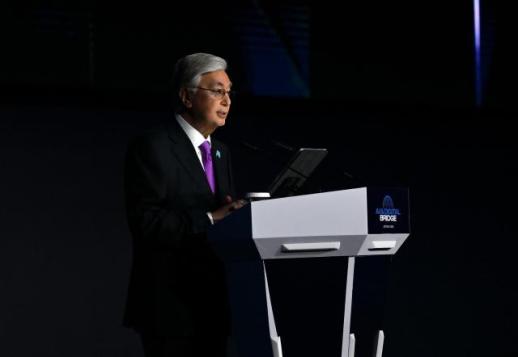 Kazakhstan pushes 'Washington Model' for global AI rules SEOUL, October 08 (AJP) - A voluntary artificial intelligence safety pact that U.S. tech leaders signed at the White House last month could become the basis of a United Nations treaty, Kazakh President Kassym-Jomart Tokayev said, adding that Kazakhstan would present its vision at the G20 summit in Miami in December. U.S. President Donald Trump and the heads of six technology companies signed the White House Accord on Super Intelligence on Sept. 29. The signatories were Google's Sundar Pichai, Anthropic's Dario Amodei, Meta's Mark Zuckerberg, OpenAI President Greg Brockman, xAI's Elon Musk and Nvidia's Jensen Huang. The accord, subtitled "Joint Commitment on Frontier Responsibilities," commits the companies to internal controls that monitor what their most advanced AI models can do, including cybersecurity, biological and chemical risks. It also calls for independent auditors to check whether those controls work. The pact carries no force of law and sets no penalties for companies that fall short. President Trump told reporters at the White House after the signing that it was "morally binding." The same day, he signed an executive order directing federal agencies to use the term "Super Intelligence" in place of "artificial intelligence." President Tokayev made his proposal on Oct. 2 at the third meeting of the Council for Artificial Intelligence Development, a presidential advisory body that brings Kazakh officials together with foreign technology executives and researchers. He called the Washington accord a "highly important and timely initiative." "It reflects a common understanding that the risks associated with artificial intelligence extend beyond national borders and require coordinated action by both governments and businesses," President Tokayev said, according to the presidential press service. "After careful review by experts, the agreement signed in Washington, D.C., could be considered by all interested countries as a model to be implemented globally in the field of artificial intelligence," he said. "I believe that the 'Washington model' could serve as the basis for an international treaty under the auspices of the United Nations." The accord is a set of commitments between one government and six companies. A treaty under the United Nations would be an agreement among states. President Tokayev offered Kazakhstan as a venue for those talks. "We are ready to serve as a platform for constructive international dialogue on these issues," he said, and he asked council members to submit concrete proposals for a Kazakh international initiative on AI "as soon as possible." Foreign speakers at the council meeting included Kai-Fu Lee, chairman and CEO of Sinovation Ventures and founder and CEO of 01.AI, and Ya-Qin Zhang, founding dean of the Institute for AI Industry Research at Tsinghua University. The council met a day after President Tokayev opened AI & Digital Bridge 2026, an international technology forum held in Astana from Oct. 1 to 3. He first praised the Washington accord in his opening address there. "I would like to commend the recent signing of the Superintelligence Accord by leading American tech companies under the leadership of President Trump," he told the forum. In the same speech, President Tokayev said AI should complement human intelligence rather than replace it. He said regulation should be strict only where security and the vital interests of citizens are at stake, so that promising talent and investment stay in Kazakhstan. He also proposed an AI Challenge that would invite Kazakh and foreign teams to solve problems drawn from real demand across the economy, with the strongest solutions put to use in industry. Kazakhstan has already adopted a Law on Artificial Intelligence and a Digital Code. The forum is the centerpiece of AI Month, a program of events running from Sept. 23 to Oct. 23 as part of the Year of Digitalization and Artificial Intelligence, which President Tokayev declared for 2026. Kazakhstan is not a member of the G20. President Trump invited President Tokayev to the summit in December 2025 after a phone call between the two leaders, and Kazakhstan's Ministry of Foreign Affairs said on Aug. 12 that he would attend the meeting at Trump National Doral Miami on Dec. 14 and 15 as a guest of the United States, which holds the group's rotating presidency this year. 2026-10-08 20:57:05
 -
 AJP Factbox: Korea's first satellite swarm reaches orbit on homegrown rocket South Korea has begun adding a fleet of small, lower-cost satellites to its handful of large observation satellites, giving up some image sharpness in exchange for looking at the Korean Peninsula far more often. The first five NEONSATs, built by KAIST's Satellite Technology Research Institute and the private firm Satrec Initiative, reached orbit on the homegrown Nuri rocket on Oct. 7, and five more launching in 2027 will let the 10-satellite fleet photograph the peninsula at least three times a day. 2026-10-07 17:08:46
 -
 Homegrown satellite fleet opens new Korea's space era SEOUL, October 07 (AJP) - South Korea's first working satellite constellation reached orbit Wednesday on the country's own Nuri rocket. A university lab and a private company built the small Earth-observation satellites and designed them from the start to fly on a Korean launcher. A satellite constellation is a group of satellites run as a single system. They are spread across different orbits, so between them they pass over the same place far more often than one satellite can. That lets them photograph a flood zone or a coastline several times a day, without waiting for a single satellite to come around again. "National satellites had been built and operated by the Korea Aerospace Research Institute, almost without exception," said Lee Chol, head of planning and coordination at KAIST's Satellite Technology Research Institute (SaTReC), which led the program. This time, Lee told AJP in a phone interview Wednesday, the Korea Aerospace Research Institute (KARI) worked alongside SaTReC and the private satellite maker Satrec Initiative. "We led the way in diversifying the national satellite program," he said. SaTReC built South Korea's first satellite, Uribyol-1, in 1992. On this program, it oversaw the project and developed the satellite system. Satrec Initiative, founded by former SaTReC researchers, built the satellite body and the optical camera, and KARI developed the ground and image-processing systems. The Korea AeroSpace Administration (KASA) and KARI declared the launch a success. Nuri lifted off at 12:25 p.m. (0325 GMT) from Naro Space Center in Goheung, on the southern coast, and released five satellites, called NEONSAT, one at a time at an altitude of about 570 kilometers. Ground controllers made first contact with NEONSAT-6 at about 1:08 p.m. through King Sejong Station in Antarctica. Nine of the 10 cubesats carried as secondary payloads also reached orbit, and one failed to separate from the rocket. The domestic launch was possible only because of a decision made before any hardware existed. Many satellite parts fall under the U.S. International Traffic in Arms Regulations (ITAR). These rules restrict where satellites carrying American defense-related technology can be launched. "If we used parts subject to ITAR, a satellite carrying those parts could not be launched on a Korean rocket," Lee said. "From the start of the program, we planned the satellite with a domestic rocket in mind. So we selected all the parts from those not subject to ITAR." The constellation itself addresses a different problem. Large observation satellites such as South Korea's Arirang series take sharp images, but each one photographs only a narrow strip of ground as it passes overhead. "Large satellites perform well, but they are expensive," Lee said. "And because their resolution is high, their observation swath is not wide." Flying small satellites as a group trades some of that sharpness for reach. "The performance is somewhat lower, but it is still high resolution, and you can photograph a wide area at a relatively low cost compared to large, full-size satellites," he said. Each NEONSAT weighs less than 100 kilograms. According to KAIST, its camera can make out objects 1 meter across in black and white and 4 meters across in color. A single satellite needs time before it passes over the same spot again, so it may not be overhead when a wildfire spreads or a river floods. The five satellites launched Wednesday fly in an orbit that crosses the Korean Peninsula in the afternoon. Five more will launch on Nuri's sixth flight in 2027, into an orbit that crosses in the morning. "It is less about linking them to each other and more about doubling the opportunities to take images," Lee said. Once all 10 production satellites are working, KAIST said, the fleet will be able to photograph the peninsula at least three times a day. In an emergency, it will be able to return to the same spot within 24 hours. Lee put the total cost of the 10-satellite program at a little over 200 billion won. That figure includes the ground system, the image-processing system and much of the launch cost. He estimated a single multipurpose satellite at roughly 200 billion to 300 billion won, though he said that figure was not exact. Lee said more constellation programs are now being prepared in South Korea. "What we are doing now for the first time looks like a model others can refer to," he said. The fleet still has to prove itself in orbit. The launch slipped from June to October after KASA found that thrusters on earlier test satellites needed improvement in space, and the five new satellites carry upgraded thrusters. KAIST said it would check each satellite's condition and image quality step by step. As of Wednesday afternoon, KASA had reported contact with one of the five satellites. 2026-10-07 16:18:00
 -
 MOFA turns ambassadors in Seoul into K-food messengers SEOUL, October 07 (AJP) - Foreign ambassadors will gather at the National Museum of Korea in Seoul later this month for South Korea's first official Hansik Day, or Korean Food Day. The foreign ministry put them on the guest list with an eye on what comes after the meal, when the envoys report back to their capitals. "Domestic ministries, after all, don't have a direct channel of communication with foreign countries," said Yi Min-jin, who heads the Cultural Cooperation Division at the Ministry of Foreign Affairs (MOFA). "So we asked what ways the foreign ministry could support promotion abroad." Yi spoke with AJP by phone on Wednesday, about two weeks before her ministry and the Ministry of Agriculture, Food and Rural Affairs (MAFRA) open the 2026 Hansik Festa at the museum. The festival runs from Oct. 23 to 25, bracketing the Oct. 24 holiday, and opens on its first day with a ceremony for diplomats, food industry figures, and academics. The ministries said they drew the diplomatic guests from major export markets for Korean food and from countries marking anniversaries of diplomatic relations with South Korea. "We can't invite every embassy in Korea, but there are countries marking anniversaries of diplomatic ties with us," Yi said. "We selected missions where it carries a bit more meaning." As she sees it, the payoff comes after the plates are cleared. "When heads of mission attend the event, they report the results to their home governments," she said. "That way, we thought we could help make the domestic ministry's work known abroad as well. As they report home, it can send a signal that the two countries are growing closer through Korean food." There is an audience waiting at the other end. In a survey released in March by the Ministry of Culture, Sports and Tourism and the Korea Foundation for International Cultural Exchange, 27,400 people familiar with Korean culture in 30 countries and regions ranked food as the most popular Korean cultural export in their own countries. It drew 55.1 percent, edging out music and beauty. A survey of 11,000 consumers in 22 overseas cities, conducted last year by MAFRA and the Korean Food Promotion Institute, found that 68.6 percent knew Korean food, a record for the survey. Nearly two-thirds said Korean pop culture had led them to try it or take an interest in it. Hansik Day fits into what President Lee Jae Myung's government calls the K-Initiative, an effort to bundle South Korea's experience, capabilities, values and appeal in culture, industry, technology and democracy into a single strategic asset and spread it abroad. Much of that work falls to MOFA. This year it finished setting up K-Initiative councils at all 173 of its diplomatic missions, pulling together the overseas offices of public institutions, companies and Korean community groups. On May 21, Foreign Minister Cho Hyun chaired the first interagency meeting on spreading the K-Initiative abroad, with director general-level officials from 11 ministries and agencies, MAFRA among them. Yi said the ministries were still working out how to cooperate when lawmakers created Hansik Day. The National Assembly passed an amendment to the Korean Food Promotion Act on June 18, and the law took effect July 7. It names Oct. 24 as Hansik Day and the week that begins that day as Hansik Week. The date pairs the number 10, meant to stand for completion and harmony, with the 24 seasonal divisions of the traditional calendar. The two ministries had already teamed up abroad. In January, MOFA and MAFRA named 30 embassies and consulates as K-food export hubs, assigning them to help exporters with customs, quarantine and other trade barriers, fight counterfeit products and pitch Korean food to local opinion leaders, influencers and consumers. Yi was careful not to oversell the festival as a first. "Rather than a first step, we have done small-scale cooperation before," she said. "With this as an occasion, we are communicating often with the agriculture ministry and keep looking for ways to link our events." Each ministry has long promoted Korean food and culture on its own, she said, and joint work has mostly run through missions overseas. "Usually we have done this through our missions abroad, so it is more meaningful that we have now cooperated in Seoul as well." Beyond the ceremony, the festival offers a conference on the future of Korean cuisine, cooking demonstrations and classes, a talk show, a flea market and restaurant pop-up stores around the museum's Geoulmot pond. Registration for the Oct. 23 conference opens Oct. 8, and sign-ups for the hands-on programs open Oct. 12. Yi took over the division in August after a posting at South Korea's mission in Myanmar. Of her time abroad, she said, "Truly, everyone knows tteokbokki," the spicy stir-fried rice cakes. "When I was working in Myanmar and talked with the younger generation, the topics that always came up without fail were food and K-pop," she recalled. Korean restaurants are common there, she said, and Korean ramyeon is sold everywhere. "For young people, K-pop and food are easier to approach," Yi said. "I think it is K-food and K-pop that serve as the gateway, an easy way into knowing Korea." AJP Takeaways - Yi Min-jin, director of the Cultural Cooperation Division at the Ministry of Foreign Affairs, said the ministry invited ambassadors in Seoul to South Korea's first Hansik Day because domestic ministries have no direct channel to foreign countries and heads of mission report such events to their home governments. She made the remarks in a phone interview with AJP on Wednesday. - The Ministry of Foreign Affairs and the Ministry of Agriculture, Food and Rural Affairs will co-host the 2026 Hansik Festa at the National Museum of Korea in Seoul from Oct. 23 to 25, opening with a ceremony for diplomats from major export markets for Korean food and from countries marking anniversaries of diplomatic relations with South Korea. - The Ministry of Culture, Sports and Tourism and the Korea Foundation for International Cultural Exchange reported in March that food ranked as the most popular Korean cultural category abroad, cited by 55.1 percent of 27,400 people familiar with Korean culture in 30 countries and regions. 2026-10-07 14:47:37
 -
 AJP Factbox: Teen drug cases rise fivefold in Korea Drug cases involving teenagers in South Korea have risen more than fivefold over the past decade, from 121 in 2016 to 674 in 2025, with synthetic cannabis sold in vape-style cartridges recording its highest share of cases among teens last year, according to the Supreme Prosecutors' Office and the National Forensic Service. The count is climbing again this year, with police arresting 370 teenagers from January to July, 78.7 percent of the 2025 total, according to data released Wednesday by Democratic Party lawmaker Kim Jun-hyuk. 2026-10-07 11:11:06
 -
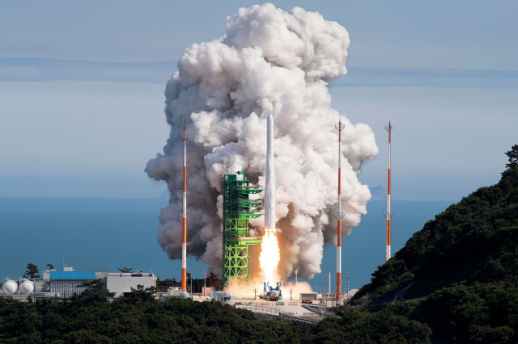 Ground station firm Contec backs 7 satellites on Nuri rocket SEOUL, October 06 (AJP) - A South Korean ground station company will make first contact with seven of the 15 satellites riding the Nuri rocket into orbit on Wednesday. Its job is to confirm each satellite survived the ride and to work out exactly where it ended up. Among the seven are the five satellites that will form South Korea's first satellite constellation. The Korea AeroSpace Administration has scheduled Nuri's fifth launch for a one-hour window opening at 12:23 p.m. at the Naro Space Center in Goheung, on the country's southern coast. The 15 satellites aboard are the most the rocket has ever carried, weighing 1,071 kilograms in total. The agency has reserved Oct. 8 to 14 as backup dates in case weather or technical problems force a delay. Contec said Tuesday that it will provide ground communication for KAIST's NEONSAT satellites No. 2 through No. 6, the Daejeon city government's DaejeonSAT-1 and Sledge, a small satellite built by space startup OnB Space. A satellite released from a rocket has to be found before it can be used. In the first hours after separation, operators on the ground listen for its first signal, check that its power and systems are working and calculate its exact path. That last task produces what is known as a TLE, short for two-line element set, the standard data format used worldwide to describe a satellite's orbit and predict where it will be. Contec said it will handle all three tasks. It plans to use its station at the Asian Space Park in Jeju, the company's ground station complex on South Korea's southern island, together with stations run by partner companies. The company said it has set up a combined control system tailored to each satellite's mission and will analyze separation and early orbit data to produce the TLEs. On launch day, Contec will station dedicated staff at the Korea Aerospace Research Institute and at the control room in its Daejeon headquarters. They will confirm contact with each satellite shortly after launch and run ground control through the early operations phase. The company said the job shows it can track several satellites and analyze their orbits at the same time, from separation through initial operations. "We feel a great sense of responsibility in joining the meaningful journey of Nuri's fifth launch as the ground station mission partner for its key satellites," Contec chief executive Lee Sung-hee said. He said the company would draw on its station network and operating experience to support "stable communication right after launch" and help the satellites settle into their proper orbits. The NEONSAT satellites are the main payload. Each is a microsatellite developed by KAIST's Satellite Technology Research Center, and they are designed to work as a group, passing over the same areas more often than a single satellite could. The government has said their purpose is frequent, precise surveillance for national security and disaster response, and the launch time was set to suit that mission. The constellation is also the reason for this year's delays. Nuri's fifth flight was first targeted for June and then pushed back several times. In August, the space agency said a prototype launched in 2024, along with a later test satellite, had shown in orbit that their thrusters fell short of expectations. Thrusters are the small engines a satellite uses to change or hold its orbit, and the five production satellites were refitted with improved versions and retested before shipping to the launch site. Nuri itself is South Korea's first rocket built entirely with domestic technology. The three-stage vehicle was developed by the Korea Aerospace Research Institute (KARI). Its first flight, in October 2021, failed to place a dummy satellite in orbit. The rocket then succeeded in 2022, 2023 and November 2025. The November flight was the first in which a private company, Hanwha Aerospace, led assembly and launch preparation under a technology transfer from KARI, and Hanwha Aerospace leads this launch as well. A successful fifth flight would give Nuri four successes in five attempts. Contec was founded in 2015 as a spin-off from KARI. Lee worked at KARI for 16 years in launch and satellite operations before starting the company. Contec trades on South Korea's tech-focused Kosdaq market and sells what it calls end-to-end space data services, covering the receiving, processing and analysis of satellite data for operators at home and abroad. The company said it operates its own ground stations in 11 countries across North America, Europe and Asia. 2026-10-06 19:50:56
 -
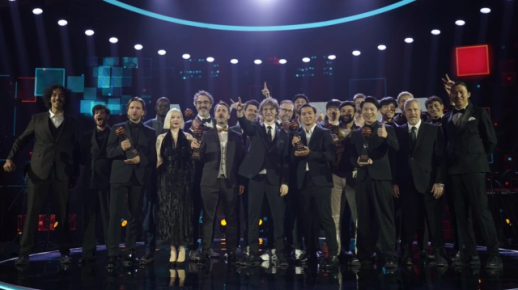 Kazakhstan's first AI film festival draws 8,067 entries SEOUL, October 06 (AJP) - Filmmakers from 125 countries sent 8,067 films made with artificial intelligence to Kazakhstan's first AI film festival, which closed Saturday in Astana as the government pushes to turn the capital into a center for technology and the creative industries. Organizers said the entry count made the Astana AI Film Festival the largest international competition for AI-generated films in the world. Only 25 films reached the final round, and the winners shared $1 million in prize money. The $450,000 Grand Prix went to Latvian filmmaker Nikolay Shestak for The First Honest Day, entered in the main competition under the theme "The Future Worth Living In." The three-day festival, held Oct. 1 to 3, was part of AI & Digital Bridge 2026, a technology forum at the center of a month of AI events Kazakhstan staged during what it declared its Year of Digitalization and Artificial Intelligence. Finalists' films were screened free to the public at a cinema in the capital. President Kassym-Jomart Tokayev opened the festival on Oct. 2, calling it "a unique, unparalleled project" in which educated, innovative and creative people show their talents, according to a readout from Akorda, the presidential office. President Tokayev said AI gives young people and small creative teams a way to compete with large studios and makes it easier to break into the film industry. He added that hosting the event in Astana was no accident, pointing out that the average age of Kazakhstan's population is 33. India's SITARA took second place and $200,000. Spain's Looking For Perseida finished third, winning $100,000. Five more films won $50,000 each in category awards for character, directing, visual language, story and concept. Kazakhstan's Myrzakhan Zhumakhan took Best Character for It Was Just a Joke, a comedy in which a dog and its owner's brother fall out over a prank that plays out on the scale of a blockbuster. Zhumakhan said his own love of pranks and humor inspired the story. An international jury chose the winners. Its members included Audrey Azoulay, who led UNESCO, the United Nations' cultural and scientific agency, from 2017 to 2025, and Balaji Srinivasan, a technology investor and former chief technology officer of the cryptocurrency exchange Coinbase. The festival carried a total fund of $2 million, half of it for prizes. The other $1 million was set aside to back promising AI teams and film production in Kazakhstan, with selected teams eligible to join Astana Hub, the state-backed technology park for startups in the capital. 2026-10-06 19:38:16
 -
 Yeungnam professor wins 2 Springer Nature editor awards SEOUL, October 06 (AJP) - A Yeungnam University professor who edits an international journal on research methods has won both of Springer Nature's 2026 Editor of Distinction Awards. The academic publisher gives the honors to editors who rank among its most active and fastest at handling submitted papers. According to Springer Nature's award criteria, the Editorial Contribution Award goes to editors in the top 20 percent for the number of manuscripts sent to peer review. The Author Service Award goes to editors in the top 20 percent for how quickly authors receive a first decision on their submissions. Park Han-woo, a professor of media and communication at Yeungnam University, received both awards for his work as editor-in-chief of Quality & Quantity, an international methodology journal published by Springer Nature. Peer review is the process in which outside experts check a study before it is published. Journal editors decide which submissions go to reviewers and which are turned away at the outset. They also manage the exchange between authors and reviewers until a paper is accepted or rejected. Springer Nature named six of the journal's editors for the Editorial Contribution Award and two for the Author Service Award. Park and Matthijs Den Besten were the only editors at Quality & Quantity to receive both, according to the announcement on the journal's website. The journal publishes work on the tools social scientists use to collect and analyze data. Its articles span economics, psychology and sociology. In its announcement, Springer Nature said the awards honor editors for their "dedication to their journals and research communities." The publisher presents the awards each year across its journals. Editors at several other titles, including the Journal of Population Economics and Humanities and Social Sciences Communications, also received both honors this year. Park has taught at Yeungnam University since 2003 and also serves as editor-in-chief of the Journal of Contemporary Eastern Asia. In the early 2000s he helped pioneer webometrics, a field that measures how information and hyperlinks spread across the internet. The International Communication Association elected him a fellow in May 2023. 2026-10-06 19:26:54
 -
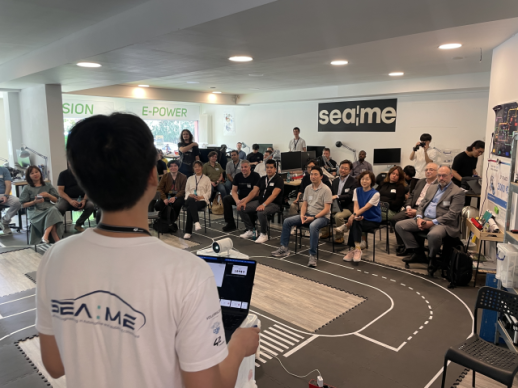 Kookmin University ties overseas training to jobs abroad SEOUL, October 06 (AJP) - Students sent overseas by Kookmin University are turning project work at foreign companies into internships and jobs, as the Seoul school moves its international programs beyond exchange visits and language courses. Kookmin University (KMU) said it has sent about 50 students to Irvine, California, since 2024 under its Global Project-Based Learning program. After internships arranged through the program, some were hired by overseas companies including Z-Order, Bestia Group LLC and Kable Inc. The university did not give a figure for how many were hired. Participants spend about six months on projects in fields such as global entrepreneurship, artificial intelligence, software development, design and research, mentored by local professionals. The program is built so that the project period leads into internships at local companies. Jeong Seung-ryul, the university's president, said KMU's long-term development plan through 2035 lists global capabilities and networks among its four core strategies. The university marks its 80th anniversary this year. In automotive software, KMU runs a one-year program in Germany with the Volkswagen Group Woori Foundation called Software Engineering in Automotive and Mobility Ecosystems. Students study embedded systems, the small computers built into vehicles to run specific functions, along with autonomous driving and cybersecurity. A team of Software Engineering in Automotive and Mobility Ecosystems (SEA:ME) students from KMU and other South Korean universities, led by KMU, won the Bosch Future Mobility Challenge 2026 in Romania in May. The international self-driving competition, hosted by German automotive supplier Bosch, drew 57 teams from around the world. Beyond student placements, the university has extended its partnerships to international organizations and foreign governments. Its Asia Olympic Graduate School opened last year as the first institution in Asia certified by the Olympic Council of Asia, the body that oversees Olympic sport on the continent and organizes the Asian Games. The school trains international sports professionals and helps athletes build new careers after they retire from competition. In September, at the invitation of the Olympic Council of Asia (OCA), former Olympic medalists studying at the school on scholarships met the OCA president and the president of the International Olympic Committee at the Asian Games. In advanced technology, the university is extending its cooperation to Central Asia. In September, it signed an agreement with Tashkent University of Information Technologies in Uzbekistan, with which it co-hosted an international academic conference in 2024. KMU then signed a memorandum of understanding with Uzbekistan's Ministry of Digital Technologies. The university said it plans to widen its academic exchanges with the country into joint teaching, research and industry partnerships in AI and software. "We plan to continue expanding cooperation with overseas universities, companies and international organizations, and to support students so they can experience the global field while still in school and become competitive on the world stage," Jeong said in a statement. 2026-10-06 19:15:56
 -
 'The Assassin(s)' tops 2 million despite distortion row SEOUL, October 03 (AJP) - A film about the 1974 shooting that killed South Korea's first lady drew its 2 millionth viewer Saturday, 11 days after release, despite accusations from conservative politicians that it distorts history. Hive Media Corp, which produced and distributed "The Assassin(s)," said Saturday afternoon that cumulative admissions had passed 2 million. It is the ninth film released in South Korea this year to reach that mark. The film opened Sept. 23 and drew about 1.41 million viewers over the four-day Chuseok harvest holiday from Sept. 24 to 27, finishing ahead of "Tazza: The Song of Beelzebub" and "Odyssey." It lost the daily box-office lead to "Tazza" on Sept. 28 as criticism of its portrayal of history mounted, then reclaimed first place at the start of October and has held it since. As of 4 p.m. Saturday, it held 16.9 percent of advance ticket sales, with more than 84,000 seats booked. That put it second only to the Japanese animated feature "Chiikawa the Movie: The Secret of Mermaid Island," at 25.7 percent. Directed by Hur Jin-ho, best known for the 1998 romance "Christmas in August," the film follows a police officer and two newspapermen who chase unanswered questions about the attack. Yoo Hai-jin plays Cheol-gu, a detective at the scene. Park Hae-il plays Jae-hwan, a newspaper's city editor, and Lee Min-ho plays Young-il, a rookie reporter. The shooting took place on Aug. 15, 1974, at a Liberation Day ceremony at the National Theater in Seoul, where President Park Chung-hee was delivering a speech. The holiday marks the end of Japanese colonial rule in 1945. Park was unhurt, but first lady Yuk Young-soo was shot in the head and died that evening. A high school student, Jang Bong-hwa, was killed by a bullet fired by a member of Park's security detail. The gunman, Moon Se-gwang, was a 22-year-old ethnic Korean born and raised in Osaka. He had stolen a revolver from a Japanese police box and entered South Korea on a Japanese passport. Seoul concluded that he acted on orders from North Korea relayed through Chongryon, a pro-Pyongyang association of Korean residents in Japan. Tokyo disputed that finding, and the case badly strained relations between the two countries. Moon was hanged on Dec. 20, 1974. The film does not name the president as the mastermind. Its characters, however, raise the possibility that the Korean Central Intelligence Agency, the state spy service of Park's era, was involved. That premise drew charges of historical distortion, most loudly from the People Power Party, the main opposition. Party leader Jang Dong-hyuk wrote on Facebook that the film floated an "absurd" possibility that Park was behind his wife's killing. Rep. Yoo Yeong-ha, a longtime associate of former President Park Geun-hye, the couple's daughter, called it "political propaganda." Rep. Yoon Sang-hyun took a softer line. He said cinematic imagination deserved protection but argued that creative freedom should be kept separate from altering historical fact. Online audience scores split along similar lines. As of Sept. 28, verified ticket buyers on the portal Naver rated the film 8.6 out of 10. Naver's open netizen score, which requires no proof of purchase, stood at 2.4. The dispute has since spread beyond the theater. Protest comments flooded YouTube ads for a fast-food brand and a securities firm featuring Yoo, and comments on both videos were closed. Hive Media Corp also canceled promotional events for the film, including an outdoor stage greeting at the Busan International Film Festival. Hur has said the film was never meant to settle the case. In a pre-release interview, he said he had reviewed broadcasts, documentaries, Japanese materials, books and academic papers, but found no basis for declaring a single answer. "This was not a story where I could reach a conclusion from the beginning," Hur said. 2026-10-03 17:06:36