

Journalist
Park Sae-jin박세진
swatchsjp@ajupress.com
Assistant EditorForeign embassies in Seoul & Geopolitics, Diplomacy, Policy
Experienced journalist and editor at AJU PRESS specializing in multilingual news. I cover international diplomacy, geolpolitics, and policy, consistently delivering highly accurate, compelling reporting for a worldwide audience.
"Reporting the facts. Shaping the narrative. Every second counts."
Latest by Park Sae-jin
-
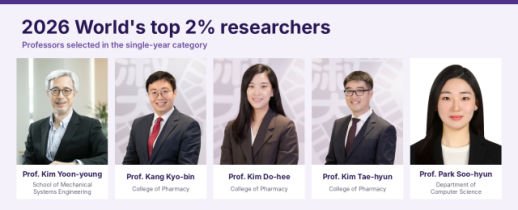 Sookmyung places 10 professors on World's Top 2% Scientists list SEOUL, October 23 (AJP) - Ten faculty members at Sookmyung Women's University have been named to this year's list of the world's most-cited researchers, a ranking compiled by Stanford University and the Amsterdam-based academic publisher Elsevier. The list, released Oct. 7, ranks scientists by a composite citation score drawn from Scopus, Elsevier's database of academic papers. The score combines how often a researcher's work is cited, their h-index, a measure of how many of their papers have each been cited at least that many times, and adjustments for co-authorship and author position. Researchers who score in the top 2 percent of their subfield, across 174 subfields, make the list. The 2026 edition uses citation data through the end of 2025. The ranking has two categories. Six Sookmyung faculty appeared in the single-year category, which measures research impact over the most recent year, and five in the career-long category, which measures impact across an entire career. Kim Yoon-young, a distinguished professor in the School of Mechanical Systems Engineering, was named in both. The university said the result showed its faculty competing at an international level in fields ranging from mechanical engineering and pharmacy to artificial intelligence and software. Sookmyung President Moon Si-yeun said the university would "continue to support the research activities of outstanding researchers and strengthen research competitiveness by promoting interdisciplinary and international joint research." Kim Yoon-young has spent his career designing mechanical devices from the principles of mechanics. His recent work applies AI to what he calls autonomous design, in which software, rather than an engineer, works out the shape of a machine part. He also studies acoustic metamaterials, engineered structures that can generate and steer ultrasound with high precision, and uses them to detect hidden structural flaws in machinery without taking it apart. Three of the other single-year names come from the university's pharmacy faculty. Kang Kyo-bin uses mass spectrometry, a technique that identifies molecules by weight, to find and study natural compounds made by plants and microbes. He recently described an open-source method for analyzing drug metabolism data in Nature Protocols, and identified a new sugar-linking enzyme in wood-decay fungi in a paper published in the Proceedings of the National Academy of Sciences. Kim Do-hee maps the three-dimensional structures of proteins and other large biological molecules to understand how they work. Her focus is structure-based drug discovery, which uses the shape of a disease-linked protein to design medicines that fit it. Kim Tae-hyun studies the molecular processes behind metabolic liver disease, drug-induced liver damage and age-related illness. His lab looks at how organs signal to one another, how exercise changes metabolism and how the liver repairs itself after injury, with the aim of finding new markers for diagnosis and new targets for treatment. The single-year list also includes Yoon Yo-han, a professor of food and nutrition, and Park Soo-hyun, an assistant professor in the School of Software. Park works on quantum AI, which applies the principles of quantum computing to machine learning. Her research includes using quantum reinforcement learning, a method in which software learns by trial and error, to cut the energy use of satellite networks, and using quantum entanglement to train AI models spread across many devices. She received an early-career researcher award in 2025 from a technical committee of the Institute of Electrical and Electronics Engineers (IEEE), the world's largest professional body for electrical and computing engineers. On the career-long list, Yang Mi-hee, a professor of pharmacy, has studied how carcinogens and hormone-disrupting chemicals affect the human body and how to counter them. Drawing on her patents and published work, she has applied to the Ministry of Food and Drug Safety (MFDS) for approval of a health supplement designed to reduce harm from fine dust. She plans to turn next to long-term monitoring of PFAS, the so-called forever chemicals that persist in the environment and the body. Kim Byung-gyu, a professor in the School of Artificial Intelligence Engineering, builds AI that reads images, sound and language together. He is developing empathetic AI, meant to recognize human emotion and context, and world models, which let machines understand physical space and movement. A paper from his lab on generating realistic facial reactions was accepted for oral presentation at ACM Multimedia 2026, a major international computing conference, and placed second in a related challenge, according to the university. Two emeritus professors of pharmacy round out the list. Kang Young-sook has spent her career on one of medicine's hardest delivery problems, getting drugs past the blood-brain barrier, the protective layer of cells that keeps most substances in the bloodstream out of the brain. Her work has targeted treatments for dementia, Parkinson's disease and amyotrophic lateral sclerosis, also known as Lou Gehrig's disease. In 2022, she published findings in the Journal of Biomedical Science showing that valproic acid, a common epilepsy drug, protected nerve cells in experimental models of the disease. Ryu Jae-ha, who taught at Sookmyung for 32 years, has searched plant materials for compounds that fight cancer, obesity, diabetes and muscle disease. He is now working to commercialize a food ingredient for age-related muscle loss, a technology already licensed to industry. 2026-10-23 16:01:37
 -
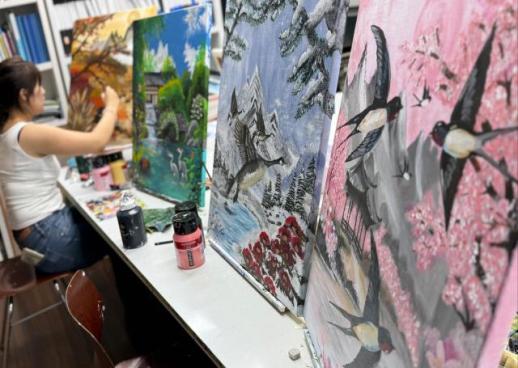 Seoul youth art show asks what to remember in AI era SEOUL, October 23 (AJP) - As artificial intelligence can produce a finished painting in seconds, a youth art exhibition in Seoul has asked young artists what they want the future to remember, and why they still make art by hand. The question reaches students who already use AI widely. In a Korea Press Foundation survey of 2,674 students from fourth grade through high school, released in January, 67.6 percent said they use conversational or generative AI. Most of them, 74.2 percent, said they use it mainly to get a range of information quickly, and ChatGPT was by far the most used service at 89.6 percent. The exhibition, titled "Memory for Tomorrow," ran from Sept. 30 to Oct. 5 and took over the whole of The Star Gallery in Insadong, the central Seoul neighborhood known for its galleries and traditional craft shops. It was the fourth youth environmental art exhibition organized by Sally Mom Art, a children's art academy in Seongnam, Gyeonggi Province, just south of Seoul. Alongside a group show, individual students held solo and special exhibitions. The first three editions centered on nature and the environment, but this year the theme widened to take in history, culture, tradition and the values students hope to pass on. Shim Ye-ji, an 18-year-old 11th grader at Monarch Park Collegiate Institute in Toronto, answered with four paintings, one for each season. Living abroad changed the way she felt the year turn, she said in a recent interview with AJP. Spring in an unfamiliar place felt like a new beginning, while winter became a quiet time to look back on herself. "It was fascinating that the same season could feel different depending on where I was and what frame of mind I was in when I looked at it," Shim said. The adjustment did not come easily. "Leaving my family and friends and adjusting to a new environment was not always easy, and at times I was lonely and missed Korea," she said. "But even then, as I met new people and tried things for the first time, I felt myself growing little by little." What she wanted to capture was that feeling, not just the scenery, and she said that turned out to be the hardest part of the work. "It was especially hard to show feelings you cannot see, like the loneliness and longing I felt while studying abroad, through color and painting," she said. "In the process, I learned that a painting does not have to be perfect, and that expressing my feelings honestly matters more." Shim said those personal feelings are what a machine cannot supply. "Even if we paint the same winter scene, winter might be a joyful season for someone else, but for me it can be the season when I miss my family far away," she said. "AI can help make a painting, but I don't think it can replace the feelings I have and the growth I go through while I paint." She described the series as a record for her future self. "When I look at these paintings again someday, I want to remember how I found the courage to make a new start in an unfamiliar place, and the precious feelings I had at the time," she said. That kind of long, personal struggle with a single work sits at the center of how Sally Mom Art teaches. Its director, Kim Sung-hae, has taught art to children and teenagers for more than 20 years and holds a master's degree in exhibition design from Kookmin University's Graduate School of Design. "What we see today, what we value and what we remember will ultimately shape the future," Kim said of the exhibition's theme. Her students choose their own subjects, research them, decide on composition and color, and revise their work again and again. Kim said she guides them with questions and teaches the skills they need, but does not hand them the answers. "I always tell my students the same thing," she said. "A painting must be completed with your own strength." She holds to that even when the work drags on. "No matter how long it takes, I believe adults should not do for students the part of the process they need to go through themselves," Kim said. The rise of AI, she said, has made that principle matter more. "AI can produce a result quickly, but it cannot replace the trial and error and the sense of achievement a student experiences while facing a single work for dozens of hours, sometimes for months," she said. Kim has since founded NEXT CANVAS Art & Exhibition, an exhibition planning company, to take students' work beyond the classroom. She said it is arranging shows with hotels and cultural venues in South Korea and preparing an exhibition in Bali, Indonesia. One adult also hung his work beside the students. Nam Jucheol, a co-host of the English-learning program Easy English on the Korea Educational Broadcasting System, showed nine travel photographs at Kim's invitation. His link to the academy began through his niece, who studied art under Kim for years. It was his first exhibition. The photographs show landmarks in France and Italy, from Mont-Saint-Michel and the Eiffel Tower to the Colosseum in Rome and Milan's Duomo, and every one was taken on a smartphone. "I wanted to show that meaningful photography does not necessarily require expensive cameras or professional equipment," Nam said. He shot each scene in color and then converted it to black and white, "selectively preserving certain colors to draw attention to details that held particular meaning for me." Millions of people have visited the places in his photographs, and Nam said that pushed him to ask what he had seen there that others had not. "Two people can stand in exactly the same place and walk away with entirely different memories, emotions, and perspectives," he said. "AI can generate extraordinary images, but it cannot actually live my life, experience my memories, or stand in my place at that particular moment." Of the young artists he exhibited with, Nam said, "They reminded me that art has no age limit, no single definition, and no one correct way of seeing the world." For Shim, painting is a way to look slowly into her own heart and put into color and line the feelings that are hard to say in words. "That is why, for me, painting is not just a piece of work," she said. "It is another language for discovering and expressing myself in an unfamiliar world." 2026-10-23 15:43:16
 -
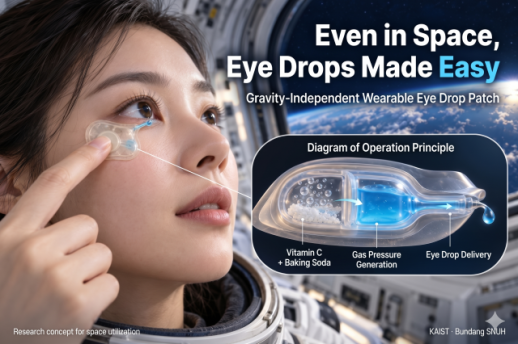 KAIST patch lets astronauts apply eye drops without gravity SEOUL, October 21 (AJP) - Putting in eye drops on Earth takes little more than tilting the head back, but in space a drop never falls into the eye. Researchers in South Korea have built a wearable patch that pushes medicine into the eye with gas from a reaction between vitamin C and baking soda, so the process no longer depends on gravity. KAIST said Wednesday that a team led by Jeong Ki-hun, a professor in its Department of Bio and Brain Engineering, developed the patch with a team led by Professor Woo Se-joon at Seoul National University Bundang Hospital. The study was published online Oct. 7 in Sensors and Actuators B: Chemical, with doctoral student Jeon Jae-hun as first author. On long missions, astronauts have to look after their own health without a doctor nearby, and eye care is part of that. In microgravity, body fluids shift toward the head, which can change the structure of the eye and affect vision, according to KAIST. Standard eye drops offer little help in that setting because the liquid has to fall from the bottle into the eye. The flexible patch attaches around the eye and holds two parts. One is a network of tiny channels that carry the eye drops, and the other is a small chamber where a chemical reaction builds pressure. When the wearer presses a button on the patch, ascorbic acid, the chemical name for vitamin C, meets sodium bicarbonate, the main ingredient in baking soda, in the presence of water. The two react and release carbon dioxide, and the gas pressure pushes the drops along the channels and into the eye. A filter between the reaction chamber and the drug reservoir lets gas pass but blocks liquid. That keeps the reacting chemicals out of the medicine while still transferring the pressure. Because the device needs no external pump and no electrical parts, KAIST said it could suit places where equipment is limited. Controlling the reaction inside such a small device was the hardest part of the work, the team said. If carbon dioxide forms too quickly, the drug can shoot out too fast, and if the pressure is too low, the drops stay in the reservoir. The researchers tuned the reaction conditions, the size of the reservoir and the size and layout of the channels together to get a steady release. In laboratory tests, the patch released drops consistently when the researchers turned it in different directions relative to gravity. They then tested it on volunteers wearing the device, using artificial tears mixed with a fluorescent dye. By tracking the glow in the volunteers' tears over time, they found that the patch delivered drops about as effectively as the usual method. The patch has not been tested in space or in conditions that simulate microgravity, and the human trial used artificial tears rather than an actual medicine. KAIST said whether the patch works in a real space environment still needs to be confirmed. Before it could become a medical device, the team said, it would also need checks on safety with repeated use, on how long drugs stay stable inside it and on whether it works with different types of eye drop formulas. The researchers see uses on the ground as well. People with Parkinson's disease, whose hand tremors make it hard to aim a dropper, and older adults with limited movement could use the patch to give themselves eye drops. "The flexible eye drop patch developed in this study is a wearable platform that can deliver drugs without separate, complex equipment," Jeong said. He added that he expected it could "expand into medical technology for various environments, including space medicine." The team plans to test the patch with actual medicines and under conditions that simulate space, and to develop a version that can store drugs for long periods and be used repeatedly. Journal/Source: Sensors and Actuators B: Chemical Title: Wearable self-instillation microfluidic eyedrop patch for space medicine Link/DOI: https://doi.org/10.1016/j.snb.2026.140885 2026-10-21 22:44:18
 -
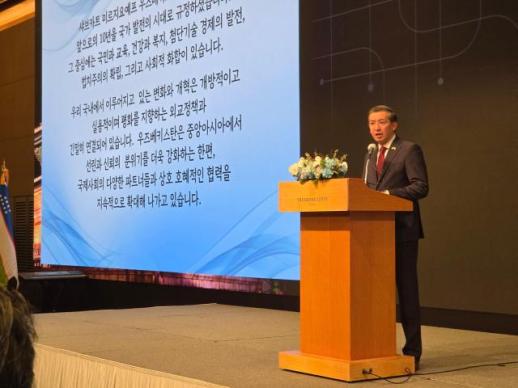 Uzbekistan courts Korean investment in New Tashkent project SEOUL, October 21 (AJP) - Uzbekistan's ambassador to South Korea invited Korean companies on Wednesday to help build New Tashkent, a planned new district of the Uzbek capital, and described the young Uzbeks studying and working in South Korea as the people who will hold the two countries together. "In particular, we warmly welcome Korean companies in expanding the New Tashkent Project together," Ambassador Alisher Abdusalomov said at a Seoul reception marking the 35th anniversary of Uzbekistan's independence. About 250 diplomats, scholars and business executives attended the event in the Crystal Ballroom of Lotte Hotel Seoul, which also marked 34 years of diplomatic relations between the two countries. Uzbekistan's Independence Day is Sept. 1. The embassy held its Seoul celebration on Oct. 21. The Uzbek government is building New Tashkent on the eastern edge of the capital as a new administrative and business center, planned to house about 2.5 million people by 2045. Abdusalomov placed the project alongside other openings he wants South Korean companies to pursue. "Huge opportunities are opening up in modern infrastructure," he said, naming high-speed rail with Hyundai Rotem, airport modernization with Incheon International Airport Corporation, critical minerals and smart urban development. His pitch follows a month of deals. President Shavkat Mirziyoyev made a state visit to Seoul from Sept. 13 to 16 and held talks with President Lee Jae Myung. According to the ambassador, the two sides signed agreements worth about $12 billion at the Uzbekistan-Korea Business Forum during the visit. Another $8 billion in projects is backed by the Export-Import Bank of Korea, the state lender that finances South Korean companies' overseas deals. Korean investment in Uzbekistan has passed $8 billion, and more than 700 South Korean companies operate there, he said. On Sept. 16, President Mirziyoyev also joined President Lee and the leaders of Kazakhstan, Kyrgyzstan, Tajikistan and Turkmenistan for the first Korea-Central Asia Summit. The six leaders adopted the Seoul Declaration and agreed to meet every two years. Abdusalomov said the declaration "laid out a clear roadmap for long-term collaboration in energy, transport, digital technology, green growth, and education." Chung Eui-hae, South Korea's deputy minister for political affairs, told the gathering the summit had "opened a meaningful new horizon for cooperation between Korea and Uzbekistan." Chung, who has visited Tashkent, credited President Mirziyoyev's "bold reforms and openness" for the country's "high and impressive economic growth." She said the two countries are moving beyond energy, transport and infrastructure into "critical mineral supply chains, healthcare, artificial intelligence, and advanced technology." "By combining Korea's leading technology and experience with Uzbekistan's rich potential and dynamism, I am confident that we can create new growth opportunities and build a future of common prosperity," Chung said. Abdusalomov then turned from money to people. "At the end of the day, our partnership is really about people," he said. More than 107,000 Uzbek citizens live and work in South Korea, including 22,000 students, according to the ambassador. "These young people are our future professionals and the most genuine living bridge connecting our two societies," he said. Abdusalomov said Uzbekistan wants to expand university exchanges, joint research and professional training with South Korea, especially in AI, digital technology, medicine and aviation. The ties also run through an older generation. About 180,000 ethnic Koreans, known as Koryo-saram or Koryo-in, live in Uzbekistan. They descend from about 172,000 Koreans whom Soviet leader Joseph Stalin deported from the Russian Far East to Central Asia in 1937. Chung said the diaspora, "warmly embraced and cared for by Uzbekistan," remains "a valuable bridge connecting our two nations." Next year marks the 90th anniversary of that resettlement, which Abdusalomov said recalls "the solidarity, compassion, and kindness that helped Uzbekistan become a true home for generations of Koryo-in." For Seoul, 2027 also brings 35 years of diplomatic relations. "Next year carries special significance as we celebrate both the 35th anniversary of our diplomatic ties, as well as the 90th anniversary of the ethnic Korean settlement in Central Asia," Chung said. She pledged that South Korea "will always remain a reliable partner, walking side by side with Uzbekistan toward development and shared prosperity over the next 35 years and beyond." Chung ended her remarks by proposing a toast to the peace and prosperity of Uzbekistan and to lasting friendship between the two countries. 2026-10-21 21:43:03
 -
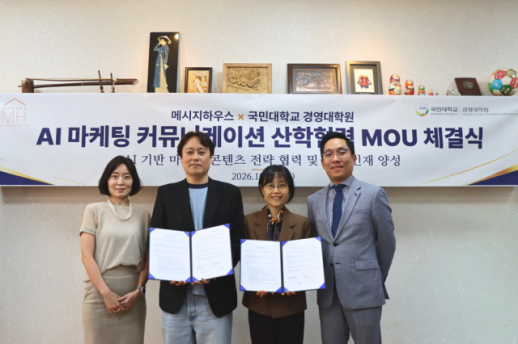 KMU partners with GEO firm to train marketers for AI era SEOUL, October 21 (AJP) - Kookmin University's business graduate school will develop courses on how brands stay visible in artificial intelligence-powered search, under a new agreement with a communications firm that specializes in the field, the university said Wednesday. Kookmin University (KMU)'s Graduate School of Business Administration signed the memorandum of understanding with Message House on Monday at its business building in Seoul. Message House designs corporate positioning and core messaging using AI. Its main line of work is generative engine optimization (GEO), which goes a step beyond conventional search engine optimization. Where search engine optimization aims to push a company's website higher in search results, GEO focuses on AI tools that answer users' questions directly, and on whether a brand surfaces in those answers. The firm offers GEO diagnosis and consulting to help companies and brands raise their visibility in AI search. Under the agreement, the two sides will jointly develop education programs on AI-based marketing communication and content strategy, share course materials and programs, and cooperate on publicity and talent development. The partnership is part of the graduate school's "Business with AI" drive, which adds AI to its practice-oriented MBA curriculum. The school is pursuing a new AI Business major so that students can apply AI to real work and decision-making across management. It also plans to give concrete shape to "AI Embedded Education," an initiative of KMU as a whole. Kang Hyun-mo, dean of the graduate school, said the agreement would be "a good opportunity" to bring "Business with AI" into actual coursework. "In the AI era, the way companies and brands become known to consumers and get chosen is changing quickly," Kang said. He added that the school would draw on Message House's expertise and field experience so students could "directly experience AI-based marketing communication and content strategy and apply them in practice." Lee Jung-dae, chief executive of Message House, said the agreement turns the exchanges the firm and KMU have built over time into "a more systematic partnership." He said the firm would go "beyond simply providing content" and bring field experience and expertise into the classroom. The graduate school is expanding AI-integrated teaching across strategy, marketing, finance, organizational management and entrepreneurship. 2026-10-21 15:39:25
 -
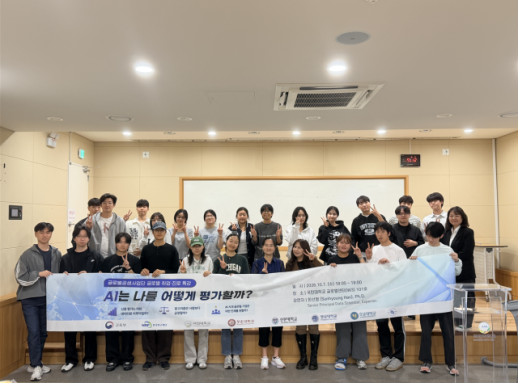 Kookmin lecture brings Experian data scientist to talk AI careers SEOUL, October 20 (AJP) - Students in the humanities and social sciences do not need to abandon their majors to keep up with artificial intelligence, a senior data scientist at the credit bureau Experian told students at Kookmin University in Seoul earlier this month. Han Sun-hyoung, a senior principal data scientist at Experian, called AI "work leverage" that builds on the expertise students already have. Han said it is not a threat that should push them into a different major. Experian is one of the three major credit bureaus in the United States. These companies collect records of how consumers borrow and repay, and supply the credit scores lenders use to decide who gets a loan and at what rate. Han holds a doctorate from the University of California, San Diego, and has worked in AI, machine learning and data science for about two decades. The lecture took place Oct. 7 at the university's Global Center. It was organized by Kookmin's Global Coexistence Project Group under HUSS, a Ministry of Education and National Research Foundation of Korea program that trains humanities and social science students to work across disciplines. Students who pair the ability to define a problem with data and AI skills and business judgment can build new strengths that reach beyond the boundaries of their majors, Han said. Han told the audience that in the age of AI, defining problems, critically checking what AI produces and turning those results into real decisions matter more than learning the technology itself. What global companies look for goes beyond specialist knowledge, Han said, to the ability to solve problems under uncertainty and work with experts from other fields. Han opened with credit scoring, explaining how financial institutions draw on a wide range of data and machine learning to assess borrowers and how data-driven decisions have pushed innovation in finance. Han also described the limits of those systems. AI algorithms have the potential to reduce human bias, Han said, but they can also reproduce the biases in the data they are trained on. For that reason, fairness, explainability and ethical judgment have to be weighed alongside accuracy. Questions from students covered how AI will change jobs, how to choose a career path, whether humans should step in when an algorithm is biased, and how different roles work together at global companies. "I had thought a lot about how to make use of AI beyond simply using it well, and it was good that the skills and activities I need were laid out specifically," one participating student said. An international student at the university said the lecture made clear what to prepare for a job search and would be a big help with career plans. Ko Hye-seon, the research professor who planned the lecture, said she hoped students would treat the advance of AI "as a chance to widen their own possibilities rather than something to fear." She said the group plans to keep running programs that connect the voices of industry with education. Kookmin's project group belongs to the HUSS Global Coexistence Consortium with Kwangwoon University, Sun Moon University, Yeungnam University and Honam University. The group runs courses, extracurricular programs and lectures by experts from South Korea and abroad, with the aim of training people who can lead a sustainable global society. 2026-10-20 21:50:27
 -
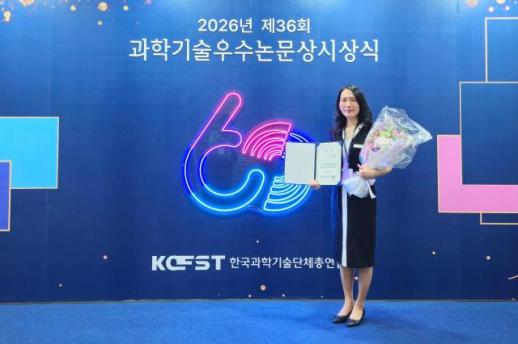 Sookmyung professor honored for midlife leggings research SEOUL, October 20 (AJP) - Most leggings on the market are built around younger women's bodies, and a study measuring how tight they should sit on women in their 40s and 50s has won a Sookmyung Women's University professor a national science paper award. Lim Ho-sun, a professor in Sookmyung's Department of Clothing and Textiles, and her co-author Lee Jong-kyu found that garment pressure should stay below 2.48 kilopascals at the middle of the kneecap, 2.09 kilopascals just below the inner knee and 0.98 kilopascals at the waist. At 2.48 kilopascals, the pressure on the skin is roughly the weight of 25 grams resting on each square centimeter. Lim received the Korean Federation of Science and Technology Societies (KOFST) Excellent Science and Technology Paper Award on Sept. 30 at the Korea Science and Technology Center in Seoul. This was the award's 36th year. The ceremony was held alongside KOFST's 60th anniversary celebration, where the federation also announced its vision for the future. The paper said leggings sold today follow a sizing system based on young women. That system does not suit the way women's bodies change in their 40s and 50s. The researchers argued that clothing makers need to know how much pressure each part of the body can take before customers become uncomfortable. To find out, the team measured garment pressure at points across the lower body and asked wearers to rate how the leggings felt on each part. The rear of the waist registered 0.00 kilopascals, which the researchers read as a sign that the area is less affected by pressure than the rest of the body. Wearers were more satisfied when the back crotch seam sat at a steeper angle. Pressure above the thresholds caused discomfort that grew with age, which the paper linked to a decline in peak and average blood flow. The lower leg was the exception. There, firmer pressure helped wearers move. Sookmyung said the study proposes a design method that weighs the body's anatomy together with the stretch of the fabric. It also sets out pattern standards meant to improve comfort and freedom of movement. The university said the work could help clothing makers develop athleisure, sportswear designed for everyday use, and other functional clothing for middle-aged women. "This award is thanks to the efforts of the students and fellow researchers I have worked with," Lim said. She added that she would continue research that contributes to the field of clothing science. The standards are still a design proposal. Sookmyung did not say whether any clothing maker has adopted them, and the paper's published abstract does not state how many women took part in the wear tests. KOFST gives the award every year to researchers who publish creative, high-quality work. The federation says the award aims to encourage academic research and advance science and technology in South Korea. The paper appeared in the April 2025 issue of the Journal of the Korean Society of Clothing and Textiles, a journal indexed in Scopus, one of the largest databases of peer-reviewed research. Journal/Source: Journal of the Korean Society of Clothing and Textiles Title: Pressure Evaluation and Leggings Modeling of Stretch Knit Materials by Body Parts Link/DOI: https://doi.org/10.5850/JKSCT.2025.49.2.240 2026-10-20 15:31:23
 -
 Korea pulls diplomats from Kyiv as POW dispute deepens SEOUL, October 20 (AJP) - The South Korean government will withdraw part of its embassy staff from Ukraine, the foreign ministry said Tuesday. The move deepens a monthlong dispute with Kyiv over Ukraine's public disclosure that two captured North Korean soldiers had been sent to South Korea. Seoul announced on Oct. 8 that it was recalling its ambassador to Ukraine, Park Ki-chang. It was the first time South Korea had called an ambassador home from a host country since 2008, when it recalled its envoy to Tokyo over Japan's claim to the Dokdo islets in a school textbook guide. The partial withdrawal leaves the embassy in Kyiv open. Diplomatic contact with Ukraine will continue through the Chargé d'Affaires, and all consular staff will remain to look after South Korean nationals in the country. Ministry of Foreign Affairs (MOFA) spokesperson Park Doo-soon announced the decision at a regular briefing on Oct. 20. He said Ukraine had taken no "forward-looking action" since the ambassador's recall. He added that the threat of air strikes across Ukraine made it hard to keep the staff safe. About half of the embassy's diplomats will leave, according to a foreign ministry official. MOFA does not disclose how many diplomats it has at the post, saying the figure is classified. Seoul had already conveyed its position to Kyiv "through various means," Park said, and the government had concluded that no forward-looking action was coming. He called the withdrawal a step judged necessary "for the smooth resolution of the matter and the restoration of trust between the two countries." Park said Seoul's demands were laid out in the position it had already put to Ukraine. President Lee Jae Myung has publicly demanded that Ukraine acknowledge a confidentiality agreement and apologize. There are 84 South Korean nationals in Ukraine, the official said. The embassy will stay in contact with them, issue safety notices, run daily safety checks and help anyone who wants to leave, Park said. He stressed that residents' own wishes came first. The dispute began at the UN General Assembly in New York on Sept. 23. In his address there, Ukrainian President Volodymyr Zelenskyy said, "Recently, we sent two North Korean prisoners of war to the Republic of Korea," using South Korea's official name. He gave no details of the transfer. Ukrainian forces captured the two men in Russia's Kursk region in January 2025. They were among the troops North Korea sent in 2024 to help Russia fight Ukraine, and both later said they wanted to resettle in South Korea. In February 2025, MOFA said it had told Kyiv that Seoul would protect and support any North Korean prisoner who freely chose to come to the South. Seoul had treated the transfer as confidential. On the day of the speech, MOFA declined to confirm the soldiers' status, the timing or route of their transfer, or the content of its talks with Kyiv. It said the matter was sensitive for the safety of the men and their families. The next day, Lee said Ukraine had broken an agreement to keep the transfer secret. On Sept. 26, Dmytro Lytvyn, a communications adviser to President Zelenskyy, said no such agreement existed. First Vice Foreign Minister Park Yoon-joo summoned Ukraine's chargé d'affaires in Seoul on Sept. 28 to protest. Lee raised the stakes on Oct. 2 in a post on X. He wrote that Seoul had agreed to keep the transfer confidential at Ukraine's request, only for Kyiv to disclose it unilaterally. When he expressed regret with every courtesy, he wrote, Ukraine denied that any agreement existed and so "made the other country's head of state a liar." He warned that Seoul would take further measures if Ukraine kept refusing to acknowledge the facts and apologize publicly. President Zelenskyy addressed the transfer again on Oct. 4 without mentioning Lee's demand. He told reporters that South Korea had asked for the soldiers and that, under South Korea's constitution, they were South Korean citizens. Foreign Minister Cho Hyun told a parliamentary audit on Oct. 6 that his Ukrainian counterpart had sent a message containing words of apology, but that it fell short of the level Seoul had in mind. He said the government would take firm action. Ukraine's foreign ministry said on Oct. 7 that the two sides had interpreted their confidentiality arrangement differently. The recall was announced the following day. Ukrainian Foreign Minister Andrii Sybiha said on Oct. 12 that he considered the matter closed. Minister-Counselor Yoon Ji-wan, who has led the embassy in Kyiv as Chargé d'Affaires since the recall, told a parliamentary audit held in Warsaw on Oct. 18 that the two governments had never discussed when the transfer would be made public. He said the two sides broadly agreed it should stay confidential for as long as possible. He also said that putting a diplomatic agreement in writing would in effect make it a treaty. Yoon said the embassy had not known in advance that President Zelenskyy would announce the transfer at the UN, and that Ukraine had yet to explain why he did. 2026-10-20 15:09:40
 -
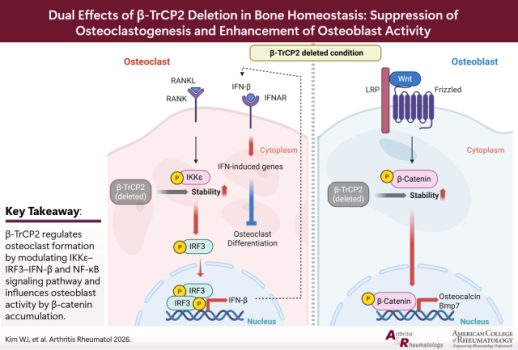 Osteoporosis study finds dual-role bone protein SEOUL, October 13 (AJP) - A single protein speeds the breakdown of bone and holds back the growth of new bone, researchers at Sookmyung Women's University found in mice. The finding points to a possible new target for osteoporosis treatment. Bone is rebuilt constantly throughout life. Cells called osteoclasts break down old bone, while cells called osteoblasts lay down new bone. Healthy bone depends on the two staying in balance. When breakdown outpaces building, bone mass falls, and over time that can lead to osteoporosis, a disease in which bones grow thin and break easily. The team was led by Yang Young, a professor in Sookmyung's Division of Biological Sciences, and Mun Se-hwan, a professor at the university's Research Institute of Women's Health. It studied β-TrCP2, a protein that marks other proteins for disposal inside cells. Mice bred without the gene for β-TrCP2 formed fewer bone-destroying cells and broke down less bone. At the same time, their bone-building cells grew more active and made more new bone. The same pattern held in mice whose ovaries had been removed, a standard model of the bone loss women experience after menopause. Without β-TrCP2, those mice lost less bone, formed more and ended up with greater overall bone mass. Removing a closely related protein, β-TrCP1, did not produce the same results, according to the paper. In bone-forming cells, the missing protein allowed β-catenin, a molecule that switches on bone-building genes, to accumulate. Experiments on injured bone also showed faster formation of new bone and faster recovery. The team said this points to a possible role in repairing damaged bone, not only in preventing its loss. "In particular, by confirming an actual bone-improving effect in an animal model of osteoporosis, we presented its potential as a new therapeutic target," Yang said. Yang said the team plans to develop technology that can regulate β-TrCP2 "safely and selectively." The team also plans to study whether the approach could extend to inflammatory bone-loss diseases such as rheumatoid arthritis. All of the results come from cell experiments and genetically altered mice. The team did not test a drug. It removed the gene instead, and a treatment that can safely target the protein in people has yet to be developed. Teams led by Kyung-Hyun Park-Min at Weill Cornell Medicine and Choogon Lee at Florida State University took part in the study. The paper was published online in September in Arthritis & Rheumatology, the journal of the American College of Rheumatology. Doctoral student Kim Woo-jung was first author, with Yang and Mun as co-corresponding authors. Journal/Source: Arthritis & Rheumatology (IF 9.9, top 6.9% in rheumatology) Title: Dual Effects of β-TrCP2 Deletion in Bone Homeostasis: Suppression of Osteoclastogenesis and Enhancement of Osteoblast Activity Link/DOI: https://doi.org/10.1002/art.70351 2026-10-14 08:00:00
 -
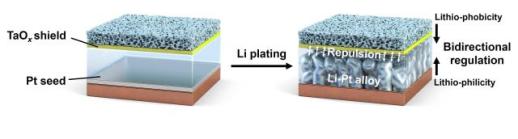 Two coatings curb dendrites in anode-free batteries SEOUL, October 13 (AJP) - A team from Sookmyung Women's University, Seoul National University and battery maker Samsung SDI developed a way to keep lithium growing evenly inside anode-free batteries. These batteries are a next-generation design that packs more energy into the same space, but they tend to wear out early. An anode-free battery has no separate anode material. During charging, lithium from the cathode travels across the cell and plates directly onto a thin copper foil, called the current collector, as a layer of metal. Removing the conventional anode saves space and weight. That is why the design has drawn attention as a route to higher energy density. The weak point is how that lithium grows. When it builds up unevenly, it forms branching structures called dendrites. Dendrites react with the liquid electrolyte and use up the lithium the battery needs to hold charge, which shortens the battery's life. The researchers attacked the problem from two directions at once. On the copper foil, they added a platinum layer about 50 nanometers thick. Platinum attracts lithium, so lithium spreads evenly across the foil from the start. Facing the foil is the separator, a thin membrane that keeps the battery's two electrodes apart. On its surface, the team applied a layer of amorphous tantalum oxide about 70 nanometers thick. Amorphous means the material has no regular crystal structure. Lithium does not readily spread across this layer, so the layer keeps lithium from rising in local spikes and steers it to grow sideways into a dense sheet. Each coating is roughly a thousandth the thickness of a human hair. The second layer made the difference. When the researchers coated only the copper foil with platinum, its effect faded as the lithium grew thicker. With both coatings in place, the lithium stayed dense and uniform through its full depth, even under high-capacity conditions in which large amounts of lithium build up. The team confirmed the difference with electron microscopy and three-dimensional X-ray imaging. Computer simulations supported their explanation of how tantalum oxide limits contact with lithium. Oh Ji-hoon, an assistant professor in Sookmyung's Department of Chemical and Biological Engineering, said the work "presents a design strategy that controls the growth of the entire lithium layer, going beyond the current collector surface where lithium first accumulates." He said the team expects the approach, once extended to other combinations of materials that differ in how strongly they attract lithium, to help improve the lifespan and stability of high-capacity anode-free batteries. Sookmyung's announcement did not give cycle-life figures, such as how many charge cycles the cells lasted or how much capacity they kept. It also did not describe tests in commercial-format cells. Samsung SDI, the Samsung group's battery affiliate, took part through its own researchers. The paper was published in Advanced Functional Materials, with Oh and Seoul National University (SNU) professors Jung Yoo-sung and Choi Jang-wook as co-corresponding authors. Journal/Source: Advanced Functional Materials (IF 19.9, JCR top 4.2%) Title: Dual-Sided Regulation of Lithium Deposition for High-Energy-Density Anode-Less Lithium Metal Batteries Link/DOI: https://doi.org/10.1002/adfm.78958 2026-10-13 19:19:21