

Journalist

Ryu Yuna류윤아
Julia37@ajupress.com
ReporterFinancial Supervisory Service (FSS) & finance, capital markets, Southeast Asian affairs
Yuna Ryu covers finance, capital markets and Southeast Asian affairs.
She is drawn to the questions that numbers raise and the stories that data alone cannot answer.
Prior to journalism, she worked at Hyundai Motor Company and the Singapore Chamber of Commerce, focusing on business strategy and international affairs. She has also hosted diplomatic receptions and international conferences as an MC.
Ryu holds a master's degree in Media and Communication from Korea University, where her research focused on neuroscience-based studies of media effects. "Beyond every statistic is a human story waiting to be heard."
She is drawn to the questions that numbers raise and the stories that data alone cannot answer.
Prior to journalism, she worked at Hyundai Motor Company and the Singapore Chamber of Commerce, focusing on business strategy and international affairs. She has also hosted diplomatic receptions and international conferences as an MC.
Ryu holds a master's degree in Media and Communication from Korea University, where her research focused on neuroscience-based studies of media effects. "Beyond every statistic is a human story waiting to be heard."
Latest by Ryu Yuna
-
 Securities firms lead in six-figure salaries SEOUL, September 2 (AJP) - Employees at South Korea's top 500 companies earned an average 54.99 million won (US$40,100) in the first half of this year, according to an analysis by corporate tracker CEO Score and released Wednesday. The figure was up 3.63 million won or 7.1 percent from 51.36 million won a year earlier, based on its analysis of 345 of the country's top 500 companies. Six-figure salaries were most common among employees at securities firms. Of the 20 companies with average pay of more than 100 million won for the first six months of this year, 12 were securities firms and five were financial holding companies. Chipmaker SK hynix, fintech company Dunamu and industrial group Doosan were the only nonfinancial companies among the highest paying companies. Korea Investment Holdings topped the ranking with average first-half pay of 184 million won per employee, up 13.6 percent from 162 million won a year earlier. Meritz Securities followed at 165.21 million won, ahead of Korea Investment & Securities at 162 million won and Yuanta Securities Korea at 149 million won. SK hynix ranked fifth at 144 million won, the top figure among companies outside the financial sector. Dunamu, the operator of cryptocurrency exchange Upbit, came next at 139.75 million won. Mirae Asset Securities followed at 136 million won, Meritz Financial Group at 130 million won and Hana Securities at 124 million won. NH Investment & Securities recorded 123 million won. Their dominance at the top reflects the industry's heavy reliance on performance-based bonuses in investment banking and trading. Pay levels were noticeably lower at the other end of the list. E-Land World, a fashion and retail company, ranked last with average first-half pay of 17 million won. The gap with Korea Investment Holdings was 167 million won, with the top-ranked company's figure 10.8 times higher. Food distribution and catering company CJ Freshway was second-lowest at 19 million won, followed by integrated food company Hyundai Green Food at 20.32 million won. Battery materials maker L&F and hospitality operator Hanwha Hotels & Resorts each recorded 23 million won. IT solutions and payment services provider Daou Data, food manufacturer OTOKI and retailer EMART each recorded 26 million won. Construction and trading company KOLON Global and food company HARIM were also at 26 million won. The most common pay range was 40 million won to 60 million won. Of the 345 companies surveyed, 150 or 43.5 percent, fell into that bracket. Another 86 companies, or 24.9 percent, fell between 20 million won and 40 million won, while 64 were in the 60 million won to 80 million won range and 23 were between 80 million won and 100 million won. Only two reported averages below 20 million won. Finance also led the industry rankings. Financial holding companies topped the list at 113.88 million won, up 5.2 percent from a year earlier. Securities firms followed at 107.10 million won. Telecommunications ranked a distant third at 69.67 million won, followed by banks at 67 million won, credit finance companies at 64.06 million won and insurers at 61.94 million won. The service sector averaged 58.83 million won, while shipbuilding, machinery and equipment companies recorded 57.51 million won. The year-on-year changes also varied widely by company. Yuanta Securities Korea recorded the biggest increase, with average first-half pay rising by 73 million won from a year earlier. Hana Securities gained 42 million won, Mirae Asset Securities 36 million won, Doosan 34 million won and Meritz Securities 33.82 million won. Beauty company APR recorded the biggest decline, with average pay falling by 32 million won from a year earlier. The research firm attributed the drop to a high comparison base created by gains from employees exercising stock options in the first half of 2025. Kyobo Life Insurance followed with a 15 million won decline, while Meritz Financial Group fell by 14 million won and Dunamu by 12.94 million won. Wind tower manufacturer CS Wind Corporation recorded an 11 million won decline. The figures were calculated from the companies' first-half disclosures and represent average employee compensation over six months, not annual salaries. AJP Takeaways • Average employee pay at 345 of South Korea's top 500 companies rose 7.1 percent to 54.99 million won in the first half of 2026. • South Korean securities firms accounted for 12 of the 20 companies where average six-month employee pay exceeded 100 million won. • Korea Investment Holdings topped the company ranking at 184 million won per employee, 10.8 times E-Land World's 17 million won. • Financial holding companies led the industry ranking with average first-half employee pay of 113.88 million won, followed by securities firms at 107.10 million won. 2026-09-02 11:10:46
 -
 Samsung, SK buybacks keep KOSPI afloat despite broad selling SEOUL, September 01 (AJP) - South Korea's benchmark stock index eked out a gain Tuesday as massive share buybacks by Samsung Electronics and SK hynix absorbed heavy selling by foreign, institutional and retail investors, while record chip exports helped steady sentiment despite a sharp rise in bond yields. The benchmark KOSPI closed at 6,835.80, up 0.23 percent from the previous session. The index fell as low as 6,732.47 in early trading before recovering to an intraday high of 6,857.35. The rebound came even as all three major investor groups sold shares. Foreign investors sold a net 491.9 billion won ($359 million) of KOSPI shares, institutions unloaded 634.0 billion won and retail investors sold 539.8 billion won. Other corporations emerged as the major counterweight, buying about 1.69 trillion won as Samsung Electronics and SK hynix continued their large-scale share repurchases. The two chipmakers bought a combined 10.3 trillion won worth of shares from Aug. 20 through Aug. 28, according to Shinhan Securities. Their purchases totaled 8.05 trillion won from Aug. 24 through Aug. 28, nearly matching the 8.32 trillion won of KOSPI shares sold by foreign investors over the same period. The buying helped pull both chip heavyweights and the broader index back from their morning lows. Strong August export data provided another cushion. South Korea's exports surged 68.7 percent from a year earlier to $98.25 billion, the third-highest monthly total on record. Semiconductor exports soared 209 percent to a record $46.65 billion as AI-related demand continued to drive chip shipments. The government's record spending plan for next year presented a more mixed signal for markets. Seoul proposed an 820.9 trillion won ($597 billion) budget for 2027, up 12.8 percent from this year in the biggest annual increase on record, drawing heavily on a tax windfall generated by booming semiconductor profits. While the fiscal expansion raised expectations for stronger government-led investment, concerns over public finances and future debt issuance hit the bond market. The 30-year government bond yield jumped 10 basis points to 4.627 percent, while the 20-year yield climbed 6.9 basis points to 4.559 percent. The 10-year yield rose 5.8 basis points to 4.371 percent. Semiconductor heavyweights recovered alongside the broader market after falling early in the session. Samsung Electronics rose 0.38 percent to 261,000 won, while SK hynix gained 1.14 percent to 1,693,000 won. Gains extended to several other large-cap shares. Samsung C&T climbed 3.72 percent to 390,500 won, while SK Square rose 2.89 percent to 1,067,000 won. Samsung Life gained 1.14 percent to 309,500 won and Shinhan Financial advanced 2.02 percent to 111,100 won. Samsung Biologics edged up 0.13 percent to 1,520,000 won, while Kia added 0.15 percent to 131,200 won. On the downside, Hanwha Aerospace dropped 3.99 percent to 1,058,000 won, while LG Energy Solution fell 2.91 percent to 367,000 won. Samsung Electro-Mechanics lost 1.92 percent to 1,430,000 won and Doosan Enerbility declined 1.33 percent to 81,400 won. KB Financial fell 1.21 percent to 171,200 won, while Hyundai Motor slipped 0.74 percent to 400,500 won. The junior KOSDAQ moved in the opposite direction, closing 1.56 percent lower at 821.25 as foreign and institutional selling outweighed retail buying. The index fell as low as 815.52 after reaching an intraday high of 833.52. Retail investors bought a net 433.7 billion won, while foreign investors sold 151.4 billion won and institutions unloaded 275.1 billion won. Losses were widespread, with 950 stocks falling, 686 advancing and 98 finishing unchanged. Biotechnology, battery and semiconductor-related shares were among the main decliners. Alteogen, a biotechnology company developing drug-delivery and biologics platform technologies, fell 2.11 percent to 301,000 won. HLB dropped 4.35 percent to 34,050 won. Battery-material shares were also under pressure. EcoPro, the holding company at the center of the group's battery-material business, slid 4.49 percent to 87,200 won. EcoPro BM, which produces cathode materials for electric vehicles and energy storage systems, lost 3.81 percent to 116,200 won. Rainbow Robotics, which develops collaborative, mobile and humanoid robots, declined 2.39 percent to 449,500 won. Semiconductor equipment and component makers were broadly lower. Jusung Engineering, which makes semiconductor deposition equipment, fell 2.26 percent to 173,000 won, while Wonik IPS, a semiconductor and display equipment maker, slipped 1.35 percent to 110,000 won. LEENO Industrial, which makes semiconductor test pins and sockets, declined 1.65 percent to 65,500 won. EO Technics, a maker of laser-based semiconductor equipment, dropped 2.48 percent to 394,000 won, while Simmtech, which produces semiconductor package substrates, lost 2.86 percent to 125,600 won. In the currency market, the Korean won weakened 1.8 won to close at 1,370.4 per dollar. The broader market has become less volatile but also markedly less active after the sharp swings earlier in the summer. The VKOSPI, a gauge of expected volatility in KOSPI 200 shares, closed at 44.03 Tuesday, less than half its June 29 level of 96.94, according to the Korea Exchange. The calmer market has been accompanied by a sharp drop in turnover. Average daily KOSPI trading value fell to 25.77 trillion won in August, nearly half June's 50.35 trillion won and the lowest level this year. The share turnover ratio declined to 0.54 percent. Retail participation has also remained subdued. Investor deposits stood at 98.70 trillion won as of Aug. 28, down nearly 30 percent from a record 139.69 trillion won on June 4, as investors remained cautious following losses during July's selloff. Investors have also remained wary ahead of the September Federal Open Market Committee meeting as uncertainty over the direction of U.S. interest rates persists. Korean investors nevertheless continued buying U.S. equities, with net purchases reaching $1.96 billion in August for a third straight month. Foreign investors, meanwhile, remained net sellers of Korean shares, unloading 10.18 trillion won of KOSPI stocks in August. They nevertheless bought a net 14,246 KOSPI 200 futures contracts in the final week of the month, suggesting some easing in bearish positioning. Across the region, stocks were mostly lower. Japan's Nikkei 225 slipped 0.15 percent to 66,215.34 as rising Japanese and U.S. yields weighed on the market. China's Shanghai Composite edged down 0.16 percent to 3,979.89 as weakness in technology shares offset gains in defensive sectors. Hong Kong's Hang Seng Index fell 0.93 percent to 25,329.73. AJP Takeaways • South Korea's KOSPI closed 0.23 percent higher at 6,835.80 on Sept. 1, 2026, after falling more than 1 percent intraday, as corporate share purchases and strong August exports offset selling by foreign, institutional and retail investors. • Samsung Electronics and SK hynix helped support the market through recent share purchases, while South Korea's August exports rose 68.7 percent from a year earlier to $98.25 billion and semiconductor exports surged 209 percent to a record $46.65 billion. • The broader market remained calmer but less active, with the VKOSPI ending at 44.03 on Sept. 1 and August KOSPI trading value falling to about half its June level, while foreign investors stayed net sellers of Korean shares and domestic investors continued buying U.S. equities. 2026-09-01 17:47:22
 -
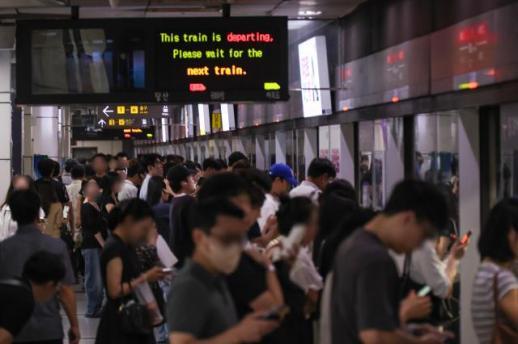 Korean jobseekers face an AI test with no rulebook SEOUL, September 01 (AJP) - AI literacy is becoming the latest addition to the long list of so-called "specs" young South Koreans need to compete for already-scarce entry-level jobs. The problem is that employers themselves are still figuring out what they want. SK hynix is removing its traditional personal-statement questions from applications in the second half of this year. Instead, applicants will be asked to describe how they have used AI in projects, research and problem-solving. During interviews in November, candidates will use a large language model, or LLM, on a computer to work through an assigned problem and then present how they reached their answer. The chipmaker is less interested in AI proficiency itself than in how candidates use the technology to solve problems and explain their reasoning. The change also reflects how generative AI has eroded the value of the written personal statement, long a staple of South Korean recruitment. As more applicants use AI to draft their essays, employers have less reason to rely on the writing alone to distinguish among candidates. Jinyoung Kim, an economics professor at Korea University, said the shift was largely inevitable. "Self-introduction essays have lost much of their value as a way to tell candidates apart because most people are using AI to write them these days," Kim said. "Basing interviews on them no longer makes much sense. Testing how applicants use AI is a way to gauge productivity, and I see it as a change that is hard to avoid." The new hurdle is emerging just as young Koreans are finding it increasingly difficult to gain a foothold in the labor market. The employment rate for South Koreans aged 15 to 29 fell 1.6 percentage points from a year earlier to 44.2 percent in July, extending its decline to 27 consecutive months, according to the Ministry of Data and Statistics' July employment report released Aug. 12. The number of employed young people fell by 191,000 to 3.441 million, marking the 45th straight month of decline, while the youth unemployment rate rose 1.3 percentage points to 6.8 percent. The squeeze is also evident at major companies. Leaders Index, a South Korean corporate research firm, found that new hires at 113 large companies that disclosed hiring figures fell 15.3 percent to 92,680 in 2025 from 109,456 in 2023. Across 132 companies, employment of workers aged 30 and under dropped 13.8 percent to 230,434 over the same period. The outlook for the second half is somewhat brighter, although companies remain cautious about the scale of recruitment. Incruit, a South Korean human resources technology company, surveyed 600 companies between July 1 and Aug. 3 and found that 74.3 percent of large companies had decided to hire in the second half, up 14.6 percentage points from a year earlier. Among those with confirmed hiring plans, however, only 14.5 percent expected to recruit 100 or more employees, down 6.4 percentage points from last year. For job seekers, AI is already deeply embedded in the application process. A July survey by South Korean recruitment platform CATCH found that 98 percent of 1,025 Generation Z job seekers were using AI when applying for jobs. Some 84 percent used it to draft self-introduction essays and 67 percent to generate possible interview questions. Yet only 66 percent said they were building AI-related experience. The gap suggests that while AI has become routine for preparing applications, fewer job seekers have experience demonstrating how they can use it in actual work. Simply saying they have used AI may therefore no longer be enough. Increasingly, applicants are being asked to show what they can do with it. That pressure is also feeding demand for AI-related credentials. South Korea's Private Qualification Information Service, a government-run database for privately issued qualifications, listed 1,292 registered private qualifications with "AI" in their names as of Tuesday. Yet there is no common standard for determining which of those credentials reflect the skills employers actually want. In the absence of one, companies are developing their own tests. KT, a major South Korean telecommunications company, opened applications Aug. 25 for college graduates in network infrastructure operations, business consulting and sales, and consumer marketing and sales. Rather than testing AI knowledge alone, KT said it will give applicants work-related situations and assess how they use AI during the problem-solving process. The approach resembles that of SK hynix. Both are focusing less on familiarity with a particular AI tool than on how applicants apply the technology to a problem. But there is no single method for measuring that ability. Employers are experimenting with everything from job simulations and AI aptitude tests to project-based assessments, effectively leaving each company to decide which elements of AI use matter most. At the same time, AI appears to be raising expectations for entry-level workers. PwC's 2026 Global AI Jobs Barometer found that U.S. entry-level jobs most exposed to AI were seven times more likely to require skills such as leadership, creativity and face-to-face communication — capabilities traditionally associated with more experienced workers. For applicants, the absence of a clear standard can add another layer of pressure to an already demanding hiring process. Alongside foreign-language scores, internships and certificates, they may now feel compelled to build AI projects or take AI courses without knowing which experiences employers will ultimately value. Kim acknowledged that learning another skill could add to the burden but viewed the shift as difficult to avoid if AI becomes a basic workplace tool. "I think it can be fair because AI is already widely used among young people," he said. Fairness, however, is only part of the problem. A more fundamental question is what AI literacy should mean in the first place. The issue is being debated globally. On June 18, the OECD and European Commission released an AI Literacy Framework for primary and secondary education, offering a common reference for the knowledge, skills and attitudes students need to understand and use AI responsibly. The framework treats AI literacy as more than the ability to operate AI tools. Learners are expected to understand how AI works, critically evaluate its output and make informed judgments about its risks and limitations. It sets out 19 competencies across four areas covering how learners engage with, create with, manage and shape AI. The framework was designed for education rather than recruitment, but it illustrates how broadly AI literacy can be defined — and why it is difficult to reduce to a single certificate or test score. Kim cautioned against treating overseas frameworks as a benchmark for Korean hiring while the technology itself continues to evolve rapidly. "I do not think we can treat that as an established standard yet," he said. "Nor do I see much reason to benchmark overseas frameworks at this point. No one really knows where AI is headed, whom it will replace or whom it will assist." That leaves employers with a contradiction: AI skills are becoming more important in hiring even as the criteria for judging them remain unsettled. If using an LLM eventually becomes as routine as working with a spreadsheet or searching the internet, knowing how to use AI alone may cease to distinguish one candidate from another. Recent hiring practices suggest the emphasis may instead move toward what workers do after AI generates an answer — whether they can verify the result, detect errors and make the final judgment rather than simply accept what the technology produces. "I think this will continue to evolve," Kim said. "Even the people who built AI are not certain how widely it will be used or where it is headed." The standard is still taking shape. For Korean graduates, the test has already begun. AJP Takeaways • SK hynix is replacing traditional personal-statement questions in its second-half 2026 recruitment with assessments of how applicants use AI to solve problems, including an LLM-based task and presentation during November interviews. • AI is becoming a new hiring requirement as South Korea's youth job market weakens, with the employment rate for people aged 15 to 29 falling to 44.2 percent in July and major companies reducing recruitment from 2023 levels. • South Korean employers including SK hynix and KT are developing their own AI-based hiring assessments because there is no common standard for determining what AI literacy means or which AI qualifications matter. • The OECD and European Commission's AI Literacy Framework defines AI literacy broadly to include understanding, critical evaluation and judgment, suggesting employers may increasingly value candidates' ability to verify and interpret AI output rather than simply operate AI tools. 2026-09-01 16:41:29
 -
 Margin debt swells back as investors rotat into KOSDAQ SEOUL, September 1 (AJP) - South Korean margin borrowing rose for a ninth straight trading day and returned to the levels of mid-July as investors migrated to KOSDAQ outperforming the main index since last month. Outstanding margin loans across the two markets stood at 33.34 trillion won ($24.36 billion) as of Aug. 28, up 8.96 billion won ($6.5 million) from a day earlier, according to the Korea Financial Investment Association (KOFIA). The increase was driven by KOSDAQ stocks, where margin borrowing jumped 101.71 billion won to 6.95 trillion won. By contrast, borrowing tied to KOSPI-listed shares fell 92.75 billion won to 26.39 trillion won. Margin financing allows investors to borrow money from brokerages to buy stocks. A higher balance therefore indicates that more borrowed money is being used for stock investments. That divergence was mirrored in the market on Aug. 28. The KOSPI lost 1.79 percent to 6,788.88, while the junior KOSDAQ edged up 0.09 percent to 838.41. The data showed borrowing increased for KOSDAQ stocks while declining for large-cap shares. Cash waiting on the sidelines also increased sharply. Investor deposits at brokerages rose by 3.10 trillion won from a day earlier to 99.81 trillion won as of Aug. 28. The deposits include cash set aside to buy stocks and money from recent stock sales that has not yet been withdrawn, meaning a substantial amount of cash remains available for investment. Riskier short-term trading indicators, meanwhile, eased. Unpaid stock purchases fell to 930.30 billion won as of Aug. 28. These trades occur when investors buy stocks without having enough cash in their accounts to cover the full purchase and fail to pay the remainder by the settlement deadline. Forced liquidations tied to such unpaid trades also fell sharply, to 4.80 billion won from 24.87 billion won a day earlier. The ratio of forced liquidations to unpaid settlement balances fell to 0.5 percent from 2.2 percent, according to KOFIA. The KOSPI has gained 3.4 percent to finish August at 6,820 from the previous month wherease the KOSDAQ soared 15.91 percent to 834.3. Korean shares recovered on Monday, with the KOSPI closing 0.46 percent higher at 6,820.02. The benchmark extended those gains slightly on Tuesday, rising 0.11 percent to 6,827.46 as of 10:23 a.m. AJP Takeaways • Margin borrowing rose for a ninth straight trading day to 33.34 trillion won as of Aug. 28. • Borrowing increased by 101.71 billion won on the KOSDAQ while falling by 92.75 billion won on the KOSPI. • Investor deposits approached 100 trillion won, while unpaid balances and forced liquidations declined. 2026-09-01 11:11:52
 -
 Sky Labs cuts IPO price ahead of KOSDAQ debut SEOUL, August 31 (AJP) - South Korean digital healthcare company Sky Labs will make its KOSDAQ debut Friday after setting its offering price at the bottom of its proposed range, with more than 60 percent of institutional orders coming in below the minimum price sought by the company. The company is scheduled to list on Sept. 4 at an offering price of 10,000 won ($7.20) per share, with Korea Investment & Securities serving as the lead underwriter. Retail subscriptions were held on Aug. 26 and 27, drawing an overall competition ratio of 2.85 to 1. The subdued response comes as several newly listed companies have struggled in their first sessions, weighing on sentiment toward upcoming offerings. KIDO Industrial, an industrial safety equipment maker, Nearthlab, a drone technology company, and Haechitech, a semiconductor equipment maker, all ended their first trading day below their respective IPO prices. Sky Labs develops wearable devices that allow users to measure health indicators through a ring worn on the finger. Its flagship product, Cardio Tracker (CART), is an artificial intelligence-powered, ring-shaped cuffless blood pressure monitor designed to continuously monitor blood pressure without a conventional arm cuff. According to the company, CART has undergone clinical validation and received regulatory approvals in South Korea, Europe and Britain. It is used to collect blood pressure data in hospitals and patients' daily lives. The company plans to use the technology to measure a broader range of health indicators, including pulse, respiratory rate and body temperature. It also plans to track blood oxygen levels and expand its medical data business. AJP Takeaways • Sky Labs is scheduled to list on the KOSDAQ on Sept. 4, 2026, with an offering price of 10,000 won per share. • More than 60 percent of institutional investors' bookbuilding orders for Sky Labs were submitted below the lower end of the proposed price range. • Sky Labs develops a ring-type wearable that measures blood pressure and plans to expand into broader health monitoring and medical data services. 2026-08-31 17:38:03
 -
 South Korea expands financial education for soldiers SEOUL, August 31 (AJP) - South Korea will step up financial education for young soldiers as higher military pay and savings programs leave them with more money to manage, while concerns grow over exposure to online gambling, risky investments and high-interest loans. The Financial Services Commission (FSC) said Monday its Financial Education Council approved a plan to strengthen financial training for military personnel, with the Ministry of National Defense (MND), Financial Supervisory Service (FSS) and other agencies taking part. The initiative will move beyond lecture-style instruction and focus more on practical skills, including one-on-one financial counseling, debt management and help with savings and investment decisions. The focus reflects the importance of military service in shaping young people's financial habits. For many, it is the first time they regularly receive a salary and build substantial savings. Habits formed during that period can continue to influence spending, saving and investment decisions after they leave the military. The need for better guidance has grown as higher military pay and government-backed savings programs give young soldiers more money to manage. At the same time, authorities said they are increasingly exposed to online gambling, risky investments such as cryptocurrency, misleading investment information and high-interest loans. Outstanding military loans from the 30 largest moneylenders registered with the FSC stood at 44.4 billion won ($32.2 million) at the end of 2025. In the same year, 432 military personnel received help with repaying about 10.2 billion won ($7.4 million) in debt through the Credit Counseling and Recovery Service. To address those risks, the government will expand one-on-one counseling on managing salaries and expenses, planning savings and handling larger sums of money. Those struggling with credit or debt will receive separate support, starting with an online assessment and followed by phone counseling. Private channels will also be available for debt-related questions that may be difficult to raise openly. The government also plans to make the training easier to access through short-form videos and entertainment-style content. One model is a military finance program produced for Korean Forces Network (KFN) TV that uses real financial concerns raised by soldiers and has experts suggest possible solutions. More attention will also be given to investment and borrowing risks. Beginning in the second half of 2026, financial industry groups will run on-site programs using real cases to explain online gambling and debt-financed investing. The programs will also cover the risks of cryptocurrency, leveraged products and high-interest loans. Current and former financial industry employees, analysts and private bankers will also be brought in to teach basic asset management, investing and credit management. To encourage participation, the government is considering awards and certificates for those who take an active part, along with possible financial benefits tied to healthy saving and money-management habits. The MND already provides at least two hours of financial education a year for military personnel, while the FSS and other public agencies offer training at military bases. However, the FSC said the current system relies heavily on lectures and public institutions and provides little incentive to take part voluntarily. The new approach is intended to give young people a more active role in solving their own financial problems instead of simply receiving information. The government will gradually roll out new content, counseling services and industry-led programs. It will review feedback from military personnel and instructors as the measures expand. The filing said the broader goal is to help young people build better financial habits during military service, improve their money-management skills and prepare for life after discharge. AJP Takeaways • The Financial Services Commission approved a plan on Aug. 31, 2026, to expand practical financial education and one-on-one counseling for South Korean military personnel. • The Financial Services Commission said outstanding military loans from the 30 largest registered moneylenders totaled 44.4 billion won ($32.2 million) at the end of 2025. • The Credit Counseling and Recovery Service helped 432 military personnel repay about 10.2 billion won ($7.4 million) in debt in 2025. 2026-08-31 16:18:42
 -
 FSS to hold public hearing before toughening financial consumer rights SEOUL, August 31 (AJP) -South Korea's financial watchdog will put its consumer protection efforts under public scrutiny next month as regulators face mounting criticism over safeguards surrounding leveraged single-stock ETFs, which intensified a retail investment frenzy before the market rout left individual investors nursing heavy losses. The Financial Supervisory Service (FSS) said Monday it will hold a public forum on Sept. 17 in Seoul with about 250 participants, including consumers, financial industry officials, representatives from related institutions and outside experts. The event comes as investor protection has moved to the center of the regulatory debate following the controversial introduction of leveraged products tied to individual stocks. Their rapid uptake among retail investors raised questions over whether warnings, education and other safeguards were sufficient for products capable of magnifying losses as well as gains. The event will review progress under a reform plan introduced on Dec. 22 last year that focuses on preventing consumer harm before it occurs, rather than addressing losses afterward. The plan covers investment, insurance and other financial products from their design and sale to how they are managed after purchase. It aims to give consumers clearer information about risks such as potential investment losses and limits on insurance coverage, while providing early warnings when stock-linked products are at risk of principal losses. It also includes measures to combat illegal private lending, voice phishing, insurance fraud and investment scams, while improving transparency around loan rates and other financial practices. At the first session, the FSS will review the measures it has taken so far and the progress made. Financial firms will share examples of how they have improved the way financial products are developed and sold and strengthened internal controls. Experts will assess those efforts and offer recommendations on how the regulatory framework should develop further. The second session will focus on remaining challenges. Panelists will include members of the FSS' Financial Consumer Protection Advisory Committee, as well as representatives from the legal community, media, civic groups and the public. Participants will also be invited to share their experiences and raise questions directly with FSS executives during an open discussion. The forum is intended to give the regulator a clearer picture of consumers' concerns and priorities as it considers what should come next. Anyone can apply to attend from Aug. 31 through Sept. 8, with attendees selected at random. The two-hour event, scheduled from 2 p.m. to 4 p.m., will be livestreamed on the FSS' official YouTube channel. Presentation materials, panel discussions and the question-and-answer session will later be available on its website. The FSS said it will continue seeking feedback from consumers as it works to strengthen protections across the financial sector. AJP Takeaways • The Financial Supervisory Service will hold a public forum on Sept. 17 to review its consumer protection efforts and seek feedback on future measures. • The regulator's plan aims to prevent harm before it occurs by strengthening protections around financial products, including clearer risk information and earlier warnings about possible losses. • About 250 participants, including consumers, financial industry officials and outside experts, are expected to attend, with applications open through Sept. 8. 2026-08-31 15:52:41
 -
 Samsung, SK hynix dominate Korea's stock-rich C-suite SEOUL, August 31 (AJP) -Nine out of 10 stock-rich C-suite executives are affiliated with Samsung Electronics and SK hynix, underscoring the sharp rise of the stock-market stature of South Korea’s two chipmakers. A total of 398 executives at listed companies affiliated with Samsung, SK, Hyundai Motor and LG held shares worth more than 1 billion won ($720,000) as of Aug. 24, according to a report released Monday by corporate analysis firm Korea CXO Research Institute. Their combined holdings were valued at 1.05 trillion won. Samsung Electronics accounted for 256 of the 398 executives, or 64.3 percent of the total, while SK hynix had 107, or 26.9 percent. Together, the two chipmakers accounted for 363 executives. That was 91.2 percent of those with shareholdings worth more than 1 billion won. The gap was even wider by group. Samsung affiliates had 269 executives above the threshold and SK had 122, meaning the two conglomerates together represented 98.2 percent of the total. Hyundai Motor Group had just four, while LG had three. The research institute attributed much of the gap to differences in compensation practices. Samsung Electronics and SK hynix have increasingly paid part of employee and executive performance bonuses in company shares, helping executives build larger holdings. The impact was clear over the past three months. The number of Samsung Electronics executives with holdings worth more than 1 billion won jumped 50.6 percent to 256 from 170 on May 13. At SK hynix, the figure rose 21.6 percent to 107 from 88. Combined, the number rose 40.7 percent even as share prices fell over the same period. Samsung Electronics shares dropped 9.5 percent and SK hynix fell 15.4 percent. At the top of the list, 12 executives held company shares worth at least 10 billion won. Six were from Samsung, five from SK and one from Hyundai Motor Group, while none came from LG. Samsung Electronics President Roh Tae-moon topped the list with 124,280 shares valued at about 31.94 billion won based on the company's Aug. 24 closing price of 257,000 won. He was the only executive outside the controlling families of the four groups with more than 30 billion won in company shares. SK hynix President Kwak Noh-jung ranked second with holdings worth 23.92 billion won. SK Square Chief Investment Officer Song Jason followed with 18.31 billion won. Samsung Electronics President Park Hak-kyu held 18.08 billion won, while Hyundai AutoEver executive Suh Dong-kwon had 16.55 billion won. The institute examined 62 listed affiliates of the four groups and calculated the value of common shares held by executives named in their first-half regulatory filings using Aug. 24 closing prices. AJP Takeaways • Samsung Electronics and SK hynix executives account for 91.2 percent of executives outside the controlling families at South Korea’s four biggest groups with company shares worth more than 1 billion won. • Their numbers rose 40.7 percent over three months even as both chipmakers’ share prices fell, pointing to the effect of stock-based compensation. • Samsung Electronics President Roh Tae-moon topped the ranking with holdings worth about 31.94 billion won. 2026-08-31 12:11:36
 -
 Hot Stock: SK Innovation up 6% on $1 billion U.S. battery deal SEOUL, August 31 (AJP) - Shares of South Korean energy company SK Innovation jumped nearly 6 percent Monday after its battery unit SK on secured a major order for energy storage system (ESS) batteries in the U.S. Shares traded 5.65 percent higher at 123,500 won ($89.57) as of 10:44 a.m. on the KOSPI, standing out in a bearish market with the key index losing nearly 2 percent. The stock opened at 119,300 won and rose as high as 125,300 won in early trading. The rally came after SK on said it signed a five-year deal with U.S. energy storage company NeoVolta Power to supply 9 gigawatt-hours (GWh) of lithium iron phosphate (LFP) pouch battery cells from 2027 through 2031. LFP is a battery chemistry known for relatively low cost, safety and long life. The agreement is estimated to be worth about 1.5 trillion won ($1.09 billion). The cells will be produced at SK on's plant in Georgia, with the long-term order expected to help raise utilization at its U.S. facilities. NeoVolta Power, a subsidiary of NeoVolta, manufactures energy storage systems at a facility in Pendergrass, Georgia. The partnership could expand further, with an additional 9 GWh supply agreement planned for this year. If completed, the two deals would bring the total volume to 18 GWh. The deal also supports SK on's push beyond electric vehicle batteries and into energy storage. ESS systems store electricity and release it when needed, and the battery maker is targeting 20 GWh of new orders in the global market this year. Higher oil prices also provided support for SK Innovation, which operates refining and petrochemical businesses. Brent crude rose about 1.4 percent to $89.38 a barrel in Asian trading Monday after U.S. forces struck Iranian launchers on Larak Island in the Strait of Hormuz. The gains marked a rebound after recent pressure on the stock. SK Innovation said on Aug. 25 that it would absorb SK IE Technology (SKIET), a battery materials subsidiary it spun off in 2019. Shares fell for two consecutive sessions following the announcement before recovering some of the losses. AJP Takeaways • SK Innovation shares traded 5.65 percent higher at 123,500 won ($89.57) as of 10:44 a.m. on the KOSPI. • SK On agreed to supply NeoVolta Power with 9 GWh of LFP battery cells over five years from 2027, with the contract estimated by industry sources at about 1.5 trillion won ($1.09 billion). • SK On plans to produce the cells in Georgia and is pursuing further cooperation that could expand its business with NeoVolta Power to 18 GWh. 2026-08-31 11:17:41
 -
 Y-Biologics expands employee share ownership after KOSDAQ listing SEOUL, August 31 (AJP) - South Korean antibody drug developer Y-Biologics has completed its third employee share purchase since its KOSDAQ listing, bringing the shareholding ratio among employees to about 65 percent of its workforce. The company said Monday that employees bought shares on the open market this month through its Employee Stock Ownership Association (ESOA), which enables employees to acquire and hold shares in their employer. The latest round follows two previous purchases since the company listed on the KOSDAQ in December 2023. To encourage participation, the firm has continued to offer employees opportunities to acquire shares after the listing, providing support including low-interest loans and flexible repayment periods. The initiative is intended to give employees a direct a stake in the company's long-term growth and align their interests with its performance. The latest purchases follow open-market buying by CEO Park Young-woo, who has been acquiring shares since June. Shares, however, traded 4.36 percent lower at 8,560 won ($6.21) as of 9:36 a.m. Monday on the KOSDAQ. They opened at 8,740 won and fell as low as 8,440 won in early trading. Y-Biologics develops antibody-based therapeutics through its proprietary drug pipeline and partnerships with other drug developers. The biotech firm aims to broaden its portfolio and strengthen its position in the global antibody therapeutics market. AJP Takeaways • Y-Biologics completed its third employee share purchase since its KOSDAQ listing in December 2023, with about 65 percent of employees now owning company shares. • Y-Biologics supports employee purchases through measures including low-interest loans and flexible repayment periods. • Y-Biologics develops antibody-based drug candidates through its proprietary discovery technologies, internal pipeline and strategic partnerships. 2026-08-31 10:04:41