

Journalist

Ryu Yuna류윤아
Julia37@ajupress.com
ReporterFinancial Supervisory Service (FSS) & finance, capital markets, Southeast Asian affairs
Yuna Ryu covers finance, capital markets and Southeast Asian affairs.
She is drawn to the questions that numbers raise and the stories that data alone cannot answer.
Prior to journalism, she worked at Hyundai Motor Company and the Singapore Chamber of Commerce, focusing on business strategy and international affairs. She has also hosted diplomatic receptions and international conferences as an MC.
Ryu holds a master's degree in Media and Communication from Korea University, where her research focused on neuroscience-based studies of media effects. "Beyond every statistic is a human story waiting to be heard."
She is drawn to the questions that numbers raise and the stories that data alone cannot answer.
Prior to journalism, she worked at Hyundai Motor Company and the Singapore Chamber of Commerce, focusing on business strategy and international affairs. She has also hosted diplomatic receptions and international conferences as an MC.
Ryu holds a master's degree in Media and Communication from Korea University, where her research focused on neuroscience-based studies of media effects. "Beyond every statistic is a human story waiting to be heard."
Latest by Ryu Yuna
-
 Blame game grows as Korean 'ants' get burned in herd trading SEOUL, August 25 (AJP) - The blame first fell on the president, who encouraged households to put their money into stocks rather than leveraged housing bets. Then came the financial regulator, criticized for allowing high-risk exchange-traded funds built around South Korea's chip supremacy. The latest to take a seat in Korea’s blame-game musical chairs are so-called finfluencers, the self-styled investment experts whose stock tips, price targets and market predictions fill YouTube and social-media feeds. “People do what YouTubers tell them. What are they, fortune tellers?” one reader complained beneath a recent stock-market article. Love them or loathe them, finfluencers have become difficult to separate from the trading habits of younger retail investors just as the Seoul market enters a more treacherous phase after its largely one-way ascent in the first half. One recent YouTube video about SK hynix carried a dramatic title warning of a “brain-freeze moment” after a sharp fall and urged viewers to watch a particular price level on Tuesday. The comments underneath showed how closely some investors were following the call. “So I should buy if it hits 1.62 million won?” one viewer wrote. Another said the video “puts my mind at ease.” “I’m going to trust this,” another commenter wrote. “Can it really rebound?” Such reactions show how easily online investment content can cross the line from entertainment or commentary into a trading signal. A price mentioned in a video can become an entry point. A bullish prediction can reassure an investor already holding a falling stock. A similar pattern emerged as the KOSPI climbed above 9,000. Kim, an office worker in his 30s at a midsized company who lives in Gyeonggi Province, said bullish forecasts seemed to be everywhere online. “Memory-chip demand was strong, semiconductor shares looked undervalued and online posts and videos kept saying the KOSPI could reach 10,000,” Kim said. “So I bought Samsung Electronics.” JY, 33, went further. In April and May, when chip shares were jumping more than 10 percent in some sessions, he put nearly all of his savings into SK hynix. He is now preparing to change jobs in hopes of rebuilding his finances after the investment turned into a loss. “I don’t understand why it started falling as soon as I bought,” he said. “At the time, almost everything on my social media and YouTube feeds was saying stocks would keep going up.” For younger retail investors, the distance between watching a market video and acting on it can be only a few taps. The algorithm rarely tells you to slow down Social-media platforms learn what users click on, watch and linger over, then feed them more of the same. A user who watches several videos about SK hynix or another popular stock can quickly find a feed crowded with similar forecasts and trading calls. When several creators point to the same price target or predict the same rebound, repetition itself can start to look like confirmation. Researchers often describe the phenomenon as a “filter bubble,” in which algorithms repeatedly expose users to information that reinforces existing interests or expectations while competing views become less visible. The effect can amplify FOMO, or fear of missing out, especially when a stock is already moving sharply. So-called “dopamine investing” can follow, with investors chasing the rush of a quick gain while paying less attention to valuation, fundamentals or risk. Yang Jun-sok, a professor of economics at the Catholic University of Korea, said such content can be particularly seductive for investors with little experience. “It can certainly be appealing to inexperienced investors,” he said. Yang said the broader concern is that finfluencers can encourage investors to chase short-term price movements rather than examine a company's fundamentals. Repeated bullish calls can reinforce an existing rally and pull more people into the same trade. The phenomenon itself is hardly new. “Even in the 19th and early 20th centuries, people tried to influence share prices by spreading stock-market news through newspapers, whether the information was true or false,” Yang said. Social media has changed the speed, reach and intimacy of that influence. A survey conducted by the Korea Financial Consumer Protection Foundation in November 2024 found that 10.5 percent of respondents who invested in products recommended by finfluencers said they had suffered losses linked to inaccurate information involving those creators. The average loss was 8.84 million won ($6,300) per person. Yang said lawmakers could consider allowing investors to seek damages when false information spread by a finfluencer causes losses. He questioned how effective such a remedy would be, however, because proving the connection between a particular claim, a trade and the resulting loss can be difficult. South Korea's Capital Markets Act already allows investors to seek compensation for losses caused by fraudulent trading. Under Article 179, a person who violates the law's prohibition on fraudulent trading can be held liable for resulting investor losses. Winning compensation remains difficult in practice. Investors generally need to establish a connection between the unlawful conduct, their trading decision and the loss they suffered — a particularly complicated task when information spreads rapidly across online platforms. Britain takes tougher action against finfluencers Britain has emerged as one of the more aggressive jurisdictions in policing illegal financial promotions on social media. Under Financial Conduct Authority (FCA) rules, financial promotions must be fair, clear and not misleading. People who are not authorized to promote certain regulated financial products can face criminal consequences if they do so without the required approval. In February 2026, seven online personalities were sentenced after pleading guilty to promoting an unauthorized foreign-exchange trading scheme. Five were fined, while two received discharges. All seven were ordered to pay court costs. The FCA is also trying to stop illegal promotions before they spread further. In April 2026, it asked platforms to remove 120 accounts carrying 1,267 illegal financial advertisements that had reached at least 2.34 million U.K. accounts. The action formed part of a coordinated crackdown involving 17 regulators worldwide. The British approach places greater responsibility on people creating and distributing risky financial content instead of leaving investors alone to identify the dangers. In Europe, a disclaimer is not enough European regulators take a relatively broad view of what constitutes an investment recommendation. Under guidance issued by the European Securities and Markets Authority (ESMA) in January 2026, even a public post suggesting that a stock or crypto asset is likely to rise or fall can, depending on how it is presented, qualify as an investment recommendation. The creator may therefore be subject to European Union requirements governing transparency, accuracy and conflicts of interest. The rules become stricter when advice is directed at a particular person. Telling someone what to buy, sell or hold can amount to regulated investment advice, which generally requires authorization. ESMA also makes clear that attaching a disclaimer such as “this is not investment advice” does not automatically shield a creator from responsibility. Creators paid to promote a product or security are expected to disclose that relationship. People publishing investment recommendations must present information objectively and reveal relevant interests or conflicts, including positions that could benefit from the recommendation. For South Korea, the European model raises a similar question: how much should finfluencers be required to disclose about their own holdings, sponsorships and other financial interests before recommending an investment? South Korea looks at new rules Korean regulators have already stepped up enforcement against illegal activity involving finfluencers. In March, the Financial Services Commission (FSC) and the Financial Supervisory Service (FSS) launched an intensive crackdown on unfair trading linked to online investment content. One focus is a familiar scheme: buying a stock before recommending it and then selling after followers pile in. Authorities are also targeting false or misleading claims designed to encourage purchases, as well as cases in which creators work with company executives to promote fabricated business plans and drive up share prices. Existing rules already cover some conflicts of interest. A creator who conceals an existing holding or plans to sell while using a recommendation to encourage fresh buying can face scrutiny for unfair trading. In April, the FSS said it had detected suspected violations involving five YouTube channels. Four were accused of providing paid investment recommendations without registering as quasi-investment advisory businesses. Another was suspected of selling an automated stock-trading program without the required registration. “Disclosing advertising, sponsorships and conflicts of interest should be a basic requirement,” Yang said. He said standards applied to financial reporting could also help shape rules for online creators, including consequences for deliberately presenting false information as fact. “The problem is how you regulate them,” he added. Enforcement becomes particularly difficult once content crosses borders and spreads through global platforms. “With online content, especially when overseas servers are involved, enforcement is almost impossible,” Yang said. South Korean financial authorities began a broader review of finfluencer rules in May. The discussions include whether to expand regulation of quasi-investment advisory businesses and whether European rules requiring disclosure of conflicts of interest could offer a useful reference. The review also extends to financial ties that viewers may otherwise never see, including whether a creator already owns the stock being recommended or receives advertising or sponsorship payments. An analyst at Mirae Asset Securities, said such transparency is essential because investors should know whether a creator has a financial interest in the recommendation. “Investors should be able to see those interests, whether the relationship is direct or indirect,” he said. He added that while sponsored content is generally disclosed, similar transparency should extend to other financial interests that could influence a recommendation. Such disclosure requirements would address a different problem from rules that punish creators for buying shares before recommending them and selling after followers rush in. Instead of acting only after possible manipulation occurs, disclosure would give investors information about a creator's financial interests before they press the buy button. Yang said clearer rules could establish basic standards and reinforce financial education. But regulation alone can go only so far if enforcement remains difficult and investors choose to ignore the warnings. “Ultimately, Korean investors need to be more skeptical and examine things more carefully before investing,” he said. For some investors, skepticism arrives only after the loss. The debate could soon become more concrete. The FSS plans to unveil new measures by the end of September to strengthen rules governing the advertising of investment products and services. The review includes expanding the range of advertisements subject to pre-screening and tightening financial firms' internal controls over promotional content. Finfluencers did not create speculation, herd behavior or the temptation to chase a rising market. Social media has made all three faster and harder to escape. As Korea considers tougher rules, the central question is whether investors can see the risks — and the financial interests behind a recommendation — before a confident voice on a screen turns into a tap on “buy.” AJP Takeaways • South Korean regulators are reviewing tougher rules for finfluencers as social-media stock recommendations play a growing role in retail trading decisions. • Algorithms can reinforce bullish investment views by repeatedly feeding users similar stock predictions, increasing the risk of FOMO and short-term “dopamine investing.” • Britain and the European Union impose stricter requirements on financial promotions, including disclosure of conflicts of interest and limits on unauthorized investment recommendations. • South Korea's FSS plans new advertising rules by the end of September as policymakers consider broader disclosure requirements for finfluencers' holdings, sponsorships and financial ties. 2026-08-25 18:01:11
 -
 KOSPI rebounds as chip giants recover, institutions step in SEOUL, August 25 (AJP) - South Korean stocks staged a sharp rebound Tuesday as chip heavyweights recovered and institutional buying offset heavy foreign selling. The benchmark KOSPI closed at 6,742.74, up 0.68 percent or 45.78 points from the previous session. The index opened 2.40 percent lower at 6,535.93 and fell as low as 6,408.82 before reversing course. It climbed to an intraday high of 6,747.16 and finished near the day's peak. The rebound was broad, with 647 stocks advancing while 226 declined, and 34 finished unchanged. Foreign investors remained heavy sellers for a third straight session. They unloaded a net 3.82 trillion won ($2.76 billion) of KOSPI shares. Retail investors bought a net 1.05 trillion won. Institutions also purchased a net 1.17 trillion won and helped the late recovery. Seoul's two chip heavyweights opened sharply lower as disappointment over recent shareholder-return announcements continued to weigh on sentiment, but both recovered from early losses and helped the KOSPI reclaim the 6,700 level. Samsung Electronics closed unchanged at 257,000 won after falling as much as 4.67 percent. SK hynix erased an early drop of more than 4 percent and finished 0.42 percent higher at 1,678,000 won. The turnaround gained momentum as buying spread beyond semiconductors and institutions increased purchases of large-cap shares. Samsung Electro-Mechanics rose 3.34 percent to 1,362,000 won while Hyundai Motor gained 1.69 percent to 421,000 won. Samsung Biologics added 0.76 percent to 1,585,000 won and Samsung C&T rose 0.69 percent to 367,000 won. KB Financial climbed 2.02 percent to 166,400 won. Nuclear power-related shares were among the strongest performers. Doosan Enerbility jumped 10.55 percent to 80,700 won. Some major stocks remained under pressure. SK Square fell 1.49 percent to 1,060,000 won and LG Energy Solution dropped 3.45 percent to 349,500 won. Samsung Life slipped 0.18 percent to 285,000 won while Hanwha Aerospace declined 0.27 percent to 1,102,000 won. Hyundai Mobis edged down 0.10 percent to 498,000 won. Gains were also broad across sectors. Construction led with a 7.16 percent rise. Electric utilities climbed 6.42 percent and air freight and logistics gained 6.30 percent. Nonferrous metals rose 5.60 percent while machinery advanced 5.59 percent. Energy equipment and services added 4.41 percent while online retail gained 4.36 percent. Cosmetics rose 3.89 percent while electronic equipment and devices climbed 3.82 percent. Handset shares advanced 3.30 percent. The junior KOSDAQ also reversed steep early losses to close 1.70 percent higher at 827.15. The index fell as low as 781.89 during the session before turning higher and finishing at its intraday peak. Foreign investors bought a net 132.7 billion won of KOSDAQ shares while institutions purchased 15.6 billion won. Retail investors sold a net 137.5 billion won. Buying was widespread, with 1,186 stocks rising against 466 decliners. Another 74 finished unchanged. Robot maker Rainbow Robotics rose 2.25 percent to 454,500 won. Semiconductor equipment maker Jusung Engineering jumped 7.71 percent to 178,800 won. Wonik IPS, which makes semiconductor and display production equipment, climbed 5.55 percent to 112,300 won. LEENO Industrial, a semiconductor testing parts maker, gained 4.33 percent to 67,400 won. Laser equipment maker EO Technics rose 3.48 percent to 401,500 won. SFA Engineering, which operates smart-factory and semiconductor packaging businesses, surged 11.12 percent to 116,900 won. Some of the KOSDAQ's largest stocks remained lower. Biotech company Alteogen fell 4.68 percent to 305,500 won. Battery materials group EcoPro dropped 3.07 percent to 85,200 won. Cathode materials maker EcoPro BM lost 3.85 percent to 112,500 won. Trading on alternative trading platform Nextrade totaled 11.78 trillion won across its pre-market and main-market sessions. The Korean won weakened slightly to 1,385.50 per dollar in afternoon trading from 1,381.90 in the morning. Across the region, markets were mixed as investors stayed cautious ahead of Nvidia's earnings and the Jackson Hole symposium later this week for signals on the Federal Reserve's interest-rate outlook. Japan's Nikkei 225 rose 0.5 percent to 65,856.43 after reversing early losses. The Shanghai Composite gained 0.19 percent to 3,889.44 as mainland stocks held firm despite lingering concerns over high valuations in technology-related names. Hong Kong's Hang Seng Index slipped 0.09 percent to 25,495.53 as pressure on technology shares kept the market in negative territory. AJP Takeaways • The KOSPI reversed an intraday drop of more than 4 percent to close 0.68 percent higher as Samsung Electronics and SK hynix recovered. • Foreign investors sold a net 3.82 trillion won of KOSPI shares but institutional and other-corporate buying helped absorb the selling. • Gains broadened beyond semiconductors into construction and nuclear power stocks while the KOSDAQ also reversed early losses to rise 1.70 percent. 2026-08-25 17:25:51
 -
 LG H&H shares up on Avon exit SEOUL, August 25 (AJP) — Shares of LG Household & Health Care (LG H&H) rose Tuesday as investors approved of its decision to shed loss-making Avon North America and concentrate resources on faster-growing K-beauty brands. LG H&H shares were up 1.4 percent at 320,500 won ($232) as of 2 p.m., outperforming a declining KOSPI. The exit is expected to improve North American earnings by removing an unprofitable operation and freeing marketing and investment resources for brands with stronger growth prospects. LG H&H's U.S. unit agreed Monday to sell its entire stake in The Avon Company to Stratford Worldwide, an affiliate of global investment firm Regent, according to a regulatory filing. The disclosed disposal value is $6 million, or about 8.4 billion won, with the final price to be determined when the transaction closes. The deal is expected to close Sept. 1. Regent already owns Avon International after acquiring the business from Brazil's Natura & Co. in January, meaning the transaction will reunite Avon's North American and international operations under common ownership for the first time since 2016. The sale price is less than 5 percent of the $125 million, or roughly 145 billion won at the time, that LG H&H paid to acquire New Avon LLC, now The Avon Company, in 2019. Before the transaction closes, LG H&H USA will convert $205.5 million it previously lent to Avon into equity. The conversion, worth about 286.3 billion won, is intended to settle financial ties between the companies and does not require additional cash or change LG H&H's ownership before the sale. Avon's results will be removed from LG H&H's consolidated earnings after the sale. The business generated 269.2 billion won in revenue last year but posted a net loss of 30.1 billion won. Its liabilities also exceeded assets by 136.1 billion won at the end of last year, according to Hanwha Investment & Securities, underscoring the financial burden LG H&H is removing from its North American portfolio. The steep markdown from the 2019 purchase price reflects how Avon's role in LG H&H's North American strategy has changed. "After a careful strategic review of our global portfolio, we believe this is the right time to further sharpen LG H&H's focus on our core global beauty and retail growth priorities," LG H&H CEO Lee Sun-joo said in a statement. When LG H&H acquired Avon seven years ago, it had only a limited distribution network of its own in the region. Avon's established sales, logistics and distribution infrastructure provided a foothold for expansion. LG H&H's own brands however gained traction through major retailers and digital channels in line with the rise of K-beauty. North American revenue jumped 47.3 percent from a year earlier to 205.8 billion won in the second quarter. The region surpassed China in sales for the first time, while LG H&H's own brands accounted for about half of North American revenue, according to Hanwha Investment & Securities. Growth was led in part by premium hair and scalp-care brand Dr. Groot. The broader North American operation also remained profitable even excluding one-off U.S. tariff refunds, Hanwha said. LG H&H is now directing more resources toward Dr. Groot, skincare brands CNP and belif and cosmetics label The Face Shop. The company is expanding those brands across major retail and online channels including Costco, Sephora, Ulta Beauty, Amazon and TikTok. The shift is part of LG H&H's broader plan to reorganize North America around retail- and digital-driven K-beauty and wellness brands rather than Avon's traditional direct-selling model. The company said the disposal would allow it to sharpen its global portfolio around businesses where it sees stronger growth potential. Analysts expect the sale to reduce LG H&H's consolidated revenue by roughly Avon's annual sales. They nevertheless see a potential earnings benefit from eliminating recurring losses and redirecting spending toward more profitable brands. AJP Takeaways • LG Household & Health Care shares rose 1.4 percent to 320,500 won as of 2 p.m. on Aug. 25, 2026, as investors welcomed the company's decision to sell The Avon Company and focus more resources on faster-growing K-beauty brands in North America. • LG H&H USA agreed on Aug. 24, 2026, to sell its entire stake in The Avon Company to Stratford Worldwide for $6 million, or about 8.4 billion won, less than 5 percent of the $125 million LG Household & Health Care paid for the business in 2019. • The Avon Company generated 269.2 billion won in revenue but posted a net loss of 30.1 billion won in 2025, while its liabilities exceeded assets by 136.1 billion won, making the disposal a potential boost to LG Household & Health Care's North American profitability. 2026-08-25 14:36:18
 -
 KOSPI extends losses on deepening chip selloff SEOUL, August 25 (AJP) - South Korean stocks fell more than 3 percent Tuesday morning as foreign investors took their cue from an overnight rout in U.S. chip stocks to dump Samsung Electronics and SK hynix. The benchmark KOSPI opened at 6,539.37, down 2.35 percent from Monday's close, and extended its decline to 6,490.65, down 3.08 percent, as of 10:22 a.m. The junior KOSDAQ fell 2.9 percent to 789.48. Selling was broad, with 247 stocks advancing and 610 declining, while 41 were unchanged. That marked a sharp contrast with Monday, when more stocks rose than fell even as the index retreated about 3 percent. Foreign investors led the selloff, unloading a net 1.38 trillion won ($998 million) of KOSPI shares. Retail investors bought a net 835.7 billion won, while institutions purchased 316.7 billion won. Samsung Electronics and SK hynix were among the biggest drags on the index. Samsung, which plunged 8.7 percent Monday after its latest shareholder-return plan fell short of market expectations, extended its losses Tuesday morning, falling 3.5 percent to 248,000 won as of around 9:25 a.m. SK hynix dropped 5.45 percent to 1,580,000 won. The chipmaker said it would return 50 percent of its free cash flow to shareholders. Investors, however, had hoped for a more aggressive package including a large share buyback and cancellation after rival SK hynix recently pledged to return at least 50 percent of its free cash flow to shareholders. Analysts nevertheless expect the two chipmakers' large shareholder-return programs to provide some support over the longer term. Pressure on Korean chip stocks intensified after another weak session for U.S. semiconductor shares overnight. On Wall Street Monday, the Dow Jones Industrial Average rose 0.26 percent, but the S&P 500 fell 0.28 percent and the Nasdaq Composite lost 0.76 percent. The Philadelphia Semiconductor Index dropped 2.70 percent. Nvidia fell 2.91 percent, extending its decline to a seventh straight session ahead of its earnings report later this week. Micron Technology dropped 5.83 percent, while AMD and Broadcom lost 3.49 percent and 2.63 percent, respectively. Losses spread across other technology-related stocks in Seoul. SK Square fell 5.58 percent to 1,016,000 won, Samsung Electro-Mechanics dropped 5.92 percent to 1,240,000 won and LG Energy Solution slid 3.87 percent to 348,000 won. Hyundai Motor bucked the weakness after the automaker and its labor union reached a tentative wage agreement following 111 days of negotiations. The deal includes a 100,000 won increase in monthly base pay, performance bonuses worth 400 percent of base pay plus 12.7 million won, and 15 Hyundai Motor shares for each worker. The agreement followed a prolonged labor dispute that included the union's first full-scale strike in a decade. Hyundai Motor shares were up 0.24 percent at 415,000 won in morning trading. Other major blue chips posted more modest declines. Samsung Biologics fell 0.83 percent to 1,560,000 won, Samsung C&T lost 0.82 percent to 361,500 won and Kia slipped 0.61 percent to 130,700 won. Some financial and industrial shares bucked the broader decline. Shinhan Financial rose 2.42 percent to 105,800 won and KB Financial gained 0.55 percent to 164,000 won, while Samsung Life fell 1.75 percent to 280,500 won. Hanwha Aerospace added 0.72 percent to 1,113,000 won and Doosan Enerbility gained 1.92 percent to 74,400 won. Selling was also heavy on the KOSDAQ. As of around 9:29 a.m., retail investors bought a net 106.1 billion won of shares, while foreign and institutional investors sold a net 48.7 billion won and 49 billion won, respectively. Battery-related shares were among the biggest decliners. EcoPro fell 6.14 percent to 82,500 won, while EcoPro BM dropped 5.98 percent to 110,000 won. Biotech and health care stocks also weakened. Alteogen slid 4.84 percent to 305,000 won, HLB fell 2.77 percent to 36,800 won and PharmaResearch lost 2.04 percent to 407,500 won. Semiconductor equipment and technology shares also came under pressure. Wonik IPS fell 3.85 percent to 102,300 won, LEENO Industrial dropped 3.56 percent to 62,300 won, Jusung Engineering declined 2.71 percent to 161,500 won and EO Technics fell 2.71 percent to 377,500 won. Rainbow Robotics was down 2.25 percent at 434,500 won. The Korean won strengthened slightly despite the stock-market selloff, trading at 1,381.90 per dollar as of around 9:42 a.m., compared with 1,382.40 in the previous session. Some external pressures eased overnight. The U.S. 10-year Treasury yield fell 3.8 basis points to 4.696 percent, while the 30-year yield dropped 4.5 basis points to 5.226 percent. West Texas Intermediate crude fell 2.35 percent to $85.01 a barrel. Lower bond yields and oil prices could provide some support, but Tuesday's trading showed investors remained focused on the sharp pullback in semiconductor shares. Analysts said the recent selloff appeared driven more by short-term positioning and profit-taking than by a deterioration in the chip industry's underlying fundamentals. AJP Takeaways • The KOSPI fell more than 3 percent as foreign investors sold a net 1.38 trillion won of shares, with Samsung Electronics and SK hynix leading the decline. • Korean chip stocks extended losses after another weak session for U.S. semiconductors, including declines in Nvidia, Micron, AMD and Broadcom. • Lower U.S. Treasury yields, weaker oil prices and a firmer won offered some support, while analysts said the selloff still appeared driven more by short-term positioning than weaker chip fundamentals. 2026-08-25 10:35:58
 -
 H.PIO stock bolstered by stock retire scheme SEOUL, August 24 (AJP) -South Korean health supplement maker H.PIO's shares rose Monday after the company announced plans to cancel all of its treasury shares. Its shares closed 2.64 percent higher at 2,135 won ($1.54) on the KOSDAQ. The KOSDAQ-listed company said its board approved the cancellation of 191,003 common shares, according to a regulatory filing Monday. The cancellation is scheduled for Sept. 11. The cancellation represents about 0.46 percent of its 41.29 million outstanding common shares. Once completed, the total will fall to about 41.10 million shares, the filing showed. The latest move follows a larger cancellation last September, when the company cancelled 796,011 shares worth about 9 billion won ($6.5 million). This year, it also paid out about 29 percent of its earnings to shareholders as dividends. The moves come as the health supplement maker reported solid earnings in the first half. Revenue rose 8.8 percent on year to 141.8 billion won, with operating profit reaching 7.2 billion won. Founded in 2012, H.PIO develops, manufactures and sells health supplements. Its main brand, Denps, offers products including probiotics and vitamins and draws on a Danish-inspired approach to health and wellness. The company expects solid performance to continue in the second half and plans to use cash generated from its operations for future investments and additional shareholder returns. AJP Takeaways • H.PIO shares closed 2.64 percent higher at 2,135 won on the KOSDAQ on Aug. 24, 2026, after the company announced plans to cancel all of its treasury shares. • H.PIO will cancel 191,003 common shares on Sept. 11, 2026, reducing its total common shares from about 41.29 million to 41.10 million. • H.PIO, founded in 2012, develops, manufactures and sells health supplements under brands including Denps, which offers products such as probiotics and vitamins. 2026-08-24 17:45:21
 -
 FSS to hold briefings on revised pharma, biotech disclosure rules SEOUL, August 24 (AJP) - The Financial Supervisory Service (FSS) will hold four briefings in September to help pharmaceutical and biotech companies adapt to new disclosure rules, the financial watchdog said Monday. The sessions are intended to help market participants understand the revised requirements before they take effect, reducing the risk of filing errors that could lead to correction requests and delays in fundraising or listing schedules. The regulator will hold separate meetings for KOSDAQ-listed companies on Sept. 1, underwriters on Sept 8, companies preparing for an initial public offering (IPO) on Sept 15 and KOSPI-listed firms on Sept 21. Each session will focus on the disclosure issues most relevant to that group. The briefings follow changes announced by the regulator on July 30 to strengthen disclosure requirements for pharmaceutical and biotech companies, particularly those whose value depends heavily on drugs and technologies still under development. Under the revised rules, companies preparing to go public will have to provide more detail on the assumptions used to determine their IPO prices. These include the expected market size for a drug, its chances of success in clinical trials, the risk of the drug failing to win regulatory approval, and the expected time and cost of development. The changes are intended to help investors better assess whether an IPO price is reasonable, especially for drug developers that may not yet generate meaningful profits and are valued largely on future earnings expectations. Disclosure requirements will also be expanded for listed companies. They will have to provide more information on technology licensing agreements, including the size and structure of the deals, as well as the history of transactions involving drugs under development, making it easier for investors to track the candidate's progress. AJP Takeaways • The Financial Supervisory Service will hold four briefings in September 2026 to help pharmaceutical and biotech companies, IPO underwriters and listed firms comply with revised disclosure requirements. • The sessions will be held for KOSDAQ-listed companies on Sept. 1, IPO underwriters on Sept. 8, companies preparing to go public on Sept. 15 and KOSPI-listed companies on Sept. 21. • Under disclosure changes announced on July 30, 2026, companies preparing for an IPO must provide more detail on how they determine their offering prices, including expected drug market size, clinical-trial success rates, regulatory approval risks, and expected development time and costs. • Listed pharmaceutical and biotech companies will also have to disclose more information on technology licensing agreements, including deal size, structure and transaction history involving drugs under development. 2026-08-24 16:45:26
 -
 Hot Stock: Samsung SDI jumps over 7% on Samsung Display stake sale SEOUL, August 24 (AJP) - Shares of Samsung SDI jumped more than 7 percent Monday after the battery maker decided to sell its stake in Samsung Display for about 4.45 trillion won ($3.2 billion), raising expectations that the proceeds could support its expansion in North America. Its shares traded at 512,000 won by midday, up 7.11 percent, or 34,000 won, from the previous session. The stock climbed as high as 522,000 won during intraday trading. The company disclosed Friday after the market closed that it would sell its 15.2 percent stake in Samsung Display, in which it is a major shareholder, for about 4.45 trillion won ($3.2 billion). While it did not specify how it will use the proceeds, investors expect some of the funds to go toward its North American battery business, including a battery plant under construction in New Carlisle, Indiana. That investment is drawing attention because Samsung SDI is also seeking to expand its energy storage system, or ESS, business in the region. ESS batteries store electricity and release it when needed, and demand is expected to grow as AI data centers increase power consumption and put greater pressure on electricity grids. Analysts said full ownership of Synergy Cells, which is developing the battery plant in Indiana, would allow Samsung SDI to keep all of the profits from the battery business instead of sharing them with its partner. The optimism spread to other battery-related stocks. L&F surged 14.83 percent, while POSCO Future M rose 9.10 percent and SK Innovation gained 3.93 percent. LG Energy Solution advanced more than 4 percent. The broader rally also reflected hopes that gains in the domestic stock market could spread beyond semiconductor shares into other sectors. Analysts also see ESS as a potential new growth driver for battery makers, even as electric vehicle demand remains relatively sluggish. AJP Takeaways • Samsung SDI shares traded at 512,000 won as of 11:13 a.m. on Aug. 24, 2026, up 7.11 percent, after rising as much as 9.21 percent to 522,000 won earlier in the session. • Samsung SDI said on Aug. 21, 2026, that it would sell its stake in Samsung Display for about 4.45 trillion won ($3.2 billion), raising expectations that the proceeds could support battery investment in North America. • Investors are focusing on Samsung SDI's energy storage system (ESS) business, as rising electricity demand from artificial intelligence data centers is expected to increase demand for large-scale battery storage. 2026-08-24 12:48:11
 -
 KOSPI rises on hopes for Samsung's huge shareholder return package SEOUL, August 21 (AJP) - South Korean stocks extended their gains on Friday, with the benchmark KOSPI closing above 6,900 points. The index recovered from a sharp drop in morning trading as expectations for higher shareholder returns at Samsung Electronics and SK hynix helped offset pressure from rising U.S. Treasury yields. The KOSPI closed at 6,912.95, up 0.88 percent or 60.37 points from the previous session. It marked a second straight day of gains after the index surged 5.89 percent the previous day. The index opened sharply lower at 6,759.95 and fell to as low as 6,742.44 before recovering. It later climbed to 6,954.12, marking an intraday swing of more than 210 points. The reversal was largely driven by major chipmakers including Samsung Electronics. Investors were encouraged by expectations that Samsung Electronics could announce a large shareholder-return package, while SK hynix continued to attract buying after unveiling a record 40 trillion-won ($28 billion) share buyback plan earlier this week. Samsung Electronics rose 3.87 percent to 281,500 won on expectations of a new shareholder-return package, a move that also lifted other Samsung affiliates. Samsung Life Insurance surged 10.61 percent to 328,500 won, while Samsung C&T jumped 5.75 percent to 395,500 won. SK hynix gained 2.31 percent, or 39,000 won, to 1.73 million won. Those gains helped offset pressure from the weak overnight performance on Wall Street and another rise in U.S. Treasury yields, which had weighed on the market at the open. The strength extended beyond chipmakers By sector, insurers, telecommunications and semiconductor-related shares were among the strongest performers. Life insurers surged 8.88 percent, wireless telecommunications services rose 4.80 percent and non-life insurers gained 3.55 percent. Semiconductor and semiconductor equipment stocks advanced 2.97 percent, while banks climbed 2.36 percent. Financials also advanced on expectations of stronger corporate value-up measures and shareholder returns. Hana Financial Group rose 3.17 percent to 130,900 won, Shinhan Financial Group climbed 2.97 percent to 104,100 won and KB Financial gained 2.69 percent to 164,300 won. Other large caps were mixed. Samsung Electro-Mechanics fell 5.73 percent to 1,316,000 won and LG Energy Solution dropped 4.05 percent to 343,500 won. Samsung Biologics lost 1.46 percent to 1,551,000 won, while Hyundai Motor slipped 0.60 percent to 415,000 won and SK Square was unchanged at 1,123,000 won. Samsung SDI also fell 4.30 percent to 478,000 won. After the market closed, the company said it would sell 13.09 million shares in Samsung Display back to the display maker for about 4.45 trillion won ($3.2 billion) to raise funds for future growth investments. The shares represent about one-third of the company's 39.86 million-share holding in Samsung Display. Once the transaction is completed, its stake in the display maker will fall to 10.2 percent from 15.2 percent. While the KOSPI was supported by gains in selected large-cap stocks, the KOSDAQ moved sharply in the opposite direction. Selling spread across growth stocks, with all 10 of its largest companies by market capitalization ending lower. The junior index closed at 801.94, down 4.63 percent. It fell as low as 795.57 during the session before trimming some losses. Foreign investors sold a net 283.6 billion won of shares and institutions unloaded 346.4 billion won, while retail investors bought a net 623.8 billion won. Biotechnology platform developer Alteogen fell 5.74 percent to 320,000 won. Battery materials holding company EcoPro dropped 7.26 percent to 81,700 won, while cathode-material maker EcoPro BM slid 7.45 percent to 105,600 won. Robot maker Rainbow Robotics lost 3.71 percent to 454,000 won. Losses also spread to semiconductor-related names. Semiconductor, display and solar equipment maker Jusung Engineering fell 4.91 percent to 168,600 won, while semiconductor and display equipment maker Wonik IPS dropped 5.27 percent to 107,900 won. Semiconductor testing-component maker Leeno Industrial declined 5.47 percent to 65,700 won, and laser-based semiconductor equipment maker EO Technics lost 2.53 percent to 404,500 won. Biotech shares were similarly weak, with HLB falling 3.13 percent to 38,650 won and bispecific-antibody developer ABL Bio tumbling 8.85 percent to 75,200 won. The broad selloff stood in sharp contrast to the KOSPI, where buying remained concentrated in a relatively narrow group of large-cap stocks. The session followed a broad retreat on Wall Street overnight. The Dow Jones Industrial Average fell 1.32 percent Thursday, while the S&P 500 lost 0.87 percent and the Nasdaq Composite dropped 1.00 percent. Higher bond yields added to the pressure, with the benchmark 10-year U.S. Treasury yield climbing above 4.70 percent. That backdrop weighed more heavily on growth-sensitive KOSDAQ shares, while shareholder-return expectations helped insulate the KOSPI's largest chip and financial stocks. The won strengthened to 1,385.20 per dollar, compared with 1,392.60 the previous day. Across Asia, markets were mixed Friday as elevated U.S. Treasury yields and high oil prices kept investors cautious. Japan's Nikkei 225 fell 0.30 percent to 66,016.36 as rising global bond yields and oil prices weighed on sentiment. Japan's own bond yields also remained elevated, reinforcing expectations that the Bank of Japan could raise rates again as early as September. China's Shanghai Composite was little changed, edging up 0.04 percent to 3,905.20. Mainland shares were relatively resilient despite pressure from global bond markets, while enthusiasm around domestic technology and strategic industries continued to provide some support. Hong Kong outperformed the region, with the Hang Seng Index climbing 1.16 percent to 25,997.73. 2026-08-21 17:29:19
 -
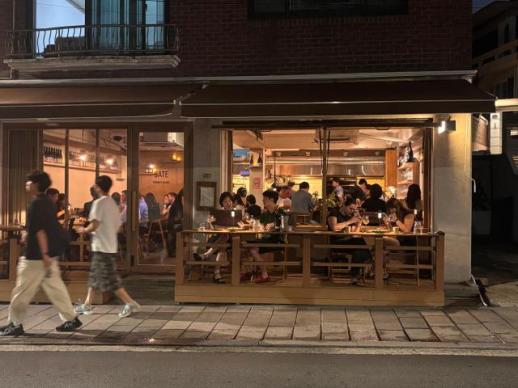 How Seoul's hillside neighborhood becomes hidden gem for foreigners SEOUL, August 21 (AJP) - On a steep hillside beneath Mt. Namsan, a neighborhood once known for cheap housing is giving foreigners a reason to look beyond Seoul's better-known hotspots. It is not as crowded as Seoul's hip Hongik University neighborhood, a popular nightlife district known for its youthful energy or as busy as nearby Itaewon, Seoul's best-known international and entertainment district. Yet Haebangchon has plenty of bars, restaurants and cafés within walking distance, food from around the world and quiet side streets that offer a break from the city's crowds. For Aurelia Rhinan, a 38-year-old visitor from France who was walking through Haebangchon with her nephew on Thursday, that mix felt just right. "It's the perfect in-between," she said. Rhinan, who had also traveled to Pohang in southeastern South Korea during her visit, described Haebangchon as a place with "everything you need" without the crowds and noise she associated with Hongdae and Itaewon. "It's peaceful, but not too quiet," she said. "If you want to go out, have a drink or something like that, you can." That "middle ground" came up repeatedly in conversations with foreigners AJP met in Haebangchon. Residents and visitors alike described a place that feels international and lively without being overwhelmed by its growing popularity. Rhinan said she would surely recommend the neighborhood to friends and could imagine making a home there herself. "If I can ever live here, why not?" she said. "This is just what I like personally." A neighborhood built by newcomers Haebangchon, a hillside neighborhood in central Seoul's Yongsan District, has long been home to newcomers. Its name translates literally as "Liberation Village," reflecting its origins after Korea's liberation from Japanese colonial rule in 1945, when Koreans returning from overseas and those who had come south from northern Korea began settling on the slopes below Mt. Namsan. More refugees arrived during and after the Korean War. Another wave followed from the 1960s, as people from across the country sought relatively cheap housing in Seoul. Many made a living in the neighborhood's growing knitwear industry, producing garments for Namdaemun Market, one of Seoul's largest wholesale markets and Myeong-dong, a major shopping district. The industry remained a major source of livelihood for residents through the 1980s. When that industry declined in the 1990s, the neighborhood entered another transition. Foreign residents increasingly moved in, drawn by its proximity to Itaewon and central Seoul and a rental market that was unusually accessible to people without the large deposits commonly required elsewhere in Seoul. Local landlords were also known for accepting shorter leases, an advantage for foreigners planning limited stays in the country. U.S. military personnel and other foreigners living around nearby Itaewon and Hannam-dong were among those who made their way into the area. In more recent years, artists, young entrepreneurs and residents from a broader range of countries have further reshaped the neighborhood. A foreign community inside Seoul Eventually, the community that had formed there became another reason to come. For Ella Ishimwe, a 28-year-old from Burundi, the draw is less about being trendy than about being able to build a life. Ishimwe came to South Korea to study and work, and has lived in Seoul for three years while working at a pizza restaurant. She plans to pursue a doctorate in global leadership. "Lots of foreigners," she said when asked what appealed to her most. "You can meet a lot of people while you're still in Seoul," she said with a smile, reflecting her affection for life in Korea. She described the Koreans she had met in the neighborhood as open-minded and kind, adding that many were naturally speaking English, which made daily life easier. The neighborhood is "peaceful" and "convenient," she said, but still fun. Safety matters, too. "It's safe to walk around even at 4 a.m.," Ishimwe said. In the three years she has been here, she has also seen the foreign community grow. "There are so many foreigners here than three years ago," she said. Official figures point in the same direction. In 2023, about 1,324 foreign residents lived in Haebangchon, accounting for roughly 10 percent of the neighborhood's population. By 2025, foreigners made up 16 percent of residents in Yongsan 2-ga-dong — about one in every six people — according to the local community service center. The center said the number of foreign residents had been increasing each year. The concentration is high enough that the office now provides foreign-language information on taxes, garbage disposal and parking, connects residents with legal and tax consultations. That concentration creates practical networks, too. "You can find a job easily as a foreigner," she said. In her experience, the neighborhood's international community made it easier for foreigners to find work in the area. Local enough to "gatekeep" Yet for some foreigners, what sets the area apart is how much of its older, local character remains alongside it. Luca Nowakowski, a 26-year-old Italian model, was sitting on the pavement with a friend he affectionately calls his "uncle," who lives in the neighborhood, when AJP met him. "I like this area because it's more local than Gangnam," he said. "If I would live somewhere, I would live in this area." For Nowakowski, much of the appeal lies farther up the hill, where the streets narrow, views of Seoul open up and small local businesses are tucked into side alleys. "If you go up a little bit more, you have a super nice view," he said. "You have a lot of side streets. You will find some more local spots." But he worries that the local character he values could fade as more people discover the area. "I just hope it doesn't become like Hongdae," he said. "I think it should stay a bit older and more local." He said he did not want the neighborhood overrun by tourists or transformed into another district dominated by younger crowds and commercial trends. Asked to name his favorite places, Nowakowski laughed and resisted. "I want to gatekeep," he said. "I don't want my favorite restaurants to have long queues of foreigners.” Beyond the newer cafés and shops, parts of the hillside still carry much older traces of the neighborhood's history. The 108 Stairs, a stone staircase built in 1943 during Japanese colonial rule, originally served as an approach to Gyeongseong Hoguk Shrine, a Shinto shrine built by imperial Japan to enshrine those who died in war. The shrine was dismantled after the liberation in 1945, but the stairs remained as a passageway for local residents. In 2018, an inclined elevator, which travels diagonally along the slope, was installed to make the climb easier for elderly residents. From fading market to destination Few places show the neighborhood's transformation as clearly as Shinheung Market. The market flourished in the 1970s and 1980s alongside the area's booming knitwear industry, serving as a hub where goods produced in small workshops and homes were gathered and distributed. When the industry declined in the 1990s, the market faded with it. By the 2010s, however, cafés and workshops had begun taking over vacant storefronts. Seoul designated the area as an urban-regeneration area in 2015 and made the revitalization of the Market one of its core projects. The plan sought to build on the businesses already emerging there while improving the market's aging infrastructure and strengthening the local community. By 2021, older shops were operating alongside cafés, workshops and other newer businesses. Television dramas, variety shows and social media later helped turn the market into a destination for a younger crowd. The transformation was easy to see on Thursday. Visitors stopped beneath the market's red "1953 Shinheung Market" sign to take photos before heading into narrow lanes lined with restaurants and cafes. A taste of home Not everyone comes to Haebangchon to live. At a Mexican restaurant, four Mexican visitors in their 20s, who declined to give their names, had crossed the area for something more familiar. "We came here to eat our home food," one said, laughing. The irony of traveling to South Korea and then seeking out Mexican food wasn't lost on them. One compared it to Koreans going overseas and eventually finding their way to a Koreatown. Another said the food alone was worth the trip, adding, "There are so many different nationalities here. It has a vibe that's pretty distinct from the rest of Seoul." Haebangchon and nearby Itaewon have long drawn Koreans looking for authentic international food. Now, social media is also bringing foreigners to the area in search of a taste of home. More broadly, Seoul is drawing record numbers of overseas visitors, with tourists increasingly venturing beyond the city's traditional attractions. A record 8.23 million foreign tourists visited the capital in the first half of 2026, up 21.3 percent from a year earlier, according to the Seoul Metropolitan Government on July 29. From behind the counter For longtime Korean shopkeepers, the change is visible not in statistics or social-media posts, but in who walks through the door. At an old supermarket in Haebangchon, a Korean owner in her 70s said she had watched the number of foreign customers rise over the years. "Half of my customers are foreigners," she added, saying Filipinos and Nigerians are among her regular shoppers. Her store offers a glimpse of how ordinary that international presence has become. Just down the street, a pet-grooming shop displayed its name prominently in English, another small sign that businesses here increasingly cater to people from different backgrounds. Foreigners are not simply visitors stopping at trendy bars or restaurants they found on Instagram. They buy groceries, work at local businesses and increasingly call the neighborhood home. In that sense, today's Haebangchon continues a long pattern. The people arriving have changed over time, but the neighborhood has repeatedly become a home for newcomers — from Koreans returning after liberation and families coming south from the North, to workers during industrialization and, later, residents from abroad. What has changed is what draws the next wave. Cheap housing once helped foreigners establish a foothold. Over time, that community created its own restaurants, businesses and social networks, turning the neighborhood itself into part of the attraction. Today, Haebangchon sits somewhere between an old residential neighborhood and an international destination. Its appeal lies in holding on to both — local streets and global influences, places to go out and places to slow down. Rhinan would recommend it to her friends. Nowakowski would happily live there. Both are drawn to the same place for much the same reason — the energy of central Seoul without quite surrendering to it. Not too crowded. Not too quiet. "The perfect in-between." 2026-08-21 16:52:48
 -
 KOSPI opens lower as US yield worries return SEOUL, August 21 (AJP) - South Korean stocks opened lower on Friday, giving back some of the previous session's sharp gains as higher U.S. Treasury yields, rising oil prices and losses on Wall Street weighed on investor sentiment. The benchmark KOSPI traded at 6,808.63 points at around 9 a.m., down 0.64 percent from the previous session. The junior KOSDAQ also fell 3.53 percent to 811.22, with losses considerably steeper among smaller growth stocks. The decline came after the KOSPI surged 5.89 percent the previous day, powered by a rebound in semiconductor heavyweights including SK hynix, after the chipmaker announced a record 40 trillion won (US$28 billion) share buyback plan. But major chipmakers bucked the broader decline in early trading. Samsung Electronics rose 0.18 percent to 271,500 won, while SK hynix gained 1.42 percent to 1,715,000 won. Samsung Electronics preferred shares climbed 3.61 percent to 198,100 won as of 9:35 a.m. Elsewhere among major stocks, losses were widespread. Samsung Electro-Mechanics dropped 4.94 percent to 1,327,000 won, LG Energy Solution fell 2.37 percent to 349,500 won and Hyundai Motor lost 1.38 percent to 411,750 won. Hanwha Aerospace slid 6.26 percent to 1,094,000 won, while HD Hyundai Heavy Industries declined 3.26 percent to 460,000 won. Financial stocks were mixed, with KB Financial rising 1.06 percent to 161,700 won and Shinhan Financial Group gaining 1.48 percent to 102,600 won. Samsung Life Insurance fell 1.01 percent to 294,000 won. The selloff was sharper on the KOSDAQ, where all 10 of the largest stocks shown in early trading were lower. Biotech platform developer Alteogen fell 5.74 percent to 320,000 won, while battery materials group EcoPro dropped 4.43 percent to 84,200 won and cathode-material maker EcoPro BM lost 5.26 percent to 108,100 won. Robot maker Rainbow Robotics slid 5.51 percent to 445,500 won. Semiconductor-related equipment and component makers also retreated. Jusung Engineering, which makes semiconductor manufacturing equipment, fell 1.35 percent to 174,900 won, while semiconductor and display equipment maker Wonik IPS dropped 3.25 percent to 110,200 won. Leeno Industrial, a maker of semiconductor testing components, declined 4.03 percent to 66,700 won, and laser-based semiconductor equipment maker EO Technics lost 2.53 percent to 404,500 won. Biotech companies were also weak, with HLB down 4.26 percent at 38,200 won and bispecific-antibody developer ABL Bio tumbling 6.67 percent to 77,000 won. Early trading showed investors turning cautious again. Retail investors bought a net 70.8 billion won ($50.7 million) of KOSPI shares, while foreign and institutional investors sold a net 20.6 billion won and 109.1 billion won, respectively. Program trading recorded net selling of about 183.9 billion won. The cautious start followed a broad retreat on Wall Street overnight, where higher Treasury yields and signs of weaker U.S. consumer spending weighed on stocks. The Dow Jones Industrial Average fell 1.32 percent, to 52,759.21 on Thursday. The S&P 500 dropped 0.87 percent to 7,641.16, while the Nasdaq Composite lost 1.00 percent to 26,067.17. Concerns about consumer spending deepened after Walmart, the largest U.S. retailer, reported that sales at its established U.S. stores rose just 2.6 percent in the second quarter, the slowest pace in six years. Its shares plunged 9.15 percent as high fuel prices added to worries that consumers could cut back on spending. Bond yields added to the cautious mood. The benchmark 10-year U.S. Treasury yield climbed 5 basis points to around 4.70 percent, while the 30-year yield rose about 4 basis points to 5.24 percent. The moves came just a day after yields briefly eased when the U.S. Treasury announced plans to expand its buyback of long-term government bonds. The program allows the Treasury to purchase bonds already trading in the market, making them easier to buy and sell. The measure helped calm global bond markets and supported Thursday's rebound in Korean equities, but investors remain concerned that heavy government borrowing and more debt issuance by big tech companies to fund artificial intelligence (AI)-related investment could keep yields elevated. Higher bond yields can weigh particularly heavily on technology and other growth stocks by increasing borrowing costs and reducing the value investors place on future earnings. Oil prices posed another risk, climbing more than 2 percent amid heightened tensions surrounding Iran. October Brent crude futures settled at $93.78 a barrel, while September West Texas Intermediate crude ended at $87.83. Friday's early decline marked a renewed test for the South Korean market after the previous day's powerful rebound, with investors watching whether semiconductor momentum can withstand another bout of pressure from higher global yields and oil prices. Meanwhile, the won strengthened, trading at 1,385.10 against the U.S. dollar as of 9 a.m., compared with 1,392.60 the previous day. AJP Takeaways • South Korea's KOSPI fell 0.64 percent to 6,808.63 as of 9:16 a.m. on Aug. 21, 2026, giving back part of its 5.89 percent surge on Aug. 20 as higher U.S. Treasury yields, rising oil prices and Wall Street losses weighed on sentiment. • Samsung Electronics rose 0.18 percent to 271,500 won and SK hynix gained 1.42 percent to 1,715,000 won, bucking the broader market decline after SK hynix's 40 trillion won ($28 billion) share buyback and cancellation plan helped fuel the previous session's rebound. • U.S. Treasury yields climbed on Aug. 20, with the 10-year yield reaching about 4.70 percent and the 30-year yield 5.24 percent, despite the U.S. Treasury's move to expand buybacks of long-term government bonds. • Walmart shares plunged 9.15 percent on Aug. 20 after the largest U.S. retailer reported its slowest second-quarter U.S. comparable-sales growth in six years, adding to concerns that high fuel prices could curb consumer spending. • The South Korean won strengthened to 1,385.10 per U.S. dollar as of 9 a.m. on Aug. 21, 2026, from 1,392.60 the previous day. 2026-08-21 10:11:54