

Journalist

Ryu Yuna류윤아
Julia37@ajupress.com
ReporterFinancial Supervisory Service (FSS) & finance, capital markets, Southeast Asian affairs
Yuna Ryu covers finance, capital markets and Southeast Asian affairs.
She is drawn to the questions that numbers raise and the stories that data alone cannot answer.
Prior to journalism, she worked at Hyundai Motor Company and the Singapore Chamber of Commerce, focusing on business strategy and international affairs. She has also hosted diplomatic receptions and international conferences as an MC.
Ryu holds a master's degree in Media and Communication from Korea University, where her research focused on neuroscience-based studies of media effects. "Beyond every statistic is a human story waiting to be heard."
She is drawn to the questions that numbers raise and the stories that data alone cannot answer.
Prior to journalism, she worked at Hyundai Motor Company and the Singapore Chamber of Commerce, focusing on business strategy and international affairs. She has also hosted diplomatic receptions and international conferences as an MC.
Ryu holds a master's degree in Media and Communication from Korea University, where her research focused on neuroscience-based studies of media effects. "Beyond every statistic is a human story waiting to be heard."
Latest by Ryu Yuna
-
 Korean brokerages' Q2 profit tops 5 tln won on trading boom SEOUL, September 10 (AJP) - South Korean brokerages posted a second straight record quarterly profit in the April-June period as a surging stock market drove trading fees and investment gains. Combined net profit at 61 securities firms reached 5.19 trillion won ($3.9 billion) in the second quarter, up 20.0 percent from 4.33 trillion won in the previous three months, according to preliminary data released Thursday by the Financial Supervisory Service (FSS). Earnings jumped 82.1 percent from 2.85 trillion won a year earlier. The regulator said earnings improved at both large and mid-sized firms as brokerage commissions and proprietary trading gains increased. It added that larger firms also saw stronger earnings from asset management and investment banking. Heavier stock trading drove the increase. Commission income rose 32.5 percent quarter on quarter to 8.87 trillion won, led by brokerage fees collected from clients buying and selling securities. Those transaction-based fees increased 34.0 percent to 5.77 trillion won. Trading value on the main KOSPI market, including transactions through the Korea Exchange and alternative trading systems, jumped 59.9 percent to 4,438 trillion won from 2,775 trillion won in the first quarter. The increase came as South Korean stocks rallied sharply during the quarter. The KOSPI climbed 67.8 percent from 5,052 at the end of March to 8,476 at the end of June, boosting investor activity and firms' trading results. Brokerages also earned more from their own investments. Their proprietary trading results, which include gains and losses from stocks and funds, bonds and derivatives, rose sharply in the second quarter. Overall proprietary trading profit increased 45.8 percent from the previous quarter to 5.98 trillion won. Rising share prices boosted gains from stocks and funds, including exchange-traded funds. Those gains were partly offset by a 36.19 trillion won increase in derivatives-related losses, while profit from bond investments increased by 684.3 billion won. They also earned more outside stock trading. Asset-management fees rose 56.7 percent to 1.05 trillion won as firms collected more fees for managing clients' investments. Investment-banking (IB) fees increased 27.5 percent to 1.20 trillion won as brokerages earned more from helping companies raise funds and guaranteeing some of their debt. The growth was even stronger compared with a year earlier. Total commission income more than doubled, driven by sharp increases in fees from stock trading and asset management, according to the FSS. Other asset-related profit increased 31.0 percent from the first quarter to 1.36 trillion won. Although the won continued to weaken against the U.S. dollar, the pace of depreciation slowed, reducing foreign-exchange losses compared with the previous quarter. Profitability also strengthened, with the industry's average return on equity rising to 4.9 percent from 4.3 percent in the first quarter and 3.1 percent a year earlier. Brokerages' total assets and liabilities also increased sharply during the quarter. Total assets reached 1,256.1 trillion won at the end of June, up 14.4 percent from three months earlier, mainly due to increases in cash and deposits as well as receivables. Liabilities rose 15.1 percent to 1,140.9 trillion won over the same period, driven largely by higher payables and customer deposits. Shareholders' equity also increased 7.7 percent to 115.1 trillion won. Brokerages also remained financially sound. The industry's average net capital ratio rose to 1,140.5 percent at the end of June from 1,000.4 percent at the end of March. All 61 firms remained above the regulatory minimum of 100 percent. Despite the strong results, the regulator said it would strengthen monitoring of profitability and financial soundness as prolonged geopolitical risks could increase volatility in domestic and global financial markets. It also plans to encourage brokerages to deal with troubled assets early, continue reforms to liquidity rules and the calculation of net capital ratios, and strengthen firms' risk-management capabilities. AJP Takeaways - South Korea's 61 securities firms posted combined net profit of 5.19 trillion won in the second quarter of 2026, up 20.0 percent from the first quarter and 82.1 percent from the second quarter of 2025, according to the Financial Supervisory Service. - Brokerage fees rose 34.0 percent to 5.77 trillion won as KOSPI trading value surged 59.9 percent to 4,438 trillion won in the April-June 2026 period. - Asset-management fees increased 56.7 percent to 1.05 trillion won, while investment-banking fees rose 27.5 percent to 1.20 trillion won as brokerages earned more from managing client investments and helping companies raise funds. 2026-09-10 12:55:50
 -
 Oil surge, rate fears pull KOSPI below 7,000 SEOUL, September 10 (AJP) - South Korean stocks turned lower shortly after Thursday's opening bell as oil prices above $100 a barrel and rising U.S. Treasury yields outweighed gains in selected chip and financial shares. The benchmark KOSPI fell 1.66 percent to 6,934.42 as of 10:07 a.m., extending its decline after briefly climbing to an intraday high of 7,072.79 earlier in the session. The index later fell as low as 6,929.13, dropping back below the 7,000 mark. Selling by foreign and institutional investors drove the pullback. Foreign investors sold a net 273.7 billion won ($204.5 million) of KOSPI shares and institutions unloaded 411.0 billion won, while retail investors bought a net 380.1 billion won. Market breadth weakened further, with 686 stocks falling and 170 rising, while 55 were unchanged. Retail investors stepped in to buy during the morning decline, reversing their broader selling trend so far this month. Korean retail investors sold a net 15.56 trillion won of KOSPI-related securities from Sept. 1 through Wednesday, according to the Korea Exchange (KRX), as many used recent rebounds as opportunities to take profits after months of sharp market swings. External pressure added to the cautious mood. Overnight losses on Wall Street as renewed military tensions between the United States and Iran pushed crude prices sharply higher and revived concerns that energy-driven inflation could keep U.S. interest rates elevated. The Dow Jones Industrial Average fell 0.77 percent Wednesday. The S&P 500 lost 0.48 percent and the Nasdaq Composite dropped 0.64 percent. The losses came as the conflict intensified around key oil shipping routes. U.S. forces sank five Iranian oil tankers, while Iran said it attacked 10 ships near the Strait of Hormuz. The escalation raised concerns over further disruption to global energy supplies, pushing Brent crude back above $100 a barrel. November Brent crude rose 3.36 percent to $101.21 a barrel, while October West Texas Intermediate gained 3.25 percent to $96.05 a barrel. The prospect of a prolonged conflict added to pressure over energy markets. U.S. President Donald Trump said Wednesday that he expected the Iran war to end immediately after the Nov. 3 midterm elections and that oil prices would fall once the war was over. Higher oil prices have, in turn, sharpened the market's focus on inflation and the Federal Reserve. The Fed kept its benchmark rate unchanged at 3.50 percent to 3.75 percent in July. Markets see around a 60 percent chance of a rate increase at next week's policy meeting. Bond yields added another source of pressure. The U.S. 10-year Treasury yield briefly rose above 4.85 percent, its highest level since November 2023, after the Treasury Department's planned buyback of long-term debt fell short of market expectations. Against that backdrop, heavyweight shares in Seoul were mixed, with chip stocks losing momentum after leading the previous session's rebound. Samsung Electronics fell 0.74 percent to 267,500 won, while SK hynix slipped 0.11 percent to 1,854,000 won. Samsung Electronics preferred shares edged up 0.05 percent to 197,600 won. Elsewhere, gains were concentrated in financial and selected large-cap shares. Samsung Life rose 1.32 percent to 307,500 won. KB Financial gained 1.10 percent to 173,900 won, while Shinhan Financial advanced 0.81 percent to 111,500 won. LG Energy Solution added 0.40 percent to 372,500 won. Hanwha Aerospace rose 0.38 percent to 1,051,000 won. Hyundai Motor edged up 0.06 percent to 388,250 won and Kia gained 0.08 percent to 126,900 won. On the downside, Doosan Enerbility fell 2.40 percent to 89,500 won. Samsung Electro-Mechanics dropped 1.78 percent to 1,379,000 won. Samsung Biologics declined 1.24 percent to 1,434,000 won. Samsung C&T slipped 0.53 percent to 374,000 won. SK Square was little changed, rising 0.09 percent to 1,139,000 won. The junior KOSDAQ came under heavier pressure, falling 1.06 percent to 821.57. Foreign investors sold a net 120.1 billion won and institutions unloaded 44.5 billion won, while retail investors bought a net 167.1 billion won. Biotechnology and battery shares were among the main decliners. Alteogen, a biotechnology company developing drug-delivery platforms, fell 2.50 percent to 272,500 won. Battery-materials companies EcoPro and EcoPro BM dropped 2.30 percent to 84,800 won and 1.39 percent to 113,300 won, respectively. Semiconductor-related shares also weakened. Jusung Engineering fell 1.69 percent to 203,000 won, while Wonik IPS lost 2.00 percent to 117,700 won. EO Technics slipped 0.74 percent to 466,500 won. Among the major junior shares shown, only robot makers Rainbow Robotics and ROBOTIS advanced. Rainbow Robotics rose 1.80 percent to 453,500 won, while ROBOTIS jumped 6.13 percent to 329,000 won. In the currency market, the Korean won weakened to 1,339.20 per dollar from 1,336.1 a day earlier. AJP Takeaways - South Korea's KOSPI fell 1.66 percent to 6,934.42 as of 10:07 a.m. on Sept. 10, 2026, dropping back below 7,000 after touching an intraday high of 7,072.79. Foreign investors sold a net 273.7 billion won of KOSPI shares and institutions sold 411.0 billion won, while retail investors bought 380.1 billion won during the morning decline. - Oil above $100 and rising U.S. Treasury yields weighed on South Korean stocks after Wall Street fell on Sept. 9, 2026. November Brent crude rose 3.36 percent to $101.21 a barrel and October West Texas Intermediate gained 3.25 percent to $96.05 as renewed U.S.-Iran fighting raised concerns over energy supply disruptions and inflation. - Rate expectations added to market pressure ahead of the U.S. Federal Reserve's September 2026 policy meeting. The Federal Reserve kept its benchmark rate at 3.50 percent to 3.75 percent in July, while markets were pricing in about a 60 percent chance of a rate increase. The U.S. 10-year Treasury yield also briefly moved above 4.85 percent, adding pressure to risk assets including South Korean equities. 2026-09-10 11:03:51
 -
 Smilegate divorce sets Korean tycoon record as SK chief partly yields SEOUL, September 09 (AJP) – South Korea saw its two biggest tycoon divorce battles move in opposite directions Wednesday, as Smilegate founder Kwon Hyuk-bin was hit with a record 2.55 trillion won ($1.8 billion) property-division ruling while SK Group Chairman Chey Tae-won moved to end most of his own dispute. The Seoul Family Court ordered Kwon to transfer about 2.55 trillion won in assets to his estranged wife, including a 35 percent stake in the privately held gaming company, setting a new record for a court-ordered divorce property division in South Korea. Hours later, Chey said he would no longer contest 700 billion won of the 944 billion won he was ordered to pay his former wife, Roh Soh-yeong, leaving only 244 billion won at issue before the Supreme Court. For a few months, Chey's case had defined the upper limit of how costly a South Korean divorce could become. Kwon's ruling has now pushed that figure well past 2 trillion won, just as Chey is seeking to draw most of his years-long legal battle to a close. The contrast extends beyond the size of the awards. Chey's obligation was structured as a cash payment, allowing him to retain the SK Inc. shares through which he exercises influence over the conglomerate. Kwon, by contrast, was ordered to hand over Smilegate shares themselves, potentially turning a marital property dispute into a direct question of corporate ownership. "The marriage has broken down to a point beyond repair," the Seoul Family Court said in granting the divorce. The court valued Kwon's Smilegate shares at about 7.1 trillion won and ordered him to transfer 35 percent of them to his wife, surnamed Lee. The shares are worth about 2.49 trillion won, while Kwon was also ordered to pay another 65 billion won in cash. The total property division amounts to roughly 2.55 trillion won. The award is more than two and a half times the 944 billion won ordered in July in the divorce of Chey and Roh, which had been South Korea's largest publicly known divorce property award. Unlike Chey, who was allowed to keep his SK Inc. shares and compensate Roh in cash, Kwon was ordered to divide the shares directly. The court said requiring the full amount in cash would be difficult because most of Kwon's wealth is tied up in company shares. If the ruling stands, Lee would become a direct shareholder in Smilegate. The court granted Lee's divorce petition but dismissed her claim for consolation money, finding that both spouses shared responsibility for the breakdown of the marriage. Lee filed for divorce in November 2022, about two years after the couple began living apart. She had sought half of Kwon's holdings, arguing that she held a 30 percent stake in Smilegate during its early years and served as a representative director and board member. She also said she contributed to the family's wealth through household duties and child care over more than two decades. Kwon argued that Lee had neither invested in nor worked for the company and therefore should not be considered a co-founder. The court nevertheless found the Smilegate shares subject to division, taking into account Lee's early involvement in the company as well as her contribution to the household and raising their children. The ruling is a first-instance judgment and can still be appealed. Chey scales back Supreme Court fight As Kwon's case set a new record, Chey moved in the opposite direction by sharply narrowing what had previously been South Korea's biggest divorce fight. Chey's lawyers filed a request with the court on Aug. 31 reducing the scope of his Supreme Court appeal, according to legal sources. Of the 944 billion won he was ordered to pay Roh in cash, Chey will no longer contest 700 billion won and will challenge only the remaining 244 billion won. Chey's side said the move was intended to narrow the years-long dispute and bring it to a quicker end while continuing to challenge any amount above 700 billion won. The decision sharply reduces the stakes in a legal battle dating back to 2017. Chey and Roh married at the presidential Blue House in 1988, during the presidency of Roh's father, former President Roh Tae-woo. Their marriage publicly unraveled in 2015, when Chey disclosed that he had fathered a daughter with another woman. He sought divorce mediation in 2017, and Roh later filed a countersuit seeking damages and a share of his corporate wealth. The Seoul Family Court initially ordered Chey in 2022 to pay 66.5 billion won in property division, finding his SK shares were largely separate property. The Seoul High Court later raised the award to about 1.38 trillion won. The Supreme Court subsequently overturned the property-division portion of the ruling over its treatment of 30 billion won linked to former President Roh. On remand in July, the Seoul High Court excluded the disputed 30 billion won but still found that Roh had contributed to building and maintaining the couple's marital assets. It awarded Roh one-third of the couple's property, resulting in the 944 billion won cash payment. Chey appealed again last month. The Supreme Court fight will now center on the remaining 244 billion won. Among the outstanding questions is whether Roh's contribution should have been set at 33.3 percent even after the disputed 30 billion won was removed from consideration. The previous appellate court had assessed her contribution at 35 percent. Chey is also challenging the court's use of SK Inc.'s rising share price in calculating the divisible assets and argues that his stake in SK Siltron should not be included. The latter stake was acquired in 2017, after the marriage had effectively broken down, raising the question of whether it should be treated as property accumulated through the couple's joint contribution. The distinction underscores how differently the two divorce rulings reach into the corporate fortunes involved. Chey's 944 billion won obligation leaves his core SK ownership intact. Kwon's ruling, if upheld, would require him to surrender part of the company itself. On the same day that South Korea's costliest divorce became substantially more expensive, the man who previously held that distinction moved closer to bowing out of his own battle. AJP Takeaways - On September 9, 2026, the Seoul Family Court ordered Smilegate founder Kwon Hyuk-bin to transfer about 2.55 trillion won ($1.8 billion) in assets to his wife, including a 35 percent stake in Smilegate. - The Kwon Hyuk-bin ruling surpassed the 944 billion won property division ordered in the divorce of SK Group Chairman Chey Tae-won and Roh Soh-yeong, making it South Korea's largest publicly known divorce property award. - Kwon Hyuk-bin was ordered to transfer company shares directly, while Chey Tae-won's 944 billion won obligation is structured as a cash payment that allows him to retain his SK Inc. shares. - Chey Tae-won has accepted 700 billion won of the 944 billion won he was ordered to pay Roh Soh-yeong and will contest only the remaining 244 billion won before the Supreme Court. 2026-09-09 18:07:24
 -
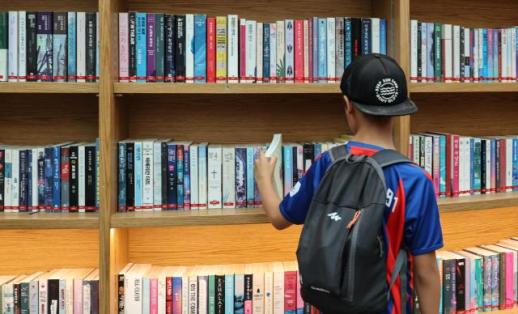 Three in 100 Korean students report school violence SEOUL, September 9 (AJP) -Nearly three in every 100 South Korean students confessed they had suffered school violence, suggesting tougher monitoring and crackdowns have yet to rein in bullying, government data showed Wednesday. According to the Ministry of Education (MOE), the share of students reporting that they had experienced school violence rose to 2.9 percent in the first nationwide survey of 2026, up 0.4 percentage point from 2.5 percent a year earlier. “As young people spend more time using digital devices in their daily lives, they have fewer opportunities for face-to-face interaction and may also be losing their ability to empathize with others,” said Sung Yoon-sook, a senior research fellow at the National Youth Policy Institute (NYPI), which conducted and analyzed the survey. She said conflicts between students may therefore be more likely to develop into school violence, while greater awareness of such behavior among students and parents may also have contributed to the higher reporting rate. According to the ministry, the online survey was conducted from April 14 to May 13 and covered 3.9 million students from the fourth grade of elementary school through the third year of high school. About 3.19 million students, or 81.9 percent, took part. The survey asked students whether they had witnessed, experienced or committed school violence from the second semester of 2025 through the time they completed the questionnaire. The share of students reporting school violence rose across all school levels. Among elementary school students, it climbed 0.7 percentage point from a year earlier to 5.7 percent. The figure rose 0.2 percentage point to 2.3 percent among middle school students and 0.1 percentage point to 0.8 percent among high school students. Verbal abuse remained the most common type of school violence, accounting for 37.8 percent of reported cases. Group bullying followed at 17.1 percent, physical violence at 15.7 percent and cyberbullying at 7.0 percent. Compared with the 2025 survey, the share involving physical violence rose 1.1 percentage points and group bullying increased 0.7 percentage point. By contrast, verbal abuse fell 1.2 percentage points and cyberbullying declined 0.8 percentage point. Verbal abuse was the largest category across every school level. As students moved into higher grades, group bullying, cyberbullying and sexual violence accounted for larger shares, while physical violence and coercion became less common. The survey showed that most reported incidents occurred at school, accounting for 69.6 percent of responses, compared with 28.0 percent outside school. Classrooms alone accounted for 28.2 percent, while hallways and stairways made up 16.4 percent. Online spaces accounted for 7.1 percent. The MOE also said the proportion of students who reported committing school violence fell to 0.8 percent from 1.1 percent a year earlier. The rate dropped to 1.6 percent among elementary school students and 0.7 percent among middle school students. It remained unchanged at 0.1 percent among high school students. Among students who said they had committed violence, 30.6 percent said they had done so as a joke or for no particular reason. Another 21.7 percent said the other student had bullied them first. Another 12.6 percent pointed to misunderstandings or disagreements with the other person. The survey also found that the share of students who said they had witnessed school violence rose to 6.7 percent from 6.1 percent a year earlier. The rate was 11.0 percent among elementary school students, 6.8 percent among middle school students and 2.6 percent among high school students. Among those who witnessed violence, 33.1 percent said they comforted or helped the victim, while 17.7 percent tried to stop the aggressor and 17.2 percent reported the incident to an adult or authorities. Another 31.0 percent said they were unable to take any action. Based on the findings, the MOE said it will strengthen prevention programs that teach students practical ways to manage conflicts, express emotions and intervene when they witness violence. It also plans to expand hands-on prevention programs beginning in the second semester of 2026. Authorities will also step up their response to newer forms of school violence, including the “Yacha Rule,” a slang term referring to fights conducted without formal rules or protective equipment, as well as sparring-style assaults. The MOE and the National Police Agency (NPA) issued an alert over Yacha Rule violence in August. The government also plans to work with the Broadcast Media and Communications Commission to improve its response to videos of school violence circulated online and expand programs aimed at resolving less serious conflicts through relationship restoration. "We will do our utmost to establish effective prevention education that builds real conflict-management skills and educational solutions centered on restoring relationships," said Shim Min-chul, director general for student health and safety policy at the MOE. “We will also work closely with the National Police Agency and other relevant authorities to respond swiftly to new forms of school violence that continue to emerge.” The survey is a self-reported perception survey conducted by the NYPI at the request of the country’s 17 provincial and metropolitan education offices and is not an officially approved national statistic. AJP Takeaways - South Korea’s Ministry of Education said on September 9, 2026, that 2.9 percent of students reported experiencing school violence in its first nationwide survey of the year, up 0.4 percentage point from 2.5 percent in 2025. - The 2026 survey found verbal abuse remained the most common form of school violence at 37.8 percent of reported cases, while physical violence rose 1.1 percentage points and group bullying increased 0.7 percentage point from 2025. - The National Youth Policy Institute survey, conducted online from April 14 to May 13, 2026, covered 3.9 million students from the fourth grade of elementary school through the third year of high school, with 3.19 million students, or 81.9 percent, participating. - South Korea’s Ministry of Education said it will expand practical school violence prevention programs from the second semester of 2026 and work with the National Police Agency to respond to emerging forms of violence, including “Yacha Rule” fights and sparring-style assaults. 2026-09-09 16:16:50
 -
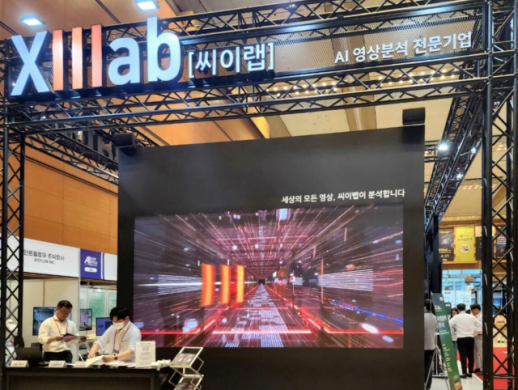 XIIlab rises after winning NVIDIA-backed AI vision challenge SEOUL, September 9 (AJP) - South Korean artificial intelligence startup XIIlab rose nearly 5 percent Wednesday after winning a computer vision competition that tested whether models trained on synthetic images could perform effectively in real-world conditions. Shares traded at 11,760 won ($8.46) as of 2:09 p.m. on the KOSDAQ, up 4.91 percent from the previous close of 11,210 won. The stock opened at 11,800 won and climbed as high as 12,690 won during the session before giving back part of its gains. “For physical AI to work in the real world, models trained in virtual environments need to perform reliably in real-world settings,” Chief Technology Officer Eugene Song said. “We will continue to advance technologies combining virtual and field data to support the real-world deployment of physical AI.” The advance came after the company said its team took first place in Track four of the 10th AI City Challenge, an international computer vision competition whose winners were announced at the 19th European Conference on Computer Vision (ECCV 2026) in Malmö, Sweden. The final results were confirmed after organizers completed code, eligibility and reproducibility reviews. The competition, organized by NVIDIA, focuses on technologies for intelligent transportation, smart cities and large-scale video analysis. A major theme is synthetic-to-real (Sim2Real) learning, which examines whether models trained on artificial data can retain their performance when applied in real world settings. For Track four, participants trained their models using more than 1.01 million synthetic images showing normal and abnormal human behavior. They were then evaluated using 1,978 text queries and a gallery of real images, with the task requiring models to find specific people based on descriptions of their appearance, actions and surroundings. XIIlab's team recorded a mean average precision score of 99.3020 percent, ranking first in the final results. The challenge is closely tied to physical AI, which enables machines such as robots, autonomous vehicles and industrial equipment to perceive and respond to their surroundings. Training such systems often relies on simulations and synthetic data before they are deployed in factories, logistics centers and other physical environments. XIIlab plans to apply the technology to its computer vision and digital twin businesses. The company aims to use digital replicas of physical spaces to generate training data, train AI models and test them before deploying them at actual sites. Founded in 2010, XIIlab develops AI software that analyzes video to identify people, objects and events. It also creates synthetic data for AI training and develops GPU-based software used in AI computing systems. The company listed on the KOSDAQ in February 2021. AJP Takeaways - South Korean artificial intelligence startup XIIlab rose 4.91 percent to 11,760 won ($8.46) on the KOSDAQ as of 2:09 p.m. on September 9, 2026, after winning a computer vision competition focused on synthetic-to-real AI performance. - XIIlab took first place in Track 4 of the 2026 AI City Challenge, with the final result announced at the 19th European Conference on Computer Vision (ECCV 2026) after organizers reviewed the team's code and eligibility. - In Track 4, participants trained models on more than 1.01 million synthetic images and tested them on real-world images, with XIIlab recording a mean average precision score of 99.3020 percent. 2026-09-09 15:49:11
 -
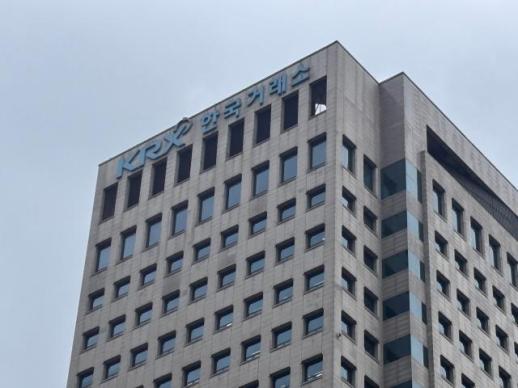 KRX to halt overnight derivatives trading over Chuseok SEOUL, September 9 (AJP) - Overnight trading for derivatives will be suspended during Chuseok or Korean thanksgiving, the Korea Exchange (KRX) said on Wednesday. The suspension, which comes to reduce risks for investors, will be effective from 6 p.m. on Sept. 23 to 6 a.m. the following day. Overnight transactions are normally settled together with the ones from the following day's regular session. However, because the market will be closed for one of the country's biggest holidays, trades made on the night of Sept. 23 will not be settled until regular trading resumes on Sept. 28. KRX said the long holiday closure could leave investors exposed to sharp price swings, increasing the risk of margin calls, forced position closures and liquidity shortages. It could also make it harder for investors and brokerages to manage any risks until trading resumes. The suspension will cover all products available for overnight trading on the KRX including KOSPI 200 and Mini KOSPI 200 futures and options tied to the country's benchmark large-cap index, as well as KOSDAQ 150 futures and options linked to major growth stocks. They also includes weekly options on the KOSPI 200 and KOSDAQ 150, U.S. dollar futures and three-year and 10-year government bond futures. KRX said the measure is in line with practices at other major Asian exchanges including those in Hong Kong and Taiwan, which also suspend such trading ahead of extended holidays. AJP Takeaways - The Korea Exchange will suspend all overnight derivatives trading from 6 p.m. on Sept. 23, 2026, to 6 a.m. on Sept. 24, 2026, ahead of South Korea's Chuseok holiday. - Trades that would normally be settled with the following regular session will not be processed until Sept. 28, 2026, when daytime trading resumes after the holiday break. - The Korea Exchange said the suspension is intended to reduce exposure to sharp price swings, margin calls, forced position closures and liquidity shortages during the extended market closure. 2026-09-09 15:43:55
 -
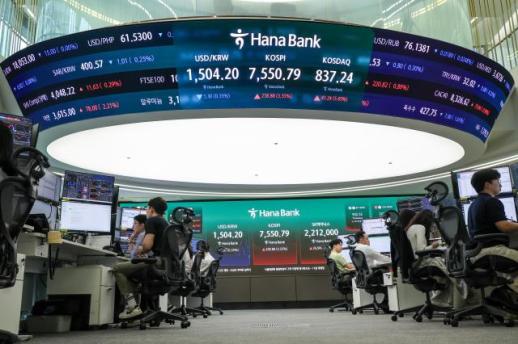 Chip stocks pull KOSPI above 7,000 SEOUL, September 09 (AJP) - South Korean stocks rebounded Wednesday morning, with the KOSPI climbing back above 7,000 as gains in chip heavyweights Samsung Electronics and SK hynix outweighed lingering pressure from higher oil prices and Middle East tensions. The benchmark stood at 7,039.16 as of 10:54 a.m., up 1.22 percent from the previous session. The KOSPI opened 0.26 percent higher at 6,972.87 and briefly slipped to 6,968.06 before turning higher as buying strengthened in semiconductor and other heavyweight shares. The rebound came a day after the index climbed as high as 7,171.52 before reversing sharply to close at 6,954.52, as rising international oil prices and geopolitical concerns in the Middle East erased an earlier chip-led rally. Major U.S. indexes fell for a second straight session overnight as escalating Middle East tensions pushed up oil prices and Treasury yields. The Dow Jones Industrial Average dropped 1.18 percent, the S&P 500 lost 0.58 percent and the Nasdaq Composite fell 0.32 percent. West Texas Intermediate crude rose to $94.20 a barrel as concerns over oil supplies intensified following U.S.-Iran military tensions and attacks on Saudi energy facilities. The U.S. 10-year Treasury yield climbed to 4.79 percent, adding pressure on risk assets. Chip shares, however, bucked the broader decline on Wall Street. The Philadelphia Semiconductor Index gained 1.30 percent as expectations for continued artificial intelligence investment supported the sector. Investors focused on signs that AI demand is broadening beyond accelerators into inference, central processing units and networking equipment. Intel surged 9.05 percent and AMD jumped 5.90 percent, while Nvidia fell 2.01 percent and Micron Technology lost 1.61 percent. In Seoul, Samsung Electronics rose 0.93 percent to 272,000 won and SK hynix gained 2.96 percent to 1,846,000 won. Samsung Electronics preferred shares edged up 0.10 percent to 198,600 won. Other semiconductor-related large caps also advanced. Samsung Electro-Mechanics gained 2.92 percent to 1,410,000 won, while SK Square rose 0.53 percent to 1,137,000 won. Power and defense shares also gained on expectations for overseas orders. Doosan Enerbility climbed 3.24 percent to 92,400 won, extending gains from the previous session amid expectations tied to South Korea's planned nuclear and power investments in the United States. Hanwha Aerospace rose 1.66 percent to 1,044,000 won as expectations persisted for additional overseas defense orders. The company is showcasing its K9A2 self-propelled howitzer at the MSPO 2026 defense exhibition in Poland, running from Sept. 8 to 11, as it pursues a third K9 execution contract with the country. Elsewhere, LG Energy Solution gained 0.72 percent to 351,000 won, Kia rose 0.64 percent to 126,200 won and Samsung Biologics edged up 0.14 percent to 1,442,000 won. Samsung C&T added 0.13 percent to 382,500 won, while Hyundai Motor was unchanged at 385,000 won. Financial shares were weaker. Shinhan Financial Group dropped 2.74 percent to 110,100 won, KB Financial fell 1.04 percent to 171,900 won and Samsung Life declined 0.81 percent to 305,500 won. The KOSPI's rebound was driven largely by local institutions, which bought a net 304.2 billion won ($226 million) as of 10:54 a.m. Retail investors sold a net 638.6 billion won, while foreign investors offloaded 201.3 billion won. Despite the rise in the benchmark, gains were not broad-based. A total of 401 KOSPI-listed stocks advanced, while 465 declined and 44 were unchanged, underscoring that the rebound was concentrated in heavyweight shares. The junior KOSDAQ rose even faster, gaining 1.86 percent, or 15.09 points, to 826.97 as semiconductor equipment and component shares extended early gains. In the currency market, the Korean won strengthened to 1,339.20 per dollar from 1,345.60 a day earlier. AJP Takeaways - South Korea's benchmark KOSPI rose 1.22 percent to 7,039.16 as of 10:54 a.m. on September 9, 2026, reclaiming the 7,000 level as Samsung Electronics and SK hynix led a rebound in heavyweight semiconductor shares. - Samsung Electronics gained 0.93 percent to 272,000 won and SK hynix rose 2.96 percent to 1,846,000 won on September 9, 2026, supported by strength in U.S. semiconductor shares even as higher oil prices and Treasury yields pressured broader global markets. - Institutional investors bought a net 304.2 billion won of KOSPI shares as of 10:54 a.m. on September 9, 2026, while retail and foreign investors were net sellers, with investors also awaiting the U.S. August producer price index on September 10 and consumer price index on September 11. 2026-09-09 11:32:12
 -
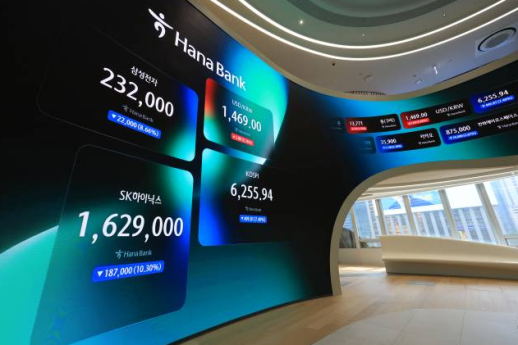 KOSPI closes below 7,000 as higher oil prices wipe out chip-led gains SEOUL, September 8 (AJP) - South Korean stocks gave up a strong early gain on Tuesday, with the country's benchmark index closing below 7,000 points as higher oil prices and caution ahead of U.S. inflation data offset gains in chip stocks and hopes for U.S. investment projects. The KOSPI closed at 6,954.52, down 0.58 percent from the previous session. The index opened above 7,000 and climbed steadily through much of the morning, reclaiming the level intraday for the first time in 15 trading sessions. It rose to an intraday high of 7,171.52 before reversing in the afternoon. Selling intensified near the close and pushed the index as low as 6,951.78. It finished at 6,954.52, nearly 220 points below its intraday high. The early rally was led by chip stocks as investors bet that OpenAI's new generative pre-trained transformer (GPT)-6 Astra model would boost memory demand. Samsung Electronics rose earlier in the session before slipping 0.19 percent to 269,500 won at the close. SK hynix climbed as high as 1,889,000 won, up nearly 6 percent intraday, before giving back most of its gains to finish 0.56 percent higher at 1,793,000 won. SK Square rose 0.53 percent to 1,131,000 won. Nuclear, power-equipment and construction shares also rallied on expectations that South Korean companies could participate in major U.S. power projects under Seoul's US$350 billion investment commitment. Reports have pointed to discussions over as many as eight large nuclear reactors and a gas-fired power project in Texas. Doosan Enerbility jumped as much as 6.37 percent to 93,500 won on hopes for those projects before paring gains to close 1.82 percent higher at 89,500 won. Buying remained strong in other nuclear and construction shares at the close. Daewoo E&C rose 8.47 percent to 19,970 won, while KEPCO E&C surged 16.60 percent to 142,600 won. The market lost momentum later in the day as international oil prices climbed further after an attack on a Saudi Aramco refinery. West Texas Intermediate futures rose above $93 a barrel, while Brent crude topped $97. Investors also turned cautious ahead of U.S. inflation data, with the producer price index due Thursday and the consumer price index on Friday. Despite the late selloff, foreign and institutional investors remained net buyers. Foreign investors bought a net 631.6 billion won ($470 million) and institutions purchased 642.7 billion won, while retail investors sold 3.03 trillion won. Electrical equipment fell 3.33 percent, IT services dropped 3.76 percent and electronic products lost 4.17 percent. Electronic equipment and devices were the weakest group, sliding 4.92 percent. Auto parts, air freight and logistics, and electrical products each fell about 2.9 percent. Losses were broad among other large-cap stocks. Samsung Electro-Mechanics tumbled 5.78 percent to 1,370,000 won. LG Energy Solution fell 3.86 percent to 348,500 won. Hyundai Motor dropped 2.04 percent to 385,000 won. Samsung Biologics declined 1.77 percent to 1,440,000 won, KB Financial fell 1.25 percent to 173,700 won and Samsung Life lost 1.28 percent to 308,000 won. Kia dropped 2.34 percent to 125,400 won, Hyundai Mobis slid 3.94 percent to 415,000 won and LG Electronics fell 4.21 percent to 205,000 won. The junior KOSDAQ followed a similar intraday pattern, reversing an early gain to close 1.25 percent lower at 811.88. It climbed as high as 830.21 in morning trading before turning lower in the afternoon. Institutions sold a net 217.9 billion won, while retail investors bought 149.1 billion won and foreign investors purchased 60.8 billion won. Losses were broad across the market. General services, pharmaceuticals and textiles and apparel stocks each fell more than 1 percent. Machinery and equipment, chemicals and manufacturing stocks also lost more than 1 percent. Metals and entertainment and culture shares ended slightly higher. Nuclear-related shares bucked the broader KOSDAQ decline. Orbitech, which provides nuclear services and inspection, hit the daily ceiling and closed 29.83 percent higher at 6,050 won. Woori Technology, which supplies control and monitoring systems for nuclear power plants, gained 8.15 percent to 11,810 won. Among semiconductor equipment and component shares, Jusung Engineering, which makes semiconductor deposition equipment rose 3.95 percent to 194,600 won. Simmtech, a maker of semiconductor package substrates gained 1.67 percent to 121,800 won. FADU, a fabless chipmaker specializing in SSD controllers and storage solutions, fell 1.78 percent to 104,800 won. Other chip equipment and component makers also finished lower. Wonik IPS fell 1.53 percent to 115,800 won. EO Technics dropped 2.08 percent to 446,500 won, while ISC declined 1.61 percent to 183,000 won. Losses were steeper in biotechnology and robotics shares. Alteogen, a biopharmaceutical company known for its drug-delivery platform technology, fell 3.15 percent to 277,000 won. HLB, which develops anticancer drugs, dropped 3.95 percent to 31,650 won, while Rainbow Robotics, a developer of collaborative and humanoid robot platforms, slid 3.35 percent to 433,000 won. In the currency market, the Korean won weakened to 1,345.2 per dollar from 1,340.5 a day earlier. Across the region, Japan's Nikkei 225 fell 1.70 percent to 65,269.33 as a stronger yen weighed on exporters. China's Shanghai Composite rose 0.20 percent to 3,940.55, supported by stronger August exports, while Hong Kong's Hang Seng Index slipped 0.38 percent to 25,317.43 amid caution over rising oil prices and Middle East tensions. With U.S. inflation data due later this week, investors are likely to remain sensitive to energy prices and any signals that could alter expectations for the Federal Reserve's interest-rate path. AJP Takeaways - South Korea's KOSPI closed at 6,954.52 on September 8, 2026, down 0.58 percent, after climbing as high as 7,171.52 earlier in the session before surging oil prices and caution ahead of U.S. inflation data erased the day's gains. - Semiconductor shares and U.S.-linked nuclear and power stocks led the early rally, with SK hynix reaching 1,889,000 won intraday and KEPCO Engineering & Construction closing 16.60 percent higher at 142,600 won. - Foreign investors bought a net 631.6 billion won ($470 million) of KOSPI shares and institutions purchased 642.7 billion won, while retail investors sold 3.03 trillion won as the market reversed sharply late in the session. 2026-09-08 17:38:24
 -
 Korea's data breaches get personal as latest exposes cosmetic choices SEOUL, September 8 (AJP) - South Korea has grown accustomed to large-scale data breaches. The latest one is also unusually personal. Nearly 220,000 users of Gangnam Unni, a platform for comparing cosmetic procedures and clinics, were affected by unauthorized access discovered last week. The affected users included about 160,000 in South Korea and roughly 48,000 in Japan. Exposed information could include names, phone numbers, email addresses, clinics and doctors users contacted, preferred appointment times and, in some cases, treatment and payment details. "When an external attack occurs, it leaves technical records such as access logs, and we found records of abnormal access," an official from Gangnam Unni told AJP. "Based on those records, we believe the data of about 220,000 users was exposed by a single attacker." For some users, the records could reveal not only their identities but private choices about their appearance that they may never have intended to share with others. Gangnam Unni is operated by South Korean health-tech company Healing Paper. According to an official notice posted by Healing Paper, abnormal access was detected on Sept. 4 through an application programming interface, or API, connected to consultation records. An API is a digital channel that allows different parts of an online service to exchange information. The company said it detected the abnormal activity in real time, immediately blocked the access route and carried out emergency security measures across the service. While the company was responding to the incident, the same attacker tried to access the system again through a different route on Sept. 5, according to the notice. Healing Paper said it blocked that route as well. The company then conducted a full system review and completed several technical measures, including stronger authentication procedures, upgraded abnormal-access detection and a reworking of authorization checks. The number of affected users stands at 219,665. Beyond South Korea and Japan, 4,218 affected users were in Taiwan and 1,591 in Thailand. Another 481 were in China, while 5,308 were from English-speaking and other markets. The figures show the breach extended well beyond South Korea. What sets the case apart, however, is the type of information exposed. A leaked phone number may lead to spam, while a password can be changed. A consultation photo or a record showing which cosmetic procedure someone considered can reveal something far more personal. Healing Paper said the exposed records could also include consultation motives and status, as well as, for some users, payment details and information about procedures they actually received. In its notice to affected users, Healing Paper warned of possible phishing attempts involving calls, messages or emails impersonating Gangnam Unni or medical institutions. It urged users to be particularly wary of contacts offering discounts, directing them to links or asking for personal or financial information. Healing Paper said it voluntarily reported the breach to the Korea Internet & Security Agency (KISA) and individually notified affected customers. Users can check which categories of their information were exposed through the Gangnam Unni website for 30 days from the date of the notice. The company also said it had gathered multiple indications that could help identify the attacker and requested a police investigation on Sept. 6 to determine exactly what happened and prevent further harm. "Our priority is to cooperate fully with the police investigation," the official said. "We understand how concerned our users are, and we want to take responsibility and do what we need to do." Chief Executive Hong Seung-il also apologized in the company's official notice. "We take this incident very seriously and sincerely apologize once again to the customers who have trusted and used Gangnam Unni," Hong said. He said the company would review the effectiveness of its existing safeguards, strengthen its security systems and make additional investments to prevent a recurrence. A country already uneasy about its data The breach comes after a string of major data-security incidents that have put digital trust under pressure in South Korea. The country's Personal Information Protection Commission, the government regulator responsible for enforcing privacy laws, received 447 personal-data leak reports in 2025, up 45.6 percent from 307 a year earlier. Hacking accounted for 276 of those cases. Some of South Korea's biggest companies have been caught up in major data breaches. Coupang reported a breach affecting more than 33 million users in November 2025. In June 2026, the Personal Information Protection Commission imposed a 624.68 billion won ($464 million) penalty on the e-commerce company over the breach and other privacy violations. In July, the commission imposed a 53.98 billion won penalty on telecom carrier KT after personal information belonging to 16,647 subscribers was exposed. The regulator said 368 customers also suffered about 240 million won in fraudulent mobile-payment transactions linked to the incident. Streaming platform TVING also came under investigation in June after unauthorized access to a database containing user information. Against that backdrop, the Gangnam Unni case stands out because consultation photos and treatment records can reveal private decisions about a person's body and appearance. Such information can be particularly sensitive in South Korea, where appearance can play an important role in how some young people view their social and employment prospects. A 2019 study titled "Beliefs and trends of aesthetic surgery in South Korean young adults," published in Archives of Plastic Surgery, surveyed 103 South Korean job seekers aged 18 to 29. Participants generally believed cosmetic surgery could improve their employment prospects, while dissatisfaction with appearance was the most common reason for undergoing or considering a procedure. The small, self-selected sample was not representative of all young South Koreans, but the findings help illustrate why information about cosmetic procedures may be particularly personal for some users. Meanwhile, South Korea is strengthening penalties for major personal-data breaches. An amended privacy law taking effect on Sept. 11 will allow fines of up to 10 percent of total revenue in cases involving repeated leaks caused intentionally or through gross negligence within three years, or incidents in which such conduct affects at least 10 million people. The previous ceiling was 3 percent. A platform built on information Gangnam Unni launched in 2015 as a platform where users could compare clinics, treatment prices and reviews in one place. The company later expanded overseas, introducing a Japanese-language service in 2019, followed by English in 2023, Thai in 2024 and Chinese in 2025. By March 2026, more than 700,000 foreign users had completed consultation requests or reservations at South Korean dermatology and plastic-surgery clinics through the service, according to Healing Paper. Japan was its largest overseas market. The company said in April that around 200,000 Japanese users had made new consultation requests or reservations over the previous year. Users from English-speaking markets including the United States, Canada and Britain increased 3.2-fold, while Thailand rose about 20-fold and Taiwan 25-fold, according to the company. The expansion came alongside a broader rise in foreign demand for cosmetic and medical treatment in South Korea. More than 2 million foreign patients received medical treatment in the country in 2025, according to the Ministry of Health and Welfare. About 1.31 million, or 62.9 percent, visited dermatology clinics. Dermatology and plastic surgery together accounted for more than 74 percent of the total. In July, Healing Paper unified its overseas services under the brand name Unni as it sought to expand further in the global beauty-care market. Compensation at home and abroad Healing Paper said any compensation plan would cover affected users regardless of nationality. "We plan to prepare and provide compensation as quickly as possible for all affected users, both in Korea and overseas," the official said. The company has not yet announced the form or size of the compensation. "We finished organizing the exposed data categories and notifying users on the evening of Sept. 7, while also completing the mandatory reporting procedures," the official said. "We are now focused on preparing compensation and communicating with our customers." The official said the company is discussing the compensation plan internally and would announce details once finalized. "Following this incident, we plan to redesign the overall service system and the way our information architecture is structured from the beginning," the official added. "We believe the technical safeguards need to be strengthened as much as possible," the official added. "We will do our best." As Gangnam Unni expands overseas, protecting the highly personal information its users provide is becoming part of the trust the platform sells. The test now is whether users will still feel safe sharing the information that made the service useful in the first place. 2026-09-08 17:29:45
 -
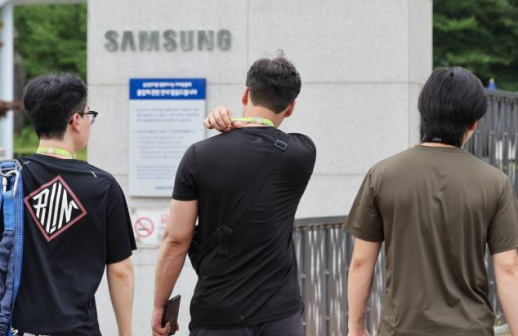 More jobseekers eligible for support as age limit rises to 34 SEOUL, September 8 (AJP) - More young adults in South Korea will become eligible for job-related support as the government decided to raise the age limit from 29 to 34. According to the Ministry of Employment and Labor, the revisions to the relevant rules, approved at a Cabinet meeting on Tuesday, raise the upper age limit to 34, expanding the range to those aged 15 to 34, from the previous range, which defined young people as those aged 15 to 29. The ministry said the move will provide more support for young people entering the labor market while making youth policies more consistent. Separately, a new government-run labor committee will be created to discuss ways to improve pay and working conditions for non-regular and contract-based workers in the public sector. It will also have smaller groups of 15 to 30 members to handle different issues. AJP Takeaways -South Korea raised the upper age limit for government youth employment policies from 29 to 34 on September 8, 2026, expanding eligibility to people aged 15 to 34. - The Ministry of Employment and Labor said the change is intended to make age standards across youth policies more consistent and strengthen support for young people entering the labor market. - South Korea's Cabinet also approved rules on Sept. 8, 2026, for a government-labor committee that will address pay and working conditions for non-regular public-sector workers, including fixed-term, dispatched and outsourced employees. 2026-09-08 15:07:59