

Journalist

Ryu Yuna류윤아
Julia37@ajupress.com
ReporterFinancial Supervisory Service (FSS) & finance, capital markets, Southeast Asian affairs
Yuna Ryu covers finance, capital markets and Southeast Asian affairs.
She is drawn to the questions that numbers raise and the stories that data alone cannot answer.
Prior to journalism, she worked at Hyundai Motor Company and the Singapore Chamber of Commerce, focusing on business strategy and international affairs. She has also hosted diplomatic receptions and international conferences as an MC.
Ryu holds a master's degree in Media and Communication from Korea University, where her research focused on neuroscience-based studies of media effects. "Beyond every statistic is a human story waiting to be heard."
She is drawn to the questions that numbers raise and the stories that data alone cannot answer.
Prior to journalism, she worked at Hyundai Motor Company and the Singapore Chamber of Commerce, focusing on business strategy and international affairs. She has also hosted diplomatic receptions and international conferences as an MC.
Ryu holds a master's degree in Media and Communication from Korea University, where her research focused on neuroscience-based studies of media effects. "Beyond every statistic is a human story waiting to be heard."
Latest by Ryu Yuna
-
 Korean ETF investors turn westbound again SEOUL, September 21 (AJP) — South Korea's home-market ETF frenzy is turning west again as the KOSPI's months-long stall cools enthusiasm for domestic products and sends asset managers back toward U.S. artificial intelligence, semiconductor and broader equity themes. Overseas-focused products accounted for 40.5 percent of ETFs launched since July, up from about 27.3 percent in the first half of the year, according to Korea Exchange data. Of 37 ETFs listed since July, 15 were tied to overseas assets. The reversal follows a dramatic swing in the Korean stock market. The KOSPI climbed above 9,000 for the first time in the first half before retreating into the 6,000s after late June. The index spent much of the past three months in that range, briefly reclaiming 7,000 on Sept. 9 before slipping back two days later. Monday brought another attempt at breaking out. The benchmark rose 1.65 percent to close at 7,007.72, reclaiming 7,000 after seven trading sessions. "There is a considerable possibility that the 6,000 level could become a new trading range," said economist Kim Dae-jong of Sejong University. "The KOSPI is likely to show considerable volatility around 6,000 depending on semiconductor earnings, U.S. interest rates and stocks, and foreign investor flows," he said. The latest rebound does not rule out continued volatility around the 6,000 level, Kim added. Individual investors are also debating whether it is time to look abroad again. "Looking at the S&P 500 after watching the KOSPI puts my mind at ease," one investor wrote on a Naver stock community site. Another was wary of simply shifting losses from one market to another. "People who got burned in the Korean market are rushing into U.S. stocks, but they could end up getting burned there too," the user wrote. The mood is a sharp reversal from the first half, when the heat was concentrated in the KOSPI and domestic chip-related products. Last year, 109 of 168 newly listed ETFs, or 64.8 percent, focused on overseas assets. The share reached 81.9 percent in the first half of 2025 before falling to 52.0 percent in the second half as Korean equities gathered momentum. The rotation continued into the first half of 2026, when the KOSPI surged through 9,000 and the overseas share of new ETF listings fell to about 27.3 percent. Momentum shifted again after late June. Four of the nine ETFs listed so far in September, or 44.4 percent, invest in overseas assets. For the year through Sept. 18, 42 of 136 newly listed ETFs were overseas-focused, accounting for 30.9 percent of the total. Of the 99 products listed in the first half, 27 focused on overseas assets. The number was 15 out of 37 from July through Sept. 18. "Both investors and asset managers are broadening their investment scope toward global markets as Korean stocks undergo a correction," Kim said. Weaker momentum in Korean equities could keep some investor money flowing toward overseas ETFs for some time, he added. The changing appetite is also visible in the size of two of the country's biggest equity ETFs. At the end of June, KODEX 200, which tracks large Korean stocks, had 28.82 trillion won ($20.8 billion) in net assets, more than 8 trillion won above the 20.03 trillion won held by TIGER U.S. S&P 500. By Sept. 17, KODEX 200's net assets had fallen 14.4 percent to 24.65 trillion won. TIGER U.S. S&P 500 grew 2.5 percent to 20.55 trillion won, narrowing the gap between the two funds to about 4.1 trillion won. Asset managers are following the money with another crop of products built around U.S. technology and global growth. NH-Amundi Asset Management listed HANARO U.S. Agentic AI TOP2+ ETF on Sept. 15, targeting U.S. companies linked to agentic AI. Samsung Asset Management launched KODEX U.S. AI Memory TOP2 Plus ETF on the same day, focusing on U.S. memory and data-storage companies. Mirae Asset Global Investments introduced TIGER U.S. S&P 500 U.S. Treasury Mixed 50 ETF on Sept. 8, splitting its portfolio between the S&P 500 and short-term U.S. Treasuries. KB Asset Management listed RISE Global AI NAND Memory Semiconductor ETF on Sept. 1, investing across the Korean and overseas NAND memory supply chain. "If Korean stocks continue to trade within a narrow range, asset managers are likely to actively launch products built around U.S. AI, semiconductors and global technology stocks," Kim said. U.S. AI, semiconductors and data centers are likely to remain attractive because of their longer-term growth prospects, he added. Monday's return above 7,000 could revive demand for Korean equity ETFs if the rebound holds. The recent move overseas does not necessarily point to a lasting exodus from Korean assets. Stronger corporate earnings and renewed foreign buying could quickly bring domestic products back into favor. "The ETF market is ultimately more likely to become more diversified across Korean stocks, U.S. AI and semiconductor shares, bonds and gold, rather than shift entirely toward either domestic or overseas assets," Kim said. AJP Takeaways - Overseas-focused ETFs accounted for 40.5 percent of new listings from July through Sept. 18, up from about 27.3 percent in the first half as the KOSPI lost momentum. - The KOSPI returned above 7,000 Monday, closing 1.65 percent higher at 7,007.72 after spending much of the past three months in the 6,000 range. - KODEX 200 net assets fell to 24.65 trillion won by Sept. 17 from 28.82 trillion won at the end of June, while TIGER U.S. S&P 500 grew to 20.55 trillion won from 20.03 trillion won. - Economist Kim Dae-jong said prolonged KOSPI consolidation could encourage more products tied to U.S. AI, semiconductors and global technology stocks while the broader ETF market diversifies across domestic equities, overseas assets, bonds and gold. 2026-09-21 17:44:27
 -
 Viet Nam joins FTSE Russell's emerging-market index SEOUL, September 21 (AJP) - Viet Nam joined FTSE Russell's secondary emerging market benchmark on Monday, a move expected to attract up to US$6 billion into the country's stock market. The global index provider upgraded Viet Nam from frontier-market status after years of reforms aimed at improving foreign investor access, placing the Southeast Asian market alongside China and India in the category. The inclusion will take place in four stages through 2027 to limit market disruption. Viet Nam will receive an initial 10 percent weighting this month, followed by 20 percent in March 2027. Another 35 percent will be added in June and the remaining 35 percent in September. Viet Nam's benchmark VN-Index opened 0.54 percent higher Monday but reversed course, falling 1.26 percent to 1,792.79 as of around 2 p.m. local time. The upgrade follows a lengthy effort to make Vietnamese equities easier for overseas investors to trade. FTSE Russell placed the country on its watch list in 2018 and confirmed in April that the change would take effect on Monday. Foreign investors had begun returning ahead of the inclusion. They bought a net 2.7 trillion dong ($104 million) of shares on the Ho Chi Minh Stock Exchange in the week through Sept. 18, though they remained net sellers for the year. The upgrade could also draw greater interest from large global funds. Vanguard, one of the world's largest asset managers, said last week that it expects to invest about $2.5 billion in Viet Nam over the coming years following the reclassification. Attention is now shifting to whether Viet Nam can eventually qualify for inclusion in indexes compiled by Morgan Stanley Capital International (MSCI), another major global index provider. Investors are watching the planned introduction of a central counterparty (CCP) clearing system in 2027. The system would place a central clearing organization between buyers and sellers to guarantee settlement and reduce transaction risk. Its introduction is expected to strengthen Viet Nam's case for meeting MSCI's market-access standards. Further hurdles remain. Foreign ownership caps at some listed companies and the limited number of shares freely available for trading could continue to constrain overseas participation. Even so, the upgrade gives global index-tracking funds a clearer route into the market while further reforms could improve its chances of broader international index inclusion. The move comes as South Korean stocks rebound. Foreign investors were net buyers of 183.9 billion won ($133.5 million) of KOSPI shares on Monday afternoon, while institutions bought a net 1.35 trillion won. The benchmark was up 1.37 percent at 6,988.44 after touching an intraday high of 7,027.58. AJP Takeaways - Viet Nam joined FTSE Russell's secondary emerging market benchmark on Sept. 21, 2026, a change expected to draw up to $6 billion into the country's stock market. - Viet Nam's inclusion in the FTSE Russell benchmark will be phased in through September 2027 after years of reforms aimed at improving foreign investor access. - Foreign investors bought a net $104 million of shares on the Ho Chi Minh Stock Exchange in the week before Viet Nam's inclusion, while Vanguard expects to invest about $2.5 billion in the country over the coming years. 2026-09-21 16:46:39
 -
 Tata Daewoo Mobility aims to expand fire truck business in Viet Nam SEOUL, September 21 (AJP) - Commercial vehicle manufacturer Tata Daewoo Mobility plans to expand its fire truck and other vehicle businesses in Viet Nam, the company said on Monday. It recently supplied two firefighting vehicles built on its flagship MAXEN heavy-duty truck platform to Hanoi's Fire and Rescue Police Authority. They can be operated remotely to approach dangerous fire sites, break through walls or other structures and spray water directly at the source of a fire. Operating the vehicles from a distance can reduce firefighters' exposure to hazardous conditions. Special-purpose vehicle maker Jinwoo SMC handled the firefighting equipment conversion. The two companies signed a memorandum of understanding (MOU) in October 2025 to jointly develop fire engines and other specialty vehicles and expand into overseas markets. Tata Daewoo plans to use the latest delivery to expand its fire truck lineup in Viet Nam, including pump trucks, ladder trucks and chemical fire engines. It will also strengthen maintenance support and improve access to spare parts in northern Viet Nam. "The export of MAXEN-based remote-controlled firefighting vehicles is a meaningful step in showing the strength of our specialty vehicle technology and Korean-made fire trucks in overseas markets," a spokesman of Tata Daewoo Mobility said. "We will continue working with specialty vehicle partners and strengthen our sales, maintenance and parts network to expand our presence in Viet Nam and other Southeast Asian markets." AJP Takeaways - Tata Daewoo Mobility supplied two MAXEN Euro six 6x4-based remote-controlled firefighting vehicles to Hanoi's fire and rescue authorities. - Tata Daewoo Mobility plans to expand its Viet Nam business to pump, ladder and chemical fire engines while strengthening after-sales and parts support. - Jinwoo SMC converted Tata Daewoo Mobility's trucks into firefighting vehicles under a partnership covering new vehicle development and overseas markets. 2026-09-21 15:36:22
 -
 Neosapience surges over 200% in KOSDAQ debut SEOUL, September 21 (AJP) - Generative artificial intelligence (AI) voice technology firm Neosapience surged more than 200 percent above its initial public offering (IPO) price on its KOSDAQ debut on Monday. Shares traded at 27,350 won (US$19.76) as of around 2 p.m., up 173.5 percent from the IPO price of 10,000 won. The stock rose as high as 30,750 won during the session after opening at 25,250 won. The sharp debut followed strong retail demand. The Sept. 10-11 public offering drew orders for 1,047.78 times the shares available, with more than 2.6 trillion won in deposits submitted for orders. Only 23.21 percent of Neosapience's shares were available for trading on the first day, down from an earlier estimate of 28.66 percent. The smaller number of shares available for trading came after institutional investors agreed not to sell 660,322 shares or 44.02 percent of their allocation for 15 days after the listing. The agreements kept part of the institutional allocation off the market, limiting the supply of shares available for trading on the first day. Founded in 2017, Neosapience develops generative AI-based voice technology. Its main service Typecast allows users to turn text into audio and video content using AI-generated voices and virtual characters. The firm offers more than 700 AI voice characters and supports 37 languages. Its customers include streaming platform SOOP, home-shopping company CJ OnStyle, telecom operator LG Uplus and broadcaster SBS. AJP Takeaways - Neosapience jumped 202 percent from its 10,000 won IPO price to 30,200 won shortly after its KOSDAQ debut on Sept. 21. - Neosapience's Sept. 10-11 public offering drew orders for 1,047.78 times the shares available, with more than 2.6 trillion won in deposits. - Neosapience had 23.21 percent of its shares available for first-day trading after institutional lockup commitments reduced the tradable supply. 2026-09-21 14:41:30
 -
 KOSPI jumps 2.7% as chips rally on lower oil, yields SEOUL, September 18 (AJP) - South Korean stocks jumped nearly 3 percent Friday as falling oil prices and U.S. Treasury yields eased inflation concerns. Samsung Electronics and SK hynix led the broad rebound as foreign investors returned after uncertainties over rate decisions by the U.S. and Japanese central banks were removed. The benchmark KOSPI closed at 6,894.23, up 2.66 percent from the previous session. The index opened 2.54 percent higher at around 6,885 and climbed as high as 6,914.08 during the session. Institutions bought a net 1.51 trillion won ($1.09 billion) of KOSPI shares, while foreign investors bought 419.1 billion won ($303 million). Retail investors sold a net 3.59 trillion won ($2.59 billion). The rebound came as investors absorbed the Fed's first rate increase in three years. The U.S. central bank raised its benchmark rate by 0.25 percentage point to a range of 3.75 percent to 4.00 percent Wednesday and signaled that further tightening remains possible this year. The Bank of Japan (BOJ) on Friday raised its benchmark interest rate by 25 basis points to 1.25 percent in a 7-2 vote at the end of its two-day monetary policy meeting, resuming tightening after a three-month pause. The increase took the policy rate to its highest level since 1995. Samsung Electronics and SK hynix led the rally. In after-market trading as of 4:20 p.m., Samsung Electronics was up 3.37 percent at 261,000 won. SK hynix was up 6.13 percent at 1,852,000 won. Samsung Electronics' preferred shares gained 1.91 percent to 197,000 won. The gains followed a strong session for U.S. chip stocks. The Philadelphia Semiconductor Index rose 3.14 percent overnight as Intel, Advanced Micro Devices and other semiconductor shares rallied on continued optimism over artificial intelligence demand. Other technology shares also advanced. SK Square climbed 6.55 percent to 1,074,000 won, while Samsung Electro-Mechanics rose 4.66 percent to 1,392,000 won. Among other large-cap stocks, Hyundai Motor gained 0.83 percent to 366,000 won and Samsung Biologics edged up 0.14 percent to 1,398,000 won. Battery maker LG Energy Solution slipped 0.14 percent to 364,500 won. KB Financial fell 2.34 percent to 175,000 won, while Samsung C&T lost 0.70 percent to 353,000 won. Lower oil prices and U.S. Treasury yields eased some of the pressure that had weighed on equities earlier in the week. West Texas Intermediate crude fell about 2.3 percent overnight, and Brent crude dropped about 3 percent. Expectations of additional Saudi supply and easing tensions involving Yemen's Houthi movement reduced concerns over oil disruptions. The U.S. 10-year Treasury yield also retreated to 4.939 percent as investors reassessed the outlook after the Fed decision. Still, concerns over prolonged monetary tightening remain. Sixteen of 18 Fed policymakers expect at least one additional rate increase before the end of 2026, according to projections released with the latest decision. The junior KOSDAQ also closed higher, rising 0.60 percent to 827.12. Institutions bought a net 23.2 billion won of shares and retail investors bought 12.8 billion won. Foreign investors sold a net 46.6 billion won. Orum Therapeutics plunged 29.96 percent to 37,400 won after Bristol Myers Squibb (BMS) stopped developing ORM-6151, an experimental blood cancer drug it acquired from Orum in 2023. The decision wiped out up to $80 million in potential future payments tied to the drug's development, weighing on the stock. The company will keep the $100 million upfront payment it already received. Among other junior stocks, cathode-material maker EcoPro BM was up 1.85 percent at 104,600 won. Semiconductor equipment maker Wonik IPS was up 3.22 percent at 121,800 won, while robotics company Rainbow Robotics was up 1.40 percent at 434,500 won. Jusung Engineering, which makes semiconductor and display equipment, was unchanged at 204,000 won. Alteogen was also flat at 254,000 won. Battery-material holding company EcoPro was down 0.97 percent at 81,500 won, while laser equipment maker EO Technics was down 1.62 percent at 455,000 won. Semiconductor test-component maker Leeno Industrial was up 4.22 percent at 69,200 won. Printed-circuit-board maker Simmtech was down 1.56 percent at 126,200 won, while robotics company Robotis was down 0.97 percent at 307,000 won. The Korean won traded at around 1,383 per dollar in late trading, compared with 1,382.20 in the previous session. AJP Takeaways - South Korea's KOSPI jumped 2.66 percent to 6,894.23 on September 18, 2026, as lower oil prices and U.S. Treasury yields supported a rebound led by semiconductor shares. - Samsung Electronics was up 3.37 percent at 261,000 won and SK hynix was up 6.13 percent at 1,852,000 won in after-market trading as of 4:20 p.m. - Orum Therapeutics plunged 29.96 percent to 37,400 won after Bristol Myers Squibb ended development of ORM-6151, removing up to $80 million in potential future payments while allowing Orum to keep its $100 million upfront payment. 2026-09-18 17:05:23
 -
 The world of K-beauty, pulled into one Seoul office SEOUL, September 17 (AJP) — K-beauty spent years carrying Seoul to bathroom shelves, beauty counters and social-media feeds around the world. Inside one skincare office in southern Seoul, that current is running the other way: the world has come to work. At Mary&May, a Korean skincare brand sold in more than 60 countries, employees from 15 nationalities sit inside the machinery of K-beauty's global expansion — choosing products, creators, words and images for markets thousands of miles from Seoul. Among them are a Kenyan former beauty influencer working on Europe, an Ecuadorian K-pop fan turned Latin America marketer, an American overseeing North America and an Indonesian shaping the brand's global voice. Together, they offer a glimpse of how far K-beauty's reach has stretched. What began as an export story about creams, serums and sheet masks is increasingly becoming a talent story, drawing young professionals to Korea not simply to consume its culture but to build careers inside it. South Korea's cosmetics exports topped the $10 billion mark last year, cementing the country as a global beauty powerhouse second only to France. Stores such as Olive Young have become fixtures on foreign visitors' itineraries. Now some of those consumers are crossing a different threshold — from fan to professional. Daisy Jemutai Rutto, a Kenyan in her 20s, once worked as a K-beauty influencer. She now sits on the brand side, handling TikTok, influencer marketing, European partnerships and product seeding for Mary&May. Maria Cristina Guayasamín Urquizo, an Ecuadorian in her 20s, traces her route into the industry back about 15 years to Girls' Generation. Korean cosmetics were difficult to find in Ecuador then. Through K-pop and the internet, she discovered brands including Tony Moly and Etude House, first drawn to their packaging and later to the rituals and products of Korean skincare. “I started as a K-Pop fan, then became a skincare fan, and eventually it became part of my career,” Guayasamín said. Her route to Korea took a more unexpected turn at university. While studying TV production and digital media in Ecuador, she made a documentary about a Korean woman who had lived there for about two decades. “At that time, I had only just started learning Korean, so editing the documentary was quite difficult. That experience motivated me to apply for a scholarship to study Korean in Korea,” she said. She arrived in 2020, later received the Global Korea Scholarship and eventually encountered Mary&May at an event for foreign K-beauty creators. She now handles creator and partner communications, regional campaigns and content across Latin America. Rutto also arrived in 2020 to study Korean and later pursued a master's degree in anthropology at Seoul National University. Along the way, she joined Korean skincare projects and built the experience that eventually took her from promoting K-beauty to helping shape how it is marketed. Octavia Grace VanHecke, an American in her 20s who handles North America, first came to Korea as a student in 2021. While studying media and communication at Korea University, she became interested in cross-border advertising and marketing. Korean YouTube makeup tutorials had already introduced her to the industry. “The K-beauty industry is growing at a rapid pace, and to drive that global growth from the source you must be here in Korea,” she said. “Being a part of this growth and shift in the beauty market is exciting.” Claire Lee, an Indonesian in her 20s, took yet another route into the business. Her work spans newsletters, advertising content and brand development. What appealed to her was the chance to move upstream — to see how a product and its identity are built before they are repackaged for consumers overseas. “Working in the country itself allows me to understand the intention behind product development and the brand philosophy up close, and to think from the planning stage about how to express that through language and visuals,” Lee said. Proximity matters because beauty does not travel as neatly as a bottle in a shipping box. A toner can be routine in Seoul and unfamiliar in another market. An ingredient that excites U.S. consumers may require explanation elsewhere. An advertisement that looks polished in Korea may feel distant, overly controlled or simply off-key abroad. And that is where Mary&May's international staff come in. “We were looking for colleagues who could see the market through the eyes of local consumers and build the business together with us,” said Kim Sue-min, the company's co-founder and chief marketing officer. The structure grew out of the company's early overseas expansion. Good formulas alone were not enough, Kim said. Consumers in different countries respond to different ingredients, creators, aesthetics and shopping habits. Guayasamín sees that gap every day in Latin America. “In Korea, concepts like toner, serum, and sunscreen are already very familiar, while in many Latin American markets, consumers are still learning about different skincare steps and why they need them,” she said. “That’s why we can't just translate Korean content into Spanish. Sometimes we need to educate consumers first and explain K-Beauty in a way that fits their culture and familiarity.” For Rutto, cultural translation can begin with a single phrase or campaign concept. Part of her job is to flag language or ideas that could be misunderstood or considered inappropriate elsewhere. “My perspective is taken into account when we decide how to word messages or present products to international audiences,” she said. VanHecke has pushed Mary&May's U.S. marketing in a looser, more candid direction. She manages influencers and TikTok Shop affiliate marketing, where creators earn commissions on sales generated through their content. In the U.S., she said, audiences increasingly respond to unvarnished product opinions rather than carefully staged brand films. “Candid content and honest brand opinions are becoming more popular than aesthetic brand videos in the U.S.,” VanHecke said. She adjusted Mary&May's guidelines for U.S. TikTok affiliates, giving creators more room to use products in their own style and show real results. Several videos subsequently went viral, she said. “What works in Korea doesn't always translate across borders,” VanHecke said. “I know what kind of messages will and won't work for my region, because I grew up seeing what kind of advertising gets praised and which gets backlash.” Lee brought a similar instinct to the company's newsletter. The publication had largely concentrated on products and company news. She proposed adding a section on trends unfolding inside Korea, reasoning that overseas K-beauty followers were interested in the culture surrounding the products as much as the products themselves. “I thought overseas subscribers who are interested in K-beauty would be curious not only about products, but also about what trends are attracting attention in Korea,” she said. The company adopted the idea. International staff are also reaching deeper into the business, influencing not only how Mary&May talks about products but which products it pushes. “They understand what part of a product should be emphasized, which influencers consumers genuinely trust and what kinds of promotions feel natural in that market,” Kim said. In the Middle East, local staff highlighted demand around the eye area among women who wear hijab, leading Mary&May to put its eye cream forward. In Turkey, a colleague pointed to the cultural familiarity of roses, encouraging the company to make its rose wash-off pack a key product. Staff covering North America and Southeast Asia pushed for greater emphasis on retinol, the vitamin A derivative widely used in anti-aging skincare, reflecting demand for ingredients associated with more visible results. “Ultimately, foreign talent helps determine which products to sell in each market,” Kim said. It is a notable shift for an industry whose first wave of globalization largely meant making products in Korea and finding ways to sell them abroad. At Mary&May, overseas markets are now represented inside the Seoul office before a campaign reaches a screen or a product reaches a shelf. The shift is also visible in job applicants, Kim said. “More applicants now see K-beauty itself as a professional field, seeking experience in global marketing, overseas sales, e-commerce and brand operations,” she said. “They want to become active participants in growing the brands, not just consumers.” The transition from foreign consumer to industry insider is not always seamless. “One challenge is finding your place and making sure your perspective is understood as a foreigner,” Rutto said. “Even when you understand the language, cultural differences can affect how people communicate and work together.” Lee described a subtler layer of adjustment: learning the unspoken language of a Korean workplace. “You have to understand what is expected, how an idea should be presented and what someone means beyond what they literally say,” she said. Those frictions will matter more if Korea wants global talent not merely to arrive but to remain, gain authority and build long-term careers. Kim said international employees should not be treated simply as translators or support staff assigned to their home markets. “We should not limit them to language-support roles for a particular market,” she said. “They should be able to develop market strategies, take responsibility for budgets and performance, and eventually grow into leaders.” Guayasamín hopes to remain in Korea for the next several years and move deeper into visual storytelling, content production and eventually creative direction. Rutto wants to expand her expertise in influencer marketing and partnerships. VanHecke hopes to continue introducing Korean products to North American consumers, whether in beauty or another Korean industry. Lee plans to build further expertise in K-beauty brand marketing. Their ambitions mirror the industry's own evolution. For years, K-beauty's defining movement was outward Korean formulas, packaging and beauty rituals traveling from Seoul into shopping carts around the globe. Now, in one office in southern Seoul, the world is being pulled into the room. “K-beauty’s next step is not simply to export Korean cosmetics,” Kim said. “It is to bring global talent to Korea and build global brands together.” 2026-09-17 15:23:07
 -
 AI voice technology firm set to debut on KOSDAQ next week SEOUL, September 16 (AJP) - Neosapience, a generative artificial intelligence (AI) and AI voice technology company will be listed on the KOSDAQ next week, according to its report filed with the Financial Supervisory Service (FSS) on Wednesday. Some 23.21 percent of its shares will be available for trading starting from next Monday, down from an earlier estimate of 28.66 percent. The smaller number of shares available for trading comes after institutional investors agreed to lock up 44.02 percent of the shares allocated to them, with some 660,322 of the 1.5 million shares subject to a 15-day lockup period after listing. The initial public offering (IPO) allocated 1.5 million shares or 75 percent to institutional investors and 500,000 shares or 25 percent to retail investors. Such lockup agreements will keep part of the institutional allocation off the market after listing, reducing the number of shares available for trading on the first day. Neosapience operates Typecast, a generative AI-based voice platform offered through the web and application programming interface or APIs, which allow other software and services to use its technology directly. The tech firm provides more than 700 AI voice characters and supports 37 languages. Customers include South Korean streaming platform SOOP, home-shopping company CJ OnStyle, telecom operator LG Uplus and broadcaster SBS. The companies use Neosapience's voice technology to create content and provide customer services. AJP Takeaways - Neosapience plans to begin trading on the KOSDAQ on Sept. 21 with 23.21 percent of its shares available for first-day trading. - Neosapience's securities filing showed that 660,322 institutional shares, equal to 44.02 percent of the institutional allocation, are subject to a 15-day lock-up. - Neosapience operates the generative AI voice platform Typecast, which offers more than 700 AI voices and is used by companies including SOOP, CJ OnStyle, LG Uplus and SBS. 2026-09-16 17:50:44
 -
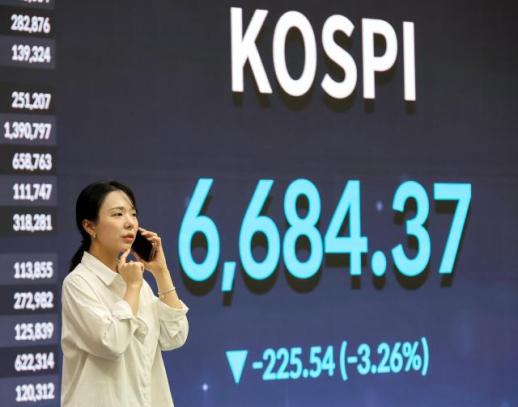 KOSPI rises on chip gains ahead of Fed's rate decision SEOUL, September 16 (AJP) - South Korean stocks rose Wednesday morning as gains in major chip stocks helped offset concerns over high oil prices, rising U.S. Treasury yields and uncertainty ahead of the Federal Reserve's rate decision. The benchmark KOSPI stood at 6,659.29 points at around 10 a.m., up 0.48 percent from the previous session. The index fell 0.06 percent shortly after the market opened to 6,623.33 points before turning higher. Retail investors bought a net 125.0 billion won (US$92 million) of KOSPI shares. Foreign investors sold a net 365.6 billion won ($269 million), while institutions bought a net 50.4 billion won ($37 million). Despite the rebound, sentiment remained cautious after four straight sessions of losses left the index at 6,627.26 the previous day. Investors were weighing bargain hunting against persistent pressure from oil prices, bond yields and the prospect of another U.S. rate increase. Those concerns were reinforced by another weak session on Wall Street. The Dow Jones Industrial Average lost 0.63 percent, while the S&P 500 fell 0.45 percent and the Nasdaq Composite dropped 0.78 percent. Oil prices remained high on concerns about Middle East supply. Saudi Arabia suspended crude shipments from Yanbu, a major oil-export port on the Red Sea, after a pipeline disruption, while Libya stopped production at three oil fields. November Brent crude rose 2.90 percent to $108.75 a barrel, while October West Texas Intermediate advanced 4.38 percent to $105.83. The rise in crude added pressure to the bond market. The benchmark U.S. 10-year Treasury yield climbed as high as 5.041 percent, its highest level since July 2007. Investors remained cautious ahead of the Federal Open Market Committee's decision due early Thursday in Seoul. Futures markets priced in about a 95 percent chance that the Fed would raise rates by 0.25 percentage point, with markets also watching for signs of further tightening. Still, some technology shares in New York showed signs of stabilization after recent losses. Nvidia gained 0.57 percent, Micron Technology rose 0.39 percent and Advanced Micro Devices advanced 2.19 percent, helping cushion concerns over a recent pullback in artificial intelligence-related stocks. That strength carried into Seoul's semiconductor sector. SK hynix gained 2.31 percent to 1,729,000 won. Samsung Electronics rose 1.11 percent to 251,250 won, while its preferred shares climbed 4.60 percent to 195,700 won. Other technology-related shares also advanced. Samsung Electro-Mechanics rose 1.90 percent to 1,342,000 won, while SK Square gained 0.90 percent to 1,009,000 won. Among other large-cap stocks, battery maker LG Energy Solution climbed 1.64 percent to 371,500 won, while Hyundai Motor fell 1.23 percent to 362,500 won. Samsung Biologics slipped 0.35 percent to 1,407,000 won. Financial shares edged higher. KB Financial rose 0.34 percent to 176,400 won, while Samsung Life Insurance added 0.18 percent to 286,000 won. Investors were also digesting the early performance of the Korea Exchange (KRX)'s new after-market session, which began on Monday and runs from 4 p.m. to 8 p.m. According to the KRX, combined KOSPI and KOSDAQ after-market turnover totaled 1.01 trillion won on Tuesday, down 44.6 percent from 1.82 trillion won on the launch day. Trading volume fell 15.4 percent to 61.1 million shares. Broader market sentiment remained weak, with the junior KOSDAQ down 1.03 percent at 804.05 as of 9:51 a.m. The index opened at 808.37 and moved between 801.90 and 808.53 in early trading. Despite the index decline, some of the most actively traded stocks posted gains. Lightron Fiber-Optic Devices, an optical communications equipment maker, jumped 8.37 percent to 4,465 won, while Taihan Fiberoptics rose 4.81 percent to 14,820 won. VISSEM Electronics, an electronic-components maker, surged 20.93 percent to 12,940 won. Korea Advanced Materials, which makes telecommunications equipment, gained 2.98 percent to 3,460 won. Security and software shares were also stronger. AXGATE, a system-software company, climbed 2.39 percent to 17,970 won, while Hancom WITH, a digital security company, rose 5.74 percent to 5,530 won. Elsewhere, semiconductor equipment maker Jusung Engineering slipped 0.47 percent to 191,900 won. Sky Labs, a maker of wearable medical devices, gained 2.16 percent to 21,250 won. Sungho Electronics, an electronic-components maker, advanced 5.77 percent to 17,780 won, while robotics company ROBOTIS fell 5.08 percent to 308,000 won. The Korean won weakened to 1,371.6 per dollar from 1,359.4 a day earlier. AJP Takeaways - South Korea's KOSPI rose 0.48 percent to 6,659.29 as of 10:01 a.m. on September 16, 2026, as gains in Samsung Electronics and SK hynix offset pressure from high oil prices and U.S. Treasury yields. - Foreign investors sold a net 365.6 billion won ($269 million) of KOSPI shares, while retail investors bought 125.0 billion won ($92 million) and institutions bought 50.4 billion won ($37 million). - The Korean won weakened to 1,371.60 per dollar from 1,359.40 a day earlier as higher U.S. yields and rate concerns pressured the currency. 2026-09-16 10:27:01
 -
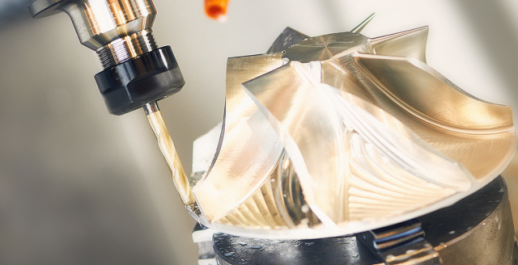 Dongwon Parts wins KOSDAQ listing approval SEOUL, September 15 (AJP) - South Korean semiconductor parts maker Dongwon Parts said Tuesday it has received preliminary approval from the Korea Exchange (KRX) for a KOSDAQ listing, clearing a key regulatory step in its initial public offering (IPO). The approval came after its revenue jumped 55 percent last year to 92.3 billion won ($67.9 million). Operating profit rose more than sevenfold to 7.8 billion won ($5.7 million). Samsung Securities is the lead underwriter. Founded in 1997, Dongwon Parts manufactures parts used in semiconductor equipment for etching, deposition and cleaning — processes used to shape, build and clean the thin layers that make up semiconductor chips. Its main products include showerheads and chamber parts, which are consumable components used inside chipmaking equipment. Showerheads distribute gases evenly across semiconductor wafers, while chamber parts form part of the enclosed area where the manufacturing process takes place. The company uses precision micro-hole drilling technology to produce components with tiny, closely controlled openings, allowing it to develop prototypes and move them into mass production. Dongwon Parts is also a registered supplier to major U.S. semiconductor equipment makers Lam Research and Applied Materials. Direct exports and sales to global equipment companies account for 51 percent of its revenue. The company expects continued investment in semiconductor production equipment as demand grows for artificial intelligence chips and high-bandwidth memory (HBM), a type of advanced memory widely used in AI computing. Unlike technology companies that list through a special track with relaxed financial requirements, Dongwon Parts is pursuing a standard KOSDAQ listing based on its earnings record. AJP Takeaways - Dongwon Parts cleared a major regulatory hurdle for its planned KOSDAQ IPO after receiving preliminary approval from the Korea Exchange. - Stronger 2025 earnings support Dongwon Parts’ standard listing route, with revenue up 55 percent and operating profit rising more than sevenfold. - Dongwon Parts has built a global semiconductor equipment customer base that includes Lam Research and Applied Materials, reducing reliance on the domestic market. 2026-09-15 17:35:19
 -
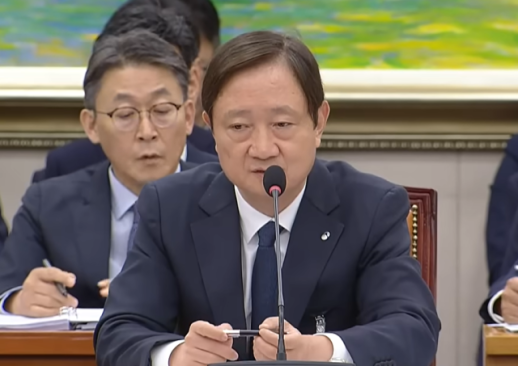 FSS chief calls for fairer CEO succession at financial groups SEOUL, September 15 (AJP) - South Korea's top financial regulator called on financial holding companies Tuesday to strengthen the fairness and transparency of CEO succession at their subsidiaries, saying existing procedures remain inadequate. Financial Supervisory Service (FSS) Governor Lee Chan-jin said at an executive meeting that succession procedures at most financial holding companies lacked clear standards for choosing subsidiary chiefs. Lee identified several weaknesses, including vague qualification standards for chief executives and insufficient time to review candidates at each stage. He also said candidate pools were not actively managed and the shortlisting and review process lacked transparency. Under industry governance guidelines, only some financial holding companies share information on standing CEO candidate pools with subsidiaries or allow bank nomination committees to recommend candidates, according to the filing. "Transparency and fairness should be strengthened throughout the entire CEO succession process, including candidate selection, verification, evaluation and record keeping," Lee said. The remarks come as financial authorities review corporate governance practices across the sector through a task force that has been operating since January. Lee said the group had discussed measures aimed at preventing executive appointments from being decided through closed processes based on internal factions or personal ties. He urged financial companies to establish more transparent and credible succession systems that can also support shareholder value. The regulator said it would closely check whether financial companies follow clear and fair rules when choosing CEOs. AJP Takeaways - South Korea's financial regulator called for stronger safeguards in CEO succession at financial holding company subsidiaries. - FSS Governor Lee Chan-jin cited vague qualification standards, insufficient review periods and largely formal candidate-pool management. - The FSS said it would strengthen scrutiny of whether CEO appointments follow transparent and fair standards. 2026-09-15 17:18:36