

Journalist
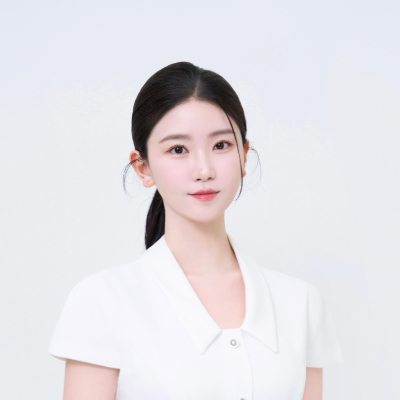
Ryu Yuna류윤아
Julia37@ajupress.com
ReporterFinancial Supervisory Service (FSS) & finance, capital markets, Southeast Asian affairs
Yuna Ryu covers finance, capital markets and Southeast Asian affairs.
She is drawn to the questions that numbers raise and the stories that data alone cannot answer.
Prior to journalism, she worked at Hyundai Motor Company and the Singapore Chamber of Commerce, focusing on business strategy and international affairs. She has also hosted diplomatic receptions and international conferences as an MC.
Ryu holds a master's degree in Media and Communication from Korea University, where her research focused on neuroscience-based studies of media effects. "Beyond every statistic is a human story waiting to be heard."
Latest by Ryu Yuna
-
 Shinhan Bank offers payouts after loan data leak on 25,000 SEOUL, October 01 (AJP) — Shinhan Bank, one of South Korea’s largest commercial banks, pledged to fully compensate customers for losses arising from a data breach that exposed personal and credit information linked to about 25,000 customers’ loan applications. The Financial Supervisory Service (FSS) said Thursday it had launched an on-site inspection to determine the scope of the leak, the types of information exposed and how the breach occurred. Shinhan reported that an unauthorized external party had accessed some of its services through abnormal means and obtained customer information. The exposed data included names, phone numbers and connecting information (CI), an identifier used to verify users across online services. It also included personal and credit information submitted or generated during loan applications, such as annual income and estimated loan limits. The bank said it activated its emergency response system after discovering the breach, blocked access from external Internet Protocol (IP) addresses and suspended the affected services. It also introduced additional security measures to prevent further damage. Shinhan Bank CEO Jung Sang-hyuk apologized Thursday over the breach. “I deeply apologize to our customers and the public for causing concern following the leak of some customers' personal and credit information,” Jung said in a statement. “We will take full responsibility and fully compensate customers for any losses caused by the leak,” he said. Jung also said the bank would review its entire personal credit information protection system from the ground up and strengthen its business processes and employee training. Shares of Shinhan Financial Holding Group fell 1 percent Thursday upon the news of the leak. AJP Takeaways - The Financial Supervisory Service launched an on-site inspection of Shinhan Bank after personal and credit information tied to loan applications for about 25,000 customers was leaked. - Shinhan Bank said the exposed information included customer names, phone numbers, connecting information and data used in loan applications, including annual income and estimated loan limits. - Shinhan Bank CEO Jung Sang-hyuk said the bank would fully compensate customers for any losses caused by the data leak. 2026-10-01 13:04:09
-
 KOSPI falls for third day as foreign selling erases AI-led gains SEOUL, September 30 (AJP) - South Korean stocks fell for a third straight session Wednesday as heavy foreign and institutional selling erased early gains in chip shares fueled by optimism over artificial intelligence (AI) infrastructure spending. The KOSDAQ bucked the decline as semiconductor equipment and battery shares advanced. The benchmark KOSPI fell 0.48 percent, to close at 6,838.04. It opened 1.06 percent higher than the previous session's close at 6,943.47 and climbed as high as 6,965.64 before reversing course as selling intensified. The index briefly fell to 6,818.39 in afternoon trading. The early gains faded as persistently high U.S. Treasury yields and heavy foreign selling outweighed support from an overnight drop in oil prices and strength in semiconductor shares. Investors also turned cautious ahead of Micron Technology's earnings, a key gauge of demand for AI-related memory chips. Foreign investors sold a net 2.05 trillion won ($1.52 billion) of KOSPI shares, while institutions unloaded about 768 billion won ($568 million). Retail investors bought a net 1.17 trillion won ($866 million). Foreign selling has remained heavy since the Chuseok autumn harvest holiday, with overseas investors unloading nearly 9 trillion won of KOSPI shares over the past three sessions. The market had opened higher as gains in U.S. semiconductor shares and expectations for continued AI infrastructure spending boosted chip-related sentiment. Those expectations were reinforced by Anthropic's initial public offering (IPO) filing, which outlined plans to commit at least $518 billion to computing and AI infrastructure over the next decade. Chip shares also gave back some of their early gains as the session progressed. Samsung Electronics rose as high as 276,000 won during the regular session before falling 1.47 percent to close at 268,500 won. SK hynix touched 1,824,000 won, up 3.34 percent intraday, before trimming its gain to close 0.62 percent higher at 1,776,000 won. SK Square, the largest shareholder of SK hynix, was also up 1.61 percent at 1,136,000 won, while LG Energy Solution gained 0.85 percent to 355,500 won. Samsung Biologics added 0.43 percent to 1,391,000 won. By contrast, Samsung Electro-Mechanics was down 0.65 percent to 1,518,000 won, while Hyundai Motor fell 1.00 percent to 346,500 won. KB Financial Group lost 2.42 percent to 169,300 won and Samsung Life Insurance was down 2.93 percent at 282,000 won. Samsung Electronics preferred shares remained among the weakest large caps, trading 3.53 percent lower at 196,800 won after falling sharply during the regular session. The KOSDAQ moved in the opposite direction. The junior index rose 0.72 percent to close at 855.91, supported by gains in semiconductor equipment, battery and biotechnology stocks. Institutions bought a net 48.8 billion won and retail investors purchased 11.8 billion won, while foreign investors sold about 67.7 billion won. Semiconductor equipment shares remained strong into the after-market session. EO Technics, a maker of laser-processing equipment used in semiconductor, display and printed-circuit-board production, was up 4.54 percent at 518,000 won as of 4:25 p.m. Jusung Engineering, which makes deposition equipment for semiconductor manufacturing, climbed 4.50 percent to 232,000 won. Wonik IPS, a semiconductor and display equipment maker, gained 0.84 percent at 131,400 won. Battery-related shares also held onto gains. EcoPro rose 2.03 percent to 80,400 won. The company operates as the holding company of a battery-materials group. EcoPro BM, which specializes in cathode materials used in rechargeable batteries, advanced 2.54 percent to 108,800 won. Alteogen, a biotechnology company that develops biologic drug technologies, was up 0.99 percent at 256,000 won. Rainbow Robotics, which develops collaborative, mobile and humanoid-based robot platforms, gained 0.72 percent to 419,500 won. The divergence between the two indexes reflected a market in which selling remained concentrated in large KOSPI names while investors continued to seek selected AI equipment, battery and biotechnology shares on the junior market. The Korean won strengthened to 1,351.80 per dollar compared with 1,356.7 in the previous session. Across the region, major Asian markets mostly advanced. Japan's Nikkei 225 advanced 1.94 percent to 66,753.72, while Hong Kong's Hang Seng Index rose 0.37 percent to 24,613.27. Mainland China's Shanghai Composite gained 0.31 percent to 3,842.19, supported by improving factory activity and government measures to support lending and stabilize the property market. Rate-hike expectations eased somewhat after New York Fed President John Williams said there was no urgency for another increase at the October Federal Open Market Committee (FOMC) meeting. Investors are now watching the U.S. personal consumption expenditures (PCE) price index, due at 9:30 p.m. Korea time, and Micron Technology's earnings, scheduled for early Thursday morning, for clues on the Federal Reserve's policy outlook and AI-related memory demand. AJP Takeaways - The KOSPI fell 0.48 percent to 6,838.04, extending its losing streak to three sessions as foreign and institutional selling erased an early 1 percent rally. - Foreign investors sold about 2.05 trillion won of KOSPI shares Wednesday, taking their cumulative selling over the past three sessions to nearly 9 trillion won. - In KRX after-market trading as of 4:25 p.m., Samsung Electronics traded at 269,500 won, down 1.10 percent from the previous close, while SK hynix rose 1.08 percent to 1,784,000 won. 2026-09-30 17:44:10
-
 For young Koreans, subscriptions make more sense than ownership SEOUL, September 30 (AJP) - A recent Samsung Electronics sales pitch for newlyweds in Cheongdam, a high-end shopping district in southern Seoul, was unusual: the familiar lineup of refrigerators, washing machines and TVs was missing. Instead, the household appliance giant was selling a subscription package: kitchen and living room appliances bundled with care services and tailored to the size of a couple’s first home. The pitch reflected a changing calculation among younger South Koreans. With budgets tight and housing arrangements often temporary, paying to use an appliance can seem more practical than buying one to keep. At the home of Jang, an office worker in his 30s in Seoul’s Seongsu-dong, few appliances are truly his. “I try to live as cheaply as possible, almost like a beggar,” he said. “I look for the cheapest option whenever I can.” He also uses Korea’s so-called geojibang, or “beggar chatrooms,” where users share spending habits and tips for cutting costs. For Jang, subscriptions have become part of the same effort to keep monthly spending manageable. Yoo, another Seoul office worker in his 30s, saw that logic at work when colleagues living in company housing chose subscription plans for wall-mounted air conditioners. They saw little reason to buy an appliance they expected to replace once they bought homes of their own. “With card discounts, the monthly subscription cost made more sense for the five years they expected to stay in company housing,” Yoo said. For younger consumers, subscriptions are already part of everyday spending. A 2025 survey by consumer research firm OpenSurvey found that South Korean consumers subscribed to an average of 2.5 service categories. Video streaming was the most common at 69.1 percent, followed by shopping memberships at 65.7 percent. Those in their 20s and 30s used the broadest range of paid subscriptions, including newer categories such as cloud storage and generative artificial intelligence, according to the survey. The expansion into physical goods comes as spending on big-ticket purchases weakens. Sales of durable goods, including cars and household appliances, fell 5.6 percent in August from a year earlier, according to the Ministry of Data and Statistics’ industrial activity report released Wednesday. The decline widened from 4.9 percent in July. Carmakers are also adjusting to consumers reluctant to commit to big purchases. Kia’s app-based subscription service, Kia Flex, lets customers use a car for a chosen period without buying it. Its monthly plans offer terms ranging from 15 to 540 days, while selected packages allow customers to switch vehicles once a month. The service also provides vehicle delivery and collection, along with maintenance support. Hyundai Motor has sought to ease the financial burden of ownership through its “EV Burden Down” program. The installment plan lowers monthly payments by deferring part of the vehicle’s price until the end of the contract. Customers can then return the car to settle the deferred amount under the program’s terms. The arrangement is a form of financing rather than a subscription, but similarly addresses the burden of a large purchase. For appliance makers, manageable monthly payments and bundled care services are becoming increasingly important selling points. Roughly one in three customers buying major appliances through sales channels offering Samsung’s subscription program chooses that option, according to Samsung Electronics. Awareness of the service rose to about 71 percent in July from 43 percent in 2024, the company said. Samsung launched its AI Subscription Club in December 2024, with AI-equipped products accounting for more than 90 percent of the initial lineup. It has since expanded its offerings to cater to different stages of life, including plans for newlyweds and seniors. Samsung is also rolling out subscriptions for banks, hotels, hospitals and other corporate customers, combining lower upfront costs with maintenance and after-sales support. Jang encountered the program when his family recently replaced its television. “It feels more like an installment plan than a subscription,” he said. “Still, benefits like free subscription periods can make it worth considering.” LG Electronics has also been expanding its subscription business. Revenue from its product-and-service subscriptions reached nearly 2.5 trillion won ($1.85 billion) in 2025, up 29 percent from the previous year, according to the company. Its subscription website also offers furniture to complement its appliances. Consumer interest suggests room for further growth, although actual use remains limited. A January survey by Embrain Trend Monitor of 1,000 adults aged 19 to 69 found that just 11.1 percent currently used an appliance subscription service. But 60.5 percent of respondents in their 20s said they were willing to use one in the future, the highest share among all age groups and above the overall figure of 51.7 percent. Among respondents with subscription experience, 36.3 percent cited lower upfront costs as a reason for signing up, while 29.9 percent pointed to promotions and discounts. Kim Si-wuel, a professor at Konkuk University’s Department of Consumer Information Science, said financial pressure and changing attitudes toward ownership were driving the shift. “Money has become the biggest factor,” Kim said. “Some people simply cannot afford to own things like cars or homes, and subscriptions offer another way to access them.” The appeal also reflects a growing familiarity with paying for use. “Just as people are accustomed to living in a home they do not own and paying rent, they are becoming more accustomed to using something without necessarily owning it,” she said. That calculation is particularly relevant for younger adults who expect to spend years in rental housing. An appliance built to last a decade may be less attractive to someone expecting to move within a few years. Yang, 35, who lives in Gangwon Province, said subscriptions can fit the needs of younger renters. “If the subscription period matches how long you plan to stay, you can return the appliance when you move instead of paying a lot to move and reinstall it.” The connection also appeared in the Embrain survey: 67.8 percent of respondents said appliance subscriptions could be useful for people who move frequently or whose housing situation changes. Kim suggested that digital life may also influence how younger generations think about lasting commitments. “The current generation may have many contacts on their phones, but only a small number of people they are deeply connected to,” she said. “Someone they meet online can still be considered a friend. That way of forming relationships can also shape how they think about consumption.” For young consumers the immediate calculation is practical: how much they must pay each month and how long they expect to need what they are paying for. An appliance may last a decade. Their current home — or their need for it — may not. AJP Takeaways - South Korean consumers are extending subscription habits from digital services to appliances and cars. - Samsung says roughly one in three major-appliance customers at sales channels offering its subscription program chooses that option. - In an Embrain survey, 60.5 percent of respondents in their 20s were willing to use appliance subscriptions, compared with 51.7 percent overall. - Lower upfront costs, bundled maintenance and temporary housing arrangements help explain the appeal among younger consumers. 2026-09-30 17:01:43
-
 Korean securities issues plunge nearly 40% Aug amid rising yields SEOUL, September 30 (AJP) —South Korean securities offerings fell 38 percent on month in August on sluggish stock market and bond demand from higher rates, government data showed Wednesday. Companies issued securities worth 16.33 trillion won ($12 billion) in August compared with - 15.88 trillion won in bonds and 454.9 billion won in equities, according to the Financial Supervisory Service (FSS). Bond sales fell 14.8 percent, largely due to smaller financial issues. Issuance by banks, financial holding companies and non-bank lenders stopped at 14.81 trillion won, down 32.2 percent from July, after the central bank's back-to-back rate hikes. Non-bank lenders cut back the most, selling 7.08 trillion won of bonds, down 42.4 percent. Bank bond sales fell 14.9 percent to 6.19 trillion won, while financial holding companies sold 1.55 trillion won, down 32.4 percent. The August slump adds to a weak year. Stock and bond sales totaled 169.25 trillion won in the first eight months of 2026, falling 14.4 percent from a year earlier - equities down 50.4 percent and bonds down 12.5 percent. August stock sales were 48.7 percent below a year earlier, and bond sales 14.8 percent lower. Equities offering fell 69.5 percent from July, though the drop mostly reflected an unusually large deal the month before. In July, Hanwha Solutions, the solar and chemicals arm of Hanwha Group, raised 1.17 trillion won by placing new shares to existing shareholders in a rights offering. Rights offerings brought in 294.3 billion won in August, down 79.4 percent. Initial public offerings rose 160.7 percent to 160.6 billion won, as six companies listed on KOSDAQ, the country's tech-heavy junior market. Small and midsized firms raised 420.7 billion won, or 92.5 percent of all stock sales, while large companies raised 34.3 billion won. Bond sales by non-financial companies all but dried up. Their issuance plunged 88.8 percent to 310 billion won, most of which went to refinance maturing debt. The companies that did come to market were lower-rated, and they borrowed short. Of the unsecured bonds sold, 71.4 percent were rated A and 28.6 percent BBB or below, with none rated AA or higher. More than half, 54.8 percent, matured within a year, and the rest within five years. No company sold bonds longer than five years amid uncertainties on how long current tightening cycle can last. The yield on three-year AA- corporate bonds, a benchmark for corporate borrowing, rose to 4.52 percent at the end of August from 4.46 percent a month earlier. Non-financial companies repaid 936 billion won more in bonds than they sold, the second straight month of net redemptions. Total corporate bonds outstanding still edged up 0.2 percent to 768.85 trillion won. Asset-backed securities were the exception, with issuance more than tripling to 752.4 billion won. Short-term borrowing also slowed. Companies sold 149.07 trillion won of commercial paper and short-term bonds in August, down 14.9 percent from July. Commercial paper issuance fell 16.5 percent to 46.25 trillion won, and short-term bond sales fell 14.2 percent to 102.82 trillion won. Commercial paper declined across the board. Standard commercial paper fell 24.5 percent, asset-backed commercial paper tied to real estate projects fell 10.1 percent and other asset-backed paper fell 6.8 percent. Among short-term bonds, standard issuance fell 21.2 percent and issuance backed by real estate project assets slipped 0.9 percent, while other asset-backed short-term bonds rose 10.9 percent. Short-term funding stayed above last year's levels. Commercial paper issuance was up 21.1 percent from August 2025, and short-term bond issuance was up 7.3 percent. Outstanding commercial paper rose 0.9 percent from the end of July to 251.80 trillion won, while outstanding short-term bonds fell 4.0 percent to 95.19 trillion won. AJP Takeaways - The Financial Supervisory Service said South Korean companies raised 16.33 trillion won ($12 billion) through stock and bond sales in August, down 38 percent from July, with financial bond issuance by banks and other lenders falling 32.2 percent to 14.81 trillion won and accounting for most of the decline. - The Financial Supervisory Service's figures showed ordinary corporate bond issuance by nonfinancial companies plunged 88.8 percent to 310 billion won in August, with every won going to refinance existing debt and none of the unsecured bonds rated AA or higher. - The Bank of Korea's data showed the yield on three-year AA- corporate bonds rose to 4.52 percent at the end of August from 4.46 percent at the end of July, a figure AJP drew from central bank statistics to supplement the Financial Supervisory Service's monthly release. 2026-09-30 13:50:06
-
 KOSPI extends losses as U.S. yields jump, foreign selling weighs SEOUL, September 29 (AJP) - South Korean stocks closed lower for a second straight session Tuesday as surging U.S. Treasury yields weighed on sentiment and foreign investors sold heavily, although the KOSPI recovered from a steeper intraday drop. The benchmark KOSPI fell 18.93 points, or 0.27 percent, to close at 6,870.81. The index opened 0.66 percent lower at 6,844.41, briefly moved into positive territory in morning trading and later fell as much as 1.55 percent before clawing back most of the losses toward the close. Foreign investors sold a net 2.94 trillion won ($2.17 billion) of KOSPI shares, extending their selling streak to a third session. Retail investors bought a net 1.17 trillion won, while institutions purchased 123.8 billion won ($91 million). The selling followed another rise in U.S. Treasury yields overnight. The 10-year yield climbed above 5.2 percent and reached its highest intraday level since 2007, while the 30-year yield touched its highest level since 2004. Global equities also came under pressure as higher borrowing costs and oil prices revived concerns that interest rates could remain elevated for longer. Adding to caution around artificial intelligence shares, OpenAI scrapped the planned October release of GPT-6.1 Astra, a next-generation AI model, after internal testing raised safety concerns. Despite those headwinds, the KOSPI recovered from a steeper intraday decline toward the close. Buying in major chip shares strengthened further after the regular session. In KRX after-market trading as of 5:25 p.m., Samsung Electronics was up 1.67 percent at 274,500 won, while SK hynix reversed its regular-session loss to trade 1.02 percent higher at 1,786,000 won. Other chip-linked shares also advanced in after-market trading. SK Square, the largest shareholder of SK hynix, rose 2.09 percent to 1,123,000 won, while electronic components maker Samsung Electro-Mechanics gained 2.94 percent to 1,543,000 won. Most other large-cap shares remained lower. LG Energy Solution fell 3.02 percent to 353,000 won, while Hyundai Motor lost 1.27 percent to 350,000 won. Samsung Biologics dropped 1.36 percent to 1,381,000 won. KB Financial slipped 0.46 percent to 173,400 won, while Samsung Life Insurance fell 1.69 percent to 291,000 won. The KOSDAQ moved in the opposite direction late in the session, reversing an early decline to close 3.22 points, or 0.38 percent, higher at 849.80. It had opened 0.32 percent lower at 843.87 before turning positive shortly before the close. Foreign investors sold a net 129.5 billion won of KOSDAQ shares. Retail investors bought a net 147.1 billion won, while institutions purchased 6.6 billion won. In KRX after-market trading as of 5:25 p.m., biotechnology company Alteogen was up 0.59 percent at 254,000 won. The company develops drug-delivery technologies, including a platform designed to convert intravenous treatments into subcutaneous injections. Battery materials shares remained weak. EcoPro, the holding company of a battery materials group, fell 3.42 percent to 79,100 won, while cathode materials maker EcoPro BM dropped 4.13 percent to 106,700 won. Semiconductor equipment stocks extended gains. Jusung Engineering, which makes semiconductor deposition equipment as well as display and solar manufacturing systems, jumped 6.22 percent to 222,000 won. Wonik IPS, a semiconductor and display equipment maker, climbed 6.17 percent to 130,800 won, while laser-processing equipment maker EO Technics surged 6.94 percent to 501,000 won. SIMMTECH, which produces printed circuit boards and semiconductor package substrates, gained 3.40 percent to 152,200 won. Leeno Industrial, a maker of semiconductor test probes and IC test sockets, rose 3.79 percent to 73,900 won. Rainbow Robotics, which develops collaborative and mobile robots, slipped 0.95 percent to 417,500 won, while pharmaceutical and biotechnology company HLB INC. added 0.50 percent to 39,900 won. The Korean won strengthened to 1,357.60 per dollar as of 5:29 p.m., compared to 1,365.1 in the previous session. Across the region, mainland Chinese shares bucked the broader weakness after Beijing pledged stronger policy support for growth and the property market. The Shanghai Composite rose 0.18 percent to 3,830.45. Japan's Nikkei 225 fell 0.60 percent to 65,481.27, while Hong Kong's Hang Seng Index dropped 0.48 percent to 24,523.57. Investors are now turning to a busy U.S. data calendar later this week. The personal consumption expenditures (PCE) price index is due Wednesday, while the September employment report is scheduled for Friday. Both releases could shape expectations for the Federal Reserve's next move. AJP Takeaways - The KOSPI fell 0.27 percent to 6,870.81, extending losses for a second session after falling as much as 1.55 percent intraday. - Foreign investors sold a net 2.9397 trillion won ($2.17 billion) of KOSPI shares as U.S. Treasury yields climbed to multi-year highs. - Samsung Electronics and SK hynix strengthened in KRX after-market trading, rising 1.67 percent and 1.02 percent, respectively, as of 5:25 p.m. 2026-09-29 17:59:12
-
 Robotics, AI, bio widen KOSDAQ IPO choices SEOUL, September 29 (AJP) - South Korea’s IPO market is showing signs of life after a sluggish first half, offering investors looking beyond the chip boom new exposure to robotics, artificial intelligence and biotech on the junior KOSDAQ exchange. September’s newcomers span robot automation, synthetic voices, digital medical devices and consumer brands. Several have posted triple-digit debut gains, although sharp subsequent pullbacks suggest investors are still more willing to chase a new listing than hold it. For investors, the expanding pipeline offers more ways to buy into emerging industries. The challenge is determining which companies can turn a promising theme into a durable business. An early-September estimate by Eugene Investment & Securities put the number of KOSDAQ debuts expected during the month at eight to 11, up from six in August and a sharp pickup from the first half with just 17 IPOs - one on the KOSPI and 16 on the KOSDAQ. Excluding special purpose acquisition companies, or SPACs, the first-half total was down 55.3 percent from 38 a year earlier, according to the Korea Exchange. Proceeds fell 48.7 percent to 1.13 trillion won, while the combined market capitalization of new listings dropped 47.5 percent to 7.36 trillion won. KRX data show that 31 companies had completed regular new listings on the KOSDAQ as of Tuesday, compared with 69 for all of 2025, 70 in 2024 and 77 in 2023. Another 12 SPACs had listed this year. Robotics and AI lead the new offerings New debutants on Tuesday illustrated both the appetite for new technology stocks and the difficulty of judging demand before trading begins. Bigwave Robotics, which operates a platform connecting companies with robot-automation providers, rose more than 200 percent shortly after the opening from its 18,000 won IPO price. The company offers exposure to the adoption of robots across businesses through a platform linking customers with automation suppliers. Bigwave attracted institutional demand of 1,109.37 to 1 and priced at the top of its proposed range. Retail demand reached 1,375.34 to 1, drawing about 4.95 trillion won in subscription deposits. Fabless semiconductor company Global Technologies also rallied, rising 175 percent to 27,500 won during Tuesday’s trading despite much weaker pre-listing demand. Its institutional bookbuilding ratio was 123.19 to 1 and retail subscription ratio 57.15 to 1. It priced its offering at 10,000 won, below its proposed range of 13,000 won to 15,000 won. The contrasting offerings produced similarly strong initial responses, suggesting that subscription demand alone offered little guidance on debut performance. AI has also drawn buyers. Neosapience, which operates Typecast, a platform for synthetic voice and video content, surged 243 percent to 34,300 won on its Sept. 21 debut. The rally followed an IPO priced at 10,000 won, well below the initial range of 13,800 won to 15,800 won. But by midmorning Tuesday, its shares were trading at 17,380 won. Investors who received shares at the offer price were still up 73.8 percent; those who bought at the first-day close had lost nearly half their investment. Kim Dae-jong, an economics professor at Sejong University, said investor sentiment toward KOSDAQ IPOs has recovered to some extent in September after many August listings fell below their offer prices. He attributed the improvement partly to stronger trading activity and liquidity across the KOSPI and KOSDAQ, which have helped draw money into new listings, as well as growing investor interest in AI, robotics and biotech. “Funds are flowing into IPOs as overall market liquidity improves, while investor interest in growth industries such as AI, robotics and biotech has also increased,” Kim said. Biotech and medical devices offer another route Healthcare listings offer exposure to businesses ranging from antibody drug development to digital monitoring devices, with markedly different commercial prospects and risks. Sky Labs, a maker of cuffless blood-pressure monitoring devices, closed its Sept. 4 debut at 23,500 won, 135 percent above its 10,000 won IPO price, despite an institutional bookbuilding ratio of just 63.41 to 1. Its shares were still 86.8 percent above the offer price on Tuesday, although below their first-day close. Ingenia Therapeutics, which develops antibody-based treatments, stood out among August’s listings. It was the only one of six regular KOSDAQ newcomers that month trading above its IPO price as of Tuesday morning, according to AJP calculations based on KRX data. The other five showed that exposure to a growth industry does not necessarily translate into shareholder returns. Autonomous-drone developer Nearthlab attracted retail demand of 530 to 1 and priced at the top of its proposed range, only to fall 30.46 percent on its Aug. 24 debut. It remained below its offer price on Tuesday. KNS, which makes satellite communication antennas for military and maritime use, drew institutional demand of 938.24 to 1 and retail demand of 1,079.55 to 1. After closing its first session 39.82 percent higher, it had fallen below its 11,000 won IPO price by Tuesday. Magnetic sensor chipmaker Haechitech was roughly 47 percent below its offer price. Fashion business-to-business platform operator Dealicious and outdoor and motorcycle protective apparel maker KIDO Industrial were down about 57 percent and 56 percent, respectively. Consumer brands join the rally — and the retreat Non-tech newcomers were also welcomed. Wiseplanet Company, which operates consumer brands including Dr.Piel, NUZAM and IRENOL, jumped 285.83 percent on its Sept. 23 debut, closing at 46,300 won against an offer price of 12,000 won. Its retail offering attracted 3.55 trillion won in deposits and was 1,477.65 times subscribed, while institutional demand reached 1,248 to 1. By Tuesday morning, however, the stock had fallen to 23,800 won. It remained 98.3 percent above its IPO price but was about 49 percent below its debut close. The distinction matters for investors as a successful offering for those allocated shares can still prove costly for buyers who enter after the initial surge. Kim said the rapid pullbacks after strong debuts reflect a typical supply-demand dynamic in newly listed shares. Limited tradable shares can concentrate investor demand immediately after listing, pushing prices sharply higher before profit-taking increases volatility. “A sharp first-day gain should not be taken as a sustained increase in corporate value,” Kim said, pointing to the subsequent declines in Wiseplanet Company and Neosapience from their debut-day closes. Woo Seok-jin, an economics professor at Myongji University, said sharp reversals can also point to weaknesses in IPO pricing. “That usually means the shares were not priced properly,” Woo said. “They jump at first because investors rush in, but once they take a closer look and reassess the company’s value, they pull back.” He cautioned against treating the debut rallies as evidence of a broad recovery. “Some investors are simply trying to capture the initial pop,” he said. “That kind of short-term trading does not necessarily mean sentiment has broadly improved across KOSDAQ.” The broader index closed just 0.31 percent higher at 849.21 on Tuesday after opening 0.32 percent lower. The next test: defense, robotics and AI infrastructure The upcoming pipeline will give investors more choices across several technology themes. Duksan Navcours, a defense technology company developing satellite navigation and anti-jamming systems, is scheduled to debut on Sept. 30 after pricing at the top of its range. Robotics company Brills is due to follow on Oct. 1. Elice Group, which provides AI infrastructure including GPU cloud services, is conducting institutional bookbuilding ahead of a planned October listing. Kim said the performance of newly listed companies is likely to become increasingly differentiated according to their earnings and growth prospects rather than simply the industries they belong to. “Even in high-growth areas such as AI, robotics and biotech, what matters is whether actual revenue and earnings can support that growth,” he said. “Going forward, share prices are likely to be driven more by earnings and corporate value than by themes.” More broadly, the range of businesses broadens the investment menu, but Woo said the market’s longer-term appeal depends on the quality of companies entering and remaining on the exchange. “IPOs are important because they provide growth companies with access to capital,” he said. “But in Korea, there are still doubts about whether some technology startups have strong enough fundamentals,” he added. “Some make it all the way to an IPO, but investors later find that the business is weaker than they expected.” He called for stricter removal of companies that fail to maintain listing standards, arguing that a cleaner market would help stronger businesses raise capital. As of Sept. 25, eight companies had received delisting decisions over the previous three months for failing to meet market-capitalization requirements, according to KRX data. “A number of reform measures have been announced, and if it becomes easier to remove companies that no longer meet listing standards, the market could improve,” Woo said. September has widened the choice of IPO themes and revived debut-day demand. Whether those gains endure will depend on what the newly listed businesses deliver after the opening excitement fades. AJP Takeaways - A wider investment menu: Robotics, AI, biotech, medical devices and defense technology are expanding the KOSDAQ IPO pipeline beyond the chip boom. - Entry prices matter: Neosapience and Wiseplanet remained well above their offer prices on Tuesday morning but had lost nearly half their value from their debut closes. - Themes need earnings support: Strong subscriptions and debut rallies offer limited assurance of lasting returns. Business fundamentals and valuations remain the bigger test. 2026-09-29 17:04:16
-
 Elite university ties fed suspected insider-trading ring in Korea SEOUL, September 29 (AJP) —South Korean financial authorities said Tuesday they had uncovered a suspected insider-trading ring whose members used elite university and consulting-firm connections to share confidential deal information and pocket more than 20 billion won ($14 million) with family members and acquaintances. The alleged scheme turned relationships formed in a university business club and at a global consulting firm into what regulators called an “information cartel," according to the Financial Supervisory Service (FSS). The cartel is said to have been composed of graduates of Seoul National University. As members moved into private equity firms and listed companies, their work on mergers, acquisitions and tender offers gave them access to market-sensitive information before ordinary investors could see it. The core suspects repeatedly exchanged those tips over about five years, trading on the information themselves and passing it to relatives and acquaintances, the FSS said. Their method was straightforward profiteering - buying shares before favorable deal announcements and selling at higher prices after the news reached the market. A joint task force comprising the Financial Services Commission (FSC), Financial Supervisory Service (FSS) and Korea Exchange (KRX) searched about 20 residences and workplaces Tuesday to gather evidence. The Securities and Futures Commission also froze withdrawals from securities accounts belonging to some suspects to prevent the alleged proceeds from being moved or concealed. Authorities said the network’s information came from professionals working on M&A transactions who were bound by strict confidentiality obligations. Their access extended to tender offers and other changes in corporate ownership or control — developments that can send share prices sharply higher once announced. By sharing information across their professional network, the suspects allegedly allowed one member’s access to a confidential transaction to become a trading opportunity for others. Passing those tips to family members and acquaintances widened the circle of people benefiting from the information. Regulators described the case as more serious than an isolated breach by an individual because the exchanges were repeated, organized and sustained over several years. AJP Takeaways - South Korean financial authorities searched more than 20 residences and offices on September 29, 2026, after uncovering suspected use of confidential merger and acquisition information that generated more than 20 billion won ($14 million) in improper gains over about five years. - A joint task force including the Financial Services Commission, Financial Supervisory Service and Korea Exchange said roughly five core suspects shared nonpublic information involving five stocks and also passed information to family members and acquaintances before it was disclosed to the market. - The investigation focuses on private equity and listed-company executives who allegedly obtained confidential information through M&A work rather than as direct insiders of the companies involved, making the trading harder to detect than a typical insider-trading case. 2026-09-29 16:54:04
-
 Banks in South Korea to open at 9:30 a.m. from April 2027 SEOUL, September 29 (AJP) — South Korean banks are set to open 30 minutes later from April 2027, with branch hours changing from 9 a.m. to 4 p.m. to 9:30 a.m. to 4 p.m. under a tentative agreement between the Korea Financial Industry Union (KFIU) and the Korea Financial Industry Employers Association. The deal, reached after about five months of negotiations, also includes a 3 percent wage increase and measures aimed at improving work-life balance. It comes as the government pushes to reduce working hours and digital banking reshapes how customers use bank services. AJP Takeaways - South Korean banks are set to shorten branch operating hours from April 2027, with opening time moving from 9 a.m. to 9:30 a.m. while the 4 p.m. closing time remains unchanged. - The Korea Financial Industry Union (KFIU) and the Korea Financial Industry Employers Association reached the tentative agreement on September 28, 2026, after about five months of negotiations. 2026-09-29 09:57:58
-
 South Korea's unequal starting lines for love and connection SEOUL, September 28 (AJP) - Young South Koreans are becoming more homebound and even reclusive, and a new study points to an educational divide in their social connections in a society still heavily preoccupied with university diplomas. Young adults without a four-year university education and those from outside Seoul showed weaker social connections across several measures, according to a National Assembly Futures Institute (NAFI) study based on a nationwide survey of 5,185 people aged 19 to 39 conducted from November to December 2025. The clearest divide was between those who had attended four-year universities and those who had not. Using graduates of four-year universities outside the Seoul metropolitan area as a reference group, the study found that young people who did not attend university were 4.3 percentage points more likely to eat alone on weekdays and 6.3 percentage points less likely to use social media regularly. They also participated in leisure activities 29.2 percent less frequently than the reference group. The institute found no significant differences across most social-connection indicators among graduates of different four-year universities. Lee D.S., who is in his late 20s and did not attend university, said limited opportunities to meet people had made dating feel increasingly distant. “How are you supposed to date when you are living on a deserted island?” Lee said. “If you miss the time when everyone is meeting people, it just gets even harder.” Geography also mattered. Young people from large cities outside Seoul took part in a narrower range of leisure activities than those from the capital. Among those from smaller cities and rural areas, the share who had never dated was 10.5 percentage points higher than among those from Seoul. For Choi J.M., a 36-year-old office worker who graduated from university in Incheon and now lives in Seoul, the gap is closely tied to jobs and money. “I came to Seoul because I could not find a decent job,” Choi said. “Without a stable job or friends nearby, it is easy to become isolated. Dating and even eating with others can start to feel like a luxury.” Choi’s move reflects a broader flow of young people toward the capital region, which recorded a net inflow of about 48,300 people in their 20s in 2025. Seoul alone gained a net 35,900. The Honam region in the southwest lost about 15,700 people in that age group, while the Yeongnam region in the southeast lost about 28,500, according to the Ministry of Data and Statistics’ 2025 Internal Migration Statistics released on Jan. 29. The draw of the capital region also extends to graduates of regional universities. A separate NAFI study published on July 30 found that 20.5 percent of graduates of universities outside the capital region were living in the Seoul metropolitan area at the time of the survey. Yee Jae-yeol, a sociology professor at Seoul National University, said young people are being pulled toward the capital region as good jobs become harder to find elsewhere, even as building a life there becomes more expensive. “Once they arrive, they face intense competition and find life there extremely difficult,” Yee said. “In some ways, life in the capital region is becoming more like living in a densely concentrated city-state such as Hong Kong or Singapore.” Housing is a major barrier. “For young people, buying a home in Seoul has become almost impossible,” Yee said. “Even with a decent job, marriage and setting up a household can be difficult. For some, living alone is not so much a choice as something circumstances push them into.” The pressure comes as Seoul apartment prices continue to rise. Prices gained 0.13 percent in the week through Sept. 21, marking an 85th consecutive weekly increase, according to data released by the Korea Real Estate Board on Sept. 24. Yet eating or living alone does not always signal social isolation, Yee said. “Highly educated young people may feel more confident being single and see it as a personal choice rather than a social stigma,” he said. “If buying a home is out of reach, they may choose to spend on a better car, travel alone or enjoy a good meal instead.” Katie Lee, 34, who works in the human resources department at a major South Korean conglomerate, said eating alone began to feel different as her circumstances improved. “When my life was unstable, I used to wear a hat and avoid crowded restaurants because I felt uncomfortable eating alone,” she said. “Now I eat alone and even post photos. It feels totally different because my life has changed.” A similar educational divide appears in the labor market. A Bank of Korea study released on Jan. 20 found that young adults out of work with a high-school or two-year college education were 6.3 percentage points more likely than four-year university graduates to be classified as “resting.” The term refers to economically inactive people who are neither working nor actively seeking work or training. The likelihood of falling into that category was 4 percentage points higher for each additional year spent out of work. Employment can also shape social ties. Stable work provides income, colleagues, routines and opportunities to meet people. Long periods out of work can reduce those everyday connections. The findings carry implications for regional policy as well. Yee said South Korea’s earlier decentralization efforts had clear limits. Moving public institutions to newly built innovation cities, in his view, was not enough to strengthen existing local communities. “Young people should be able to find good jobs and attractive places to eat, spend time and enjoy life without having to leave their own regions,” he said. Local governments also need greater control over their budgets to respond more directly to local needs, he added. “Without deeper decentralization, it will be difficult to create a sustainable future for young people in the regions.” NAFI’s July 7 report made a similar argument, saying economic support alone cannot address youth isolation and unequal social ties. It recommended expanding cultural, leisure and sports infrastructure outside the capital region. It also called for what it described as “relationship infrastructure” in struggling regions, along with easier access to workplace and community activities for young people without a four-year university degree. The institute proposed adding social connection to youth-policy evaluations alongside conventional measures such as employment, income and marriage, and conducting the national youth survey regularly to track changes over time. Eating alone can be a choice, as can staying single. But education, work and geography help determine how much choice young people have in building their social lives. “Sometimes it is not that you want to be alone,” Choi said. “Being alone is simply the easiest option when meeting people takes money, time and energy.” AJP Takeaways - Young adults without a four-year university education showed weaker social connections across several measures. Differences among graduates of different four-year universities were limited. - Regional gaps also appeared in leisure activities and dating, while migration data showed young adults continuing to move toward the capital region. - NAFI called for youth policy to address social connections alongside jobs and income, with more cultural, leisure and community opportunities outside the capital region. 2026-09-28 17:55:29
-
 NEX-I files for KOSDAQ IPO to raise up to 65 billion won SEOUL, September 28 (AJP) - South Korean cancer drug developer NEX-I has submitted a regulatory filing for a KOSDAQ listing, seeking to raise up to 65 billion won ($47.8 million) through an initial public offering (IPO). The company plans to offer 5 million shares at a proposed price range of 10,500 won to 13,000 won apiece, putting the total offering at between 52.5 billion won and 65 billion won. Korea Investment & Securities is the lead underwriter. Founded in 2021, NEX-I develops antibody-based cancer treatments for patients who do not respond to existing immunotherapies or who develop resistance during treatment. NXI-101, the company's main drug candidate, targets a newly identified factor linked to resistance to cancer immunotherapy. NEX-I licensed the drug's global development and commercialization rights to Japan's Ono Pharmaceutical, a major drugmaker known for cancer treatments. The company is also developing NXI-201, another drug candidate that has entered clinical development after receiving trial approval in South Korea. The company plans to advance the program while seeking opportunities for global development and partnerships. Beyond these clinical programs, NEX-I is developing new candidates using antibody-drug conjugates (ADCs), which combine targeted antibodies with cancer-killing drugs. The company plans to use the IPO proceeds mainly to advance NXI-201's clinical development and fund research into new drug candidates, including next-generation ADCs. AJP Takeaways - NEX-I plans to offer 5 million shares at a proposed price range of 10,500 won to 13,000 won each in its KOSDAQ initial public offering, seeking to raise up to 65 billion won. - NEX-I licensed global development and commercialization rights for its main drug candidate, NXI-101, to Japan's Ono Pharmaceutical, which is now developing the treatment in clinical trials. - NEX-I plans to use the IPO proceeds mainly to advance clinical development of NXI-201 and fund research into new drug candidates, including next-generation antibody-drug conjugates. 2026-09-28 17:48:35