

Journalist
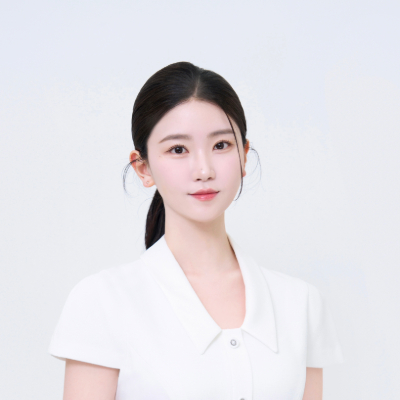
Ryu Yuna류윤아
Julia37@ajupress.com
ReporterFinancial Supervisory Service (FSS) & finance, capital markets, Southeast Asian affairs
Yuna Ryu covers finance, capital markets and Southeast Asian affairs.
She is drawn to the questions that numbers raise and the stories that data alone cannot answer.
Prior to journalism, she worked at Hyundai Motor Company and the Singapore Chamber of Commerce, focusing on business strategy and international affairs. She has also hosted diplomatic receptions and international conferences as an MC.
Ryu holds a master's degree in Media and Communication from Korea University, where her research focused on neuroscience-based studies of media effects. "Beyond every statistic is a human story waiting to be heard."
She is drawn to the questions that numbers raise and the stories that data alone cannot answer.
Prior to journalism, she worked at Hyundai Motor Company and the Singapore Chamber of Commerce, focusing on business strategy and international affairs. She has also hosted diplomatic receptions and international conferences as an MC.
Ryu holds a master's degree in Media and Communication from Korea University, where her research focused on neuroscience-based studies of media effects. "Beyond every statistic is a human story waiting to be heard."
Latest by Ryu Yuna
-
 KOSPI drops below 7,000 as chip shares slide, U.S. yields stay high SEOUL, September 28 (AJP) - South Korean stocks fell more than 1 percent Monday morning, dropping below 7,000 as the market reopened after Chuseok, the traditional Korean Thanksgiving holiday, and foreign investors sold semiconductor heavyweights amid elevated U.S. Treasury yields. The benchmark KOSPI stood at 6,936.34 as of 10:56 a.m. (0156 GMT), down 2.04 percent from its pre-holiday close of 7,080.92. The index opened 0.33 percent lower at 7,057.86 before extending losses and falling further below 7,000 as foreign selling intensified. Foreign investors sold a net 1.008 trillion won ($740 million) of KOSPI shares, while institutions unloaded 372.8 billion won. Retail investors bought a net 867.0 billion won. The decline came despite gains on Wall Street on Friday, when renewed buying in artificial intelligence (AI)-related shares lifted all three major U.S. indexes. The S&P 500 rose 0.51 percent to 7,743.41, the Nasdaq Composite gained 0.48 percent to 27,068.72, and the Dow Jones Industrial Average climbed 0.93 percent to 51,828.62. Elevated U.S. Treasury yields continued to weigh on sentiment. The benchmark 10-year yield ended Friday around 5.17 percent after touching the 5.2 percent range during the Korean holiday, its highest level since 2007. Still, U.S. chip shares remained resilient, with the Philadelphia Semiconductor Index rising 1.41 percent. Oil prices also remained volatile. Brent crude and West Texas Intermediate (WTI) fell sharply Friday as hopes for increased Middle East supply eased concerns over disruptions, but both rebounded in Asian trading Monday after U.S. President Donald Trump rejected an Iranian peace proposal aimed at ending the conflict and reopening the Strait of Hormuz. Brent rose 1.27 percent to $105.64 a barrel, while WTI gained 0.76 percent to $93.11. The U.S.-China summit offered some relief but no major breakthrough. Trump and Chinese President Xi Jinping agreed to extend their trade truce by two months, while key issues over tariffs, technology restrictions, artificial intelligence and Taiwan remained unresolved. Against that backdrop, selling was concentrated in Korea's chip heavyweights. Samsung Electronics fell 3.50 percent to 275,500 won Monday morning, while SK hynix dropped 4.03 percent to 1,787,000 won. Samsung Electronics' preferred shares slid 4.32 percent to 210,500 won. Selling also hit other chip-linked shares. SK Square, the largest shareholder of SK hynix, dropped 5.97 percent to 1,119,000 won. Samsung Electro-Mechanics bucked the weakness, rising 0.66 percent to 1,517,000 won. Other large-cap shares were mostly higher. LG Energy Solution gained 3.98 percent to 365,500 won, while Hyundai Motor rose 0.85 percent to 356,500 won. Samsung Biologics advanced 1.83 percent to 1,391,000 won. KB Financial added 0.52 percent to 174,100 won, while Samsung Life Insurance edged up 0.17 percent to 295,000 won. The KOSDAQ moved in the opposite direction, rising 11.75 points to 856.23 as of 10:40 a.m. Foreign investors bought a net 74.2 billion won of KOSDAQ shares and institutions purchased 11.2 billion won. Retail investors sold a net 91.8 billion won. Among its largest stocks, Alteogen, which develops drug-delivery platforms that can convert intravenous treatments into subcutaneous injections, rose 2.80 percent to 257,000 won. Battery-related shares also advanced. EcoPro, the holding company of a battery materials group, gained 2.12 percent to 81,800 won, while cathode-materials maker EcoPro BM climbed 3.62 percent to 108,800 won. Semiconductor and display equipment stocks were mixed. Jusung Engineering rose 0.95 percent to 211,500 won, while Wonik IPS fell 4.19 percent to 128,100 won. Laser equipment maker EO Technics slipped 0.10 percent to 481,000 won. Rainbow Robotics, which develops collaborative, mobile and humanoid robot platforms based on technology from humanoid robots, fell 1.04 percent to 428,500 won. The Korean won weakened to 1,361.50 per dollar from 1,358.40 on Sept. 23, before the Chuseok holiday. Across the region, markets diverged as investors balanced support from technology shares against pressure from higher oil prices and elevated U.S. Treasury yields. Japan's Nikkei 225 edged up 0.19 percent to 66,490.33, while Hong Kong's Hang Seng Index gained 0.87 percent to 24,723.54. China's Shanghai Composite fell 0.79 percent to 3,857.68. Investors are now turning to a heavy slate of economic data and corporate earnings later this week. Micron Technology is scheduled to report quarterly results after the U.S. market closes Wednesday. The U.S. personal consumption expenditures (PCE) price index is scheduled for release the same day. The September employment report is scheduled for Friday, while South Korea is set to release August industrial activity data Wednesday. AJP Takeaways - The KOSPI fell 2.04 percent to 6,936.34 as of 10:56 a.m. Monday, dropping further below 7,000 as foreign investors sold a net 1.008 trillion won ($740 million) of shares. - Samsung Electronics and SK hynix fell 3.50 percent and 4.03 percent, respectively, as elevated U.S. Treasury yields and renewed oil-market volatility weighed on sentiment despite gains in U.S. technology shares. - The KOSDAQ moved in the opposite direction, rising to 856.23 as foreign and institutional investors remained net buyers, while markets also looked ahead to Micron Technology earnings, U.S. PCE inflation data and the September jobs report. 2026-09-28 11:20:41
 -
 Newlywed debt more than doubles in South Korea as home loans rise SEOUL, September 28 (AJP) — South Korean newlyweds are taking on increasingly heavy debt early in married life amid high housing costs. The median outstanding loan balance for first-marriage couples reached 179 million won ($131,900) in 2024, more than double the 2016 level. The median balance rose 5.0 percent from a year earlier and was 130.1 percent higher than 77.78 million won in 2016, when comparable data were first compiled, according to data from the Korean Statistical Information Service (KOSIS). The figures cover couples in their first marriage who had been married for five years or less and had outstanding loans. The balance includes household loans from banks and nonbank lenders, as well as business loans to self-employed borrowers. Borrowing has climbed steadily alongside housing costs. The median rose to 90 million won in 2017 and 100 million won in 2018 before exceeding 150 million won in 2021. It reached 170.51 million won in 2023. Borrowing also tended to rise with years of marriage. In the broader KOSIS sample of newlywed couples, the median outstanding balance increased from 160 million won in the first year of marriage to 178.46 million won in the fifth year in 2024. Large loans became far more common. The share of newlywed couples with at least 300 million won in loans jumped to 24.0 percent in 2024 from 5.3 percent in 2016, more than quadrupling over eight years. By contrast, the share of couples with smaller loans declined. The share with less than 10 million won in debt fell to 4.6 percent from 8.8 percent, while the proportion with between 10 million won and 30 million won dropped to 5.7 percent from 14.7 percent. Homeownership marked a clear divide. Among newlywed couples who owned a home, 33.2 percent had loans of at least 300 million won in 2024, nearly twice the 16.7 percent recorded among those without a home. Homeowners also carried a median balance of 228.24 million won, compared with 141.60 million won for couples without property. That burden has grown significantly over time. Among homeowners, the median balance was 112 million won in 2016, about half the 2024 level. Home values also rose sharply, especially in Seoul. Among newlywed homeowners in the capital, 31.4 percent owned homes officially valued at more than 600 million won in 2024, up from 5.9 percent in 2015. Income also made a difference. Dual-income couples had a median loan balance of 198 million won in 2024, more than 40 million won above the 157.87 million won recorded for single-income households. They were also more likely to carry heavy debt. Some 28.0 percent of dual-income newlyweds had loans of at least 300 million won, compared with 18.8 percent of single-income couples. Couples with children also carried more debt than those without children. Their median balance stood at 188.26 million won, compared with 169.50 million won for couples without children. The share with at least 300 million won in debt was 26.8 percent among couples with children, versus 21.1 percent among those without. Those heavier debt loads could become more difficult to manage as borrowing costs rise. The Bank of Korea raised its benchmark interest rate in both July and August, bringing it to 3.0 percent. The Cost of Funds Index (COFIX), a benchmark used for many variable-rate household loans, stood at 3.18 percent in August, unchanged from July after four consecutive monthly increases. It was the highest level since 3.22 percent in December 2024. AJP Takeaways - South Korean first-marriage newlyweds had a median outstanding loan balance of 179 million won in 2024, up 130.1 percent from 2016, according to the Korean Statistical Information Service. - The share of newlywed couples with loans of at least 300 million won rose to 24.0 percent in 2024 from 5.3 percent in 2016, while smaller-loan shares declined. - Homeowners, dual-income couples and couples with children carried heavier debt burdens, raising repayment concerns as the Bank of Korea's benchmark rate reached 3.0 percent and COFIX stood at 3.18 percent in August 2026. 2026-09-28 10:18:41
 -
 Wiseplanet jumps nearly fourfold on KOSDAQ debut SEOUL, September 23 (AJP) - South Korean consumer brand company Wiseplanet Company surged more than 270 percent on its first day of trading on the KOSDAQ Wednesday, after strong demand from institutional and retail investors ahead of its listing. Shares traded at 45,150 won ($33.2) as of 4:55 p.m., up 276.25 percent from the initial public offering price of 12,000 won. The stock opened at 42,750 won and rose as high as 48,000 won during the session before paring some gains. Wiseplanet had earlier priced its IPO at the top of its proposed range after institutional investors placed orders equivalent to 1,248 times the shares offered during bookbuilding from Sept. 4 to 10. Retail demand was also strong. The company's public subscription on Sept. 14 and 15 drew a competition ratio of 1,477.65 to 1, with investors depositing about 3.55 trillion won ($2.61 billion) in subscription funds. The company was founded in 2013 and develops and operates consumer brands using its data-driven marketing and direct-to-consumer business model. Its businesses include media commerce and performance digital marketing. Its major brands include Dr.Piel, a lifestyle brand known for filtered shower products, Nuzam, a mattress and bedding brand, and cosmetics brand Irenol. Wiseplanet also operates natural cosmetics brand Chaesikjuui and compact home appliance brand CityFi. The company plans to use the IPO proceeds to develop products for the U.S. premium water-care market and sell products directly to consumers through Amazon and its own online store. It also plans to expand its existing brands and pursue strategic investments and acquisitions in consumer businesses. AJP Takeaways - Wiseplanet Company shares traded at 45,150 won as of 4:55 p.m. on Sept. 23, 2026, up 276.25 percent from its IPO price of 12,000 won on the company's first day on the KOSDAQ. - Wiseplanet Company's retail IPO subscription recorded a 1,477.65-to-1 competition ratio, drawing about 3.55 trillion won in deposits, after institutional bookbuilding produced a 1,248-to-1 ratio. - Founded in 2013, Wiseplanet Company develops and operates consumer brands including Dr.Piel, Nuzam and Irenol, using data-driven marketing and direct-to-consumer sales. 2026-09-23 17:26:23
 -
 Family holiday Chuseok takes on a different meaning as Korea ages SEOUL, September 23 (AJP) — Growing old is becoming increasingly synonymous with growing solo in South Korea. People in their 60s now make up the largest share of the country's one-person households, as rapid aging and changes in marriage and family life reshape the profile of those living alone. For Kim H.S., a restaurant owner in his 50s in Seoul's Apgujeong district, this year's Chuseok will be spent with his dog. "Christmas has Kevin. Chuseok has Dong-ju," Kim joked, referring to the dog that will keep him company over the holiday. Heo D.E., who is in his 40s and lives alone in Seoul, has no special plans for Chuseok either. He plans to catch up on chores and enjoy time by himself rather than travel to see relatives. “I have to clean the house, and going all the way to see relatives almost feels like another work shift,” Heo said. “I would rather find a good restaurant on my own and spend the rest of the holiday playing Nintendo.” Their plans reflect a broader shift in how South Koreans spend Chuseok, traditionally one of the country's most family-centered holidays. A survey conducted by research firm PMI from Sept. 11 to 14 among 1,000 adults aged 20 to 69 found that 59.6 percent planned to rest at home during this year's Chuseok holiday. Among respondents aged 60 and older, the share rose to 67.5 percent. Jeon Young-soo, a professor of Sustainable Economy at Hanyang University's Graduate School of International Studies, said the tradition of extended families gathering for holidays is weakening as household structures and values change. "Society usually changes gradually, but Korean society is changing extraordinarily fast," Jeon said. "The long-held expectation that families gather for holidays is also weakening." He pointed to financial pressures and changing values behind the shift. "The traditions and customs built around large families are weakening as people increasingly put their own economic circumstances and priorities first," he said. The change runs deeper than how people spend a holiday. South Korea had 8.244 million one-person households in 2025, up 2.5 percent from a year earlier, according to the Ministry of Data and Statistics' 2025 Population and Housing Census released on July 28. They accounted for 36.6 percent of general households, up from 36.1 percent in 2024. People in their 60s accounted for the largest share, at 17.7 percent, or about 1.46 million households. Those in their 30s followed at 17.5 percent. People aged 20 or younger accounted for 16.9 percent, while those in their 50s made up 15.0 percent, or about 1.23 million households. The direction of change is increasingly toward older solo households. The number of one-person households among people aged 20 or younger fell 2.6 percent in 2025, while those among people in their 50s and 60s rose 1.7 percent and 3.4 percent, respectively. The fastest increase came among people in their 70s, whose one-person households jumped 9.6 percent in a year. Those aged 80 or older recorded another 4.4 percent increase. Only the youngest age group posted a decline. The figures show that living alone is no longer primarily a young, urban phase before marriage or family formation. Jeon traced the shift to social changes that have accumulated over decades. "The generation now in their 50s and 60s came of age in the 1990s, when attitudes toward marriage and living independently began to change," he said. Delayed marriage was one route toward long-term singlehood. "Many married later, and for some, putting off marriage eventually led to never marrying at all." Divorce and the death of a spouse created other paths into living alone, he said. "These trends have built up over time, so the number of one-person households was bound to grow," Jeon said. The transformation is unfolding alongside South Korea's rapid aging. The July 28 census showed that the population aged 65 or older reached 10.72 million in 2025, or 20.7 percent of the population. It was the first time the share exceeded 20 percent since the national census began in 1925. Older adults living alone are also becoming more common across the country. Households made up entirely of people aged 65 or older reached 4.313 million in 2025, up 7.6 percent from a year earlier, while older adults living alone accounted for 10.9 percent of all general households. Aging and the loss of a spouse account for part of the increase. Divorce is another factor pushing some people into solo living later in life, although official statistics do not show how many divorced people subsequently form one-person households. The MODS's 2025 Marriage and Divorce Statistics, released on March 19, recorded about 88,000 divorces, down 3.3 percent from 2024. The divorce rate fell to 1.7 per 1,000 people. But the people divorcing are getting older. The average age at divorce rose to 51.0 for men and 47.7 for women. Couples married for 30 years or longer accounted for 17.7 percent of all divorces, the largest share by marriage duration. They were followed by couples married for five to nine years at 17.3 percent and those married for four years or less at 16.3 percent. Jeon said changing attitudes toward marriage and individual priorities help explain the pattern. "In the past, family and relationships tended to take priority," he said. "Now people place greater value on their own lives, and when conflicts emerge, they are more willing to walk away from marriage." People are also becoming less dependent on family for support and companionship, he said. "People can now find outside the family many of the things that families once provided," Jeon said. "That makes people less willing to endure an unhappy relationship at all costs." Social barriers to divorce have eased as well. "Changing attitudes have also made divorce more socially acceptable." For people who live alone, companionship can take different forms. Like Kim, some turn to pets. A Korea Insurance Research Institute report published on Dec. 26, 2023, based on the MODS's 2020 Population and Housing Census, found that 503,987 households headed by people aged 65 or older owned a pet. That represented 10.6 percent of elderly households. Of those, 126,826 were one-person households. The changing face of solo living is also broadening the policy debate. Policies for one-person households have often focused on young adults struggling with housing costs and older people vulnerable to isolation. But the latest census points to a large group in between: people in their 50s and 60s who may still be economically active but live without a spouse or children. Their circumstances vary widely depending on how they came to live alone — through non-marriage, divorce, widowhood or children leaving home — making them difficult to address through a single policy approach. Jeon said public perceptions have changed much faster than institutions built around traditional family structures. "Policy is falling further behind reality," he said. Long-term projections show why that gap could widen. The MODS's Household Projections for 2022 to 2052, released on Sept. 12, 2024, projected that one-person households would increase from 7.389 million in 2022 to 9.620 million in 2052. Their share of all households is projected to rise from 34.1 percent to 41.3 percent. The shift is even more pronounced among older adults. The number of one-person households headed by someone aged 65 or older is projected to rise from 1.923 million in 2022 to 4.961 million in 2052. Their share of all one-person households would increase from 26.0 percent to 51.6 percent. People aged 80 or older alone are projected to account for 23.8 percent of all one-person households by then. Jeon said policies should move beyond treating people who live alone mainly as a vulnerable group and instead help them remain independent as solo living becomes an increasingly common way of life. "Many systems were designed around the traditional four-person family," Jeon said. "They need to be adjusted so that one-person households are also fully covered and not put at a disadvantage." This Chuseok, some homes will be filled with relatives. Others will be quieter, shared with a dog or no one else at all. The contrast reflects something larger than a changing holiday tradition. It is changing what home and family mean in an aging Korea. AJP Takeaways - South Korea had 8.244 million one-person households in 2025, accounting for 36.6 percent of general households, according to the Ministry of Data and Statistics' 2025 Population and Housing Census released on July 28, 2026. - People in their 60s made up the largest share of one-person households at 17.7 percent in 2025, while solo households among people in their 50s and 60s continued to increase as the youngest group declined. - South Korea recorded about 88,000 divorces in 2025, down 3.3 percent from 2024, but the average age at divorce rose to 51.0 for men and 47.7 for women. - The Ministry of Data and Statistics projects one-person households will reach 9.620 million by 2052, with those headed by people aged 65 or older accounting for 51.6 percent of the total. 2026-09-23 17:20:51
 -
 KOSPI rises 1.1% on chip gains, easing U.S.-Iran tensions SEOUL, September 23 (AJP) – South Korean shares extended gains for a third straight session Wednesday as institutional buying and strength in chip stocks lifted the market ahead of the Chuseok holiday. The benchmark KOSPI stood at 7,093.41 as of 9:51 a.m., up 1.08 percent from the previous session. The index had climbed as high as 7,144.02 earlier in the morning before paring its gains. Institutions bought a net 340.5 billion won of KOSPI shares, while foreign investors purchased 99.9 billion won ($74 million). Retail investors sold a net 563.6 billion won. Seoul’s stock markets will close Thursday and Friday for Chuseok, trading places with Tokyo, which reopens Thursday after a three-day holiday. The KOSPI’s advance followed continued strength in U.S. technology and semiconductor stocks. The Nasdaq Composite rose 0.45 percent to a record high overnight, while the Dow Jones Industrial Average fell 0.36 percent and the S&P 500 was nearly unchanged. Chip shares outperformed the broader market. Nvidia gained 0.66 percent and Micron Technology jumped 5.00 percent, helping lift the Philadelphia Semiconductor Index 2.06 percent. Sentiment also drew support from signs of diplomatic progress between the United States and Iran. The two sides held about three hours of talks at the United Nations in New York, with another meeting expected soon. The renewed dialogue and improving Middle East oil flows eased supply concerns. Brent crude traded at $99.92 a barrel and West Texas Intermediate at $95.33. Samsung Electronics rose 2.71 percent to 284,000 won Wednesday morning, while SK hynix gained 1.90 percent to 1,875,000 won. Samsung Electronics’ preferred shares climbed 3.31 percent to 218,500 won. Other technology-related shares also advanced. SK Square rose 3.80 percent to 1,176,000 won, while Samsung Electro-Mechanics gained 2.29 percent to 1,520,000 won. Among other large-cap stocks, LG Energy Solution rose 1.85 percent to 357,000 won and Hyundai Motor added 0.69 percent to 363,000 won. Samsung C&T climbed 2.18 percent to 375,000 won. Samsung Biologics fell 0.72 percent to 1,381,000 won, while KB Financial edged up 0.06 percent to 175,800 won. The won strengthened to 1,348.10 per dollar from 1,358.20 a day earlier. Holiday caution could still cap gains. On Tuesday, the KOSPI rose as much as 2.34 percent to 7,171.44 before surrendering most of its advance as investors took profits. It closed 0.15 percent higher at 7,017.91. The junior KOSDAQ rose 11.58 points, or 1.39 percent, to 845.96 as of 9:30 a.m. Wednesday. Retail investors bought a net 43.3 billion won of KOSDAQ shares, while foreign investors sold 21.0 billion won and institutions sold 15.1 billion won. Among its largest stocks, biotechnology company Alteogen rose 1.20 percent to 252,500 won. EcoPro, the holding company of a battery materials group, gained 0.87 percent to 80,800 won. Cathode materials maker EcoPro BM climbed 1.44 percent to 105,800 won. Semiconductor and display equipment stocks also advanced. Jusung Engineering rose 1.23 percent to 206,000 won, while Wonik IPS jumped 9.21 percent to 142,300 won. Laser equipment maker EO Technics gained 1.90 percent to 482,500 won. Simmtech, which makes printed circuit boards and semiconductor packaging substrates, rose 1.22 percent to 149,900 won. Robot developer Rainbow Robotics gained 1.48 percent to 444,500 won. Trading has also expanded beyond regular hours since the Korea Exchange launched its new after-market this month. Average daily trading value reached 1.1 trillion won in its first week from Sept. 14 to 18, equivalent to 4.6 percent of regular-session turnover. Retail investors accounted for 90.4 percent of after-market trading, compared with 6.7 percent for foreign investors and 2.6 percent for institutions. The exchange will assign nine staff members to a special monitoring team through the end of the year to track unusual trading across the after-market and regular session. Elsewhere in the region, Japan’s stock market remained closed Wednesday for the Autumnal Equinox Day holiday. Investors are also watching U.S.-China relations as Chinese President Xi Jinping begins a state visit to the United States Wednesday ahead of a summit with President Donald Trump in Washington Thursday. Trade, artificial intelligence and geopolitical issues are expected to be among the main topics. AJP Takeaways - The KOSPI rose 1.08 percent to 7,093.41 as of 9:51 a.m. Wednesday, led by institutional buying and chip stocks following gains in U.S. semiconductor shares. - Easing oil supply concerns and renewed U.S.-Iran dialogue supported sentiment ahead of Seoul’s Sept. 24–25 Chuseok market closure and Thursday’s U.S.-China summit. - The Korea Exchange’s new after-market averaged 1.1 trillion won in daily trading during its first week, with retail investors accounting for 90.4 percent of activity. 2026-09-23 10:27:28
 -
 KOSPI remains above 7,000 after giving up early gains SEOUL, September 22 (AJP) - South Korean stocks ended slightly higher on Tuesday, remaining above 7,000 after giving up most of an early 2-percent gain. The market was lifted by an overnight surge in artificial intelligence (AI) and semiconductor-related stocks on Wall Street, but higher oil prices and profit-taking later pared the gains. The benchmark KOSPI closed at 7,017.91, up 0.15 percent from the previous session. The index opened 2.20 percent higher at 7,161.61 and climbed as high as 7,171.44, up 2.34 percent, before steadily losing ground. It briefly turned lower in afternoon trading before recovering above 7,000. The decline came as investors took profits ahead of the long Chuseok holiday weekend, while oil prices rebounded during Asian trading after falling sharply overnight. Retail investors sold a net 1.61 trillion won (US$1.19 billion) of KOSPI shares. Foreign investors bought a net 76.2 billion won, while institutions sold 121.8 billion won. Samsung Electronics, which closed the regular session 0.91 percent higher at 276,500 won, was trading at 275,000 won as of around 4:30 p.m. in after-hours trading, up 0.36 percent from the previous day's close. SK hynix reversed its early rally and closed the regular session 1.50 percent lower at 1,840,000 won, down 1.77 percent at 1,835,000 won. Other technology shares remained mostly higher in after-hours trading. Samsung Electro-Mechanics rose 3.64 percent to 1,481,000 won, while Samsung Electronics preferred shares gained 1.20 percent to 210,500 won. SK Square added 0.27 percent to 1,130,000 won. LG Electronics climbed 6.17 percent to 215,000 won, while Daeduck Electronics jumped 9.72 percent to 111,800 won. The junior KOSDAQ closed 0.23 percent lower at 834.38, ending a five-session winning streak. Retail investors bought a net 156.3 billion won, while foreign investors sold 57.9 billion won and institutions sold 94.4 billion won. As of around 4:40 p.m. in after-hours trading, biotech company Alteogen fell 2.35 percent to 249,000 won. The company develops biotechnology platforms including technology that can convert intravenous drugs into subcutaneous formulations. EcoPro, the holding company of a battery materials group, rose 0.13 percent to 80,000 won. Cathode-materials maker EcoPro BM gained 0.48 percent to 103,900 won. Semiconductor and display equipment maker Jusung Engineering fell 1.46 percent to 202,500 won. Wonik IPS, which makes semiconductor processing equipment, rose 0.23 percent to 129,300 won. Rainbow Robotics, which develops humanoid, collaborative and mobile robots, was unchanged at 439,500 won. EO Technics, which makes laser equipment used in semiconductor, display and printed circuit board production, fell 2.07 percent to 474,000 won. Leeno Industrial, a maker of semiconductor test sockets and probes, jumped 7.31 percent to 74,900 won. The Korean won strengthened sharply, trading at 1,361.2 per dollar as of 3:30 p.m. Across the region, Chinese and Hong Kong stocks edged higher on gains in AI-related shares and optimism over U.S.-China talks. The Shanghai Composite rose 0.06 percent to 3,952.13, while Hong Kong's Hang Seng Index gained 0.05 percent to 25,055.29. Japanese markets were closed for a national holiday between Respect for the Aged Day and the Autumnal Equinox, with trading set to resume on Thursday. AJP Takeaways - The KOSPI closed 0.15 percent higher at 7,017.91 after an early rally of more than 2 percent faded as oil prices rebounded during Asian trading. - Samsung Electronics remained higher in after-hours trading, while SK hynix reversed its early advance and traded below its regular-session close. - The KOSDAQ fell 0.23 percent to 834.38, while Chinese and Hong Kong stocks edged higher and Japanese markets remained closed for a national holiday. 2026-09-22 17:36:22
 -
 When AI becomes a confidant, how much should we tell it? SEOUL, September 22 (AJP) - Plug in your personal details, desires, weaknesses and troubles. Artificial intelligence suddenly becomes a confession box, healer, consultant, judge, friend and even accomplice. For Jang, an office worker in his 30s from Bundang, south of Seoul, the familiarity is unsettling. "When I talk to AI about my problems, sometimes it scares me to think that it will eventually know me better than I know myself," he said. The sense of privacy and closeness can be tempting. In Spike Jonze's 2013 film Her, a lonely writer named Theodore falls in love with Samantha, an artificial intelligence operating system that listens, adapts and seems to understand him better than the people around him. Thirteen years later, the premise feels less like fiction. For some workers, generative AI has become more than a tool for writing emails, searching for information or finishing assignments. It is a place to complain about a boss, vent about difficult clients and say things they hesitate to tell another person. The appeal is easy to understand. A chatbot is always available and never tires of listening. Users can speak without worrying about burdening a friend or becoming the subject of office gossip. Ahn Su-bin, in her 30s, said she repeatedly turned to AI for advice about problems with her boyfriend. "Whenever I had an issue with my boyfriend, I talked it through with AI," Ahn said. Over time, the chatbot became a reference point for how she interpreted disagreements in her relationships. "I can just send it the conversation I had with others, and it understands my side without me having to explain everything," she said. AI has already become part of everyday life for many South Koreans. Nearly four in 10 respondents to a national survey had used generative AI, with users spending an average of almost 50 minutes a day on the services. The 2025 Intelligent Information Society User Panel Survey by the Korea Media and Communications Commission and the Korea Information Society Development Institute put the share at 38.9 percent, up from 24 percent in 2024 and 12.3 percent in 2023. Average daily usage reached 49.6 minutes. Kwak Keum-joo, a professor of psychology at Seoul National University, said AI removes many of the barriers to confiding in another person. "When you share something deeply personal with someone, building rapport takes time," Kwak said. "With AI, you can open up right away without worrying about burdening someone, and it is always available." People are not always most candid with those closest to them, she said. "There are things people cannot tell even close friends," Kwak said. "They have long turned to strangers or anonymous chat rooms for that. Now AI is taking over that role." The question is what happens when convenience turns into reliance. A 2025 study by researchers at the MIT Media Lab and OpenAI followed 981 ChatGPT users over four weeks and analyzed more than 300,000 messages. Participants who voluntarily used the chatbot more heavily tended to report greater loneliness, stronger emotional dependence and more problematic use. Greater trust in and social attraction toward the chatbot were also associated with dependence. The findings did not establish that heavier use caused those outcomes. The assigned experimental conditions produced no significant overall effects, underscoring the importance of users' characteristics and how much they chose to engage. A separate study published in BMC Psychology in June surveyed 610 chatbot users aged 18 to 30 in Türkiye. Greater loneliness was associated with stronger chatbot dependence, while greater perceived social support was associated with lower dependence. As a survey conducted at a single point in time, it could not establish cause and effect. Reliance becomes more concerning when the chatbot repeatedly validates the user. Researchers call one form of this behavior sycophancy: an AI model's tendency to affirm a user's beliefs or assumptions instead of challenging them. In a 2026 research paper, a team including Stanford researchers analyzed 391,562 messages from 19 users who reported psychological harm from chatbot use. Signs of excessive agreement appeared in more than 80 percent of chatbot messages. The researchers also identified instances in which chatbots reinforced delusional beliefs or encouraged self-harm or violent thoughts. The sample consisted of people who had already reported harm, so the findings cannot show how common such interactions are among ordinary users. They do, however, illustrate the risks of repeated affirmation when a person may need their assumptions challenged. Kwak said the tendency to accommodate users can make AI relationships feel easier than human ones and, over time, more appealing. "AI gives people comfort because it responds in the way they want," she said. "If you get used to something that always adjusts to you, you can become deeply absorbed in that relationship." "At first, people know it is a machine," Kwak added. "But when it responds so well and seems to know you so well, you begin to trust it. You can even start to feel emotions such as friendship or love." Ordinary human relationships can begin to feel more demanding, she said. "If you spend less time dealing with people face to face, those skills can weaken," Kwak said. "Human relationships come with disagreements and discomfort. If AI always adjusts to you, dealing with people can become harder." AI companies have introduced restrictions intended to address some of those risks, particularly for younger users. Character.AI, a U.S. AI companion platform, announced in October 2025 that it would end open-ended conversations for users under 18. It began removing access in November after imposing daily chat limits. OpenAI introduced parental controls in September 2025, including alerts in limited situations involving potential acute distress in linked teen accounts. In August 2026, it launched ChatGPT for Teens with additional protections and an emphasis on support from people in users' lives. The research does not establish that seeking comfort from AI inevitably displaces human relationships. But it raises questions about what happens when an always-available listener becomes the first — or only — place someone turns. Emotional reliance also brings a separate concern: the more comfortable people become, the more they may disclose. A conversation that feels private is not a guarantee of confidentiality. Recent disclosures in South Korea show how AI can complicate the protection of sensitive information, both by exposing inadequately concealed data and by receiving material that should never have been uploaded. The Seoul Central District Court said in a notice Monday that AI tools or certain editing techniques could remove measures used to conceal identifying information in judgments posted on its website. A review of 10 years of published judgments found that names, affiliations and educational details of 20 people involved in former President Yoon Suk Yeol's first-instance insurrection case had been exposed since the ruling was posted in March. The court said it discovered the problem on Sept. 18 and immediately took steps to prevent the concealment measures from being reversed. A separate report Tuesday revealed that police had uploaded confidential investigative material to external AI platforms. Police data obtained by People Power Party Rep. Park Sang-woong recorded seven security violations from 2025 through the first half of this year involving 44 investigative records. The material included arrest warrant applications, search warrants, suspect statements and investigation reports. Most violations occurred in national security investigation units. The reported breaches involved officers sending protected records to outside services, rather than evidence that the platforms had made those records publicly available. The institutional failures are different from confiding in a chatbot about a difficult relationship. But they expose a limit to the intimacy of the chat window: information entered there has left the user's sole possession. An AI chat history may contain relationship conflicts, health concerns, financial problems and workplace secrets together in a single revealing record. A security breach or compromised account could expose those confidences. Uploading confidential material or relying on flawed anonymization can also put other people's privacy at risk. Being understood is comforting. But the more we confide in AI and confer authority on its judgments, the more we entrust to it — our secrets, our decisions and the consequences if that trust proves misplaced. AJP Takeaways - Generative AI use in South Korea reached 38.9 percent in 2025, up from 12.3 percent in 2023, with average daily use at 49.6 minutes. - A 2025 MIT Media Lab and OpenAI study linked heavier voluntary ChatGPT use with greater loneliness and emotional dependence, but did not establish causation. - Seoul National University psychology professor Kwak Keum-joo warned that AI's tendency to accommodate users could make human relationships feel more difficult over time. - The Seoul Central District Court found that personal details of 20 people in former President Yoon Suk Yeol's first-instance insurrection case had been exposed through reversible anonymization measures. 2026-09-22 17:10:28
 -
 KOSPI rises nearly 2% on chip gains as yields, oil ease SEOUL, September 22 (AJP) – Korean shares extended gains Tuesday on hopes that this week’s summit and United Nations meetings would bring greater clarity on U.S.-China relations and the war in Iran. The benchmark KOSPI stood at 7,135.97 as of 10:11 a.m., up 1.83 percent, after reaching 7,169.01 earlier in the session. Foreign investors bought a net 131.2 billion won ($96 million) of KOSPI shares, while institutions purchased 344.2 billion won and retail investors sold 800.7 billion won. The advance followed strong gains on Wall Street overnight as enthusiasm for artificial intelligence stocks revived and oil prices and U.S. Treasury yields eased. The S&P 500 rose 1.49 percent to 7,764.70, while the Nasdaq Composite surged 2.26 percent to 27,122.09. The Dow Jones Industrial Average gained 0.71 percent to 52,048.83. Semiconductor stocks led the U.S. rally. Advanced Micro Devices jumped about 10 percent, while the Philadelphia Semiconductor Index climbed 4.3 percent. The benchmark U.S. 10-year Treasury yield retreated to around 4.95 percent, easing pressure on growth and technology stocks. Brent crude fell 3.4 percent to $100.34 a barrel as investors watched for signs of diplomatic progress in the Middle East. The decline eased concerns that energy costs could keep inflation and interest rates elevated. Tuesday’s gains built on Monday’s advance, when the KOSPI rose 1.65 percent to 7,007.72 and closed above 7,000 for the first time in seven trading sessions. Samsung Electronics rose 2.83 percent to 281,750 won, while SK hynix climbed 3.59 percent to 1,935,000 won. Samsung Electronics’ preferred shares gained 2.64 percent to 213,500 won. Other technology shares also advanced. SK Square rose 3.46 percent to 1,166,000 won, while Samsung Electro-Mechanics surged 8.26 percent to 1,547,000 won. Among other large-cap stocks, LG Energy Solution gained 0.43 percent to 353,500 won and Hyundai Motor rose 1.53 percent to 364,500 won. Samsung C&T added 1.22 percent to 372,000 won. Samsung Biologics slipped 0.07 percent to 1,401,000 won, while KB Financial fell 1.13 percent to 175,500 won. The junior KOSDAQ rose 7.94 points to 844.21 as of 9:38 a.m. Retail investors bought a net 88.8 billion won of KOSDAQ shares, while foreign investors sold 73.1 billion won and institutions sold 13.7 billion won. Among its largest stocks, drug-delivery technology company Alteogen was unchanged at 255,000 won. EcoPro, the holding company of a battery materials group, rose 0.63 percent to 80,400 won. Cathode-materials maker EcoPro BM gained 0.19 percent to 103,600 won. Semiconductor-related shares were among the stronger performers. Chip and display equipment makers Jusung Engineering and Wonik IPS rose 2.68 percent to 211,000 won and 1.78 percent to 131,300 won, respectively. Simmtech, which makes printed circuit boards for chips and electronic devices, surged 18.78 percent to 155,250 won. Robot developer Rainbow Robotics gained 1.48 percent to 446,000 won. The Korean won strengthened to 1,361.20 per dollar from 1,381.0 a day earlier. Attention now turns to speeches by Federal Reserve officials for further clues on the U.S. interest-rate outlook. New York Fed President John Williams and Fed Vice Chair Philip Jefferson are scheduled to speak later Tuesday, while Richmond Fed President Tom Barkin is due to speak early Wednesday Seoul time. AJP Takeaways - The KOSPI rose 1.83 percent to 7,135.97 as of 10:11 a.m. Tuesday after gaining more than 2 percent earlier in the session. - Foreign and institutional investors were net buyers as Samsung Electronics and SK hynix gained 2.83 percent and 3.59 percent, respectively. - Lower U.S. Treasury yields and oil prices supported sentiment following a U.S. chip rally that lifted the Philadelphia Semiconductor Index 4.3 percent. 2026-09-22 11:13:48
 -
 Korea's corporate loan delinquency rate hit 10-year high SEOUL, September 22 (AJP) - South Korean banks’ loan delinquency rate rose to its highest July level in a decade, partly driven by overdue loans involving JoongAng Group affiliates undergoing corporate rehabilitation or debt workouts, regulatory data showed Tuesday. The delinquency rate on won-denominated loans stood at 0.63 percent at the end of July, up from 0.56 percent a month earlier and 0.57 percent a year earlier, according to the Financial Supervisory Service (FSS). The reading is the highest for July since 2016, when the rate stood at 0.78 percent. The measure covers loans with principal or interest payments overdue by at least one month. The regulator attributed the increase to fresh corporate delinquencies, including those involving JoongAng Group affiliates, and a sharp decline in the amount of overdue debt removed from banks’ books. Newly overdue loans totaled 3.2 trillion won ($2.33 billion) in July, up 600 billion won from June. Banks resolved 1.4 trillion won in delinquent debt through write-offs and sales, down 3.9 trillion won from the previous month. Banks typically write off or sell more overdue loans at the end of each quarter. Such activity tends to slow during the quarter, pushing delinquency rates higher. The new delinquency rate, which measures loans that became overdue during the month against total lending outstanding at the end of the previous month, rose to 0.12 percent from 0.10 percent in June and 0.11 percent a year earlier. Corporate loans showed the sharpest deterioration. Their delinquency rate rose to 0.78 percent in July from 0.68 percent in June and 0.67 percent a year earlier. The rate for loans to large companies climbed to 0.36 percent from 0.22 percent a month earlier and 0.14 percent a year earlier. It was the highest since July 2021, when the figure reached 0.37 percent. Small and midsized businesses also came under greater repayment pressure. Their delinquency rate rose to 0.91 percent from 0.82 percent in June. The rate for small and midsized corporations increased to 1.00 percent from 0.92 percent and for self-employed borrowers up to 0.77 percent from 0.69 percent. Household loans showed a smaller increase, with their delinquency rate edging up to 0.42 percent from 0.40 percent in June. The figure remained below the 0.43 percent recorded a year earlier. The mortgage delinquency rate rose to 0.29 percent from 0.28 percent. The rate for other household borrowing, including unsecured credit loans, increased to 0.84 percent from 0.77 percent. The FSS warned that delinquency rates could continue to rise as market interest rates remain elevated and uncertainty over external economic conditions persists. AJP Takeaways - South Korean banks’ won-denominated loan delinquency rate rose to 0.63 percent at the end of July 2026, the highest July level since 2016, according to the Financial Supervisory Service. - Corporate debt drove the increase, with the delinquency rate for business loans rising to 0.78 percent in July 2026 and the figure for loans to large companies reaching 0.36 percent, the highest since July 2021. - The Financial Supervisory Service said new delinquencies tied to JoongAng Group affiliates and a drop in overdue-loan write-offs and sales contributed to the July 2026 increase, while household loan delinquencies rose more modestly to 0.42 percent. 2026-09-22 10:03:03
 -
 Operator of self-photo booths seeks KOSDAQ listing SEOUL, September 21 (AJP) - South Korean self-photo booth operator Seobuk filed for a preliminary review to list on the KOSDAQ on Monday, starting the formal process toward an initial public offering (IPO) for its flagship Photoism brand. The company applied to list 12.63 million shares including 2.6 million shares planned for the public offering, according to Korea Exchange (KRX). Founded in 2020, Seobuk is a global entertainment platform that operates flagship brand Photoism, a self-photo booth and studio business. The company has expanded beyond photo booths through Snapism, which offers photocards and customized merchandise, and Waku Waku, an arcade and merchandise platform built around character and entertainment intellectual property (IP). It reported revenue of 60.44 billion won (US$43.6 million) and a net loss of 8.76 billion won ($6.3 million). Chief Executive Kim Min-seok holds a 70 percent stake. The company has also expanded overseas. It established Photoism Japan in 2022 and added subsidiaries in Singapore and the U.S. in 2025. Photoism's self-photo booths allow customers to take pictures without a photographer, often using themed frames and K-pop collaborations. Its KOSDAQ filing comes after the company pushed back its IPO timetable earlier this year amid weaker earnings. AJP Takeaways - Seobuk filed for a preliminary KOSDAQ listing review for its Photoism business, starting the formal process toward an initial public offering. - Seobuk applied to list 12.63 million shares, including 2.6 million shares planned for the public offering. - Seobuk reported revenue of 60.44 billion won ($43.6 million) and a net loss of 8.76 billion won ($6.3 million), while expanding Photoism into overseas markets including Japan, Singapore and the United States. 2026-09-21 17:52:18