

Journalist

Ryu Yuna류윤아
Julia37@ajupress.com
ReporterFinancial Supervisory Service (FSS) & finance, capital markets, Southeast Asian affairs
Yuna Ryu covers finance, capital markets and Southeast Asian affairs.
She is drawn to the questions that numbers raise and the stories that data alone cannot answer.
Prior to journalism, she worked at Hyundai Motor Company and the Singapore Chamber of Commerce, focusing on business strategy and international affairs. She has also hosted diplomatic receptions and international conferences as an MC.
Ryu holds a master's degree in Media and Communication from Korea University, where her research focused on neuroscience-based studies of media effects. "Beyond every statistic is a human story waiting to be heard."
She is drawn to the questions that numbers raise and the stories that data alone cannot answer.
Prior to journalism, she worked at Hyundai Motor Company and the Singapore Chamber of Commerce, focusing on business strategy and international affairs. She has also hosted diplomatic receptions and international conferences as an MC.
Ryu holds a master's degree in Media and Communication from Korea University, where her research focused on neuroscience-based studies of media effects. "Beyond every statistic is a human story waiting to be heard."
Latest by Ryu Yuna
-
 Taeseok Optical seeks KOSDAQ listing SEOUL, September 15 (AJP) - South Korean eyewear and fashion company Taeseok Optical has applied for preliminary approval to list on the KOSDAQ, starting the review process for a potential market debut, the company said Tuesday. The company said it submitted the preliminary listing application to the Korea Exchange (KRX), a required step before proceeding with an initial public offering (IPO). Founded in 2015, Taeseok Optical has built its business around eyewear manufacturing, sourcing and distribution. Its strategy centers on developing and securing products quickly to respond to changing fashion trends and consumer demand. Its portfolio includes Viewmap and SUPPORT LIGHT, two eyewear brands created by the company, as well as Brera and Harry Mason, which it later acquired. It has also broadened its lineup through distribution licenses for global fashion brands including Vera Wang, TUMI, Anna Sui, Maje and AllSaints. The licenses allow it to expand its eyewear business under established global labels in the country. More recently, Taeseok Optical has expanded beyond eyewear into other fashion products, using its sourcing and distribution network built through its core business. That expansion has supported rapid growth. The company said revenue increased at a compound annual growth rate of 115 percent over the past three years. Its sales network has also widened from home-shopping channels to department stores, duty-free shops, online malls and its directly operated flagship store in Seoul’s Seongsu district. Taeseok Optical said it plans to adapt sales strategies to the customer base of each channel as it works to strengthen its brands and increase revenue. AJP Takeaways - Taeseok Optical has entered the preliminary review process for a KOSDAQ listing. - Taeseok Optical sells its own eyewear brands and products under global labels including VERA WANG, TUMI, ANNA SUI, MAJE and ALLSAINTS. - Taeseok Optical said revenue grew at a compound annual rate of 115 percent over the past three years as its sales channels expanded. 2026-09-15 16:25:43
 -
 DTS begins KOSDAQ IPO process SEOUL, September 14 (AJP) - South Korean thermal solutions company DTS has begun the initial public offering (IPO) process for a KOSDAQ listing after filing a securities registration statement with the Financial Services Commission (FSC), the company said Monday. DTS plans to offer 2,228,917 initial shares at a proposed price range of 17,000 won to 18,500 won each. The deal is expected to raise between 37.9 billion won ($28.2 million) and 41.2 billion won ($30.6 million). Institutional bookbuilding is scheduled for October 1 to 8, followed by subscriptions for retail investors on October 13 and 14. Daishin Securities is the lead underwriter. Founded in 2000, DTS designs and manufactures air-cooled heat exchangers used in power generation, liquefied natural gas and petrochemical plants. Its main products include air fin coolers, or AFCs, which use outside air to cool process gases and liquids. It also makes air-cooled condensers, or ACCs, which cool steam from power-generation turbines and convert it back into water. The company said its main strength lies in designing heat exchangers to meet the operating conditions of each plant. Its technology includes fins that improve heat transfer, low-noise designs and the capacity to manufacture large-scale equipment. DTS handles projects from design and production to quality inspection and delivery, allowing it to adjust equipment to different performance, noise and installation requirements. The business has expanded overseas. As of the end of the first half, DTS had completed 284 projects in more than 30 countries. It said it had supplied 15 of the world's top 20 engineering, procurement and construction (EPC) companies. DTS also said it had received as many as 27 repeat orders from a single end customer and up to 15 from the same EPC company, reflecting what it described as long-term relationships with major clients. Sales and operating profit have also grown. Revenue rose to 142.7 billion won last year from 75.8 billion won in 2023, while operating profit increased to 25.1 billion won from 13.3 billion won over the same period. Its operating margin stood at 17.6 percent last year. The growth continued in the first half. Revenue reached 79.1 billion won, up 26.2 percent from a year earlier. Operating profit rose 42.9 percent to 15.0 billion won. DTS plans to use the IPO proceeds to expand and automate production facilities and develop new businesses. Investments at its Gunsan production base, which produces heat-exchange equipment, are intended to raise productivity and improve cost competitiveness. It also plans to expand its existing energy-plant capacity and strengthen its business in artificial intelligence and low-carbon energy. AJP Takeaways - DTS said September 14 that it filed a securities registration statement for a KOSDAQ IPO, offering 2.23 million shares at 17,000 won to 18,500 won each. - The offering is expected to raise 37.9 billion won to 41.2 billion won, with institutional bookbuilding scheduled for October 1 to 8 and retail subscriptions for October 13 and 14. - DTS completed 284 projects in more than 30 countries as of the first half and reported first-half revenue of 79.1 billion won and operating profit of 15.0 billion won. 2026-09-14 17:51:39
 -
 HUINNO passes technology review for KOSDAQ IPO SEOUL, September 14 (AJP) - South Korean digital health company HUINNO has passed a technology review required for a special KOSDAQ listing, moving its initial public offering (IPO) process to the next stage. The company said Monday it received an A rating and a BBB rating from two evaluation agencies designated by the Korea Exchange (KRX), meeting the technology requirement for the listing route. HUINNO develops artificial intelligence (AI)-based medical technology, including wearable systems for heart monitoring. “We will thoroughly prepare for the follow-up procedures and expand the supply of our solutions to medical institutions at home and abroad based on our AI analysis capabilities and product safety,” CEO Kil Young-jun said. The assessment focused on HUINNO's technology for electrocardiogram, or ECG, diagnosis and patient monitoring. The company combines AI with wearable medical devices to help doctors detect abnormal heart rhythms and track patients over time. Arrhythmias can occur intermittently and may not appear during short hospital tests. Longer ECG monitoring can help doctors detect irregular heart activity that might otherwise be missed. HUINNO's Memo Care system records ECG data through a wearable device for up to 14 days. Its AI software analyzes readings to diagnose arrhythmias. The service has been introduced at major tertiary hospitals in South Korea and is also being adopted by general hospitals and smaller clinics, according to the company. Memo Cue, another solution from HUINNO, is designed for hospitalized patients. It allows medical staff to monitor ECG readings and other vital signs in real time and has been adopted mainly by tertiary hospitals. HUINNO said its in-house AI technology can identify abnormal signals in ECG data and support doctors in interpreting the results. Its wearable ECG patch also includes protection designed to improve electrical safety during defibrillation. The company has raised about 80 billion won ($59.4 million) from South Korean institutional investors. Yuhan Corp., a South Korean pharmaceutical company, is both a strategic investor and HUINNO's domestic distribution partner. It is also expanding overseas. Memo Care has received medical device certification in Japan, and the company has signed an exclusive distribution agreement with a local partner covering the Japanese market. It is preparing to launch Vital Picasso, an AI-based clinical decision support system designed to help medical staff detect signs that a hospitalized patient's condition may be worsening. AJP Takeaways - South Korean digital health company HUINNO passed the technology assessment required for a special KOSDAQ listing after receiving A and BBB ratings from two Korea Exchange-designated evaluation agencies. - The company plans to move toward a preliminary listing review as it pursues an IPO, with its technology centered on AI-powered ECG analysis and wearable patient-monitoring devices. - HUINNO has raised about 80 billion won from institutional investors, entered the Japanese market with Memo Care and is preparing a new AI system designed to detect deterioration in hospitalized patients. 2026-09-14 17:15:23
 -
 KRX's longer hours may mean a longer grind for retail investors SEOUL, September 14 (AJP) — Seoul's stock market now stretches from 9 a.m. to 8 p.m. as the Korea Exchange (KRX) moves to compete with privately run Nextrade, or NXT, giving retail investors more time to trade — and potentially more hours to watch, worry and wager on stocks. The new KRX session runs from 4 p.m. to 8 p.m. and replaces the previous after-hours system that matched orders every 10 minutes between 4 p.m. and 6 p.m. About 2,400 securities are available, roughly four times the 610 issues offered through NXT. Market professionals expect the longer session to improve access for individual investors but have only a limited effect on broader market trends. “The KOSPI and KOSDAQ will still be driven mainly by macroeconomic conditions and corporate earnings,” an analyst at Yuanta Securities told AJP. “The split between KRX and NXT matters less than whether new net buyers actually come into the after-hours market.” For some retail investors, however, the immediate concern is less about liquidity than how much more of the day the market could consume. Jang, a 31-year-old office worker in Seoul who has put nearly all his savings into SK hynix and Samsung Electronics, said keeping stocks open longer did not feel like progress. “One step closer to a 24-hour casino,” he said. Lee Jeong-bin, an office worker in his 30s in Gangwon Province, worried that longer access could encourage already aggressive investors to take even greater risks. “I’m terrified,” Lee said. “People are already borrowing money and even selling houses to invest. Longer trading hours could only make that worse and spill further into daily lives.” The concern comes as stock investing has become an increasingly consuming part of daily life for some Koreans, particularly during periods of sharp market swings and heavy retail speculation. Others welcomed the flexibility. “It is much more convenient for retail investors,” said Jeong YM, a 29-year-old office worker in Seoul. “Office workers had difficulty trading their stocks because the market closed during the day. Now they can trade after work.” Jeong said he even bought a book on investing as he plans to make greater use of the longer hours. The evening session also gives investors a chance to react the same day to corporate disclosures and overseas market developments released after the regular 3:30 p.m. close. The bigger structural question is whether KRX will generate new evening demand or simply divide existing liquidity with NXT. The two venues now operate during largely overlapping hours, allowing investors to send orders for the same stocks to either market. If overall evening trading does not expand enough, less-active shares could end up with thinner buy and sell orders on each venue. “Korea has limited demand compared with the United States,” the Yuanta analyst said. “For individual stocks, liquidity often needs to be concentrated for prices to gain momentum. If that liquidity is split between two markets, I am not sure that is necessarily a positive development.” The impact will also depend on what investors hold. Jeong mainly invests in exchange-traded funds, which are not included in the evening session, limiting the immediate effect on his own portfolio. “Anyone still watching individual stocks after work is probably already pretty active in the market, so I think they will make up most of the people using the extended hours,” he said. The Yuanta analyst also expects retail investors to dominate early evening activity rather than foreign or institutional investors. “It will probably be driven mainly by individuals,” he said. “Foreign investors are less likely to shift heavily into the new evening stock session because futures, options and other major flows already follow their own trading schedules.” KOSPI 200 futures and options already trade through a separate overnight derivatives market from 6 p.m. to 6 a.m., according to KRX. That timetable is unchanged by the new stock session. Institutional and foreign investors therefore already have ways to manage exposure after the regular cash market closes, making the extension more consequential for retail traders than for large professional investors. Evening stock trading itself is also not new. NXT was already operating until 8 p.m. before KRX entered the same time slot. “KRX is essentially joining an evening market that already exists,” the Yuanta analyst said. The test, then, is whether four extra hours bring in fresh demand or simply stretch existing retail activity across a longer day and another venue. AJP Takeaways - The Korea Exchange launched real-time stock trading from 4 p.m. to 8 p.m. on Sept. 14, expanding evening access to about 2,400 securities and replacing its previous 10-minute batch-matching system. - The longer session gives office workers more flexibility but may also extend the psychological burden of trading, particularly for retail investors already heavily exposed to stocks or leveraged investment. - Analysts question whether KRX will attract fresh money or merely split existing evening liquidity with Nextrade, which already operates until 8 p.m. 2026-09-14 16:03:59
 -
 Korea stock trading extends to 8 p.m. from Monday SEOUL, September 14 (AJP) — The Seoul bourse will stay open until 8 p.m. from Monday under a new after-hours trading system that extends trading well beyond the regular session's 3:30 p.m. close. The Korea Exchange (KRX) will introduce a new after-market session running from 4 p.m. to 8 p.m., allowing investors to trade most KOSPI and KOSDAQ shares in real time long after the regular session closes. The new session replaces a much more limited after-hours system. The previous system, which operated from 4 p.m. to 6 p.m., grouped orders and executed them at a single price every 10 minutes. Disclosures made after regular trading hours can now be reflected in Korean share prices the same evening. The new session also greatly expands the number of stocks available for evening trading. About 2,400 securities are expected to be available on KRX, roughly four times the 610 issues currently offered through the after-market operated by alternative trading platform Nextrade, or NXT. Most KOSPI and KOSDAQ shares and depositary receipts are included. However, securities under special market supervision will be excluded. These include investment-warning and high-risk stocks, extremely illiquid shares and stocks undergoing liquidation trading. Exchange-traded funds (ETFs) and exchange-traded notes (ETNs) will also be excluded from evening trading for now because of concerns that thinner trading could increase price dislocations and volatility. The same 30 percent daily price limits used during regular trading will apply to contain those risks. Volatility safeguards that temporarily slow trading when prices move too quickly will also remain in place. Market orders will not be allowed during the after-market session. Investors must set the price at which they want to buy or sell. The restriction is designed to reduce the risk of sharp price moves when evening trading is thin, as a large market order could otherwise sweep through several price levels when fewer orders are available. Most investors will still be able to use the new session through their existing brokerages. Thirty-eight brokerages have joined the session, representing 95.2 percent of domestic trading value. AJP Takeaways - The Korea Exchange will run a new real-time after-market session from 4 p.m. to 8 p.m. from Monday, extending trading well beyond the regular market's 3:30 p.m. close. - The new session replaces the previous 4 p.m.-to-6 p.m. system that matched orders every 10 minutes and expands evening trading to about 2,400 securities from around 610 available through Nextrade. - KRX will retain the regular market's 30 percent daily price limit and volatility safeguards while prohibiting market orders during evening trading. 2026-09-14 10:51:25
 -
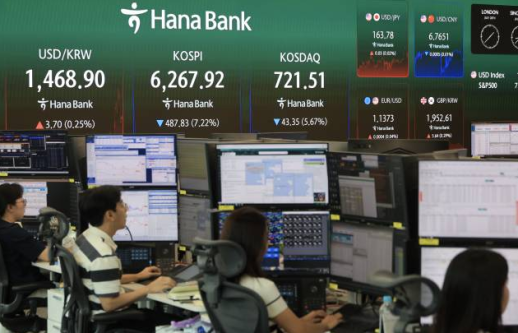 KOSPI closes below 7,000 as foreign selloff outweighs chip exports SEOUL, September 11 (AJP) - South Korean stocks fell nearly 2 percent on Friday as concerns over oil prices and interest rates led to heavy foreign selling, outweighing strong semiconductor exports. The benchmark KOSPI closed at 6,909.91, down 1.76 percent from the previous session. The index opened 3.29 percent lower at 6,802.50 before recovering part of its losses in afternoon trading. Foreign investors sold a net 2.29 trillion won (US$1.70 billion) of KOSPI shares, while institutions unloaded 1.23 trillion won. Retail investors bought a net 1.87 trillion won, helping the index recover from a drop of more than 3 percent at the open. The KOSPI nevertheless recovered more than 100 points from its opening level as bargain hunting strengthened and oil prices eased from their overnight surge during Asian trading. Brent crude and West Texas Intermediate both pulled back after surging more than 6 percent overnight, though both remained above $100 a barrel. Brent fell about 1.9 percent to $105.62, while WTI slipped 1.4 percent to $101.10. Reports that Middle Eastern officials were seeking a temporary arrangement with Iran over shipping through the Strait of Hormuz helped prices retreat from earlier highs. Easing oil prices took some of the pressure off equities, but concerns over inflation and interest rates remained. The U.S. 10-year Treasury yield hovered near 5 percent, while the 30-year yield reached its highest level in nearly two decades. Investors also remained cautious ahead of the U.S. August consumer price index report due later in the day, with markets pricing in about a 70 percent chance of a quarter-point Federal Reserve rate increase next week. The pressure carried into Seoul's chip sector, though losses narrowed later in the session. Samsung Electronics and SK hynix remained under pressure but recovered from steeper morning losses. Fresh trade data released during the session showed a sharp increase in semiconductor exports, offering some support to chip shares. Samsung Electronics closed down 3.35 percent to 260,000 won, while SK hynix fell 2.05 percent to 1,815,000 won. Semiconductor exports reached $16.48 billion in the first 10 days of September, up 270.1 percent from a year earlier and accounting for 47.1 percent of the country's total exports during the period, according to data released Friday by the Korea Customs Service. Other major KOSPI stocks were broadly lower. SK Square dropped 4.14 percent to 1,088,000 won, and Samsung C&T fell 3.29 percent to 367,000 won. Hyundai Motor lost 1.80 percent to 382,000 won and LG Energy Solution declined 1.64 percent to 359,000 won. Samsung Biologics fell 1.05 percent to 1,408,000 won, while Samsung Life Insurance dropped 1.29 percent to 305,500 won. Samsung Electro-Mechanics edged down 0.29 percent to 1,396,000 won. KB Financial bucked the broader decline, rising 2.02 percent to 176,900 won. Losses also extended to the junior KOSDAQ, which closed at 820.64, down 1.95 percent. Retail investors bought a net 511.8 billion won, while foreign investors sold 312.0 billion won and institutions unloaded 216.0 billion won. The stocks were broadly lower at the close. Biotech company Alteogen, which develops drug-delivery and biosimilar technologies, fell 3.61 percent to 267,000 won. Battery materials holding company EcoPro dropped 3.11 percent to 84,200 won, while its cathode-materials affiliate EcoPro BM slid 6.99 percent to 110,400 won. Robotics shares also weakened. Rainbow Robotics, which develops humanoid, collaborative and mobile robots, fell 2.78 percent to 436,500 won. ROBOTIS, a maker of smart robot actuators and humanoid platforms, finished unchanged at 323,500 won. Semiconductor equipment and component makers were mostly lower. EO Technics, which makes laser equipment used in semiconductor and electronics manufacturing, declined 2.09 percent to 445,500 won. LEENO Industrial, a semiconductor test-component maker, fell 3.46 percent to 66,900 won. Simmtech, which produces printed circuit boards and package substrates for semiconductors, lost 1.72 percent to 131,600 won. ISC, which produces semiconductor test sockets and related testing solutions, edged down 0.26 percent to 190,100 won. Biopharmaceutical company HLB fell 0.79 percent to 31,400 won. The broader risk-off move was not confined to Seoul. Asian stocks also retreated as higher oil prices and rising bond yields kept investors cautious. Japan's Nikkei 225 was down 1.93 percent at 64,011.34. The Shanghai Composite fell 1.18 percent to 3,888.11 at the close, while Hong Kong's Hang Seng Index was down 0.67 percent at 24,787.90. Japanese shares were among the hardest hit, with higher global yields weighing on technology stocks while expectations for tighter Bank of Japan policy added pressure after wholesale inflation accelerated 7.6 percent from a year earlier. Chinese and Hong Kong shares also weakened as investors remained cautious over the global inflation outlook and the risk that elevated energy costs could keep monetary policy tighter for longer. Investors are now awaiting the U.S. August CPI report, which could affect expectations for a Fed rate increase next week. AJP Takeaways - South Korea's KOSPI closed down 1.76 percent at 6,909.91 on Sept. 11, falling back below 7,000 as foreign and institutional investors sold heavily. - Samsung Electronics and SK hynix both fell on Sept. 11, although the two chipmakers narrowed steeper morning losses as South Korea's semiconductor exports showed a sharp year-on-year increase in the first 10 days of September. - Oil prices above $100 and the U.S. 10-year Treasury yield near 5 percent heightened inflation and rate concerns ahead of the U.S. August CPI report and next week's Federal Reserve meeting. 2026-09-11 17:05:47
 -
 In Korea's delivery republic, gratitude comes without the tip SEOUL, September 11 (AJP) - Any homebody knows the small thrill — the doorbell, footsteps outside and finally the arrival of dinner, groceries or the sneakers you have been waiting weeks for. In South Korea's delivery republic, that moment is woven deeply into everyday life. Increasingly, some customers are finding small ways to acknowledge the people who make it possible, whether through an iced drink, a snack, an extra meal or simply a note saying thank you and ride safely. The gestures stand out precisely because Korea does not have a tipping culture. A delivery rider is expected to bring the order, not to wait for an extra percentage on the bill. That can make an unexpected thank-you feel more personal. On Tuesday night, Seong YH, a delivery rider in his 30s, arrived at an apartment complex in Seoul's eastern Seongdong District during a blackout. Near the lobby, he stood with a bottle of soda in one hand and a bag of fried chicken in the other, illuminated only by nearby phone flashlights. He had come to drop off an order. The power had been out for some time, and the couple who placed it told him they were unlikely to eat the food. Instead, they asked him to take it. "They even gave me this drink and told me to take care of myself," he told AJP. The small gesture stayed with him. "I started doing delivery work because things were financially difficult," he said with a smile. "Moments like this make me feel that the world is still a warm place." Seong had been thinking about going abroad on a working holiday. Encounters like this, he said, had made him want to stay a little longer. For Korean delivery riders, gratitude rarely arrives as a percentage added to an app bill. Several similar stories have circulated online through a summer when heat and rain kept many Koreans indoors and made food and grocery delivery an even more familiar part of daily life. Earlier this month, a customer deliberately ordered two of the same meal and left one for the rider. According to an order slip posted by a delivery rider and later reported by several Korean news outlets, the customer wrote: "One set is for you. I ordered two of the same meal on purpose. Please leave mine at the door. Drive safely." The receipt also showed a separate 500 won surcharge for the rider, the type of additional payment platforms may offer depending on weather or delivery conditions. The distinction mattered. The 500 won was part of the delivery system. The second meal was not. Days earlier, another rider wrote in a Sept. 1 Threads post under the account mister.clothing_ that he had fallen on a wet road while making a delivery and damaged about a third of the food he was carrying. He went to the customer to apologize and offered to pay for the damaged food. Instead, she told him he reminded her of her son and handed him a 10,000 won bill. The rider wrote that he rode away with a sense of gratitude he would never forget, unsure whether the water on his face was rain or tears. The story was later picked up by Korean media and drew supportive reactions online. Commenters praised the rider for offering to make amends and the customer for responding with kindness. When gratitude becomes part of the bill The element of surprise helps distinguish Korea from countries where tipping has become part of the economics — and sometimes the friction — of ordering food. In the United States, major delivery apps such as DoorDash and Uber Eats allow customers to tip through the app, and tipping is widely expected. Bankrate's 2025 tipping survey found that 52 percent of Americans who use food delivery services said they always tipped. Yet the same survey captured growing frustration with tipping more broadly: 63 percent of U.S. adults held at least one negative view of tipping, 41 percent said tipping culture had gotten "out of control," and 38 percent said they were annoyed by pre-set tipping screens. The contradiction is increasingly familiar. A tip can remain a genuine expression of gratitude toward a worker while also feeling, to the customer, like another mandatory charge. Digital payment systems have amplified that tension by bringing tip prompts into coffee shops, takeout counters and other settings where they were once uncommon, a phenomenon widely described as "tip creep." Korea largely avoids that ambiguity because the customer is generally not expected to calculate an additional payment for the rider. Other countries fall somewhere between the two models. In Britain, tipping food-delivery riders remains far less routine than in the United States. A March 2025 survey by consumer group Which? found that 46 percent of people who had used food-delivery services had not tipped a driver or courier at all over the previous year, while only 11 percent said they tipped every time. Australia also largely treats delivery tipping as optional despite the spread of tip prompts on digital payment screens. Japan sits even closer to Korea. Tipping is generally not expected in restaurants, hotels or taxis, although delivery platforms such as Uber Eats Japan allow customers to leave one voluntarily. The comparison helps put Korea's small acts of generosity in perspective. A Korean rider may receive extra compensation from a platform because of distance, demand, weather or a promotion. But that is fundamentally different from a customer deciding to buy an extra meal, hand over a cold drink or write a note asking a stranger to ride safely. Without an established tipping custom, gratitude tends to take a less standardized form. AJP Takeaways: - A 2025 Bankrate survey found that 52 percent of U.S. food-delivery users always tip, while 63 percent of U.S. adults expressed at least one negative view of tipping as “tip creep” spread to more services. - Food-delivery tipping remains more optional in Britain, Australia and Japan, where customers may be given the choice to tip but generally face less social pressure than in the United States. - In South Korea, delivery platforms may provide riders with extra pay for distance, demand or bad weather, but recent cases show customer appreciation often taking more personal forms, including food, cash, drinks and messages encouraging riders to stay safe. 2026-09-11 15:39:52
 -
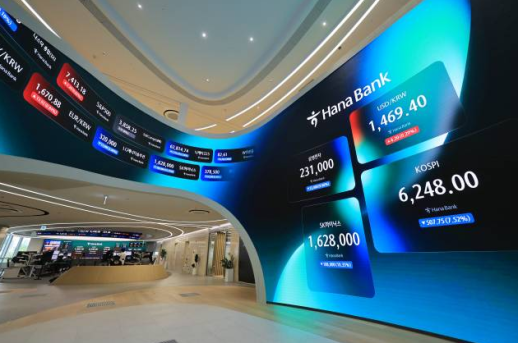 Seoul and Tokyo retreat nearly 3% on oil price and Treasury jitters SEOUL, September 11 (AJP) – Seoul and Tokyo stocks lost ground on soaring oil prices and U.S. Treasury yields on renewed Gulf tensions. The benchmark KOSPI stood at 6,847.74 as of 10:30 a.m., down 2.63percent from the previous session. The Nikkei 255 was also down 2.66 percent to 63,554.48. The KOSPI opened more than 3 percent lower at 6,802.50 before paring some of its losses in early trading as retail investors stepped in to buy shares. Retail investors bought a net 1.32 trillion won ($979 million) of KOSPI shares. Foreign investors sold a net 844.6 billion won, while institutions unloaded 760.1 billion won. The decline followed another weak session in New York as higher oil prices and bond yields weighed on risk assets. The Dow Jones Industrial Average fell 0.60 percent overnight and the S&P 500 lost 0.58 percent. The Nasdaq Composite dropped 0.65 percent. West Texas Intermediate crude surged 6.69 percent to $102.48 a barrel, while Brent crude jumped 6.34 percent to $107.63. Both benchmarks closed at their highest levels since May 19. WTI extended its gains for an eighth straight session, marking its longest winning streak in three years. The surge in oil prices added to inflation concerns, contributing to broader pressure on the bond market as U.S. Treasury yields moved sharply higher. The benchmark 10-year Treasury yield briefly rose above 4.95 percent, reaching its highest level since November 2023. The jump in yields weighed particularly on rate-sensitive technology shares, while investors remained cautious ahead of the U.S. August consumer price index due later Friday. Semiconductor stocks were hit particularly hard on Wall Street. Nvidia fell 2.26 percent and Micron Technology dropped 4.90 percent. The Philadelphia Semiconductor Index declined 2.66 percent. That weakness carried into Seoul, where major chip stocks led the morning decline. Samsung Electronics fell 3.53 percent to 259,500 won, while SK hynix dropped 3.62 percent to 1,786,000 won. Samsung Electronics preferred shares lost 4.43 percent to 194,000 won. Other semiconductor-related shares were also weaker. SK Square fell 4.23 percent to 1,087,000 won, while Samsung Electro-Mechanics bucked the trend and rose 0.86 percent to 1,412,000 won. Losses extended to other large-cap stocks. LG Energy Solution fell 1.37 percent to 360,000 won and Hyundai Motor dropped 2.25 percent to 380,250 won. Samsung Biologics slipped 0.84 percent to 1,411,000 won. Financial shares were mixed. KB Financial gained 1.01 percent to 175,150 won, while Samsung Life Insurance fell 2.91 percent to 300,500 won. Some industrial and construction shares, however, moved higher. GS E&C rose 3.49 percent to 38,550 won and HD Hyundai Heavy Industries advanced 2.54 percent to 465,000 won. Selling was broad across the main market. A total of 551 KOSPI-listed stocks declined, while 276 advanced and 67 were unchanged. The junior KOSDAQ also came under pressure, falling 1.72 percent to 822.55. Retail investors bought a net 158.1 billion won, while foreign investors sold 111.5 billion won and institutions offloaded 46.7 billion won. Losses were broad across major KOSDAQ names. Biotech company Alteogen fell 2.71 percent to 269,500 won, while battery materials makers EcoPro and EcoPro BM which specializes in cathode materials for rechargeable batteries dropped 2.76 percent to 84,500 won and 4.21 percent to 113,700 won, respectively. EcoPro BM specializes in cathode materials for rechargeable batteries. Semiconductor equipment and component shares were also weaker. Jusung Engineering slipped 0.23 percent to 220,500 won and Wonik IPS fell 5.47 percent to 112,300 won. EO Technics, a maker of semiconductor laser equipment, dropped 3.30 percent to 440,000 won. LEENO Industrial declined 4.04 percent to 66,500 won, while printed circuit board maker Simmtech lost 2.02 percent to 131,200 won. Robotics shares were mostly lower. Industrial robot maker Rainbow Robotics fell 2.23 percent to 439,000 won. Robotis was the only gainer among the major names shown, rising 0.46 percent to 325,000 won. Market breadth was firmly negative, with 1,126 KOSDAQ stocks declining, compared with 484 advancing and 112 unchanged. The Korean won weakened to 1,346.50 per dollar from 1,339.20 a day earlier. Investors are now focused on the U.S. August consumer price index, due later Friday, for clues on the Federal Reserve's rate outlook ahead of next week's policy meeting. Markets are currently pricing in about a 70 percent chance of a rate increase after August producer prices reinforced concerns over persistent inflation. AJP Takeaways - South Korea’s benchmark KOSPI fell below 6,900 on September 11, 2026, as surging oil prices and rising U.S. Treasury yields triggered broad risk-off selling and pushed semiconductor shares sharply lower. - The KOSPI traded at 6,861.44 as of 10:04 a.m. on September 11, down 2.45 percent, after opening more than 3 percent lower at 6,802.50. Retail investors bought a net 1.32 trillion won ($979 million), while foreign and institutional investors were net sellers. - West Texas Intermediate crude rose 6.69 percent to $102.48 a barrel and Brent crude climbed 6.34 percent to $107.63 on September 10, while the U.S. 10-year Treasury yield briefly exceeded 4.95 percent. Investors are awaiting the U.S. August consumer price index on September 11, 2026, for further clues on the Federal Reserve’s rate outlook. 2026-09-11 10:51:14
 -
 AI, robotics firms help revive South Korea's IPO scene SEOUL, September 10 (AJP) –The number of initial public offerings is showing signs of recovery in September, with as many as 11 companies preparing to go public. Artificial intelligence (AI) and robotics firms are emerging as a major source of new listings. Expected fundraising this month is estimated at 400 billion won (US$299 million) to 450 billion won. An early-September estimate by Eugene Investment & Securities put the combined market capitalization of companies expected to list at 2.1 trillion won to 2.7 trillion won. That scale would be broadly in line with recent September levels. According to an AJP analysis of Korea Exchange (KRX) monthly listing data, companies listed in September had an average combined market capitalization of about 2.73 trillion won from 2021 through 2025. The number of new listings is also set to increase. Eight to 11 companies are expected to go public this month. They include Neosapience, an AI company behind the Typecast voice-generation platform, and BRILS, a robotics and automation solutions provider. Wise Planet Company, a marketing and media-commerce company, is also among the candidates. Only one company listed in September last year, while six made their debuts in August. The market was much weaker just a month ago. Only six companies listed in August, raising a combined 210.6 billion won, about one-third of the historical August average of 595.8 billion won. September also brings larger offerings. AI coding education platform operator Elice Group is expected to raise about 156.4 billion won. Beyond the larger deals, AI and robotics companies are also drawing investor interest. Bigwave Robotics, which provides industrial robotics and physical AI solutions, is conducting institutional bookbuilding through Friday. The process allows institutional investors to submit bids before the company sets its final IPO price and proceeds with the listing. Neosapience, which develops AI-based voice and content generation technology, completed institutional bookbuilding this week and is taking retail subscriptions on Thursday and Friday. Its IPO price was set at 10,000 won, with the company scheduled to list on the KOSDAQ on Sept. 21. Another AI company, Lablup, which develops infrastructure software for AI computing, plans to begin institutional bookbuilding on Sept. 28 and continue through Oct. 2. It is targeting an October listing. A broader mix of AI and robotics companies could give investors more choices and support the market's recovery. Attention is also moving beyond companies already in the formal IPO process. Several of South Korea's best-known private technology and consumer companies are accelerating preparations for listings. Fashion platform Musinsa has already filed for a preliminary KOSPI listing review and is widely expected to pursue a market debut in 2027. AI chipmaker Rebellions is also targeting a KOSPI listing next year after pushing back its original timetable. The company plans to complete filing preparations by the end of 2026. MegazoneCloud also remains in the IPO pipeline, while Wrtn Technologies has begun selecting underwriters for a potential listing after 2027. AJP Takeaways - South Korea's initial public offering scene is showing signs of a September 2026 recovery, with as many as 11 companies preparing to go public. Artificial intelligence and robotics firms including Neosapience, BRILS and Bigwave Robotics are emerging as a major source of new listings. - September 2026 IPO fundraising is estimated at 400 billion won (US$299 million) to 450 billion won, while the combined market capitalization of prospective listings was projected at 2.1 trillion won to 2.7 trillion won. - An AJP analysis of Korea Exchange monthly data found that September listings averaged about 2.73 trillion won in combined market capitalization from 2021 through 2025. 2026-09-10 17:10:39
 -
 KOSDAQ delisting clock starts ticking as menswear brand exits SEOUL, September 10 (AJP) - South Korea's tougher new rules have led to the first KOSDAQ delisting, with men's apparel company Wonpung Mulsan set to leave the market after 29 years and several other micro-cap companies facing a similar fate. Wonpung Mulsan, one of the KOSDAQ's earliest-listed companies and once the South Korean licensee of French fashion brand Nina Ricci, failed to recover the minimum market capitalization of 20 billion won (US$14.5 million). Its shares plunged more than 40 percent on Wednesday, the first day of liquidation trading ahead of its delisting. Its stock was trading at 141 won at around 1:40 p.m. on Thursday, down 43.15 percent from the previous close, after plunging more than 40 percent the previous day, the first day of liquidation trading ahead of its delisting. The stock opened at 172 won and fell as low as 134 won during the session. Wonpung Mulsan will continue trading until Sept. 18 before being delisted from the junior stock market on Sept. 21. During the liquidation period, the usual daily price limits do not apply. Instead, trades are matched every 30 minutes between 9 a.m. and 3:30 p.m., rather than continuously throughout the trading session. The case marks the first delisting under a stricter market-capitalization requirement introduced in July, and it is unlikely to be the last. Under the revised rules, a KOSDAQ company is designated as an administrative issue if its market value remains below 20 billion won for 30 consecutive trading days. Once designated, it has a 90-session recovery period. During that window, its market capitalization must reach at least 20 billion won and remain there for 45 consecutive sessions. Failure to do so creates grounds for delisting. The company had been placed on the administrative list on July 3 but failed to restore its valuation before the deadline. Founded as a garment maker in 1972, the company was listed on the KOSDAQ in July 1997, a year after the junior stock market was launched. It brought Nina Ricci to South Korea in 1999 and currently operates menswear labels including Kinloch Anderson, a Scottish heritage fashion brand, and Kinloch by Kinloch Anderson, a more contemporary line under the same brand. Its core apparel business has deteriorated sharply since 2023. Revenue fell from 28.9 billion won in 2023 to 22.7 billion won in 2024 and 16.9 billion won last year, down 41.5 percent over two years. Operating losses widened from 1.9 billion won in 2023 to 4.7 billion won in 2024 and 7.2 billion won last year, pushing its operating loss margin to 42.5 percent. The company remained in the red in the first half of this year, posting 7.6 billion won in revenue and a 1.4 billion won operating loss. In March, Wonpung Mulsan's shareholders approved a two-for-one reverse stock split to help improve trading conditions. This raised the face value of each share from 500 won to 1,000 won. But the move only reduced the number of shares and raised the share price, leaving the company's total market value unchanged. As a result, it did little to help the company meet the listing requirement. The delisting will have a direct impact on thousands of minority shareholders. According to the company's half-year report, 5,687 minority investors held 59.23 percent of its outstanding shares as of May 4. That has fueled concern among retail investors online, with some questioning whether tighter delisting rules leave small shareholders bearing most of the losses despite having little control over a company's decline. "This just does not seem right. What are small shareholders supposed to do? If investors are simply left to absorb the losses, the system needs to be reconsidered," one commenter wrote. The concern is likely to extend beyond a single company as several other micro-cap stocks move closer to their own deadlines. KM Pharmaceutical, a maker of oral-care and personal-care products, was down 12.87 percent at 528 won as of 1:54 p.m. Silla SG, a food company focused on meat distribution and processed food products, fell 6.29 percent to 954 won. Gold&S, an education company that operates foreign-language learning and publishing businesses, dropped 17.38 percent to 713 won. Soosung Webtoon, which operates industrial equipment and webtoon-related businesses, plunged 28.35 percent to 273 won. A.F.W, a manufacturer of friction-welded parts used in electric vehicles and other automotive applications, tumbled 19.42 percent to 166 won. For several of them, meeting the requirement would demand a dramatic rebound in their share prices. Some would need to rise more than fivefold from current levels. A weaker broader market has also added to the pressure on smaller companies. The KOSDAQ was trading at 831.87 as of 1:56 p.m. Thursday, up 0.18 percent on the day but still well below 929.35 on July 1. Despite Thursday's rebound, the KOSDAQ remained about 10.5 percent below its July 1 level, making it harder for the smallest companies to restore their market value within the limited recovery period. Not every company facing removal, however, would necessarily disappear from the public market altogether. Companies that meet certain profitability and other financial criteria may instead transfer to the Korea New Exchange (KONEX), a smaller market for early-stage and small businesses, without going through the usual liquidation trading period. OSP, a pet food maker, SEJIN T.S, an LCD component manufacturer, and RYUK-IL C&S, a cover-glass maker, also appear to meet the basic financial requirements based on their latest financial statements. Under Korea Exchange (KRX) rules, companies may qualify for a transfer to KONEX if they are not in a state of capital impairment and have posted operating profits in at least two of the past three years. They may also qualify with one profitable year and equity of at least 20 billion won. AJP Takeaways - Wonpung Mulsan is set to be delisted from South Korea's KOSDAQ on Sept. 21, 2026, after failing to restore its market capitalization above the 20 billion won threshold. The company entered liquidation trading on Sept. 10, with its shares down 43.15 percent at 141 won as of 1:38 p.m. - The Korea Exchange's tougher KOSDAQ delisting rules are putting more micro-cap companies under pressure. Under the revised system, companies that remain below 20 billion won in market capitalization for 30 consecutive trading days receive a 90-session recovery period and must stay above the threshold for 45 consecutive sessions to avoid delisting. - Several small-cap companies including KM Pharmaceutical, Silla SG, Gold&S, Soosung Webtoon and A.F.W were trading sharply lower on Sept. 10, 2026, as investors assessed their ability to meet KOSDAQ listing requirements. Some companies that satisfy profitability and financial criteria may instead transfer to the Korea New Exchange, or KONEX, rather than leave the public market entirely. 2026-09-10 15:15:52