

Journalist

Ryu Yuna류윤아
Julia37@ajupress.com
ReporterFinancial Supervisory Service (FSS) & finance, capital markets, Southeast Asian affairs
Yuna Ryu covers finance, capital markets and Southeast Asian affairs.
She is drawn to the questions that numbers raise and the stories that data alone cannot answer.
Prior to journalism, she worked at Hyundai Motor Company and the Singapore Chamber of Commerce, focusing on business strategy and international affairs. She has also hosted diplomatic receptions and international conferences as an MC.
Ryu holds a master's degree in Media and Communication from Korea University, where her research focused on neuroscience-based studies of media effects. "Beyond every statistic is a human story waiting to be heard."
She is drawn to the questions that numbers raise and the stories that data alone cannot answer.
Prior to journalism, she worked at Hyundai Motor Company and the Singapore Chamber of Commerce, focusing on business strategy and international affairs. She has also hosted diplomatic receptions and international conferences as an MC.
Ryu holds a master's degree in Media and Communication from Korea University, where her research focused on neuroscience-based studies of media effects. "Beyond every statistic is a human story waiting to be heard."
Latest by Ryu Yuna
-
 AJP FAQ: When should you blink? Korea vs. the U.S. The little lever beside the steering wheel does the same job everywhere. But knowing exactly when to flick it can depend on where you drive. In South Korea, the rules are based on distance. Drivers must activate their turn signals at least 30 meters before turning or changing lanes on regular roads and 100 meters on expressways. California requires drivers to signal at least 100 feet (about 30.5 meters) before turning, roughly the same distance as South Korea's regular-road requirement. For freeways, however, California's driver handbook advises signaling at least five seconds in advance, rather than setting a fixed distance. Pennsylvania, meanwhile, bases its signaling requirements on driving speed. Drivers traveling below 35 miles per hour must signal for at least 100 feet before turning, while those traveling at 35 mph or faster must signal for at least 300 feet, or about 91 meters. Unlike South Korea's distance-based rules, some U.S. states rely on time or speed, but the principle is the same: signal before making your move. 2026-10-13 17:08:18
 -
 Foreign exodus deepens despite Korea's red-hot chip power SEOUL, October 12 (AJP) — South Korea’s KOSPI, the unrivalled best-performing major stock index in the first half, is among the worst performers in the second half after surrendering nearly half its earlier gains. The retreat has been led by record foreign net selling exceeding 227.6 trillion won as of Monday — roughly 25 times the 9 trillion won sold throughout 2025 — despite stronger-than-ever fundamentals, according to the Financial Supervisory Service. Memory bellwethers Samsung Electronics and SK hynix have been setting earnings records quarter after quarter, fueling red-hot exports on course to reach the $1 trillion annual milestone, with chips accounting for roughly half of shipments. The won has strengthened more than 7 percent against the dollar this year, reversing its first-half weakness. It closed at 1,335.1 per dollar, strongest since October 2024. Inflation remains around a manageable 3 percent, although persistent price pressures prompted the Bank of Korea to raise interest rates in both July and August. Major international investment banks have raised their average growth forecast for 2026 to 3.5 percent, which would mark the strongest expansion since the post-pandemic rebound in 2021. Yet the foreign retreat suggests deepening unease over the froth in the AI boom and the Korean companies powering it. Investors are questioning how much longer extraordinary chip profits can last — and how much of that prosperity share prices have already anticipated. What began as profit-taking and portfolio rebalancing increasingly reflects questions about future demand. Higher U.S. bond yields have raised the returns competing for investors’ money, while the approaching end of major share buybacks is weakening the market’s ability to absorb continued selling. “For foreign investors, the durability of the earnings boom may matter more than the latest quarterly profit figure alone,” a Yuanta Securities analyst told AJP. Monday’s trading sharpened that disconnect. Returning from the Hangeul Day holiday, the KOSPI closed down 241.69 points, or 3.65 percent, at 6,384.24 — its steepest daily decline since Sept. 2. It lost both the 6,500 and 6,400 levels during the session. The benchmark has fallen for four consecutive sessions, shedding 619.50 points, or 8.85 percent, over that period. Foreign investors extended their selling streak to five sessions, unloading a net 2.025 trillion won at the regular-session close. Institutions sold another 110.6 billion won. The KOSPI 200 volatility index jumped 10.65 percent to 40.73, reflecting heightened market anxiety. The pressure followed Samsung Electronics’ Oct. 8 guidance for record third-quarter operating profit of 107.4 trillion won ($80.2 billion). Its shares fell about 2.4 percent on the announcement day. “The earnings were better than expected, but not dramatically so,” the Yuanta analyst said. Strong results offer less support when investors have already anticipated them and are looking for evidence of the next advance. Foreign selling also predates the latest market decline. “The KOSPI was one of the world's strongest-performing markets through June, yet foreign ownership continued to decline,” the analyst said. “Foreign investors were rebalancing their portfolios while retail investors were buying heavily.” That pattern suggests the initial retreat included locking in gains and reducing exposure to stocks whose rapid appreciation had increased their weight in portfolios. The concern has since broadened. “Investors are now increasingly uncertain about the outlook for the broader AI market,” said Woo Seok-jin, an economics professor at Myongji University. September’s selling was concentrated in the two companies benefiting most directly from the boom. Foreigners sold a net 21.51 trillion won of KOSPI shares, with Samsung Electronics and SK hynix accounting for 16.47 trillion won, or 76.6 percent, according to Korea Exchange (KRX) data. The concentration points to a reassessment of Korea’s dominant investment theme. The semiconductor exposure that powered the rally leaves the market vulnerable when investors question the durability of AI spending. Current shortages and rising memory prices demonstrate strong demand today. Investors must also judge whether spending on AI services and data centers will keep expanding fast enough to sustain exceptional profitability as chipmakers add capacity. “There are concerns about whether the overall pie of AI investment will keep growing and which companies will get a bigger slice,” Woo said. The selling does not establish that an AI collapse is imminent. It suggests some investors are becoming less willing to assume that the current pace of growth will continue. Higher U.S. Treasury yields reinforce that caution. They increase the return available without taking equity risk and reduce the present value of profits expected further into the future, making investors more demanding about the price they pay for growth. The Institute of International Finance reported $19.2 billion in emerging-market equity outflows in September following a more hawkish Federal Reserve stance. Korean selling was a major contributor to that total, placing the retreat within a broader tightening of global financial conditions. “Oil prices have fallen, but U.S. bond yields remain high, so stocks have shown little response,” the Yuanta analyst said. A major source of buying support is also fading. Samsung and SK hynix announced combined share repurchases of 55 trillion won in August. Samsung’s 15 trillion won program was intended for employee compensation, while SK hynix committed 40 trillion won to repurchases and cancellations. By Oct. 6, Samsung had purchased its planned number of shares, while SK hynix had completed about 83 percent of its program by value. The approaching end of those purchases helps explain why continued foreign selling can now have a greater impact on prices. A buyer that had absorbed substantial supply is stepping back. The Yuanta analyst said further repurchases remained possible after the companies’ detailed earnings announcements. But additional corporate buying would support prices without necessarily resolving doubts about future earnings. 2026-10-12 17:29:45
 -
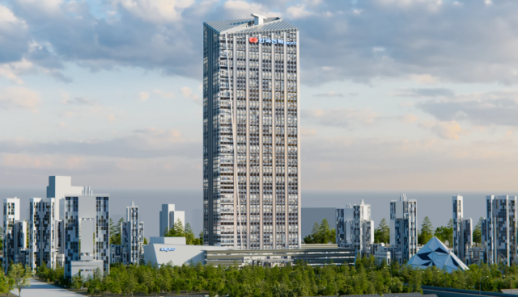 Samsung, SK hynix to cover 80% of chip power grid costs in Honam: KEPCO SEOUL, October 12 (AJP) — Samsung Electronics and SK hynix would have to shoulder about 80 percent of the 1.4 trillion won ($1.05 billion) needed to build the initial power supply network for a major semiconductor manufacturing complex in South Korea's southwestern Honam region unless government funding is provided, the head of Korea Electric Power Corporation (KEPCO) said Monday. KEPCO President and CEO Kim Dong-cheol outlined the cost-sharing arrangement during a parliamentary audit in response to questions from People Power Party lawmaker Kim Do-eup about transmission facilities planned for the project's first stage. “KEPCO's share would likely be less than 20 percent,” Kim said. “Samsung and SK hynix are supposed to cover the rest.” The cost-sharing arrangement, however, could change if the government provides funding under a law that allows central and local governments to cover 50 to 100 percent of the cost of building and operating infrastructure for semiconductor clusters, including power supply facilities. Kim said that without such support, the utility and the two chipmakers would share the costs according to their respective electricity use. Separately, KEPCO executives said the utility's financial constraints had prompted an earlier proposal for Samsung Electronics and SK hynix to pay 25 trillion won ($18.76 billion) in electricity bills upfront to help finance power grid expansion. Kim Jae-gun, Head of KEPCO's Power Grid Division said the company must reduce its bond issuance limit from five times its capital to twice that level by the end of 2027. “We proposed the advance-payment plan to address the problem on our own,” he said. The utility's chief also acknowledged that keeping bond issuance within the lower limit was one of KEPCO's biggest financial challenges. He said the plan had been drawn up by KEPCO following a policy proposal and a related bill introduced by Democratic Party lawmaker Park Jeong, before being presented to Samsung Electronics and SK hynix, which rejected it in September. 2026-10-12 17:28:31
 -
 Korea's retail crypto buying remains unfazed in 2026 SEOUL, October 12 (AJP)—South Korean retail investors remained quietly invested in crypto even as it surrendered much of its limelight to equities in 2026. Cumulative investments through automatic crypto purchase programs at three domestic exchanges reached 972.92 billion won ($725.6 million) at the end of August, up 78.9 percent from 543.85 billion won at the end of last year, according to data submitted to Democratic Party lawmaker Park Sang-hyuk. The figures cover Upbit, Coinone and DigitalX, the three of the country’s five major exchanges that offer recurring-purchase services. Bithumb and Gopax do not offer such programs. The programs allow users to choose a cryptocurrency and set an amount and schedule for automatic purchases. Upbit, the country’s largest cryptocurrency exchange, accounted for 92.3 percent of cumulative recurring investments at 897.71 billion won, up 81.3 percent from the end of 2025. DigitalX recorded 63.26 billion won, an increase of 31.3 percent over the same period. Coinone posted the fastest growth, with investments rising nearly twentyfold to 11.95 billion won from 610 million won. Participation also climbed. The three platforms reported a combined cumulative user count of 337,119 at the end of August, up 37.4 percent from the end of last year. Upbit’s user count rose 32.2 percent to 296,675, while DigitalX’s increased 11.4 percent to 10,982. Coinone’s more than doubled to 29,462 from 11,067. The increase may reflect continued demand from small investors spreading purchases over time to average out buying costs during a weak market. Recurring purchases grew even as major cryptocurrencies declined. Bitcoin was down 5.3 percent from the start of the year as of 9 a.m. Sunday, while Ethereum, the second-largest cryptocurrency by market capitalization, had fallen 15.7 percent, according to crypto market data provider CoinMarketCap. Staking services, which allow investors to earn rewards by committing crypto holdings to help operate blockchain networks, showed mixed trends across exchanges. At Upbit, cumulative staking users increased 20.4 percent from the end of last year to 365,121, while the reported cumulative staking amount fell 4.3 percent to 11.23 trillion won. At Bithumb, both measures rose, with users increasing 2.1 percent to 374,326 and the cumulative staking amount climbing 24 percent to 1.33 trillion won. Coinone also recorded gains in both measures. Users increased 11.4 percent to 341,992, while the cumulative staking amount rose 10.9 percent to 316 billion won. DigitalX saw participation rise 11.3 percent to 37,659, but customer balances in its staking service fell 14.1 percent to 169.9 billion won. The amounts are not directly comparable across all four exchanges. Upbit, Bithumb and Coinone reported cumulative amounts for fixed-term staking products. DigitalX, which offers only flexible staking, reported customer balances. User demographics also varied across platforms. Among Upbit’s recurring-purchase users, people in their 30s made up the largest share at 30.4 percent, followed by those in their 40s at 27.1 percent and those in their 50s at 20.9 percent. Its staking users showed a similar pattern, with people in their 30s accounting for 32 percent and those in their 40s for 30.1 percent. DigitalX had a higher share of older users. Investors in their 50s accounted for 30.7 percent of recurring-purchase users, slightly ahead of those in their 40s at 30.1 percent. Among staking users, those in their 40s led at 33.8 percent, followed by those in their 50s at 28.4 percent. 2026-10-12 09:59:24
 -
 Korean stocks slide 2.6% despite Samsung's record earning SEOUL, October 08 (AJP) — South Korean stocks fell nearly 3 percent Thursday as heavy foreign and institutional selling dragged down major semiconductor shares, even after Samsung Electronics forecast record quarterly operating profit. The benchmark KOSPI closed at 6,625.93, down 2.62 percent from the previous session. The index opened slightly higher at 6,808.68 but reversed course as selling accelerated through the afternoon. Foreign investors sold a net 1.99 trillion won ($1.49 billion) of KOSPI shares, while institutions unloaded about 1.67 trillion won. Retail investors bought a net 2.90 trillion won, but their purchases failed to offset the combined selling pressure. Decliners outnumbered advancers 625 to 252. The decline came despite Samsung Electronics' stronger-than-expected third-quarter earnings guidance, with operating profit surging 782.5 percent from a year earlier to a record 107.4 trillion won on strong demand for artificial intelligence (AI) memory chips, while revenue jumped 126.6 percent to 195 trillion won. The stock extended its morning losses to close 2.42 percent lower at 262,000 won. Rival SK hynix also reversed its early gains, falling 2.44 percent to finish at 1,681,000 won. It had risen about 1.7 percent in morning trading before joining the broader chip selloff. Other major technology shares followed the decline. Samsung Electro-Mechanics, a supplier of electronic components, dropped 3.62 percent to 1,546,000 won, while SK Square, the investment holding company and largest shareholder of SK hynix, plunged 8.06 percent to 1,050,000 won. The selling extended beyond the chip sector as investors faced mounting pressure from higher U.S. Treasury yields and renewed concerns over global energy prices. The U.S. 10-year Treasury yield hovered around 5.33 percent Thursday afternoon after briefly climbing above 5.36 percent the previous day, its highest level since 2002, adding to concerns that borrowing costs could remain high for longer. Short-term trading factors also raised concerns about additional selling in Samsung shares. Ahead of the company's earnings announcement, Goldman Sachs had warned that semiconductor exchange-traded fund (ETF) rebalancing could trigger share sales. Options expiration could also increase market volatility, while the winding down of Samsung's share buyback program could weaken buying demand. The decline was not limited to technology shares, with automakers, financial companies and biotechnology stocks also retreating. Hyundai Motor dropped 3.42 percent to 324,500 won, while financial shares also declined. KB Financial Group fell 3.38 percent to 162,800 won and Samsung Life Insurance slipped 4.27 percent to 269,000 won. Samsung Biologics, a major contract drug manufacturer, lost 4.54 percent to 1,219,000 won. Battery shares offered a rare bright spot among large-cap stocks. LG Energy Solution rose 2.56 percent to close at 401,000 won after reporting stronger-than-expected preliminary third-quarter results. The battery maker estimated operating profit at 756 billion won, up 25.7 percent from a year earlier, while revenue increased 59 percent to about 9.64 trillion won, a quarterly record. The results were supported by increased shipments of energy storage systems (ESS) to North America and stronger sales of EV batteries in Europe, despite a broader slowdown in electric vehicle demand. The KOSDAQ also finished lower, though its losses were more limited as some semiconductor equipment and component makers advanced despite declines in major memory chipmakers. The junior index closed at 892.27, down 0.69 percent from the previous session. Foreign investors bought a net 60.0 billion won and retail investors purchased 50.3 billion won, while institutions sold 106.5 billion won. Among the gainers, Jusung Engineering, a manufacturer of semiconductor deposition equipment, surged 8.08 percent to 267,500 won. Its equipment is used to deposit thin layers of materials onto silicon wafers during chip production. Wonik IPS, which supplies semiconductor manufacturing equipment, also gained 1.98 percent to 133,700 won, while LEENO Industrial, a producer of semiconductor test sockets and probes, advanced 3.17 percent to 87,900 won. Simmtech, a manufacturer of semiconductor package substrates and memory module circuit boards, rose 1.41 percent to 172,800 won. Battery-related stocks also attracted selective buying. EcoPro BM, a producer of cathode materials used in rechargeable batteries, climbed 3.45 percent to 128,800 won, while its parent company EcoPro finished unchanged at 91,900 won. The gains were offset by weakness in biotechnology and robotics shares. Alteogen, a biotechnology company developing drug-delivery technologies for biologic medicines, dropped 6.23 percent to 241,000 won. Rainbow Robotics, a developer of industrial and collaborative robots, also fell 4.03 percent to 429,000 won, while biotech company Peptron plunged 29.94 percent. In currency trading, the Korean won was little changed at 1,340.7 per dollar, compared with 1,340.4 at the previous close. Meanwhile, the Korea Exchange (KRX) said Wednesday it would suspend further delisting procedures for companies that fail to meet minimum market capitalization requirements, following a court ruling that blocked the delisting of two companies. The exchange said the affected stocks would remain under administrative supervision. The market's decline extended a losing streak for the KOSPI, which had already fallen nearly 2 percent Wednesday as foreign investors sold heavily ahead of Samsung's earnings announcement. Despite the record profit guidance, investors remained cautious about the sustainability of the AI-driven semiconductor boom and the impact of high global interest rates on equity valuations. Samsung is scheduled to release its detailed third-quarter earnings, including business division results, on Oct. 29. Across the region, major Asian stock markets also traded lower. Japan's Nikkei 225 fell 1.42 percent to 69,042.11, while China's Shanghai Composite declined 0.79 percent to 3,811.90. Hong Kong's Hang Seng Index dropped 1.48 percent to 23,772.25. 2026-10-08 17:00:13
 -
 Dating shows seek a new spark as romance alone loses its pull SEOUL, October 8 (AJP) — South Korea’s latest dating show does not begin in a villa, on an island or over a candlelit dinner. It begins in the outfield. On streaming platform TVING, “Love at First Hit” pairs fans of rival baseball teams for dates at live Korea Baseball Organization games. Mutual choices lead to romance, while a one-sided choice earns the person chosen a season ticket. Contestants may leave with love, baseball tickets or neither. The pairing appears to be paying off. The show’s contribution to new subscriptions rose 68 percent in its second week, according to TVING. Viewing time increased 25 percent and unique viewers climbed 8 percent. It is also drawing men into the dating-show audience. Those in their 20s and 30s accounted for 30 percent of viewers, while men in their 40s made up 15 percent — the highest proportion for that age group among TVING’s major titles. For producers, the lesson is increasingly clear. Bringing strangers together is no longer enough. Viewers need another reason to watch. South Korea’s crowded dating-show market has already worked through former couples, divorced singles, siblings joining the same cast and adults who have never dated. By mid-2026, more than 50 Korean dating reality shows and seasons had been released. Even established franchises are struggling to sustain their appeal. “Heart Signal 5” remained below 1 percent in national television ratings through its first 11 episodes, according to Nielsen Korea. Its predecessor ended at 3.05 percent in 2023. The retreat extends beyond Korea. Scripted productions accounted for 83 percent of new romance commissions in the first half of 2026, compared with a roughly even split between scripted and reality romance in late 2022, according to Ampere Analysis. Audiences have not fallen out of love with love. The research firm found that 49 percent of people aged 18 to 24 enjoyed romance content in early 2026, unchanged from 2020. The harder task is making another round of dates, confessions and rejections feel fresh. “Love at First Hit” starts with an audience already invested in something else. Baseball rivalries give fans a reason to tune in before they care who ends up together. Kwak Keum-joo, a psychology professor at Seoul National University, said competing loyalties can also make the relationships more compelling. “We live in a highly polarized society, and even political views can become a source of tension in relationships,” Kwak told AJP. “Compared with the past, these differences may feel more realistic and relatable to viewers.” Music and sports offer other ready-made fan bases. Mnet Plus launched “Rapper’s Girlfriend: KISS or DISS” on Aug. 7, bringing rappers from the hip-hop competition “Show Me the Money” into a contest in which five men pursue one woman. Disney+ has announced “Love Training Camp” for 2027, pairing male and female athletes through physical challenges and romantic encounters. Japan’s Netflix series “Badly in Love” takes a more provocative route. It draws on “yankii” culture, associated with rebellious youth and delinquent groups, with a cast that includes former motorcycle gang members and people with ties to organized crime. Its first season reached No. 8 on Netflix’s global chart for non-English series and entered the Top 10 in South Korea, Singapore, Hong Kong and Taiwan. “People are exposed to so much information that they increasingly want something more stimulating,” Kwak said. “When a show offers something they have never seen before, it can make them curious enough to watch.” Curiosity, however, does not guarantee affection. “I couldn’t even finish the first episode. I find it irritating when reality shows feel staged,” said Lee Seung-jin, 32, of Seoul. He preferred “I Am Solo,” which follows ordinary singles seeking relationships, because it felt more realistic. The Japanese show also ran into controversy at home. Japan’s Ministry of Justice withdrew a rehabilitation campaign featuring Season 2 contestants in August after criticism that it could glorify criminal behavior and was insensitive to victims, according to the ministry. American producers are experimenting with different complications. Netflix’s “Age of Attraction,” released in March, brought together singles without revealing their ages and reached the Top 10 in 26 countries. The platform is also recruiting for “Weight to Date,” about dating during and after major weight loss. Another planned series, “Playing with Matches,” asks couples to conceal their relationships while identifying other secret pairs. Yet novelty need not mean greater spectacle. South Korea’s “Better Late Than Single” finds its drama in adults navigating their first relationships. Its debut season topped Netflix’s weekly television rankings in South Korea in July 2025, while the second entered the global non-English Top 10 following its release this July. “People watch reality shows because they want to see something real,” Kwak said. “Some may be willing to overlook a little staging, but for now, authenticity still matters. Once viewers feel it is fake, the appeal can quickly fade.” A baseball rivalry or an unusual cast may get viewers through the first episode. Whether they stay still depends on believing the romance. 2026-10-08 16:41:45
 -
 Seoul named world's best big city in Condé Nast Traveler SEOUL, October 08 (AJP)— Seoul was named the world's best big city by readers of U.S. travel magazine Condé Nast Traveler. South Korea's capital ranked first in the magazine's 2026 Readers' Choice Awards, followed by Tokyo, Phnom Penh, Shanghai and Sydney, the Seoul Metropolitan Government said Friday. The city topped the Best Big Cities ranking for the first time, rising from fifth place in 2025 and overtaking Tokyo, which had held the top spot for two consecutive years. Montreal ranked sixth, followed by Paris, Cape Town, Singapore and Kyoto, with Asian cities taking five of the top 10 spots. The annual awards, now in their 39th year, drew 798,867 reader votes across categories covering cities, hotels, resorts and other travel experiences. Seoul is drawing growing attention beyond K-pop, Korean dramas and beauty trends. The magazine has also highlighted its blend of historic neighborhoods and palaces with modern culture, shopping, food and technology. Visitors can explore centuries-old historic sites and modern entertainment districts in a single trip, enjoying everything from affordable local experiences to luxury hotels, fine dining and shopping. The city also ranked third in the U.K. edition of Condé Nast Traveller's separate list of the world's friendliest cities for 2026, behind Melbourne and Porto. The magazine highlighted the hospitality of local residents, from restaurant owners explaining dishes to commuters helping tourists navigate the subway. Other international travel rankings have also recently highlighted Seoul. Time Out, a global culture and travel publication, named Jongno 3-ga the world's coolest neighborhood for 2026, citing its mix of traditional hanok areas, late-night street food, workshops and independent shops. Seoul Mayor Oh Se-hoon said the ranking reflected global recognition of the city's diverse attractions, from its 2,000-year history and globally popular K-culture to everyday life in its traditional houses and alleyways. "We will preserve the city's history and unique character while adding new culture and vitality, making Seoul a place that residents can take pride in and visitors want to stay longer and return to," he added. 2026-10-08 13:07:44
 -
 AI chat records point to China-based suspect in Korean cyberattacks SEOUL, October 8 (AJP) —The culprit behind the latest wave of cyberattacks on South Korean financial firms may be a 26-year-old living in China’s Guangdong province, according to U.S. cybersecurity firm CrowdStrike Wednesday. CrowdStrike claimed it found the clues while examining servers linked to the attacks. They included records of the suspected hacker's interactions with Claude Code, an artificial intelligence (AI)-powered coding tool developed by Anthropic. The records showed that the person had asked Claude to help write a resume describing past experience in identifying security weaknesses in computer systems. The request included personal details such as initials, a Telegram account, education history and a location. The same username also appeared in separate activity involving a Telegram-based marketplace for non-fungible tokens (NFTs) and a suspected attack on a Chinese payment platform. CrowdStrike said the overlap suggested the same person may have been involved in these activities. The records also offered clues to the attacker's motives. In other exchanges with Claude, the person asked where stolen Korean data was typically sold and how to find Korean-language Telegram groups trading such information. The investigation also showed how the person combined overseas servers with AI-powered tools to target South Korean financial institutions. The attacker was found to have used a server in Hong Kong to control the operation and a separate server running ARTEX, a Chinese-developed open-source tool designed to identify and test security weaknesses in computer systems. The ARTEX server was believed to have been used in the attacks on South Korean financial firms. The person also used nine additional internet protocol (IP) addresses to change connection routes and make the attacks harder to trace. The ARTEX tool mainly used DeepSeek's v4.1-flash, an AI model designed for faster, more efficient processing, accessed through a third-party provider rather than directly. The attacker also used other AI models, including GLM-5.3 from China's Zhipu AI and Grok 4.6, during separate interactions with Claude Code. The findings come amid a series of cyberattacks on seven South Korean financial companies between late September and early October. The companies include Shinhan Bank, KB Kookmin Bank, Hana Bank and BNK Busan Bank, along with Yegaram Savings Bank, Welcome Savings Bank and Hyundai Capital. Authorities suspect the same attacker may have switched IP addresses while using AI tools to carry out automated attacks against multiple institutions. Police are investigating after traces of ARTEX were found on a server linked to the bank attacks. 2026-10-08 11:08:38
 -
 AJP Factbox: Korean financial groups H1 profit at record $13 billion SEOUL, October 08 (AJP) - South Korea's 10 major financial holding companies posted a record 17.6 trillion won ($12.9 billion) in combined net profit in the first half of 2026, up 13.7 percent from a year earlier, according to the Financial Supervisory Service Thursday. Strong stock markets lifted trading fees and investment gains at securities units, while increased corporate lending boosted interest income. Financial investment profit jumped 72.8 percent to 5.1 trillion won, while bank earnings fell 7.9 percent to 9.6 trillion won. 2026-10-08 10:03:31
 -
 KOSPI slides nearly 2% as Samsung earnings caution weighs SEOUL, October 07 (AJP) — South Korean stocks fell nearly 2 percent Wednesday, extending losses for a second session as heavy foreign selling hit semiconductor shares and investors turned cautious ahead of Samsung Electronics' preliminary third-quarter earnings due Thursday. The benchmark KOSPI closed at 6,803.90, down 1.98 percent from the previous session. The index opened 1.11 percent lower at 6,864.25 and briefly reversed into positive territory in morning trading before renewed selling pushed it back toward the 6,800 level. Foreign investors sold a net 2.60 trillion won ($1.94 billion) of KOSPI shares, while institutions unloaded 674.6 billion won. Retail investors bought a net 2.56 trillion won, absorbing much of the selling. Decliners outnumbered advancers 527 to 333. The weakness was concentrated in large technology stocks, with Samsung Electronics and SK hynix extending their declines for a second straight session. Both chipmakers gave up early gains as selling intensified through the session. Samsung Electronics briefly climbed 2.76 percent in morning trading before reversing to close the regular session 1.29 percent lower at 268,500 won, a day before its preliminary third-quarter earnings announcement. SK hynix also briefly moved into positive territory before falling 2.82 percent to 1,723,000 won. In KRX after-market trading as of around 4:30 p.m., Samsung Electronics rose to 270,500 won, narrowing its decline from the previous day to 0.55 percent, while SK hynix climbed to 1,726,000 won, leaving it down 2.65 percent. The declines came despite a positive overnight lead from Wall Street, where gains in AI infrastructure shares and lower Treasury yields lifted the major indexes. The S&P 500 rose 0.58 percent to 7,818.93 and the Nasdaq Composite gained 0.45 percent to a record 27,599.79, while the Dow Jones Industrial Average advanced 0.49 percent to 51,521.28. The strength did not extend across the U.S. semiconductor sector, however. Memory-related shares lagged, with Micron Technology falling 1.73 percent and SanDisk dropping 2.56 percent, limiting the positive spillover into Seoul. Treasury yields also remained high. The U.S. 10-year yield, which had retreated to around 5.28 percent Tuesday after reaching 5.349 percent earlier in the week, climbed back to around 5.31 percent Wednesday. Samsung's earnings remained the main near-term focus for chip shares. Analysts expect third-quarter profit to rise sharply on strong AI-related memory demand and tight supply, but forecasts have been trimmed as memory price gains slow and the stronger won weighs on overseas earnings. Investors are also watching whether memory-chip margins can remain resilient, making Thursday's preliminary results an important test of the current chip cycle. Samsung also lost a source of steady buying support after completing a large share repurchase for employee compensation on Tuesday. The end of the program meant the company was no longer providing the regular buying that had helped support its shares in recent weeks, leaving the stock more exposed to market selling. Samsung shares could face another source of volatility Thursday. Goldman Sachs said seven semiconductor exchange-traded funds with about 19 trillion won ($14 billion) in combined assets are scheduled to rebalance their portfolios on the same day as the earnings release. Because Samsung's weighting in some of the funds is near their limits, the ETFs may have to sell some Samsung shares automatically. Some of that money could instead move into other chip-related stocks, including SK hynix, SK Square and semiconductor equipment makers. The earnings caution spread beyond semiconductors. LG Electronics plunged 10.54 percent to 208,000 won after estimating third-quarter operating profit at 781.8 billion won, below market expectations despite a 13.5 percent increase from a year earlier. Hyundai Motor fell 3.45 percent, while Samsung Electro-Mechanics dropped 4.24 percent to close at 1,604,000 won. Samsung Electro-Mechanics later pared part of its decline in KRX after-market trading, rising to 1,614,000 won and leaving it down 3.64 percent from the previous day. SK Square was down 1.46 percent at 1,144,000 won, while LG Energy Solution gained 0.26 percent to 391,000 won. The KOSDAQ suffered an even steeper decline, falling 2.34 percent to 898.43. The junior index had opened at 917.45 before losses widened through the session. Retail investors bought a net 502.9 billion won of KOSDAQ shares, while foreign investors sold 259.6 billion won and institutions unloaded 217.0 billion won, according to KRX data. Selling was broad across major KOSDAQ stocks in after-market trading as of 5:27 p.m. Alteogen, a biotechnology company developing platform technologies for biologic drugs, fell 2.12 percent to 254,500 won. EcoPro, the holding company of a battery-materials group, dropped 3.67 percent to 91,900 won, while cathode-material producer EcoPro BM lost 2.87 percent to 125,200 won. Jusung Engineering, which makes deposition equipment used in semiconductor production, slid 8.98 percent to 253,500 won. Rainbow Robotics, a developer of collaborative, mobile and humanoid-based robot platforms, fell 3.97 percent to 447,500 won. Simmtech, a supplier of semiconductor package substrates, declined 2.23 percent to 171,100 won. Leeno Industrial, which makes semiconductor test probes and IC test sockets, slipped 1.27 percent to 85,800 won, while semiconductor equipment maker Wonik IPS dropped 6.16 percent to 132,600 won. Nevertheless, the Korean won strengthened to 1,338.60 won per dollar from 1,343.6 won in the previous session. 2026-10-07 17:51:28