

Journalist

Ryu Yuna류윤아
Julia37@ajupress.com
ReporterFinancial Supervisory Service (FSS) & finance, capital markets, Southeast Asian affairs
Yuna Ryu covers finance, capital markets and Southeast Asian affairs.
She is drawn to the questions that numbers raise and the stories that data alone cannot answer.
Prior to journalism, she worked at Hyundai Motor Company and the Singapore Chamber of Commerce, focusing on business strategy and international affairs. She has also hosted diplomatic receptions and international conferences as an MC.
Ryu holds a master's degree in Media and Communication from Korea University, where her research focused on neuroscience-based studies of media effects. "Beyond every statistic is a human story waiting to be heard."
Latest by Ryu Yuna
-
 Korea's record birth streak extends to fourth month SEOUL, June 24 (AJP) — South Korea extended its record birth streak this year with four-month tally nearing 100,000 mark for the first time in seven years and helping to bolster the fertility rate closer to 1. According to the Ministry of Data and Statistics on Wednesday, 24,521 babies were born in April, up 3,734, or 18.0 percent, from a year earlier. It was the highest April figure since 2019 and marked the largest year-on-year increase for the month since monthly records began in 1981. Births have now risen for 22 consecutive months since July 2024. From January to April, a total of 99,534 babies were born, the highest level for the period since 2019. The cumulative increase of 15.5 percent from a year earlier was also a record. The rebound pushed April's total fertility rate — the average number of children a woman is expected to have over her lifetime — to 0.93, up from 0.80 a year earlier. Marriages, a leading indicator for future births, also maintained their upward trajectory. April marriages rose 9.0 percent from a year earlier to 20,622, extending a multi-year recovery and surpassing the 20,000 threshold for the first time since 2016 for the month of April. The sustained increase reflects several factors that have emerged over the past two years, including a rise in marriages, a larger population of women in their 30s and a more positive perception of childbirth. Women in their 30s continued to drive the recovery. The birth rate among women aged 30 to 34 climbed to 86.8 births per 1,000 women, up 12.7 from a year earlier, while that for women aged 35 to 39 rose to 63.4, up 12.3. Birth rates also increased among women in their late 20s, though those aged 24 and younger remained on a downward trend. By birth order, first-born children accounted for 62.2 percent of births and second-born children 32.2 percent, both slightly higher than a year earlier, while the share of third or later children fell to 5.6 percent. Deaths fell 1.3 percent to 28,405 in April, leaving the country with a natural population decline of 3,884 people. That was a marked improvement from the loss of 8,004 recorded a year earlier. Still, experts urged caution against declaring victory. When South Korea's fertility rate climbed to 0.99 in January, experts attributed much of the rebound to the so-called second echo-boom generation — those born between 1991 and 1995, the children of the country's second baby boomers — entering their peak marriage and childbearing years. That demographic support is expected to continue for another two to three years, but analysts say it should not be mistaken for a permanent shift. 2026-06-24 14:24:38
-
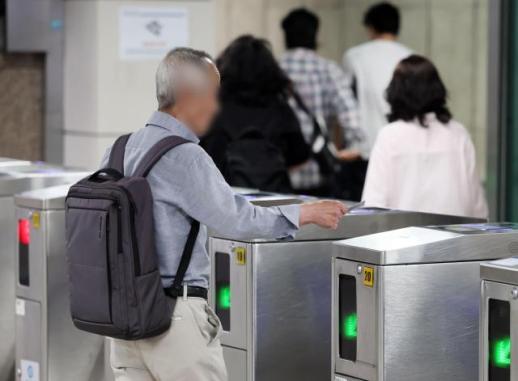 Seoul seeks to raise free subway age to 70 SEOUL, June 24 (AJP) - South Korea's capital is moving to overhaul one of its longest-standing welfare benefits for older citizens, proposing to raise the eligibility age for free subway rides from 65 to 70 as the country grapples with the realities of a superaged society. If approved, the ordinance would authorize the Seoul city government to offer free or discounted bus rides to residents aged 70 and older who live in the city. The city would decide later how many free rides would be provided and who would qualify for the benefit. The ordinance up for a vote on Wednesday does not itself change the eligibility age for free subway rides. Instead, it would provide the legal basis for Seoul's broader transportation reform, with details to be finalized through future legislation and administrative measures. The measure is part of Seoul Mayor Oh Se-hoon's broader effort to reform transportation benefits for South Korea's aging population and was one of his key campaign pledges during this month's local elections. After winning reelection, Oh met with the head of the Seoul Federation of the Korean Senior Citizens Association on June 19 to discuss senior transportation policies. The association welcomed the proposal, saying the change would better reflect fiscal sustainability and South Korea's changing demographics. The proposal reflects growing concerns that South Korea's decades-old senior transportation system no longer matches the country's demographic reality. People aged 65 and older have long been entitled to unlimited free subway rides, a benefit that has remained largely unchanged for nearly 40 years despite rapid population aging and longer life expectancy. City officials say the reform aims to make the system more sustainable while expanding transportation options for older residents. The city is considering limiting free bus rides to 14 trips a month. According to estimates by the Seoul Metropolitan Council, a fully free bus program for all eligible seniors would cost more than 100 billion won ($73 million) annually and approximately 578.9 billion won over five years. Officials said the actual burden would likely be lower if the city adopts a monthly cap on the number of free rides. Any savings generated by raising the eligibility age for free subway rides could also offset part of the cost of the new bus program. The measure is widely expected to pass, as the conservative People Power Party holds a majority in the Seoul Metropolitan Council with 68 of its 106 seats, while also gaining support from senior citizens' groups. The debate mirrors broader social changes in South Korea, where people are living longer and remaining economically active well beyond traditional retirement age. According to the Ministry of Health and Welfare's 2023 survey on older adults, South Koreans now consider the average age at which a person becomes "elderly" to be 71.6 years. Meanwhile, the labor force participation rate among people aged 65 and older rose to 40.7 percent last year from 29.5 percent in 2000. If the ordinance passes, Seoul plans to proceed with further public consultations and budget discussions before deciding when to implement the revised transportation benefits program. 2026-06-24 10:49:51
-
 Korea's new obsession: borrowing to buy stocks, not homes SEOUL, June 23 (AJP) - South Korea's stock craze has reached a point where borrowing to buy shares is becoming more socially acceptable than borrowing to buy an apartment. The shift reflects a profound change in a country long defined by its obsession with real estate, as millions of Koreans pour into a handful of AI-related stocks in pursuit of rapid wealth creation. Tuesday's selloff offered a reminder of how fragile that enthusiasm can be. The benchmark KOSPI crashed nearly 10 percent, while the junior KOSDAQ plunged almost 8 percent as a broad market correction swept through Seoul. Only 46 stocks advanced against 859 decliners on the main board, while 134 gained versus 1,574 losers on the KOSDAQ. For Korea's "ants" — the nickname for retail investors — it was a bruising day. Yet the mania itself shows little sign of cooling. Stocks dominate lunchtime conversations, subway rides and office meetings. Fear of missing out, or FOMO, has pushed leveraged investment to unprecedented levels, overtaking concerns that once centered almost exclusively on the housing market. Margin loans reached a record 38.48 trillion won ($28 billion) as of June 19, according to the Korea Financial Investment Association, after the KOSPI broke above 9,000 for the first time in history. The psychology surrounding wealth accumulation is changing alongside the money. According to the 2026 Korea Wealth Report by Hana Financial Research Institute, 43 percent of wealthy Koreans with more than 1 billion won ($730,000) in financial assets said financial investments are now a more effective way to build wealth than real estate. The findings point to a remarkable reversal in a country where apartment ownership has long been treated as the ultimate measure of financial success. But the fever is highly concentrated. "It's like college admissions," said Park Jae-ha, a day trader in his 20s. "There are many universities, but everyone only wants to get into SKY." In Korea's stock market, the equivalent of SKY — shorthand for Seoul National University, Korea University and Yonsei University — has become a small group of AI winners led by Samsung Electronics and SK hynix. The divergence is becoming extreme. According to market data provider MP Doctor, the KOSPI surged 11.43 percent during the week of June 15-19, making it the best-performing major stock index among G20 economies. The KOSDAQ, by contrast, fell 6.07 percent during the same period, making it the worst performer in the group. Over the past month, the junior index has slumped 16.75 percent. The gap has widened all year. While the KOSPI has soared 114.81 percent so far this year, the KOSDAQ has gained just 4.44 percent. The junior market now accounts for only 6.8 percent of South Korea's total stock market capitalization, its lowest share since 1999. The concentration is visible even in borrowing. Of the record 38.48 trillion won in margin loans, 29.4 trillion won was tied to KOSPI stocks, compared with 9.08 trillion won for the KOSDAQ. Analysts cite three drivers behind the divide: money flows, earnings and interest rates. Semiconductor giants continue to enjoy rising profit forecasts as global AI investment accelerates, while many KOSDAQ companies, concentrated in biotechnology and battery sectors, have struggled to generate comparable earnings momentum. Higher interest rates have added further pressure. Growth stocks tend to be more sensitive to tighter liquidity conditions, leaving the KOSDAQ particularly vulnerable as monetary policy turns more hawkish. "For money to return to the KOSDAQ, the current rally in large-cap stocks would first have to end," said Lee Jae-won, an analyst at Yuanta Securities. That bleak outlook is already visible online. KOSDAQ investor communities have become increasingly bitter as the performance gap with the KOSPI widens. "It's a pyramid," one investor wrote. "The winners at the top keep getting richer while the rest keep slipping." Some have turned their frustration toward policymakers. "Even when chip stocks rise in the U.S., biotech doesn't collapse," another investor wrote. "If pharmaceuticals and biotech continue to suffer because of this semiconductor obsession in Korea, financial authorities have made a serious mistake." Others have simply given up. "For now, staying out of the market is an investment strategy," one post read. Meanwhile, optimism thrives elsewhere. "This is a historic moment," one investor wrote. Another recalled advice from a friend who made 1 billion won during the rally. "Never sell Samsung and SK hynix. Just be patient." Regulators, however, are increasingly uneasy. Lee Chan-jin on Monday openly regretted approving single-stock leveraged ETFs tied to Samsung Electronics and SK hynix, saying the products had produced limited benefits while exposing retail investors to mounting risks. "I personally regret the timing of the approval," he said. The products were introduced last month to encourage domestic investors to gain leveraged exposure at home instead of turning to overseas markets. "The effect has been minimal, but the side effects have become too significant," Lee said. He warned that the products encourage excessive trading and primarily benefit securities firms rather than investors. "There is a risk that investors gain little while securities firms and liquidity providers earn most of the profits." Lee said turnover in some single-stock leveraged ETFs reached 200 percent and remains around 130 percent. He estimated cumulative trading commissions generated by the products at between 5 trillion won and 10 trillion won. In one of his strongest remarks, he even expressed personal regret. "Maybe I should have physically blocked the approval process at the time," he said. The regulator is now discussing possible measures with policymakers, including safeguards on margin and credit-backed trading. Yet the warnings have done little to dampen enthusiasm. "I refresh the app over and over, sometimes several times a minute," said Dan Kim, 36, who owns SK hynix, Samsung Electronics, Samsung Electro-Mechanics and the TIGER U.S. S&P 500 ETF. "Yesterday was all red, and now I check again today and it's all blue. Honestly, maybe I'd be better off not looking at it at all." Still, he keeps checking. "I never invested before," said H.K., who runs a cafe in Seoul. "Every customer who comes into my cafe seems to be talking about stocks these days — Samsung, SK hynix, ETFs. At some point, I started to feel like I was the only one not in the game." Some are getting rich. Others are being left behind. As more Koreans borrow money to chase a handful of AI winners, the country's defining asset bubble may no longer be apartments. It may be a handful of stocks. And the biggest question may no longer be who is winning today, but who will still be standing when the rally eventually cools. 2026-06-23 17:36:40
-
 SpaceX slide painfully watched by Korean retailers holding nearly $2 billion SEOUL, June 23 (AJP) — SpaceX has become an instant favorite among South Korean retail investors, who have poured nearly $2 billion into the stock since its June 12 Nasdaq debut, only to see the trade quickly turn painful as the initial heat surrounding Elon Musk's rocket rapidly cools. According to data from the Korea Securities Depository on Tuesday, Korean investors purchased a net $1.95 billion worth of SpaceX Class A shares between June 12 and June 19. The buying spree far outpaced purchases of other popular U.S. investments, including the iShares Semiconductor ETF and the Roundhill DRAM ETF. The frenzy quickly spread beyond the stock itself. Retail investors also rushed into high-risk exchange-traded funds linked to SpaceX's price swings, betting on even larger gains despite mounting volatility. One of the most popular products was a leveraged ETF designed to deliver twice the stock's daily return. It ranked as the fourth-most purchased overseas security among Korean retail investors during the period, attracting net inflows of $62.8 million. The rush was so intense that SpaceX instantly became the biggest overseas stock purchase by Korean retail investors this year, overtaking earlier favorite Micron Technology. But the bet quickly soured. After a blockbuster debut, the stock came under heavy selling pressure, tumbling 16.4 percent in the latest session after the company unveiled plans to issue more than $20 billion in bonds shortly after its equity offering. While Moody's Ratings, S&P Global Ratings and Fitch Ratings all assigned investment-grade ratings to SpaceX, the ratings remain well below the coveted triple-A level. The move has fueled broader concerns about the company's balance sheet and its growing reliance on debt financing. Shares surged 19.2 percent on their first trading day and briefly climbed as high as $225.64, instantly making SpaceX one of the market's most expensive stocks. The shares have since fallen to $154.60, down more than 31 percent from their peak. Although the stock remains above its IPO price of $135, the sharp reversal has underscored the risks associated with highly volatile growth stocks. iM Securities economist Park Sang-hyun said concerns are growing over AI-related borrowing as companies increasingly rely on debt to finance massive investments, warning that intensifying competition could eventually weigh on profitability across the sector. "The market is becoming more sensitive to whether AI investment can generate sustainable returns, rather than simply rewarding companies for spending aggressively," Park said. 2026-06-23 15:13:00
-
 KOSPI tumbles below 9,000 as Wall Street tech selloff hits Seoul rally SEOUL, June 23 (AJP) — South Korean stocks succumbed to foreign-led profit-taking Tuesday, pushing the benchmark KOSPI back below the 9,000 mark and sending the won toward 1,540 per dollar, as a broad correction in artificial intelligence stocks spread across Wall Street and Asia. As of 9:56 a.m., the benchmark KOSPI fell 1.73 percent to 8,957.02, while the junior KOSDAQ sank 3.40 percent to 935.47. The correction followed a record-setting streak in Seoul that had propelled the KOSPI to successive all-time highs, though the pullback was milder in Tokyo, where the Nikkei 225 edged down 0.16 percent to 72,237.85. The battle for market leadership has become one of the market's defining investment themes after SK hynix overtook Samsung Electronics in common-share market capitalization to become the KOSPI's largest listed company, marking the first change at the top in 25 years. Analysts said the shift reflects how aggressively investors have embraced the memory-chip maker's dominance in AI-related products. Yet the rivalry has also exposed the bellwether stocks to profit-taking. Both chipmakers came under pressure as investors locked in gains following the recent AI-fueled rally and turned cautious after overnight weakness in U.S. technology shares. SK hynix fell 1.78 percent to 2,867,000 won, while Samsung Electronics slid 2.97 percent to 343,000 won. SK Group affiliates remained relatively resilient. SK Square rose 6.95 percent to 2,107,000 won, underscoring continued optimism surrounding AI and semiconductor-related businesses despite the broader market selloff. Samsung affiliates traded mixed. Samsung Life Insurance jumped 6.10 percent to 478,000 won, while Samsung C&T gained 1.73 percent to 529,000 won and Samsung Biologics rose 1.93 percent to 1,320,000 won. In contrast, Samsung Electronics preferred shares fell 1.56 percent to 220,500 won and Samsung Electro-Mechanics tumbled 6.33 percent to 2,087,000 won. LG Energy Solution edged up 0.52 percent to 387,500 won, while automakers came under pressure. Hyundai Motor fell 5.68 percent to 548,000 won and Kia lost 3.43 percent to 146,200 won. HD Hyundai Heavy Industries slipped 2.36 percent to 621,000 won, while Doosan Enerbility rose 1.70 percent to 95,800 won. Financial shares bucked the broader downturn, with KB Financial Group gaining 2.99 percent to 161,700 won. Losses were broad-based on the KOSDAQ, with secondary battery and growth stocks leading the decline. EcoPro BM fell 5.58 percent to 157,400 won, while Rainbow Robotics dropped 6.98 percent to 533,000 won. Jusung Engineering slid 5.36 percent, Wonik IPS lost 5.97 percent and EO Technics fell 4.54 percent as investors reduced exposure to high-growth technology names. The weakness followed a mixed session on Wall Street, where investors rotated out of mega-cap technology shares amid concerns over higher interest rates and growing skepticism over the pace of AI spending. The Nasdaq Composite fell 1.33 percent overnight, while the S&P 500 slipped 0.37 percent. The Dow Jones Industrial Average, however, rose 0.29 percent as investors shifted toward value stocks and sectors expected to benefit from easing geopolitical risks and lower oil prices. The retreat in technology shares was led by SpaceX, which plunged more than 16 percent after announcing plans to issue $20 billion worth of investment-grade bonds to finance its AI infrastructure expansion. Alphabet also declined after reports that a senior Google DeepMind executive would leave for rival Anthropic. Meta, Amazon and Microsoft also fell as investors questioned whether the billions of dollars being poured into AI infrastructure can be sustained. Oil prices remained soft as geopolitical tensions eased after the United States and Iran reportedly made progress in follow-up negotiations to implement their ceasefire agreement. Brent crude futures fell more than 3 percent overnight, while U.S. West Texas Intermediate crude also declined as investors dialed back fears of supply disruptions in the Middle East. The market instead turned wary over the U.S. interest-rate outlook. Bank of America said overnight that the Federal Reserve could raise interest rates by 25 basis points each in September, October and December, a view that pushed Treasury yields higher and strengthened the dollar. The greenback traded at 1,539.40 won, up from the previous session's close of 1,537.0 won. Market participants said the tug-of-war between foreign profit-taking and domestic AI optimism is likely to define trading in the coming sessions, with investors closely watching several key events this week. Investors are also looking ahead to Micron Technology's quarterly earnings and guidance due on June 25, which could provide fresh clues about the sustainability of the AI-driven memory-chip boom and the outlook for South Korean semiconductor stocks. Meanwhile, U.S. May personal consumption expenditures inflation data will be closely watched for signals on the Federal Reserve's policy path. Another closely watched event is MSCI's annual market classification review. Investors are hoping South Korea will be added to the watch list for developed-market status, a move that could further improve sentiment and support a re-rating of Korean equities. 2026-06-23 10:16:19
-
 Netflix classroom drama mirrors reality as 300 teens admit to online gambling SEOUL, June 22 (AJP) -In one episode of Netflix's "Teach You a Lesson," an ordinary high school student falls into a vicious cycle of online gambling and criminal networks as he struggles to pay off mounting debt. A recent survey on school gambling suggests the hit Korean drama, which explores the social problems increasingly dominating classrooms, may be uncomfortably close to reality. Nearly 300 South Korean teenagers voluntarily admitted to illegal online gambling in just one month, including 48 students from a single high school, underscoring growing concerns over the spread of online gambling addiction among students. The National Police Agency said Sunday it received 294 voluntary reports of youth cyber gambling, including 244 self-reports from minors and 50 reports filed by parents. A high school in Gangwon Province accounted for the largest cluster of cases, with 48 students voluntarily reporting online gambling. Together with another nearby school, where 20 students came forward, the province recorded 78 cases, more than a quarter of the nationwide total. Gangwon Provincial Police sought to make the reporting program more accessible by distributing business cards featuring school police officers' Instagram accounts and encouraging students to reach out through direct messages. Several cases illustrated how online gambling addiction can rapidly escalate into debt, violence and family breakdown. In Incheon, a 15-year-old boy admitted to illegal online gambling after assaulting his mother for refusing to repay about 4 million won ($2,900) in gambling debts before later attempting to take his own life. Police said he had gambled a total of about 30 million won ($22,000). Another case involved a 17-year-old boy in North Jeolla Province who repeatedly ran away from home and stole from parked vehicles to finance his gambling habit. Over 14 months, he deposited a total of 16 million won into online gambling sites. He was later placed in a youth shelter and enrolled in an addiction recovery program. Police data showed that teenagers who voluntarily reported their activities had gambled for an average of 12 months and spent about 3 million won ($2,200) each. The largest amount reported by a single individual reached 60 million won. 2026-06-22 15:21:49
-
 KOSPI gives up record rally as profit-taking, Gulf jitters cool momentum SEOUL, June 19 (AJP) — South Korea's benchmark KOSPI surrendered a record-breaking rally Friday, retreating sharply from an all-time high above 9,300 as investors rushed to lock in profits after one of the fastest market surges in the country's history. The KOSPI closed down 0.13 percent at 9,052.42 after soaring nearly 3 percent earlier in the session and briefly crossing the 9,300 threshold for the first time ever. The benchmark later reversed course, falling as much as 2.56 percent intraday before managing to defend the newly established 9,000 level. The junior KOSDAQ fell more sharply, tumbling 3.43 percent to 966.59 and slipping back below 1,000 as investors unloaded smaller growth and biotechnology shares following weeks of outsized gains. The selloff was initially driven by domestic supply-demand pressure. Foreign and institutional investors turned heavy sellers on the main board, unloading a combined 2.4 trillion won ($1.75 billion) worth of shares. Foreigners sold a net 983 billion won, while institutions offloaded 1.45 trillion won. Retail investors absorbed the selling, purchasing a net 2.53 trillion won. The reversal came just a day after the KOSPI closed above 9,000 for the first time, leaving investors increasingly wary of stretched valuations after a historic run. The benchmark has surged more than 10 percent this week alone, fueled largely by semiconductor shares and a handful of mega-cap technology stocks. That concentration left the market vulnerable to profit-taking as investors questioned how much further the rally could extend in the near term. Technology shares delivered mixed performances. Samsung Electronics fell 2.34 percent to 354,000 won as investors booked profits following its recent surge. In contrast, SK hynix gained 2.94 percent to 2,764,000 won after touching a fresh all-time high of 2,891,000 won earlier in the day. SK Square climbed 4.71 percent to 1,780,000 won, extending gains as investors continued to favor companies tied to artificial intelligence and long-term technology themes. Buying also rotated into selected defensive and financial names. Samsung Life Insurance jumped 5.97 percent, Hyundai Motor rose 2 percent, and LG Energy Solution added 1.12 percent. Samsung Electro-Mechanics gained 3.18 percent as investors shifted toward companies perceived to have more durable earnings visibility beyond the semiconductor boom. Meanwhile, Samsung Biologics fell 3.92 percent as investors rotated away from some of this year's biggest winners. The KOSDAQ saw broad-based weakness. Jusung Engineering plunged 9.13 percent, while Alteogen, Kolon TissueGene, Rainbow Robotics and HLB all fell around 4 percent or more. EcoPro BM and EcoPro also declined as investors reduced exposure to higher-risk growth stocks. The Korean won briefly weakened to the 1,540 level before recovering slightly to close at 1,530.4 against the U.S. dollar. External risks also weighed on sentiment. Risk appetite softened after reports that follow-up U.S.-Iran talks had been delayed, including the postponement of U.S. Vice President J.D. Vance's expected trip to Switzerland, raising concerns that diplomatic momentum between Washington and Tehran may be losing steam. U.S. index futures also weakened during Asian trading, adding to intraday pressure on Seoul. Semiconductor-related concerns resurfaced after reports that Washington was increasingly worried about advanced chipmaking equipment from Dutch manufacturer ASML reaching China. The report added caution across semiconductor stocks, while speculation over a possible reduction in SK hynix's weighting in FTSE Russell's global index rebalancing raised concerns about short-term supply pressure. Elsewhere in Asia, Japan's Nikkei 225 rose 0.28 percent to 71,250.06, remaining near record territory as enthusiasm for artificial intelligence-related shares persisted, though gains became more selective. Advantest jumped 4.75 percent to 31,740 yen on optimism over AI-driven semiconductor demand, while fellow chip-equipment maker Lasertec fell 2.39 percent to 55,100 yen. Mitsubishi UFJ Financial Group dropped 2.85 percent to 3,278 yen as financial shares lagged despite the Bank of Japan's recent rate hike. Hong Kong's Hang Seng Index fell 1.59 percent to 23,924.81, while mainland Chinese markets were closed for the Dragon Boat Festival. 2026-06-19 17:06:26
-
 Korean frenzy over SpaceX pours another $1 billion into stock SEOUL, June 19 (AJP) - South Korean retail investors can't get enough of SpaceX, pouring another $1 billion into the stock as money floods out of semiconductor plays and into Wall Street's hottest new trade. According to data from Korea Securities Depository as of Friday, Korean investors purchased a net $346.9 million worth of SpaceX shares on Monday alone, equivalent to about 528.8 billion won. Gross purchases reached $376.6 million, while selling totaled just $29.7 million. The buying spree came on top of the record-breaking debut session on June 12, when Korean investors snapped up nearly $796 million worth of shares. In just two trading sessions, their cumulative net purchases reached 1.74 trillion won ($1.14 billion). That was enough to keep SpaceX firmly at the top of the overseas stock buying rankings among Korean investors. Net purchases were more than twice the amount invested in Alphabet, the second-most bought stock during the same period. Shares of SpaceX have rewarded that enthusiasm so far. After pricing its initial public offering at $135, the stock soared 19.3 percent on its first trading day and gained another 19.6 percent in the following session. The two-day rally pushed the shares above $190, representing a gain of more than 40 percent from the IPO price. The craze has rapidly lifted the company's standing among Korean investors. The stock is now the 33rd-largest foreign holding, ranking just behind Meta Platforms and ahead of the Roundhill Memory ETF, a semiconductor-focused fund heavily invested in Samsung Electronics and SK hynix. During the same period, Korean investors dumped some of their semiconductor investments. They sold a net $1.04 billion worth of SOXL, a leveraged ETF that tracks U.S. semiconductor stocks, and also unloaded $105.2 million worth of Micron shares. Market participants say some of the money that once chased the AI-driven semiconductor rally is now flowing into the newly listed aerospace company. 2026-06-19 15:14:48
-
 KOSPI extends historic rally beyond 9,200 as chip giants lead charge SEOUL, June 19 (AJP) -South Korean stocks extended their record-breaking rally Friday, with the benchmark KOSPI surging further above the 9,000-point mark as a global semiconductor boom, aggressive foreign buying and renewed optimism over artificial intelligence demand continued to fuel gains. The benchmark KOSPI opened at 9,292.71, up 2.53 percent from the previous session, extending its record-breaking rally after closing above the 9,000-point mark for the first time a day earlier. The junior KOSDAQ opened 0.03 percent lower at 1,000.67. As of Thursday's close, the KOSPI jumped 2.25 percent to finish at 9,063.84, marking its sixth consecutive session of gains and achieving another historic milestone. The index climbed as high as 9,106.07 intraday, setting another record and crossing the symbolic threshold just over a month after first breaching the 8,000 mark on an intraday basis on May 15. The rally remained firmly centered on semiconductor heavyweights. Samsung Electronics rose 2.48 percent to 371,500 won at the open, while SK hynix jumped 4.73 percent to 2,812,000 won, extending gains as optimism over the global AI-driven memory boom continued to build. The strength spread across major Samsung and SK affiliates. SK Square surged 7.82 percent to 1,833,000 won, Samsung C&T climbed 6.90 percent to 519,000 won, Samsung Electro-Mechanics gained 5.00 percent to 2,310,000 won, Samsung Electronics preferred shares advanced 3.06 percent to 235,500 won and Samsung Life Insurance rose 3.09 percent to 483,500 won. Among other blue chips, LG Energy Solution edged up 0.25 percent to 401,000 won and Samsung Biologics added 0.35 percent to 1,435,000 won. Hyundai Motor rose 0.17 percent to 602,000 won, while HD Hyundai Heavy Industries slipped 0.73 percent to 679,000 won. Kia and Hanwha Aerospace edged down 0.06 percent and 0.25 percent to 158,700 won and 1,186,000 won, respectively. The chip rally gathered pace after Apple Chief Executive Tim Cook said booming artificial intelligence demand was driving a sharp increase in chip prices, bolstering expectations for a prolonged global memory upcycle. Foreign investors remained the dominant buyers, purchasing a net 1.01 trillion won worth of KOSPI shares on Thursday, while institutions added another 539 billion won. Samsung Electronics was the single most-bought stock among overseas investors. The bullish mood was reinforced overnight on Wall Street, where semiconductor stocks extended their gains and pushed major indexes higher. The S&P 500 rose 1.08 percent and the Nasdaq Composite gained 1.91 percent as investors piled into AI-related names. Memory chip makers led the rally. Micron Technology surged 8.7 percent while Sandisk jumped more than 11 percent, reflecting growing confidence that AI-driven demand for high-bandwidth memory and data-center storage will continue to outpace supply. Adding to the momentum, U.S. President Donald Trump said Apple had agreed to cooperate with Intel to design and manufacture chips in the United States, sending Intel shares soaring more than 10 percent and boosting sentiment across the broader semiconductor industry. Oil prices also eased overnight, providing additional relief to investors concerned about inflation and geopolitical risks. U.S. crude futures edged lower to settle at $76.60 a barrel. Several market indicators also pointed to continued strength. The MSCI Korea ETF climbed nearly 7 percent overnight, while the MSCI Emerging Markets ETF gained more than 3 percent. The Philadelphia Semiconductor Index surged 6.42 percent, and KOSPI 200 futures traded in overnight sessions rose 3.5 percent. Still, after one of the fastest rallies in the market's history, investors are increasingly watching whether the KOSPI's next leg higher can broaden beyond semiconductors and the AI trade that has propelled it to record highs. 2026-06-19 09:29:27
-
 Cash stays on its toes to ride stock rally and higher rates in Korea SEOUL, June 18 (AJP) -Cash set aside for stock investments has surged and money parked in instantly accessible accounts remains elevated, underscoring the depth of fear of missing out in a stock market whose benchmark index has more than doubled since the beginning of the year. Households and companies are moving cash in and out of bank accounts at the fastest pace in a decade, favoring flexible, short-term deposits over long-term savings as a record-breaking stock market rally reshapes how Koreans manage their money. According to the Bank of Korea on Wednesday, the turnover ratio of demand deposits — a measure of how frequently money flows in and out of checking accounts and other instantly accessible deposits — stood at 23.1 in April, up from 18.2 a year earlier and 14.7 in April 2022, shortly after the COVID-19 pandemic. The ratio reached 23.6 in December, its highest level in 10 years, and has remained above 23 for two consecutive months since March. The indicator is calculated by dividing total withdrawals by the average amount of deposits held. A higher reading suggests households and businesses are actively deploying cash for spending and investment rather than leaving it in long-term savings accounts. The trend reflects a broader shift in how Koreans manage money, prioritizing liquidity over locking funds away for months or years. The country's five largest banks — KB Kookmin, Shinhan, Hana, Woori and NH NongHyup — held a combined 703.2 trillion won ($510 billion) in demand deposits as of June 16, up 29.2 trillion won from the end of last year. At the same time, money earmarked for stock investments jumped 41.8 percent to 36.7 trillion won, highlighting investors' growing preference to keep cash readily deployable as opportunities emerge. Retail investors are also taking on more leverage. Credit extended through overdraft accounts at the five major banks reached 43.2 trillion won at the end of May, up about 3.5 trillion won this year. Corporate cash is moving in a similar fashion. Demand deposits held by businesses at the five major banks rose by more than 13 trillion won to 247.6 trillion won at the end of May from 234 trillion won at the end of last year. Much of the increase flowed into money market deposit accounts, or MMDAs, which allow companies to earn interest while preserving immediate access to cash. The preference reflects rising interest rates and increasingly unpredictable funding needs. Companies face larger expenses from performance bonuses, shareholder returns and financing costs, prompting them to keep excess cash flexible rather than tie it up in longer-term products. Samsung Electronics and SK hynix are among companies reported to have parked portions of their surplus cash in MMDAs to maximize interest income. Financial institutions expect money to circulate even faster as interest rates rise. The yield on one-year bank bonds, a benchmark used to price deposit rates, climbed to 3.565 percent on June 16, up 0.748 percentage point from the start of the year. Concerns about inflation stemming from Middle East tensions, coupled with expectations that the Bank of Korea could raise rates further, have pushed market yields higher and encouraged banks to increase deposit rates. Several lenders now offer returns approaching those of savings banks. Standard Chartered Korea offers deposits paying up to 3.75 percent annually, while regional lenders including Jeonbuk Bank and Jeju Bank offer rates around 3.7 percent. Internet-only banks such as KakaoBank, K Bank and Toss Bank offer around 3 percent even on three-month deposits. 2026-06-18 17:04:20