

Journalist

Ryu Yuna류윤아
Julia37@ajupress.com
ReporterFinancial Supervisory Service (FSS) & finance, capital markets, Southeast Asian affairs
Yuna Ryu covers finance, capital markets and Southeast Asian affairs.
She is drawn to the questions that numbers raise and the stories that data alone cannot answer.
Prior to journalism, she worked at Hyundai Motor Company and the Singapore Chamber of Commerce, focusing on business strategy and international affairs. She has also hosted diplomatic receptions and international conferences as an MC.
Ryu holds a master's degree in Media and Communication from Korea University, where her research focused on neuroscience-based studies of media effects. "Beyond every statistic is a human story waiting to be heard."
Latest by Ryu Yuna
-
 For BTS fans, following them 'Into the Sun' is worth every second — even 3 months SEOUL, June 12 (AJP) — While much of South Korea was painted red in celebration of the national football team's opening victory at the 2026 FIFA World Cup, the country's second-largest city turned purple as BTS fans flooded Busan for a two-day concert marking the group's 13th anniversary. For many ARMY members, the concerts were more than another stop on BTS's world tour. They marked an emotional return to the very venue where the group bid farewell before answering the nation's call for military service four years ago. Fans arrived from every corner of the globe. Some, however, had barely left South Korea since BTS launched its comeback year with a special event in Seoul in March. "It feels unreal," said Vuyo Matiwane, 36, from South Africa. "It's been almost three months of waiting, but I'm just as excited as I was for the comeback live event and the first tour concerts in Goyang." Matiwane chose to remain in South Korea after attending BTS's Gwanghwamun event in March and the group's opening concerts in Goyang in April. She said the wait for Busan had felt endless, making it difficult to believe the anniversary weekend had finally arrived. Hours before showtime, Busan was already buzzing with anticipation. Fans filled hotels, shopping districts and tourist landmarks as the city prepared for BTS's return. "The atmosphere in Busan is amazing," Matiwane said. "The city is buzzing with 'ARIRANG.' Every corner is painted in shades of purple and themed around the tour. ARMY from all over the world are here." Matiwane had also visited Busan for BTS FESTA last year while the members were completing their military service. The experience was memorable despite the group's absence, she said, making this year's anniversary celebrations even more meaningful. "I'm excited and emotional at the same time," she said. "I think what ARMY means to BTS and what BTS means to ARMY is not a feeling that can easily be put into words." Asked what she would say to BTS if given the chance, Matiwane delivered a message on behalf of fans in her home country. "South Africa is eagerly waiting for its turn to have a concert," she said. "Until then, I'll follow you 'Into the Sun.'" For some fans, even not having a ticket was not enough to keep them away from Busan. "A lot has changed in my life over the past 13 years, but BTS has been a constant," said Liu, a Singaporean fan in her 30s. "That's why being in Busan for this anniversary feels emotional." Moreau, 29, from France, said Busan felt different from any BTS concert experience he had encountered in Europe. "I've attended several BTS concerts, but coming to Busan feels like experiencing the heart of the fandom," he said. "The excitement throughout the city is unlike anything I've ever seen." Moreau said BTS's music helped him gain confidence when he was younger, making the journey particularly meaningful. "Looking around the stadium, I see people of every age and background sharing the same joy," he said. "It's proof that music can bring the world together in a very real way." For Olivia Bennett, 24, from the United Kingdom, visiting South Korea for BTS had long been a dream shared by many international fans. "Busan is full of people from different cultures, yet everyone seems connected through the same music," she said. Bennett said BTS's messages of hope, self-acceptance and resilience were reflected in the diversity and openness of the fan community. "I've made friends here from countries I've never even visited before," she added. Anticipation had also been building online. After a fan-run BTS news account shared a preview video of the stage setup at Busan Asiad Main Stadium, social media quickly filled with messages of excitement. "Nostalgia is hitting," one fan wrote, recalling BTS's 2022 performance at the same venue before the members began military service. Another commented: "If the stage lights are half as bright as that renovation, we'll need sunglasses in Busan. Can't wait to see BTS turn a stadium into a concert galaxy." The Busan concerts come amid the global success of BTS's fifth studio album, "ARIRANG," which recently spent a third consecutive week atop the Billboard 200 chart. For the fans who traveled thousands of kilometers — and for some, waited nearly three months across multiple Korean cities — the weekend represents more than another concert or another chart milestone. It is a celebration of BTS's 13-year journey and a reminder of the bond that continues to connect millions of fans across generations, cultures and continents. 2026-06-12 15:41:05
-
 SpaceX buzz, ceasefire hopes send KOSPI soaring back above 8,000 SEOUL, June 12 (AJP) - The KOSPI once again proved one of the world's most volatile major stock indexes, surging more than 7.6 percent Friday morning as hopes for a Middle East ceasefire and excitement surrounding SpaceX's Nasdaq debut sparked a broad-based rally in technology shares. As of 10:57 a.m., the benchmark KOSPI was up 7.76 percent at 8,366.47 after opening 6.44 percent higher. The index earlier jumped as much as 8.50 percent to 8,424.13. The sharp advance triggered a buy-side sidecar shortly after the opening bell, underscoring the extraordinary swings that have gripped Korean equities this week. Investors also cheered news that Hanmi Semiconductor plans to invest 50 billion won ($37 million) in SpaceX, the world's largest private space company, ahead of its Nasdaq debut on Friday later in New York. The move reinforced enthusiasm for AI infrastructure, advanced semiconductors and space-related growth themes, sending Hanmi Semiconductor shares soaring more than 14 percent. Risk appetite was further boosted after U.S. President Donald Trump said a ceasefire agreement with Iran was nearing completion and announced the cancellation of planned military strikes, easing fears of a prolonged conflict that had rattled global markets earlier this week. Foreign investors, persistent sellers throughout much of June, returned as net buyers, purchasing 568.5 billion won worth of shares on the main board. Institutional investors added another 393.4 billion won, while retail investors took profits, selling a net 921.2 billion won. The Korean won also strengthened alongside equities, with the dollar falling to 1,519.40 won from the previous close of 1,528.90 won. Chipmakers led the advance. Samsung Electronics rose 10.54 percent to 330,500 won, extending its rebound above the 300,000-won mark, while SK hynix gained 7.76 percent to 2,264,000 won after briefly climbing above 2.3 million won. The gains spread across other heavyweight stocks. SK Square jumped 8.47 percent, Samsung Electro-Mechanics advanced 5.10 percent, Hyundai Motor gained 5.36 percent, LG Energy Solution added 4.16 percent and Samsung Life Insurance climbed 7.53 percent. The bullish mood spilled over into the junior KOSDAQ market, where the index rose 3.02 percent to 1,027.07, reclaiming the 1,000-point level. Rainbow Robotics surged 11.40 percent, EcoPro gained 6.71 percent, EcoPro BM rose 5.36 percent and Alteogen added 1.30 percent. The rebound in Seoul mirrored a powerful overnight rally on Wall Street. The Dow Jones Industrial Average gained 1.86 percent, while the S&P 500 and Nasdaq Composite rose 1.75 percent and 2.54 percent, respectively. U.S. semiconductor stocks also rallied sharply, reinforcing gains across Asian technology markets. Intel jumped 9.27 percent, Micron Technology surged 11.66 percent, SanDisk soared 14.50 percent and Nvidia added 2.22 percent. The optimism extended across Asia. Japan's Nikkei 225 rose 2.68 percent to 65,941.08, Hong Kong's Hang Seng Index gained 1.45 percent to 24,602.06, and China's Shanghai Composite advanced 0.99 percent to 4,026.62. 2026-06-12 11:13:47
-
 BTS turns Busan into Asia's hottest destination SEOUL, June 11 (AJP) - Busan, South Korea's second-largest city and biggest port, has turned into a mini-Asia as it hosts a two-day homecoming concert for BTS, timed with the group's 13th anniversary. The summer vacation season arrived early for the coastal city, with fans crowding department stores, luxury outlets, convenience stores and Olive Young shops, while roaming beaches and BTS-themed streets ahead of the June 12-13 concerts. By late May, major hotels including Paradise Hotel Busan, The Westin Josun Busan, Grand Josun Busan, Ananti Cove and Sono Moon Haeundae had either sold out or reported occupancy rates above 90 percent for the concert period. "BTS WORLD TOUR 'ARIRANG' IN BUSAN" will take place at Busan Asiad Main Stadium, the same venue that hosted "Yet To Come in BUSAN" in October 2022, the group's last major full-member performance before the members began their mandatory military service. The second day of the concert also falls on the anniversary of BTS's debut, adding emotional weight to the Busan shows. It marks a homecoming after the group launched its world tour in Goyang, west of Seoul, drawing about 132,000 fans over three performances. Since then, BTS has swept through Japan, the United States and Mexico, with Busan serving as the latest stop on a global itinerary spanning 34 cities and up to 85 performances through March 2027. The group also picked up Artist of the Year and two other trophies at the American Music Awards during its stop in Las Vegas. The tourist boom is already translating into stronger consumer spending across Busan. Foreign sales at Shinsegae Centum City surged 267 percent during the first five months of the year from a year earlier, while overseas visitor sales at Lotte Department Store's Busan Main Store and Dongbusan branch rose 125 percent and 150 percent, respectively. Convenience stores and beauty retailers have also benefited. Foreign-currency transactions at GS25 stores near major tourist destinations such as Haeundae and Gwangalli jumped nearly 192 percent, while foreign sales at Olive Young stores in key tourism districts rose 64 percent. Spending by visitors from Greater China increased by about 80 percent. The figures suggest Busan is increasingly attracting tourists from Taiwan, Hong Kong, China and other parts of Asia not only as a sightseeing destination but also as a shopping and lifestyle hub. Industry officials say foreign tourists who once concentrated their spending in Seoul's Myeong-dong and Gangnam are increasingly extending their trips to Busan. The city has also prepared sideline showcases and events such as the Busan Port Festival and the Busan One Asia Festival to ride the BTS boom. "When you walk into Shinsegae Department Store these days, it's hard to tell whether you're in Busan or Fukuoka," said Park Sun-young, a 50-year-old resident of Busan's Centum City district. "You see Japanese and Chinese shoppers lining up outside luxury boutiques such as Hermès and Louis Vuitton. It's the same in Haeundae. I've never heard so many different Asian languages spoken in one place before," she added. Foreign arrivals reached 7.01 million in the first four months of this year, up 20.9 percent from a year earlier. Taiwan recorded the fastest growth at 34.1 percent, followed by China at 23.5 percent, Japan at 19.5 percent, Vietnam at 12.6 percent and the United States at 11.6 percent. Busan has emerged as one of the biggest beneficiaries of that trend. The city welcomed a record 3.64 million foreign visitors in 2025, while more than 1.02 million overseas travelers visited during the first quarter of this year, up 45 percent from a year earlier and marking the fastest time the city has surpassed the one-million-visitor mark since related statistics began in 2014. Authorities are preparing for a sharp increase in overseas visitors. The Incheon Airport Immigration Office said it will implement special operating measures from Wednesday to Saturday in anticipation of a surge in foreign arrivals traveling to Busan for the concerts. During a previous BTS concert period in April, daily foreign arrivals at Incheon Airport rose to between 47,000 and 49,000, roughly 26 percent higher than the monthly average. Chinese visitors accounted for the largest share, while travelers from Japan, Taiwan and Southeast Asian countries also increased significantly. Unlike BTS's first comeback performance at Seoul's Gwanghwamun Square in March, where nearly three-quarters of foreign attendees were long-term residents already living in Korea, the Busan concerts are expected to draw a larger share of visitors traveling specifically for the event, particularly from China, Taiwan, Japan and Southeast Asia. The trend has been aided by frequent regional air routes, even as long-haul travel remains costly amid the Gulf crisis. The city's growing popularity has even spawned the term "Busan craze," referring to travelers who find themselves wanting to return after experiencing the city's beaches, food culture and laid-back coastal atmosphere. But not everyone has been happy with the city. According to data from the Korea Tourism Data Lab, operated by the Korea Tourism Organization, Busan alone accounted for more than half of all tourism-related complaints filed nationwide in May, with 185 of 368 cases reported in the city. That total was equivalent to about 77 percent of all tourism complaints reported in Busan during the entirety of 2025. Complaint numbers jumped sharply from 48 in April to 185 in May, with accommodation-related grievances making up the overwhelming majority. Many complaints involved unilateral reservation cancellations, excessive cancellation fees and allegations of price gouging. Foreign visitors accounted for 83.8 percent of all complaints, significantly outnumbering domestic travelers. The increase came after reports emerged that some accommodation providers had canceled existing reservations and relisted rooms at higher prices following the announcement of BTS's Busan concerts. BTS members personally appealed to hospitality operators not to damage the image of the country or the group through profiteering. Local and central government authorities have since stepped up inspections of lodging businesses and transportation operators to prevent unfair pricing practices and minimize inconvenience for visitors. After Busan, BTS will continue its world tour through Europe, North America, Latin America, Southeast Asia, Greater China and Australia. The scale of the concerts and the consistency of production quality at each venue have drawn awe and praise, generating a wave of online confessions from new fans who say they have converted to ARMY. In a social media post on Monday, a member of the tour's technical team said the show will feature a 360-degree stage designed to bring fans closer to the performance, supported by around 100 trucks, 10 cargo aircraft and 400 crew members. The concerts will also be streamed online and shown through live-viewing screenings, allowing fans outside Busan to take part in the anniversary event. For Busan, the shows are more than another stop on the group's world tour. They may test whether a burst of global attention can become something more lasting. 2026-06-11 17:10:07
-
 AI technologies take center stage at global longevity summit SEOUL, June 11 (AJP) —Artificial intelligence (AI) and Human Digital Twin (HDT) technology could fundamentally reshape how people age, enabling physicians to predict disease risks, simulate health outcomes and deliver personalized interventions before symptoms appear, longevity researchers said Wednesday. The technologies are increasingly being viewed as a bridge between decades of aging research and practical healthcare applications, allowing scientists to combine genomic, medical and lifestyle data to model how individuals age and respond to treatment. The discussion featured prominently at the 30th Annual Meeting of the International Centenarian Consortium (ICC) in Gochang, North Jeolla in Korea, where more than 50 researchers from 18 institutions across the United States, Japan, France, China, Brazil and other countries gathered to share the latest findings in genetics, precision medicine, nutrition, oral health and digital healthcare. Researchers said the growing convergence of AI, genomics and longevity science is accelerating the shift from treating age-related diseases to preventing them before symptoms emerge. "The goal of longevity research is no longer simply to add years to life, but to add healthy years to life," several speakers said throughout the conference. Participants also highlighted South Korea's growing importance in global aging research. They pointed to the country's rapidly aging population and decades of centenarian studies, which have produced one of the world's most comprehensive datasets on people who have lived beyond the age of 100. Researchers said Korean centenarians today tend to be better educated, smoke and drink less, and report higher levels of life satisfaction than previous generations. They also noted a sharp increase in the proportion of centenarians capable of managing daily household activities independently, suggesting that healthy aging is becoming increasingly attainable. Traditional Korean fermented foods drew particular interest among international researchers. Studies presented at the conference suggested that foods such as kimchi, doenjang and cheonggukjang — the latter two traditional Korean fermented soybean products — may contribute to healthy aging by supporting gut microbiome diversity and improving nutrient absorption. Researchers said the findings align with growing evidence linking gut health to immunity, inflammation, cognitive function and age-related diseases. Among the keynote speakers, Suh You-sin professor of aging research and genetics at Columbia University described centenarians as "nature's best laboratory," arguing that rare genetic variants found among exceptionally long-lived individuals could provide clues to slowing biological aging. "The future of aging research lies in understanding and slowing the aging process itself," Suh said. "Extending healthy lifespan is no longer a distant goal." French demographer Jean-Marie Robine called for a broader approach to measuring longevity, emphasizing the importance of the modal age at death rather than average life expectancy alone. "For decades, medicine has focused on what causes people to die early," Robine said. "The next challenge is understanding what allows people to live longer and remain healthy." Researchers from Osaka University also presented findings from the SONIC project, a long-running study of older adults in Japan, showing that oral health plays a critical role in maintaining nutrition, muscle strength and cognitive function later in life. Looking ahead, many participants identified AI-powered precision medicine as one of the most transformative developments in the field. They said the integration of centenarian research, genomic data and digital healthcare platforms could help accelerate the development of personalized health management systems designed to extend healthy lifespan rather than simply prolong life. As countries around the world confront the challenges of aging societies, researchers said the future of medicine will increasingly focus on helping people age well. The message emerging from Gochang was clear: living to 100 is no longer the ultimate challenge. The greater challenge is staying healthy enough to enjoy those extra years. 2026-06-11 14:42:59
-
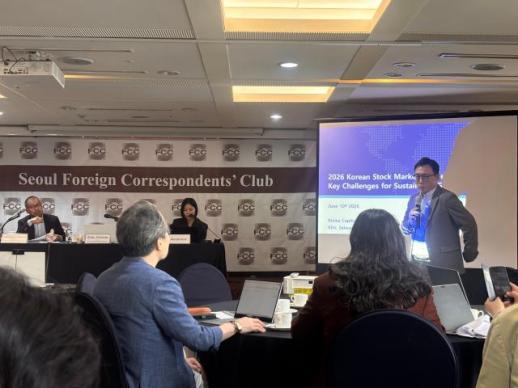 Risks remain for South Korea's historic stock market rally, expert warns SEOUL, June 10 (AJP) - South Korea's stock market has seen one of the fastest rallies in modern history, driven initially by major governance reforms that helped boost long-undervalued South Korean stocks. Many economists now say the rally will only last if the country strengthens institutions, encourages greater corporate innovation, and expands its economy beyond semiconductors. Similar remarks were made by Kim Sei-wan, president of the Korea Capital Market Institute during a press briefing at the Korea Press Center in central Seoul on Wednesday. Kim said the South Korean market has long remained undervalued, compared to global peers, despite strong players like Samsung Electronics and SK hynix. He attributed much of the market's revaluation to regulatory reforms aimed at strengthening shareholder rights and improving board independence, implemented after President Lee Jae Myung took office in June last year. He added that those reforms were likely the main driver behind the market's recent rally from roughly the 2,000-point range to around 6,000, before strong corporate earnings and market expectations provided further momentum. "As far as I know, this is one of the fastest rises in stock market history," he said. "We joke that this rise should be registered in Guinness World Records." In fact, the country's benchmark KOSPI has risen about 225.6 percent since June 2025, while the junior KOSDAQ has gained 41.8 percent, repeatedly setting record highs. Kim said Korea had delivered the strongest stock market performance among major economies over the past year. He explained the rally was initially driven by institutional changes including stronger protection for minority shareholders and greater independence of corporate boards. But this year's gains have increasingly been supported by improving earnings at major companies, particularly in technology and artificial intelligence (AI)-related sectors such as semiconductors, defense, and biotechnology. But Kim warned that the market still relies heavily on the two major chipmakers, which now account for more than half of the stock market's total value, up from about 40 percent last year. Kim said South Korea should use the current boom to restructure its economy toward advanced manufacturing, AI, and other services, citing Japan, which once dominated the global memory chip market but lost ground after failing to make timely large-scale investment. "South Korea's semiconductor competitiveness can weaken at any time," he said. "When we have the world's strongest competitiveness, we must use this opportunity to restructure our industries." Kim said domestic individual and institutional investors have been the main buyers of South Korean stocks this year, while foreign institutional investors have been net sellers. He said this marked a reversal from last year, when foreign investors helped support the market. Kim also said South Korea's possible inclusion in the MSCI developed market index would be a major event, as many global institutional investors use MSCI benchmarks to allocate their portfolios. "It would be a very important milestone, as it could open another channel for foreign liquidity into the South Korean stock market," he said. Asked about risks from retail investors borrowing money to buy stocks and investing in leveraged products, Kim said margin lending by securities firms is already tightly capped and monitored. But he warned that leveraged products can increase market volatility. He said, "It is true that leveraged products carry the risk of increasing volatility," but added that financial authorities are closely watching the market. Kim also cautioned against debt-fueled investing among younger investors. "Investment should be made with surplus funds, not with borrowed money," he said. "The government cannot stop people from making such investments if they are legal, but financial education is essential." Kim said the next stage of South Korea's market reforms should focus on building trust. He pointed to stronger shareholder protection, better enforcement of rules, consistent policies, improved corporate governance, more innovation, and clearer communication with investors as key tasks. "The government's role is very important in maintaining the momentum of the stock market boom," Kim stressed. But he pointed out that market behavior is influenced by countless variables. "We always say everything affects stock prices," he said. "Corporate earnings matter, interest rates matter, the weather matters — even the number of birds flying in the sky." 2026-06-10 18:03:16
-
 U.S.-Iran tensions and SpaceX debut weigh on Asia, drag KOSPI below 8,000 SEOUL, June 10 (AJP) - The volatile Seoul market gave ground Wednesday, surrendering part of the previous session's explosive gains as investors locked in profits while renewed military clashes between the United States and Iran rattled global markets. As of 10:33 a.m., the benchmark KOSPI was down 2.80 percent at 7,870.03, extending losses after slipping below the 8,000-point mark earlier in the session. The junior KOSDAQ edged up 0.27 percent to 970.38. The Korean won also weakened against the dollar, with the greenback trading at 1,522.70 won, up from the previous session's close of 1,512.1 won, as foreign selling accelerated ahead of SpaceX's highly anticipated Nasdaq debut on Friday. Technology shares led the decline after the Philadelphia Semiconductor Index fell nearly 2 percent overnight, with Samsung Electronics dropping 4.66 percent to 307,000 won and SK hynix sliding 4.09 percent to 2,124,500 won. Losses spread across major Samsung affiliates. Samsung Life Insurance fell 4.96 percent, SK Square lost 4.26 percent, Samsung C&T declined 4.08 percent, Samsung Electro-Mechanics dropped 2.23 percent and Samsung Electronics preferred shares slipped 2.06 percent. The weakness in chip stocks comes as investors increasingly question whether the memory-driven rally that propelled the KOSPI to record highs can be sustained amid mounting global uncertainties and a shift in capital toward new opportunities abroad. Elon Musk's SpaceX is set to begin trading on Nasdaq on Friday after attracting more than $250 billion in investor demand for what is expected to be the largest initial public offering in history. The company is seeking to raise about $75 billion at a valuation approaching $1.8 trillion. Market participants said some global funds may be raising cash ahead of the listing by trimming positions in some of this year's biggest winners, including semiconductor shares that have spearheaded gains in South Korea and other technology-heavy markets. Foreign investors have already sold 24.6 trillion won ($18 billion) worth of KOSPI shares during the first nine trading days of June after unloading 51.5 trillion won in May. The combined 76.1 trillion won selloff represents more than half of the 144.2 trillion won foreign investors have dumped from Korean equities so far this year. "Investors looking to participate in the SpaceX debut are likely to sell existing winners first," a Seoul-based brokerage official said on condition of anonymity. "Samsung Electronics and SK hynix have been among the market's biggest beneficiaries this year and naturally become sources of liquidity when global funds need cash." Not all sectors participated in the retreat. Shipbuilders, battery makers and automakers outperformed as investors rotated into industries perceived as less exposed to the semiconductor cycle. HD Hyundai Heavy Industries gained 3.59 percent, LG Energy Solution advanced 2.14 percent and Hyundai Motor rose 1.41 percent. Among KOSDAQ heavyweights, Jusung Engineering jumped 7.2 percent. Samchundang Pharm, EcoPro BM, Kolon TissueGene, EcoPro, Wonik IPS, HLB and Rainbow Robotics also posted gains. Reno Industrial was the lone decliner among the major names, falling 2.73 percent. The selloff followed another volatile session on Wall Street, where technology stocks swung sharply after reports that Iranian forces had downed a U.S. military helicopter and a major data-center project by Crusoe was halted. Investors were also awaiting the release of U.S. consumer inflation data for further clues on the Federal Reserve's interest-rate path. The Nasdaq Composite plunged more than 3 percent at one point before trimming losses as hopes emerged that Washington and Tehran could still avoid a broader conflict through negotiations. However, reports of fresh U.S. retaliatory strikes against Iranian targets surfaced before trading began in Seoul, reviving concerns about escalating hostilities in the Middle East and triggering another round of risk-off trading across Asia. The cautious mood was reflected across regional markets. Japan's Nikkei 225 fell 0.71 percent to 64,952.45, Hong Kong's Hang Seng Index slipped 0.71 percent to 24,392.48 and China's Shanghai Composite Index lost 0.62 percent to 3,985.12. 2026-06-10 11:16:51
-
 South Korea's workforce over 70 tops 2 million as aging and poverty reshape labor market SEOUL, June 10 (AJP) - More than 2 million South Koreans aged 70 and older were employed last year to make up a record 7.5 percent of the country's workforce, underscoring how rapid aging and persistent old-age poverty are reshaping the labor market. According to Ministry of Data and Statistics, the number of employed people aged 70 or older reached 2.16 million in 2025, nearly doubling from 1.22 million in 2018. Their share of total employment climbed from 4.5 percent to 7.5 percent over the same period. The milestone came just four years after the number of workers in the age group first surpassed 1.5 million in 2021. Employment among those aged 70 and above has since expanded by between 7.1 percent and 9.7 percent annually. South Korea became a super-aged society in 2024, with people aged 65 and older accounting for more than 20 percent of the population. The number of people aged 70 and above rose from 5.03 million in 2018 to 6.82 million in 2025, providing a larger pool of potential workers. Yet experts say many older Koreans continue working because they cannot afford to retire. The relative poverty rate among people aged 65 and older stood at 39.8 percent in 2024, the highest among member countries of the Organization for Economic Cooperation and Development. The figure was nearly three times the OECD average and means roughly four out of every 10 elderly Koreans lived on less than half of the national median income. The employment surge has been particularly notable among men. The number of employed men aged 70 and older rose 9.6 percent on year to 1.11 million in 2025 after first crossing the 1 million mark a year earlier. Female employment in the age group increased 8.7 percent to 1.05 million, also surpassing 1 million for the first time. The broader shift has altered the age composition of the workforce. The number of employed people aged 60 and older reached 6.83 million last year, exceeding workers in their 50s, who totaled 6.68 million. It marked the first time since age-based employment statistics were introduced in 1963 that workers aged 60 and above outnumbered those in their 50s. Government surveys suggest financial pressures remain a key reason many seniors stay economically active. Among Koreans aged 65 to 79 who expressed a desire to continue working, 51.3 percent cited living expenses as the primary reason, while 38.1 percent said they worked for personal fulfillment and satisfaction. A separate survey by the National Pension Research Institute highlighted concerns over retirement income adequacy. In its 2025 report on recipients of the Basic Pension, based on a survey of 2,000 beneficiaries, only 19.9 percent said the current monthly payment level of about 340,000 won was appropriate. Nearly half, or 47.7 percent, said 400,000 won would be a more suitable amount, while another 20 percent favored 500,000 won. The survey found pension recipients earned an average monthly income of 1.27 million won, with the basic pension accounting for 26 percent of recurring income. Some 42.8 percent of recipients were still working, mainly in cleaning services, sales, public-order support and government-backed senior employment programs. As the country's senior population is projected to continue growing rapidly over the next two decades, economists expect the number of workers aged 70 and older to remain above 2 million for the foreseeable future, intensifying debates over pension reform, retirement security and the creation of higher-quality jobs for older workers. 2026-06-10 10:38:29
-
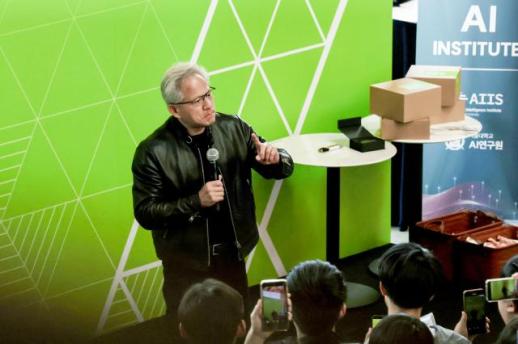 From chicken to K-pop: why Jensen Huang fell for Korea's soft power SEOUL, June 09 (AJP) — Nvidia CEO Jensen Huang surely knew how to mix business with pleasure. He returned home Tuesday with deals on not just memory chips for Nvidia's next-generation Rubin and Vera platforms, but also bags of HBM chip snacks to munch on and the lingering aftertaste of chicken, soju and Korean hospitality. Since his arrival last Friday, Huang dominated headlines and social media feeds, shuttling between beer and soju gatherings with Korean tech giants, a baseball stadium appearance complete with a ceremonial first pitch, meetings with esports icon Faker and ordinary pedestrians, a brief dance to a K-pop hit and an enthusiastic discussion of singer Hwasa. While his meetings with business leaders focused on the future of artificial intelligence and multibillion-dollar partnerships, many of the moments that resonated most with the public reflected his enthusiasm for Korean culture and soft power. Food topped the list. "I love to eat," Huang told reporters. "I thought my favorite food in Korea was fried chicken, but I was wrong." He had discovered samgyetang, Korea's traditional ginseng chicken soup, and samgyeopsal, the country's ubiquitous pork barbecue. The food tour began almost immediately after his arrival. On his first evening, Huang was joined by SK Group Chairman Chey Tae-won, LG Group Chairman Koo Kwang-mo and Naver founder Lee Hae-jin for a barbecue dinner in Seoul's Hongdae district, with hundreds of fans and reporters closely following and livestreaming what was being served. Reflecting on the meal during his appearance on tvN's popular talk show "You Quiz on the Block," Huang joked, "I ate most of it, because I'm the oldest." Afterward, he greeted citizens outside the restaurant, signing autographs and handing out HBM Chip snacks. The images quickly went viral. Convenience store chain Seven Eleven said sales of the snack jumped 704 percent during June 6-7 compared with a week earlier. The following day, he was photographed enjoying samgyetang with family members at a well-known restaurant in central Seoul. Korean media soon noticed a pattern: wherever Huang went, chicken seemed to follow. During a previous visit to Seoul in October 2025, he attended a chimaek gathering with Samsung Electronics Chairman Lee Jae-yong and Hyundai Motor Group Executive Chair Chung Eui-sun at a chicken restaurant in Gangnam. That theme resurfaced at Jamsil Baseball Stadium, where Huang threw out the ceremonial first pitch before a Korea Baseball Organization game. "Nothing is better than chimaek," he said, using the popular Korean term for fried chicken and beer. Even after a schedule dominated by AI, semiconductors and business meetings, food remained on his mind. Speaking at the Shilla Hotel after a private meeting with Samsung Electronics DS Division Vice Chairman Jun Young-hyun at the Guest House, Huang enthusiastically revisited his first meal in Korea. "A little sesame oil, a little bit of salt. Come on, that's incredible," he said, smacking his lips at the memory. Food, however, was only one part of the story. Later on "You Quiz on the Block," Huang surprised viewers by dancing to "Golden," the hit soundtrack from Netflix's animated film "KPop Demon Hunters." "Who doesn't love Golden?" Huang said with a smile. He also expressed admiration for singer Hwasa. "I do also love Hwasa," Huang said. "She's a very good dancer, a good singer." He even referenced her songs "Good Goodbye" and the newer "So Cute," surprising host Yoo Jae-suk with his familiarity with her music. He was pleased with an observation from fortune teller Park Sung-jun, who interpreted his facial features on the show — saying his high forehead signified extraordinary intelligence and his nose indicated lifelong prosperity. Huang responded with characteristic humor. "Your nose is not big enough," he told the host. "My nose is extraordinary tycoon - "New Korea fashion: Jensen nose," he joked. His up-close show appearance was notable for another reason. Despite being one of the world's most recognizable technology executives, Huang chose a Korean variety show for his first appearance on an entertainment program. His interest in Korean culture extended beyond food and K-pop. Shortly after arriving in Seoul, Huang visited T1 Base Camp and met legendary esports player Lee Sang-hyeok, better known as Faker. Days later, he appeared at Jamsil Stadium wearing a Doosan Bears jersey bearing the number 93, a tribute to Nvidia's founding year. Taken together, the images formed a striking contrast to Huang's public image as the face of the global AI boom. Rather than appearing only in boardrooms and conference halls, he spent much of his visit engaging with the cultural experiences that millions of people around the world increasingly associate with South Korea. For Huang, those experiences were not separate from the country's technology ambitions. He told reporters what he had told Korea's deputy prime minister for science and ICT Bae Kyung-hoon - that Korea's cultural strengths are one reason the country is uniquely positioned for the AI era. "I told the deputy prime minister that this is Korea's moment and that this moment must take advantage of Korea's culture," Huang said. "Korea's culture is very, very adaptable to technology. The culture is very accepting of new technology. In the last 25 years, so much technology came into Korean culture and it was adapted so easily." "The culture is perfect for new technology, artificial intelligence." He also pointed to Korea's geopolitical position and openness to global partnerships. "If there's a country that represents lovers, not fighters, it would be Korea," Huang said. The comment drew laughter, but it also reflected a recurring theme throughout his visit: that Korea's appeal extends beyond manufacturing and technology. For Huang, the country's competitive advantage lies equally in its people. "There's a culture of Korea that is about knowledge and wisdom and dedication and suffering. You have to protect that," he said. As artificial intelligence makes computing power and even intelligence itself increasingly accessible, Huang argued that character becomes the true differentiator. "Intelligence is now a commodity because of artificial intelligence. Running fast is a commodity." "Intelligence plus character is not a commodity." "The character is suffering, the ability to suffer. I have a deep ability to suffer. Nobody can suffer better than I can." Then he turned the observation toward Korea itself. "No country can suffer better than Korea." "The grandparents, your parents created everything that we see today from their suffering, from their resilience, from their incredible desire to create this future for you." "This is the national character of Korea." "If you combine that with AI, incredible things can happen." 2026-06-09 17:52:57
-
 British Museum to showcase collection of late Samsung chairman Lee Kun-hee SEOUL, June 09 (AJP) - The British Museum will stage its first major exhibition dedicated to Korean art in more than four decades this fall, featuring works from the collection donated by the late Samsung chairman Lee Kun-hee and tracing over 2,000 years of Korea's artistic and cultural history. The British Museum said Monday that it will present Korea, an exhibition running from Oct. 1, 2026, to Jan. 31, 2027, bringing together masterpieces from the National Museum of Korea, the National Museum of Modern and Contemporary Art, and the museum's own Korean collection. The exhibition is the third overseas showcase of works donated by Lee Kun-hee, following exhibitions in Washington and Chicago. The museum said the exhibition will provide historical context for modern Korea's growing global influence, as Korean culture continues to gain popularity through Hallyu, or the Korean Wave. "Korean art has evolved through exchanges with other cultures while developing its own distinct identity," museum director Nicholas Cullinan said. "Visitors will see how that identity was shaped through the country’s engagement with the wider world." Key pieces include Celadon Gourd-shaped Ewer with Inlaid Lotus Design, a Goryeo celadon vessel renowned for its jade-green glaze and craftsmanship, and White Porcelain Bottle with Underglaze Bamboo Design, reflecting the understated elegance of Korea's Joseon Dynasty (1392–1910). The exhibition will also feature Inwangjesaekdo (Scene of Mount Inwang After Rain) by 18th-century painter Jeong Seon, one of Korea's most celebrated landscape paintings. Other notable works include pottery decorated with small clay figures from Korea's ancient Three Kingdoms period, Buddhist sculptures and manuscripts, folding screens symbolizing longevity and prosperity, traditional tiger-and-magpie paintings, and royal screens featuring the sun, moon and five mountain peaks, a symbol of the Korean monarchy. “The exhibition presents a new story of Korea to international audiences," said You Hong-june, director of the National Museum of Korea. "Visitors in London will have an opportunity to discover the roots of K-culture." The modern and contemporary section will feature works by Paik Nam-june, one of the world's most influential video artists; Woman in a Red Dress (1965) by Kim In-seung, a leading Korean painter known for his Western-style portraits; and Self-portrait (2019) by Suh Do-ho, a Korean installation artist based in London. The museum said Suh’s work explores themes of identity, migration and memory, reflecting the exhibition's broader focus on the connections between Korea's past and present. 2026-06-09 10:35:25
-
 Greek seeks direct flight from Seoul to Athens SEOUL, June 08 (AJP) — Greek tourism officials on Monday highlighted efforts to strengthen deeper tourism ties with South Korea built around direct air connectivity, sustainable tourism, and authentic local experiences, as Greece seeks to attract more Korean travelers while broadening its appeal beyond traditional sightseeing. Speaking at the "Greece: A 365 Day Destination" tourism promotion event at the Mondrian Hotel in Yongsan District near central Seoul, Greek Ambassador to South Korea Loukas Tsokos said tourism has become one of the strongest bridges connecting the two countries, with Korean culture gaining popularity in Greece. "Tourism is more than an economic activity. It is a bridge between societies," Tsokos told the audience. The event brought together representatives from the Greek Embassy, the Greek National Tourism Organization (GNTO), Athens International Airport, and Santorini tourism authorities to discuss growing travel demand between the two countries and opportunities to deepen tourism cooperation. A recurring theme throughout the event was the push for a direct air connection between Seoul and Athens, which officials said would strengthen tourism and cultural exchanges in both directions. "Our main objective is to establish a permanent direct connection between our two capitals, Athens and Seoul," Tsokos said, adding that the direct flight route will allow both Koreans and Greeks to travel and have a better understanding of their respective countries. The envoy also highlighted Santorini's popularity among Korean travelers, saying the island has become synonymous with Greece for many Koreans. Villy Christoflopoulou, head of the advertising department at the Greek National Tourism Organization, shared the message "Step Into Your Next Story," during an interview with AJP, explaining that the message resonates particularly with South Korean travelers, who are highly digital-savvy and heavily influenced by social media. She also highlighted Greece's effort to focus on quality, sustainability and year-round travel experiences, pointing to activities like sailing, yachting, water sports, hiking, trekking, skiing and rock climbing, that appeal strongly to Korean travelers. She added that Greece's music scene, nightlife and open culture also attract visitors seeking local experiences. "Our goal is not just more tourists, but better tourists," she said. More than 60 percent of Greece's tourism promotion efforts are now focused on special-interest tourism, including culture, gastronomy, luxury travel, conferences and exhibitions (MICE), outdoor activities and city breaks. The approach has been accompanied by strong tourism growth, with international arrivals rising to about 38 million in 2025 from 32.7 million in 2023, while tourism revenue increased to 23.6 billion euros from 20.6 billion euros, according to the organization. Athens International Airport also renewed its call for direct air services between the two countries, emphasizing that growing travel demand and geopolitical uncertainty have strengthened the business case for a nonstop route. "We hope and wish that 2027 will be the Korean year," said Ioanna Papadopoulou, director of communications and marketing at Athens International Airport. Athens Airport handled a record 34 million passengers in 2025 and is currently connected to 174 destinations in 55 countries through 70 airlines, Papadopoulou said. More than 50,000 passengers travel annually between Korea and Greece via Middle Eastern hubs, she noted, arguing that regional geopolitical tensions have made a direct Seoul-Athens connection increasingly important. "As soon as there is a direct connection, we believe the air travel market can grow from roughly 50,000 passengers to as many as 150,000," Papadopoulou told AJP. Asked what would be needed to make the route a reality, Papadopoulou said the decision ultimately rests with a Korean carrier. "We are trying to persuade Korean Air," she said, adding that Athens International Airport is offering substantial incentives, including a full waiver of certain airport charges and marketing support for new routes. The final presentation focused on Santorini, where local officials sought to highlight the island's cultural heritage and local traditions alongside its internationally recognized scenery. Nomikou Georgia, president of the City Council of Santorini, described the island as a destination shaped by nearly 7,000 years of history, archaeological heritage, wine culture and local traditions. She highlighted sites such as Akrotiri, often referred to as the "Pompeii of the Aegean," as well as the island's museums, medieval settlements and growing reputation as a gastronomic destination, with Santorini recently added to the Michelin Guide. Nomikou also emphasized efforts to address overtourism. Since January 2025, Santorini has operated a berth-allocation system that limits daily cruise arrivals to 8,000 passengers. She noted that South Korean travelers tend to flock to Santorini in May and October. The city council president said that Santorini seeks to balance the growth in tourism while preserving people's everyday lives by highlighting local identities such as wine, agricultural products and traditional cultural events. Among them are "panigiria," traditional religious community festivals that bring together residents and visitors through local music, food and cultural celebrations. She added that 2025 was Santorini's "Year of Authenticity," part of an effort to place local culture and community life at the center of the island's tourism model. "Santorini is not merely a place to visit. It is a place that touches you — a place you wish to protect just as you protect something you love," she said. 2026-06-08 18:03:34