

Journalist

BAE IN SUN
baeinsun@ajunews.com
-
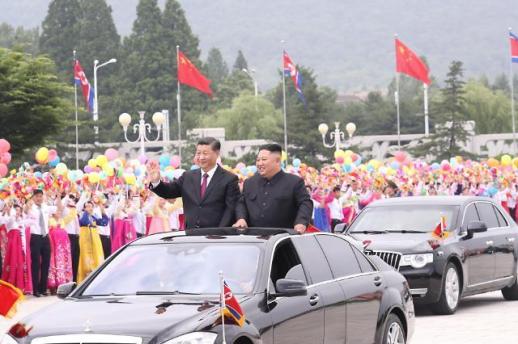 Xi Jinping to Visit North Korea for First Time in Seven Years North Korea is expected to provide the highest level of protocol for Chinese President Xi Jinping, who is visiting the country for the first time in seven years, showcasing the enduring North Korea-China alliance to the international community. The International Liaison Department of the Central Committee of the Communist Party of China announced on June 5 that Xi, who is also the General Secretary of the Communist Party, will visit North Korea as a state guest from June 8 to 9 at the invitation of Kim Jong Un, General Secretary of the Workers' Party of Korea and Chairman of the State Affairs Commission. While the detailed schedule has not been disclosed, the visit comes ahead of the 65th anniversary of the signing of the North Korea-China Mutual Cooperation and Assistance Treaty on July 11, suggesting that North Korea will emphasize the significance of the relationship during Xi's visit. Historically, Kim has welcomed visiting leaders at the airport, and it is highly likely he will greet Xi at Pyongyang's Sunan International Airport on June 8. In June 2019, Kim and his wife, Ri Sol Ju, welcomed Xi at the airport, and in June 2024, he personally greeted Russian President Vladimir Putin, who arrived late at night. Official welcome ceremonies are expected to include a gun salute, the playing of national anthems, and a review by the People's Army honor guard. Following the airport reception, Kim and Xi are anticipated to ride in an open-top vehicle through Pyongyang, receiving a warm welcome from large crowds. Kim Il Sung Square is likely to be the site of the official welcome ceremony. During Putin's visit in June 2024, the airport reception was simplified due to an early morning arrival, but a large-scale welcome ceremony was held at Kim Il Sung Square later that day. Recent reports from international media, including Bloomberg, indicate that North Korea is preparing for Xi's welcome event at this location. There is also a possibility that a welcome event could take place at the Kumsusan Palace of the Sun, where the bodies of Kim Il Sung and Kim Jong Il are preserved. Xi was the first foreign leader to receive a welcome there during his 2019 visit, emphasizing the traditional friendship between North Korea and China. Given the short duration of the visit, a summit between the two leaders is likely to occur on the day of Xi's arrival in Pyongyang. They are expected to discuss ways to enhance North Korea-China relations and the situation on the Korean Peninsula. Following the summit, a welcome dinner and a commemorative performance are anticipated. Key members of North Korea's leadership, including Kim Yo Jong, the head of the Workers' Party Organization and Guidance Department, are expected to attend the dinner. During Xi's first visit in 2019, he attended a mass gymnastics and artistic performance at the May Day Stadium in Pyongyang with Kim and his wife. North Korea staged a special performance themed on North Korea-China friendship to coincide with Xi's visit. Xi's itinerary may also include a visit to the Friendship Tower in Pyongyang. Built in 1959, the tower commemorates the Chinese People's Volunteer Army's participation in the Korean War and is a customary stop for high-ranking Chinese officials visiting North Korea. Xi visited the tower during his 2019 trip to mark the 70th anniversary of diplomatic relations between the two countries. Xi is likely to stay at the Kumsusan State Guest House, where he lodged during his first visit. The Kumsusan State Guest House is North Korea's premier state guest accommodation. Recently, NK News reported that North Korea has significantly expanded its capacity to host foreign guests by constructing large-scale lodging facilities within the Kumsusan complex. 2026-06-05 19:06:00
 -
 China Highlights North Korea Ties Ahead of Xi Jinping's Visit Chinese state media is emphasizing the friendly relations between China and North Korea ahead of President Xi Jinping's state visit to North Korea scheduled for June 8-9. On June 5, shortly after the International Liaison Department of the Communist Party of China announced Xi's itinerary, Xinhua News published an article and a one-minute video recalling Xi's first state visit to North Korea in 2019. The report highlighted Xi's metaphor of the China-North Korea relationship as a "towering tree," stating, "Despite the changes of time and fluctuations in the international situation, the friendship between China and North Korea remains strong and becomes even more solid over time." Xi also expressed a strong sense of kinship, saying, "Wherever I go, I feel that China and North Korea are one family." The People's Daily, the official newspaper of the Communist Party, shared the visit video on its official Weibo account, noting, "An unprecedented scene unfolded as hundreds of thousands of North Koreans took to the streets to welcome President Xi," which it described as a testament to the enduring friendship between the two nations. Comments on the post included phrases like "Long live China-North Korea friendship," and news of Xi's upcoming visit trended as the top search on Baidu, China's largest search engine, on the morning of June 5. The International Liaison Department announced that Xi would visit North Korea at the invitation of Kim Jong Un, Chairman of the Workers' Party of Korea and Supreme Leader of North Korea. Specific details of the visit have not been disclosed. This will be Xi's second visit to North Korea since taking office. He previously visited in June 2019 and last met Kim in September 2022 during a Victory Day celebration in Beijing. The choice of North Korea as Xi's first overseas destination this year is seen as highly symbolic. The visit comes just weeks after U.S. President Donald Trump and Russian President Vladimir Putin held talks in Beijing. The South China Morning Post reported that Xi's visit aims to showcase the strong ties between China and North Korea, noting that the two countries are cautiously restoring their relationship after a period of estrangement due to the COVID-19 pandemic, North Korea's dissatisfaction with China's stance on denuclearization, and concerns over expanding military cooperation between North Korea and Russia. This year marks the 65th anniversary of the China-North Korea Mutual Aid and Cooperation Treaty, and the two countries have been gradually resuming exchanges. In April, Wang Yi, a member of the Political Bureau of the Communist Party and Foreign Minister, visited North Korea, where Kim expressed his willingness to strengthen high-level exchanges and enhance strategic communication with China. Experts suggest that given the diplomatic significance of Xi's first overseas trip, this visit may carry a strategic message that goes beyond merely managing China-North Korea relations or mediating the resumption of U.S.-North Korea dialogue. The Singapore-based Lianhe Zaobao analyzed that through Xi's visit to North Korea following the recent visits by U.S. and Russian leaders, China aims to demonstrate its continued influence on the Korean Peninsula to neighboring countries, including the U.S., Russia, South Korea, and Japan. 2026-06-05 13:24:00
 -
 Huawei's New Semiconductor Strategy Amid U.S. Sanctions In March 2023, I attended a performance announcement at Huawei's headquarters in Shenzhen, China. More striking than the performance figures was the plum blossom theme that adorned the venue. The flower symbolizes resilience and nobility. Huawei CEO Xu Zhi Jun's remark, "The fragrance of the plum blossom comes from enduring the harsh winter," seemed to reflect the company's determination to overcome stringent U.S. sanctions. However, I couldn't shake the question: Can Huawei truly navigate these challenges? Three years later, that question seems to be fading. Recently, Huawei unveiled its so-called "Tao's Law," which resembles a plum blossom that has bloomed after enduring the cold. Despite being blocked from accessing advanced extreme ultraviolet (EUV) lithography equipment due to U.S. sanctions, Huawei has proposed a new direction for semiconductor processes that enhances chip performance. The core of this approach shifts away from Moore's Law, which focuses on making transistors smaller to boost performance. Instead, it optimizes the entire internal circuit and data transmission structure of chips to reduce signal transmission time. The term "Tao" is derived from the physics term "tau (τ)," which represents the time constant for electrical signal transmission. Tao's Law is the brainchild of He Tingbo, head of Huawei's semiconductor design division, HiSilicon. Within Huawei, it is also referred to as "He’s Law" in honor of He. He Tingbo has drawn inspiration from the ancient Chinese irrigation system, Dujiangyan, built over 2,300 years ago. This system was scientifically designed to redirect water flows to prevent flooding rather than blocking rivers, and it remains in use today. He stated, "Dujiangyan was completed in an environment lacking electricity, Newton's laws, and mechanical equipment. There is no reason why today's Huawei engineers cannot find solutions." In fact, Huawei has sought new alternatives against U.S. sanctions through semiconductor process design, packaging, system architecture, and software optimization. This reflects the wisdom of Dujiangyan: if you cannot block the river, change its course. Such solutions did not emerge overnight. Last year alone, Huawei invested 192.3 billion yuan (approximately $42 billion) in research and development. Over the past decade, total investments have exceeded 1.38 trillion yuan. Even during the peak of U.S. sanctions, Huawei did not reduce its technological investments. This resilience is rooted in Huawei's unique sense of crisis. In early 2001, founder Ren Zhengfei published a lengthy piece in the company’s internal media titled "Huawei's Winter." At that time, Huawei was rapidly growing as a leading telecommunications company in China, but he warned, "It is spring now, but winter is not far off." This message emphasized the need to prepare for crises during times of success. The company has endured the 2008 global financial crisis and the comprehensive U.S. sanctions that began in 2019. Today, "Huawei's Winter" is considered essential reading among Chinese business leaders. Recently, the semiconductor industry in South Korea has thrived amid an AI boom. However, the semiconductor cycle is inherently repetitive. Today's prosperity does not guarantee tomorrow's success. Another winter will inevitably come. Will we be able to endure like the plum blossom? Can we apply the wisdom of Dujiangyan?* This article has been translated by AI. 2026-06-04 08:00:00
 -
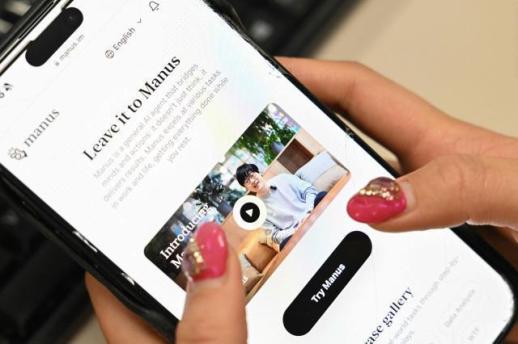 China Strengthens Regulations on Foreign Investment Amid Security Concerns China is significantly tightening regulations on foreign investments that may impact national security and interests. This move follows the recent acquisition of the Chinese AI startup Manus by U.S. tech giant Meta, prompting concerns about the outflow of advanced technologies, critical data, and skilled personnel. According to China's state-run Xinhua News Agency, the State Council announced new regulations on foreign investment on June 1, set to take effect on July 1. The new regulations consist of 34 articles that prohibit companies and individuals from transferring restricted goods, technologies, services, and data abroad without government approval during overseas investment processes, including the dispatch of technical personnel, provision of technical support, and operation of training programs. A new security review system for overseas investments will allow authorities to assess investments that could threaten national security and, if necessary, order their suspension. Violations could result in the confiscation of illegal profits and fines. Even completed overseas investments can be halted if deemed a national security risk, with authorities able to order the sale of related stocks and assets. The Hong Kong Ming Pao reported that China has established comprehensive legal grounds to cancel completed overseas investments, suggesting that the risks for foreign investments in sensitive areas like AI technology are increasing. The regulations also explicitly outline penalties for illegal overseas investments, including orders to halt investments and dispose of assets within a specified timeframe, confiscation of investment returns, and fines ranging from 0.05% to 1% of the total investment amount. Authorities may also impose a ban on overseas investments for up to three years or restrict new business registrations. Additionally, foreign companies and individuals that discriminate against Chinese entities during the overseas investment process may face corresponding restrictions or bans on their investment and business activities in China under the Anti-Foreign Sanctions Law. This regulatory tightening comes as the U.S. has been increasing restrictions on China in the high-tech sector. China's measures can be seen as a formalization of its response to enhance scrutiny of foreign investments and technology controls under the guise of national security. The Ministry of Commerce stated that these measures are necessary to protect the legitimate rights and interests of Chinese investors and their overseas investments, as well as to safeguard China's overseas interests from threats or infringements. It emphasized that the protective and defensive nature of these regulations will not affect normal market transactions or the resolution of legitimate commercial disputes. Market observers note that these regulations follow China's intervention in Meta's acquisition of Manus in April. Authorities determined that Manus, which grew based on Chinese technical talent and infrastructure, was circumventing regulations by relocating its headquarters to Singapore after attracting U.S. capital, a practice referred to as 'Singapore Washing.' Xu Xiaoli, head of the WTO Law Research Center at China University of Political Science and Law, told Global Times that the new regulations demonstrate that overseas investments using the Singapore Washing method are illegal and serve as a warning to Chinese companies to strictly comply with overseas investment regulations.* This article has been translated by AI. 2026-06-02 11:21:00
 -
 Chinese State Media Calls AI a New Area for US-China Cooperation On June 1, Chinese state media characterized artificial intelligence (AI) as a new area for cooperation between the United States and China, urging for expanded dialogue and collaboration. This message comes amid the U.S. tightening its semiconductor export controls against China. In an editorial column titled "Zhongsheng" in the People's Daily, the official newspaper of the Chinese Communist Party, it stated, "AI should be promoted as a new area of U.S.-China cooperation," emphasizing that AI collaboration is crucial for advancing technology and effectively addressing the risks and challenges associated with AI. The column noted, "China aims to strengthen communication and coordination with the international community, including the U.S., to establish a global AI governance system and standards based on broad consensus," and called for a collective defense of AI development beyond competitive and confrontational mindsets. It further highlighted that China is the world's largest holder of AI patents and a key driver of global intelligent transformation, providing significant market opportunities for U.S. companies. It mentioned that U.S. tech firms like Nvidia, Microsoft, and AMD are actively engaging with China's AI technology ecosystem for various business collaborations. The column cited practical examples of cooperation, such as the joint establishment of an "AI Cloud Gigafactory" by Lenovo Group and Nvidia, stating, "U.S.-China cooperation clearly demonstrates the potential to break down technological, market, and industrial barriers and create innovative momentum for mutual development." At the same time, the editorial strongly criticized U.S. semiconductor regulations against China. It stated, "Some individuals in the U.S. view AI through a zero-sum lens, politicizing, weaponizing, and instrumentalizing technology," and pointed out that measures such as investment restrictions and semiconductor export controls create artificial barriers to cooperation. The column warned that the so-called "decoupling" and "small yard, high wall" strategies not only violate the objective laws of scientific and technological development but also undermine the legitimate rights and interests of businesses in both countries and hinder the harmonious development of the global AI industry. It asserted, "China will resolutely defend its right to develop against such oppression and blockade." During last month's U.S.-China summit, both countries agreed to expand dialogue in the AI sector, yet the struggle over AI supremacy continues. Notably, on May 31, the U.S. announced new guidelines to block Chinese companies from acquiring high-performance AI chips from Nvidia through overseas subsidiaries. This action follows allegations that Chinese firms have been purchasing advanced AI chips in bulk via overseas entities established in third countries like Malaysia. According to Reuters, the number of advanced AI chips exported to China through such channels in the past year is estimated to be in the hundreds of thousands. In response to the tightening controls, China is accelerating the establishment of a domestic AI semiconductor ecosystem, led by companies like Huawei and Alibaba.* This article has been translated by AI. 2026-06-01 15:39:00
 -
 Demand for Panda Bonds Surges Amid Low Interest Rates and De-Dollarization Trends As the global influence of the Chinese yuan grows, demand for yuan-denominated bonds, known as panda bonds, is rapidly increasing. Market analysts predict that this year's panda bond issuance could reach an all-time high. Panda bonds are yuan-denominated bonds issued by foreign entities in mainland China. According to the Chinese market research firm Wind, as of May 29, the total issuance of panda bonds reached approximately 133 billion yuan (about $19 billion), nearly double the amount from the same period last year. The Nikkei reported that if the current trend continues, the annual issuance could surpass the previous record of 195 billion yuan set in 2024. Recently, several governments have issued panda bonds. Last month, the government of Pakistan issued 1.75 billion yuan worth of panda bonds for the first time, with a three-year maturity and an interest rate of 2.5%, significantly lower than Pakistan's domestic benchmark rate of 11.5%. In April, Kazakhstan became the first Central Asian country to issue 3.4 billion yuan in panda bonds with a three-year maturity. That same month, Slovenia also entered the yuan bond market as the first Eastern European country to issue 4 billion yuan in panda bonds. Participation from foreign entities, including global banks and manufacturers, is also expanding. Deutsche Bank issued the largest panda bond by a foreign bank, totaling 5.5 billion yuan, in March. Last month, German automaker Volkswagen issued 3 billion yuan in panda bonds. A significant change in the panda bond market is the increasing presence of foreign issuers. In the past, Chinese companies led the issuance through overseas subsidiaries, but now foreign governments and corporations are driving market growth. Ray Wang, head of research at S&P Global Ratings (China), told the Nikkei that the share of panda bond issuance by foreign companies rose from 27% in 2023 to 41% in the first quarter of 2026. He added that the proportion of non-Chinese issuers is expected to continue growing, becoming a key driver of market expansion. The primary reason for the increase in panda bond issuance is the relatively low cost of financing. Despite rising inflation concerns globally due to geopolitical instability in the Middle East and increasing commodity prices, China maintains lower interest rates compared to other major economies. This allows foreign governments and companies to secure funding more cheaply in the yuan market. The international status and influence of the yuan have also supported the growing demand for panda bonds. As countries seek to reduce their reliance on the dollar and diversify their foreign exchange and investment assets, interest in yuan-denominated assets is rising. Notably, countries in Central Asia and the Middle East are increasing their demand for yuan bonds as they engage in China's Belt and Road Initiative and expand economic cooperation with China. China's robust export performance has further bolstered the internationalization of the yuan. The yuan's value has recently reached its highest level against the dollar in three years, enhancing global investors' preference for yuan-denominated assets.* This article has been translated by AI. 2026-06-01 10:54:00
 -
 Chinese Social Media Platform Xiaohongshu Enters World Cup Broadcasting "The World Cup broadcast will be a coming-of-age moment for Xiaohongshu." Chinese economic media outlet 36kr recently reported that Xiaohongshu (小紅書), often referred to as the 'Chinese Instagram,' has invested 1.6 billion yuan (approximately $350 million) to secure online broadcasting rights for all matches of the 2026 FIFA North American World Cup. This move is seen as a pivotal moment for the female-centric lifestyle content platform to attract male users and sports fans, potentially transforming it into a comprehensive content platform. During the World Cup, Xiaohongshu plans to offer live broadcasts, replays, and highlight videos, while also creating a diverse content ecosystem that encourages participation from general users, sports fans, and creators. The platform will introduce a new segment called "World Cup Stories," featuring commentary from renowned analysts, match analysis, tactical discussions, and fan interactions. Additionally, it aims to engage users with features such as match predictions, quiz events, and fan communities. Notably, Xiaohongshu intends to merge its established consumer and lifestyle ecosystem with the sports viewing experience. Users will be able to share and connect on topics such as where to watch the games, what jerseys and fan items to purchase, and which foods and venues fit the World Cup atmosphere. This strategy aims to integrate sports broadcasting with content, community, and e-commerce into a seamless experience. This initiative aligns with recent shifts in how Chinese consumers engage with sports content. Young audiences in China are increasingly favoring short-form platforms for highlights and participating in fan-generated content and real-time reactions on social media, rather than watching entire games on TV. This trend suggests that community-driven platforms like Xiaohongshu may have a competitive edge. Xiaohongshu's foray into sports broadcasting is also influenced by the success of Douyin (the Chinese version of TikTok) during the 2022 Qatar World Cup. Douyin attracted over 230 million viewers for its live coverage of the final match, demonstrating the potential for platform-based sports broadcasting. The total viewership for live broadcasts during the World Cup reached 10.6 billion. Douyin utilized an AI-based editing system to automatically generate highlight reels, key moments, and tactical analysis videos in real-time, offering an experience distinct from traditional TV broadcasts with various interactive features. This shift indicates that sports broadcasting is evolving from mere viewing content to an interactive platform experience. Founded in Shanghai in 2013, Xiaohongshu has grown as a platform centered on lifestyle content for fashion, beauty, travel, and food, leading to the saying, "Trends in China start on Xiaohongshu." However, the platform has faced criticism for being overly focused on specific lifestyle areas, with female users making up 70% of its audience, which has been seen as a limitation to its growth. Zhao Jianying, CEO of Xiaohongshu, stated, "The World Cup is a global event, providing an opportunity to attract male users, sports fans, and those who may not frequently use the platform." Xiaohongshu aims to increase its daily active user count from approximately 170 million to 200 million. Industry analysts believe Xiaohongshu is attempting to evolve into a more mainstream comprehensive content platform through this World Cup initiative. The strategy involves expanding advertising, e-commerce, and community engagement through sports content, highlighting the shift from traditional TV-centric sports broadcasting to a platform-focused interactive content market.* This article has been translated by AI. 2026-05-31 22:33:00
 -
 Taiwanese Celebrity Lin Chi-ling Faces Backlash Over Pro-China Stance The phrase "Liang'an bushi ren" (兩岸不是人) reflects a cynical view that neither side of the Taiwan Strait—mainland China and Taiwan—welcomes certain individuals. Recently, this expression has resurfaced in discussions surrounding Taiwanese celebrity Lin Chi-ling's recent actions. The controversy began when Lin was appointed to the board of the Taiwan Creative Content Agency (TAICCA), an organization established by the Taiwanese government in 2019 to promote the cultural content industry and support global marketing efforts. Her appointment aimed to leverage her international experience. However, upon the announcement of her appointment, criticism arose from pro-independence factions in Taiwan. The backlash intensified after Lin shared a post on Chinese social media platform Weibo on October 1, 2023, celebrating the 74th anniversary of the founding of the People's Republic of China, along with a video of her singing a patriotic song in China. This fueled accusations of her pro-China stance. Critics argued that her role on the board of an agency tasked with promoting Taiwanese identity and cultural content was inappropriate, especially during a sensitive period in cross-strait relations. Some claimed that the agency should maintain a certain distance from mainland China. In response, Taiwan's Mainland Affairs Council publicly supported Lin's appointment, urging her to "disconnect from China and return to Taiwan" (脫中返台). However, this statement reportedly complicated Lin's position, as she has been active in both Taiwan and mainland China. Ultimately, Lin broke her silence just nine days after her appointment, stating that she wished to prevent further "baseless speculation and misunderstandings" and announced her resignation. This led to a wave of criticism from Chinese netizens. In China, many view TAICCA as part of the ruling Democratic Progressive Party's 'cultural Taiwan independence' policy. Some online commentators interpreted Lin's acceptance of the board position as a pro-independence move. Additionally, her quick resignation raised suspicions that it was a strategic decision to continue her activities in mainland China. Lin hails from Tainan, a city known for its strong anti-China sentiment. Her father is a well-known supporter of former President Tsai Ing-wen, who advocates for Taiwanese independence. Consequently, Lin faced backlash when she began her career in mainland China. Despite this, she maintained popularity in China as cross-strait relations stabilized over time. After marrying a Japanese actor in 2019, she reduced her public appearances but resumed her activities in mainland China this year. Following the recent controversy, Lin's name was removed from the cast list of a Chinese drama in which she was expected to make a special appearance, and other entertainment programs are reportedly seeking replacements for her. This indicates a growing atmosphere of boycott against Lin in mainland China. This situation has drawn comparisons to the 2016 'Tzuyu incident,' where Tzuyu, a member of the K-pop group TWICE from Taiwan, faced backlash from Chinese netizens for waving a Taiwanese flag on a Korean broadcast. After publicly apologizing, she encountered a backlash in Taiwan as well. Ultimately, the phrase "Liang'an bushi ren" encapsulates the precarious reality faced by Taiwanese celebrities amid escalating cross-strait tensions. They become targets of controversy without explicitly stating their political views, and any perceived alignment with one side can provoke backlash from the other. As cross-strait relations worsen, the space for Taiwanese entertainers continues to shrink.* This article has been translated by AI. 2026-05-30 06:03:00
 -
 China Vows Strong Response to EU Trade Protectionism Chinese state media has strongly criticized the European Union's (EU) pressure tactics, warning that it will "fight back to the end." This response comes as the EU considers implementing import quotas and additional tariffs in response to the issue of overproduction from China. On May 29, the social media account "Yuyuantantian," affiliated with China Central Television (CCTV), stated, "If the EU insists on enforcing its so-called 'overproduction tools,' China could immediately launch countermeasures, including anti-discrimination investigations and security checks on industries and supply chains." It emphasized that the Ministry of Commerce has made it clear it will firmly retaliate if national interests and corporate rights are infringed upon. The media outlet further warned, "If the EU stubbornly pushes forward with its 'overproduction tools,' China will take immediate action and implement comprehensive countermeasures. Trade friction is neither unfamiliar nor frightening to China. We will fight to the end (奉陪到底)." The EU's proposed 'overproduction tools' refer to mechanisms that would allow for the imposition of import quotas or additional tariffs to counteract the influx of low-priced goods from China. The EU is set to hold a special meeting to discuss unfair trade practices related to China and potential responses. Ahead of the meeting, Stefan Sejourne, the EU Commissioner for Prosperity and Industrial Strategy, warned that European industries in chemicals, metals, and clean technologies are at risk of being undermined by unfair competition from China. He indicated that the EU would systematically mobilize measures such as import quotas and tariffs. In response, Yuyuantantian criticized the EU's increasingly radical economic and trade policies toward China, stating, "The EU's shift toward trade protectionism is a result of long-term decline in European industries and lobbying by vested interest groups." It added that the EU, facing difficulties, is avoiding necessary structural reforms by raising barriers instead of addressing the root causes. China has also hinted at potential retaliation against European products. Yuyuantantian noted, "European products such as meat, alcohol, luxury goods, and cosmetics hold significant market shares in China. If the EU defines Chinese products as overproduced based on the logic that 'production capacity exceeds domestic demand,' it should consider whether the same criteria apply to European products sold in China." This suggests that a wide range of European consumer goods could become targets of China's response. The Chinese government has also issued an official response. Mao Ning, a spokesperson for the Chinese Foreign Ministry, stated during a briefing the previous day, "The EU should view the China-EU trade relationship comprehensively and objectively and adhere to its free trade commitments." She indicated that China would closely monitor the EU's actions and take necessary measures to safeguard its legitimate rights and interests. This exchange comes amid the EU's recent expansion of its measures against China across various sectors, including industry, telecommunications, and digital platforms. The EU is advancing the Industrial Acceleration Act (IAA), which prioritizes 'production within Europe' for public procurement and subsidies in strategic industries such as batteries, electric vehicles, and solar energy. Additionally, it is pushing for amendments to cybersecurity laws to exclude Chinese telecommunications companies like Huawei from European networks, thereby tightening regulations on Chinese firms. Recently, the EU imposed a fine of 200 million euros (approximately $349 million) on the Chinese e-commerce platform Temu for selling illegal products that did not meet safety standards. On the same day, it initiated an investigation into JD.com's acquisition of the German electronics distributor Ceconomy under foreign subsidy regulations (FSR), suspecting that JD.com may have received favorable financial and tax benefits from the Chinese government, potentially distorting competition in the EU market. The FSR was introduced to prevent companies receiving foreign government subsidies from distorting market competition by acquiring EU firms or participating in public tenders.* This article has been translated by AI. 2026-05-29 15:22:00
 -
 Chinese Film 'Dear You' Explores the History of Overseas Chinese “An audiovisual letter to hometowns and overseas compatriots.” On May 22, the Chinese state media outlet Global Times described the film 'Dear You' (original title: 給阿嬤的情書) as a recent box office sensation. Set in the Chao Shan region of Guangdong Province, which is home to many overseas Chinese in Southeast Asia, the film tells the story of Chinese immigrants who left for Southeast Asia in search of a better life and the families who awaited their return. The film follows Ye Su-lou, a grandmother living a quiet life in Chao Shan. Her husband, Zheng Wu-sheng, left for Southeast Asia long ago to earn money but has not returned, leaving only rumors of his success. Meanwhile, her grandson, Xiao Wei, burdened by debt, secretly travels to Thailand in search of the grandfather he has only heard about in stories. However, the truth he uncovers is unexpected. Zheng Wu-sheng has been deceased for many years, and the person who has been sending letters and money to Ye Su-lou for the past two decades is actually a friend of her late husband, Xie Nan-zi. The film delicately unravels themes of love, sacrifice, and the passage of time that have been hidden for over half a century. At the heart of the film is 'Chao Pi' (僑批), letters sent by overseas Chinese along with their remittances to family back home. In an era when communication was challenging, Chao Pi served not only as a means of sending money but also as the only link to families thousands of kilometers away. Today, Chao Pi is recognized as a UNESCO Memory of the World Register. The Global Times noted, “A single Chao Pi sent by overseas Chinese is not just a letter but a piece of Chinese history.” It added, “During times of turmoil and poverty, many residents of the Chao Shan region relied on remittances from overseas Chinese for their livelihoods,” emphasizing that the film captures the collective memory of the overseas Chinese community beyond individual stories. Initially, the film did not attract much attention. Released on April 30, just before the Labor Day holiday, it had a modest production budget of 14 million yuan (approximately $2.7 million) and earned only 3.77 million yuan on its opening day, with screenings limited primarily to the Chao Shan region. However, word of mouth during the Labor Day holiday changed its fortunes. As of May 21, the film's cumulative box office surpassed 760 million yuan (approximately $170 million), with projections from Chinese film ticketing platform Maoyan estimating final earnings to exceed 1.6 billion yuan. The film has received a rating of 9.1 on the review site Douban, making it the highest-rated Chinese film released this year. Critics attribute the film's success to its authenticity and realism. The main characters, Ye Su-lou and Xie Nan-zi, are portrayed by amateur actors without formal training. Their understated performances, delivered in the Chao Shan dialect, resonate deeply with audiences, leading some viewers to comment, “It feels like I’m watching my own grandparents.” Director Lan Hunchun reportedly spent nearly a decade refining the script, visiting numerous overseas Chinese families to gather real-life stories related to Chao Pi, which he incorporated into the film's narrative. Interestingly, the film has also found resonance in Taiwan. The Chao Shan dialect shares similarities with the Minnan language spoken in Taiwan. The term 'Amo' (阿嬷), which means 'grandmother,' is widely used in Taiwan as well. During a recent briefing, Zhu Fenglian, spokesperson for the Taiwan Affairs Office of the State Council, remarked, “The Chao Shan region and Taiwan share many linguistic and cultural similarities,” adding that Taiwanese audiences deeply empathized with the film's themes of loyalty, familial love, and patriotism expressed in the Chao Shan dialect. He further noted, “The term 'Amo' symbolizes the common roots and origins of people on both sides of the Taiwan Strait,” highlighting that the positive response from Taiwanese viewers reflects the shared cultural heritage and emotional connection between the two regions.* This article has been translated by AI. 2026-05-23 20:15:30