

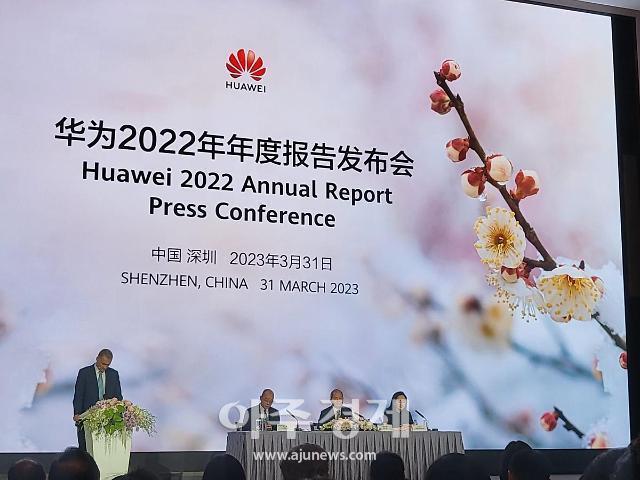
In March 2023, I attended a performance announcement at Huawei's headquarters in Shenzhen, China. More striking than the performance figures was the plum blossom theme that adorned the venue. The flower symbolizes resilience and nobility. Huawei CEO Xu Zhi Jun's remark, "The fragrance of the plum blossom comes from enduring the harsh winter," seemed to reflect the company's determination to overcome stringent U.S. sanctions. However, I couldn't shake the question: Can Huawei truly navigate these challenges?
Three years later, that question seems to be fading. Recently, Huawei unveiled its so-called "Tao's Law," which resembles a plum blossom that has bloomed after enduring the cold. Despite being blocked from accessing advanced extreme ultraviolet (EUV) lithography equipment due to U.S. sanctions, Huawei has proposed a new direction for semiconductor processes that enhances chip performance.
The core of this approach shifts away from Moore's Law, which focuses on making transistors smaller to boost performance. Instead, it optimizes the entire internal circuit and data transmission structure of chips to reduce signal transmission time. The term "Tao" is derived from the physics term "tau (τ)," which represents the time constant for electrical signal transmission. Tao's Law is the brainchild of He Tingbo, head of Huawei's semiconductor design division, HiSilicon. Within Huawei, it is also referred to as "He’s Law" in honor of He.
He Tingbo has drawn inspiration from the ancient Chinese irrigation system, Dujiangyan, built over 2,300 years ago. This system was scientifically designed to redirect water flows to prevent flooding rather than blocking rivers, and it remains in use today.
He stated, "Dujiangyan was completed in an environment lacking electricity, Newton's laws, and mechanical equipment. There is no reason why today's Huawei engineers cannot find solutions." In fact, Huawei has sought new alternatives against U.S. sanctions through semiconductor process design, packaging, system architecture, and software optimization. This reflects the wisdom of Dujiangyan: if you cannot block the river, change its course.
Such solutions did not emerge overnight. Last year alone, Huawei invested 192.3 billion yuan (approximately $42 billion) in research and development. Over the past decade, total investments have exceeded 1.38 trillion yuan. Even during the peak of U.S. sanctions, Huawei did not reduce its technological investments.
This resilience is rooted in Huawei's unique sense of crisis. In early 2001, founder Ren Zhengfei published a lengthy piece in the company’s internal media titled "Huawei's Winter." At that time, Huawei was rapidly growing as a leading telecommunications company in China, but he warned, "It is spring now, but winter is not far off." This message emphasized the need to prepare for crises during times of success. The company has endured the 2008 global financial crisis and the comprehensive U.S. sanctions that began in 2019. Today, "Huawei's Winter" is considered essential reading among Chinese business leaders.
Recently, the semiconductor industry in South Korea has thrived amid an AI boom. However, the semiconductor cycle is inherently repetitive. Today's prosperity does not guarantee tomorrow's success. Another winter will inevitably come. Will we be able to endure like the plum blossom? Can we apply the wisdom of Dujiangyan?
* This article has been translated by AI.

Copyright ⓒ Aju Press All rights reserved.