


Latest by
-
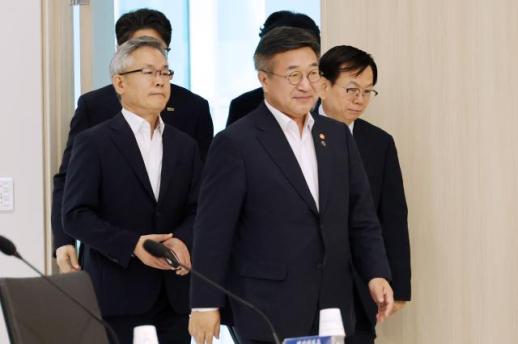 Minister Yoon Ho-jung Commends Forest Service for Wildfire Response Efforts Minister Yoon Ho-jung of the Ministry of Interior and Safety visited the Forest Service to commend employees for their contributions to wildfire response efforts, presenting them with special performance awards and a coffee truck. On June 15, the Ministry recognized the Forest Service as an exemplary institution for its management of the 'Special Performance Award' program and conducted on-the-spot awards. During a field meeting, Minister Yoon listened to employee feedback and personally encouraged staff dedicated to responding to large wildfires. The Forest Service improved its response system based on a 'Comprehensive Government Wildfire Response Plan,' achieving a 99% reduction in wildfire damage compared to the previous year and preventing any loss of life. The Ministry praised the Forest Service for its exemplary implementation of the award system, which included immediate monetary rewards following performance achievements. As a result of this recognition, the Forest Service received a cash award of 10 million won. Minister Yoon stated, "We will spread excellent examples to all departments to establish a performance-oriented public service culture."* This article has been translated by AI. 2026-06-15 18:24:00
 -
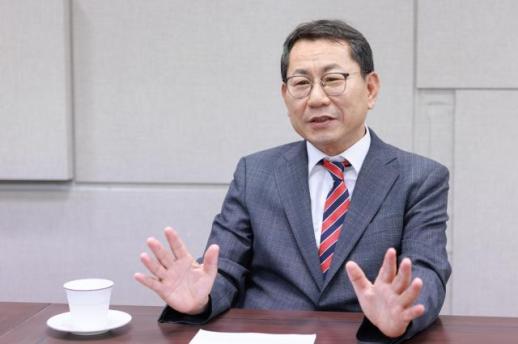 Franchise Association President Nam Myung-seok Advocates for Data Sharing from Delivery Apps Delivery applications have become a crucial infrastructure for the restaurant franchise industry. Consumers can place orders through a single app, while the platform manages the ordering, payment, and delivery processes. However, franchise headquarters and store owners often struggle to identify their loyal customers. Nam Myung-seok, president of the Korean Franchise Industry Association, highlighted this issue as a key challenge for the franchise sector. In an interview with Aju Economic Daily on June 12 at the association's office in Seoul, Nam stated, "The only difference is whether the customer orders by phone or through the app, yet all the data necessary for customer management is blocked by the platform. We need to create a structure where the store operators can receive essential information with customer consent." Nam, who is also the CEO of Wellbeing Food, which operates the Jadam Chicken brand, addressed various industry issues, including the cost burden on franchisees, delivery app commission fees, overseas expansion of K-Franchises, the introduction of artificial intelligence (AI), and the ethical management certification system. He emphasized, "Franchising is not just an industry for headquarters and store owners; it is a key infrastructure for the living economy, involving numerous small businesses, partner companies, farmers, and startups. Changing the perception of the industry based on coexistence and trust is my most important goal during my term." - The issue of delivery app commission fees remains one of the industry's biggest challenges. How do you evaluate the current delivery platforms? "The delivery app issue has been raised since I took on the role of emergency response committee chair at the association. At that time, we communicated with platforms like Baedal Minjok, but fundamental improvements have not been made. It is difficult to resolve everything at once. I believe it is realistic to reach a first-stage agreement at a feasible level and then make gradual adjustments in the following years." - Besides commission fees, what other improvements are needed regarding delivery platforms? "Customer information sharing is necessary. For instance, even if a customer orders from Jadam Chicken multiple times a week, the franchise headquarters or store owner cannot know this if the order is placed through the app. The only difference is whether the order is made by phone or through the app, yet all the data needed for customer management and service provision is blocked by the platform. We need to create a structure where store operators can receive necessary information with customer consent. Personal data should not be indiscriminately shared, so it should be provided only to companies with security measures in place." - Despite the K-food craze, small brands struggle to expand overseas due to a lack of funds. What support is the association preparing? "At the franchise conference held in Jakarta, Indonesia, two years ago, most of the food court restaurants were Japanese, with only a few Korean brands present, and they only imitated the Korean image. If we do not take action ourselves, the image of K-food can be distorted locally. Therefore, we need to consider a collective approach where 20 to 30 restaurant, retail, and service brands enter together, such as models like 'Korea Street,' 'Gangnam Street,' 'Myeongdong Street,' or 'Seoul Street.' Most small franchise headquarters hesitate to expand overseas due to a lack of information, local networks, and funding. Hence, we are promoting the establishment of the 'K-Franchise Global Promotion Headquarters' to create a platform that connects the association, government, large corporations, and overseas networks, making it easier for small brands to enter foreign markets. We have applied for a budget related to overseas expansion this year." - The ongoing high exchange rate is increasing the burden of raw materials and food ingredients. What is the biggest challenge the franchise industry is facing? "When the exchange rate rises, import prices increase, and as import prices rise, the prices of products coming into stores also go up. In the chicken industry, a significant portion of feed is dependent on imports, which inevitably raises the cost of raising chickens. Chicken prices have been high since last year and remain similar now. The supply of chickens is also scarce. Ironically, even a 1,000 won increase in chicken prices triggers a sensitive reaction from the public. The industry is in a very difficult situation. Even if we try to improve efficiency, we can only reduce labor costs or adjust operational methods, which we have already done extensively. The government's allocation of tariff-free quotas can provide some help to the chicken industry, but its effect is limited. While the government is understandably sensitive to price increases, there are limits to artificially suppressing prices." - Discussions on next year's minimum wage are underway. What level does the industry consider manageable, and what does it expect from the government? "Minimum wage is a crucial issue related to the livelihoods of workers. However, when the minimum wage is raised significantly, it paradoxically leads to job losses for many. Some people end up working at two different places instead of one. I think adjustments should be made without exceeding the inflation rate. Particularly concerning is the issue of wages for foreign workers. There needs to be a discussion on whether the wages for foreign workers should be the same as for locals. I understand that most countries apply wages that are 20-30% lower for foreign workers. In contrast, Korea applies the same wage rate for both. Although the food industry can now employ foreign kitchen assistants through the employment permit system, the actual procedures are complicated, and the burden of providing accommodations makes it difficult for store owners to utilize this option. The cost benefits are not significant, so I believe there are not many applications." - There is a conflict between headquarters and store owners regarding the proposed amendment to the franchise law that grants collective bargaining rights to store owners. What solutions can promote coexistence? "The term 'collective bargaining rights' ultimately means we need to have a conversation. The franchise business structure involves headquarters, franchisees, and partner companies working together. Dialogue is essential. However, the final decision-making authority to maintain brand consistency must rest with the headquarters. Decisions that impact the entire brand, such as pricing, funding, and operational standards, should be managed by the headquarters. While dialogue is necessary, it should not undermine brand consistency. The criteria for franchisee collectives must also consider reality. In industries with 20,000 franchise stores like convenience stores, a 30% threshold would require gathering 6,000 stores, which is practically difficult. Conversely, small franchise headquarters with only 10 or 20 stores would face different burdens. Rather than resolving this solely through legislation, ethical and coexistence education through the association and self-regulation are also necessary." - How is the association conducting ethical and coexistence education? "We conducted a training session in May, where the executive committee and vice presidents first participated to identify areas for improvement. We plan to expand this training in the second half of the year. The training covers actual dispute cases, ethical management, and changes in franchise law. In the future, we are considering a system where the association grants ethical management certification to companies that have undergone training and have no dispute cases. If we allow them to display this certification at trade shows or on company websites, it could encourage other companies to follow suit." - Large franchises are adopting AI for ordering, market analysis, and customer management, but small brands face significant cost burdens. Are there any support measures from the association? "It is challenging for the association to directly support systems. However, we have established an AI committee within the association, which is currently very active. We are in the process of identifying the specific functions that small businesses need. We expect to have a clearer outline by the end of this year. AI is an unavoidable trend. For example, Jadam Chicken has nearly 15 years of accumulated order data. By integrating this data with AI, we can assist franchisees in their ordering processes." - What is your primary goal during your term? "This year's goal is to establish the ethical management certification system. The long-term goal remains coexistence. Changing the perception of franchising in Korea is the most challenging and meaningful task. Currently, it is difficult to make progress while being labeled as a 'bullying industry.' Most headquarters and franchisees are working together while fulfilling their roles. I hope the public recognizes that they are not adversarial groups that constantly bully and fight each other. While there can be healthy tension as business partners, the majority of franchises are striving hard for coexistence." ◆ Profile of Nam Myung-seok, President of the Korean Franchise Industry Association △ Born in 1965 in Incheon △ Studied photography at Chung-Ang University △ Former reporter for the current affairs magazine Sisa Journal △ Publisher of Monthly Start-up & Franchise △ Launched the Jadam Chicken brand △ Senior Vice President of the Korean Franchise Industry Association △ Chair of the Delivery App Response Task Force of the Korean Franchise Industry Association △ President of the Korean Franchise Industry Association* This article has been translated by AI. 2026-06-15 18:21:00
 -
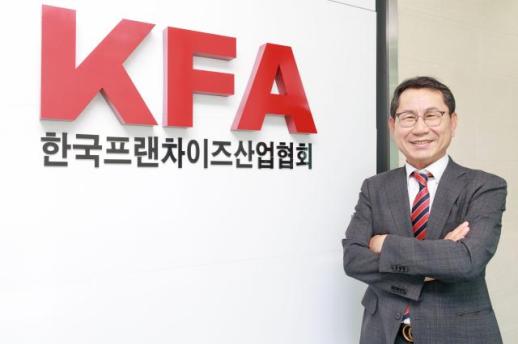 Korea Franchise Association Moves to Yeouido, President Na Myung-seok Vows Proactive Regulation Response The Korea Franchise Industry Association is closing its Seocho chapter and relocating to Yeouido, the heart of South Korean politics. This move reflects President Na Myung-seok's strong commitment to directly convey industry voices to the National Assembly and lead improvements in unreasonable regulations. In an interview with Aju Economy on June 12 at the association's office in the aT Center, Na announced, "We will move our office to the Yeouido Geukdong VIP Building in front of the National Assembly on June 15. This has been a top priority since I took office as president in January of this year." The impetus for the relocation is Na's clear goal of strengthening the association's event management capabilities. He noted, "The physical distance from the National Assembly has limited our ability to effectively manage important event functions." He emphasized that the move to Yeouido is not only practical for securing a dedicated training space but also a strategic decision to enhance policy responsiveness through closer communication with lawmakers. In addition to the relocation, the association is also focusing on revitalizing its personnel to strengthen its network within the National Assembly. A notable example is the recent appointment of Song Gi-jeong, former vice-chair of the Democratic Party's policy committee, as the executive vice president. Na remarked, "Over the past decade, numerous regulatory bills have constrained the franchise industry, but the association often reacted only after laws were passed." He added, "With the addition of Vice President Song, who has extensive political experience, we aim to actively communicate industry realities from the pre-legislation stage and proactively lead necessary legal amendments, transforming into a more dynamic organization." Na identified the provision of estimated sales figures as a key area for improvement. Under current franchise law, franchisors are required to provide prospective franchisees with estimated sales ranges based on nearby stores. However, Na pointed out, "Sales can vary significantly depending on location and the franchisee's management style." He explained, "If a franchisee follows the manual and operates diligently, sales can increase, but if they are late to open or frequently close, sales will suffer. Yet, the law requires franchisors to meet estimated sales figures, essentially making them 'fortune tellers.'" Na believes that the domestic system is overly stringent compared to international standards. He stated, "In the U.S., there are restrictions on how much can be claimed about potential sales, and I understand that China has similar limitations. Such regulations are rare globally but exist in Korea." However, he acknowledged that changing regulations is not an easy task. Na concluded, "Altering a law is challenging, but we cannot remain idle. We must continue to strive for change, regardless of the outcome." * This article has been translated by AI. 2026-06-15 18:21:00
 -
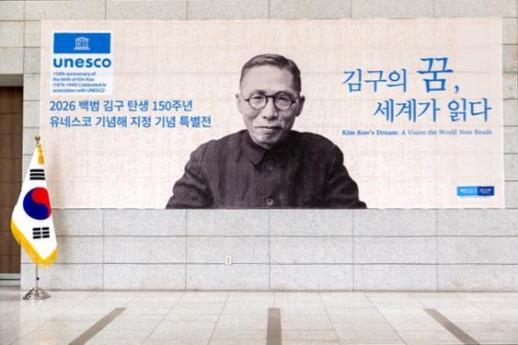 Original Manuscript of 'Baekbeom Ilji' to Be Unveiled for Kim Gu's 150th Birthday The Baekbeom Kim Gu Memorial Association and the Baekbeom Kim Gu Memorial Hall announced on June 15 that they will hold a special exhibition titled "Kim Gu's Dream, Read by the World" to commemorate the 150th anniversary of Kim Gu's birth, designated by UNESCO for 2026. The exhibition will take place from June 16 to June 30 in the main conference room of the Baekbeom Kim Gu Memorial Hall. This special exhibition will feature the original handwritten manuscript of "Baekbeom Ilji," which has not been publicly displayed since being designated as a national treasure in 1997 due to preservation concerns. "Baekbeom Ilji" is an autobiography written by Kim Gu in the form of a will for his two sons during the time of the Provisional Government of the Republic of Korea. It was recorded in a mixed script of Korean and Chinese characters, with the first volume written in Shanghai in 1929 and the second volume in Chongqing in 1942, followed by its first publication in 1947 by the National History Compilation Committee after Korea's liberation. The exhibition is designed to showcase the evolution of published editions, including the original manuscript, handwritten copies, facsimiles, and editions published in the 1990s. Since its first publication, "Baekbeom Ilji" has sold over 10 million copies and has been published in approximately 160 different editions. Additionally, visitors will have the opportunity to see foreign editions translated into six languages: English, German, French, Japanese, Chinese, and Mongolian. The international translations began with the Chinese edition in Taiwan in 1969, followed by Japanese in 1973, English in 2000, German in 2005, and Mongolian in 2009. Notably, a new French edition has been published this year, coinciding with the 150th anniversary, while the English and Japanese editions have been newly translated and published in modern language. The exhibition is divided into three main sections. The introduction highlights Kim Gu's life as an independence activist who dreamed of peace through education and culture. The subsequent section presents the publishing journey from the original manuscript to the six translated editions. The epilogue area features an interactive corner where visitors can leave a sentence expressing a wish they want to share with the world, based on the theme "My Wish." UNESCO officially designated 2026 as the "Year of Commemoration for the 150th Anniversary of Kim Gu's Birth" during its 43rd General Conference last year. This designation underscores the global recognition of Kim Gu's ideals of peace and cultural spirit.* This article has been translated by AI. 2026-06-15 18:15:00
 -
 Middle East Risks Easing, Experts Predict KOSPI Could Reach 10,000 The 'Middle East risk' that has overshadowed the South Korean economy for over three months is expected to be resolved soon. This risk has been identified as one of the three major external factors affecting the economy, alongside interest rate hikes and the potential for an artificial intelligence (AI) bubble. With expectations that the Middle East risk will soon dissipate, optimism for the KOSPI reaching 10,000 has resurfaced in the stock market. Improved investor sentiment following peace negotiations between the U.S. and Iran has led experts to weigh the possibility of further gains in the second half of the year.◆ Middle East Risk Eases After Three MonthsOn June 15, the KOSPI index surged by 5.2% following news of an agreement between the U.S. and Iran. At one point, the index rose nearly 6%, recovering above the 8,600 mark, prompting a buying sidecar. Analysts believe that the easing of tensions in the Middle East could lead to a decline in international oil prices and reduced inflationary pressures.Market analysts widely agree that one of the obstacles to the KOSPI reaching 10,000 has been removed. With the end of the Middle Eastern conflict and anticipated corporate earnings in the second half of the year, many expect the upward trend in the KOSPI to continue.Yoo Jong-woo, head of research at Korea Investment & Securities, projected the KOSPI's range for the second half to be between 8,000 and 11,000. He stated, "A breakthrough above 10,000 is possible based on improved earnings from semiconductor companies."Lee Jong-hyung, head of research at Kiwoom Securities, also forecasted a performance-driven bull market. He noted, "The increase in corporate earnings will support stock price rises in the second half, with inflows from individual investors, improvements in return on equity (ROE) due to policy effects, and valuation attractiveness compared to global markets acting as upward factors."Choi Hyun-jae, head of research at Yuanta Securities, predicted that the current official forecast is 10,000, and if conditions develop positively, it could reach 11,600. He explained, "If tensions in the Middle East ease and energy prices stabilize, inflationary burdens will decrease, and concerns about U.S. monetary policy may also ease. Stability in oil prices and bond yields will positively impact stock market valuations."Baek Young-chan, head of research at Sangsin Securities, remarked, "Oracle's earnings have reaffirmed demand for AI, and Samsung Electronics and SK Hynix's second and third-quarter results are likely to exceed market expectations. Improved earnings and expanded AI demand will lead to further index gains." He added, "The likelihood of the KOSPI reaching 10,000 in the third quarter is high."Interest in sectors beyond semiconductors is also increasing. Analysts believe that relatively neglected sectors such as finance, chemicals, and consumer goods may benefit from a rotation in the market.Baek noted, "The financial sector is positively affected by changes in the interest rate environment, and energy sectors like refining and chemicals also have room for further gains. Consumer goods sectors such as department stores and apparel are expected to benefit from improved consumer sentiment." Yoo also advised paying attention to the potential for improved earnings in the chemical sector following the resolution of the Middle East issue.◆ The Biggest Risk in the Second Half is Interest RatesThe common risk factors for the second half include U.S. monetary policy and changes in the semiconductor industry. Choi stated, "The market's upward momentum relies on improved semiconductor earnings and expectations for U.S. interest rate cuts. If either of these falters, the market may reconsider its direction." He warned that if Samsung Electronics and SK Hynix's results fall short of expectations, investor sentiment could weaken.Lee pointed out that after the second-quarter earnings announcements, discussions about profit peak-out may resurface, and the direction of the Federal Reserve's monetary policy and the continued strength of the dollar are also key variables. Baek identified the possibility of further interest rate hikes in the U.S. as a risk factor.Regarding investment strategies, many experts suggested maintaining a semiconductor-focused portfolio while managing volatility.Choi emphasized, "Most of this year's earnings growth is coming from the semiconductor and IT sectors, so it is essential to maintain a significant portion in semiconductors while seeking opportunities in other sectors." Baek advised that given the ongoing demand for AI and improved earnings, there is no need to rush to sell semiconductors.Lee cautioned, "In a volatile market like this, investors should be wary of both chasing purchases and panic selling. It is advisable to check the proportion of AI and semiconductor investments while diversifying sectors and securing some cash to manage volatility." He added, "Long-term investors should maintain a perspective of gradually buying quality stocks that have not been fundamentally damaged, while refraining from short-term directional bets."* This article has been translated by AI. 2026-06-15 18:12:00
 -
 Concrete Transport Workers and Industry Reach Agreement on 6% Rate Increase The national concrete transport workers' union and the concrete manufacturing industry have reached an agreement to increase transport costs. On June 15, the union announced that 65.9% of its 7,517 members voted in favor of the second provisional agreement on transport cost increases. Under this agreement, transport costs for concrete will rise by 4,200 won per delivery for the next eight months. This will then increase to 5,200 won for the following four months. Annually, this translates to an average increase of 4,533 won, or 6.0%. Previously, the union and management proposed a first provisional agreement that raised transport costs from 75,800 won to 80,000 won, a 4,200 won (5.5%) increase. However, this proposal was rejected by 68.3% of union members in a vote. Following the rejection, the concrete transport union in the metropolitan area began a strike on June 8, resulting in the suspension of concrete supply at 119 construction sites operated by 27 major construction companies. This led to delays in approximately 180,000 cubic meters of concrete pouring. With the approval of the provisional agreement, the suspension of concrete transport activities will end as of today.* This article has been translated by AI. 2026-06-15 18:09:00
 -
 Korean Privacy Commission Strengthens AI Data Protection Cooperation with Singapore and Hong Kong The Personal Information Protection Commission of South Korea is enhancing cooperation on data protection in the age of artificial intelligence (AI) with regulatory bodies in Singapore and Hong Kong. The initiative aims to jointly address emerging data privacy issues, combat illegal data distribution, and expand collaboration across the Asia region. On June 15, during the 65th Asia-Pacific Privacy Authorities (APPA) Forum held in Hong Kong, the commission announced that it signed memorandums of understanding (MOUs) with the Personal Data Protection Commission of Singapore and the Office of the Privacy Commissioner for Personal Data in Hong Kong. These agreements focus on strengthening data protection in the AI era and enhancing regional cooperation. The significance of this agreement lies in establishing a collaborative framework among regulatory bodies to address data protection challenges arising from advancements in AI technology. As new technology-based services, such as Agentic AI and Physical AI, rapidly proliferate, countries are working to develop data protection principles and standards suitable for the AI environment. Through this agreement, the commission also plans to jointly tackle illegal data distribution. With increasing cases of data breaches, illegal transactions, scams, and voice phishing in a cross-border digital landscape, the commission aims to strengthen cooperation among regulatory bodies. Additionally, the commission intends to participate in a newly established working group on illegal data distribution at the APPA Forum, alongside Singapore and Hong Kong, to expand related cooperation. Furthermore, the commission will collaborate with Singapore to support the enhancement of data protection capabilities among Asian countries. The goal is to serve as a bridge between nations with high data protection standards and emerging countries while leading discussions on global data protection norms. The MOUs also include provisions for sharing AI privacy policies and best practices, exchanging information related to investigations and enforcement, providing data protection training, and promoting joint cooperation projects. Song Kyung-hee, chairperson of the Personal Information Protection Commission, stated, "This agreement with Singapore and Hong Kong will further strengthen the cooperation network among Asian data protection authorities in the AI era. We will continue to work closely with major global data protection authorities to lead discussions on global data protection issues."* This article has been translated by AI. 2026-06-15 18:03:00
 -
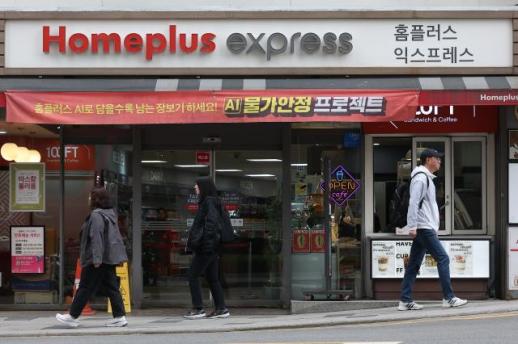 NS Shopping Boosts Homeplus Express Sales Recovery Sales at Homeplus Express, which was sold separately, are showing signs of recovery following the resumption of product supply.Homeplus reported on June 15 that from June 1 to June 11, sales at Express increased by 16% compared to before the resumption of deliveries. Notably, sales of fresh produce rose by over 30%.The recovery in sales is attributed to NS Shopping, a subsidiary of Harim Group, which provided payment guarantees for Homeplus Express products, allowing suppliers to resume deliveries.A Homeplus official stated, "Considering that most major products were received starting June 8, we expect significant sales growth from this week onward."The official also noted that the recent poor performance was due to temporary supply disruptions during the restructuring process, rather than a decline in business competitiveness. They emphasized, "If product supply is normalized, sales in other remaining business segments, such as hypermarkets, can also recover quickly."Meanwhile, Homeplus has initiated the sale process for its headquarters, online, and hypermarket segments. The sale will be conducted through a public bidding process, with Samil PwC serving as the advisor, the same firm that managed the sale of Express.* This article has been translated by AI. 2026-06-15 18:03:00
 -
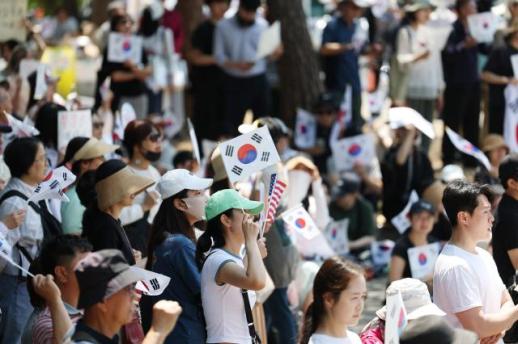 Behind the Jamsil protests: The pro-democracy politics of young Koreans SEOUL, June 15 (AJP) - Unlike their clear-cut elders, young South Koreans are neither right nor left. They are simply pro-democracy, and intolerant when they believe it is under attack — whether through a martial law declaration or a shortage of ballot papers. The generational divide has become increasingly visible in recent months as South Koreans in their 20s and 30s have emerged as a new political force, distancing themselves from the country's deeply entrenched ideological camps while mobilizing around what they see as threats to democratic norms. The latest example came after widespread ballot shortages during the June 3 local elections, an administrative failure that triggered protests led largely by younger citizens and ignited a broader debate over trust in South Korea's electoral institutions. Unlike older generations, whose political identities have long been shaped by Cold War-era divisions between conservatives and progressives, many younger Koreans have shown little loyalty to either camp. Instead, they have increasingly rallied around procedural fairness, transparency and institutional accountability. For more than a week, demonstrators occupied areas around a vote-counting center in Seoul's Jamsil district, demanding accountability from election authorities and, in some cases, calling for a rerun of the election. The protests drew significant participation from people in their 20s and 30s, many of whom organized through online communities rather than traditional civic organizations. But as far-right groups attempted to frame the controversy as evidence of election fraud, many younger protesters deliberately sought to distance themselves from such narratives. On June 11, users of the online platform DC Inside launched a new forum called the "Voting Rights Gallery," saying its purpose was to restore public confidence in elections and protect citizens' right to vote. A similar distinction emerged offline. At a rally near Hongik University Station on Saturday, organizers prohibited all flags except placards calling for a new election. National flags and political banners commonly associated with conservative and far-right protests were banned. About 40 people attended, according to organizers. University students have also sought alternative avenues for civic engagement. One example is "One Vote Record," a website compiling statements from student governments nationwide. According to the platform, 396 statements issued by 215 universities most frequently referenced democracy, voting rights, trust and fairness. Ninety-six percent of the statements mentioned democracy, while 94 percent referred to political participation rights and 87 percent highlighted concerns about trust or fairness. Experts say the movement reflects anxieties over institutional competence rather than belief in systemic election fraud. "The first responsibility is to separate two issues that can too easily become confused: the administrative failure itself, and the much broader claim that the election was fraudulent," said Emily Flore St. Denny, a political scientist at the University of Copenhagen. "A shortage of ballot papers is a serious failure because it affects the equal exercise of voting rights. It deserves a full and independent public investigation. But it should not automatically be allowed to become evidence for fraud unless there is evidence of fraud," she said. Robert Gulotty, a political scientist at the University of Chicago, said political leaders have a responsibility both to improve election administration and to reject unfounded allegations. "Parties and people have a responsibility to hold their own politicians to account when they try to argue that elections are fraudulent when they are not," Gulotty said. Peter Chen, a senior lecturer at the University of Sydney, said governments must focus on building institutional resilience. "Trust and confidence in elections should be a core performance measure," he said, adding that independent electoral bodies, stronger resources and anti-misinformation strategies are essential. The issue has become politically sensitive for President Lee Jae Myung, whose administration has condemned disruptive protest tactics while acknowledging public frustration. On Monday, Lee wrote on X that demonstrators should refrain from violating the rights of others while expressing their views. He cited reports that activities at sports facilities near the Jamsil election site had been disrupted and instructed police to investigate allegations of obstruction and restricted public access. "Freedom of expression and public debate must be protected," Lee said previously. "But actions that cross the line cannot be tolerated." Political analysts warn that authorities' handling of the controversy could have lasting consequences for public trust. "Democracy depends not only on citizens accepting the winners they prefer, but also on accepting losses they dislike," St. Denny said. "When trust in election administration collapses, electoral defeat is no longer interpreted as defeat but as a form of theft." Yet some scholars argue that the intensity of public engagement itself signals democratic resilience rather than decay. "South Koreans still believe in democracy enough to participate massively," said Timothy Koskie, a researcher on trust at the University of Sydney. "They believe in it enough to protest a lot. Consequently, it just isn't accurate to say that Korea's trust in democracy has collapsed." Lawmakers from both the ruling and opposition parties largely agreed that younger voters no longer fit conventional ideological labels. "I think the young people are being very wise in drawing a line between themselves and those who claim election fraud," said Rep. Kwon Chil-seung. "The younger generation has a balanced view of this situation." Rep. Song Ki-heon said many politicians still struggle to understand younger voters. "I feel that there are not many politicians who understand the sentiments of people in their 20s and 30s," he said. For younger South Koreans, democracy itself — not party affiliation — has become the cause worth defending. 2026-06-15 18:00:14
 -
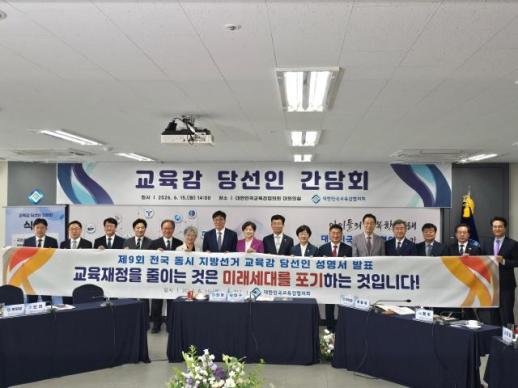 Jeong Geun-sik Elected as Chair of the 11th Korea Education Superintendents Association On June 3, newly elected superintendents from across the country gathered ahead of their official terms to voice their unified opposition to the restructuring of local education finance grants being pursued by financial authorities. The superintendents, regardless of ideological affiliations, unanimously elected Jeong Geun-sik, the Superintendent of Seoul, as the chair of the association, emphasizing, "We cannot accept unilateral budget cuts that disregard on-the-ground data and the unique nature of education." They declared their intent to respond vigorously. On June 15, the newly elected superintendents convened at the Korea Education Superintendents Association office in Sejong to discuss enhancing communication among local education offices and addressing pressing educational issues. Kang Eun-hee, the former chair and Superintendent of Daegu, stated, "Korea's education system is facing unprecedented challenges due to a rapid decline in school-age populations, an increase in small schools, and a digital transformation driven by artificial intelligence. In this crisis, securing stable local education finances, firmly establishing local education autonomy, and restoring teachers' rights while ensuring a safe educational environment are urgent collective tasks that require our wisdom." The superintendents unanimously elected Jeong Geun-sik as the 11th chair of the Korea Education Superintendents Association, representing the voices of 16 local education offices and leading policy negotiations with the central government. As a prominent figure in the capital region, Jeong will be responsible for safeguarding education finances and implementing key educational reforms during the upcoming budget discussions. A key issue discussed during the meeting was the joint statement issued by the superintendents in response to the financial authorities' proposed restructuring of education grants. They criticized the notion that declining student numbers justify budget cuts, stating, "Local education finance grants have been a systematic mechanism ensuring stable funding for public education since the law was enacted in 1971, representing a social commitment by the state to education. Despite the significance of this issue for the future of education, it is being pursued solely by financial authorities without any prior consultation or adequate explanation to the local education offices responsible for actual educational delivery." The superintendents specifically targeted the flawed logic presented by the Ministry of Planning and Finance, which argues for budget reductions based on declining student numbers. They asserted, "The claim that education finances should decrease with fewer students reflects a superficial understanding of the realities in education. Many education costs, including staff salaries and basic operational expenses, are fixed costs incurred at the school and classroom level, not variable costs based on the number of students. Even with a decrease in student numbers, essential resources to maintain classrooms and ensure safe school operations cannot be reduced." Additionally, the superintendents dismissed claims of abundant education finances as misleading, based on distorted figures. They presented evidence that the 2026 budget for the Special Account for Education decreased by approximately 1 trillion won compared to the previous year, with significant cuts of 14.9% in budgets for supporting teaching and learning activities and 22.4% in school facility improvement funds. While new educational responsibilities, such as the introduction of digital textbooks and tailored care infrastructure, are increasing, essential expenses are being cut, worsening the conditions for educational activities. The Korea Education Superintendents Association plans to strengthen its negotiation stance with the central government and related agencies following this meeting and the joint statement. The association stated, "All newly elected superintendents have voiced a unified opposition to the restructuring of education grants from the outset, demonstrating our strong solidarity. We will actively engage in comprehensive negotiations with the National Assembly and financial authorities to prevent the collapse of the public education ecosystem due to unilateral expenditure restructuring during the government's national reform initiatives." Meanwhile, during the meeting, the superintendents agreed to recommend Do Seong-hoon, Superintendent of Incheon, as a permanent director of the School Sports Promotion Association, and to delegate the selection of three vice chairs and one auditor to the new chair, to be ratified at the next general meeting.* This article has been translated by AI. 2026-06-15 18:00:00