

Journalist

Candice Kim, Lim Jaeho
candicekim1121@ajupress.com, ajupresswogh@ajupress.com
-
 Korea's memory giants hit new ceiling ahead of visit by their biggest client SEOUL, May 29 (AJP) - South Korea's memory-chip giants climbed to fresh records Friday as investors turned euphoric ahead of next week's visit by their biggest customer, Nvidia Chief Executive Officer Jensen Huang, fueling hopes of deeper AI partnerships and new orders for next-generation memory chips. The world's most valuable company's CEO Jensen Huang is set to visit South Korea next week, a trip expected to transform his high-profile camaraderie with the country's conglomerate chiefs into broader business alliances that could reshape parts of the domestic technology sector. According to industry sources, Huang will travel to Seoul following his keynote address at the GTC Taipei 2026 AI conference, which runs from June 1 to 4. The upcoming visit, occurring just seven months after his widely publicized "Gganbu" gathering with South Korean business leaders, signals Nvidia's intent to expand its footprint beyond its existing semiconductor supply chain into broader industrial ecosystems spanning physical AI, cloud infrastructure and industrial automation. Investors wasted little time positioning for that possibility. Samsung Electronics rose 5.5 percent to a record closing high of 316,000 won, lifting its market capitalization to 1,853.3 trillion won ($1.35 trillion), while SK hynix climbed 2.23 percent to an all-time high of 2.34 million won, bringing its market value to 1,662.7 trillion won. Together, the two memory giants were worth more than 3,500 trillion won, accounting for nearly half of the KOSPI's total market capitalization and underscoring how deeply South Korea's stock market has become tied to the global artificial intelligence boom. Market watchers expect Huang to hold a series of strategic meetings with major South Korean business leaders, including LG Group Chairman Koo Kwang-mo and executives from internet giant Naver. Discussions with LG are expected to center on physical AI collaboration, potentially involving affiliates such as LG AI Research, LG Innotek and LG Uplus, combining hardware sensing technologies with AI software capabilities for next-generation industrial applications. The visit also coincides with a critical moment in the race for high-bandwidth memory, a key component powering Nvidia's AI accelerators. Earlier Friday, Samsung Electronics announced shipments of the industry's first 12-layer HBM4E memory samples. Huang is reportedly coordinating a meeting with Jun Young-hyun, head of Samsung's Device Solutions division, a discussion that could directly influence the qualification process and supply timeline for Samsung's next-generation HBM products. Any sign of progress would be closely watched by investors seeking evidence that Samsung is narrowing the gap with SK hynix, Nvidia's primary supplier of HBM chips and one of the biggest beneficiaries of the AI spending frenzy. The industry is also betting on the possibility of a second "Gganbu Meeting" involving Samsung Electronics Chairman Lee Jae-yong, Hyundai Motor Group Executive Chair Chung Euisun and SK Group Chairman Chey Tae-won. Chey is scheduled to meet Huang separately at Computex 2026 in Taiwan before the Nvidia chief's arrival in Seoul, marking their fourth encounter in seven months and highlighting the increasingly strategic relationship between Nvidia and South Korea's corporate elite. Analysts say such high-level networking carries growing economic significance in a technology industry where supply chains, product development and market access increasingly depend on close cooperation among a handful of global leaders. "In a global supply chain where mutual cooperation is essential rather than a single company's monopoly, building closer relationships naturally leads to increased exchanges and stronger partnerships," said Kang Sung-jin, a professor of economics at Korea University. "It gives a positive signal to investors that these companies will cooperate and support one another," Kang added. "These meetings go beyond simple socializing and help reinforce confidence in future business opportunities." 2026-05-29 16:35:41
 -
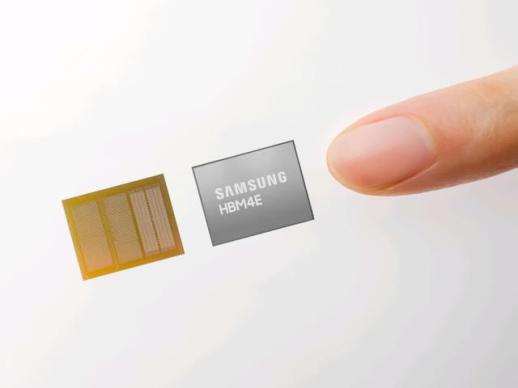 Samsung Electronics ships industry's first 12-layer HBM4E memory samples SEOUL, May 29 (AJP) - Samsung Electronics has begun shipping samples of its 12-layer HBM4E memory chips to global customers. According to the company on Friday, this is the semiconductor industry's first 12-layer HBM4E sample to be shipped. The new memory component delivers a stable pin speed of 14 gigabits-per-second (Gbps) and is capable of scaling up to 16 Gbps. This marks a performance increase of more than 20 percent compared to Samsung's previous generation of HBM4 chips. Additionally, the 12-layer HBM4E provides a memory bandwidth of up to 3.6 terabytes-per-second (TB/s) per stack. In terms of capacity, the 12-layer HBM4E offers 48 gigabytes (GB), which represents a capacity increase of over 30 percent from the previous generation. Samsung plans to further expand this lineup to include 32GB 8-layer and 64GB 16-layer configurations to meet varying customer requirements. The HBM4E utilizes Samsung's sixth-generation 10-nanometer-class (1c) DRAM process paired with a 4-nanometer logic base die manufactured by Samsung Foundry. The company reported that optimized packaging and low-power design technologies have improved the chips' energy efficiency by 16 percent. Furthermore, thermal resistance characteristics have been improved by more than 14 percent compared to the prior generation, aiding in heat dissipation for data centers running intensive workloads. The release of these samples follows Samsung's mass production and commercial shipment of HBM4 chips, which began earlier this year in February. The previous HBM4 model reached speeds of 11.7 Gbps during system in package (SiP) tests last December. "Following the successful mass production of HBM4, Samsung has once again demonstrated its distinct technological edge with HBM4E," said Sang Joon Hwang, Executive Vice President and Head of Memory Development at Samsung Electronics. "Through our advanced manufacturing capabilities and preemptive infrastructure investments, we will continue to drive the growth of the global AI memory market." 2026-05-29 10:20:50
 -
 AJP Focus: The perils of chip boom SEOUL, May 28 (AJP) -The world is at the threshold of the artificial-intelligence revolution, and at the heart of that revolution sits the semiconductor — with Korea at the heart of the semiconductor. Only a few years ago memory prices had collapsed, inventories had swollen, and Samsung Electronics and SK hynix were enduring a brutal downturn alongside the rest of the slowing global economy. Then the AI era rewrote the board almost overnight. The generative-AI surge that followed ChatGPT sent data-center and AI-server investment soaring, and machines built to think like humans demanded a different order of memory altogether — faster, denser, and unlike anything ordinary DRAM could deliver. That demand has a name: high-bandwidth memory, or HBM. The AI industry today orbits Nvidia, yet inside Nvidia's beating heart sits Korean memory. If America supplies the platforms and the software of the age, Korea supplies its memory. Small wonder the market now speaks of a semiconductor supercycle unlike any in four decades. And yet this is precisely the moment for cold clarity, because prosperity has always clouded human judgment. Korea has a habit of treating whichever industry happens to be surging as if it were the country's permanent destiny — heavy and chemical industries in the 1970s, shipbuilding and steel in the 1980s, IT and chips in the 1990s, real estate and construction in the 2000s, and more recently the fevers around platforms and batteries. Each time, a single sector was mistaken for the fate of the whole nation. But the history of industry has always been a history of cycles. Booms breed overinvestment; overinvestment breeds oversupply; oversupply ends in collapsing prices and painful restructuring. That is the cold, repeating logic of industrial capitalism, and semiconductors are no exception. In the 1980s, Japanese chipmakers nearly owned the memory market, and the world declared the future Japanese. Then bubbles burst, structures shifted, and American pressure bore down, and Japan's lead unraveled. Korea inherited that crown — Samsung rising to dominance, SK Hynix to world rank — but never on a smooth road. The industry survived countless slumps, price crashes, and financial crises. That survival is exactly why this moment matters most: the boom is the dangerous hour. The dispute now roiling Korean society looks like a quarrel over wages, but it runs far deeper. Labor, management, politicians, and the financial markets are colliding over how to divide record profits. Workers say the record was built on their devotion; shareholders insist the earnings of a listed company belong, first, to its owners; politicians invoke a third logic entirely — that chips are a national strategic asset. The trouble is that all three claims have begun to collide, because the semiconductor has quietly stopped being a mere industry. It is at once an export engine, a security asset, the gravitational center of the stock market, and the vessel of the country's youthful ambition. At some point it began to be treated as if it were the nation itself. That is where the danger I would call the "semiconductor disease" begins. Economists speak of the Dutch Disease — the way one overpowering sector can warp an entire economy out of balance, named for how a natural-gas boom hollowed out Dutch manufacturing. Korea now faces its own variant. The Korean stock market has, in effect, become the semiconductor market: when Samsung and SK hynix rise, the whole index rises; when chips wobble, the whole economy shakes. Over the long run that is not a healthy structure. Once a nation leans this heavily on a single sector, that sector's cycle becomes the nation's fate. Why hardware is not enough The deeper issue is the nature of the AI era itself. People speak as if AI will grow forever, but technology has never moved that way. The dot-com bubble, the LCD industry, solar power, batteries — each rode its own vast cycle. AI, too, will meet oversupply, price wars, shifting standards, geopolitical risk, and China's pursuit. The China variable is decisive. Even under American sanctions, Beijing is pouring national resources into building a self-sufficient chip ecosystem. A technology gap still exists — but the surest way to lose an industrial war is to underestimate how fast a rival is closing it. Japan chased America; Korea chased Japan; China now chases Korea. This battlefield has no permanent victor. Nor will the contest stay confined to memory. The competition ahead will be an ecosystem war binding chips to energy, software to cloud, data centers to robotics, AI platforms to defense and quantum computing. Korea holds the world's finest memory technology, but memory alone cannot guarantee the future. The real winner of the AI age will not be whoever makes the best chip; it will be whoever commands the whole ecosystem. America's strength is not Nvidia alone but OpenAI and Microsoft, Google and Amazon, Meta and Tesla — platform, cloud, data center, and software woven into one fabric. Korea remains far too hardware-centric. So the question Korea must truly wrestle with is not how to split this year's profits. It is how to prepare next-generation AI architecture, breakthroughs in power efficiency, AI software and data sovereignty, talent, a place in the reordered global supply chain, industrial diversification, and an energy strategy. Power, above all, is decisive: AI data centers devour electricity, which is why America's tech giants now scramble for nuclear, LNG, and renewables. Chip competitiveness will increasingly mean energy competitiveness. Three great transitions are moving at once — the AI revolution, the U.S.–China contest for supremacy, and the remaking of energy and supply chains — and the semiconductor sits where all three axes meet. America sees chips as a matter of security, China as a matter of survival, Europe as a cause worth vast subsidy. The semiconductor has become a strategic asset of modern civilization. Which is all the more reason to stay cold-eyed. The crisis begins the moment one grows drunk on the boom. 居安思危 — in times of peace, think of danger. Korea's chip industry sits at the very summit of the world; paradoxically, that may be its most perilous moment. History has never long tolerated the arrogant victor. The industries that survive are never the ones intoxicated by today's boom, but the ones that prepared for tomorrow's crisis. What is needed now is not applause but a clear strategy. Labor must think in terms of long-term competitiveness; companies must build the future ecosystem rather than chase quarterly results; government must weigh the whole structure of national industry above political popularity. Above all, balance. The semiconductor is Korea's core strategic industry — but it must not become a "semiconductor disease" that swallows the nation whole. The AI era has only just begun, and Korea stands in the middle of a vast historical turn. The countries that endure are not those drunk on present success but those preparing for future crisis. Let the chip be a source of national pride — and let Korea, at the same time, prepare for a future that reaches beyond it. That is the true national strategy, and the condition of survival in the age of AI. 2026-05-28 14:00:29
 -
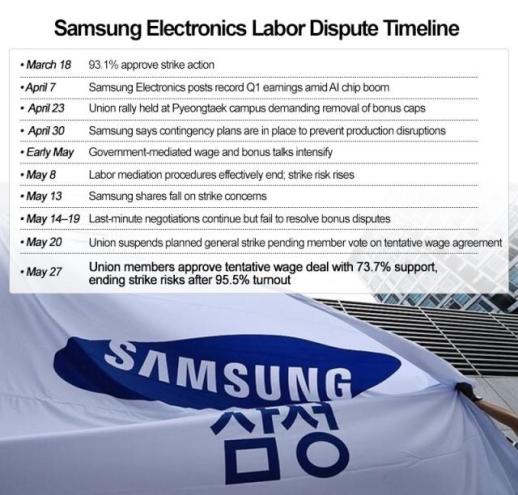 AJP Watch: Samsung puts on charm offensive after avoiding strike despite internal rift SEOUL, May 27 (AJP) - Samsung Electronics went on a multitrillion-won spending blitz Wednesday, pledging 5 trillion won ($3.6 billion) over the next five years to nurture talent and support suppliers on the very day it averted a historic strike by agreeing to hand out over 40 trillion won in rewards tied to this year’s blockbuster earnings and soaring share prices. Management and labor formally signed the 2026 wage agreement after union members approved the deal by 73.7 percent, with turnout reaching 95.5 percent, ending months of escalating tensions that had threatened Samsung’s first large-scale strike. Following the signing ceremony in Giheung, Gyeonggi Province, Samsung executives issued a rare joint statement apologizing for the labor unrest and unveiling a 5 trillion won support package for smaller suppliers, AI talent development and inclusive financing programs. The extravaganza, however, appeared hastily assembled to paper over the deep internal fractures exposed during the negotiations. At the center of the conflict was a widening disparity in performance bonuses between the highly profitable Device Solutions (DS) semiconductor division and the Device eXperience (DX) division, which oversees mobile and consumer electronics businesses. The deal mostly rewards chipmakers – up to 600 million won through special boon-tied bonus, while non-memory workers get 6 million at best. An estimated 74,000 of the chip division is expected to collect the special bonus, costing the company over 40 trillion won – most of what the company has earned in the first quarter. Samsung Electronics earned 57.2 trillion in operating profit in the first quarter, of which 53.7 trillion won came from the chip division. After 93.1 percent of unionized workers approved strike action in March, tensions peaked in April with large-scale rallies demanding the removal of bonus caps. A tentative agreement was reached late on May 20, only hours before a planned general strike. But the relief quickly gave way to another round of infighting. A surge of disgruntled DX employees joined the minority Samsung Electronics Co. Union (SECU), swelling its membership to around 12,000. The representative majority union then stripped SECU members of voting rights on May 21, prompting the smaller union to seek a court injunction Tuesday. Management experts say preventing future labor crises will require Samsung to fundamentally overhaul its compensation structure, replacing opaque and ad hoc bonus decisions with transparent and predictable standards. Hwang Yong-sik, a business administration professor at Sejong University, said the essence of a performance-based reward system lies in predictability and motivation. “The necessity of predictability is to ensure employees are motivated, immersed in their work and driven to produce results. That is the true purpose and essence of a performance bonus system,” Hwang told AJP. Addressing calls from some employees to structurally separate Samsung’s divisions to resolve bonus inequities, Hwang dismissed the idea as unnecessary for a diversified conglomerate. “There is no need to physically separate the organization to achieve equality,” he said. “As long as the company sets clear standards that bonuses are paid according to each business unit’s performance — meaning if the DX division generates strong operating profits in the future, it receives corresponding rewards — there should be no major issues.” While Samsung has stepped back from the brink of a strike, the bigger challenge now lies in repairing trust within an increasingly divided workforce and building a compensation framework capable of sustaining cohesion during the intensifying global AI and semiconductor race. 2026-05-27 17:36:05
 -
 Suspect arrested after stabbing two LG Electronics employees in Seoul SEOUL, May 27 (AJP) - A subcontractor employee was arrested after stabbing two LG Electronics workers in the Magok district of Seoul, police and company officials said. The suspect, who is not a direct employee of LG, turned himself in to police shortly after the attack and was placed under emergency arrest. The two injured LG employees were transported to a local hospital. An LG spokesperson confirmed that their injuries are non-life-threatening. Authorities have taken the suspect into custody and are currently investigating the motive behind the stabbing. 2026-05-27 13:30:49
 -
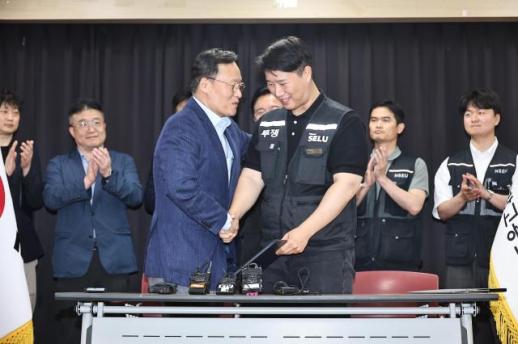 Samsung Live: Union approves wage deal, averting immediate strike SEOUL, May 27 (AJP) - Samsung Electronics’ representative union approved a tentative wage agreement Wednesday, averting an immediate strike at the world’s largest memory chipmaker and easing concerns over potential disruption to AI supply chains and South Korea’s stock market. Electronic voting ran from May 22 to 10 a.m. Wednesday for the 57,302 eligible members. The deal, reached urgently on May 20 just a day before the planned strike deadline, passed with 73.7 percent in favor. It includes an average 6.2 percent wage increase and a newly created special performance bonus. The agreement, however, still faces a legal hurdle. A day before the voting deadline, the Samsung Electronics Co. Union (SECU), a minority union representing mainly the Device eXperience (DX) division, filed for an injunction, accusing the majority union of abruptly stripping its 12,000 members of voting rights. If the court grants the injunction or a later lawsuit invalidates the vote over procedural flaws, Samsung management could be forced to restart negotiations from scratch. As of 10:30 a.m. Wednesday, Samsung Electronics shares have hit new heights, surging 6.7 percent to 319,000 won ($212). 2026-05-27 10:31:38
 -
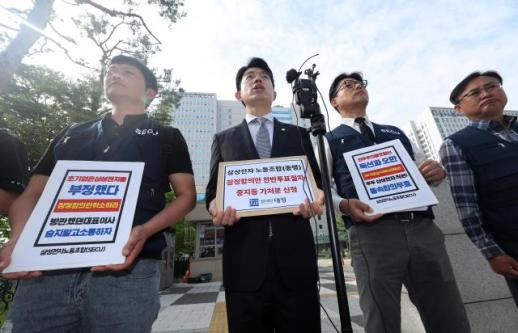 AJP Watch: Union divide and distrust deepen ahead of Samsung Elec vote SEOUL, May 26 (AJP) - The AI windfall powering record earnings and soaring stock prices is increasingly turning into a curse in disguise for Samsung Electronics, as wage negotiations meant to share the rewards of the semiconductor boom instead expose widening internal disparities and threaten the company’s long-cultivated “One Samsung” ethos. Just days before a crucial ratification vote on the tentative wage agreement, divisions between labor groups escalated into open legal conflict Tuesday, deepening uncertainty over whether the deal can stabilize the company’s fractured labor landscape. The Samsung Electronics Co. Union (SECU), a minority union representing primarily employees in the Device eXperience (DX) division — the segment overseeing smartphones and home appliances — filed for an injunction to halt the ongoing vote, arguing that the representative union unfairly stripped thousands of its members of voting rights shortly before the deadline. At the heart of the dispute lies mounting anger over what many employees see as an increasingly skewed compensation structure under the AI-driven semiconductor boom. The proposed agreement would allow some employees in the semiconductor-focused Device Solutions (DS) division to receive compensation packages approaching 600 million won ($438,000), while some research and development staff in non-chip divisions reportedly receive bonuses as low as 6 million won. The staggering disparity has intensified resentment across divisions and accelerated a sharp realignment inside Samsung’s union structure. The current legal standoff unfolded through a rapid and chaotic sequence of events last week that SECU claims exposed serious procedural inconsistencies. According to union officials, the representative union initially invited SECU members to participate in the tentative agreement vote through official emails sent May 20 and May 21. Around the same period, however, SECU experienced a sudden influx of roughly 10,000 new members, swelling its total eligible voting base to approximately 12,000 employees. But shortly after the expansion, the representative union abruptly notified SECU on the evening of May 21 that its members would no longer be granted voting rights. Koo Jeong-hwan, secretary general of SECU, alleged the move reflected fears that the rapidly enlarged minority union could significantly influence the outcome and potentially derail approval of the wage pact. “That itself is a procedural violation,” Koo told AJP. “This situation is really serious.” He argued that denying employees the right to vote represented both an abuse of authority and a breach of basic labor principles. The dispute illustrates how the AI boom is reshaping not only Samsung’s earnings profile but also its internal corporate order. For decades, Samsung maintained a tightly controlled organizational culture built around cohesion, hierarchy and collective identity. But the explosion in AI-related profits within the semiconductor business is increasingly fragmenting that structure into competing constituencies divided by business lines, compensation gaps and perceptions of unequal recognition. The tentative wage deal itself had initially been viewed as a breakthrough after management narrowly avoided an unprecedented strike that threatened to disrupt the global memory chip supply chain. Instead, the agreement now risks becoming a catalyst for broader distrust across the company. Koo warned that if the vote proceeds without resolving procedural disputes, Samsung could face prolonged legal and operational uncertainty even if the agreement is formally approved. “If the vote is invalidated later, all voting matters from this point would become void and need to be conducted again,” he said. As the Wednesday deadline approaches, the court’s decision on the injunction could determine not only the fate of this year’s wage agreement, but also how Samsung navigates a far more fragmented labor environment in the AI era. 2026-05-26 17:09:52
 -
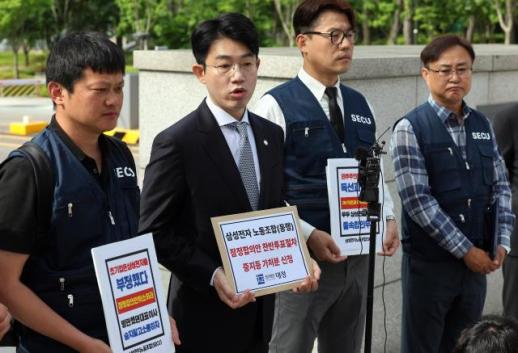 Samsung Electronics' DX union files injunction to halt wage deal vote amid internal rift SEOUL, May 26 (AJP) - A labor union representing Samsung Electronics' Device eXperience (DX) division filed a court injunction on Tuesday to halt an ongoing vote on a tentative wage agreement, highlighting a deepening internal conflict among the tech giant's labor groups. The "Donghaeng" union submitted the request to the Suwon District Court, accusing the larger "Enterprise Union" of unlawfully stripping its members of their voting rights. During a press conference ahead of the filing, Donghaeng representatives stated that the larger union abruptly revoked their voting rights on the evening of May 21, shortly after repeatedly asking them to participate in the vote. The minority union argued that excluding a participating member of the joint bargaining group is legally impermissible. Donghaeng claims the exclusion stems from the larger union's concerns over the DX division's growing influence. Membership in the Donghaeng union has recently surged from approximately 2,600 to over 13,000. The likelihood of the court intervening in time appears low, as the voting period is set to close on Wednesday. A court hearing would need to take place on Tuesday, a timeline legal observers note is practically difficult. However, Donghaeng representatives expressed hope that the court might expedite the process given the urgency of the matter. If the voting concludes before a court ruling is issued, the Donghaeng union plans to file a separate injunction to suspend the validity of the finalized agreement. The legal action underscores a growing "union-versus-union" dispute within Samsung Electronics, as non-memory and DX employees actively campaign to reject the tentative wage deal. 2026-05-26 14:00:20
 -
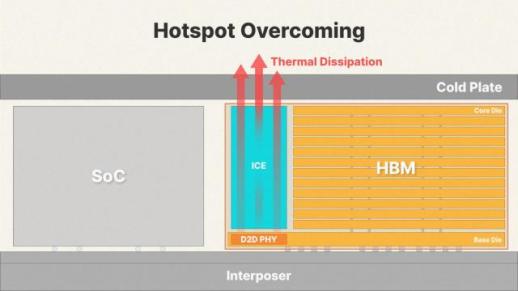 SK hynix unveils 'iHBM' cooling tech to tackle AI chip heat SEOUL, May 26 (AJP) - South Korean chipmaker SK hynix Inc. on Tuesday unveiled its "iHBM" (Integrated High Bandwidth Memory) technology, a memory solution incorporating Integrated Cooling Elements (ICE) directly into the High Bandwidth Memory (HBM) package to dramatically reduce heat and enhance the efficiency of overall AI systems.1 The company plans to apply the iHBM technology starting with its next-generation products, such as HBM5, to meet the stringent thermal management requirements of ultra-high integration and ultra-high bandwidth environments like High-Performance Computing (HPC) and AI data centers. SK hynix developed iHBM to address rising heat issues as HBM performance advances through increased stacking and faster speeds to handle soaring AI processing demands. The technology structurally resolves this issue by placing a thermal control element (ICE) in the Die-to-Die Physical Layer (D2D PHY) area—where heat is most concentrated—creating a separate, dedicated "Heat Path". This method, which contrasts with the traditional indirect approach of relying on the Core Die to expel heat, reduces thermal resistance by over 30 percent, ensuring stable operating characteristics even in high-temperature and high-load environments. ICE uses a silicon material with high thermal conductivity but no electrical conductivity to form the additional heat dissipation route inside the HBM package. "iHBM is the optimal solution for minimizing heat generation, developed by combining memory design capability and advanced packaging technology," said Lee Kang-wook, Vice President of Package Development at SK hynix. He added that the company will "further solidify its AI memory leadership by preemptively providing the value customers need in the AI environment". The solution also boasts strong advantages in manufacturability, utilizing the market-proven Advanced MR-MUF (Mass Reflow Molded Underfill) based WLP (Wafer Level Packaging) process for stable mass production. Furthermore, its high design compatibility with customers' existing SiP (System in Package) environments allows for immediate application without major design changes, substantially lowering the adoption burden for customers. 2026-05-26 13:42:49
 -
 S. Korean prosecutors seek arrest of YouTuber over AI-fabricated rumors involving actor Kim Soo-hyun SEOUL, May 25 (AJP) - South Korean prosecutors have sought an arrest warrant for a prominent YouTuber on charges of defaming actor Kim Soo-hyun and the late actress Kim Sae-ron through heavily fabricated evidence, including AI-manipulated audio. The legal representative for Kim Soo-hyun reaffirmed on Sunday their policy of not directly responding to the allegations, emphasizing that the actor is strictly a victim of a cybercrime. "Actor Kim Soo-hyun is simply a victim of a crime, not a party engaging in a legal dispute on equal footing with the suspects," lawyer Go Sang-rok said in a statement posted on social media. "We have not responded to these nonsensical claims and will continue to maintain this principle." The statement follows a recent police conclusion that rumors spread by the YouTuber, identified as Kim Se-eui, were entirely false. Kim had publicly claimed that the actor dated and had sexual relations with the late Kim Sae-ron between 2015 and 2018, when she was a minor. The Seoul Central District Prosecutors' Office requested an arrest warrant for Kim Se-eui on May 19 on charges including defamation, violation of the sexual violence punishment act, and attempted coercion. According to the police warrant request, Kim allegedly manipulated text messages from 2016 by altering the sender's name and profile picture to make it appear as though the deceased actress was conversing with Kim Soo-hyun. Furthermore, he is accused of playing an AI-generated voice file at a press conference in May of last year, falsely mimicking the late actress's voice to claim a relationship dating back to middle school. Police concluded that Kim Se-eui repeatedly distributed these fabricated materials with the malicious intent to defame the actor, fully aware that the allegations were untrue and that the actor had no connection to the actress's passing. A court hearing to determine whether to grant the arrest warrant is scheduled for 10:30 a.m. on Tuesday at the Seoul Central District Court. 2026-05-25 17:58:38