

Journalist

Candice Kim, Lim Jaeho
candicekim1121@ajupress.com, ajupresswogh@ajupress.com
-
 Samsung Elec AGM turns euphoric despite union's party-crashing strike news SUWON, March 18 (AJP) - Samsung Electronics’ annual general meeting struck an unusually buoyant tone Wednesday as a surging share price and AI-driven optimism lifted investor sentiment — even as a looming union strike cast a shadow over the outlook. More than 1,000 shareholders gathered at the Suwon Convention Center with little to complain about. The stock has nearly quadrupled from a year ago, while the company is now targeting 200 trillion won ($150 billion) in operating profit as it deepens its role in Nvidia’s AI supply chain. Samsung is also moving ahead with its largest-ever treasury stock cancellation — 87 million shares worth 16 trillion won ($11 billion) — in the first half of the year, reducing outstanding shares and boosting earnings per share. Against a backdrop of sustained applause, concerns over transparency and post-AI strategy were largely muted — a stark contrast to last year’s meeting, when shareholders openly criticized management over a stagnant share price stuck in the 50,000-won range. Momentum has been fueled in part by Nvidia’s endorsement. Earlier this week, CEO Jensen Huang gave Samsung a public shoutout at the GTC developer conference, highlighting its role in producing AI chips based on technology from startup Groq. Samsung’s 4-nanometer foundry is now “cranking as hard as they can” to manufacture Groq’s LP30 inference chips, slated for release in the second half, according to Huang and the company. “The mood today is completely different; people are actually saying ‘thank you’ to the board,” said a shareholder in his 50s, surnamed Oh, who reported a nearly 190 percent return on his holdings. Still, beneath the optimism, unease lingered. During the Q&A session, shareholders pressed management on the durability of the current upcycle and the company’s position in high-bandwidth memory (HBM), particularly as rival SK hynix maintains a lead in supplying advanced chips to key clients such as Tesla. Jun Young-hyun, head of the Device Solutions (DS) division, emphasized Samsung’s “one-stop solution” spanning logic, memory, foundry and packaging. But tensions surfaced when a shareholder compared employee incentives to the record-breaking bonuses at SK hynix. Jun appeared momentarily on the defensive, saying the company is “focused on securing long-term technological dominance,” which would ultimately translate into “sustainable rewards” for both employees and investors. Some attendees also questioned the authenticity of the meeting’s upbeat tone, describing it as “choreographed.” “It felt like an effort to shield executives from accountability just as the questions got difficult,” one shareholder said after the session. The gathering ended with a stark reminder of internal risks. The National Samsung Electronics Union (NSEU) said 93.1 percent of its members had voted in favor of industrial action, warning of a potential general strike starting in May — which would mark the first in the company’s 57-year history. The labor tension poses a tangible risk to Samsung’s “all-in-one” AI strategy, particularly as it seeks to close the gap with SK hynix in HBM and Taiwan’s TSMC in advanced foundry. For now, however, investors appear willing to look past the risks. Samsung reaffirmed its commitment to shareholder returns, announcing an additional 1.3 trillion won ($980 million) dividend alongside record R&D spending of 6.73 trillion won. The market response was unequivocal. Shares of Samsung Electronics rose 7.27 percent to close at 207,500 won ($156.82) on Wednesday, shrugging off the strike threat. 2026-03-18 16:46:09
 -
 Samsung Electronics union threatens walkout after near-unanimous strike vote SEOUL, March 18 (AJP) - More than 60,000 employees out of 89,874 union members at Samsung Electronics have voted to go on a general strike in May if their demands for fair and transparent compensation during the chip boom are not met, posing a potential headwind to the chipmaker’s AI-driven upswing. The joint union coalition announced Wednesday that 93.1 percent of participating members voted in favor of a strike in a 10-day ballot. A total of 66,019 employees from three separate unions took part, with 61,456 voting in favor. The collective action would mark the second such stoppage in the company’s 57-year history, following a 25-day walkout in July 2024. The strike threat cast a shadow over Wednesday’s annual shareholder meeting, where Vice Chairman Jun Young-hyun pledged to restore the company’s “technological hyper-gap.” While many retail investors celebrated the stock’s surge past the 200,000-won mark following Nvidia’s endorsement of Samsung’s HBM4 chips, the union finalized its walkout plans just three hours after the meeting concluded. Labor leaders are demanding a 7 percent wage increase, the removal of caps on performance-based incentives, and greater transparency in bonus calculations. “The sheer rate — 93 percent — in support demonstrates how deeply frustrated our members are with the company’s compensation proposal,” a union official told AJP. “This has given us powerful momentum for our struggle and a firm foundation to push even harder.” The potential impact of a walkout is significant, particularly for the critical Device Solutions (DS) division, which accounts for the bulk of Samsung’s profits. The union coalition warned that even an 18-day stoppage could result in losses of at least 5 trillion won ($3.79 billion), with some industry estimates suggesting the total impact could reach 9 trillion won if the strike is prolonged. The labor unrest is further complicated by escalating geopolitical tensions in the Middle East and rising raw material costs that threaten global supply chains. In response to these mounting pressures, Samsung’s consumer electronics divisions have already initiated cost-cutting measures, including requiring executives to fly economy class on short-haul trips. 2026-03-18 16:23:50
 -
 SK hynix owed 70% to US and 25% to Nvidia for record 2025 sales SEOUL, March 17 (AJP) - SK hynix has effectively pivoted into an American-centric powerhouse, with nearly 70 percent of its record-breaking 2025 revenue originating from U.S. customers, with NVIDIA alone accounting for a quarter, according to its annual business report released Tuesday. The fiscal transformation, fueled by an insatiable appetite for High Bandwidth Memory (HBM) among Silicon Valley giants, pushed the company into a "net cash" position for the first time in six years. Cash and cash equivalents skyrocketed by 146.8 percent to 34.94 trillion won (approximately $26.47 billion), far outstripping its total debt of 22.25 trillion won (approximately $16.86 billion). The American Surge The report underscores a dramatic shift in the company’s geographic footprint. Revenue from the U.S. market hit 66.89 trillion won ($50.67 billion) in 2025, a staggering jump from previous years when the U.S. share hovered between 39 percent and 53 percent. This 68.9 percent revenue concentration in the U.S. highlights the success of SK hynix’s strategy to tether its fate to the North American AI infrastructure build-out. While China sales grew to 19.14 trillion won (approximately $14.50 billion), the U.S. market expanded by more than 47 trillion won in a single year, widening the gap between the two regions to an all-time high. The NVIDIA Anchor Central to this U.S. dominance is a tightening grip on the supply chain for NVIDIA. SK hynix generated an estimated 23.26 trillion won ($17.62 billion) from the California-based AI leader alone—accounting for nearly a quarter (23.9 percent) of its total global sales. Following its success as a primary supplier of HBM3E, the company is now accelerating its transition to next-generation HBM4.The improved financial liquidity, characterized by a debt-to-equity ratio that fell to 45.95 percent from 62.15 percent, provides the necessary capital to lead the high-stakes AI memory race. Financial Fortification This robust cash flow is now being channeled into a massive R&D push. SK hynix reported a 35.9 percent increase in research and development spending, reaching 6.73 trillion won ($5.10 billion) in 2025. This record investment specifically targets the development of 16-layer HBM4 and next-generation packaging technologies essential for the evolving AI ecosystem. 2026-03-17 19:39:55
 -
 Samsung-SK hynix faceoff at NVIDIA GTC as race for HBM4 enters cutthroat phase SEOUL, March 17 (AJP) - The world’s most consequential semiconductor rivalry is increasingly being fought not in fabs but on the stage of artificial intelligence. At this year’s NVIDIA GPU Technology Conference in San Jose, the annual gathering hosted by Jensen Huang drew the usual global crowd eager to hear where AI infrastructure is headed next. But behind the keynote spectacle, another story unfolded: South Korea’s memory giants Samsung Electronics and SK hynix quietly squared off in what is becoming the semiconductor industry’s most decisive battleground — HBM4, the next generation of high-bandwidth memory powering AI accelerators. The rivalry sharpened after Huang unveiled NVIDIA’s next-generation Vera Rubin AI platform, alongside the Groq 3 Language Processing Unit, a specialized inference processor manufactured by Samsung’s foundry division. The message from the stage was unmistakable. AI computing demand is entering a new phase — and the companies that supply memory will determine who captures the value. “We are heading toward a world where AI infrastructure becomes a trillion-dollar industry,” Huang told the audience, projecting at least $1 trillion in revenue by 2027 as demand for accelerated computing explodes. For Samsung, the event served as a strategic reset. The world’s largest memory maker has spent much of the past two years trying to regain ground in the high-bandwidth memory segment after falling behind SK hynix in NVIDIA’s supply chain. At GTC, Samsung came armed with a clear message: it intends to retake the technological lead. The company showcased its sixth-generation HBM4, now entering mass production, and publicly introduced its successor HBM4E, signaling an aggressive roadmap aimed squarely at next-generation AI accelerators. Samsung’s pitch leaned heavily on a structural advantage it believes competitors cannot easily replicate — its position as the industry’s only fully integrated device manufacturer (IDM) capable of delivering a complete AI chip stack. The company highlighted a “total solution” approach combining:1c-nanometer DRAM memory dies, 4-nanometer foundry logic dies, and advanced 2.5D and 3D packaging technologies. By controlling memory, logic fabrication and packaging within one ecosystem, Samsung argues it can shorten design cycles and accelerate deployment for hyperscale AI customers. That strategy gained visibility during Huang’s keynote when he confirmed that the Groq 3 LPU, optimized for ultra-fast AI inference, will begin shipping in the second half of the year. “I want to say thank you to Samsung,” Huang said from the stage. “They are cranking as hard as they can.” The remark underscored Samsung’s role in scaling production for the next generation of AI silicon. But SK hynix – the dominant NVIDIA partner for past and current generation chips – isn't ready to give up its dominance. Under the theme “Spotlight on AI Memory,” the company emphasized its established position within NVIDIA’s ecosystem — a relationship built over several product cycles. SK hynix highlighted its HBM3E and upcoming HBM4 solutions already integrated into the NVIDIA DGX Spark AI supercomputer, positioning its products as the industry benchmark for reliability and mass production. The company’s presence was also notable for the level of leadership attending the event. Chey Tae-won, chairman of SK Group, appeared alongside senior executives to reinforce what insiders often call the “triangular alliance” linking SK hynix, NVIDIA and TSMC. That partnership model contrasts sharply with Samsung’s vertically integrated strategy. Where Samsung emphasizes end-to-end control of semiconductor manufacturing, SK hynix is doubling down on specialized collaboration, relying on deep engineering integration with NVIDIA and advanced logic fabrication from TSMC. The approach has paid off so far. SK hynix remains NVIDIA’s primary supplier of HBM used in its most powerful AI accelerators currently deployed across hyperscale data centers. The confrontation at GTC reflects a deeper shift underway in the semiconductor industry. For decades, memory companies competed largely on manufacturing scale and cost efficiency. In the AI era, the competition is increasingly about system architecture. HBM — stacks of vertically integrated DRAM connected through ultra-wide interfaces — has become the critical bottleneck for AI performance. The memory must deliver enormous bandwidth while staying tightly coupled to GPUs and custom accelerators. That shift is forcing memory makers to operate less like commodity suppliers and more like system engineering partners. Samsung is betting that its turn-key semiconductor ecosystem will allow it to integrate memory, logic and packaging into unified AI modules. SK hynix is betting that deep specialization and ecosystem partnerships will preserve its lead. The stakes could hardly be higher. During his keynote, Huang described the scale of change in stark terms. Computing demand, he said, has grown one million-fold over the past two years as generative AI moves from experimentation to real economic work. “AI has finally become able to do productive work,” Huang said. Investors quickly picked up on the implications. Shares of Samsung Electronics rose sharply following the GTC announcements. As of 10:05 a.m. KST, the stock was trading at 195,700 won, up 3.71 percent from the previous session. SK hynix also gained ground, climbing to 994,000 won, up 2.05 percent, reflecting broad optimism about the expanding role of Korean memory suppliers in the global AI semiconductor supply chain. Analysts say the next two years will likely determine the long-term hierarchy in the HBM market. With NVIDIA preparing the Vera Rubin generation of AI systems and hyperscale data centers expanding at unprecedented speed, demand for high-bandwidth memory is expected to surge. Some projections suggest Samsung’s HBM revenue alone could more than triple by 2026 if the company successfully ramps production. But SK hynix is unlikely to relinquish its lead without a fight. At GTC, the message from both companies was clear. The AI boom has created a semiconductor arms race — and the decisive battle may be fought not over GPUs, but over the memory stacked beside them. 2026-03-17 11:21:20
 -
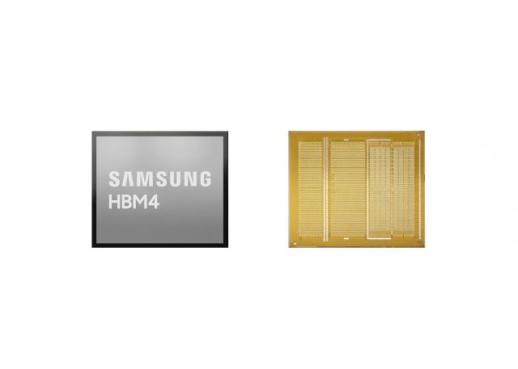 Samsung challenges SK hynix HBM dominance with HBM4E debut via NVIDIA alliance SEOUL, March 17 (AJP) - Samsung Electronics Co., Ltd. announced on Tuesday at NVIDIA GTC 2026 the first public showcase of its next-generation High Bandwidth Memory 4E (HBM4E) and its role as a provider of a comprehensive memory and storage total solution for NVIDIA’s Vera Rubin platform. The South Korean chip giant presented physical HBM4E chips and core die wafers, detailing a product that supports speeds of 16 gigabits-per-second per pin and a total bandwidth of 4.0 terabytes-per-second. Samsung confirmed it aims to complete sample shipments of HBM4E within the year to align with customer production schedules. Leveraging its position as an integrated device manufacturer, Samsung highlighted its ability to integrate its sixth-generation 10-nanometer-class (1c) DRAM process, 4-nanometer foundry logic dies, and advanced packaging technologies. This vertical integration allows the company to supply a full suite of memory and storage required for NVIDIA’s next-generation Vera Rubin AI superchip platform, including HBM4 memory, which is currently in mass production with speeds up to 13 gigabits-per-second. The company also displayed its SOCAMM2, an industry-first server memory module based on low-power LPDDR5X, and the PM1763 enterprise SSD utilizing the PCIe 6.0 interface. These solutions were demonstrated through NVIDIA SCADA workloads to showcase their performance in AI infrastructure. During the event, Samsung introduced its Hybrid Copper Bonding (HCB) technology, which the company claims improves thermal resistance by more than 20 percent compared to traditional thermal compression bonding. This technology is intended to enable the vertical stacking of 16 or more layers for future HBM generations, with implementation expected to begin with 16-layer HBM4E products. Samsung is also collaborating with NVIDIA to implement accelerated computing and Omniverse libraries to create digital twins of its manufacturing facilities. Samsung executives stated that HBM revenue in 2026 is projected to more than triple compared to 2025 levels as the company expands production capacity to meet global demand for AI infrastructure. 2026-03-17 05:45:27
 -
 Samsung's agentic-AI flagship posts record presales, software edge in premium market SEOUL, March 12 (AJP) - Samsung Electronics’ latest AI-strong flagship is off to a bar-raising debut, signaling a shift in the premium handset race from hardware specifications toward practical artificial intelligence features. The Galaxy S26 series, launched Wednesday in more than 120 countries including South Korea and the United States, logged 1.35 million preorders in its home market, the highest ever for the Galaxy S lineup. Industry observers say the strong early demand reflects a broader change in consumer priorities as smartphones increasingly compete on usable AI functions rather than processor speed or camera upgrades. Samsung’s new lineup centers on agentic AI, designed to move beyond passive assistance and carry out tasks autonomously for users. Among the most notable features is on-device real-time translation that works without an internet connection, allowing conversations across languages without relying on cloud processing. The phone also introduces generative AI tools such as “Call Screening,” which can answer incoming calls and summarize them for the user, and “Privacy Display,” a feature that blocks side-angle viewing to protect information in public spaces. The emphasis on practical AI utilities has become a key differentiator as rivals struggle to bring comparable capabilities to global users. Apple, which dominates the premium smartphone segment, has faced hurdles rolling out its Apple Intelligence system internationally. The platform’s expansion has been slowed by delayed support for non-English languages and staggered updates to core features, frustrating many users outside the United States. Recent survey data suggests that the AI gap may be influencing consumer loyalty. A study by resale marketplace SellCell of more than 2,000 smartphone users found that 16.8 percent of iPhone owners said they would consider switching to a Galaxy device for better AI features, compared with 9.7 percent of Samsung users willing to move to Apple for its AI system. The shifting sentiment is already beginning to show up in market data. Powered by aggressive deployment of on-device AI functions, Samsung has gradually narrowed Apple’s market-share lead in the United States to about 11 percentage points by late 2025, according to industry estimates. Real-world users echo the trend. “I tried my husband’s Galaxy, and it’s definitely much more user-friendly when it comes to AI,” said Kyuri Kim, a longtime iPhone user in Seoul. “I wish I could have those features on my iPhone. It gets frustrating at times.” “Choosing a smartphone without AI is now akin to buying a car without a navigation system or autonomous driving capabilities,” said Lee Soo-jun, a professor of business administration at Sejong University. “Privacy is the biggest concern with AI today, but Samsung’s on-device processing ensures that personal data remains strictly on the phone without leaking externally, which is a decisive factor for consumers.” With the smartphone industry entering what analysts describe as the “AI utility era,” the market is closely watching whether Samsung’s early push into practical, on-device intelligence can finally dent Apple’s long-standing dominance in the premium segment. 2026-03-12 16:36:01
 -
 Samsung strike risk rises as 60 percent of union members cast ballots SEOUL, March 11 (AJP) - The likelihood of a strike at Samsung Electronics, the world’s largest memory chipmaker supplying about a quarter of global DRAM, is rising as more than 60 percent of its unionized workers have cast ballots on collective action over disputes about employee bonuses. A joint strike committee representing three Samsung labor unions said Wednesday that over 60 percent of their roughly 90,000 members had participated in the vote since balloting began Monday. Under South Korean law, a strike requires approval from a majority of total union membership. The largest group, the Samsung Group Unified Union, reportedly surpassed the 50 percent participation threshold on the first day alone. The ballot, which runs through March 18, could pave the way for a joint protest next month and potentially a full-scale strike between May 21 and June 7 if the motion passes. The vote follows a breakdown in wage negotiations after the National Labor Relations Commission suspended mediation between Samsung and its three main unions — the Samsung Electronics Labor Union (SELU), the National Samsung Electronics Union and Samsung Electronics Co. Union. Together they represent more than 90,000 employees, roughly 70 percent of Samsung Electronics’ 129,000 workforce, making the potential walkout one of the most consequential labor actions in the company’s history. At the heart of the dispute is Samsung’s Economic Value Added (EVA) bonus system. Unlike local rival SK hynix, which distributes 10 percent of operating profit as bonuses and recently removed its payout cap, Samsung calculates performance rewards after deducting capital costs and taxes from operating profit. Union members argue the formula makes bonuses opaque and unpredictable. “We initially demanded 20 percent of operating profit, but management offered us a choice between maintaining the current 20 percent EVA or shifting to a 10 percent operating profit model, which actually results in a smaller bonus pool,” a union official told AJP. “What matters is that the bonus system must be transparent and predictable. The company needs to fundamentally reform the standard, starting with abolishing the annual salary cap,” the official added. A prolonged strike could disrupt global IT supply chains because about 70 percent of the unionized workforce consists of engineers in Samsung’s critical Device Solutions (DS) division, which oversees semiconductor manufacturing. The union strongly rejected the common industry assumption that highly automated semiconductor fabs could easily withstand a walkout. “Only the wafer transport system is automated,” the official said. “If equipment fails or a safety interlock is triggered and engineers are not there to fix it, the machines simply stop.” “For example, if 10,000 of the 14,000 workers at the Pyeongtaek campus join the strike, the plant would effectively be paralyzed. A two-week general strike would inevitably lead to production disruptions and declining chip quality.” The unions plan to announce the voting results on March 18, hold a mass rally on April 23 and potentially begin a general strike in May unless management presents a revised proposal. The dispute comes less than a year after Samsung experienced its first-ever strike in July 2024, led by the National Samsung Electronics Union. That walkout ended without major production losses, but the current movement poses a greater threat due to the larger number of engineers involved. Samsung Electronics declined to comment on the potential strike or the unions’ demands. Samsung, which enforced a strict “no-union” policy for decades, has seen organized labor expand rapidly since Chairman Jay Y. Lee publicly apologized in 2020 and pledged to end the practice. The growing mobilization of younger engineers demanding transparent compensation is increasingly challenging Samsung’s traditional corporate culture at a time when the company faces fierce competition from global rivals such as TSMC and SK hynix in the race for AI semiconductor dominance. “Some argue Samsung’s no-union culture helped fuel its past growth, but the company can no longer go against the flow of the times,” said Hwang Yong-sik, a business professor at Sejong University. “At a critical moment when Samsung must compete with global rivals, repeating confrontations over an opaque bonus structure is a severe waste of time and resources.” Hwang said management must address the root cause of distrust. “SK hynix is delivering record results while paying top bonuses without internal conflict. Samsung needs to face reality and find a tailored compromise rather than clinging to outdated methods,” he added. The labor dispute comes at a critical moment as Samsung Electronics races to catch up with SK hynix in high-bandwidth memory (HBM), the AI-era chip at the center of multibillion-dollar supply contracts with Nvidia and other big-tech names. 2026-03-11 17:53:34
 -
 SK hynix expands AI memory portfolio beyond HBM with LPDDR6 breakthrough SEOUL, March 11 (AJP) - SK hynix said Tuesday it has developed the world’s first 16-gigabit LPDDR6 DRAM built on its sixth-generation 10-nanometer-class (1c) process, positioning the chipmaker to capture the next wave of artificial-intelligence demand spilling over from data centers to smartphones and mobile front. The new mobile memory, designed for devices running on-device AI, improves data processing speed by 33 percent and boosts power efficiency by more than 20 percent compared with the current LPDDR5X generation. With a base operating speed exceeding 10.7 gigabits per second, the chip surpasses the maximum performance of existing mobile DRAM products, the company said. The LPDDR6 chip incorporates Dynamic Voltage and Frequency Scaling (DVFS) and a sub-channel architecture that activates only necessary data paths, enabling devices to maximize bandwidth during heavy workloads while lowering voltage and power consumption during routine tasks. SK hynix plans to complete preparations for mass production in the first half of the year and begin supplying global smartphone and tablet makers in the second half. The development underscores how aggressively SK hynix is leaning into the AI memory boom that has reshaped the semiconductor industry over the past two years. The company has emerged as one of the biggest beneficiaries of the AI infrastructure build-out, particularly through its dominance in high-bandwidth memory (HBM) used in AI accelerators supplied to companies such as Nvidia. Demand for AI servers has tightened the supply of advanced memory, driving prices sharply higher across the industry. Server-grade DRAM prices are expected to rise as much as 60 to 70 percent this year compared with late 2025, according to industry estimates, as hyperscale cloud providers including Microsoft and Google rush to secure memory supplies for expanding AI data centers. The surge in AI-related demand has also spilled over into conventional DRAM markets. Even as chipmakers prioritize production of HBM for AI servers, tighter supply of standard DRAM is pushing up prices for memory used in PCs, smartphones and other consumer electronics. Against that backdrop, SK hynix is broadening its portfolio beyond data-center memory to include mobile chips optimized for AI workloads running directly on devices. Industry analysts say the shift toward on-device AI, where smartphones process AI tasks locally rather than through remote servers, is creating a new growth engine for mobile memory with higher bandwidth and better power efficiency. The LPDDR6 chip is designed to support faster response times and longer battery life in AI-enabled smartphones and tablets, enabling complex tasks such as real-time language processing and image recognition without relying heavily on cloud computing. By moving early into LPDDR6 while maintaining leadership in HBM, SK hynix is positioning itself at both ends of the AI memory spectrum — from hyperscale data centers to next-generation mobile devices — as the industry pivots toward AI-driven computing. 2026-03-11 14:59:43
 -
 Samsung shares head north on record R&D, buyback plan in AI chip push SEOUL, March 11 (AJP) - Shares of Samsung Electronics headed north as investors welcomed the South Korean tech behemoth’s record spending — amounting to nearly a third of last year’s revenue of over $200 billion — to advance chipmaking capabilities in the AI-driven era while sharing the memory boom with shareholders. According to its 2025 business report disclosed Tuesday, the company invested a record 37.7 trillion won ($28.3 billion) in research and development last year and set aside 16 trillion won to retire around 87 million treasury shares during the first half. As of 10:00 a.m. Wednesday, shares were up 2.55 percent at 192,500. The 2025 R&D spending marked a 7.8 percent increase from 2024, while capital expenditure on semiconductor and display facilities rose to 52.7 trillion won, about 5 trillion won more than initially planned. Samsung said the massive investment was aimed at preemptively addressing demand for next-generation semiconductors such as High Bandwidth Memory (HBM) and high-capacity DDR5, key components powering artificial intelligence data centers. The company recently began mass production of HBM4 base dies and plans to expand supply of HBM4 this year to meet surging demand from major global technology firms. Notably, Alphabet has joined Samsung’s top five customers amid the rapid expansion of AI infrastructure investments by big tech companies. Samsung also reported strong financial performance last year. Annual revenue reached 333.61 trillion won, up 10.9 percent from a year earlier, while operating profit jumped 33.2 percent to 43.6 trillion won. Revenue exceeded 330 trillion won for the first time, marking the company’s highest annual sales on record. Shareholder returns are also being strengthened. Samsung plans to cancel about 87 million treasury shares, valued at roughly 16 trillion won based on the March 10 closing price, as part of efforts to enhance shareholder value. The semiconductor recovery and improved earnings also lifted employee compensation. The average annual salary rose 21.5 percent to a record 158 million won last year, compared with 130 million won in 2024. To promote longer-term performance-based management, the company granted 35.29 million performance share units (PSUs) to around 128,000 employees. As of the end of last year, Samsung’s domestic workforce stood at 128,881, with the average tenure rising to 13.7 years. The company said it plans to continue creating jobs for young people through its traditional open recruitment program in the first half of the year. 2026-03-11 11:11:40
 -
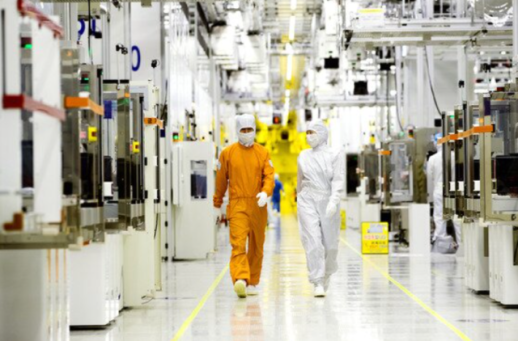 Middle East conflict squeezes Korean chip supply chain as helium shipments face disruption SEOUL, March 10 (AJP) - The widening Middle East conflict is beginning to bite into South Korea’s industrial supply chains, with the semiconductor sector facing growing concern over disruptions to helium shipments — a critical gas used in advanced chip manufacturing. The de facto disruption of shipping routes through the Persian Gulf has hit South Korea particularly hard given the country’s heavy reliance on Middle Eastern energy and industrial materials that feed its export-driven manufacturing base, including the strategically vital semiconductor industry. Industry attention has turned especially to Qatar, a major global supplier of helium, after Iranian retaliatory strikes spread across Gulf states following coordinated U.S. and Israeli attacks on Iran. Helium, a noble gas with an extremely low boiling point, is indispensable in semiconductor fabrication. It is widely used in lithography and plasma etching processes to maintain stable vacuum environments and cool high-temperature equipment during wafer processing, where microscopic circuit patterns are etched to form transistors and interconnects. Any interruption in supply therefore risks creating a bottleneck in the production of advanced chips. According to a Korea International Trade Association (KITA) report, Qatar accounts for roughly 64 percent of South Korea’s helium imports, highlighting the sector’s exposure to geopolitical shocks in the Gulf region. Other major suppliers include the United States and Russia, while the United Arab Emirates — another Gulf producer that has also come under attack — ranks fourth in Korea’s import mix, according to trade data compiled by Volza. Helium is typically transported in liquid form, which allows large volumes to be shipped efficiently before being vaporized upon arrival for industrial use. Shipping disruptions are already pushing up transport costs. The Shanghai Containerized Freight Index (SCFI) for Middle East routes jumped 72.3 percent week-on-week, according to the Shanghai Shipping Exchange, as vessels increasingly divert around the Cape of Good Hope to avoid the conflict zone. Such detours add two to three weeks to delivery times, raising the risk that chipmakers’ stockpiles could be drawn down faster than expected. “Temporary shortages are likely because alternative suppliers currently lack the capacity to immediately offset Qatar’s dominant share,” said Koo Gi-bo, a professor of global commerce at Soongsil University. “South Korea will need to rely on existing reserves while expanding imports from other regions.” Industry sources say Samsung Electronics and SK hynix typically maintain helium inventories sufficient for two to three months of operations. Both companies have already begun securing additional supplies from the United States and Australia, though rerouting shipments comes with sharply higher logistics costs. Yet analysts note that South Korea’s position at the center of the global semiconductor ecosystem could work to its advantage in securing alternative supplies. “The United States has a strategic interest in ensuring helium shipments to South Korea remain stable,” Koo said. “Without Korean high-bandwidth memory (HBM) chips, U.S. companies cannot manufacture advanced AI accelerators. Any disruption to Korean fabs would ripple across the global AI industry.” As fighting in the Middle East threatens vital shipping lanes, the episode is once again exposing a structural vulnerability in South Korea’s export economy — its dependence on imported energy and specialized industrial gases that underpin the world’s semiconductor supply chain. 2026-03-10 16:56:24