
Journalist

Kim Hee-su
khs@ajupres.com
-
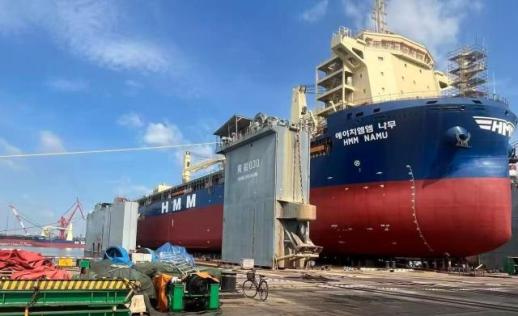 Seoul at a strategic crossroads as Hormuz crisis deepens SEOUL, May 06 (AJP) - A third Korea-bound tanker has begun a longer but safer voyage through the Red Sea to carry much-needed crude home, while an HMM cargo carrier damaged by an explosion in the heart of the Strait of Hormuz is being towed toward port — two parallel scenes underscoring the growing price South Korea is paying for its heavy dependence on Middle Eastern energy supplies. With both Washington and Tehran claiming the upper hand over the strategic chokepoint, uncertainty over who truly controls the Strait of Hormuz has intensified. As of Wednesday, 26 Korea-related vessels carrying 173 crew members remained stranded inside the Persian Gulf on dwindling resources, adding urgency to Seoul’s strategic calculations. The possibility that Iranian militant forces may have been involved in the latest maritime incident has fueled calls for Korea to reconsider its cautious stance toward Washington’s repeated requests to join “Project Freedom,” the U.S.-led naval operation aimed at restoring safe passage through Hormuz. Seoul has simultaneously been courted by both the U.S. and a separate Europe-led framework seeking to reopen the waterway responsible for roughly one-fifth of global energy flows. The focal point of the latest tensions is the Namu, an HMM-operated cargo ship that suffered an explosion near the port of Umm Al Quwain in the United Arab Emirates at around 3:40 p.m. Monday. The Ministry of Oceans and Fisheries said 24 crew members — including six Koreans and 18 foreign nationals — were aboard. No casualties were reported. An HMM official said Wednesday the company had secured a tugboat and expected towing operations to begin later in the evening. “The schedule remains subject to several variables, but if the operation proceeds quickly, the vessel could arrive in Dubai by Thursday night,” the official said. A full investigation into the cause of the explosion is expected once the vessel docks in Dubai. HMM said Iran had expanded its control zone in the Strait of Hormuz on the day of the accident, although the Namu itself was not inside the restricted area. Four other HMM vessels remained anchored near the control line alongside hundreds of ships awaiting passage clearance. Speculation over a possible external strike quickly emerged, but industry officials and union representatives cautioned against premature conclusions, noting the absence of visible structural damage consistent with a missile or drone attack. “If a fire had been caused by an external factor, there would have to be signs of damage to the hull, but no such signs have been reported,” said Jeon Jeong-geun, head of HMM’s seafarers’ union. “Nearby vessels have also reported no major visible damage.” Jeon added that further inspection would still be required to determine whether the vessel sustained damage below the waterline. “Whether a strong shock wave was transmitted can only be determined after checking the condition of the underwater hull,” he said. He also directly challenged U.S. President Donald Trump’s characterization of the incident. “President Trump’s remarks are far from the facts,” Jeon said. “Our vessels were anchored, not sailing, when the damage occurred.” South Korea’s Foreign Ministry said the exact cause would only be determined after the vessel undergoes inspection at port. The Iranian Embassy in Seoul on Wednesday denied any involvement by Iranian armed forces in the incident, saying Tehran “firmly rejects and categorically denies” allegations linked to the damage to the Korean vessel. It said safe passage through the Strait of Hormuz requires compliance with Iranian regulations, warnings and designated routes, adding that disregarding such requirements “may lead to unintended incidents.” Trump, however, has repeatedly used the incident to intensify pressure on Seoul. “Their ship was smashed yesterday. But the ships protected by the U.S. were not attacked,” Trump said on Tuesday, arguing that South Korea should join Project Freedom. The U.S. launched Project Freedom on Sunday to escort commercial vessels trapped in the Strait of Hormuz. A merchant ship operated by Danish shipping giant Maersk became the first stranded vessel to successfully transit the strait under U.S. naval escort. Yet the operation’s future quickly became uncertain after Trump abruptly announced its suspension on the second day, fueling questions over Washington’s next move. Some analysts interpreted the reversal as part of Trump’s familiar negotiating strategy of maximizing pressure before pursuing talks, while others suggested the mission may have imposed greater operational burdens on the U.S. military than initially anticipated. For Seoul, the crisis presents a far more complex challenge than previous overseas naval deployments. Unlike South Korea’s anti-piracy missions near Somalia under the Cheonghae Unit in 2020, the Hormuz situation involves an active war environment, including risks from Iranian drone attacks and naval mines whose locations may not be fully identified. Trump has repeatedly singled out South Korea while calling for allied naval participation, and U.S. Defense Secretary Pete Hegseth has also publicly urged allies, including Seoul, to shoulder greater military responsibilities. But joining U.S.-commanded operations carries significant diplomatic risks. If South Korean naval forces operate directly under U.S. command in the strait, Seoul could be perceived as assuming a more active role in the conflict itself, according to an industry official. At the same time, South Korea has been participating in a separate U.K.-French initiative involving roughly 40 countries aimed at supporting the eventual postwar reopening of the strait. Discussions began with a France-hosted virtual meeting of military chiefs in March and have since continued at the general officer level, with broad agreement on the need for international coordination to maintain freedom of navigation. Domestic politics pose another obstacle. Expanding the Cheonghae Unit’s operational mandate from the Gulf of Aden to Hormuz — or altering its mission area entirely — would likely require parliamentary approval, transforming the issue into a politically sensitive national debate rather than a purely military decision. For now, Seoul appears inclined toward more limited contributions, such as dispatching liaison officers to multinational headquarters or strengthening intelligence-sharing arrangements. Such measures would allow South Korea to respond to allied pressure while minimizing direct military exposure. Still, the European-led framework remains largely focused on postwar maritime stabilization, leaving unresolved the immediate dangers facing Korean crew members and vessels trapped inside the Gulf. With the U.S.-Iran standoff continuing, market expectations suggest normalization of Hormuz shipping traffic could take far longer than initially hoped. As of 4 p.m. Wednesday Korean time, prediction market Kalshi estimated a 60.8 percent probability that shipping operations through Hormuz would return to normal by Oct. 1. Analysts say the crisis has evolved beyond a simple question of naval deployment into a broader test of South Korea’s diplomatic balancing strategy between its alliance obligations with Washington and its preference for multilateral risk management. “For Trump, this is an incident that is very easy to use politically at a time when no country other than Israel is openly siding with the war,” said Jeong Kyung-woon of the Korea Military Studies Association. Jeong added that any deployment of South Korean military assets would likely remain limited for now. But if tensions in the Middle East worsen or the blockade drags on, pressure on Seoul to assume a more active military role is expected to intensify. 2026-05-06 16:57:21
 -
 BIGBANG to reopen fan club after 11 years ahead of comeback SEOUL, May 02 (AJP) - K-pop boy band BIGBANG will recruit members for its official fan club, V.I.P, for the first time in 11 years ahead of the group’s 20th anniversary comeback, YG Entertainment said Saturday. The group unveiled a teaser poster for the recruitment of the sixth generation of V.I.P through its official social media channels on Friday. It marks the first official fan club drive since 2015. The poster features BIGBANG’s official light stick, known as Bang Bong, which symbolizes the bond between the group and its fans. Recruitment for the fan club will take place through BIGBANG’s official community on fan platform b.stage. “We prepared this new V.I.P membership round to communicate more closely with fans who have supported BIGBANG for many years,” YG said. “Please look forward to the new journey of the 20th anniversary that the artists and V.I.P will write together.” BIGBANG recently performed at the 2026 Coachella Valley Music and Arts Festival in the United States, where the group said it had completed preparations for a new album and plans to begin a world tour in August. Originally a five-member group, BIGBANG now works as a trio after Seungri left in 2019 amid the Burning Sun scandal involving a Seoul nightclub and T.O.P departed following the end of his contract with the agency. T.O.P, who later appeared in Netflix’s “Squid Game” Season 2, had previously been convicted of marijuana use. 2026-05-02 17:09:01
 -
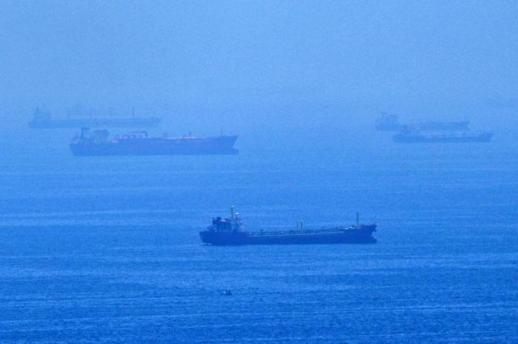 Seoul weighs role in Hormuz security efforts as US plan adds new variable SEOUL, May 02 (AJP) - South Korea is weighing how to contribute to multinational efforts to secure safe passage through the Strait of Hormuz, as a separate U.S.-led proposal adds another layer of complexity to ongoing discussions led by Britain and France. Military authorities have been taking part in talks on supporting the reopening of the key waterway after the war, starting with a virtual meeting of chiefs of staff hosted by France in March and followed by senior-level military discussions. Seoul has maintained that it is reviewing possible contributions. The discussions, involving around 40 countries, have produced broad agreement on the need for international cooperation to ensure freedom of navigation. The more difficult question is whether South Korea will deploy military assets. The Strait of Hormuz remains exposed to regional tensions and irregular threats. Operations to clear mines or protect civilian vessels could leave participating forces vulnerable to drone attacks and other asymmetric threats. The possible deployment of the Cheonghae Unit’s destroyer Dae Jo-yeong, or its replacement vessel Wang Geon, has been discussed, but caution remains strong within the military given the need to ensure troop safety. Domestic procedures also remain a key factor. If the Cheonghae Unit, currently deployed in the Gulf of Aden, is redirected to the Strait of Hormuz or given an expanded mission, parliamentary approval would be required. That means the issue would require not only a military decision but also political consensus. The government’s emphasis on a phased response plan appears to reflect these constraints. As an initial contribution, Seoul is expected to consider sending personnel and sharing intelligence. Options include dispatching liaison officers to a multinational command or strengthening information-sharing channels. Such steps would allow South Korea to respond to international calls for cooperation while minimizing the military burden. The U.S. proposal for a “maritime freedom” coalition has emerged as a new variable. If a separate U.S.-centered coalition takes shape alongside the existing UK-France-led initiative, Seoul may have to reassess how and where to participate. The government has refrained from making a formal announcement while continuing close consultations with Washington. Experts say the issue should be seen not simply as a question of troop deployment but as a broader diplomatic strategy. Seoul must balance cooperation with the U.S., given the importance of the alliance, with participation in a European-led multilateral security effort. Leaning too heavily toward one coalition could also create diplomatic risks, they say. The government is likely to first assess the details of the U.S. proposal and the level of international participation before deciding on the scale of its phased contribution. The deployment of military assets is expected to be considered only as a limited option at a later stage. However, pressure for more active military involvement could grow if the security situation in the Middle East deteriorates further or if disruptions in the Strait of Hormuz are prolonged. 2026-05-02 16:24:05
 -
 Pokémon leaps off screen as game IP craze paralyzes Seongsu SEOUL, May 02 (AJP) - Crowds are continuing to line up for a Pokémon pop-up event in Seoul’s Seongsu-dong on Saturday, a day after tens of thousands of fans packed the area and prompted organizers to suspend parts of the event just hours after it opened. The continuing turnout shows how game and animation intellectual property, or IP, is increasingly moving beyond screens into offline spaces, drawing massive crowds through pop-up stores and experience-based events. The event, held to mark the 30th anniversary of the Japanese animation and game franchise, drew large crowds from early morning as fans gathered for a pop-up store operated by Pokémon Korea. Authorities began receiving multiple reports around 10:30 a.m. that the area was becoming dangerously crowded. No injuries were reported. Pokémon Korea had opened the pop-up store in Seongsu-dong and held an event offering rare cards to visitors who participated in games. The promotion drew fans during the Labor Day holiday, while visitors to a Pokémon-themed garden installed at the nearby 2026 Seoul International Garden Show in Seoul Forest also added to the crowd. Photos and videos posted on social media showed narrow streets in Seongsu packed with people, with some users expressing concern over crowd safety. According to Seoul city estimates, the number of people in the Seongsu cafe street area rose from around 26,000 at 10 a.m. to about 40,000 by noon. The organizer suspended the event around noon at the request of Seoul city and other authorities. Some participants protested the decision, leading to brief disputes at the scene. Police officers were deployed to mediate and manage the crowd. The trend comes as pop-up stores have become a mainstream marketing channel in Korea. According to Sweet Spot’s 2025 Pop-up Trend Report, 3,077 pop-up stores were held across its network last year, up 109 percent from a year earlier. Seongdong District, which includes Seongsu-dong, accounted for 35.38 percent of pop-ups in Seoul. Sweet Spot also said more than 60 pop-up stores were operating in Seongsu-dong in a single week as of April 2026, showing how temporary retail events have become a regular feature of the district rather than one-off promotions. Cushman & Wakefield’s 2025 Seoul High Street Retail report said the district is evolving from a pop-up store hub into a flagship destination, recording the lowest vacancy rate among major commercial districts in Seoul. The shift also reflects the growing commercial value of character and content IPs. KOCCA’s latest annual report showed Korea’s content industry sales rose 2.6 percent to $112 billion in 2025, while exports grew 5.9 percent to $14.91 billion, driven in part by character businesses. 2026-05-02 15:05:19
 -
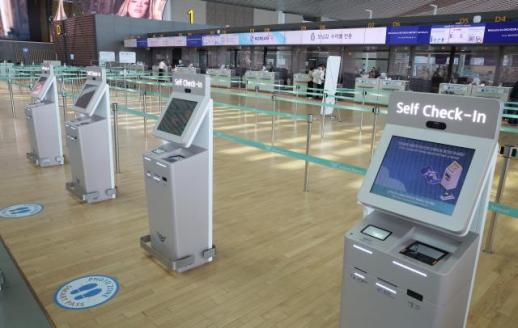 Soaring fuel surcharges push up overseas travel costs amid Iran war SEOUL, May 02 (AJP) - International airfare costs are set to rise sharply this month as higher oil prices driven by the U.S.-Iran war push fuel surcharges to a record level, adding pressure on travelers and forcing airlines to cut more flights. Tickets issued from May 1 are subject to the highest fuel surcharge level of 33, which applies when jet fuel prices exceed 470 cents per gallon, according to the airline industry. The benchmark Singapore jet fuel price, known as MOPS, reached 511.21 cents per gallon, marking the first time the top level has been applied since the current system was introduced in 2016. The surcharge jumped 15 levels from April. Fuel surcharges are additional fees airlines impose on top of fares to offset losses from rising oil prices. Airlines set their own surcharge amounts based on the monthly surcharge level. Korean Air set its May international fuel surcharge at 150,000 won to 1.128 million won ($765) for round-trip tickets, depending on distance. For the longest routes, the surcharge is nearly five times higher than the 231,000 won charged in January and about double last month’s level. Asiana Airlines will charge between 170,800 won and 952,400 won for round-trip international tickets. Jeju Air, the country’s largest low-cost carrier, will impose fuel surcharges of $52 to $126 for one-way tickets. The sharp increase is expected to weigh heavily on consumers already facing higher travel costs. Airlines are also struggling to offset rising expenses through fuel surcharges alone, prompting some carriers to reduce flights. Asiana Airlines had initially planned to cut eight flights on three international routes this month but later expanded the reduction to 13 flights. Jin Air, which suspended eight routes last month, will halt operations on 14 routes this month. Air Premia plans to cancel 22 flights in July. Korean Air has not yet decided whether to suspend flights but is closely monitoring the situation, according to industry officials. In some countries, including Vietnam, airlines are reportedly facing difficulties securing jet fuel supplies. “There are growing concerns that overseas travel demand, which had been recovering, could weaken again,” an airline industry official said. The surge in international fuel surcharges is also shifting travel demand toward domestic destinations. According to travel and accommodation platform Yeogi Eottae, overseas accommodation bookings from April 1 to 23 fell to 75 percent of the level recorded in February, before the Middle East war began. Domestic accommodation bookings, by contrast, rose to 107 percent of the February level. The trend suggests that more travelers are turning to domestic trips as overseas travel becomes more expensive. Domestic hotels and resorts are also seeing stronger demand. Hanwha Resorts said its average occupancy rate in April rose by 8 percentage points from a year earlier. Reservations for major locations, including Haeundae and Gyeongju, have already topped 80 percent this month, surpassing last year’s actual occupancy rates. 2026-05-02 12:10:04
 -
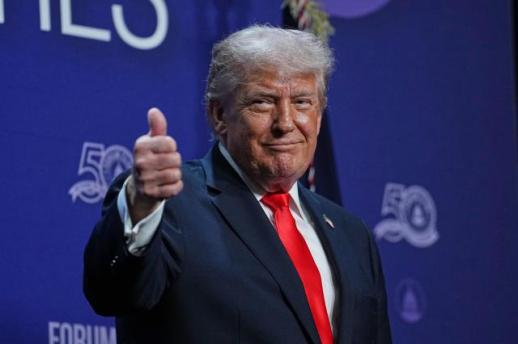 Trump's Germany troop cut, EU tariff hike fuel concerns in Seoul SEOUL, May 02 (AJP) - U.S. President Donald Trump’s decision to withdraw thousands of troops from Germany and raise tariffs on EU vehicles starting next week is raising concerns in Seoul over whether Washington could use similar pressure against South Korea. The moves come amid growing tensions between the U.S. and its allies over their response to the Iran war. The Pentagon said Friday that Defense Secretary Pete Hegseth had ordered the withdrawal of about 5,000 U.S. troops from Germany, with the drawdown expected to be completed over the next six to 12 months. Germany hosts around 35,000 U.S. troops, the second-largest overseas U.S. military presence after Japan. It is also home to the headquarters of U.S. European Command and U.S. Africa Command, making it a key pillar of European security since the end of World War II. The Pentagon’s announcement came four days after Trump said on Truth Social that his administration was “studying and reviewing the possible reduction of troops in Germany," and would make a decision soon. The move is widely seen as having been triggered by German Chancellor Friedrich Merz’s remarks on April 27 that the United States had been "humiliated" by Iran and that the war was unlikely to end easily. Trump also said on Truth Social, “Based on the fact the European Union is not complying with our fully agreed to Trade Deal, next week I will be increasing tariffs charged to the European Union for Cars and Trucks coming into the United States.” Under last year’s U.S.-EU trade agreement, Washington agreed to lower tariffs on EU-made passenger cars and trucks from 25 percent to 15 percent. Trump’s latest announcement would restore the rate to its previous level. The sudden tariff move is being interpreted as another sign of Trump’s frustration with key NATO allies, many of which have effectively rejected Washington’s requests for military support in the Iran war. Trump has repeatedly complained that European allies are not doing enough, particularly in relation to efforts to secure the Strait of Hormuz. Trump has also voiced frustration with Indo-Pacific partners, including South Korea, Japan and Australia, which have been reluctant to send forces to the Strait of Hormuz. About 28,500 U.S. troops are stationed in South Korea. Since Trump returned to office, Seoul and Washington have been holding talks on what they call “alliance modernization,” which centers on readjusting the role and responsibilities of U.S. Forces Korea. After Trump floated the possibility of reducing U.S. troops in Germany, South Korea’s defense ministry sought to draw a line, saying there had been “no discussions at all” between Seoul and Washington on a reduction of USFK. Still, concerns remain as several major agreements reached at last year’s South Korea-U.S. summit have been slow to move forward. At the center of the issue is Seoul’s $350 billion investment pledge in the U.S., which was linked to Washington’s agreement to lower tariffs on Korean goods and support key security-related initiatives, including South Korea’s pursuit of nuclear-powered submarines for peaceful purposes. The Trump administration’s focus on the Iran war has limited Washington’s bandwidth for detailed consultations with Seoul. But diplomatic sources say the bigger reason behind delays in follow-up security talks appears to be Washington’s dissatisfaction with the pace of South Korea’s promised investment package. The U.S. has repeatedly urged Seoul to move faster in selecting and implementing investment projects. Japan’s announcement of its first and second U.S. investment projects in February and March has added pressure on the South Korean government. South Korea has moved to speed up preparations since Trump threatened in January to restore tariffs on Korean automobiles and other goods to 25 percent over delays in the investment agreement. The National Assembly passed a special law to support the package, and the government has continued talks with Washington over potential projects. But Seoul has yet to announce its first investment plan, taking a cautious approach given the size of the commitment and the need to ensure commercial viability. Trump’s latest moves against Germany and the EU have heightened concerns in Seoul that Washington may use trade and security leverage more aggressively in dealing with allies. Even if a reduction of U.S. troops in South Korea is not currently under discussion, Seoul may find it difficult to rule out renewed pressure if investment commitments continue to lag. 2026-05-02 11:00:28
 -
 Hanwha Aerospace posts solid Q1 earnings, record-high order backlog SEOUL, April 30 (AJP) - Hanwha Aerospace reported solid first-quarter earnings on the back of improved performance in its aerospace division and key subsidiaries, while its order backlog reached a record high amid steady growth in overseas contracts. The company said Thursday that its consolidated revenue rose 5 percent year-on-year to 5.751 trillion won ($3.9 billion) in the January–March period, while operating profit climbed 21 percent to 638.9 billion won. By segment, the ground defense division posted revenue of 1.2211 trillion won and operating profit of 208.7 billion won. While revenue rose 5 percent on-year, operating profit fell 31 percent. Its order backlog reached a record high of about 39.7 trillion won, supported by overseas deals including a 1.3 trillion won Chunmoo export to Norway. The aerospace division reported revenue of 661.2 billion won and operating profit of 22.6 billion won. Revenue increased 25 percent, while operating profit surged more than fivefold on higher military demand and a greater share of high-margin businesses. Hanwha Ocean posted revenue of 3.2099 trillion won and operating profit of 441.1 billion won, up 2 percent and 71 percent, respectively, driven by more high-value ships such as LNG carriers and favorable exchange rates. A company official said the firm “maintained solid growth in the first quarter, supported by strong performance in the aerospace division and Hanwha Ocean,” adding that it would “continue to deliver new orders and maximize shareholder value on the back of a record-high backlog.” During an earnings conference call held on Thursday, Han Sang-yoon, executive vice president in charge of IR at Hanwha, said only part of the Polish order for Chunmoo launchers was reflected in the first-quarter results, adding that earnings momentum is expected to accelerate from the second quarter. “From the second quarter, deliveries to Poland, Australia and Egypt will begin to be reflected, leading to improved performance compared with the first quarter,” Han said. “Demand for air defense systems is rising in the Middle East, and projects such as Spain’s self-propelled howitzer program are expected to further support growth.” Meanwhile, Hanwha Aerospace said it signed a memorandum of understanding on Wednesday in Ontario, Canada, with the Automotive Parts Manufacturers’ Association and Hanwha Ocean to establish a joint venture for the production of military vehicles, including the K9 self-propelled howitzer. The agreement comes as Hanwha Ocean and HD Hyundai Heavy Industries are jointly bidding for Canada’s submarine program known as the CPSP. The two companies have formed a consortium to compete against Germany’s TKMS, with the preferred bidder expected to be announced in June. 2026-04-30 15:31:51
 -
 At War 60 Days: Trump again crying wolf? Seoul dismisses US troop pullout worries SEOUL, April 30 (AJP) - Washington has hardly been shy about prioritizing a home-first defense strategy over the Indo-Pacific, with repeated signals of potential rollbacks in U.S. force deployments in both Europe and South Korea — a direction embedded in its National Defense Strategy. Those warnings have only grown louder as allies have shown limited appetite to back Washington in its confrontation with Iran. Seoul, however, is drawing a firm line against speculation. South Korea’s Ministry of National Defense said Thursday that “no discussions whatsoever” have taken place with Washington regarding any reduction of U.S. Forces Korea (USFK), underscoring that the alliance’s core mission — maintaining a robust combined defense posture against North Korea — remains unchanged. The reassurance came after U.S. President Donald Trump said via social media that Washington is reviewing a possible troop reduction in Germany, adding that a decision would be made “soon.” While the comment was directed at Europe, its implications reverberated across alliance networks. Concerns that troop deployments could be wielded as political leverage are not new. Trump has repeatedly pressed allies on burden-sharing, at one point overstating U.S. troop levels in South Korea while arguing Seoul had fallen short of supporting broader U.S. strategic priorities. Yet the likelihood of an abrupt shift on the Korean Peninsula remains structurally constrained. The National Defense Authorization Act for Fiscal Year 2026 includes provisions barring any reduction of USFK personnel below 28,500 without congressional approval — a legislative safeguard designed to prevent precisely such politically driven recalibration. A parallel requirement to maintain at least 76,000 U.S. troops in Europe reinforces that, despite rhetorical pressure, alliance commitments retain institutional depth. Still, the more consequential shift is unfolding beneath the surface. U.S. Forces Korea is increasingly being repositioned not as a peninsula-bound deterrent, but as part of a broader Indo-Pacific operational framework emphasizing “strategic flexibility.” “The U.S. is seeking to ensure that USFK is no longer tied exclusively to peninsular defense, but can be mobilized across the Taiwan Strait and the South China Sea,” said Jeong Kyung-woon of the Korean Military Studies Association. This evolution is captured in the emerging concept of the “kill web,” highlighted by General Xavier Brunson, commander of the ROK-U.S. Combined Forces Command and USFK. The framework envisions a fully networked battlespace linking sensors — from satellites and drones to ground-based radar — with strike capabilities across allied forces, enabling faster, more flexible responses across theaters. In such a system, geography becomes secondary to connectivity. A threat detected in one domain could be processed and neutralized through assets deployed from another, effectively turning East Asia into an integrated operational space rather than a collection of discrete fronts. Brunson underscored that U.S. allies in the region cannot operate in isolation. “When you connect them, adversaries no longer have a single axis to focus on, which strengthens overall military effectiveness,” he said. This doctrinal shift coincides with ongoing negotiations over the transfer of wartime operational control (OPCON), with Washington signaling a possible timeline before early 2029 under the administrations of Lee Jae Myung and Trump. As the Iran conflict stretches U.S. resources and sharpens alliance expectations, the central question is no longer simply whether troops will be reduced, but how they will be used. For Seoul, the immediate risk of a drawdown may be limited. But the longer-term shift toward a more mobile, integrated and regionally oriented USFK presents a more complex strategic adjustment — one that extends well beyond the Korean Peninsula. 2026-04-30 15:02:42
 -
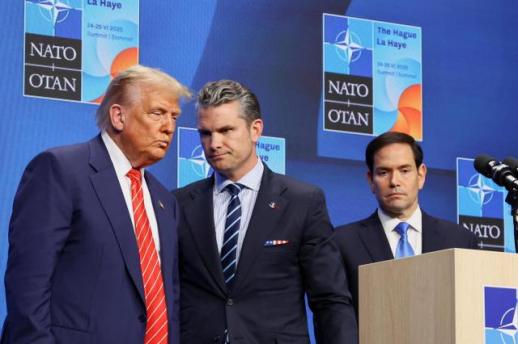 Trump's hint of troop rollback in Germany likely to worry Seoul, Tokyo SEOUL, April 30 (AJP) - U.S. President Donald Trump on Wednesday said Washington is reviewing a possible reduction of American troops in Germany, a brief one-sentence warning that could have wider repercussions across the Pacific, including in South Korea, where large-scale U.S. military deployments underpin regional security. “The United States is studying and reviewing the possible reduction of troops in Germany, with a determination to be made over the next short period of time,” Trump said on Truth Social. The statement followed an exchange of remarks with German Chancellor Friedrich Merz over the Iran conflict. Merz earlier said Iran was “humiliating” Washington in negotiations, prompting Trump to respond that the German leader “doesn’t know what he’s talking about.” The United States maintains its largest military presence in Europe in Germany, with about 34,547 troops as of 2025, according to available data, although estimates vary depending on rotations. These forces serve as a central hub for U.S. operations across Europe, including logistics and NATO coordination. Prior to Trump’s post, the U.S. State Department said Secretary of State Marco Rubio spoke with German Foreign Minister Johann Wadephul by phone, discussing Iran and the importance of securing freedom of navigation in the Strait of Hormuz. Any discord between Washington and Berlin — a central pillar of NATO — could carry implications beyond Europe, including in the Indo-Pacific. About 28,500 U.S. troops are stationed in South Korea under the bilateral alliance, while roughly 50,000 troops are based in Japan. These forces form a key part of U.S. deterrence posture in the region, particularly in relation to North Korea. Both countries are also linked to the Strait of Hormuz through energy supply chains. Before the recent conflict disrupted the waterway, South Korea depended on the strait for roughly 70 percent of its crude oil and about 20 percent of its natural gas, while Japan relied on it for about 93 percent of its crude imports. Earlier in April, Washington asked several countries, including South Korea and Japan, to consider supporting efforts related to security in the Strait of Hormuz. According to Seoul’s foreign ministry, Rubio spoke with Foreign Minister Cho Hyun on April 16 and referred to cooperation for long-term security in the area. The United States has previously reviewed troop levels in allied countries, including Germany, during earlier phases of the Trump administration. U.S. forces in Germany play a central role in logistics, command operations and support for NATO missions across Europe. No timeline or specific scale for a potential reduction in Germany has been announced. 2026-04-30 08:13:24
 -
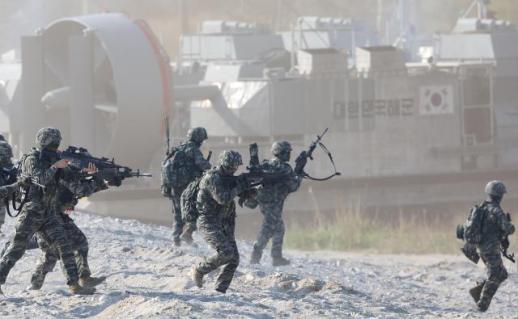 Seoul, Tokyo echo self-defense amid U.S. distraction in Gulf SEOUL, April 29 (AJP) - Self-sufficiency has shifted from a strategic choice to an absolute necessity for U.S. allies in East Asia. As American military resources become increasingly overextended in the Middle East, leaders in South Korea and Japan have begun harmonizing their rhetoric, placing a renewed emphasis on independent self-defense capabilities. During a cabinet meeting on Tuesday, President Lee Jae Myung delivered a lecture on the imperative of national self-reliance. "A nation must be able to defend itself. Why should we rely on others?" Lee bolstered his reasoning by citing South Korea’s current military standing: the world’s fifth-largest defense capability (independent of U.S. assets) and its position as the fourth-largest global arms exporter. The entrenched U.S. engagement in the Middle East after attacks on February 28, 2026 has precipitated this urgency. The financial burden on Washington is mounting; as of early April, the U.S. is estimated to have spent $35 billion on the conflict. Analysts project that total costs could exceed $1 trillion if the war continues to drag on. Amid this distraction, North Korea has ramped up its military provocations. In April alone, Pyongyang conducted four ballistic missile launches from Wonsan on April 8 and from the Sinpo area on April 19, raising the possibility of submarine-launched ballistic missile (SLBM) testing. The North also claimed to have tested short-range ballistic missiles equipped with cluster munitions between April 6 and 8. On paper, South Korea maintains a significant conventional advantage; its annual defense budget exceeds North Korea’s entire GDP. However, as the contemporary wars in Ukraine and Iran have demonstrated, firepower alone does not guarantee victory. Professor Kim Houng-yu of the Korea Defense Industry Association notes that "no country conducts war operations in isolation in modern conflict." He argues that military rankings are often deceptive, pointing to the Russia-Ukraine war as proof that even major powers face grueling uncertainty on the battlefield. "Alliances and coalition operations remain essential for national security," Kim concluded. Despite the rhetoric of self-reliance, several "anchors" keep the U.S.-ROK alliance in place. Under the U.S. National Defense Authorization Act, the number of U.S. troops stationed in South Korea is capped at 28,500, making any abrupt reduction difficult without congressional approval. Some analysts also note that the U.S. 2026 National Defense Strategy calls for maintaining “primary responsibility” for deterring North Korean conventional threats while continuing close coordination with the United States. Strain in traditional trilateral ties Recent months have seen visible friction in bilateral coordination. In January, Seoul requested a reschedule of trilateral air drills with the U.S. and Japan, citing the Lunar New Year and Japan's provocative "Takeshima Day." The U.S. ultimately proceeded with the drills alongside Japan only. Further tension surfaced on February 18–19, when U.S. Forces Korea conducted independent operations over the Yellow Sea. This prompted a standoff with Chinese fighter jets and a subsequent protest from South Korean Defense Minister Ahn Gyu-back regarding a lack of prior consultation. General Xavier Brunson reportedly issued an apology, and the drills were truncated from four days to two. Japan’s recent policy shifts add a layer of complexity. With roughly 55,000 U.S. troops on its soil, Tokyo is revising export rules to allow for the transfer of lethal weapons. This signals a move toward active combat readiness. Professor Hosaka Yuji of Korea University suggests this is a calculated alignment with Washington. "The Takaichi administration is leaning into cooperation with the Trump administration," he noted, highlighting that Japan is seeking a partnership that covers not just Chinese containment, but also the securing of critical resources like rare earths. As the U.S.-Iran conflict shows no sign of abating, South Korea is caught in a delicate balancing act. The trajectory of the alliance will be defined by how well Seoul can reconcile its goal of a self-reliant defense with the harsh realities of geopolitical interdependence. 2026-04-29 18:03:24