
Journalist

Jang Soo-young
swimming@ajunews.com
-
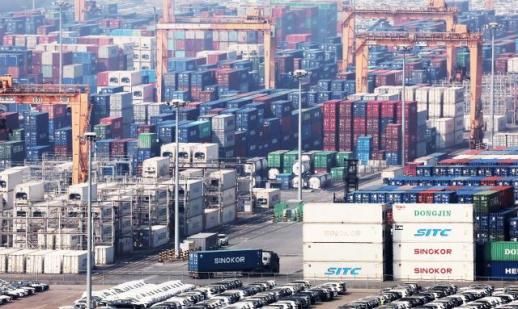 South Korea's Current Account Surplus Hits Record $37.3 Billion in March In March, South Korea recorded a historic current account surplus exceeding 54 trillion won, driven by strong semiconductor exports. Despite ongoing conflicts in the Middle East, the surplus trend is expected to continue. According to preliminary statistics released by the Bank of Korea on May 8, the current account surplus for March was $37.33 billion (approximately 54.4 trillion won), marking the second-longest streak of surpluses since 2000 at 35 consecutive months. This figure significantly surpassed the previous record of $23.19 billion set in February. From January to March, the cumulative current account surplus reached $73.78 billion, a 3.8-fold increase compared to $19.49 billion during the same period last year, achieving more than half of the annual surplus of $123.05 billion from last year within just three months. By category, the goods balance recorded a surplus of $35.07 billion, the highest ever, and up 3.6 times from $9.69 billion in the same month last year. Exports totaled $94.32 billion, a 56.9% increase year-on-year, driven by strong performance in information technology products, particularly semiconductors and computer peripherals. Non-IT items also saw growth due to increased working days and rising oil prices. Customs data showed significant increases in exports of computer peripherals (167.5%), semiconductors (149.8%), petroleum products (69.2%), wireless communication devices (13.1%), and chemical products (9.1%). Imports rose by 17.4% to $59.24 billion, with capital goods imports increasing by 23.6%, particularly in information and communication equipment (51.6%), transportation equipment (34.8%), and semiconductors (34.5%). Raw material imports also increased by 8.5%, marking a turnaround after six months, driven mainly by chemical products (20.5%). Consumer goods imports rose by 2.1%. The services balance recorded a deficit of $1.29 billion, significantly reduced from a deficit of $2.51 billion in the same month last year and $1.86 billion the previous month. Notably, the travel balance turned positive with a surplus of $140 million, the first surplus since November 2014, attributed to the spring travel season and an influx of foreign tourists. March saw over 2 million arrivals for the first time, boosted by BTS concerts and increased K-pop tourism. In the financial account, foreign investment in the domestic stock market showed a notable decline. Direct investments increased, with domestic investments abroad rising by $8.89 billion and foreign investments in Korea increasing by $3.77 billion. However, securities investments saw a $40 billion increase in domestic investments abroad, while foreign investments in domestic stocks dropped by $34.04 billion, the largest decline on record, influenced by risks in the Middle East and profit-taking. Despite the ongoing conflict in the Middle East, the surplus trend is expected to persist. Kim, a director at the Bank of Korea, noted that while the U.S.-Iran conflict and the blockade of the Strait of Hormuz had some impact on trade in April, it was not significant enough to disrupt the overall trend. He expressed optimism that the current account would continue to show positive results beyond April, although he emphasized the need to monitor semiconductor export trends and the developments in the Middle East. However, he cautioned that the surplus in April might decrease due to rising energy prices affecting raw material imports. The cost of crude oil rose sharply from $75.4 per barrel in March to $112.3 in April. The semiconductor sector is expected to remain resilient despite the Middle East conflict, with increased capital investment and rising imports of capital goods. Kim stated that reports of semiconductor supply shortages have led to increased investments, indicating that the sector is unlikely to be significantly impacted by the ongoing situation. 2026-05-08 12:05:12
 -
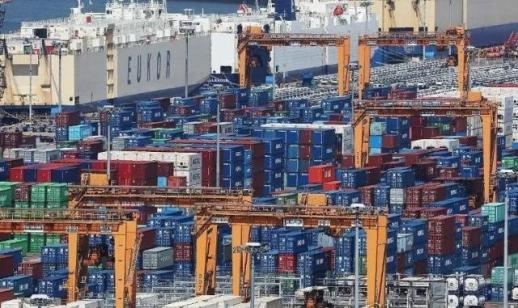 South Korea's Current Account Surplus Reaches Record $37.3 Billion in March South Korea's current account surplus reached a record $37.33 billion in March, driven by strong semiconductor exports. The increase in oil products and chemicals also contributed to this historic surplus. According to preliminary statistics released by the Bank of Korea on May 8, the current account surplus for March was approximately 54.43 trillion won. This marks the 35th consecutive month of surplus, the second-longest streak since the 2000s. Following a record surplus of $23.19 billion in February, March's figure exceeded $30 billion, indicating significant growth. The trade balance recorded a surplus of $35.07 billion, the highest ever. After reaching $23.36 billion in February, the trade surplus surpassed $30 billion in March. Exports surged 56.9% year-on-year to $94.32 billion, also a record high. IT products, particularly semiconductors and computer peripherals, showed strong performance, while non-IT items benefited from increased working days and rising oil prices. Notable increases were seen in exports of computer peripherals (167.5%), semiconductors (149.8%), wireless communication devices (13.1%), and chemicals (9.1%). After a 23% decline last year, automobile exports rebounded with a 1.1% increase. Oil product exports surged from a 0.7% decline to a 69.2% increase. Regionally, exports to Southeast Asia (68.0%), China (64.9%), the United States (47.3%), and Japan (28.5%) performed well, while exports to the Middle East fell by 49.1%. Imports also rose by 17.4% to $59.24 billion, driven by capital goods, particularly information and communication equipment (51.6%), transportation equipment (34.8%), and semiconductors (34.5%). Raw material imports increased by 8.5%, led by chemicals (20.5%), marking the first rise in six months, while consumer goods imports grew by 2.1%. The services account recorded a deficit of $1.29 billion, significantly reduced from a $2.51 billion deficit in March last year and down from $1.86 billion the previous month. The travel balance showed a surplus of $140 million, marking the first surplus since November 2014, coinciding with the spring travel season. The primary income balance surplus increased from $2.48 billion in February to $3.58 billion in March, driven by higher dividend income from direct and portfolio investments. The financial account showed a net asset increase of $36.99 billion. Domestic investment abroad rose by $8.89 billion, while foreign investment in South Korea increased by $3.77 billion. In securities investment, domestic investment abroad increased by $4 billion, but foreign investment in South Korea decreased by $34.04 billion, the largest drop on record, amid concerns over regional risks and declining memory demand.* This article has been translated by AI. 2026-05-08 08:15:28
 -
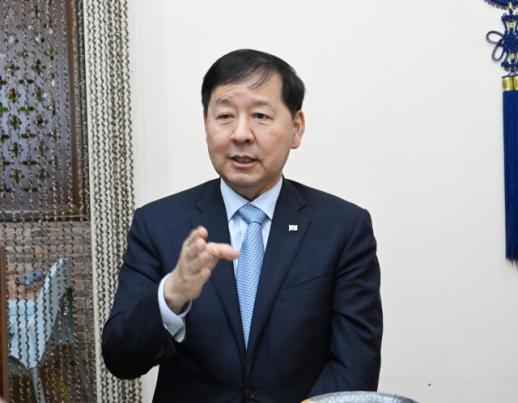 South Korea’s Koo Pyo-cheol vows to meet 2% growth target despite Middle East war risks Deputy Prime Minister and Minister of Economy and Finance Koo Pyo-cheol said South Korea will hold to its 2% economic growth target this year despite the prolonged Middle East war, which he said is adding uncertainty and inflation pressure. Koo made the remarks May 5 (local time) after attending the Asian Development Bank annual meeting in Samarkand, Uzbekistan, along with the ASEAN+3 finance ministers and central bank governors meeting. “Because the Middle East situation is changing a lot, it is practically difficult to forecast growth, and the impact is large,” Koo said. “But I want to say we will achieve the 2% (growth) we originally promised.” He added that investment banks’ forecasts are “much higher than 2%,” and said he told counterparts he would work closely with a new governor on policy cooperation to meet the goal. On inflation measures drawing attention amid high oil prices, including a “maximum oil price system,” Koo said decisions on whether to maintain or end the policy depend on how quickly the Middle East war situation changes. “The best policy is for the Middle East to move to a peace system,” he said. But with uncertainty and oil prices above $100, he said the government would need to respond with a combination of measures if prices stay elevated. Koo said the government would watch inflation closely, citing the risk of broader price increases stemming from higher fuel taxes and rising diesel and gasoline prices. He also said South Korea’s fiscal management and policy response are earning trust from international organizations. Koo said he met with the International Monetary Fund’s deputy managing director, who assessed South Korea as “doing very exemplary work.” Koo said the IMF official spoke highly of South Korea repaying 1 trillion won without issuing government bonds because tax revenue conditions were favorable. He also said the official noted that even as oil prices surged 50% in the United States, South Korea has managed the situation steadily through policy coordination. Asked about the possibility of a second supplementary budget, Koo was cautious. “Right now, we need to focus on executing the first supplementary budget,” he said, noting the government has already approved a 26.2 trillion won package and is prioritizing rapid implementation. He added that with the main budget near 730 trillion won, the focus is also on executing that spending. On exchange-rate volatility, Koo said it is not appropriate to comment on specific levels because the market sets the rate. Still, he said the key factor for the exchange rate, inflation and growth is how quickly the Middle East war stabilizes. If volatility persists, Koo said the government would respond actively with a policy mix and work closely with the Bank of Korea, the Financial Services Commission and the Office of Planning and Budget to prevent economic instability. On the possibility of a currency swap with the United States, Koo said external changes, including a change in the Federal Reserve chair, mean the issue should be reviewed comprehensively, signaling a cautious stance. 2026-05-06 12:03:21
 -
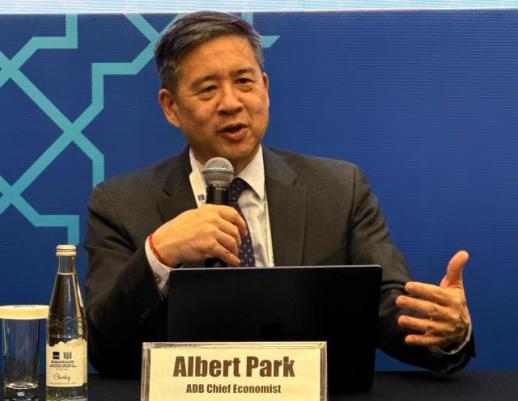 ADB Economist Warns Prolonged High Oil Prices Could Drag South Korea Growth Albert Park, chief economist at the Asian Development Bank, warned that prolonged disruption to energy supply chains from the Middle East conflict could keep oil prices elevated and weigh on South Korea’s economy. Speaking at a press briefing May 4 (local time) in Samarkand, Uzbekistan, Park said that even if the conflict ends, rebuilding damaged energy infrastructure could take years, locking in a “higher-for-longer” oil-price environment. Under that scenario, South Korea’s economic growth would be estimated to fall by 0.9 percentage points in 2026 and 0.5 percentage points in 2027. In April, the ADB projected South Korea’s growth at 1.9% in both 2026 and 2027. In a new baseline scenario, the ADB forecast average oil prices of $96 a barrel in 2026 and $80 in 2027. “This is not simply a matter of passing through a strait,” Park said, adding that key infrastructure for global production capacity has been damaged and could take three to five years to restore. Park said South Korea is a concern because it relies more heavily on energy imports than other Asian economies. He also warned of stronger upward pressure on inflation as higher energy costs spill over into other prices. Park said strong first-quarter semiconductor exports could partly offset slower growth, but he cautioned that Middle East-related disruptions in raw materials could also hinder expanded chip production. “Overall, the growth forecast is more likely to be revised downward,” he said. He stressed that the estimates were not an official revision to the ADB’s forecast. The figures, he said, were meant to gauge the pure impact of a negative external shock from the Middle East crisis, and actual growth could vary depending on offsetting factors such as semiconductor exports. The ADB plans to release an updated outlook for South Korea in its July ADO update, reflecting both chip performance and developments in the Middle East. On policy, Park advised against broad subsidies, saying they tend to concentrate benefits among higher-income households and increase fiscal burdens. Instead, he said, governments should allow higher energy prices to signal consumers and businesses to improve efficiency, while targeting support precisely to vulnerable groups. He also urged central banks to closely monitor second-round inflation effects, but not to raise rates too early in ways that could curb investment and growth. Park offered a positive view of the current semiconductor cycle, saying it is being driven by artificial intelligence. If AI delivers real productivity gains, he said, the cycle could have a relatively “long life.” Still, he noted data suggesting up to eight key materials used in semiconductor production are supplied from the Middle East, and warned that prolonged conflict could lift prices or disrupt supplies, limiting production expansion even if global demand remains strong. The briefing also addressed international use of the Korean won. Yuji Yamashita, an ADB official who attended with Park, said that “true” won internationalization should look beyond its use in payments for goods and services and include government bonds. He said Korean government bonds have become a liquid and trusted asset for global investors after being added to the World Government Bond Index. If those bonds can be used as collateral in cross-border transactions, he said, investors may view the currency and bonds as a package, expanding the won’s role beyond trade into broader financial transactions. 2026-05-05 12:12:16
 -
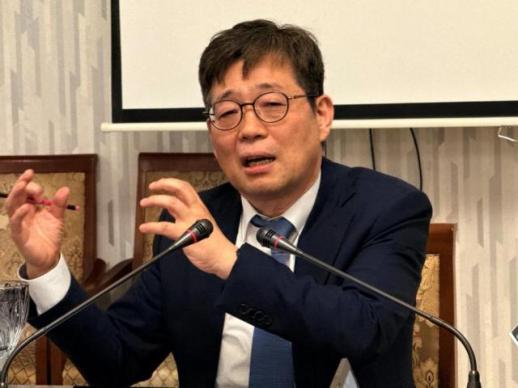 Bank of Korea Deputy Governor Says Rate-Cut Cycle Is Over, Hints at Possible Hikes Bank of Korea Deputy Governor Yoo Sang-dae said it may be time to consider shifting monetary policy toward an interest-rate hiking cycle. Yoo, in Samarkand, Uzbekistan, for the Asian Development Bank’s annual meeting, made the remarks during a May 3 (local time) briefing with a traveling press pool. He said the economy has been stronger than expected and inflation is likely to run higher than forecast. “Monetary policy moves in cycles,” Yoo said. He described the rate trend as having been in a downward cycle since October 2024, adding that through the end of last year many on the Monetary Policy Board believed one more cut could end the easing cycle, followed by a shift to hikes at an appropriate time. The central bank cut rates twice last year, in February and May, and has since kept them on hold. Yoo said the war in the Middle East this year changed the outlook. He said an oil shock from the conflict pushed up prices while hurting growth, creating a “stagflation-like” situation. But he said growth later improved as a semiconductor upcycle strengthened exports and government stimulus helped revive consumer sentiment. As a result, he said, growth appears resilient while upward pressure on inflation has intensified. “The economy doesn’t seem as weak as we initially thought, and in my personal view monetary policy may shift from cuts to a hiking cycle,” Yoo said. He added that data since April suggest growth will not fall below the forecast of 2.0%, while inflation is likely to exceed the 2.2% projection. “Now is the time to stop cutting and consider hikes,” he said. Yoo also signaled changes to the central bank’s dot plot, which shows the projected rate path. He said the war broke out between February and April and conditions have changed significantly, so there is no need to cling to the previous dot plot. If growth and inflation conditions are confirmed by the May policy meeting, he said, there is “plenty of room” for the dot plot to move higher than in February. He said views may differ on whether to focus on the highest point in the distribution or the most frequently marked points such as the average or median, but the overall probability distribution could rise. With uncertainty high and changing daily, he said, the bank needs to watch developments over the next two weeks, but the policy statement would show a different distribution. On the exchange rate, Yoo said the market’s decisions should be respected but the won’s level appears out of line with fundamentals. He said foreigners often ask why the exchange rate is high when South Korea has relatively strong growth, a current account surplus and solid exports. “It is clearly true that the exchange rate level is high compared with the past,” he said. Still, he said the market does not appear to see major problems with the won trading in the 1,470 to 1,480 per dollar range, and he understands there are no concerns about worsening foreign-currency liquidity or capital outflows. Yoo also maintained an optimistic view on concerns that export strength is overly concentrated in semiconductors. He said he worries less about the sector’s large share than about what happens when the semiconductor cycle turns down. With expectations growing that the current semiconductor cycle could last considerably longer than in the past, he said, those concerns have eased. Comparing growth with Taiwan, he said South Korea, unlike an economy concentrated in semiconductors, has a broader industrial base including autos, shipbuilding and steel, expressing confidence in the economy’s scale.* This article has been translated by AI. 2026-05-04 10:03:24
 -
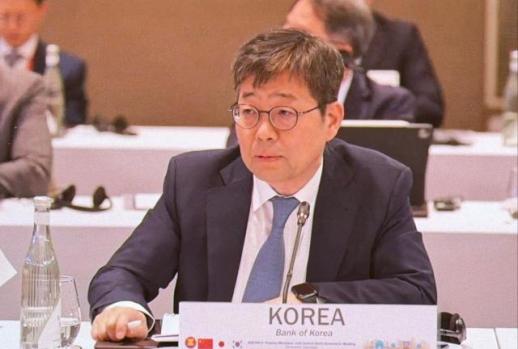 Bank of Korea’s Yoo says Middle East tensions raise need for regional safety net, backs CMIM funding shift Bank of Korea Deputy Gov. Yoo Sang-dae met with Asian counterparts to strengthen the region’s financial safety net and build a next-generation framework for financial cooperation, including a plan to overhaul the safety net’s funding structure and broaden cooperation to stock and derivatives markets. Yoo attended the 29th ASEAN+3 finance ministers and central bank governors meeting on May 3 (local time) in Samarkand, Uzbekistan, where participants discussed those steps. Timor-Leste, which joined ASEAN as its 11th member in October last year, attended the meeting for the first time, expanding the scope of regional financial cooperation. Members shared the view that downside risks to the regional economy have increased amid rising tensions in the Middle East. They said a prolonged conflict could spread beyond energy to industrial raw materials, logistics and food prices, with broad and lasting effects. They agreed to continue policy responses tailored to each country’s conditions to support macroeconomic and financial stability. South Korea has also faced persistent upward pressure on prices since the outbreak of war. The consumer price index rose 2.2% in March from a year earlier, driven by a sharp jump in petroleum product prices. Producer prices rose 1.6% in March from the previous month, the biggest monthly increase in more than four years since April 2022. The meeting approved a detailed roadmap to improve the effectiveness of the Chiang Mai Initiative Multilateralization, or CMIM, the region’s financial safety net. Members agreed to push for the swift entry into force of a Rapid Financing Facility, or RFF, to respond to external shocks such as natural disasters. They also agreed to shift CMIM resources to a paid-in capital, or PIC, model to increase certainty of funding support. The Bank of Korea is co-chairing a technical working group studying the funding-structure shift and is leading the institutional design. It plans to review specific PIC models. The working group, launched in late 2024 under the leadership of the Bank of Korea and Malaysia’s central bank, has studied models to reshape CMIM into a structure similar to the International Monetary Fund. “With the Middle East situation increasing the importance of the regional safety net, the shift to PIC will strengthen the safety net’s credibility, availability and responsiveness,” Yoo said. “As co-chair of the TWG, I will responsibly push ahead with PIC governance issues and model design.” Members also agreed to significantly broaden the scope of financial cooperation. They decided to expand and reorganize the existing Asian Bond Markets Initiative, or ABMI, into the Asian Bond and Financial Markets Development Initiative, or ABFMI, to cover stock and derivatives markets as well. The 30th ASEAN+3 finance ministers and central bank governors meeting will be held next year in Nagoya, Japan. South Korea and Singapore are set to serve as co-chairs.* This article has been translated by AI. 2026-05-03 21:48:19
 -
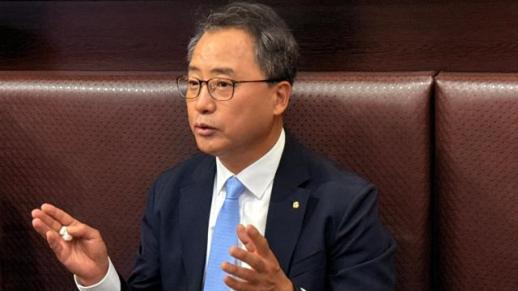 KFTC to Overhaul Operations for AI-Driven Payments, Launch Agent-Payment Pilot The Korea Financial Telecommunications & Clearings Institute said it will support the financial sector’s AI transformation while reshaping its own organization around AI and moving to verify technology for an AI agent-based payment platform. On May 3 (local time), the institute said it will build a companywide “AI agent” work environment so employees can use AI agents in day-to-day tasks to improve efficiency. An AI agent refers to an intelligent system that goes beyond providing information by interpreting a user’s intent, making judgments and handling complex tasks. The institute said it aims to embed the technology in its operations to develop next-generation payment services that minimize human intervention. To move faster on AI projects, it plans to establish new processes and accelerate a shift to an AI-centered organization, while significantly expanding programs to train AI specialists. Externally, the institute said it will help raise the overall level of AI transformation across the financial industry by quickly forming a tentative “financial sector AX alliance” with major financial firms to standardize finance-focused AI technologies and share best practices. It also plans a proof-of-concept for an “agent payment platform,” described as a key element of next-generation payment innovation. The technology would allow a conversational AI to handle the entire process — from product search to ordering and payment — in a single session without the consumer directly operating an app. The institute said it plans to begin the PoC within this year in cooperation with fintech partners. The institute also said it is expanding its footprint in global payments by continuing to broaden a cross-border QR payment service network with major Asian countries including Indonesia, India and Vietnam. By directly linking national clearing institutions, it expects cost savings of up to 2 percentage points per transaction compared with existing overseas payment methods, accelerating efforts to improve user benefits. Under existing overseas payment services, domestic payment providers settle with overseas merchants through double currency conversion — won to U.S. dollars, then dollars to local currency — resulting in overlapping exchange fees. The institute began two-way inbound and outbound QR payment services with Indonesia on April 1. It said the cross-border QR payment infrastructure will be operated as an open platform available to banks, card companies and fintech firms. Shinhan, Woori and Hana banks; Shinhan Card and KB Kookmin Card; and providers including GLN and Travel Wallet are expected to join within this year, and talks are also underway with major big tech companies. Cooperation in payment and settlement also strengthened following the president’s April trips to India and Vietnam. The institute signed a memorandum of understanding with India’s National Payments Corporation of India, or NPCI, and a service contract with Vietnam’s NAPAS, and said it will launch QR payment services with both countries within this year. The institute said it plans to keep expanding the network, focusing on Asian countries where QR payments are widely used, including Singapore and Thailand, to improve customer convenience and support overseas expansion by South Korean financial firms. Speaking at a meeting with accompanying reporters in Samarkand, Uzbekistan, where the 59th Asian Development Bank annual meeting was held, institute head Chae said, “We are pushing cross-border payment services with ambition.” He added, “In Southeast Asia and Central Asia, QR payments are far more common than cards, so we are promoting QR services centered on countries that many of our people travel to.” Chae said, “If pay companies provide QR services, they have to use overseas networks, so usage fees occur,” adding, “If it goes through the institute, those fees disappear.” 2026-05-03 16:03:19
 -
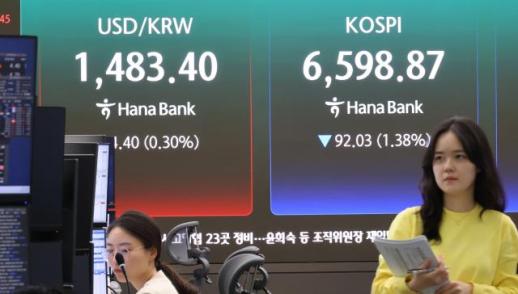 South Korean Won Weakens to 1,480s as Oil Surges and Fed Turns More Hawkish The won weakened against the U.S. dollar as international oil prices jumped on global supply-chain disruptions and expectations for U.S. rate cuts faded. In Seoul trading on April 30, the won closed at 1,483.3 per dollar in onshore trading at 3:30 p.m., up 4.3 won from the previous session. The currency opened at 1,486.5, up 7.5 won, and briefly climbed to 1,488.0 soon after the market opened before paring gains later in the day. A day earlier, the won ended at 1,488.5, up 9.5 won from the prior onshore close, nearing the 1,490 level. Since the outbreak of war in the Middle East, the strongest catalyst for the won’s decline has been oil. Volatility has increased as concerns grow that supply disruptions could be prolonged. Overnight, Brent crude briefly surged to $119.76 a barrel, the highest since June 2022, early in the Russia-Ukraine war. For energy-dependent South Korea, higher oil prices raise import costs and fuel worries about a weaker current account, adding pressure on the won. Another key variable is the combination of Middle East risk and the Federal Reserve’s stance. After the Middle East war pushed the exchange rate above 1,500 last month, markets appeared to gradually absorb the shock. But the Fed has now formally warned of inflation risks tied to the conflict, reinforcing investor concerns. In its latest Federal Open Market Committee statement, the Fed said the Middle East situation is a factor that is increasing inflation concerns and adding to high uncertainty around the economic outlook. With the Fed holding rates, expectations for a rate cut this year have effectively faded. Although the policy rate was left unchanged, the decision was viewed as a hawkish hold after three officials issued a dissenting view seen as aimed at blocking expectations for future cuts. According to CME Group’s FedWatch Tool, interest-rate futures markets priced in about a 12% chance that the Fed will raise rates by at least 0.25 percentage point by December. A day earlier, that probability was 0%. The shift has supported demand for the dollar as a safe-haven asset. The foreign exchange market is expected to remain volatile as it reacts to external factors. With talk of renewed military clashes in the Middle East, oil prices have risen again. On April 30 (Korea time), Brent futures for June delivery on London’s ICE Futures Exchange briefly topped $120 a barrel. Still, some expect pressure on the won to ease if the Bank of Korea raises rates later this year. Moon Da-un, a researcher at Korea Investment & Securities, said higher-than-expected domestic growth and interest rates would increase downward pressure on the exchange rate. He forecast the central bank will raise its policy rate by 0.25 percentage point each in August and November, citing solid growth and war-driven inflation pressure. Moon added that the Korea-U.S. policy rate gap would narrow to minus 0.75 percentage point from minus 1.25 percentage points, slowing overseas investment that had been rising in search of higher expected returns and leading to a more gradual accumulation of net external financial assets than previously expected.* This article has been translated by AI. 2026-04-30 17:35:22
 -
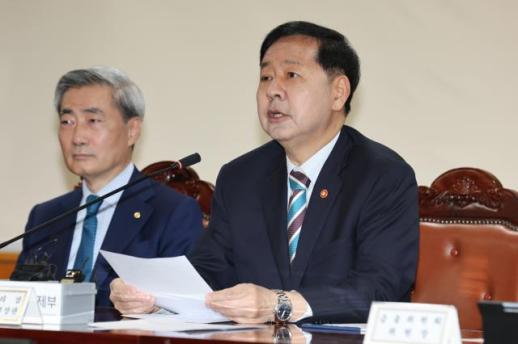 Finance Minister Koo Says Rate, FX Volatility Persists but Banks Have Ample Buffers Deputy Prime Minister and Minister of Economy and Finance Koo Yun-cheol said Wednesday that volatility in financial and foreign-exchange markets is persisting, but the financial sector has sufficient capacity to respond. Koo made the remarks at a joint “expanded macroeconomic and financial meeting” at the Korea Federation of Banks building in Seoul, where officials reviewed global market moves following the U.S. Federal Open Market Committee’s decision and assessed the impact of the Middle East war on financial and FX markets. Attendees included Bank of Korea Gov. Rhee Chang-yong, Financial Services Commission Chairman Lee Eok-won and Financial Supervisory Service Chairman Lee Chan-jin. “Our economy is seeing stronger growth in the first quarter even amid the fallout from the Middle East war, and the KOSPI is above its prewar level,” Koo said. “However, volatility in financial and FX markets, including government bond yields and the exchange rate, continues.” The three-year government bond yield rose to 3.627% at the end of March from 3.030% at the end of February, then moved to 3.525% the following month. The 10-year yield climbed to 3.882% from 3.447% before easing to 3.843%. Over the same period, the won-dollar exchange rate swung from 1,439.7 won to 1,530.1 won, then to 1,479.0 won. Koo said stress tests of financial institutions showed their buffers remained adequate even in crisis scenarios involving key variables such as oil prices and the exchange rate. Still, he warned that risks remain as uncertainty persists, including stalled ceasefire talks in the Middle East war. He cited downside risks to growth, rising inflation pressure and potential supply-chain disruptions, and said authorities will keep a 24-hour market monitoring system running and take stabilization steps in a timely manner in coordination with relevant agencies if needed. Koo also said the government will closely track profitability risks tied to raw-material supply instability in sectors sensitive to the war, including refining, petrochemicals and construction, and expand support through financial policy measures. He noted international oil prices are surging again, with Brent crude hitting a four-year high as concerns grow over prolonged supply disruptions. He said efforts to improve financial and FX markets will continue, including close cooperation with financial institutions to proceed smoothly with a 24-hour FX trading market and the creation of an offshore won settlement system. He also pledged to accelerate structural reforms such as internationalizing the won and revitalizing capital markets. Koo said preparations are underway to launch a public-participation National Growth Fund in May, including quickly completing revisions to an enforcement decree to provide tax support and broaden the base for productive finance. Participants congratulated Shin Hyun-song on his inauguration as governor and agreed to tighten policy coordination among the government, the central bank and financial regulators. They also decided to review ways to develop cooperation and communication channels for discussing macroprudential and financial issues. 2026-04-30 10:18:42
 -
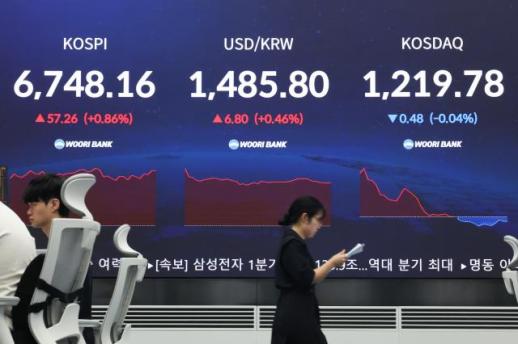 Korean won opens weaker near 1,480 per dollar on prolonged Middle East supply fears The South Korean won opened weaker against the U.S. dollar on worries that energy supply disruptions tied to the Middle East could last longer than expected. As of 9:31 a.m. on April 30, the won was trading at 1,484.6 per dollar. It opened at 1,486.5, up 7.5 won from the previous session’s close. The move was attributed to rising demand for safe-haven assets as ceasefire talks between the United States and Iran remained stalled, fueling concerns over prolonged supply turmoil. Overnight, ICE Futures Europe said June Brent crude settled at $118.03 a barrel, up 6.1% from the prior session. Brent climbed as high as $119.76 intraday, its highest level since June 2022, about four years ago. On the New York Mercantile Exchange, June West Texas Intermediate crude settled at $106.88 a barrel, up 6.95%. U.S. stocks finished mixed as expectations for big tech earnings offset supply concerns. The Dow Jones Industrial Average fell 280.12 points, or 0.57%, to 48,861.81. The S&P 500 slipped 2.85 points, or 0.04%, to 7,135.95, while the Nasdaq composite rose 9.44 points, or 0.04%, to 24,673.24. Min Kyung-won, an economist at Woori Bank, said the won-dollar rate was likely to rise around 1,490 as higher oil prices and weaker risk appetite follow difficulties in U.S.-Iran negotiations. With WTI above $100 a barrel, he said, oil prices are a direct burden on the won.* This article has been translated by AI. 2026-04-30 09:50:28