

Journalist

Hong Seungwan
veryhong@ajunews.com
-
 Gmarket Cultivates Star Sellers Through Data and Promotions Gmarket is actively cultivating star sellers by discovering small brands, local producers, and new sellers with competitive products. On June 3, Gmarket announced that its category managers have collaborated with sellers to identify high-potential products, resulting in food brands that have been on the platform for less than two years reaching category leadership, and local agricultural products achieving sales in the tens of thousands. Gmarket supports the growth of new brands by analyzing sales data to suggest product assortments and pricing strategies, while also providing customer engagement opportunities through major promotions and live broadcasts. The processed food brand "Myeongjang," which joined Gmarket and Auction in 2024, has become a star seller in less than two years. The brand's kimchi stew, priced competitively at around 2,000 won per serving, aligns with the average price of processed foods in the mid-20,000 won range, leading to positive customer responses. Another notable example is "Saengsaeng Story," a seller representing the largest stevia tomato producer in the Buyeo region. Gmarket enhanced the visibility of their products during promotional events like Big Smile Day, resulting in transaction amounts of approximately 760 million won and 56,000 orders during the event period. The global robot vacuum brand MOVA has also expanded its customer base through Gmarket. By analyzing competing products, Gmarket's home appliance category manager planned exclusive benefits and supported promotional visibility, leading to sales of about 1.5 billion won for a single model during the first half of the Big Smile Day. Overall transaction amounts for the brand increased approximately 14 times compared to the monthly average. A Gmarket representative stated, "We are focused on discovering and nurturing small sellers and new brands with high growth potential. We will leverage the product planning capabilities of our category managers and various marketing assets to create more star sellers." Meanwhile, Gmarket has returned to a growth trend in gross merchandise volume (GMV) after launching a joint venture with AliExpress, following aggressive marketing and pricing investments. In March, GMV and average transaction prices increased by 12% and 10%, respectively, with similar trends continuing into April.* This article has been translated by AI. 2026-06-04 07:03:00
 -
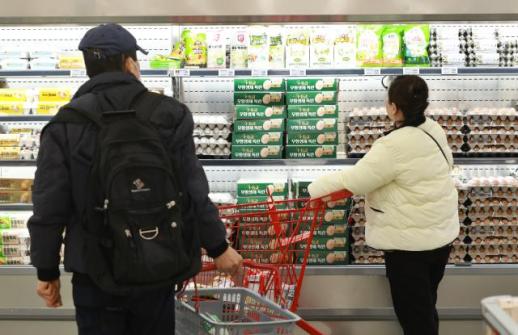 Egg Prices Surge Amid AI Outbreak and Heatwave, Supermarkets Scramble for Supplies "It's hard to find a 30-egg carton. Even when I do, the price is so high that I hesitate to buy it," said Kim Jin-joo, a 42-year-old housewife, while browsing the egg section of a supermarket on June 2. She expressed concern, stating, "I used to cook with eggs often when I ran out of side dishes, but now that's becoming difficult too."The burden on consumers is increasing as the supply of eggs diminishes due to the impact of highly pathogenic avian influenza (AI). The culling of hens has led to a decrease in production. With the added concern of a heatwave this summer, supermarkets are actively seeking to secure supplies through discount promotions and the sale of imported eggs.According to the Korea Agro-Fisheries & Food Trade Corporation (aT), the average consumer price for domestic special eggs (30-count) was recorded at 7,412 won as of June 1. This marks an increase of about 6% from the average price of 7,008 won in June of last year. At the end of last month, prices for special eggs in Seoul exceeded 8,500 won.Egg prices, which were in the low 6,000 won range earlier this year, surged to the 7,000 won level by late April and have remained high. Although there has been some recent adjustment, prices are still above the average levels seen in previous years. Some supermarkets have posted notices indicating temporary shortages of eggs, and Costco has limited purchases to two cartons per person.The primary cause of rising egg prices is the spread of highly pathogenic AI, which has led to the culling of over 11 million hens, drastically reducing the supply. Additionally, it takes time to raise new chicks to laying hens, making a quick recovery in supply unlikely.The summer heat is also a significant factor. Chickens experience heat stress when temperatures exceed 27 degrees Celsius, which can reduce their laying rates and, in severe cases, lead to mortality. As a result, industry experts predict that prices will remain high until egg production stabilizes in July.In response, supermarkets are considering discount promotions and the sale of imported eggs. Lotte Mart is offering a discount of 1,000 won on its Happy Egg special (30-count) from June 3 to June 10, selling it for 6,990 won through a government-supported agricultural discount program. Last month, Lotte Super sold fresh eggs from the U.S. at prices more than 35% lower than the average domestic price for the same size. A representative from Lotte Mart and Super stated, "We plan to explore various product management strategies that can help stabilize prices." E-Mart is reportedly considering importing eggs from Thailand.The government is also implementing measures to stabilize the egg supply. The Ministry of Agriculture, Food and Rural Affairs plans to import an additional 20 million fresh eggs from the U.S. and Thailand this month and next to prepare for the expected decrease in production during the summer. Deputy Minister Kim Jong-gu stated, "The government will continue to promote discount support programs to stabilize consumer prices for eggs," adding that discussions are ongoing with relevant departments to expand tariff quotas for egg products and increase the supply of fresh eggs.* This article has been translated by AI. 2026-06-03 18:03:00
 -
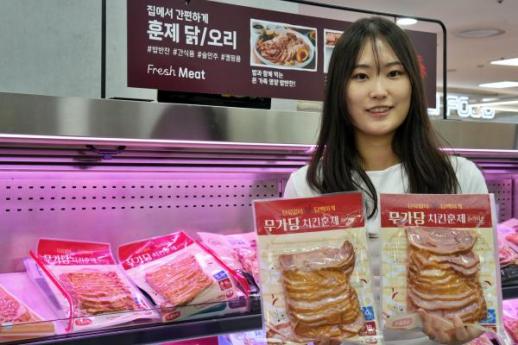 Lotte Mart Expands Unsweetened Meat Products to Target Low-Sugar Trend Lotte Mart announced on June 3 that it will introduce unsweetened meat products aimed at consumers looking to reduce sugar intake.The new product, unsweetened smoked chicken slices (400g), contains no added sugars or alternative sweeteners. It will be sold at a promotional price of 10,990 won through June 10, with a buy-one-get-one-free offer.The decision to launch unsweetened meat products comes as sales and demand for poultry items have increased. From January to May this year, sales of low-sugar, unsweetened, and zero-sugar poultry products, including chicken and duck, rose by 28% compared to the same period last year. During the same timeframe, sales volume increased by 32%. The zero-sugar smoked duck slices, introduced last year, sold 100,000 units as a single product.Initially focused on beverages, the low-sugar trend has recently expanded to include grains and meat products. According to Lotte Mart, sales of low-sugar, unsweetened, and zero-sugar fresh food products, including grains and meats, have seen growth of 91% in 2023, 150% in 2024, and 247% in 2025, marking three consecutive years of growth.The number of stock-keeping units (SKUs) is also increasing. During the same period, the SKUs for low-sugar, unsweetened, and zero-sugar fresh food products grew by 25%, 41%, and 57%, respectively.Jeon So-eun, product planner (MD) for Lotte Mart's Super Meat Team, stated, "We plan to continuously strengthen our meat product lineup in line with the rapidly growing low-sugar and unsweetened fresh food trend."Additionally, Lotte Mart will hold a 'Big Sale Day' event from June 3 to 7, offering major food items such as watermelon, Korean beef, and pork belly at up to half price. The Big Sale Day is a monthly discount event organized by Lotte Mart Super.* This article has been translated by AI. 2026-06-03 14:09:00
 -
 Hyundai Department Store's Eco-Friendly Shopping Bags Save 8,000 Tons of Wood Hyundai Department Store announced on June 3 that its introduction of eco-friendly shopping bags has saved the equivalent of over 53,000 trees in four years.The department store launched its eco-friendly shopping bags in June 2022 as part of its independent resource recycling project. As of the end of May this year, a total of 32 million eco-friendly shopping bags have been produced.These bags are made from 100% recycled paper. Hyundai Department Store reported that it has recycled 1,758 tons of paper for this initiative. A company representative stated, "By using eco-friendly shopping bags, we have reduced the amount of wood used in traditional bag production by about 8,000 tons, which protects approximately 53,000 trees involved in wood production."The eco-friendly shopping bags have also received international recognition, winning the Package Design Award at the 2023 iF Design Award, following a previous win at the 2022 Red Dot Design Award.Looking ahead, Hyundai Department Store plans to renew the design of its eco-friendly shopping bags next year. A company representative emphasized, "We will continue to lead genuine ESG (Environmental, Social, and Governance) management that customers can share in their daily lives, rather than just building an eco-friendly image."In conjunction with World Environment Day on June 5, Hyundai Department Store is launching an eco-friendly campaign. Together with the Ministry of Climate, Energy, and Environment, the store will offer benefits to customers participating in eco-friendly activities at its nationwide locations until June 12. Customers who engage in activities such as using reusable bags in the modern food court or utilizing multi-use containers at Fresh Table will earn double rewards in Hyundai Department Store's own rewards program, "Green Friends."* This article has been translated by AI. 2026-06-03 14:06:00
 -
 Debate Over Retail Law Revisions Gains Momentum After Elections Amid Pushback Discussions on amending the Retail Industry Development Act to change mandatory closure days for large supermarkets to weekdays and allow early morning deliveries are expected to gain traction after the June 3 local elections. This comes amid growing concerns that offline retail regulations do not align with changing consumer environments. However, pushback from labor groups and small businesses remains a variable in the legislative process.According to the retail industry on June 2, the National Assembly's Committee on Trade, Industry, Energy, and Small and Medium Enterprises has recently presented the amendment to the Retail Industry Development Act and referred it to a subcommittee for review. The proposals include those from Democratic Party lawmaker Kim Dong-ah and People Power Party lawmaker Kim Sung-won.The two proposals differ in the scope of regulatory relief. Kim Dong-ah's proposal maintains offline sales regulations for large supermarkets but allows online deliveries during mandatory closure days and restricted hours. In contrast, Kim Sung-won's proposal goes further by permitting early morning deliveries and abolishing restrictions on late-night operations and mandatory closure days. Both proposals, however, agree that the existing regulatory framework needs to be revised as the focus of retail has shifted from offline to online. Notably, concerns have been raised that regulations originally intended to protect traditional markets and small retailers have created a disadvantage for large supermarkets compared to e-commerce companies like Coupang.According to the Ministry of Trade, Industry and Energy's report on major retail companies' sales trends released on May 27, online retail sales increased by 7.5% compared to the same month last year, while offline sales grew by only 6.7%. Specifically, large supermarket sales dropped by 6.6%. Consequently, voices within the large supermarket sector have expressed that mandatory closure days and late-night operation restrictions place them at a competitive disadvantage in the online delivery market.In this context, research supporting regulatory relief has emerged. Last month, the Korea Development Institute (KDI) analyzed cases where mandatory closure days for large supermarkets were changed from weekends to weekdays in Seoul, Gyeonggi, and Busan. The study found no evidence that this change led to decreased sales in traditional markets. In fact, some sectors reported increased sales due to the customer attraction effect of large supermarkets.KDI posited that traditional markets are not in direct competition with large supermarkets across all areas. Therefore, even if large supermarket sales increase due to the weekday change, it does not necessarily lead to a corresponding decrease in traditional market sales.However, significant challenges are anticipated before any legal amendments are finalized. Labor groups have opposed the allowance of early morning deliveries, arguing it infringes on workers' rights to rest. The Korean Confederation of Trade Unions' supermarket union recently criticized the National Assembly for advancing the Retail Industry Development Act amendment, stating, "The government and ruling party are pushing workers and small business owners to the brink," and labeled the expansion of early morning deliveries as a pro-chaebol policy that only fills the coffers of retail conglomerates.There are interpretations that the political sphere's hesitance to engage in related discussions is influenced by the anticipated backlash ahead of the local elections. As a result, discussions may resume post-election under the pretext of enhancing industrial competitiveness and consumer benefits.Meanwhile, there are also calls for regulatory relief for large supermarkets to be accompanied by coexistence programs for traditional markets. KDI suggested that if joint promotional events and increased availability of local specialties could link the customer attraction of large supermarkets with traditional markets and local businesses, regulatory relief could stimulate consumption and increase foot traffic in those areas. They advised that discussions on changing mandatory closure days should consider the coexistence structure of the local retail ecosystem.* This article has been translated by AI. 2026-06-02 17:48:00
 -
 Daesang Participates in Thailand Food Expo, Aiming for 1 Trillion Won in Southeast Asia Sales Daesang has launched an integrated brand booth at THAIFEX-Anuga 2026, Asia's largest food trade fair, held in Bangkok, Thailand, to expand its presence in the Southeast Asian market.From May 26 to 30, Daesang showcased its Kimchi brand Jongga, global food brand Ofood, and Indonesian local brand Mama Suka at the event.THAIFEX-Anuga is the largest food trade fair in Asia, featuring over 3,300 companies from 60 countries this year.At the fair, Daesang operated a unified brand booth for Jongga, Ofood, and Mama Suka. More than 13,000 visitors attended Daesang's booth, where the company engaged in export consultations with global buyers, exploring opportunities to expand its local distribution network.The company noted that major Southeast Asian buyers, including CP Extra's Macro and Lotus, as well as Big C and Tops, visited the booth to discuss entry and distribution strategies.Daesang also conducted tasting programs reflecting local food culture. The company presented a 'Seafood Salad with Jongga Flavored Kimchi' produced at its factory in Vietnam. Additionally, it introduced 'Hot Lava Chicken Stir-fry' using 'Ofood Cup Tteokbokki,' which is popular among the MZ generation in Southeast Asia, and 'Mama Suka Hot Lava Sauce,' certified halal in Indonesia.Building on the network established at the fair, Daesang plans to expand its business in Southeast Asia. The company aims for a combined revenue of 1 trillion won from its Southeast Asian subsidiaries by 2030.Im Jeong-bae, CEO of Daesang, stated, "We will lead the way in enhancing the status of K-food by presenting products that harmonize with global food culture based on Daesang's localization strategy."In the first quarter of this year, Daesang reported an operating profit of 57 billion won, a 0.4% increase from the same period last year, while sales fell by 1.8% to 1.11 trillion won.* This article has been translated by AI. 2026-06-01 17:18:00
 -
 Hyungji I&C Targets Japanese B2C Market with Carisnote Brand Hyungji I&C is set to launch its global expansion, starting with the Japanese market. The company plans to apply its omnichannel strategy, which combines online and offline sales, to enhance its business-to-consumer (B2C) operations abroad.On June 1, Hyungji I&C announced that it will introduce its women's clothing brand Carisnote as the leading brand for its entry into Japan. This decision comes in response to the growing demand for business attire in Japan and the expanding K-fashion consumer base shifting from young fashion to adult women's clothing.In the offline sector, the company is collaborating with Tokyo-based fashion sales agent KUNI to secure placements in major local retail channels, including Mitsukoshi Department Store and Onward Kashiyama. In the second half of the year, Hyungji I&C plans to participate in the fall/winter (F/W) season order fairs organized by major Japanese trading companies, including Itochu Corporation.For the online segment, Hyungji I&C intends to leverage a K-fashion online platform set to launch in August by Itochu and fashion distribution company CNB Network. The company aims to establish this platform as a B2C sales hub in Japan and develop a local direct shipping system to broaden its sales base.Once Carisnote establishes itself in the Japanese market, Hyungji I&C plans to expand its local lineup with the men's clothing brand Yejak and the Bon brand. The company is also reportedly considering entering the home shopping platform Shop Channel, which caters to premium brand customers in Japan.A representative from Hyungji I&C stated, "We will build a distribution network in the Japanese market that includes online, offline, and home shopping, and we aim to capture the local premium market with high-quality materials and differentiated designs."In March, ahead of Carisnote's entry into Japan, Hyungji I&C underwent a brand renewal to reduce the heavy image of its existing women's clothing line and to strengthen a younger, more modern concept.* This article has been translated by AI. 2026-06-01 17:00:00
 -
 Cully Acquires AI Firm 1Z LABS to Accelerate AI Transformation Cully has acquired the artificial intelligence (AI) solutions company 1Z LABS to accelerate its AI transformation (AX). Cully announced on June 1 that it has decided to exchange shares with 1Z LABS to enhance its business competitiveness and operational efficiency through AI technology. The share exchange ratio for common stock between Cully and 1Z LABS is set at 1 to 1.8437990. To facilitate this, Cully will issue 453,518 new common shares. The share exchange date is scheduled for August 4. Following this, 1Z LABS will remain a wholly-owned subsidiary of Cully. Through this acquisition, Cully plans to expedite its efforts in automating operations and enhancing services based on AI. Cully is currently strengthening its AX capabilities across the organization. The company is working to integrate AI into its services, establish an AI governance framework, and identify new business opportunities and services based on AI. Cully and 1Z LABS are jointly developing creative AI, AI customer service (AICS), and an in-house advertising system to improve operational efficiency. Among these, AICS has been applied to Cully's one-on-one inquiries, with AI handling about 40% of customer inquiries, including cancellations and returns. To enhance AX execution, Cully has appointed Kwak Geun-bong, CEO of 1Z LABS, as the head of Cully's AX Center. A Cully representative stated, "Once 1Z LABS is fully integrated as a subsidiary, swift decision-making and close collaboration will allow us to advance our current AX action plan more rapidly." Cully CEO Kim Seul-ah emphasized, "We aim to lead innovation in the e-commerce market by combining commerce with AI technology." In the first quarter, Cully reported an operating profit of 24.2 billion won, a 1,277% increase compared to the same period last year. This figure represents 1.9 times last year's total operating profit. During the same period, sales rose by 28.4% to 745.7 billion won.* This article has been translated by AI. 2026-06-01 15:18:00
 -
 CJ Olive Young Expands U.S. Presence with New Store in Century City, LA CJ Olive Young is accelerating its entry into the U.S. market with the opening of a new store in Century City, Los Angeles, scheduled for this month, following the launch of its first U.S. location in Pasadena. According to CJ Olive Young, the Century City store will be located in the Westfield Century City shopping mall, a prominent commercial hub in Los Angeles known for attracting young professionals, high-income consumers, and global tourists. While the Pasadena store targets customers interested in K-culture and experiential shopping, the Century City location aims to expand K-beauty access to premium consumers and a global clientele. Starting with its West Coast expansion, Olive Young plans to gradually open stores in key regions across the U.S., including the East Coast and the Midwest. The company intends to establish a strong market presence by tailoring store operations and product offerings to local consumer preferences, while also enhancing its omnichannel strategy that integrates offline stores with its online platform. The Pasadena store, which opened on May 29, generated significant interest, with lines forming the day before its launch. The opening event featured remarks from Lee Sun-jung, CEO of Olive Young, and Kwon Ga-eun, head of Olive Young's U.S. operations. Local employees also performed to the hit song 'APT.' by BLACKPINK's Rosé. Notable attendees included Pasadena Mayor Victor Gordo and city council members Steve Madison and Tyrone Hampton. Lee Sun-jung stated, "The Pasadena store symbolizes the vision of Olive Young as a global platform and will serve as a new milestone for the collaborative growth of outstanding domestic indie brands on the global stage." In conjunction with the opening of its physical stores, Olive Young has also launched a U.S.-specific online store, reducing delivery times from the previous average of 5-7 business days to 3-5 days. 2026-06-01 13:57:00
 -
 Lotte Home Shopping Expands AIGLE's Retail Presence with Second Store in Seoul Lotte Home Shopping has launched the second official store of the global outdoor brand AIGLE in South Korea, marking a significant expansion in its offline retail operations. The company announced on June 1 that the AIGLE Dosan store opened on May 29 in Gangnam, Seoul. This location follows the concept of AIGLE's first flagship store, which opened in 1989 in Saint-Germain, France. It is the third global store to open, following locations in France and Hong Kong, and reflects the brand's philosophy and the ambiance of its French headquarters throughout the space. To adapt to stagnation in the TV home shopping market and diversify consumer channels, Lotte Home Shopping is expanding its retail business by securing exclusive domestic rights for overseas brands. Previously, the company signed an exclusive domestic rights contract with AIGLE in 2024 and has operated pop-up stores in key fashion districts such as Apgujeong and Hannam-dong. In April, Lotte Home Shopping opened AIGLE's first official store in Lotte World Mall in Jamsil, Seoul. With the opening of the Dosan store, the company aims to enhance brand experience through its official retail locations. Lotte Home Shopping plans to operate pop-up stores in department stores in Daejeon and the Chungcheong region in the first half of this year and expand to new locations in Busan and Gyeongsang by the end of the year. Kim Hyun-jung, head of the Fashion DT team at Lotte Home Shopping, stated, "By opening AIGLE's second official store in Dosan-daero, a key fashion district, we have strengthened customer experience elements. We expect to attract significant interest from customers who value a differentiated brand experience that allows them to feel AIGLE's unique brand sensibility."* This article has been translated by AI. 2026-06-01 11:30:00