


Latest by
-
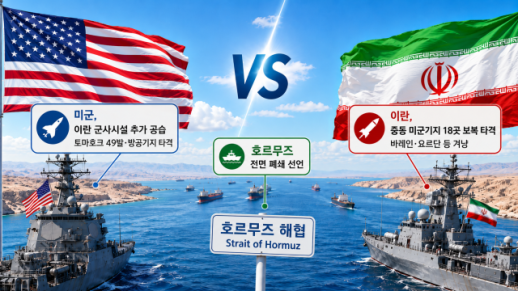 U.S.-Iran Tensions Escalate After Major Attacks in Strait of Hormuz Tensions in the Strait of Hormuz have surged as the United States and Iran engage in significant military exchanges following a ceasefire. The U.S. military has conducted airstrikes on Iranian military facilities for the second consecutive day, prompting Iran to retaliate with attacks on U.S. bases in the Middle East and declare a complete closure of the Strait. On June 10, U.S. Central Command (CENTCOM) announced that it had initiated further strikes against multiple targets in Iran, describing the actions as self-defense measures. President Donald Trump stated in a Fox News interview that U.S. forces had launched 49 Tomahawk missiles at Iranian targets. The escalation followed the crash of a U.S. Army Apache helicopter near the Strait of Hormuz on June 8, with both sides responding with attacks. Trump claimed that Iran shot down the helicopter and warned of a strong response, leading to U.S. strikes on Iranian military sites. Trump noted that some targets were located about 65 kilometers from Tehran, while others were situated along Iran's western coastline adjacent to the Persian Gulf. Iranian media reported loud explosions near the Strait and west of Tehran early on June 11. CENTCOM later confirmed that it had completed airstrikes targeting military surveillance equipment, communication systems, and air defense bases across Iran. In response, the Islamic Revolutionary Guard Corps (IRGC) claimed to have attacked 18 U.S. military bases in the region. International news outlets, including Reuters, reported that the targets included U.S. facilities in Bahrain, Kuwait, and Jordan. The IRGC stated that it struck the Al-Azraq airbase in Jordan with ballistic missiles, causing damage to U.S. fighter jets and key infrastructure. Iran also reported further attacks on the U.S. Navy's Fifth Fleet stationed in Bahrain. However, U.S. officials refuted claims of significant damage from the Iranian retaliation. Bahrain announced that it intercepted missiles launched by Iran, while Kuwait temporarily closed its airspace due to risks to civilian aviation. Alongside military retaliation, Iran declared a complete closure of the Strait of Hormuz. The Central Military Command, which oversees the Iranian military, announced a ban on all vessels, including oil tankers and cargo ships, from transiting the Strait. The command warned that any ships attempting to pass through would be fired upon. Iran's semi-official Tasnim news agency reported that fire was actually directed at two vessels that violated the transit ban. In contrast, CENTCOM stated on X that commercial vessels continued to navigate the Strait of Hormuz that night, contradicting Iran's claims of a closure. Trump indicated that airstrikes against Iran would soon cease but threatened to resume bombing the following night if Iran did not sign an agreement with the U.S. negotiating team. He claimed to have communicated directly with Iranian officials, who allegedly requested a halt to the airstrikes, but Iranian state media denied any such dialogue took place. 2026-06-11 15:09:00
 -
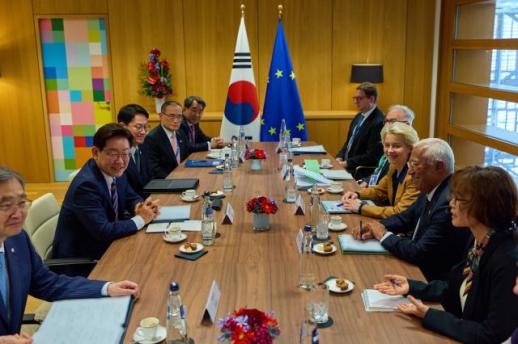 President Yoon Emphasizes Economic Cooperation with U.S. and Autonomous Defense President Yoon Suk Yeol stated on June 11 that South Korea aims to strengthen economic cooperation with the United States while enhancing its autonomous defense capabilities in the security sector.In an interview with the Italian daily 'Corriere della Sera,' Yoon criticized the so-called 'balancing approach' of cooperating with the U.S. on security while engaging economically with China, saying, "This approach has lost its validity." The interview coincided with Yoon's state visit to Italy.Yoon emphasized that expanding economic cooperation with the U.S. in technologically advanced sectors is crucial for enhancing South Korea's industrial competitiveness.Regarding China, he acknowledged it as a key trading partner and an essential player in supply chains, but noted, "It is undeniable that competition between the U.S. and China is intensifying." He attributed this to China's ongoing advancements in industrial competitiveness and high-tech capabilities.In terms of security, Yoon reaffirmed that the U.S. alliance remains a fundamental pillar of South Korea's foreign policy. However, he stressed the need to evolve this alliance in light of new realities, stating, "We must enhance our autonomous capabilities."He defined autonomous capabilities as the ability to take direct responsibility for national security without relying on allies, thereby becoming a trustworthy partner from the U.S. perspective.Yoon noted that the South Korean government is pursuing policies to regain wartime operational control over its military and increase defense investments, asserting that these align with U.S. interests.He highlighted the relationship between South Korea and Italy, stating, "South Korea will strengthen cooperation with Europe in advanced manufacturing and strategic supply chains, and Italy is an ideal partner in future industries."Yoon also addressed discussions on constitutional amendments in South Korea, reflecting on a recent state of emergency declaration that he said put the country in a crisis. He expressed gratitude that citizens managed to nullify the emergency decree but acknowledged the need for mechanisms to limit arbitrary exercises of presidential power.He concluded by stating, "We need to amend the constitution to reflect the realities of our time and establish institutional safeguards against arbitrary power, such as illegal emergency decrees."* This article has been translated by AI. 2026-06-11 15:06:00
 -
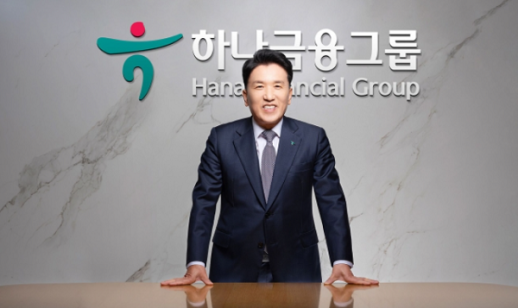 Hana Financial Group Chairman Ham Young-joo: Finance Must Be a Partner in Corporate Growth Ham Young-joo, chairman of Hana Financial Group, emphasized the need for a stronger role of private finance in linking industrial and financial policies. He stated that in the rapidly changing industrial environment, finance should evolve from merely being a provider of funds to becoming a partner in corporate growth. Speaking at the seminar titled "Financial Policy in the Era of Strategic Industrial Policy" held at the Korean Bankers Association in Jung-gu, Seoul, Ham remarked, "As uncertainties in the global supply chain increase, it has become impossible to separate industrial policy, which is directly linked to national security, from financial policy. This underscores the significant role and responsibility of private finance." He noted that the industrial ecosystem is swiftly transitioning beyond traditional core industries to technology-driven sectors such as artificial intelligence (AI), data, and energy. Ham cited the evolution of automobiles from simple transportation means to advanced electric vehicles as a prime example, stating, "In this era of transformation, finance must move beyond the narrow definition of traditional funding support." Ham also highlighted the importance of finance in supporting the entire growth process of companies. He stated, "The true role of finance is to support the entire lifecycle of a company, from its inception to growth and leap, by properly evaluating investments in research and development (R&D) and intangible technological capabilities." He argued that productive finance should not be limited to advanced industries alone. According to him, true productive finance is realized when it combines inclusive finance that encompasses not only the nurturing of future industries but also the foundational industries and small manufacturing sectors that support the economy. Ham concluded, "Hana Financial will play a leading role as a key pillar in the collaborative model connecting industrial policy, policy finance, and private finance, enabling South Korean companies to secure future technological competitiveness and lead the global technology ecosystem." He added, "The entire financial sector must break free from outdated frameworks and demonstrate greater effort and adaptability to foster innovation and the growth of future industries in South Korea."* This article has been translated by AI. 2026-06-11 15:06:00
 -
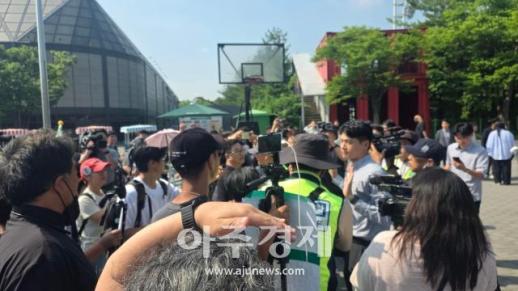 Jamsil Counting Center Blockade Enters Second Week as Sports Groups Demand Return to Work As the blockade of the Jamsil Counting Center, used during the June 3 local elections, entered its second week on June 11, sports organizations located at the site appealed for their workplaces to be returned. In response, some citizens shouted accusations of "fraudulent elections" and "re-elections." The federation struggled to read its appeal and had to relocate to conduct a press conference amid the chaos. At 8 a.m., the area in front of the Olympic Handball Stadium was relatively calm. Citizens stood in place shouting phrases like "fraudulent elections, re-elections, same-day counting, and manual counting." Volunteers distributed sunscreen and water to encourage participation. A group of young people in their 20s and 30s sat at the entrance of the handball stadium, blocking access to the counting center. Crowds began to gather around 9 a.m., 30 minutes before the federation's press conference was set to start. Hwang Kyo-ahn, leader of the Liberty and Innovation Party, visited the site, and Jeon Han-gil, a former instructor, conducted a live broadcast on YouTube with Kim Hyun-tae, a former commander of the Army Special Warfare Command's 707th Special Mission Battalion, in front of the handball stadium. Jeon referred to the Election Commission as a "criminal organization" and urged officials to make a "declaration of conscience." The federation's press conference, which began around 9:20 a.m., faced disruptions from loud protests by citizens. Employees from nine organizations, including the Korea Fencing Federation and the Korea Underwater Sports Federation, stood wearing masks and holding signs that read, "We want to return to our workplace" and "Both voting rights and the right to sports happiness are important." As the federation's secretary general announced the start of the press conference, some citizens shouted, "Take off your masks and hold the press conference!" and "We can't live without a country!" Others demanded the federation hold the press conference at the Election Commission, insisting, "Don't become a historical criminal." Despite the noise, the sports organizations continued their appeal, stating, "We want to return to our workplace," but their voices were barely audible even to reporters present. One protester unplugged the microphone amplifier prepared by the federation, further hindering communication, and the press conference ended in disarray. After the outdoor press conference, some clashes occurred. A middle-aged woman opposed to the federation's press conference chased staff, shouting, "Go to the National Assembly! I came all the way here without sleep, and what are you doing?" Another citizen criticized some media outlets, saying, "You should report the facts; if the broadcasts had been accurate, this wouldn't have happened." Some volunteers urged, "Let’s not fight; let’s just guard the entrance to the counting center," but the heightened tension persisted. The federation later conducted a press conference at a separate location. They stated that negotiations with the protesting citizens to access the stadium on June 9 and 10 had failed. A federation official explained, "We had agreed that two representatives from each organization would enter on the evening of the 9th, but we were blocked by a crowd of over 100 people. On the 10th, we attempted negotiations with police present, but again, it fell through." They also reported that their request to retrieve only essential items for banking, such as OTP devices, corporate cards, and seals, was denied. Federation representatives unanimously expressed, "We want to return to our workplace," urging the government and relevant authorities to resolve the situation swiftly. The secretary general of the Korea Fencing Federation noted, "The Asian Championships are scheduled for next week, and we need to leave on the 16th, but we can't access the necessary equipment or pay entry and accommodation fees." He added, "The Asian Games in September are also affected, as seeding depends on the Asian Championships." The secretary general of the Korea Underwater Sports Federation expressed similar concerns, stating, "The 24th World Underwater Swimming Championships will be held from June 22 to 29 at the Park Tae-hwan Literary Swimming Center in Incheon, and we need time for venue inspections and other preparations, but we can't access our office and are forced to manage everything via phone." They pointed out that the intervention of law enforcement was already overdue. Federation representatives stated, "This should have been resolved by now, but the response from law enforcement has been delayed. They have not provided adequate support even until this past Monday, and it needs to be resolved as quickly as possible." 2026-06-11 15:06:00
 -
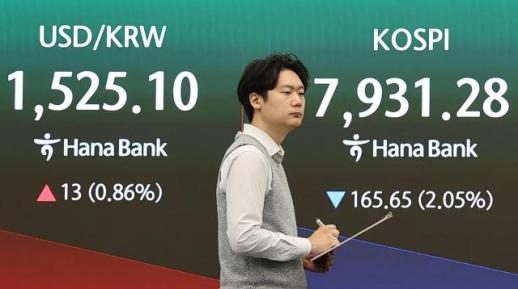 Government Addresses High Exchange Rates Impacting Livelihoods, Urges Major Exporters to Stabilize Forex Supply The South Korean government has engaged in discussions with major exporters, including Samsung Electronics and Hyundai Motor, regarding the early conversion of export payments and increasing the inflow of overseas retained earnings into the domestic market amid rising exchange rate volatility. On June 11, the Ministry of Economy and Finance and the Ministry of Trade, Industry and Energy held a meeting at the Government Seoul Office with key exporters such as Samsung Electronics, SK Hynix, Hyundai and Kia, HD Korea Shipbuilding & Offshore Engineering, Samsung Heavy Industries, and Hanwha Ocean to discuss recent foreign exchange transaction trends and measures for stabilizing the forex market. Deputy Minister of Economy and Finance Heo Chang noted that recent geopolitical risks in the Middle East and adjustments in foreign investor proportions due to a favorable domestic stock market have contributed to increased volatility in the foreign exchange market. However, he assessed that the external soundness of the South Korean economy remains robust, considering the record-high current account surplus and ample foreign currency liquidity. He cautioned, "Despite the solid performance of the real economy, prolonged high exchange rates could increase burdens on businesses and households, potentially hindering domestic recovery and impacting the livelihood economy." He urged exporters to play a role in improving forex supply and reducing volatility, and discussed measures for immediate conversion of export payments and enhancing the inflow of overseas retained earnings. Deputy Minister of Trade, Industry and Energy Moon Shin-hak emphasized the importance of proactive cooperation from companies to minimize the negative impacts of high exchange rates on exports and the economy. He added that the government will make every effort to stabilize the foreign exchange market while enhancing support for companies facing difficulties due to rising raw material prices linked to high exchange rates, including expanding import insurance and preferential loan guarantees. Attending companies expressed that excessive exchange rate volatility is increasing the burden of managing foreign exchange risks and creating management uncertainties, and they pledged to actively cooperate with the government's efforts to stabilize forex supply.* This article has been translated by AI. 2026-06-11 15:03:00
 -
 Government Collaborates with Telecom Companies to Recover Key Minerals from E-Waste The South Korean government has partnered with three major telecommunications companies—SK Telecom, KT, and LG Uplus—along with the Korea Broadcasting and Telecommunications Commission (KCA) and the Korea Environmental Corporation to promote the domestic recycling of key minerals from e-waste. On June 11, the Ministry of Science and ICT and the Ministry of Climate, Energy, and Environment announced the signing of a memorandum of understanding at the Korea Press Center aimed at facilitating the domestic circulation of critical minerals, including rare earth elements, found in discarded telecommunications equipment. The event was attended by Ryu Je-myung, the Second Vice Minister of Science and ICT, and Geum Han-seung, the First Vice Minister of Climate. According to research by KCA, approximately 13,600 tons of e-waste were generated from base stations, repeaters, and servers in 2023. These devices are estimated to contain about 180 billion won worth of key minerals, including copper and neodymium. Industry sources indicate that smartphones utilize around 80% of stable elements from the periodic table, with rare earth elements comprising about 0.15 to 0.25 grams in each device. During the signing ceremony, plans for a pilot project to establish a recycling system for e-waste were announced, along with details of a new joint initiative set to begin next year through collaboration among the Ministry of Science and ICT, the Ministry of Climate, KCA, and the Korea Environmental Corporation. Following this, feedback was gathered from the three telecom companies, leading to the signing of the memorandum. The parties involved will pursue follow-up actions, including data sharing, establishing criteria for the classification and processing of e-waste, and advancing joint projects between the Ministry of Science and ICT and the Ministry of Climate. Vice Minister Geum stated, "E-waste is a key resource that can help mitigate supply chain risks for critical minerals. Through this pilot project, we will actively gather input from stakeholders, including telecom operators and recycling companies, to continuously strengthen the domestic recycling system for e-waste." Vice Minister Ryu added, "We will continue to support the establishment of a domestic recycling system for e-waste through public-private collaboration, enhancing our resource security and promoting carbon neutrality."* This article has been translated by AI. 2026-06-11 15:03:00
 -
 Korean Ministry of Oceans and Fisheries Implements Measures to Prevent Ferry Accidents The Ministry of Oceans and Fisheries plans to install constant monitoring devices in the wheelhouses of coastal ferries and develop an AI-based navigation support system to eliminate ferry accidents. On June 11, the ministry announced its "Innovative Strategy for Preventing Ferry Accidents," aimed at establishing a safe ferry operation system that the public can trust. The strategy includes three main objectives: enhancing crew management and developing advanced navigation technology, recognizing hazardous areas on routes, and strengthening the vessel traffic service (VTS) management capabilities. According to the Korea Maritime Safety Authority, there were a total of 324 ferry accidents from 2015 to 2024. To prevent accidents, the ministry will utilize advanced navigation technology. It will prohibit the use of mobile phones during watch duty and gradually mandate the installation of closed-circuit television (CCTV) in coastal ferry wheelhouses to aid in accident prevention and cause identification. Additionally, the ministry will increase the frequency of onboard training for navigation managers from once a year to four times and promote the development of an AI-based navigation support system that can predict accident risks and provide optimal routes in real-time. AI will also be integrated into the VTS to enhance its management capabilities. This will improve the accuracy of risk alerts and allow external experts to participate in identifying improvements following maritime accidents. To enhance awareness of hazardous areas and ensure safe navigation, the ministry plans to install a 10-meter high lighthouse at accident-prone locations by the end of this year. It will also increase the number of safety facilities, such as visibility meters and CCTV, from 100 to 171 to reduce accidents caused by fog and debris. Furthermore, by 2027, the ministry will assess the safety risks of 27 major legal shipping routes and improve or establish navigation standards, including maximum speed limits. Minister of Oceans and Fisheries Hwang Jong-woo stated, "Safe ferries are the starting point for guaranteeing the public's basic rights to maritime transportation," and emphasized the commitment to collaborate with relevant agencies to ensure the effective implementation of this innovative strategy.* This article has been translated by AI. 2026-06-11 15:03:00
 -
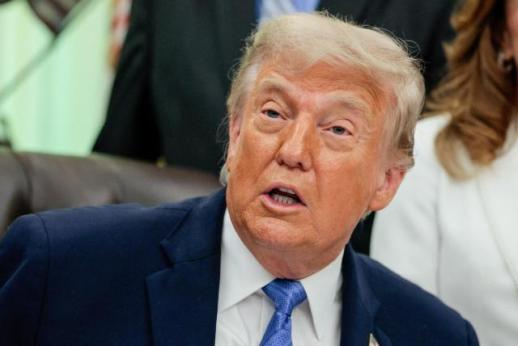 Trump Expects AI Companies to Discuss Wealth Redistribution Donald Trump, President of the United States, expressed optimism that major artificial intelligence (AI) companies will agree to discuss ways to redistribute wealth to the public. On June 10, during a meeting with reporters in the Oval Office, Trump stated, "I plan to meet soon with 12 to 15 top executives to discuss ways to give something back to the public." He added, "If that happens, the public will become very wealthy. I believe they will do it, and I think it will be very popular." Reuters interpreted Trump's remarks as suggesting that the U.S. government may seek to acquire stakes in AI companies. Earlier, OpenAI proposed the establishment of a 'public wealth fund' aimed at investing in AI companies, suggesting that the profits from this fund could be directly distributed to citizens. This discussion comes amid growing concerns in the U.S. about the impact of AI on jobs and livelihoods. A recent Reuters/Ipsos poll indicated that half of Americans fear that the spread of AI could lead to job losses for themselves or family members.* This article has been translated by AI. 2026-06-11 15:03:00
 -
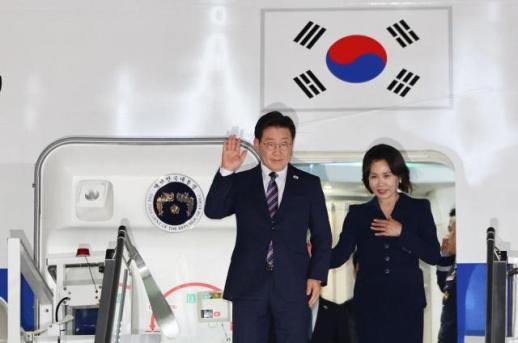 President Yoon Suk Yeol Outlines New Foreign Policy Strategy During Italy Visit President Yoon Suk Yeol has declared that the current diplomatic strategy known as "Anmi-gyeongjung"—which emphasizes security cooperation with the United States and economic ties with China—has "lost its validity." He announced plans to pursue a new foreign policy centered on national interests. In an interview with the Italian daily Corriere della Sera during his state visit to Italy, Yoon stated, "I aim to develop a new approach based on national interests," emphasizing the need to strengthen economic cooperation with the U.S. while enhancing South Korea's self-defense capabilities in the security sector. Yoon remarked, "Expanding economic cooperation with the U.S. in the most technologically advanced sectors will further strengthen our industrial competitiveness." Regarding China, he acknowledged it as a key trading partner and an important player in supply chains, but he also noted, "It is undeniable that competition between the U.S. and China is intensifying," adding that "China's industrial competitiveness and technological capabilities continue to develop." This suggests a shift towards finding a new balance in the economy, aiming to reduce unilateral dependence on specific countries and adapt to the changing international landscape focused on advanced industries. In the security domain, Yoon reaffirmed the importance of the South Korea-U.S. alliance while stressing the need to enhance self-defense capabilities. He stated, "The alliance with the U.S. remains a fundamental pillar of South Korean diplomacy," but emphasized that the alliance must evolve to meet the new realities of our time and strengthen autonomous action capabilities. He explained that self-reliance means having the ability to take direct responsibility for one's own security without relying on allies, stating, "Such a country becomes a trustworthy partner from the U.S. perspective." Yoon highlighted that the South Korean government is pursuing policies to regain wartime operational control over its military and increase defense investments, which he noted aligns with U.S. interests. On the significance of his visit to Italy, Yoon said, "South Korea will strengthen cooperation with Europe in advanced manufacturing and strategic supply chains," calling Italy an ideal partner in future industries. He added, "In the context of complex crises such as the Ukraine war and conflicts in the Middle East, dialogue between South Korea and Europe, which share the values of multilateralism, is becoming increasingly important," expressing readiness for active cooperation with Italy. Additionally, Yoon reiterated the need for constitutional reform, stating, "The declaration of a state of emergency in 2024 was an event that plunged South Korea into crisis." He acknowledged that while citizens successfully neutralized the emergency, there is a lack of institutional tools to check arbitrary exercises of presidential power. He concluded, "We need to enact a constitution that reflects reality and establish institutional mechanisms to prevent arbitrary power exercises like illegal emergencies."* This article has been translated by AI. 2026-06-11 14:57:00
 -
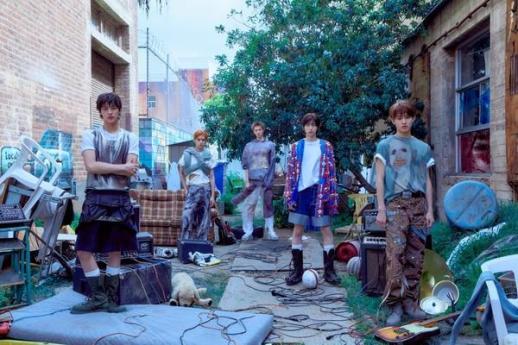 K-pop boy group CORTIS sells out North American presale for first tour SEOUL, June 11 (AJP) - Rookie K-pop boy group CORTIS has sold out all North American dates for its first tour, "PUT YOUR PHONE DOWN," during membership presales, the group's agency BigHit Music said Wednesday. CORTIS — an acronym for Color Outside the Lines — is a five-member boy group under Big Hit Music and Republic Records in the US, consisting of James, Juhoon, Martin, Seonghyeon, and Keonho debuted last year. Tickets for six North American shows, including stops in Toronto, New York, Los Angeles and San Francisco, sold out Monday, the first day of presales for fan club members. In response to demand, CORTIS added a second San Francisco show on Aug. 16. The tour will open with two shows at Inspire Arena in Incheon on July 18 and 19 before moving to North America in August. The added San Francisco date brings the tour to 14 shows across nine cities in South Korea, North America and Japan. CORTIS will also perform at Korea University's Hwajeong Gymnasium in Seoul on Aug. 22 and 23 to mark the first anniversary of its debut, before wrapping up at Pia Arena MM in Kanagawa, Japan, from Sept. 4 to 6. Ticketing for the Incheon, Seoul and Japan shows will be announced later. Separately, CORTIS is scheduled to perform at Lollapalooza Chicago from July 30 to Aug. 1. BigHit Music said the group will be the only K-pop boy group on this year's lineup. The sold-out presale comes as CORTIS continues promotions for its second EP, "GREENGREEN." The album's lead single, "REDRED," topped major Korean music charts including Melon and Bugs and has remained on Spotify's daily chart for 48 consecutive days, according to BigHit Music. The group's monthly listeners on Spotify reached a high of 12 million as of Thursday, with listeners in the United States making up the largest share. "GREENGREEN" also debuted at No. 3 on the Billboard 200 on May 23 and stayed on the chart for four consecutive weeks. CORTIS has also drawn attention for "ACAI," another track from the EP. The music video surpassed 10 million views on YouTube on Tuesday, 30 days after its release on the HYBE Labels channel. All five members took part in the song's creation, with Martin and Seonghyeon credited as producers. 2026-06-11 14:50:19