
Journalist

Andrew Urquhart
-
![[ASIA BIZ] Tensions Rise Between China and Japan Amid Diplomatic Strain](https://image.ajunews.com//content/image/2026/05/11/20260511083416371536_518_323.jpg) [[ASIA BIZ]] Tensions Rise Between China and Japan Amid Diplomatic Strain On May 3, during China's Labor Day holiday, state-run Xinhua News Agency broadcast a statement from the Chinese Foreign Ministry marking the 80th anniversary of the Tokyo Trials. While China commemorates this day as the start of the Allied prosecution of Japanese war criminals after World War II, it is unusual for the Foreign Ministry to issue a statement on the occasion. The key theme of the statement was 'new militarism,' accusing Japan's right-wing factions of using the guise of a 'peaceful nation' to bolster military capabilities and reform systems, thereby posing a regional security threat. This statement encapsulates China's gradual shift in its approach to Japan over the past six months. The situation traces back to November of last year when Japan's Prime Minister Sanae Takaichi responded to a question in the House of Representatives Budget Committee regarding Taiwan, stating that it could lead to a "crisis for Japan's existence." This implied the potential for Japan's Self-Defense Forces to exercise collective self-defense. China reacted vehemently, with Japan clarifying that it was merely a reinterpretation of existing laws and not a specific scenario. However, China remained unyielding, viewing any mention of military intervention by the Japanese Prime Minister as an infringement on what the Xi Jinping administration considers a 'core interest.' In response, China summoned the Japanese ambassador for a reprimand. The most significant impact was felt not in diplomatic circles but in the daily lives of ordinary citizens. A 23-year-old graduate student from Jiangsu Province, whose dream is to become a judge, expressed her dismay last month. She had planned to attend law classes at a university in Tokyo this spring, but the school canceled her enrollment citing "safety concerns" just a month after her acceptance. Despite her willingness to sign a waiver accepting full responsibility, the school remained firm in its decision. In China, major universities have suspended study abroad programs to Japan. A company that has facilitated Japanese study for 25 years reported sending nearly 60 students last year but only five this year. This situation is unprecedented, even more so than during the 2012 Senkaku incident when study abroad programs continued despite intense anti-Japanese protests. Economic Relations Also Cooling The landscape for tourism has also changed. While the number of foreign tourists visiting Japan reached an all-time high in March, visitors from China dropped by 55.9% compared to the previous year. One official lamented that the current situation is worse than during the politically tense Koizumi administration, stating, "Back then, while politics were frozen, the economy was thriving. Now, both politics and the economy are cooling off together." China has targeted Japan's manufacturing sector as well. In January, it tightened export regulations on dual-use items to Japan, and in February, it added 20 Japanese companies to a regulatory list. Although Chinese authorities claimed there would be no impact on civilian life, the reality was different. In March, China's exports of rare earth magnets to Japan fell to 184 tons, a decrease of 27.2% year-on-year and 17.3% from the previous month. A representative from a Japanese company in Beijing reported that customs clearance has been inexplicably delayed recently. Some major corporations are exploring alternative sourcing, but it is challenging to eliminate inexpensive Chinese products quickly. The conflict has even extended to maritime issues. On April 17, Japan's Maritime Self-Defense Force destroyer Ikazuchi passed through the Taiwan Strait for the first time in about ten months. This operation had been on hold since Takaichi's remarks about Taiwan. According to the Yomiuri Shimbun, the Japanese government decided that continuing to postpone operations out of concern for China would only encourage China's maritime expansion. China's response was immediate and intense. The military newspaper PLA Daily criticized the passage, stating it coincided with the day Taiwan was ceded to Japan under the Treaty of Shimonoseki, which "greatly hurt the feelings of the Chinese people." Two days later, on April 19, China's missile destroyer Baotou and frigate Huanggang appeared 60 kilometers southwest of Yokota Island in Kagoshima Prefecture, approaching as close as 300 kilometers to the southern tip of Kyushu. Around the same time, new structures for gas field development were detected on the Chinese side of the median line in the East China Sea. China's pressure has expanded across multiple fronts. However, the sentiment among Chinese civilians towards Japan appears largely unaffected. On May 1, Labor Day, a park in downtown Shanghai hosted an event related to the Japanese anime "Pokémon." Families were seen taking photos in front of a Pikachu model. A 35-year-old company employee participating in the event remarked, "I don't care about the deterioration of China-Japan relations. My favorite Pokémon is irreplaceable." This situation reflects a disconnect between government-imposed pressure and the remaining demand for Japanese culture among the public. This contrast illustrates the current state of affairs. Unlike the explosive anger seen during the 2012 Senkaku incident, the pressure now is a meticulously designed strategy from above. What began with a single line in the Prime Minister's parliamentary response has, six months later, shaken Japan's daily life, industry, and maritime activities simultaneously.* This article has been translated by AI. 2026-05-12 05:30:18
[[ASIA BIZ]] Tensions Rise Between China and Japan Amid Diplomatic Strain On May 3, during China's Labor Day holiday, state-run Xinhua News Agency broadcast a statement from the Chinese Foreign Ministry marking the 80th anniversary of the Tokyo Trials. While China commemorates this day as the start of the Allied prosecution of Japanese war criminals after World War II, it is unusual for the Foreign Ministry to issue a statement on the occasion. The key theme of the statement was 'new militarism,' accusing Japan's right-wing factions of using the guise of a 'peaceful nation' to bolster military capabilities and reform systems, thereby posing a regional security threat. This statement encapsulates China's gradual shift in its approach to Japan over the past six months. The situation traces back to November of last year when Japan's Prime Minister Sanae Takaichi responded to a question in the House of Representatives Budget Committee regarding Taiwan, stating that it could lead to a "crisis for Japan's existence." This implied the potential for Japan's Self-Defense Forces to exercise collective self-defense. China reacted vehemently, with Japan clarifying that it was merely a reinterpretation of existing laws and not a specific scenario. However, China remained unyielding, viewing any mention of military intervention by the Japanese Prime Minister as an infringement on what the Xi Jinping administration considers a 'core interest.' In response, China summoned the Japanese ambassador for a reprimand. The most significant impact was felt not in diplomatic circles but in the daily lives of ordinary citizens. A 23-year-old graduate student from Jiangsu Province, whose dream is to become a judge, expressed her dismay last month. She had planned to attend law classes at a university in Tokyo this spring, but the school canceled her enrollment citing "safety concerns" just a month after her acceptance. Despite her willingness to sign a waiver accepting full responsibility, the school remained firm in its decision. In China, major universities have suspended study abroad programs to Japan. A company that has facilitated Japanese study for 25 years reported sending nearly 60 students last year but only five this year. This situation is unprecedented, even more so than during the 2012 Senkaku incident when study abroad programs continued despite intense anti-Japanese protests. Economic Relations Also Cooling The landscape for tourism has also changed. While the number of foreign tourists visiting Japan reached an all-time high in March, visitors from China dropped by 55.9% compared to the previous year. One official lamented that the current situation is worse than during the politically tense Koizumi administration, stating, "Back then, while politics were frozen, the economy was thriving. Now, both politics and the economy are cooling off together." China has targeted Japan's manufacturing sector as well. In January, it tightened export regulations on dual-use items to Japan, and in February, it added 20 Japanese companies to a regulatory list. Although Chinese authorities claimed there would be no impact on civilian life, the reality was different. In March, China's exports of rare earth magnets to Japan fell to 184 tons, a decrease of 27.2% year-on-year and 17.3% from the previous month. A representative from a Japanese company in Beijing reported that customs clearance has been inexplicably delayed recently. Some major corporations are exploring alternative sourcing, but it is challenging to eliminate inexpensive Chinese products quickly. The conflict has even extended to maritime issues. On April 17, Japan's Maritime Self-Defense Force destroyer Ikazuchi passed through the Taiwan Strait for the first time in about ten months. This operation had been on hold since Takaichi's remarks about Taiwan. According to the Yomiuri Shimbun, the Japanese government decided that continuing to postpone operations out of concern for China would only encourage China's maritime expansion. China's response was immediate and intense. The military newspaper PLA Daily criticized the passage, stating it coincided with the day Taiwan was ceded to Japan under the Treaty of Shimonoseki, which "greatly hurt the feelings of the Chinese people." Two days later, on April 19, China's missile destroyer Baotou and frigate Huanggang appeared 60 kilometers southwest of Yokota Island in Kagoshima Prefecture, approaching as close as 300 kilometers to the southern tip of Kyushu. Around the same time, new structures for gas field development were detected on the Chinese side of the median line in the East China Sea. China's pressure has expanded across multiple fronts. However, the sentiment among Chinese civilians towards Japan appears largely unaffected. On May 1, Labor Day, a park in downtown Shanghai hosted an event related to the Japanese anime "Pokémon." Families were seen taking photos in front of a Pikachu model. A 35-year-old company employee participating in the event remarked, "I don't care about the deterioration of China-Japan relations. My favorite Pokémon is irreplaceable." This situation reflects a disconnect between government-imposed pressure and the remaining demand for Japanese culture among the public. This contrast illustrates the current state of affairs. Unlike the explosive anger seen during the 2012 Senkaku incident, the pressure now is a meticulously designed strategy from above. What began with a single line in the Prime Minister's parliamentary response has, six months later, shaken Japan's daily life, industry, and maritime activities simultaneously.* This article has been translated by AI. 2026-05-12 05:30:18 -
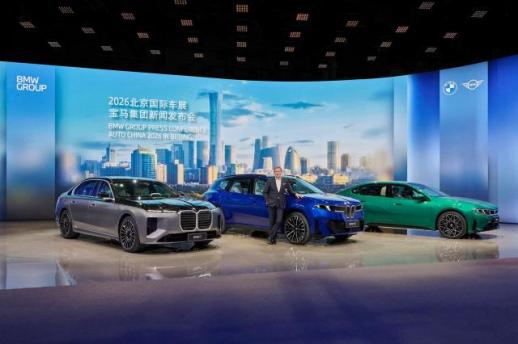 Global Automakers Intensify Localization Efforts in China As Chinese automotive companies expand into overseas markets, global automakers are intensifying their efforts to penetrate the Chinese market. With China emerging as the world's largest automotive market and a key testing ground for the global auto industry, international companies are focusing on models tailored specifically for Chinese consumers and applying local technologies. Notably, the average age of new car buyers in China is decreasing, leading to a growing preference for vehicles with sleek designs and advanced digital features. According to the "2025 Automotive Industry White Paper" released by Chinese video platform Bilibili in collaboration with market research firm CTR, the average age of new car buyers in China is 30.5 years, significantly younger than the average of about 50 years in Europe and the United States. François Roudié, Secretary General of the International Organization of Motor Vehicle Manufacturers (IOM), stated to Reuters, "The younger average age of car buyers in China has a significant impact on vehicle design and option selection compared to Europe and the U.S." Alfonso Albaisa, Senior Vice President of Global Design at Nissan, noted, "The Chinese market is quite experimental in terms of color and material expression." Last year, Nissan launched the China-exclusive electric vehicle 'N7,' which became popular, particularly for its interior options in shades of pink and lavender that are less favored in other regions. The emphasis on advanced technology and in-car software experiences among Chinese consumers is also influencing global companies' strategic shifts. Features such as Chinese voice AI assistants, advanced driver-assistance systems (ADAS), and in-car karaoke have become essential specifications. This trend was evident at this year's Beijing Motor Show, where BMW unveiled 16 new models, many of which were designed specifically for the Chinese market. Mercedes-Benz announced plans to enhance local technology development and collaboration with major Chinese tech companies from its Shanghai research and development center. Volkswagen, promoting its 'In China, For China' strategy, showcased models built on a China-exclusive electric vehicle platform with local driving assistance systems. The company plans to launch over 20 new energy vehicles in China by 2026 and expand that number to about 50 by 2030. South Korea's Hyundai also officially announced its entry into the Chinese market with its electric vehicle brand Ioniq, unveiling two electric concept cars for the first time globally, signaling its commitment to the Chinese electric vehicle market.* This article has been translated by AI. 2026-05-12 05:28:06
 -
![[ASIA BIZ] Geely and BYD Target Global Aging Car Factories for Acquisition](https://image.ajunews.com//content/image/2026/05/08/20260508165458222208_518_323.png) [[ASIA BIZ]] Geely and BYD Target Global Aging Car Factories for Acquisition Chinese automaker Geely is reportedly in talks to acquire the third body assembly line at Ford's Valencia plant in Spain, according to local media. This line previously produced models such as the Ford Mondeo and S-Max but has been inactive since those models were discontinued. Geely plans to renovate the line for the production of small electric vehicles (EVs) and hybrids specifically for the European market. Recent reports from Chinese economic media outlet, The Economic Observer, indicate that Chinese automakers are expanding their global production bases by acquiring aging overseas factories at low prices. As traditional automakers streamline production in response to the shift toward electric vehicles, they are selling off internal combustion engine production facilities, creating opportunities for Chinese companies to accelerate their localization strategies. Chinese Capital Acquires Ford, Mercedes-Benz, and Nissan Factories Chinese investments are rapidly filling the void left by Western and Japanese automakers in regions such as South America, Africa, and Southeast Asia. A notable example is Chery Automobile's push to acquire Nissan's factory in South Africa. The company has reportedly agreed to purchase the Nissan plant located in the Rosslyn area, which has been a key production site in South Africa for over 60 years, producing 45,000 pickup trucks annually. In Brazil, the largest automotive market in South America, Chinese companies continue to make inroads. Great Wall Motors (GWM) acquired a former Mercedes-Benz factory and began production of 30,000 vehicles annually in August of last year. BYD also acquired a closed Ford factory in Bahia, Brazil, in March 2024 and started electric vehicle assembly in October. These moves come as intense price competition and oversupply in the Chinese automotive market have led to declining profitability, prompting companies to look abroad. BYD, a leader in the electric vehicle sector, reported a 50% drop in net profit for the first quarter compared to the same period last year, indicating a prolonged slowdown. In response, BYD is aggressively targeting international markets, with overseas sales accounting for 46% of its total sales. The company has set an ambitious overseas sales target of 1.5 million units this year, a 40% increase from the previous year. Chinese Automakers Shift Focus from Exports to Local Production Chinese automakers are increasingly recognizing the necessity of establishing local production systems abroad rather than relying solely on exports. With the European Union, the United States, Canada, and Brazil imposing higher tariffs to limit the influx of Chinese electric vehicles, companies are moving to circumvent these barriers through local production. According to the Rhodium Group, a U.S. market research firm, the scale of overseas investments by Chinese electric vehicle manufacturers surpassed domestic investments for the first time last year. Acquiring existing idle factories is viewed as a more efficient approach in terms of time and cost compared to building new plants. While new factory construction typically takes 3 to 5 years, existing factories can be renovated and operational within about a year after acquisition. Chui Dongxu, secretary-general of the China Passenger Car Association (CPCA), noted, "The global strategies of Chinese automakers show a similar trend to the globalization process of the Japanese automotive industry in the past." Initially focused on exporting vehicles for the domestic market, the strategy has evolved to include sending parts for local assembly (KD production) and ultimately establishing local production systems. Aiming for a 'Yaris Moment' in the European Hatchback Market To penetrate global markets, Chinese automakers are accelerating the development of models tailored to regional consumer preferences. This strategy recalls Toyota's successful approach in Europe with its small hatchback, the Yaris, which capitalized on local tastes. Pedro Pacheco, an analyst at Gartner, stated through Reuters, "Chinese automakers are striving to replicate the 'Yaris Moment.'" Hongqi, a brand under the state-owned automaker FAW Group and known for its ceremonial vehicles for President Xi Jinping, unveiled a small global SUV aimed at the European market at the recent Beijing Motor Show. Additionally, companies like BYD, Chery, Great Wall, SAIC, and Hongqi are developing models ranging from small hatchbacks for Europe to pickup trucks for markets in Australia and Mexico. While hatchbacks are in low demand in China, they are highly sought after in Europe, where practicality and narrow road conditions drive their popularity. In some regions of Southern Europe, hatchbacks account for over 40% of new car sales, showing robust growth. BYD plans to launch its specially designed 'Dolphin G' hatchback model for the European market in June. Chery's new global brand, Rephas, is also developing a hatchback model aimed at Europe, while SAIC's brand MG is expected to release the MG2 hatchback model in Europe. 2026-05-12 05:25:28
[[ASIA BIZ]] Geely and BYD Target Global Aging Car Factories for Acquisition Chinese automaker Geely is reportedly in talks to acquire the third body assembly line at Ford's Valencia plant in Spain, according to local media. This line previously produced models such as the Ford Mondeo and S-Max but has been inactive since those models were discontinued. Geely plans to renovate the line for the production of small electric vehicles (EVs) and hybrids specifically for the European market. Recent reports from Chinese economic media outlet, The Economic Observer, indicate that Chinese automakers are expanding their global production bases by acquiring aging overseas factories at low prices. As traditional automakers streamline production in response to the shift toward electric vehicles, they are selling off internal combustion engine production facilities, creating opportunities for Chinese companies to accelerate their localization strategies. Chinese Capital Acquires Ford, Mercedes-Benz, and Nissan Factories Chinese investments are rapidly filling the void left by Western and Japanese automakers in regions such as South America, Africa, and Southeast Asia. A notable example is Chery Automobile's push to acquire Nissan's factory in South Africa. The company has reportedly agreed to purchase the Nissan plant located in the Rosslyn area, which has been a key production site in South Africa for over 60 years, producing 45,000 pickup trucks annually. In Brazil, the largest automotive market in South America, Chinese companies continue to make inroads. Great Wall Motors (GWM) acquired a former Mercedes-Benz factory and began production of 30,000 vehicles annually in August of last year. BYD also acquired a closed Ford factory in Bahia, Brazil, in March 2024 and started electric vehicle assembly in October. These moves come as intense price competition and oversupply in the Chinese automotive market have led to declining profitability, prompting companies to look abroad. BYD, a leader in the electric vehicle sector, reported a 50% drop in net profit for the first quarter compared to the same period last year, indicating a prolonged slowdown. In response, BYD is aggressively targeting international markets, with overseas sales accounting for 46% of its total sales. The company has set an ambitious overseas sales target of 1.5 million units this year, a 40% increase from the previous year. Chinese Automakers Shift Focus from Exports to Local Production Chinese automakers are increasingly recognizing the necessity of establishing local production systems abroad rather than relying solely on exports. With the European Union, the United States, Canada, and Brazil imposing higher tariffs to limit the influx of Chinese electric vehicles, companies are moving to circumvent these barriers through local production. According to the Rhodium Group, a U.S. market research firm, the scale of overseas investments by Chinese electric vehicle manufacturers surpassed domestic investments for the first time last year. Acquiring existing idle factories is viewed as a more efficient approach in terms of time and cost compared to building new plants. While new factory construction typically takes 3 to 5 years, existing factories can be renovated and operational within about a year after acquisition. Chui Dongxu, secretary-general of the China Passenger Car Association (CPCA), noted, "The global strategies of Chinese automakers show a similar trend to the globalization process of the Japanese automotive industry in the past." Initially focused on exporting vehicles for the domestic market, the strategy has evolved to include sending parts for local assembly (KD production) and ultimately establishing local production systems. Aiming for a 'Yaris Moment' in the European Hatchback Market To penetrate global markets, Chinese automakers are accelerating the development of models tailored to regional consumer preferences. This strategy recalls Toyota's successful approach in Europe with its small hatchback, the Yaris, which capitalized on local tastes. Pedro Pacheco, an analyst at Gartner, stated through Reuters, "Chinese automakers are striving to replicate the 'Yaris Moment.'" Hongqi, a brand under the state-owned automaker FAW Group and known for its ceremonial vehicles for President Xi Jinping, unveiled a small global SUV aimed at the European market at the recent Beijing Motor Show. Additionally, companies like BYD, Chery, Great Wall, SAIC, and Hongqi are developing models ranging from small hatchbacks for Europe to pickup trucks for markets in Australia and Mexico. While hatchbacks are in low demand in China, they are highly sought after in Europe, where practicality and narrow road conditions drive their popularity. In some regions of Southern Europe, hatchbacks account for over 40% of new car sales, showing robust growth. BYD plans to launch its specially designed 'Dolphin G' hatchback model for the European market in June. Chery's new global brand, Rephas, is also developing a hatchback model aimed at Europe, while SAIC's brand MG is expected to release the MG2 hatchback model in Europe. 2026-05-12 05:25:28 -
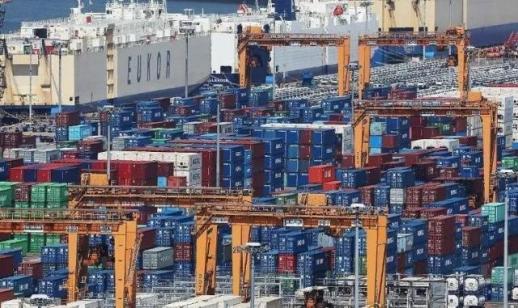 Korean Tire Companies Face EU Anti-Dumping Duties Amid Rising Costs Domestic tire manufacturers have reported solid first-quarter results despite rising global raw material costs. The increase in sales of high-inch tires has been driven by a surge in global demand for electric vehicles and sports utility vehicles (SUVs). However, the European Union's announcement of anti-dumping duties on Chinese tires could lead to increased volatility in second-quarter results. According to industry sources on May 11, the three major South Korean tire companies—Hankook Tire & Technology, Kumho Tire, and Nexen Tire—saw improvements in their financial performance for the first quarter. Hankook Tire's operating profit in its tire division reached 437.5 billion won, a 31.1% increase compared to the same period last year. Kumho Tire and Nexen Tire reported operating profits of 147 billion won and 54.2 billion won, respectively, marking increases of 0.3% and 33.1% year-on-year. The three tire manufacturers achieved relatively stable results, bolstered by increased sales of electric, high-inch, and replacement tires. Analysts attribute this improvement to a strategy focused on expanding premium product sales amid a market shift toward SUVs and electric vehicles. In fact, for the first quarter, the sales proportion of high-inch tires (18 inches and above) was 49.1% for Hankook Tire, 45.1% for Kumho Tire, and 40% for Nexen Tire. Despite the first-quarter gains, trade risks for the tire companies are escalating. The EU recently announced it would impose anti-dumping duties of up to 50% on passenger and light truck tires produced in China, effective June 16. Kumho Tire and Nexen Tire have been notified of anti-dumping duty rates of 29.9%. When combined with the existing EU import duty of 4.5%, the actual burden could reach as high as 34.4%. In contrast, Hankook Tire will face a relatively lower anti-dumping duty rate of 3.4%, resulting in a total tariff of 7.9%. Kumho Tire and Nexen Tire plan to seek a reduction in their duty rates through appeals before the tariffs take effect. An industry insider noted, "The remaining companies, excluding Hankook Tire, have been subjected to an average duty rate. We are exploring ways to mitigate tariff impacts, including increasing local production and filing appeals." Approximately 40% of the total sales for the three domestic tire companies come from the European market. Notably, about 50% of Kumho Tire's sales in Europe are produced locally in China, while Nexen Tire sources around 15% of its European tires from China. In addition to the anti-dumping duties, raw material prices for tires in China are also on the rise. According to data from the Chinese raw materials data firm Sunsear, the price of styrene-butadiene rubber reached 16,041 yuan per ton as of May 10, up 22.2% from 13,125 yuan on March 9. As a result, the three domestic tire manufacturers are considering strategies to gradually increase their domestic and European production volumes while boosting the export share of their domestic output. Industry analysts predict that the combination of tariff burdens and rising costs could lead to greater variability in corporate performance in the second quarter. According to financial information provider FnGuide, Kumho Tire's second-quarter operating profit consensus is projected at 145.6 billion won, a 16.9% decrease from 175.2 billion won in the same period last year. Conversely, Hankook Tire's operating profit is expected to rise to 549.3 billion won, a 58.5% increase year-on-year, while Nexen Tire's operating profit is projected to reach 48.3 billion won, an approximate 13% increase. 2026-05-12 05:23:19
 -
 Top Five Banks Increase Self-Rescue Efforts by 3.5 Times Amid Praise from President Lee President Lee praises financial commission's inclusive finance achievements President Lee Jae-myung publicly commended the financial commission's achievements in inclusive finance as "remarkable" during a cabinet meeting. This praise follows a shift in how banks manage delinquent loans, moving away from selling them to external collection agencies and instead focusing on internal debt restructuring and loan forgiveness to support borrowers' recovery. According to documents obtained by Aju Economy, self-managed debt restructuring by the five major banks (KB Kookmin, Shinhan, Hana, Woori, and NH Nonghyup) increased from 989 cases in the first quarter of 2025 to 3,456 cases in the fourth quarter of the same year, a rise of approximately 3.5 times. In contrast, the sale of delinquent loans plummeted from 35,000 cases in 2025 to just 11 cases in the first quarter of 2026. The financial commission views this as a transition from a focus on maximizing recoveries to one centered on recovery and coexistence. Historically, the financial sector has typically sold long-term delinquent loans to external collection agencies. While this allowed financial institutions to remove bad debts from their books, it often left borrowers facing prolonged collection pressures. Blue House condemns attack on Namwoo ship, identifies perpetrators "Our government firmly believes that attacks on private vessels like the Namwoo cannot be justified or tolerated," said a Blue House official. The government is taking a cautious approach regarding the identity of the attackers. National Security Office Director Wi Seong-rak made these remarks during a press briefing, stating, "We strongly condemn this attack." He added that while it is clear that attacks on commercial vessels warrant condemnation, the government is not currently identifying the perpetrators and is in the process of gathering information. On May 4, an explosion and fire occurred on the South Korean cargo ship HMM Namwoo, which was anchored in the Strait of Hormuz. Wi noted that two unidentified flying objects struck the ship's stern at one-minute intervals, causing flames and smoke. He explained that given the damage pattern and the height of the damage above sea level, the likelihood of a mine or torpedo attack appears low. Growing financial support for vulnerable borrowers raises concerns As inclusive finance expands within the banking sector, the scale of support for vulnerable borrowers is increasing. However, this growth also raises concerns about the financial burden on institutions. While there is consensus on the need to support vulnerable groups, there are fears that the performance metrics for inclusive finance may become a new standard for supervision and evaluation. On May 11, President Lee Jae-myung asked Financial Services Commission Chairman Lee Ok-keun during a cabinet meeting if there were ways to evaluate the implementation of inclusive finance and provide benefits or penalties, suggesting that the current system relies heavily on the goodwill of financial institutions. This comment hints at the possibility of incorporating the performance of inclusive finance for low-to-middle credit borrowers into the evaluation and management guidelines for financial institutions, which has been interpreted as a signal that it could go beyond mere recommendations and influence future supervisory and evaluation frameworks. Banks are already investing significant resources to expand support for vulnerable borrowers. The scale of long-term delinquent loan forgiveness and policy-driven financial support is also on the rise. This year, the total amount of long-term uncollected special bonds scheduled for forgiveness is estimated at 335.1 billion won, with Shinhan Bank accounting for the largest share at 269.4 billion won, followed by KB Kookmin Bank (33.5 billion won) and Woori Bank (32.2 billion won). Kakao shareholders frustrated over union bonus demands amid stock decline The Kakao union, which recently reported record earnings, is set to demand performance bonuses and may take collective action. This comes amid rising tensions following the Samsung Electronics union's call for a 10% performance bonus based on operating profit. However, unlike Samsung Electronics, which has seen its stock price reach all-time highs, Kakao's stock has been struggling, raising concerns that the company is prioritizing compensation demands over enhancing corporate value. On May 11, the KOSPI index surpassed 7,800, approaching the 8,000 mark, while Kakao's stock price has been moving between a high of 50,600 won and a low of 45,250 won. Despite reporting record earnings in the first quarter, Kakao's stock price fell on the same day. The ongoing decline in Kakao's stock price is attributed to uncertainties regarding its future growth potential. Although the company achieved record earnings in the first quarter, this improvement was largely due to restructuring effects rather than growth in its core business. The exclusion of Kakao Games and Kakao Healthcare from consolidated results has also contributed to the improved profit structure. Despite the performance improvement, concerns about slowing growth, uncertainties surrounding its artificial intelligence strategy, and underperformance in its content business continue to dampen market expectations.* This article has been translated by AI. 2026-05-12 05:20:45
 -
 Kakao Shareholders Upset Over Union Bonus Demands Amid Stock Struggles Kakao's union is set to demand bonuses as it prepares for collective action, following Samsung Electronics' union's call for a 10% bonus based on operating profit. This has intensified labor-management tensions in the industry. Unlike Samsung, which has seen its stock price reach record highs, Kakao's shares have plummeted to near yearly lows, raising concerns that the company is prioritizing bonus demands over enhancing corporate value. On May 11, the KOSPI index surpassed 7,800, approaching 8,000, while Kakao's stock price has been stagnant, causing distress among shareholders. Over the past month, the KOSPI surged nearly 30%, yet Kakao's shares fluctuated between a closing high of 50,600 won and a low of 45,250 won. Even on the day Kakao reported its highest-ever quarterly results, its stock price fell. The decline in Kakao's stock is attributed to uncertainties surrounding its future growth potential. Although the company achieved record quarterly results, the improvement in profitability was largely due to restructuring effects rather than organic growth. Excluding contributions from subsidiaries like Kakao Games and Kakao Healthcare has also altered its profit structure. Despite the record performance, concerns about slowing growth, uncertainties in its AI strategy, and underperformance in its content business have kept market expectations low. In this context, the Kakao union argues that the company’s record performance warrants corresponding compensation and is moving forward with collective action. The Crew Union of the National Chemical Fiber Food Industry Labor Union plans to hold a rally on May 20 at Pangyo Station in Seongnam, Gyeonggi Province. The union will begin accepting participant registrations on that day or the following day. This rally is intended to mobilize members and raise public awareness if negotiations with management do not proceed smoothly. Earlier, on May 7, the Kakao union declared a breakdown in wage and collective bargaining negotiations with management and submitted a mediation request to the Gyeonggi Regional Labor Relations Commission. This year's negotiations involve five subsidiaries, including Kakao, Kakao Pay, Kakao Entertainment, DK Tech, and XL Games. The union maintains that given Kakao's record performance, appropriate compensation is necessary. However, it is reported that they are not demanding a specific percentage of operating profit like Samsung's union. Internally, there is a recognition that many subsidiaries are still operating at a loss, making it challenging to demand uniform bonuses tied to operating profit. In shareholder communities and on Naver's stock discussion forums, reactions have emerged regarding the ongoing discussions about bonuses while the stock price remains low. Critics argue that internal compensation issues are being prioritized over restoring corporate value and returning profits to shareholders. Some investors have expressed frustration, stating, "Samsung Electronics, despite its bonus discussions, has seen its stock price rise, while Kakao's union is only focused on bonuses without any stock rebound," and others have commented that "restoring corporate value should take precedence over bonuses." Additionally, some investors have noted, "There seems to be no clear growth drivers since the appointment of CEO Jeong Shin-ah," and have suggested that unless a new major service akin to KakaoTalk emerges, the potential for stock price increases may be limited. Industry observers believe that the ongoing labor disputes at Kakao could influence wage negotiations across the broader IT sector, particularly in the platform and gaming industries, where demands for enhanced performance-based compensation may gain traction. However, with ongoing stock price declines and slowing growth, finding a balance between employee compensation and shareholder value remains a critical challenge for companies.* This article has been translated by AI. 2026-05-12 05:18:30
 -
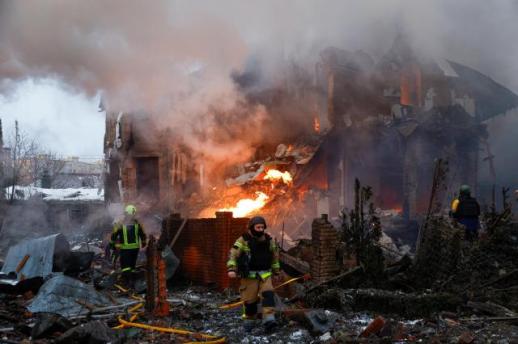 Russia and Ukraine Accuse Each Other of Ceasefire Violations, Peace Talks Stalled Russia and Ukraine are engaged in a heated exchange of accusations over ceasefire violations during a truce brokered by U.S. President Donald Trump. According to Yonhap News Agency, the Russian Defense Ministry reported on May 11 that since the ceasefire began at midnight on May 9, there have been a total of 23,802 recorded violations by Ukrainian forces within the designated "special military operation" zone. In just one day, the Ukrainian military allegedly fired 767 rounds using multiple rocket launch systems, artillery, and mortars in 12 separate incidents targeting Russian positions. Additionally, the Russian Defense Ministry claimed there were 6,905 drone strikes conducted by Ukrainian forces. The ministry also reported that 18 drones targeted civilian areas in the Belgorod region, which borders Ukraine, resulting in injuries to two residents. In response to these attacks, the Russian military stated it struck multiple rocket launch positions, artillery, and mortar sites, as well as command posts and drone launchers. Conversely, Ukraine accused Russia of continuing its assaults with kamikaze drones at the front lines. In a speech the previous evening, Ukrainian President Volodymyr Zelensky stated, "The Russian military has not adhered to any ceasefire at the front and has made no effort to do so." Zelensky noted that while there had been no large-scale drone or missile attacks targeting rear urban areas in the past day, Russian forces launched over 150 attacks at the front lines. He specifically mentioned that nearly 10,000 of these involved kamikaze drone strikes, along with more than 100 artillery shellings. "All Ukrainian units will respond in kind to Russia," Zelensky declared. Both sides had agreed to a three-day ceasefire from May 9 to May 11 to coincide with Russia's Victory Day celebrations marking the end of World War II. U.S.-mediated peace negotiations between the two nations have effectively stalled due to the ongoing situation in the Middle East. On May 8, U.S. Secretary of State Marco Rubio stated that while he is prepared to play a mediating role regarding the Russia-Ukraine war, he does not want to waste time if no progress is being made.* This article has been translated by AI. 2026-05-12 05:13:01
 -
 Coupang Files Lawsuit Against Fair Trade Commission Over Designation of Founder Kim Beom-seok Coupang has filed a lawsuit against the Fair Trade Commission (FTC) seeking to overturn its decision to designate founder Kim Beom-seok as the company's individual representative. According to Yonhap News on May 11, Coupang submitted the lawsuit to the Seoul High Court on May 8, contesting the FTC's designation. The company also filed for a suspension of the enforcement of this designation on May 9. On April 29, the FTC changed the designation of Coupang's representative from the corporation to the individual, Kim Beom-seok. This marks the first time since Coupang was classified as a corporate group with total assets exceeding 5 trillion won in 2021 that the FTC has altered its designation. The FTC determined that Kim's brother, Kim Yoo-seok, is effectively involved in Coupang's management, which led to the conclusion that the criteria for designating an individual representative instead of a corporation had been met. Under the Fair Trade Act, if an individual is designated as the representative, the corporate group must disclose additional information about stock ownership and transaction history of relatives, and the scope of regulations on profit-sharing is also expanded. Previously, Coupang responded to the FTC's announcement by stating, "Neither Kim nor his relatives hold shares in Korean affiliates, so there is no concern for profit-sharing issues," and indicated plans to pursue administrative litigation.* This article has been translated by AI. 2026-05-12 05:11:21
 -
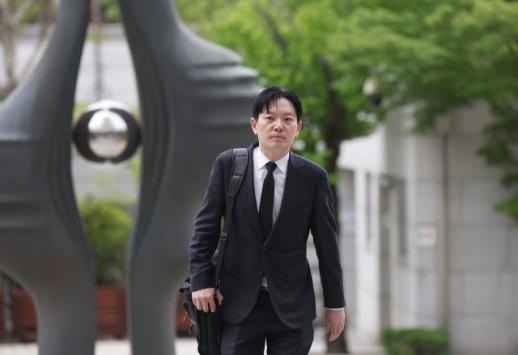 Prosecutor Park Sang-yong Appears Before Disciplinary Committee Over Salmon Party Allegations Prosecutor Park Sang-yong of the Incheon District Prosecutors' Office appeared before the Supreme Prosecutors' Office's disciplinary committee to address allegations of testimony coercion related to the 'salmon party' incident. He stated, "I provided a thorough explanation regarding the inaccuracies." The disciplinary committee convened on the afternoon of May 11 to deliberate on potential disciplinary actions against Park. The allegations under review include: the importation of alcohol into the investigation room, a recorded phone conversation disclosed by attorney Seo Min-seok, repeated summons, incomplete documentation, and consumption of outside food. According to Yonhap News, Park requested the opportunity to explain himself and waited for about three hours in the Supreme Prosecutors' Office's reception area before being allowed to present his case around 5 p.m. After concluding his explanation at approximately 6:17 p.m., he remarked, "I provided a thorough explanation regarding the inaccuracies. I feel grateful to the committee members for giving me this opportunity, and I believe I should repay this kindness by living faithfully, regardless of the conclusion they reach." Earlier, Park had expressed to reporters, "I have not been informed at all about the nature or number of the allegations against me. I wish to have the opportunity to explain myself to the external committee members as if I were knocking on the door of a public complaint office." He added, "Even regarding the salmon party, the correctional officers nearby were unaware of it, and if such an event did not occur, how could it be considered true? It is unprecedented in the history of the prosecution to impose disciplinary action based on the results of a lie detector test, which lacks evidentiary value, and it does not align with legal principles or reality." Park also stated, "If a disciplinary decision is ultimately made and I cannot accept it, I plan to file a lawsuit for cancellation." Park is under scrutiny for allegedly attempting to extract testimony from suspects, including former Gyeonggi Province Peace Vice Governor Lee Hwa-young and former Ssangbangwool Chairman Kim Seong-tae, by providing them with salmon and alcohol during the investigation into the Ssangbangwool North Korea remittance case on May 17, 2023. The Seoul High Prosecutors' Office's Human Rights Violation Task Force, which has been investigating the allegations, concluded that a drinking event did occur and reported this to the Supreme Prosecutors' Office. During a National Assembly investigation, Kim denied drinking alcohol, while a former Ssangbangwool director, identified as Park, claimed he purchased alcohol for personal consumption and drank it in his car. However, it has been reported that evidence, including corporate credit card records showing the purchase of soju at a nearby convenience store and the lie detector test results indicating truthful responses from Lee, were used as grounds for the allegations. The disciplinary committee's decision regarding Park's potential punishment will be advisory, and the Prosecutor General is not obligated to follow it. Nonetheless, the Prosecutor General has typically respected the committee's recommendations in determining disciplinary measures. Disciplinary actions against prosecutors can range from reprimands to suspension, dismissal, or removal from office, with the execution of penalties, excluding the mildest reprimand, requiring the Minister of Justice's recommendation and the President's approval. If a judge or prosecutor is dismissed as a disciplinary measure, they cannot practice law for three years.* This article has been translated by AI. 2026-05-12 05:08:56
 -
 Search Continues for Missing 11-Year-Old in Juwangsan National Park Search authorities are continuing their nighttime efforts to locate an 11-year-old boy, A, who went missing in Juwangsan National Park in Cheongsong County, North Gyeongsang Province. On May 11, officials from the North Gyeongsang Provincial Police Agency, the North Gyeongsang Fire Department, and the Korea National Park Service reported that they would deploy equipment and personnel for nighttime searches. Considering the weather conditions, the search will involve 80 personnel, including 40 police officers, 28 firefighters, and 12 national park staff, along with five drones equipped with thermal imaging cameras. The search teams plan to focus their efforts along the hiking trail from Giam Bridge, where A was last seen by his parents, to the summit, which stands at an elevation of 720.6 meters. The distance between Giam Bridge and the summit is approximately 2.3 kilometers. A police official stated, "The five drones will be operated until the rain begins, and the timing for concluding the search will be determined based on the situation on the ground." Earlier that day, authorities had already deployed a helicopter, two drones, and around 90 personnel in their search for A. Police reviewed closed-circuit television footage within the national park and found no indications that A's disappearance was related to any criminal activity. A, who lives in Daegu, had visited a temple in Juwangsan National Park with his parents the previous day. Around noon, he told them he would "just go up the mountain for a bit" and then disappeared. When A did not return, his parents reported him missing to emergency services at 5:53 PM that same day. A is described as approximately 145 centimeters tall and slender, wearing a Samsung Lions uniform and cap at the time of his disappearance. He did not have a mobile phone with him. In a phone call with Yonhap News Agency, A's father shared, "There is a short path from the temple to the mountain, and we were together until that point. That was the last time I saw him."* This article has been translated by AI. 2026-05-12 05:06:21