


Latest by
-
 Editorial: AI wealth dividend debate is one Korea cannot ignore Artificial intelligence is already creating a new global order of wealth. The rise of AI has propelled figures such as OpenAI CEO Sam Altman, Nvidia CEO Jensen Huang and Anthropic CEO Dario Amodei into the center of global capital markets. Companies that dominate AI chips, frontier models, cloud infrastructure and data centers are accumulating value at a pace rarely seen in modern economic history. The question is whether that wealth will ultimately benefit society as a whole. That is why a growing debate in the United States deserves close attention in Korea. U.S. President Donald Trump has expressed openness to proposals under which AI companies would voluntarily contribute equity to public wealth funds whose returns could be distributed to citizens. Altman has long advocated versions of a universal capital account that would allow the public to share in the gains of technological progress. Sen. Bernie Sanders has gone even further, suggesting a one-time 50 percent stock levy on major AI companies so that ownership could be distributed directly to Americans. Behind these proposals lies a reality that is becoming increasingly difficult to ignore. AI may raise returns on capital far faster than returns on labor. If advanced AI systems eventually replace a significant portion of human work, wealth will naturally become concentrated among those who own the machines, the models and the infrastructure. In that scenario, giving citizens a stake in AI-generated wealth is not merely a populist idea. It could become an important mechanism for maintaining social stability. Yet the practical challenges are substantial. As The Economist recently noted, even if companies such as OpenAI and Anthropic contributed portions of their equity to public funds, the resulting payouts would likely amount to only tens or perhaps hundreds of dollars per person annually. Even if AI company valuations multiply many times over, the dividends would remain far from sufficient to provide a meaningful universal basic income. There is also a deeper concern. When governments become shareholders in AI companies, the line between regulator and investor begins to blur. Authorities may become reluctant to enforce antitrust measures or safety regulations against firms in which the public sector holds a financial stake. Policymakers could face pressure to support failing companies rather than allowing markets to function normally. A system intended to spread wealth could inadvertently entrench incumbent giants and weaken competition. None of this means the debate should be dismissed. On the contrary, Korea should begin developing a more sophisticated response today. The country is unlikely to win the AI race solely through foundation models. Its strength lies elsewhere: semiconductors, batteries, power infrastructure, data centers, robotics, automobiles, shipbuilding, defense technology and biotechnology. As AI increasingly merges with physical industries, Korea possesses many of the ingredients needed to become a leading beneficiary of the next phase of industrial transformation. The government's role should not be to acquire ownership stakes in selected AI champions. Instead, policymakers should build a comprehensive national strategy that combines citizen-participation investment vehicles, long-term pension fund exposure to AI-related growth, incentives for infrastructure investment, expansion of power grids and data centers, support for small-business AI adoption and large-scale workforce retraining. The distribution of AI wealth cannot be reduced to a simple dividend check. It must encompass employment transitions, wage structures, education systems and broader participation in capital markets. Corporate responsibility will also become increasingly important. The era in which AI-driven windfalls can be directed exclusively toward shareholders may prove short-lived. Businesses will face growing expectations to share productivity gains with workers, strengthen partnerships throughout supply chains, invest in communities, develop future talent and uphold standards for AI safety and ethics. Without public trust, technological progress itself becomes vulnerable. Households, too, must adapt. In an AI-driven economy, labor income alone may no longer provide sufficient long-term security. Investment literacy, pension savings, continuous education and the ability to adapt to new occupations will become essential. Citizens can benefit from AI-led growth only if governments create pathways, companies generate opportunities and individuals prepare themselves for a rapidly changing economic landscape. AI is not simply another technological breakthrough. It is a civilizational shift that could redefine how wealth is created, distributed and preserved. If Korea fails to prepare, the gains generated by AI may flow disproportionately to a small group of firms and investors, leaving much of society facing greater insecurity and exclusion. For AI to become a national blessing rather than a source of division, growth alone will not be enough. The challenge ahead is to build institutions that balance innovation and distribution, capital and labor, corporate success and public prosperity. The debate over an AI wealth dividend that has begun in the United States should serve as an early warning for Korea. Government, business and households must start thinking now about how AI-generated wealth will be created, shared and protected in the decades ahead. 2026-06-14 19:49:51
 -
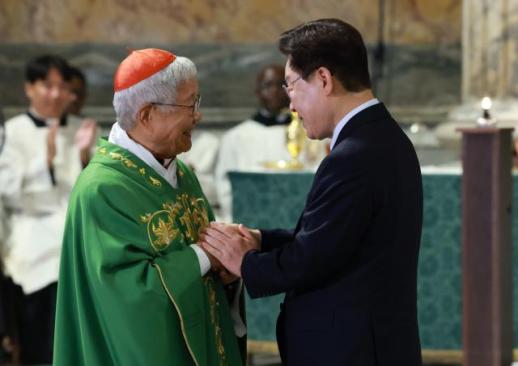 President Lee: The June 15 North-South Joint Declaration is a Beacon of Hope President Lee Jae-myung stated on June 14 that he believes the hope sparked by the June 15 North-South Joint Declaration remains alive. He expressed his commitment to doing everything possible to establish a sustainable peace system, moving beyond the current armistice.Speaking at the Special Mass for Peace and Solidarity held at St. Paul Outside the Walls in Rome, President Lee remarked that the dialogue and cooperation that once characterized relations between the North and South have regressed into a period of disconnection and confrontation.He noted that while communication channels between the two Koreas have closed and distrust and tension persist, the people of South Korea have not lost their faith in peace and democracy, having overcome numerous trials and hardships.Reflecting on the historic meeting 26 years ago on June 15, when the two Koreas first sat down to announce the Joint Declaration, President Lee called it a pivotal moment that signaled the possibility of dialogue and cooperation to the world.Below is the full text of President Lee's commemorative speech.Cardinal Yoo Heung-sik, esteemed guests, it is a profound honor to stand in this sacred place, alive with the spirit of St. Paul.I extend my heartfelt gratitude to Cardinal Yoo and the Vatican officials for their warm hospitality and for organizing this meaningful event.Ladies and gentlemen, the world today is engulfed in deep conflict and uncertainty.The war in Ukraine continues unabated, and new clashes are erupting in the Middle East. The foundations of cooperation and coexistence are shaking, casting shadows of division and confrontation across the international community.The Korean Peninsula is not free from these realities. The North and South, once discussing peace and prosperity together, have reverted to a state of disconnection. Communication channels have closed, and distrust and tension remain.However, the people of South Korea have a history of steadfastly maintaining their belief in peace and democracy, even amid numerous trials and tribulations.We reclaimed our nation, rebuilt from the ruins of war, and advanced democracy beyond an era of dictatorship and oppression.Amid economic crises and social upheaval, we have illuminated the darkness not with weapons, but with candles; not through violence, but through peace; and not with cynicism, but with solidarity.The Korean Catholic Church, which began as a voluntary community of lay believers and endured severe persecution, has been a steadfast support in times of hardship, upholding the values of human dignity, peace, and solidarity.Esteemed guests, on June 15, 26 years ago, the North and South first met and announced the June 15 North-South Joint Declaration.This was a historic turning point that signaled the possibility of dialogue and cooperation beyond long-standing hostility and tension.Since then, family reunions, humanitarian cooperation, and exchanges have opened a new door of hope for peace on the Korean Peninsula.I am confident that the spark of hope remains alive today.Since its inauguration last year, the South Korean government has taken proactive measures to ease tensions, including halting leaflet distribution and loudspeaker broadcasts toward the North. We have also made it clear that we do not pursue absorption unification or unilateral regime competition.We will continue our efforts to prevent accidental clashes between the North and South and to restore military trust. We are committed to doing everything possible to establish a sustainable peace system beyond the current armistice.Esteemed guests, for many years, the international community has longed for peace and reconciliation on the Korean Peninsula, and South Korea has consistently worked to meet those expectations and support.I would like to take this opportunity to express sincere gratitude, on behalf of the people of South Korea, to the Vatican for its unwavering interest and support throughout this process.In a time when conflict and uncertainty weigh heavily on the world, South Korea aims to convey a message of hope.We will unite our efforts to create a world where democracy shines brightly, where the richness of culture is celebrated, and where the possibilities of science, technology, and innovation pave the way for a more peaceful and free existence for all, allowing everyone to live with dignity.We will fulfill our international responsibilities to foster reconciliation where there is conflict, trust where there is distrust, and solidarity where there is division, transcending borders, ideologies, races, and cultures.Esteemed guests, let us pray together that the precious words from Isaiah 2:4, "They will beat their swords into plowshares and their spears into pruning hooks," may be realized throughout the nation.I hope that peace on the Korean Peninsula will lead to global peace, and that international solidarity will reinforce peace on the Korean Peninsula in a virtuous cycle.Next year, the World Youth Conference will be held in Seoul. I am confident it will be a meaningful time for young people to share friendships and learn the values of peace and solidarity, transcending borders, languages, and cultures.I hope that youth from around the world can gather here, overcoming battle lines, barbed wire, and borders, and I request the Vatican's interest and constructive role in this endeavor. The South Korean government also promises to do its utmost to support this effort."Take heart; I have overcome the world," Jesus Christ said to his fearful disciples 2,000 years ago. May these words bring comfort, courage, and hope to our youth today.I pray that our prayers offered today may be a blessed seed for peace and solidarity throughout the world.May God's grace be with everyone present here today.Thank you.* This article has been translated by AI. 2026-06-14 19:39:00
 -
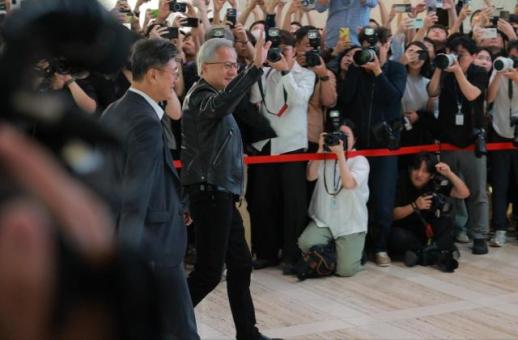 Jensen Huang's Taiwan and South Korea Tour: Insights into AI Supply Chains Symbolic journeys have always marked significant turning points in world history. Christopher Columbus's transatlantic voyage opened the age of the New World, Deng Xiaoping's southern tour determined the direction of China's reform and opening, and Steve Jobs's iPhone announcement ushered in the smartphone era. Similarly, Jensen Huang's recent tour of Taiwan and South Korea in late May and early June 2026 is likely to be recorded as a crucial milestone in the history of the AI industry.Many people focused on Huang's visits to night markets in Taiwan and his enjoyment of samgyeopsal in South Korea, with media outlets highlighting his culinary experiences and personal charm. However, for those attuned to global industrial trends, a different scene emerged: the supreme commander of the world AI empire inspecting his core production and logistics bases in a massive supply chain tour.The first stop that drew attention was Taiwan. Today, NVIDIA stands at the center of the AI industry, and Taiwan is at the heart of NVIDIA's operations. Most of the cutting-edge GPUs designed by NVIDIA are produced at Taiwan's TSMC. NVIDIA's Blackwell and Rubin platforms, in fact, could not exist without Taiwan's advanced semiconductor manufacturing capabilities.Huang's closest meetings in Taiwan were with TSMC. TSMC is not just a foundry; it is the heart of the global semiconductor industry. Major fabless companies, including Apple, AMD, Qualcomm, and Broadcom, all rely on TSMC for their AI chips. If NVIDIA is the emperor of the AI era, TSMC can be seen as the empire's forge producing weapons for the emperor.Huang also maintains close partnerships with Taiwan's AI server manufacturers, including Foxconn, Quanta, Wistron, Inventec, and Pegatron. While these companies may be less familiar to the general public, they are absolute giants in the global data center industry. A significant portion of the AI servers equipped with NVIDIA GPUs are produced in their factories. This is why it is said that the actual production site of the AI industry is not Silicon Valley but Taiwan.Foxconn, in particular, is no longer just an iPhone assembly company. It has expanded its business into AI servers, robotics, and electric vehicles, preparing for the era of Physical AI. Quanta has also grown to become one of the world's largest AI server manufacturers. Ultimately, Taiwan has established a complete manufacturing ecosystem that brings NVIDIA's brain to life.In contrast, the companies Huang met in South Korea play a different role. South Korea is not the country that creates the brain of the AI industry; rather, it supplies the blood that fuels it.At the center of this supply is SK Hynix. Currently, SK Hynix is virtually the strongest player in the HBM market for NVIDIA's AI servers. HBM is a critical component that connects GPUs and data at ultra-high speeds. No matter how advanced a GPU is, it cannot function properly without sufficient HBM. Therefore, one of the biggest bottlenecks in today's AI industry is the supply of HBM.Huang's visit to SK Hynix was not merely a formality; it was a process of confirming the lifeline of the AI industry. In fact, many of NVIDIA's latest platforms heavily rely on SK Hynix's HBM. As AI data centers proliferate, SK Hynix has become one of NVIDIA's most important strategic partners.Samsung Electronics was also a key stop on Huang's visit. As the world's leading memory company, Samsung is fiercely competing with SK Hynix for the next-generation HBM4 market. For NVIDIA, diversifying its supply sources is essential. Therefore, the quality certification of Samsung's HBM and the potential for supply expansion will directly impact the stability of the future AI supply chain.Another noteworthy company during the South Korea visit was Hyundai Motor Group. This is a significant signal. While Hyundai is an automotive company, it is attempting to transform into an AI-based mobility company. Autonomous vehicles, robotics, and smart factories are all core areas of Physical AI. NVIDIA is also focusing on developing AI platforms for vehicles and robotics. The collaboration between Hyundai and NVIDIA is not just a partnership in automotive technology; it is more akin to building a testing ground for future industrial revolutions.LG Group is another entity to watch. LG has potential collaboration opportunities with NVIDIA across various areas, including batteries, electric components, smart factories, and AI data center cooling technologies. As AI becomes more integrated into the real world, the importance of power, batteries, cooling, and sensor technologies increases.Naver also emerged as an interesting visit. Until now, South Korea has been a stronghold for AI semiconductors but not for AI platforms. Naver is building a Korean version of generative AI through HyperCLOVA and is working to secure competitiveness in the data center and cloud sectors. Huang's meeting with Naver can be seen as a process of confirming the potential of the entire Korean AI ecosystem, not just meeting a customer.Thus, Taiwan and South Korea play different roles in NVIDIA's supply chain. While Taiwan serves as the manufacturing hub for the AI industry, South Korea acts as the memory hub. If Taiwan is NVIDIA's arms and legs, South Korea can be seen as its veins.However, an important question remains: Will South Korea remain a memory supplier, or will it become a co-designer of AI civilization?Taiwan has already seized control of the entire manufacturing ecosystem. The United States dominates platforms and software. China is catching up with its vast market and state-led AI strategy. Now, South Korea must also move to the next stage.The next stage is Physical AI.The reason Huang met with Hyundai, LG, and Naver in South Korea ultimately relates to this. The future of AI lies not within data centers but in factories, warehouses, hospitals, farms, vehicles, and robotics. As a manufacturing powerhouse, South Korea has advantageous conditions in this field compared to the United States.In particular, Jeonbuk and Saemangeum hold new possibilities in the era of Physical AI. Their vast industrial land, renewable energy, agricultural biotechnology, and manufacturing base provide suitable conditions for building AI demonstration cities. In the future, the center of the AI revolution is likely to shift from mere semiconductor production to Physical AI that drives actual industrial sites.Thus, Jensen Huang's tour of Taiwan and South Korea is not just a business trip record. It serves as a preview of the second act of the AI revolution. In Taiwan, he confirmed the power of the AI manufacturing empire, while in South Korea, he assessed the potential of the AI application industry.We may remember the samgyeopsal and soju, but Huang saw HBM, robotics, autonomous driving, and Physical AI. While we recall laughter and handshakes, he calculated supply chains, markets, and the industrial map for the next decade.The true competition of the AI era has just begun. This tour was the first test of whether South Korea can transcend its role as a mere supplier and become a key player in AI civilization.* This article has been translated by AI. 2026-06-14 19:15:00
 -
 South Korea and Saudi Arabia Agree to Long-Term Energy Cooperation South Korea and Saudi Arabia have agreed to strengthen long-term cooperation in the energy sector. The Ministry of Trade announced that Minister Kim Jung-kwan met with Saudi Energy Minister Abdulaziz bin Salman in Saudi Arabia on June 14, where they signed a memorandum of understanding (MOU) on cooperation in the oil and gas sectors. The ministry detailed that the two countries will collaborate in several areas, including: oil stockpiling, pipeline infrastructure development, technological innovation in energy resources using artificial intelligence and digital transformation, technology development for environmental and economic sustainability, petrochemical material development and utilization, infrastructure development to enhance access to energy resources, and inter-company cooperation. Earlier, Minister Kim visited Saudi Arabia in April as a follow-up to the presidential special economic envoy's visit, where he assessed the supply situation of crude oil and naphtha. At that time, both sides agreed to ensure that the agreed quantities would be supplied without disruption until the end of the year. Additionally, Kim met with Saudi Minister of Investment Fahad Al-Saif and Minister of Industry and Mineral Resources Bandar Al-Khorayef to review the progress of local projects by South Korean companies. He examined the Hyundai Motor-Saudi Public Investment Fund (PIF) vehicle assembly plant project, which is set to begin full-scale production next year, and the IMI project, a joint shipyard between HD Korea Shipbuilding & Offshore Engineering and Aramco, the largest in the Middle East, and requested active support from the Saudi government. Notably, the collaboration will focus on Saudi mineral resources, South Korean technology, and mineral demand, aiming for comprehensive cooperation from mining to refining, processing, and advanced industrial development. Minister Kim stated, "In a situation where global supply chain instability persists, reaffirming the stable supply of key national resources and laying the groundwork for long-term resource cooperation is a significant achievement of this visit to Saudi Arabia. We will continue to expand economic cooperation in various fields, including manufacturing and advanced industries."* This article has been translated by AI. 2026-06-14 19:12:00
 -
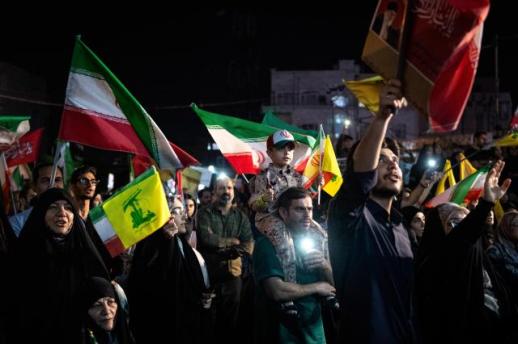 Cyber Attack Disrupts Services at Iranian Banks A cyber attack targeting Iran has disrupted services at several banks amid ongoing peace negotiations between the United States and Iran. According to Reuters on June 14, the Iranian Banking Coordination Council reported that a cyber attack occurred on the country's shared communication infrastructure, temporarily halting services at four banks, including Mellat, Tejarat, Saderat, and the Iran Export Development Bank. The council stated that there was no unauthorized access to customer information or data deletion, but recovery efforts are currently underway to restore normal operations.* This article has been translated by AI. 2026-06-14 19:06:00
 -
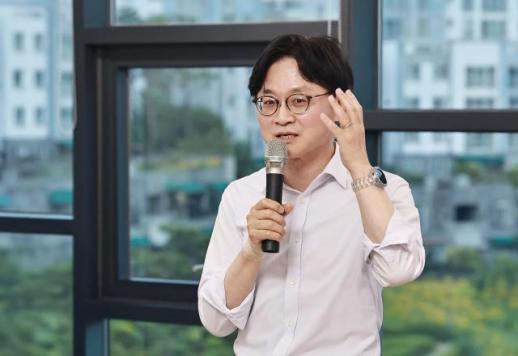 South Korea's Minister of Industry Strengthens Oil and Gas Cooperation with Saudi Arabia Amid ongoing instability in the Middle East, Kim Jeong-kwan, South Korea's Minister of Trade, Industry and Energy, visited Saudi Arabia to assess energy supply chains.According to the Ministry, Minister Kim met with heads of key Saudi ministries over two days starting June 13 to discuss ways to expand resource and industrial cooperation. This visit follows a delegation sent by the South Korean president in April to explore further collaboration in the region.Saudi Arabia is the largest supplier of crude oil to South Korea. During the April delegation's visit, Saudi officials pledged to prioritize the supply of crude oil and naphtha to South Korea. With increasing uncertainty in the international energy market, the South Korean government is working to stabilize supply chains through cooperation with major oil-producing countries.Minister Kim first met with Abdulaziz bin Salman, the Saudi Minister of Energy, to review the current status of crude oil and naphtha supplies between the two countries and agreed to ensure that the promised volumes are delivered without disruption by the end of the year.In addition to securing short-term resource supply stability, the two nations signed a memorandum of understanding (MOU) to strengthen long-term cooperation in the oil and gas sectors. The MOU includes provisions for oil storage and pipeline infrastructure development, energy technology innovation utilizing artificial intelligence (AI) and digital transformation, and expanding collaboration in the petrochemical sector.Efforts were also made to support major projects undertaken by South Korean companies in the region. Minister Kim met with Fahad Al-Saif, the Minister of Investment, and Bandar Al-Khorayef, the Minister of Industry and Mineral Resources, to review the progress of key collaborative projects, including a local vehicle assembly plant being developed by Hyundai Motor and the Saudi Public Investment Fund (PIF), as well as the IMI shipyard project by HD Hyundai Heavy Industries and Aramco.The Hyundai-PIF joint plant is expected to produce 50,000 electric and internal combustion vehicles annually, while the IMI shipyard plans to build around 40 very large crude carriers each year, making it the largest shipyard in the Middle East.Furthermore, both countries expressed their intention to expand cooperation beyond the automotive and shipbuilding sectors into minerals and advanced industries. They agreed to establish a collaborative framework that connects Saudi mineral resources with South Korean refining and processing technologies, covering everything from mining to processing and utilization in advanced industries.Minister Kim Jeong-kwan stated, "In the context of ongoing global supply chain instability, reaffirming the stable supply of key resources such as crude oil and naphtha and laying the groundwork for long-term resource cooperation are the main achievements of this visit. We will continue to expand cooperation into manufacturing and advanced industries based on the results of our industrial collaboration to date."Following his visit to Saudi Arabia, Minister Kim plans to travel to Qatar and the United Arab Emirates (UAE) to discuss cooperation in nuclear power, plants, and new industries.* This article has been translated by AI. 2026-06-14 19:03:00
 -
 Huang's Taiwan and Korea tour highlights supply chain at the heart of AI era SEOUL, June 14 (AJP) -Every great technological pivot has its symbolic journey. Columbus crossing the Atlantic opened the age of exploration. Deng Xiaoping's Southern Tour set the course of China's economic reform. Steve Jobs unveiling the iPhone launched the smartphone era. Nvidia's chief Jensen Huang's late-May to early-June 2026 sweep through Taiwan and South Korea may well be remembered as a similarly defining moment in the history of the AI industry. Much of the media coverage focused on the optics — Huang browsing night markets in Taiwan, clinking soju glasses over pork belly in Seoul. Understandable. He is a compelling figure. But for those watching the structural shifts in global technology, a very different story was unfolding: the supreme commander of the world's AI empire conducting a strategic inspection of his core production bases and logistics chain. Taiwan: The Manufacturing Empire Behind the AI Revolution At the center of today's AI industry sits Nvidia. And at the center of Nvidia sits Taiwan. The cutting-edge GPUs that power the AI boom are almost entirely fabricated by TSMC. Nvidia's Blackwell and Rubin platforms simply could not exist without Taiwan's advanced semiconductor manufacturing capability. TSMC is not merely a foundry — it is the forge of the global chip economy, serving Apple, AMD, Qualcomm, Broadcom and virtually every major fabless semiconductor company on earth. If Nvidia is the emperor of the AI age, TSMC is the imperial armory. But Taiwan's role extends well beyond silicon wafers. Foxconn, Quanta, Wistron, Inventec and Pegatron — names unfamiliar to most consumers but foundational to the global data center industry — assemble the AI servers that house Nvidia's GPUs. The actual manufacturing floor of the AI revolution is not Silicon Valley. It is Taiwan. Foxconn, notably, has moved far beyond iPhone assembly. It is aggressively expanding into AI servers, robotics and electric vehicles, positioning itself for the physical AI era. Quanta has emerged as one of the world's largest AI server manufacturers. Taiwan, in short, possesses the entire manufacturing ecosystem needed to turn Nvidia's architectural vision into operational hardware. South Korea: The Memory Backbone of AI Korea's role in the Nvidia supply chain is different — but no less critical. If Taiwan supplies the brain, Korea supplies the blood. The country's most strategically vital contribution to the AI stack is High Bandwidth Memory, or HBM — the high-speed interface connecting GPU to data. Without sufficient HBM, even the most powerful GPU cluster cannot function at scale. HBM availability has become one of the most acute bottlenecks in the global AI supply chain. SK hynix currently dominates that market. Huang's visit to SK hynix was not a courtesy call. It was a verification of one of Nvidia's most critical dependencies. As demand for AI data center capacity continues to surge, SK hynix has become among Nvidia's most important strategic partners. Samsung Electronics was equally significant on the itinerary. As the world's largest memory manufacturer by volume, Samsung is locked in intense competition with SK hynix for the next-generation HBM4 market. From Nvidia's perspective, supply diversification is not optional — it is essential. Whether Samsung achieves full qualification and meaningful volume for Nvidia's next platforms will have direct implications for the stability of the entire AI supply chain. The visit to Hyundai Motor Group carried a different kind of signal. Hyundai is a carmaker, but it is repositioning itself as an AI-driven mobility company. Autonomous vehicles, robotics and smart factories are all core domains of physical AI — the frontier where artificial intelligence moves out of data centers and into the physical world. Nvidia is deeply invested in exactly this transition, through its automotive AI platform and its Isaac robotics stack. The Nvidia-Hyundai relationship is less a conventional automotive technology partnership than a joint experiment in building the infrastructure of the next industrial revolution. LG Group rounds out the picture. Across batteries, automotive electronics, smart manufacturing, and data center cooling technology, LG sits at multiple intersections where AI meets the physical world. As AI systems consume more power and generate more heat, the importance of energy, thermal management and sensing technology will only grow. The stop at Naver, Korea's dominant internet platform, added yet another dimension. Korea has established itself as a memory powerhouse, but not yet as an AI platform powerhouse. Naver's HyperCLOVA initiative represents Korea's most serious attempt to build a sovereign large language model capability and compete in cloud and data center infrastructure. Huang's meeting with Naver was not simply a customer visit — it was an assessment of the potential depth of Korea's broader AI ecosystem. Two Roles, One Supply Chain Taiwan and Korea occupy distinct but complementary positions in the Nvidia supply chain. Taiwan is the manufacturing hub; Korea is the memory hub. Taiwan provides the arms and legs of Nvidia's AI infrastructure. Korea provides the circulatory system. But that framing also surfaces the most important strategic question for Korea: will it remain a component supplier, or will it become a co-architect of AI civilization? Taiwan has already locked in control of the full manufacturing ecosystem. The United States owns the platform and software layers. China is pursuing aggressive state-directed AI investment backed by the world's largest domestic market. Korea must now define its own next move. That move, increasingly, points toward physical AI. This is precisely why Huang's Korean itinerary included Hyundai, LG and Naver alongside the memory giants. The next phase of AI development will not play out primarily inside data centers. It will play out in factories, logistics facilities, hospitals, farms, autonomous vehicles and robots. As a manufacturing nation with deep industrial expertise, Korea is in many respects better positioned than the United States to lead in this domain. The Real Story Behind the Optics Jensen Huang's Taiwan-Korea tour in the spring of 2026 was not a celebrity road show. It was a strategic audit — a systematic review of the supply chain architecture that underpins the global AI build-out, combined with an assessment of where the next phase of AI-driven industrial transformation will take root. The cameras captured the night markets and the soju. But Huang was reading something else entirely: HBM roadmaps, server production capacity, robotics pipelines and the emerging geography of physical AI deployment. The AI era's genuine competition is only now beginning. This tour was the first formal question posed to South Korea: can it move from supplier to shaper of the AI future? The answer is not yet written. 2026-06-14 18:58:23
 -
 South Korean president offers olive branch in Vatican despite Pyongyang's snub SEOUL, June 14 (AJP) -South Korean President Lee Jae Myung used a Vatican peace gathering on Sunday to renew his offer of dialogue and reconciliation with North Korea, insisting that the "ember of hope" for inter-Korean cooperation remains alive despite Pyongyang's continued refusal to engage with Seoul. Speaking at a special Mass for peace and solidarity at the Basilica of Saint Paul Outside the Walls in Rome, Lee framed his administration's North Korea policy as one rooted in dialogue, trust-building and tension reduction, while acknowledging that relations between the two Koreas have deteriorated sharply in recent years. "I firmly believe the ember of that hope is still alive," Lee said, referring to the June 15, 2000 inter-Korean summit and joint declaration that ushered in an unprecedented period of exchanges between the two sides. The remarks came as Lee seeks to revive diplomacy on the Korean Peninsula nearly a year after taking office, while North Korea has shown little interest in responding to Seoul's outreach efforts. Since assuming office last June, Lee's administration has suspended anti-Pyongyang loudspeaker broadcasts and moved to halt civilian leaflet campaigns across the border, describing the measures as steps aimed at reducing military tensions and rebuilding trust. Lee reiterated Sunday that his government does not seek reunification through absorption or ideological confrontation. "We have made it clear that we do not pursue absorption-based unification or unilateral system competition," he said. "We will continue efforts to prevent accidental clashes between the South and the North and restore military trust." He added that his administration would do "everything possible" to move beyond the armistice regime and establish a durable peace framework on the peninsula. The conciliatory message stands in contrast to North Korea's increasingly hostile posture toward the South. Pyongyang has declared inter-Korean relations to be those between two separate and hostile states, dismantled symbols of reconciliation and remained steadfast in its refusal to discuss denuclearization. It has also largely ignored Seoul's repeated calls for dialogue since Lee took office. In a statement carried Saturday by the state-run Korean Central News Agency, a spokesperson for the North Korean Foreign Ministry's Bureau 10 said South Korea remains "an invariable enemy state obsessed with hostility and confrontation" and vowed that Pyongyang's policy toward Seoul would not change. Lee acknowledged that the Korean Peninsula has slipped back into what he described as "an era of disconnection." "South and North Korea, which once spoke of peace and prosperity together, have returned to a period of rupture," he said. "The channels of communication that connected the two sides have been closed, and distrust and tensions remain." Yet Lee argued that South Korea's own modern history demonstrates that seemingly entrenched divisions can be overcome. "The Korean people have repeatedly overcome crises without abandoning their faith in peace and democracy," he said. "Even in times of turmoil, they illuminated darkness not with weapons but with peace, not with violence but with solidarity." The Vatican setting added symbolic weight to Lee's message. The special Mass was celebrated by Cardinal Lazzaro You Heung-sik, the highest-ranking Korean official in the Catholic Church, under the theme of peace and solidarity. Lee and First Lady Kim Hye Kyung attended alongside Vatican officials and members of the Korean Catholic community. Linking the Korean Peninsula to wider global instability, Lee pointed to the prolonged Russia-Ukraine war and renewed violence in the Middle East as evidence that the international community faces mounting uncertainty and division. "The world is facing deeper conflict and uncertainty than ever before," he said. Lee thanked the Holy See for its longstanding support for peace and reconciliation efforts on the Korean Peninsula, expressing hope that peace in Korea could contribute to global stability and that international solidarity could in turn strengthen peace on the peninsula. "I hope we can create a virtuous cycle in which peace on the Korean Peninsula contributes to world peace, and global solidarity strengthens peace on the peninsula," he said. Invoking a passage from the Book of Isaiah — "They shall beat their swords into plowshares and their spears into pruning hooks" — Lee called for a world where instruments of war are transformed into tools that sustain life. He also sought Vatican support for the 2027 World Youth Day in Seoul, expressing hope that young people from around the world would gather beyond the barriers of conflict, ideology and national borders. Lee is scheduled to meet Pope Leo XIV on Monday, where peace on the Korean Peninsula and broader international security issues are expected to feature prominently in discussions. 2026-06-14 18:41:58
 -
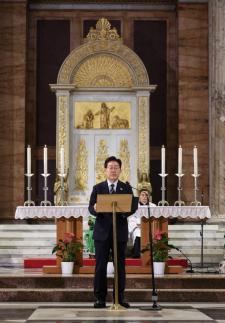 President Lee Pledges Support for Dignified Life at Vatican Event President Lee Jae-myung stated on June 14 that he would contribute to creating a world where everyone can enjoy a dignified life.Speaking at a special mass for peace and solidarity held at St. Paul's Cathedral in Rome, President Lee emphasized his commitment to fulfilling international responsibilities to ensure that peace becomes a shared heritage of humanity.Quoting Isaiah 2:4, which speaks of turning swords into plowshares and spears into pruning hooks, he expressed hope that peace on the Korean Peninsula would lead to global peace, creating a virtuous cycle where international solidarity strengthens peace in Korea.He noted, "The world today is facing deeper conflicts and uncertainties than ever before. The sounds of war in Ukraine continue, and new conflicts are emerging in the Middle East."President Lee remarked that the foundations of cooperation and coexistence are being shaken, casting shadows of division and confrontation across the international community, and that the Korean Peninsula is not free from this reality.He highlighted the resilience of the South Korean people, who have maintained their belief in peace and democracy despite numerous trials and hardships. He stated, "We reclaimed our lost nation, rebuilt it from the ruins of war, and advanced democracy beyond the era of dictatorship and oppression."He also pointed out that even amid economic crises and social turbulence, South Koreans have illuminated the darkness with candles instead of guns, peace instead of violence, and solidarity instead of cynicism. He praised the Korean Catholic Church, which began as a voluntary community of faith and has been a steadfast support in upholding the values of human dignity, peace, and solidarity during difficult times.Reflecting on the historic June 15 Inter-Korean Declaration, he noted that 26 years ago, the North and South met for the first time since their division and announced the declaration, marking a turning point that signaled the possibility of dialogue and cooperation beyond long-standing hostility and tension.He affirmed, "I firmly believe that the spark of hope from that declaration is still alive today," referencing the subsequent family reunions, humanitarian cooperation, and exchanges that opened new doors for peace on the Korean Peninsula.President Lee stated that since taking office last year, the South Korean government has pursued proactive measures to ease tensions, including halting leaflet distribution and loudspeaker broadcasts towards the North, clearly stating that it does not seek absorption or unilateral competition.He committed to continuing efforts to prevent accidental clashes between the North and South and to restore military trust, stating, "We will do everything we can to build a sustainable peace regime beyond the current armistice."He also mentioned the upcoming World Youth Conference to be held in Seoul next year, expressing hope that young people from around the world could gather beyond frontlines, barbed wires, and borders. He requested the Vatican's interest and constructive role in this endeavor, promising that the South Korean government would do its utmost to support it.President Lee concluded by recalling the words of Jesus Christ, who told his fearful disciples, "Take courage; I have overcome the world," wishing that this message would bring comfort, courage, and hope to today's youth. 2026-06-14 18:24:00
 -
 High Exchange Rates Hit Direct Purchases, Benefit Exporters and Department Stores The won-dollar exchange rate has surpassed 1,500 won, causing widespread repercussions in the retail industry. While food and dining businesses, heavily reliant on imported raw materials, are struggling with rising costs, exporters and department stores benefiting from foreign tourist demand are experiencing a contrasting boost. According to industry reports, the sectors most affected by the prolonged high exchange rate are the dining industry and local businesses that depend on imported materials. For instance, the price of naphtha used for packaging ramen and snacks has surged nearly 50%, rising from $500 per ton at the end of last year to around $730 recently. Additionally, the price of soybean oil, widely used in processed foods, has jumped 53.2% compared to a year ago, and aluminum prices for canning have increased by 25% since the beginning of the year. In response, dining franchises have begun raising consumer prices following the local elections on June 3. MegaMGC Coffee has decided to increase the price of its signature 'Halmega Coffee' by 200 won starting June 19, while Coffee Bean Korea has raised the price of its vanilla latte stick coffee by up to 8.1%. The Bon Korea has also increased prices by an average of 11% on some menu items across its 11 brands since June 9. Burger franchises, including Burger King, McDonald's, and Lotteria, are also adjusting their prices. Goobne Chicken has implemented 'shrinkflation' by reducing the weight of chicken thigh meat used in its boneless menu items. Prices for processed foods sold at convenience stores have risen by approximately 5-10% since early this month. The online direct purchase market has also come to a halt. In the first quarter of this year, online overseas direct purchases amounted to 1.9789 trillion won, a mere 1.2% increase from the same period last year. The rising exchange rate has diminished price competitiveness, compounded by financial difficulties faced by some shipping companies, leading to increased consumer anxiety. In contrast, companies with a high proportion of overseas sales are reaping the benefits of the high exchange rate. Samyang Foods, which generates about 80% of its revenue from abroad, has seen significant improvements in both sales and profitability in the first quarter of this year. Orion, which also derives 70% of its revenue from overseas, is experiencing strong performance due to the profit effects of the weak won. Department stores are enjoying a 'foreign shopping boom' thanks to the strong dollar. The depreciation of the won has made Korea a shopping paradise for foreign visitors. In May, luxury goods sales to foreign customers at Hyundai Department Store's The Hyundai Seoul increased by 140.6% compared to the previous year, while sales at the main branch of Shinsegae Department Store surged by 230% in April and May. The reverse direct purchase market, where overseas consumers buy Korean products directly, has gained momentum, with e-commerce exports surpassing $200 million for the first time in April. As the high exchange rate persists, the disparity in performance among companies is expected to become more pronounced. According to the Korea International Trade Association's International Trade and Commerce Research Institute, a 10% increase in the exchange rate initially benefits export companies in the short term. However, if the high exchange rate continues, the prices of imported raw materials and supplier costs will rise in succession, ultimately leading to profitability declines for 80.1% of domestic companies. An industry insider stated, "Even though we set the exchange rate at a high level of 1,450 won when establishing our business plans last year, the current rate far exceeds that. If the trend of high exchange rates continues, there will be limits to absorbing cost burdens internally, making profitability declines inevitable for domestic-based companies."* This article has been translated by AI. 2026-06-14 18:03:00