


Latest by
-
 From the stands as BTS kicks off 'ARIRANG' tour in Busan SEOUL, June 13 (AJP) - K-pop sensation BTS performed during the opening night of their "ARIRANG" world tour at the Busan Asiad Main Stadium in Busan, South Korea, on Friday. The highly anticipated concert was held to commemorate the 13th anniversary of the group's debut. 2026-06-13 15:09:01
 -
 HYBE apologizes after BTS Busan concert delayed by 75 minutes SEOUL, June 13 (AJP) - The agency behind K-pop sensation BTS issued an official apology after the first day of the group's concert in Busan was delayed by more than an hour due to severe operational disruptions affecting nearly 50,000 attendees. The "BTS WORLD TOUR 'ARIRANG' IN BUSAN" was scheduled to begin at 7 p.m. on Friday but did not start until 8:15 p.m.. Fans faced long waiting times in early summer temperatures reaching up to 28 degrees Celsius, as admission routes overlapped with lines for fan gifts, prompting complaints online. HYBE released a statement on Saturday morning through the fan platform Weverse and official social media channels, apologizing for the inconvenience. "The start of the main concert was delayed due to a combination of confusion in on-site guidance, bottlenecks in the fan gift distribution process, and delays in merchandise collection," the company said. HYBE promised to thoroughly inspect and improve its on-site operations to prevent similar congestion during the second show. Saturday's performance marks the second day of the concert at the Busan Asiad Main Stadium and coincides with the 13th anniversary of the group's debut. The stadium previously hosted the group's last concert before the members began their mandatory military service, which was held to support Busan's bid for the 2030 World Expo. Alongside the concerts, the city is hosting a comprehensive "BTS THE CITY ARIRANG - BUSAN" project, which includes a drone show at Gwangalli Beach and various media facades. 2026-06-13 14:28:25
 -
 Can Busan Become South Korea's Second Growth Engine with AI and the Arctic Route? "(ABC Broadcasting's question) Can Busan combine its role as a maritime capital with that of an AI city to become South Korea's second growth engine?" Regions across South Korea are facing a common crisis. Young people are leaving, businesses are flocking to the capital region, and local areas are on the brink of extinction. Busan is no exception. Once the country's second-largest city, it now grapples with a trifecta of challenges: population decline, industrial stagnation, and youth outmigration. In this context, Jeon Jae-soo, the newly elected mayor of Busan, has proposed a radically different solution. He aims to create a future-oriented industrial city that combines a maritime capital with an AI-leading city. His vision includes preparing for the Arctic route era, establishing AI data centers and a digital industrial ecosystem, and transforming Busan Port into a smart port. A special committee for AI transformation and another for the Arctic route have been established within the transition committee. Now, the future of Busan can be distilled into one question: Can it evolve from a traditional port city into a hub for South Korea's future industries that integrate AI and maritime capabilities? Preparing Busan for the Arctic Route Era All of Jeon Jae-soo's pledges are interconnected. Busan is the largest port city in South Korea. However, its port competitiveness has largely depended on cargo volume and location. Jeon aims to take a step further. He is preparing for the Arctic route era. With climate change increasing the feasibility of using Arctic sea routes, the global logistics map is changing. There are projections that routes connecting Asia and Europe could be shorter than those through the Suez Canal. Jeon believes Busan can be the city that benefits the most from this change. Thus, he established a special committee for the Arctic route within the transition committee. This is a strategic choice to prepare for Busan's future, not just a simple shipping policy. He has emphasized that the relocation of the Ministry of Oceans and Fisheries to Busan should not be limited to merely moving an administrative body. He envisions building a maritime industry cluster that combines shipping, logistics, shipbuilding, ports, and finance, making Busan a central city for the Northeast Asian maritime economy. Importantly, Busan's competitors are not Incheon or Ulsan. Busan must compete with Singapore, Shanghai, and Hong Kong. Jeon is well aware of this. Therefore, he plans to enhance Busan Port's competitiveness by integrating advanced technology. At the heart of this strategy is AI. AI Transformation: A Game Changer for Busan's Industrial Structure Among Jeon Jae-soo's pledges, the most notable is AI. He has declared his intention to transform Busan into not just a maritime city but an AI-leading city. The establishment of a special committee for AI transformation within the transition committee aligns with this vision. Jeon identifies the biggest issue facing Busan as not the decline of manufacturing or population loss, but rather the stagnation of its industrial structure. Busan has long grown around shipbuilding, ports, and manufacturing. However, in the age of the AI revolution, new growth drivers are essential. Jeon seeks to find these in the AI industry. A key pledge is the establishment of an AI data center cluster. He has announced plans to attract global companies and develop an AI data center complex in Busan through large-scale investments over the next five years. Additionally, he pledged to invest 892.1 billion won in the AI transition project for Busan Port, aiming to innovate port operations and logistics systems based on AI. This strategy is highly significant. AI is not merely a new industry. It is a universal technology that can transform manufacturing, logistics, healthcare, finance, education, and administration. Jeon intends to leverage AI as a tool to innovate Busan's entire industrial structure. Particularly, the need for industrial transformation is greater in Busan than in the capital region. Relying solely on existing manufacturing competitiveness does not guarantee a secure future. Ultimately, AI represents not just an option for Busan, but a survival strategy. This is why Jeon has made AI a core focus of his administration. Transforming a City Losing Youth into One That Attracts Them Busan's most pressing reality is youth outmigration. Even graduates from good universities struggle to find quality jobs. Many young people leave for Seoul and the capital region. The city is aging, and its economy is losing vitality. Jeon views this as the most urgent issue facing Busan. The reason he emphasizes both the AI and maritime industries ultimately comes down to job creation. Good jobs must be created to retain people. People must stay for the city to thrive. He has pledged to create new high-quality jobs by combining the maritime and AI industries. In particular, he stresses the importance of building an AI ecosystem that connects universities, businesses, and research institutions. This is far more critical than merely attracting investments. The competitiveness of a city ultimately stems from its people. Jeon asserts that Busan must not be a city that merely follows Seoul but one that possesses its own competitiveness. This competitiveness lies in the integration of maritime and AI. It is a strategy that connects what Busan excels at with future industries. In fact, major cities around the world are pursuing similar paths. Singapore has combined finance and digital technology, while Dubai has integrated logistics and AI. If Busan can successfully combine its port with AI, it can create a new growth model. Can Busan Serve as a Testing Ground for South Korea's Local Era? Jeon Jae-soo's vision is not merely a set of pledges for the mayor of Busan. It represents an experiment for South Korea's local era. Until now, local development policies have primarily relied on budget support or the relocation of public institutions. However, there have been limitations to this approach. Jeon is taking a different approach, aiming to revitalize the city through industry and technology. Maritime capital. Arctic route. AI data centers. Smart ports. Youth jobs. All of these elements are part of a single strategy. Of course, there are significant challenges. Building AI data centers requires substantial power and capital. The Arctic route also carries considerable uncertainty. Busan's financial conditions are not robust. Above all, execution is crucial. Anyone can propose a vision. However, it is execution that changes the fate of a city. The political execution capability that Jeon emphasizes is now under scrutiny. If he succeeds in creating a new growth model that combines maritime and AI, Busan could become not just the second city but a forward base for South Korea's future industries. Busan's challenge is ultimately South Korea's challenge. If local areas thrive, the nation thrives. And Busan is currently testing that potential. : SWOT Analysis: Strength Jeon Jae-soo's greatest strength is his clear vision for the future. The dual focus on maritime capital and AI-leading city is evident. His policy priorities are clear, as seen by the establishment of special committees for AI transformation and the Arctic route. The potential benefits from the relocation of the Ministry of Oceans and Fisheries and Busan Port's competitiveness are also strengths. Weakness Establishing AI data centers and transforming the industry requires immense resources. Many projects may be difficult to pursue solely with Busan's finances. Additionally, Busan's economy still heavily relies on traditional industries, which may slow the pace of industrial transformation. Opportunity The AI revolution and the Arctic route era present new opportunities for Busan. The AI transition at Busan Port, the establishment of data center clusters, and the advancement of the maritime logistics industry could become key drivers of growth in the next decade. Threat The concentration of resources in the capital region remains strong. Global economic slowdowns and volatility in the shipping industry also pose risks. The competition to foster the AI industry is likely to intensify among local governments. * This article has been translated by AI. 2026-06-13 14:18:00
 -
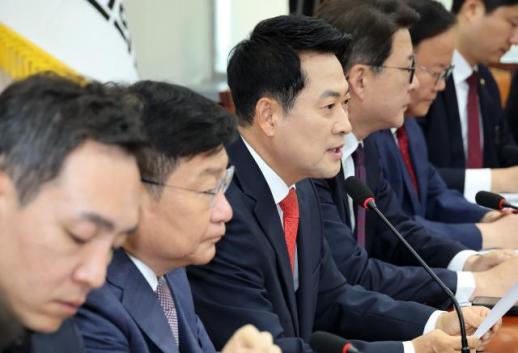 Jang Dong-hyuk Proposes Meeting with Kim Min-seok and Jeong Cheong-rae Jang Dong-hyuk, leader of the People Power Party, proposed a meeting on June 13 with Prime Minister Kim Min-seok and Jeong Cheong-rae, leader of the Democratic Party, regarding the shortage of ballots during the June 3 local elections. Jang emphasized, "Let’s discuss both the re-election and the special investigation, and I am open to any format of dialogue." In a Facebook post, Jang stated, "There were 869 cases of twin votes nationwide, and 15 cases of triple votes were also reported. The Songpa District Election Commission was caught removing evidence even while a search was underway." He continued, "Boxes of ballots that were said to be discarded have been found. In addition to Jeonbuk, 1,700 votes were missing in the Gyeonggi education superintendent election, and there were instances of votes being incorrectly entered by candidate. We must conduct nationwide re-elections immediately and launch a special investigation." Jang noted that both Kim and Jeong had previously expressed their agreement on disbanding the Central Election Commission and initiating a special investigation. He urged, "Let’s meet today to discuss the re-election and the special investigation, regardless of the format." He warned, "If you believe that you can block this with a majority of seats again, you are gravely mistaken. Go to Olympic Park and listen to the voices of the citizens. The public sentiment is boiling over across the nation, beyond just Jamsil. Ignoring the anger of the citizens will only lead to the downfall of the regime."* This article has been translated by AI. 2026-06-13 13:09:00
 -
 South Korea Responds to EU's Statement Condemning North Korea-Russia Military Cooperation South Korea's Blue House stated that the European Union's recent joint statement condemning military cooperation between North Korea and Russia does not represent a new position for the South Korean government. A senior official from the Blue House spoke to reporters in Rome on June 13, saying, "The stance on military cooperation between Russia and North Korea, as well as on North Korean human rights, is merely a reflection of the positions already articulated by the South Korean government." On June 10, following a summit in Brussels, President Lee Jae-myung, António Costa, President of the European Council, and Ursula von der Leyen, President of the European Commission, issued a joint statement that strongly condemned illegal military cooperation between Russia and North Korea and asserted that North Korea would never be recognized as a nuclear-armed state under the Treaty on the Non-Proliferation of Nuclear Weapons (NPT). The Blue House official, who accompanied President Lee on his European tour, dismissed the notion that the statement introduced any new content regarding North Korea's nuclear issues, stating, "There is nothing new here." He added, "While the EU may hold somewhat stronger opinions, the statement reflects our existing positions. Some may argue that expressing a firm principle on North Korea's nuclear issues while mentioning the need to ease tensions on the Korean Peninsula is contradictory, but that is not the case." He emphasized that denuclearization and the establishment of peace are simultaneous goals and expressed confidence that the statement would not create new burdens in relations with Russia or North Korea. Regarding speculation that a peace agreement between the U.S. and Iran is nearing completion, he noted, "We do not have detailed information, but there seems to be a trend toward approaching a ceasefire agreement, and both sides appear to be moving toward a truce." The official remarked, "It seems they are finalizing the wording, and the provisions under discussion do not differ significantly from our existing predictions, covering issues such as nuclear matters, uranium enrichment, and the Strait of Hormuz." As President Lee is scheduled to visit France for the G7 summit soon, he was asked whether a meeting with President Donald Trump could take place. The official replied, "If the opportunity arises, dialogue could occur, but it is difficult to comment on the likelihood of that happening at this time." * This article has been translated by AI. 2026-06-13 13:03:00
 -
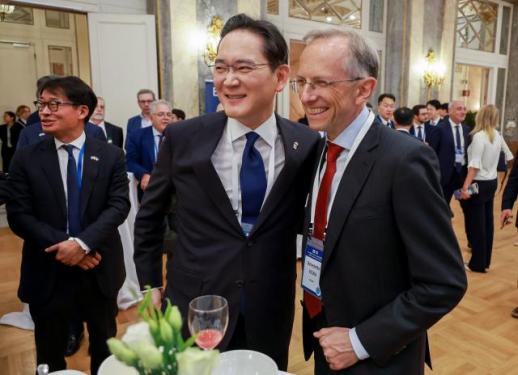 Lee Jae-Yong: Italy is a Special Country for Samsung The Blue House stated that the first state visit by a South Korean president to Italy in 26 years reaffirmed the strategic partnership between South Korea and Italy in ushering in a new era of future industries. On June 12, Kim Jong-Soo, the head of the South Korean delegation, briefed the press at a center in Rome about the outcomes of the Korea-Italy business roundtable attended by business leaders from both countries. Lee Jae-Yong, Chairman of Samsung Electronics, remarked, "Italy is a special country for Samsung. Events like the Milan Furniture Fair have been a remarkable source of inspiration, and our Chief Design Officer is also Italian." He added, "By combining Italy's strength in science with Korea's technological innovation, we can expand cooperation in various advanced industrial sectors." Koo Ja-Eun, Chairman of LS Group, highlighted recent collaborative achievements with Italy, stating, "We will strive to create tangible results in the power infrastructure sector, leveraging Italy's significance as a Mediterranean hub connecting North Africa and Europe." Cho Hyun-Joon, Chairman of Hyosung, shared examples of cooperation in fashion and finance, expressing a commitment to enhance collaboration in eco-friendly materials and energy infrastructure to contribute to the economic development of both nations. Kim Jung-Soo, Chairman of Samyang Foods, introduced joint research and development efforts aimed at improving the taste and quality of noodle products from both countries, including Korean ramen and Italian pasta. Moon Jae-Young, CEO of HD Hyundai Construction Equipment, expressed gratitude for the swift resolution of issues related to the accelerated depreciation system, likening the Italian government's problem-solving speed to that of Ferrari. Kim also reported that companies such as LG Chem, Naver, Korea Aerospace Industries, Fashion Group Hyungji, Cosmax, and Cureverse expressed their aspirations to expand collaboration with Italian firms in their respective fields. Italian business leaders responded positively. John Elkann, Chairman of Ferrari, described Korea as a continuously inspiring market and a homeland, expressing hope for collaboration through joint research and development in electrification and digitalization, in addition to traditional luxury car ventures. A senior official from the Blue House noted that Elkann and Lee Jae-Yong have been friends for 27 years and mentioned that Lee had previously served as an outside director at Ferrari. In addition to Elkann, other Italian business leaders, including Giuseppe Mazzotta, Chairman of the defense and shipbuilding company Fincantieri, and Dominici, CEO of Kiko Milano, expressed their desire for collaborative relationships with South Korea. After the business leaders' remarks, President Yoon stated, "In this time of great transition, solidarity and cooperation between countries that share values are essential. I hope that South Korea and Italy can develop together in a dynamically changing global order, and I expect business leaders to play a central role in that process." Following the event, President Yoon held an impromptu meeting with South Korean business leaders to express his gratitude for their participation. He also encouraged them to make proactive policy suggestions, stating, "If there are requests that individual ministries find difficult to handle, please bring them directly to the Presidential Policy Office." President Yoon also announced that a direct hotline between the two countries, proposed by Indian Prime Minister Narendra Modi during his recent visit to India, has been established between the Indian Prime Minister's Office and the Blue House. Additionally, it was confirmed that a 'Korea Business Week' will be held in India at the end of this month.* This article has been translated by AI. 2026-06-13 13:03:00
 -
 USA Defeats Paraguay 4-1 in World Cup Opener The United States, co-host of the 2026 FIFA North and Central America World Cup, secured its first victory by defeating Paraguay 4-1 in their opening match on June 13. Under the guidance of head coach Mauricio Pochettino, the US men's national soccer team triumphed in the group stage match held at the LA Stadium in California. The victory featured an own goal from Paraguay, two goals from Folarin Balogun, and a late goal from Giovanni Reyna. The match tilted in favor of the US early on due to an own goal by Paraguay. In the 7th minute, US player Christian Pulisic made a penetrating run into the left side of the penalty box before passing to Weston McKennie, whose return pass deflected off Paraguay midfielder Damian Bobadilla for the own goal. This marked the first own goal of the tournament. The US continued to press Paraguay, focusing their attacks on the left side. In the 31st minute, Pulisic broke free into space behind the defense and delivered a cutback pass from the left side of the penalty area, which Balogun finished with a right-footed shot into the center of the goal. Balogun added to the score in the first-half stoppage time, receiving a pass from Malik Tillman and unleashing a powerful left-footed shot from the center of the penalty area. Paraguay finally found the net in the 73rd minute when a long goal kick led to an attack, and Mauricio scored with a left-footed shot from the left side of the goal area after receiving a pass from Julio Cesar Enciso, breaking their scoreless drought. However, the US responded quickly, with Reyna scoring in the 53rd minute to seal Paraguay's fate.* This article has been translated by AI. 2026-06-13 12:45:00
 -
 LGBTQ pride festival underway in Seoul amid looming Christian counter-protests SEOUL, June 13 (AJP) - Tens of thousands of LGBTQ rights advocates and conservative Christians are gathering in downtown Seoul on Saturday for rival rallies, marking the city's largest annual face-off over sexual minority rights. The Seoul Queer Culture Festival kicked off at 11 a.m., with organizers operating stages and booths along Namdaemun-ro and Ujeongguk-ro in central Seoul. The festival’s main event, the Queer Parade, is scheduled to begin at 4 p.m. Participants plan to march a 3-kilometer (1.8-mile) route starting from Jonggak Station, passing by Myeongdong Cathedral and Seoul Plaza, and concluding near Euljiro 1(il)-ga Station. Organizers have notified police of an estimated 50,000 attendees. Meanwhile, just 600 meters away from the festival, a Christian group known as the "Holy Breakwater" is set to hold a counter-protest starting at 1 p.m. outside the Seoul Metropolitan Council building. Under the slogan "Marriage between a man and a woman, a healthy South Korea," the group will voice its opposition to homosexuality and a proposed comprehensive anti-discrimination law. The conservative protesters plan to march toward the historic Sungnyemun Gate. The Christian coalition has registered an estimated 30,000 participants with authorities for their rally. 2026-06-13 12:22:25
 -
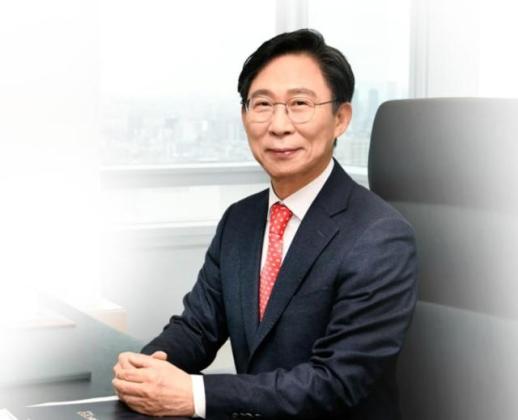 Samsung Life's CEO Redefines Insurance in the Age of AI The insurance industry stands at a significant turning point. With low birth rates, an aging population, digital transformation, and the AI revolution occurring simultaneously, traditional life insurance models are being shaken. Where insurance companies once relied on product sales and agent organizations for competitiveness, the focus has now shifted to data, platforms, and the ability to manage the entire customer lifecycle. Hong Won-hak, CEO of Samsung Life, is among the insurance leaders most actively embracing these changes. He is redefining insurance not merely as a risk protection industry but as a comprehensive life care industry that manages health, assets, retirement, and overall life. Through AI, healthcare, senior business initiatives, and digital innovation, he aims to transform Samsung Life into a future-oriented financial platform. Hong's entrepreneurial vision in finance ultimately boils down to one question: How far can insurance truly take responsibility for people's lives? Dreaming of an 'Life Platform' Beyond Insurance The insurance industry has long grown in a consistent manner. Customers purchase insurance, companies underwrite risks, and payouts occur when accidents happen. However, demographic changes are altering this structure. People are living longer and seeking healthier lives, and their expectations of insurance are evolving. Hong Won-hak has quickly recognized this shift. He believes the future of insurance lies not in death benefits but in the integration of health management, retirement planning, and asset management. Insurance companies must evolve from merely providing post-accident coverage to becoming partners that manage the entirety of a customer's life. In recent years, Samsung Life has focused on expanding its senior and healthcare businesses. The company is preparing a new business model that combines nursing services, health management platforms, and asset management functions. This is not just a diversification of business; it is an attempt to redefine the very purpose of the insurance industry. Hong views insurance not merely as a financial product but as a life infrastructure. He believes that the insurance company should play a role throughout the entire process of a customer's life—from birth to growth, retirement, and aging. This perspective is reflected in Samsung Life's future strategy. As the life insurance market matures, traditional methods will no longer suffice for growth. New markets must be created, and Hong sees this opportunity in the aging society.The future of the insurance industry is ultimately tied to the future of the senior market. South Korea is one of the fastest-aging countries in the world, and significant industrial changes are likely to emerge from the senior sector over the next decade. Hong aims to position Samsung Life at the center of this transformation. AI as a Revolution, Not Just Cost-Cutting Many financial companies discuss AI, but many remain focused on automation and cost reduction. Hong's view of AI is different. He sees AI as a technology that fundamentally changes the structure of the insurance industry. Insurance is essentially a probability-based industry, predicting who is likely to get sick, what accidents may occur, and which customers might cancel their policies. Ultimately, an insurance company's competitiveness hinges on how accurately it can predict the future. AI excels in this domain. In the past, insurers relied on average data; now, they can utilize individual data. Instead of analyzing groups, they can analyze individuals, providing tailored services based on each customer's health status, consumption patterns, and financial activities. Hong believes AI will shift the insurance industry toward a prevention-focused model. Historically, insurance has been about providing coverage after an incident; in the future, preventing incidents will become paramount. It will be more important to help customers avoid illness than to pay out claims after they fall ill. With the integration of wearable devices, health data, and generative AI, insurers can manage customers' health in real-time. They can encourage healthy lifestyles, predict disease occurrence, and offer personalized health management services. The digital innovation that Hong emphasizes aligns with this vision. AI is no longer optional; it is a survival strategy for insurance companies. Insurers hold some of the most extensive customer data among financial institutions, providing them with significant potential to leverage AI. This is why Samsung Life is investing in expanding its AI-based customer service and data analytics capabilities. The future of insurance is likely to be shaped by AI, and Hong is preparing for that change. Rebuilding the Insurance Ecosystem with Samsung Life and Samsung Fire Hong's strength lies in his experience across both life and non-life insurance sectors. He has served as the CEO of both Samsung Life and Samsung Fire, giving him a unique understanding of the differences and similarities between the two fields. Life insurance is a long-term asset management industry, while non-life insurance focuses on risk management. The combination of these two areas can enable comprehensive management of a customer's entire life.The collaboration between Samsung Life and Samsung Fire is not merely about synergy between affiliates; it is about creating a new model for the insurance industry. For instance, auto insurance customers can be offered health insurance services, while health insurance customers can be connected to asset management services. Customer data can also be utilized in an integrated manner.With the addition of AI, the possibilities expand even further. By comprehensively analyzing customers' consumption, health, assets, and risk information, insurers can provide hyper-personalized services. This represents a new value that traditional insurance companies have not been able to offer. Hong views insurance not just as a financial product sales business but as a data industry. Insurance data reflects people's lives most deeply, encompassing health, assets, consumption, and risk. In the age of AI, the most powerful competitive edge is data. Hong aims to leverage the data held by Samsung Life to create a new insurance ecosystem. Proven Changes in Numbers, but the Real Challenge Starts Now Hong's strategy is still a work in progress, but results are already emerging. In the first quarter of 2026, Samsung Life recorded a consolidated net profit of 1.2036 trillion won, an increase of 89.5% compared to the same period last year. The company's retained CSM grew to 13.6 trillion won, while new contract CSM reached 848.6 billion won. Managed assets totaled 265 trillion won, with a solvency ratio (K-ICS) of 210%. The company maintains one of the highest levels of profitability and soundness in the domestic insurance industry. The number of exclusive agents has also expanded to approximately 44,400, with a net increase of over 1,500 this year alone. This indicates that the company has not abandoned human competitiveness in the digital age. However, the real challenges are just beginning. The insurance industry is poised to undergo significant changes over the next decade. Low birth rates could shrink the insurance market itself, while big tech companies are entering the financial sector, and AI is reshaping industry dynamics. Hong is not just running an insurance company; he is designing the future of the insurance industry. If he succeeds, Samsung Life could evolve into a comprehensive life care platform beyond traditional insurance. If he fails, the company may struggle to break free from the limitations of conventional life insurance. Thus, Hong's challenge is crucial. It represents an experiment to change the future of insurance. : SWOT Analysis :StrengthSamsung Life's overwhelming competitiveness is reflected in its status as the leading brand in the domestic life insurance industry, with managed assets of 265 trillion won, a CSM of 13.6 trillion won, and a K-ICS ratio of 210%. Hong's experience leading both Samsung Life and Samsung Fire provides him with a comprehensive perspective that encompasses both life and non-life insurance. Setting AI and senior business as future growth pillars is also a strength.WeaknessThe life insurance market itself has entered a low-growth phase. Low birth rates are reducing the base of new customers, and the reliance on investment income is seen as a limitation. Due to the nature of large organizations, the pace of digital transformation may be slower than that of startups or big tech companies.OpportunityAging presents the greatest opportunity for Samsung Life. Healthcare, senior business, nursing industry, and AI-based personalized insurance are likely to be key growth drivers in the insurance industry over the next decade. The synergy with Samsung Fire also represents an important growth opportunity.ThreatThe entry of big tech into finance, intensified AI competition, stricter insurance regulations, and market contraction due to low birth rates are ongoing threats. Additionally, fluctuations in interest rates and strengthened capital regulations may also pose management burdens.* This article has been translated by AI. 2026-06-13 11:36:00
 -
 Prosecutors Seek Arrest Warrants for Former Shincheonji Officials Amid Allegations of Political Manipulation The Joint Investigation Team probing allegations of collusion between religion and politics has applied for arrest warrants for former Shincheonji officials accused of forcing party membership. On June 13, the team announced it had requested warrants for three individuals, including former General Secretary Ko Dong-an, who is considered the second-in-command of Shincheonji, and the former secretaries of the Johan and Simon tribes, on charges of violating party laws. This marks the first attempt to secure custody since the team was established on January 6, 2026. The former officials are suspected of coercing members to join the People Power Party to influence the party's presidential and general election primaries from 2021 to 2024. The investigation team reported that Shincheonji encouraged its members to join the People Power Party under initiatives like the 'Pilates Project,' resulting in over 50,000 members registering as party affiliates. Since January, the team has conducted searches at the Shincheonji headquarters and the People Power Party's offices, securing membership lists from both organizations. Following the analysis of seized materials and interviews with related individuals, the team has questioned Ko three times as a suspect since last month. Reports indicate that Ko has largely denied the allegations during these interrogations. If the arrest warrants for Ko and the others are granted, the investigation team is expected to pursue the apprehension of Lee Man-hee, the head of Shincheonji, who is viewed as a central figure in the allegations.* This article has been translated by AI. 2026-06-13 10:42:00