
Journalist

Seo Hye Seung
-
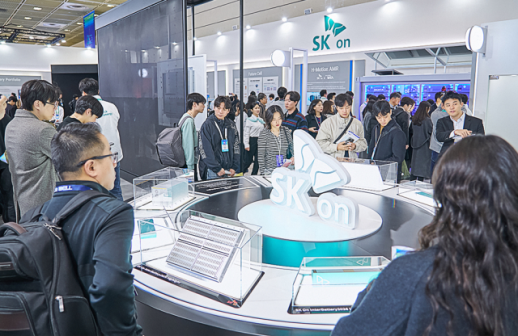 SK On-Nissan Battery Deal Under Review as EV Demand Slows Cracks are emerging in the electric-vehicle battery industry, with reports that SK On and Japan’s Nissan have entered a full review of a battery supply agreement said to be worth about 15 trillion won. The move highlights structural uncertainty in a market long described as a growth sector, as demand shifts collide with heavy investment burdens. The review is rooted in a slowdown in the EV market. As global automakers adjust production plans, battery demand is weakening faster than expected. Nissan, amid signs it is moderating the pace of its EV strategy, is reported to be reexamining the contract’s terms and scale. The development suggests broader demand forecasts across the industry are becoming less reliable, not merely a routine negotiating issue. Battery makers are also under growing strain. SK On is making large-scale facility investments while continuing to run at a loss. Long-term supply contracts premised on expanding capacity are meaningful only if demand holds. If the market moves differently than expected, investment commitments can quickly become financial risk. The contract review reflects that reality. The issue extends beyond a single company. Across the global battery sector, companies have been slowing investment, delaying plant construction and renegotiating contract terms. A softer demand growth rate, cost pressures and changes in subsidy policies are converging, testing the limits of an industry built on speed and expansion. For years, the battery business has been driven by a race for scale — how quickly and how much capacity could be secured. That approach is now being reassessed. With demand uncertainty rising, aggressive expansion can become a liability, making changes to growth strategies increasingly unavoidable. Relations between automakers and battery suppliers are also shifting. Where carmakers once moved early to lock in long-term deals out of concern about shortages, they are now more likely to scrutinize conditions and revisit terms, signaling a subtle change in leverage. For South Korea’s battery industry, the SK On-Nissan review is a warning that strategies focused mainly on expanding size may no longer be sustainable. The sector remains a growth industry, but the yardsticks are changing — balance over speed, and profitability over sheer scale. 2026-05-05 08:33:14
 -
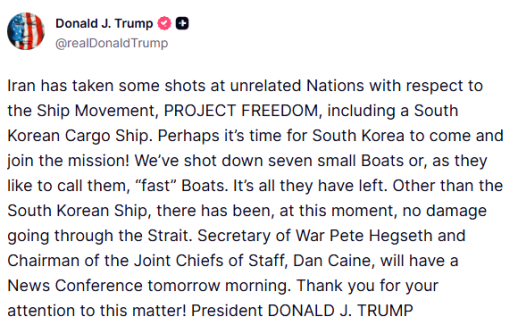 Trump pressures South Korea to join Project Freedom after ship explosion in Hormuz Strait SEOUL, May 05 (AJP) - Following a mysterious explosion on a South Korean cargo vessel in the Strait of Hormuz on Monday, the United States' President Donald Trump has publicly pressured South Korea to deploy military forces to a U.S.-led maritime mission "Project Freedom" in the Hormuz Strait. Trump directly linked the safety of commercial shipping to participation in the naval mission, while explicitly attributing the explosion to an Iranian attack. The incident marks the first time a South Korean vessel has sustained physical damage since the U.S. and Israel attacked Iran on February 28, forcing Seoul into a difficult diplomatic position between its primary ally and its energy security interests. While the South Korean government remains cautious in its assessment, Trump's immediate assignment of blame narrows the window for the investigative deliberation typically preferred by South Korean officials. The HMM NAMU, a cargo ship operated by HMM, suffered an explosion and subsequent fire at approximately 8:40 p.m. (1140 GMT) on May 4, while navigating waters near the United Arab Emirates (UAE). HMM, formerly known as Hyundai Merchant Marine, is the flagship carrier of South Korea and serves as a critical link in the country's export-driven economy. No casualties were reported among the crew members, and South Korean diplomats in the UAE and Dubai have contacted the shipping company to ensure the safety of the sailors. The vessel was operating in the strategic Strait of Hormuz when the blast occurred, an area that serves as a transit point for a significant portion of South Korea's oil imports. In a post on the Truth Social platform, Trump stated that Iran has taken shots at unrelated nations, including the South Korean cargo ship. He suggested it is time for South Korea to join the mission, noting that United States forces had already engaged and destroyed seven Iranian fast boats that were obstructing movement in the strait. The South Korean government held an emergency meeting at midnight on Tuesday to discuss the protection of its citizens. Kim Jin-ah, the second vice foreign minister, expressed deep concern over the incident but emphasized that the government is still investigating the exact cause and the possibility of a targeted strike. The call for military involvement comes amid a pattern of Trump targeting allies who decline to support U.S.-led security initiatives. He recently imposed tariff increases and proposed troop reductions for Germany after its government refused to join similar naval operations, a precedent that weighs heavily on the current deliberations in Seoul. The U.S. Secretary of War Pete Hegseth and Chairman of the Joint Chiefs of Staff Dan Caine are scheduled to hold a news conference on Monday morning to discuss the engagement. 2026-05-05 08:25:52
 -
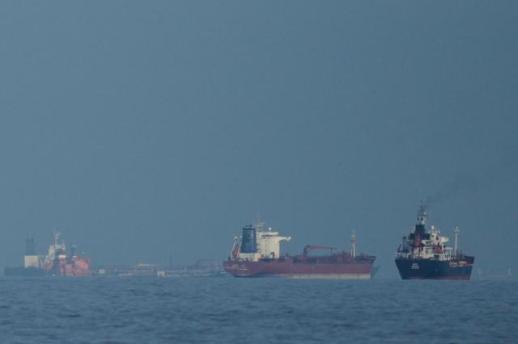 South Korea Holds Emergency Meeting After Blast, Fire on Ship in Strait of Hormuz South Korea convened an emergency meeting after an explosion and fire broke out on a Korean-operated vessel in the Strait of Hormuz. The government said it will strengthen coordination with host-country authorities so Korean sailors can be rescued and protected immediately if needed. The Foreign Ministry said the Overseas Nationals Protection Countermeasures Headquarters met at midnight on May 5 under Vice Foreign Minister Kim Jin-a, with seven diplomatic missions in the Middle East and the Ministry of Oceans and Fisheries attending. The incident occurred at about 8:40 p.m. on May 4 (Korea time) in waters near the United Arab Emirates, when an explosion and fire broke out on the HMM NAMU, a cargo ship operated by Korean shipping company HMM, the ministry said. Kim expressed deep concern that it was the first reported damage to a Korean vessel inside the Strait of Hormuz since the outbreak of war in the Middle East. “Fortunately, there were no casualties this time, but it is important to identify the cause and prevent a recurrence,” Kim said. She added that it is essential to be fully prepared to take swift steps to protect the lives and safety of Korean sailors at any time. Participants included the South Korean Embassy in the UAE, the Consulate General in Dubai, and the embassies in Iran, Saudi Arabia, Iraq, Qatar and Oman. The embassy in the UAE and the consulate general in Dubai said they contacted the shipping company and related agencies immediately after the incident to confirm the sailors’ safety and request necessary assistance. The missions said they have maintained regular communication with local authorities to protect and support Korean ships and crews, and pledged to further strengthen coordination so safety measures, including immediate rescue, can be carried out in an emergency. The Foreign Ministry said it will continue to closely monitor local conditions and maintain tight communication between headquarters and overseas missions while pursuing all necessary steps to ensure the safety of South Korean nationals. The United States on May 4 launched an operation dubbed “Project Freedom,” escorting civilian vessels with military aircraft and warships to help them pass through the Strait of Hormuz and leave the Gulf (Persian Gulf), the report said. U.S. President Donald Trump wrote on Truth Social that Iran had fired several times in connection with ship movements related to “Project Freedom,” targeting “irrelevant countries” including a Korean cargo ship, and said it seemed time for South Korea to join the operation.* This article has been translated by AI. 2026-05-05 08:21:15
 -
 Domino’s Korea Raises Prices on Six Drinks, Including Coca-Cola and Sprite Domino’s Pizza has raised prices by up to 8.7% for major beverages sold in its stores, including Coca-Cola and Sprite. Industry officials said on May 5 that Domino’s increased prices on six drink items by 100 to 200 won. The company said it raised the prices starting May 4 due to higher costs. Coca-Cola and Coca-Cola Zero in 1.25-liter bottles rose 8.7% to 2,500 won. Sprite in a 1.5-liter bottle increased 8.3% to 2,600 won. Three 500-milliliter drinks also went up 100 won each. Coca-Cola and Coca-Cola Zero in 500-milliliter bottles rose 5.9% to 1,800 won, and Sprite in 500 milliliters was also set at 1,800 won. Domino’s said it asks for customers’ understanding and will “do our best to repay your support and interest with the best service and menu.” Domino’s is No. 1 in South Korea’s pizza franchise market by sales. According to the Financial Supervisory Service’s electronic disclosure system, Cheong O DPK, Domino’s local operator, posted 210.9 billion won in revenue last year, up 4.8% from 201.2 billion won a year earlier. The increase comes as raw material and logistics costs continue to rise, and is seen as a move to protect profitability. An industry official said companies sometimes adjust prices for drinks or side items first because raising pizza prices can trigger stronger consumer pushback, adding that further increases cannot be ruled out if cost pressures persist. * This article has been translated by AI. 2026-05-05 08:19:27
 -
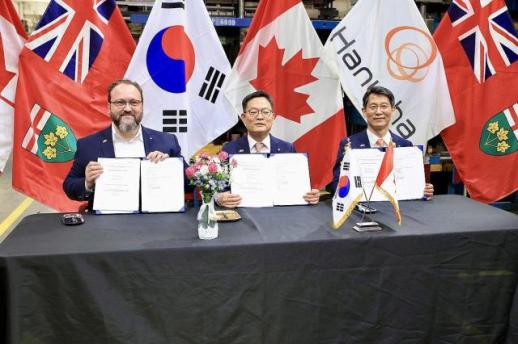 Hanwha’s KAI Stake Signals Shift Toward Management Role, Raising Integration Questions Hanwha Aerospace has secured more than a 5% stake in Korea Aerospace Industries and changed the stated purpose of its holding from a “simple investment” to “management participation.” The numerical shift may look modest, but it signals a potentially important moment as South Korea’s defense sector moves from competition among individual firms toward competition among integrated systems. A key point is separating what has happened from what may come next. A 5% stake does not, by itself, confer control. At this stage, it amounts to an early entry aimed at testing management influence. Still, the move points in a clear direction. Given talk of additional investment and broader cooperation, the possibility of stronger influence or structural reorganization over the long term remains open. The central question, then, is not what has already changed, but what kind of structure should be designed. The defense industry’s reality is straightforward: integration is increasingly necessary to compete globally. System-level competition — linking fighter jets, engines, missiles and maintenance into a single package — has become the standard. U.S. defense contractor Lockheed Martin and Europe’s Airbus both operate on large integrated structures. With companies fragmented, South Korea risks falling behind in major contract competitions. From that perspective, efforts to link Hanwha and KAI follow a broader trend. But integration brings its own risks. It can improve efficiency while also concentrating power, which can weaken competition and create structural rigidity. If that dilemma is not addressed, a “national champion” could drift toward becoming a “national monopoly.” The answer is not to avoid the contradiction but to design a system that manages it. One approach is a dual structure: integrate at the top while preserving competition at the lower levels. A prime contractor can strengthen system-integration capabilities, while a layered competitive ecosystem is maintained in parts, materials and technology. This is also a model used in global defense industries. Integration and competition can operate together if the structure is designed to allow it. Debate over privatization should be viewed in the same framework. KAI is a strategic asset that grew under government leadership. Privatization can be a tool to increase autonomy and efficiency. But defense is not like ordinary manufacturing: it is tied to national security, heavily dependent on government demand, and requires technology controls. A fully free-market model is difficult to apply. That points to what could be called “regulated privatization.” Management would be left to the private sector, while the state sets and enforces minimum standards for technology, security and fair competition. The goal is rule-setting, not day-to-day intervention. Crossing that line can hollow out privatization; missing it can create security risks. Technology concentration should be assessed by the same logic. It is an overstatement to frame the accumulation of technology in domestic firms as a loss of sovereignty; reduced reliance on overseas sources can be a benefit. The risk is different: if too much technology is concentrated in one company, the industry’s flexibility and resilience can decline, and a single failure can become a systemwide risk. What matters, then, is not only who owns technology but how access is structured. Core technologies should be managed at the national level, with an open framework that allows multiple companies to use them. Competitiveness comes from enabling broad use, not from concentrating capabilities in one place. At its core, the issue is whether South Korea can capture the power of integration while preserving the safety that comes from dispersion. Defense is a field that cannot lean entirely to one side: without integration, it can lose out in competition; without dispersion, the system becomes vulnerable. Hanwha’s move to participate in KAI management is both an opportunity and a test. With careful design, South Korea’s defense industry could take a step forward. Without it, the country could lose both efficiency and competition. What is needed now is not speed but a system. The key is not who holds what, but how it is run. The future of South Korea’s defense industry will depend less on the direction of this choice than on the precision of its design. 2026-05-05 08:15:06
 -
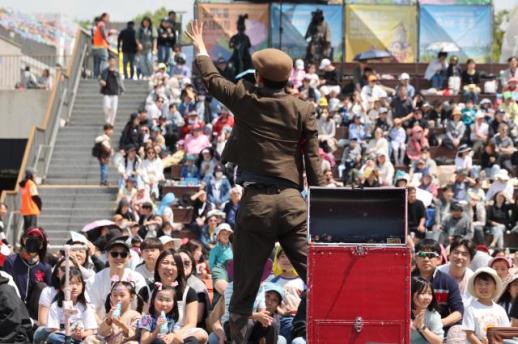 Circus casts a little magic over Children's Day on Nodeul Island SEOUL, May 04 (AJP) - A little magic settled over Nodeul Island this Children’s Day as the Seoul Circus Festival turned the riverside island into a world of acrobats, laughter and wide-eyed wonder. From Monday through Tuesday, circus performers tumbled across grassy fields, balanced high above cheering crowds and invited children to step into the spotlight themselves. What began as a performance quickly became a playground where children were no longer spectators, but part of the show. Now in its ninth year since launching in 2018, the festival adopted the theme “Circus Land,” welcoming every visitor as a member of the circus troupe the moment they arrived. Before settling in to watch performances, families tried their hand at circus acts and activities scattered across the venue. Children climbed jungle gyms, rode small carousels, and navigated obstacle courses under clear skies. This wasn't a festival about sitting and watching. Audiences clapped, cheered, and became part of the show as acrobatics and music filled the air. The festival turned spectators into participants, making everyone part of the circus. or one holiday, the circus offered something beyond entertainment — a small world where imagination felt real and Children’s Day carried just a little more magic. 2026-05-05 08:12:58
 -
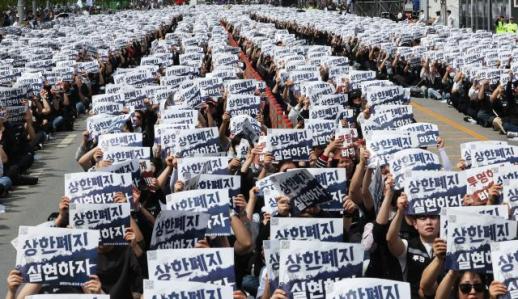 Samsung Electronics Union Rift Deepens as Donghaeng Group Quits Joint Action Samsung Electronics’ labor unions are showing visible cracks, with a joint bargaining and protest front beginning to unravel from within — a development that goes beyond a routine labor-management dispute. Donghaeng, a union centered in the company’s non-semiconductor operations, has formally withdrawn from the joint bargaining group and the joint struggle headquarters. The unified response system was formed for last year’s wage talks and later expanded into a protest organization after negotiations broke down, but it ultimately failed to overcome internal differences. Donghaeng cited dissatisfaction with demands led by the semiconductor division for bigger performance bonuses and with a hard-line protest strategy. Members in the DX division, which handles finished products, have argued that their interests were not reflected in the structure. The group also publicly pointed to a lack of consultation among unions and an erosion of trust. As a result, conflict has widened from labor-management tensions to disputes among unions themselves. With division-by-division interests colliding inside the same company, the episode underscores how difficult it can be to hold those interests together under a single union framework — a reflection of Samsung Electronics’ complex corporate structure. The timing adds to the stakes. With a general strike having been announced, the collapse of the joint front could weaken both the rationale and momentum for collective action. Observers have also raised the possibility that, after Donghaeng’s exit, participation in any strike could splinter into separate decisions. Samsung Electronics’ unions have expanded rapidly in size, but growth does not necessarily translate into broad representation. The more complex the business, the more layered the interests. Semiconductors and finished products differ in profit structures and performance-based compensation systems, and demands can diverge accordingly. This episode suggests those fault lines have reached a breaking point. Union fragmentation also burdens the company. A divided bargaining channel can complicate negotiations and raise the cost of conflict. But responsibility cannot be placed solely on management; unions that cannot coordinate internally are also exposing their own limits. What is needed now is not a higher level of confrontation but a reset of representation. A structure in which one division’s demands effectively speak for the whole workforce is unlikely to last. Without a system that can reconcile competing interests, similar disputes are likely to recur. The challenge facing Samsung Electronics’ unions is not confined to one company. As industries become more complex, labor, too, becomes harder to unify around a single set of interests. The latest split highlights a new task confronting South Korea’s labor movement. 2026-05-05 08:12:06
 -
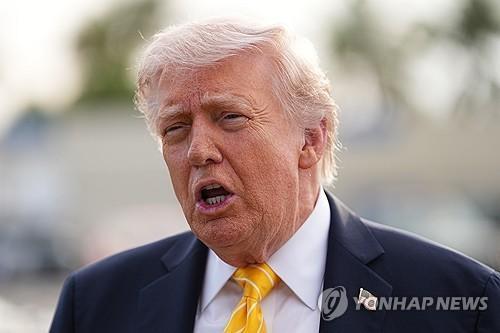 Trump Pressure Puts South Korea’s Hormuz Strait Decision in Focus Tensions around the Strait of Hormuz are rising again. President Donald Trump has publicly pressed South Korea to join a military operation after claiming Iran attacked a South Korean vessel, urging participation in a U.S.-led “liberation project.” With possible damage to a South Korean ship being discussed, public opinion may sway. But in moments like this, the standard for decision-making should be clear: national interest, not emotion. First, the facts must be verified. So far, it has not been confirmed whether Iran was responsible for any damage to the vessel. In conflict situations, early reports are often exaggerated or shaped by political aims. Making a military decision based on a single country’s claim is risky. The government should conduct objective checks through multiple intelligence and information channels. Rushing the process is the biggest risk. Verification, however, should not become an excuse for inaction. What matters is having a response roadmap. Measures to protect South Korean nationals and assets on the ground should be immediate: securing ship safety, adjusting routes and ensuring the military is ready to provide protection. Strategic decisions, including whether to join military action, require caution. Tactics demand speed; strategy demands accuracy. The two should not be confused. The Strait of Hormuz is a vital artery for South Korea’s economy. A large share of the country’s crude oil imports passes through it. Instability there can quickly translate into higher energy prices and rising costs across industry. Still, having a stake does not automatically mean military involvement. Interests require a response, but the form of that response is a matter of choice. South Korea must weigh its national interests in concrete terms, and those interests are not singular. On one side is the U.S.-South Korea alliance, a top security interest. On the other are ties with the Middle East and economic interests such as energy supply. Both matter and can collide. National interest, therefore, is not a slogan but a question of priorities. The standards for South Korea’s choice should be clear: Protecting lives and property comes first. Second, it should act in a way that does not undermine trust in the alliance. Third, it should minimize economic damage. The decision should seek balance within these principles; treating any one as absolute could harm the national interest. Washington’s request also needs a cool-headed assessment. Trump is pressing South Korea while emphasizing allied military contributions. But an alliance is not automatic mobilization; it should rest on shared interests and agreement. South Korea has the sovereign right to decide whether to participate, and its benchmark should be its own national interest. That does not mean ruling out multilateral cooperation. In practice, maritime security in the Strait of Hormuz operates within a U.S.-led multilateral framework. The key is separating independent decision-making from cooperation in execution. South Korea should decide on participation on its own, but if it joins, it can use the multilateral structure. In other words, decisions should be sovereign, implementation realistic. A sober view is also needed on diplomacy. It is structurally difficult for South Korea to serve as a fully neutral mediator between the United States and Iran. But it can play a buffering role that helps reduce tensions. As a country with energy interests at stake, it is more realistic to seek diplomatic space that manages conflict rather than expands it. Military involvement should be a last resort. Once involved, South Korea could become a party to a clash beyond a simple escort mission. That could have long-term effects on relations across the Middle East. Given South Korea’s deep economic ties in the region, a one-track choice carries risks. What is needed now is clear: respond quickly on the ground, judge carefully at the strategic level, and organize national interests by priority. The more U.S. pressure, international urgency and domestic opinion shifts converge, the more disciplined the standard for judgment must be. Tensions in the Strait of Hormuz are unlikely to ease quickly. This decision may not be a one-off, but a test that signals the standards of South Korea’s diplomacy going forward: calculation over emotion, structure over speed, and principles over pressure.* This article has been translated by AI. 2026-05-05 08:00:17
 -
 Fire on HMM Namu Ship in Strait of Hormuz Extinguished; Vessel Heads to Dubai for Checks A fire aboard the HMM Namu, a cargo ship that had been stuck in the Strait of Hormuz under Iranian control, has been extinguished, HMM said. No injuries were reported, and the vessel is expected to enter the nearby port of Dubai to assess damage. HMM said May 5 that the fire was fully put out after midnight May 5, Korea time. Because a large amount of carbon dioxide (CO2) was used to fight the fire, the company said it plans to enter the engine room later in the afternoon to confirm the extent of damage and then report the findings to the South Korean government and its headquarters. The HMM Namu is a Panama-flagged 38,000-deadweight-ton bulk carrier operated by HMM. It was launched in September last year at the HPWS shipyard in Guangzhou, China. The fire broke out with an explosion in the port-side section of the engine room at about 8:40 p.m. the previous evening (Korea time) while the ship was anchored in waters near the United Arab Emirates, the company said. Six South Korean crew members and 18 foreign crew members were aboard, and HMM said it has confirmed there were no casualties. The ship is expected to be moved to Dubai port soon. The cause of the fire has not been determined. President Donald Trump, in a post on his social media platform Truth Social, said Iran had fired several times at ships from unrelated countries, including a South Korean cargo vessel, during vessel movements linked to a “liberation project,” and pointed to Iran as being behind the incident. 2026-05-05 07:03:18
 -
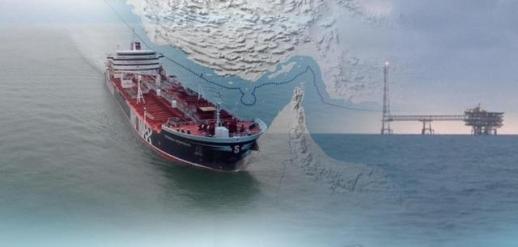 Explosion, Fire Reported on Korean-Operated Ship in Strait of Hormuz; Government Checking if It Was Attacked The South Korean government said it was checking the facts after an explosion and fire broke out on a Korean shipping company’s vessel in the Strait of Hormuz, as the United States launched what it calls the “Project Freedom” operation using warships and military aircraft to help civilian ships transit the area. South Korea’s Foreign Ministry said the incident occurred at about 8:40 p.m. Korean time on May 4 on a vessel operated by a South Korean shipping company that was anchored near the United Arab Emirates in waters around the Strait of Hormuz. The ship was identified as the HMM NAMU, which sails under the Panamanian flag. The ship had 24 crew members on board — six South Koreans and 18 foreign nationals — and no casualties had been reported as of the latest information, the ministry said. The ministry said it was investigating the cause of the explosion and fire and the extent of any damage. “We will take necessary measures to ensure the safety of our ship and crew while communicating closely with relevant countries,” it said. Yonhap News Agency reported that HMM said a fire broke out near the port side of the engine room after an explosion-like sound of unknown cause. Crew members carried out their own firefighting efforts, and no injuries were reported. The incident has raised questions about a possible link to military clashes during the U.S. “Project Freedom” operation. With tensions rising between the United States and Iran, there has been speculation the ship may have been attacked, but the government said it was still confirming whether it was hit. South Korea’s Oceans Ministry said 26 South Korean-flagged ships are currently inside the Strait of Hormuz, including nine oil tankers and car carriers. It said 160 South Korean crew members are staying in the strait area — 123 on South Korean-flagged ships and 37 on foreign-flagged ships. They have been unable to leave the area for the past two months as Iran’s blockade of the Strait of Hormuz has continued. * This article has been translated by AI. 2026-05-05 06:48:13