


Latest by
-
 Cow Manure to Be Used as Solid Fuel: Government Begins Field Verification The government is set to begin field verification for utilizing cow manure as solid fuel. This initiative aims to investigate the entire process from the amount of manure generated on livestock farms to the production and quality of the fuel, thereby reducing the burden of livestock manure disposal while establishing a foundation for renewable energy use.The National Institute of Environmental Research, under the Ministry of Climate, Energy and Environment, announced on September 17 that it will hold a kickoff meeting for the 'Field Survey and Policy Support Research for Promoting Cow Dung Solid Fuel' on September 18 at the JK Business Center in Yongsan, Seoul.Cow dung is a biomass resource generated locally that can be processed into solid fuel for energy use. The government explains that collecting locally produced cow dung for fuel not only alleviates the burden of livestock manure disposal but also contributes to greenhouse gas reduction.On July 30, the government began revising related systems, including the permitting and quality standards for cow dung solid fuel facilities, in accordance with the 'Act on the Management and Use of Livestock Manure.' However, to implement these systems effectively, verification of the actual amount of cow dung generated, fuel quality, and economic feasibility is necessary.To this end, the National Institute of Environmental Research will gather data on the entire process from cow dung generation to solid fuel production and final quality through this research. The study will be conducted in three phases: a field-based survey of cow dung generation, quality and material-energy balance analysis at each processing stage, and tailored policy recommendations.Initially, the research will compare and analyze the actual amount of cow dung emitted from livestock facilities with the quantity and characteristics of the dung currently being processed at solid fuel production facilities. Approximately ten representative farms near the production facilities and a core sample of 300 head of cattle farms will be designated for periodic sampling and analysis of solid fuel quality standards, total solids, salinity, and phosphorus.At the production facilities, the material and energy balance, quality, and moisture content at each processing stage will be analyzed from raw cow dung to solid fuel products. This will provide scientific evidence regarding salinity and phosphorus concentration, as well as estimate the potential for solid fuel production considering actual cow dung emissions, collection rates, quality compliance rates, and processing yields.Efforts will also be made to incorporate field opinions into policy. Two meetings will be held at the end of this year and early next year, involving stakeholders such as cow dung solid fuel producers, consumers, and local governments, to prepare policy recommendations for system improvements.Park Jeong-min, head of the Environmental Resource Research Division at the National Institute of Environmental Research, stated, "This research will provide substantial scientific data on actual cow dung generation, fuel quality, and facility operation. We plan to continuously support the development of policies that consider both environmental and energy aspects in the promotion of cow dung solid fuel, tailored to local conditions."* This article has been translated by AI. 2026-09-17 12:04:00
 -
Interdimension Launches Apartment Auction Analysis Service 'Aljja Auction' Interdimension Co., Ltd. is launching an auction information service that analyzes apartment auction data from 60 courts across the country, providing attractiveness rankings and explanatory reports.On September 17, the proptech startup announced the official release of 'Aljja Auction,' aimed at discouraging short-term speculative investments and enabling actual buyers to analyze their rights.Aljja Auction is a proptech platform that collects and analyzes 25 types of public and private data daily, including Supreme Court auction information (property details, case specifics, status investigations, and appraisal reports), the Ministry of Land's actual transaction prices, building registries, and economic statistics from the Bank of Korea. As of August, the platform has accumulated data on 10,000 properties and analyzed over 39,000 court and government documents.The core of the service is the 'six-item 100-point algorithm (v18),' designed based on 306 professional materials, including 62 academic papers. Properties listed within seven days of the auction date are comprehensively evaluated according to internal criteria and classified into five grades (S to D). Properties that have been unsold more than five times can lose up to 25 points.The evaluation criteria include: location (proximity to transportation, school districts, amenities, and medical access), safety of rights analysis (burden of acquisition, risks such as rights of retention and statutory superficies), price attractiveness compared to market value (expected returns based on actual transaction prices and actual costs), future value (redevelopment projects, transportation improvements, rental rates, and stability of complex size), minimum price compared to appraised value (drop from the appraised value to the minimum bid), and brand (price premium and liquidity based on the construction company's brand).The service also offers document explanation features for novice buyers. It breaks down court documents such as property specifications, appraisal reports, and land registry documents into a nine-step card format, from the start of the case to recommended bid prices. Users can check the top-ranked properties and detailed analyses for free across 60 courts nationwide. Full rankings and detailed reports are available through a premium subscription for 33,000 won per month (including VAT), while document issuance and analysis are offered at 1,500 won each (including VAT).According to the Supreme Court, the number of auction applications at courts nationwide reached 121,261 last year, the highest since 2009. The total amount of apartment sales reached 17.4176 trillion won, a record high. In July, there were 11,300 cases, and in August, 9,684 cases, maintaining a monthly average of around 10,000 cases this year.CEO Kim Won-seok stated, 'Aljja Auction is not a platform that indiscriminately encourages purchases but an analytical tool that helps actual buyers assess risks with objective data by lowering the barriers of complex court documents. We will update the status of 60 courts nationwide daily to resolve information asymmetry and serve as a starting point for reasonable home ownership.'* This article has been translated by AI. 2026-09-17 11:52:00
-
Sangmidang Holdings Engages in Charity Activities at 29 Welfare Institutions Nationwide for Chuseok Sangmidang Holdings is conducting charity and volunteer activities across the country in celebration of the Chuseok holiday.On September 17, Sangmidang Holdings announced that from September 14 to 23, it will carry out product donations and volunteer activities at 29 welfare institutions nationwide.On September 16, the Happy Volunteer Group, composed of employees from its subsidiaries, visited the Yangjae Senior Center in Seocho, Seoul, to host a 'Sweet Chuseok' event with local seniors. Employees engaged with 200 seniors in activities such as making rice cakes and participating in traditional games, while also serving holiday meals. They exchanged Chuseok greetings along with handwritten letters and donated products like Sanglim full moon bread and cream bread.Key subsidiaries are also continuing tailored charitable efforts across various regions. Sanglim is providing over 6,000 items, including Greek Schwein ham sets, olive oil, and bread, to 14 welfare institutions in Seoul, Gyeonggi, Chungcheong, and Gyeongsang provinces. Paris Croissant is delivering pastry sets, roll cakes, and rice to four welfare institutions in Seongnam and Gangwon regions.BR Korea visited homes of veterans in Eumseong, Chungbuk, to deliver Sanglim Jeju Black Pork ham sets, while SPC GFS collaborated with the Yangjae Comprehensive Social Welfare Center to create holiday food packages containing Sanglim Haimeon udon and full moon bread. SPL also visited a childcare facility in Pyeongtaek to donate castella products. Sekta Nine and SPC PACK plan to deliver bakery products to welfare institutions in Yeoksam-dong, Seoul, and Cheongju, and will sequentially conduct employee participation volunteer activities focused on caring for children and individuals with disabilities.A representative from Sangmidang Holdings stated, "In celebration of Chuseok, our employees have come together to convey warmth to our neighbors. We will continue to engage in various social contribution activities that allow employees to directly participate and bring comfort to the community."* This article has been translated by AI. 2026-09-17 11:48:00
-
Law Firm Hwa Woo Welcomes Energy Expert Baek Jong-kwan as Senior Foreign Attorney Law firm Hwa Woo announced on September 17 that it has recruited Baek Jong-kwan as a senior foreign attorney specializing in nuclear power, small modular reactors (SMR), and engineering, procurement, and construction (EPC) contracts for energy plant exports.With over 35 years of experience in energy, EPC, foreign investment, mergers and acquisitions (M&A), and international litigation and arbitration, Baek is recognized as an expert in nuclear energy and international transactions. He has accumulated extensive experience in negotiating key contracts and providing legal advice for domestic companies involved in overseas nuclear power export projects.Baek earned a degree in business administration from Boston College and a Juris Doctor from Georgetown University Law Center. He became a licensed attorney in New York and has been active in South Korea since 1990, offering comprehensive legal advice on nuclear power export projects, domestic business development for foreign SMR companies, cross-border M&A, joint ventures, and international arbitration and litigation.Notably, he represented Korea Electric Power Corporation (KEPCO) in the UAE Barakah nuclear power plant project, overseeing the prime contract negotiations with the Emirates Nuclear Energy Corporation (ENEC) and managing the entire bidding and contracting process.Baek also participated in subsequent contract negotiations related to the Barakah project, including the Operating Support Services Agreement (OSSA) with Korea Hydro & Nuclear Power and the Long-Term Maintenance Agreement (LTMA) with KEPCO KPS, gaining valuable advisory experience throughout the project.He has advised KEPCO and Korea Hydro & Nuclear Power on numerous overseas nuclear projects, including the Olkiluoto 4 project in Finland, the El Dabaa project in Egypt, and various projects in Saudi Arabia.Recently, he led the EPC prime contract negotiations for the Czech Dukovany nuclear power project, representing Korea Hydro & Nuclear Power in discussions with the Czech Power Company’s subsidiary, EDU II, and has provided legal advice on various issues arising during the project implementation phase.Baek has also demonstrated significant expertise in international disputes. He represented KEPCO and Korea Hydro & Nuclear Power in a dispute involving Westinghouse related to intellectual property and U.S. export control issues concerning overseas nuclear contracts, responding to arbitration at the Korean Commercial Arbitration Board (KCAB) and litigation in U.S. federal courts. He has participated in developing legal strategies related to U.S. export control laws in collaboration with foreign law firms.Baek has built early expertise in the next-generation nuclear sector, advising global SMR developers on domestic business development, and possesses extensive practical experience across the nuclear industry, from large-scale nuclear plants to next-generation reactors.In addition to his work in the nuclear and energy sectors, Baek has rich experience in cross-border transactions. He has advised on overseas M&A for domestic companies, including LG Chem's acquisition of U.S.-based NanoH2O and LG Group's acquisition of U.S.-based Rolls-Royce Fuel Cells, as well as various international transactions involving foreign investments and joint ventures in South Korea. He has also represented domestic and international companies, including Samsung C&T, LS Cable, and Sikorsky, in ICC arbitration and other international disputes.Recognized for his expertise, Baek was named a Recommended Lawyer in the energy sector by the global legal evaluation organization Lexology Index for 2026.Through this recruitment, Hwa Woo plans to enhance its advisory capabilities for overseas projects in the nuclear, SMR, and energy plant sectors. The firm aims to provide comprehensive legal services across all stages of overseas nuclear and SMR project bidding, EPC contract negotiations, project implementation, and international disputes, while also expanding synergies in cross-border M&A, joint ventures, and foreign investment.Lee Myung-soo, managing partner of Hwa Woo, stated, "Baek is an expert who has directly handled key contract negotiations and international disputes in South Korea's major overseas nuclear projects. We expect that this recruitment will further expand Hwa Woo's existing capabilities in energy, infrastructure, and international transactions and disputes into the nuclear and SMR sectors, allowing us to provide more comprehensive legal services for domestic companies in the global energy market."* This article has been translated by AI. 2026-09-17 11:40:20
-
 Stray Kids take 'STRAYCITY' across Latin America SEOUL, September 17 (AJP) - K-pop boy band Stray Kids are taking a new music festival built around the group across Latin America, with "STRAYCITY" set to move to Mexico City later this month, JYP Entertainment said Thursday. The festival, jointly planned by JYP and Live Nation, opened in Bogota on Sept. 9 before staging two shows in Buenos Aires on Sept. 14 and 15. Stray Kids headlined the events with a set spanning tracks including "TOPLINE," "MANIAC," "S-Class," "God's Menu," "MIROH" and newer songs "This & That" and "After You." The performances featured a live band as well as large-scale outdoor production including fireworks and video screens. "STRAYCITY" will continue in Mexico City on Sept. 25 and 26, with additional locations expected to be announced. The festival follows a run of major international festival appearances by Stray Kids, including Lollapalooza Paris, British Summer Time Hyde Park, Lollapalooza Chicago and The Governors Ball. Earlier in September, the group also headlined Rock in Rio in Brazil, drawing about 100,000 people, according to JYP. AJP Takeaways - Stray Kids are headlining "STRAYCITY," a new festival built around the group. - The festival opened in Bogota and held two shows in Buenos Aires. - JYP Entertainment and Live Nation jointly planned the project. 2026-09-17 11:32:21
 -
 RIIZE lands second 100 million-stream Spotify hit SEOUL, September 17 (AJP) - "Love 119" by K-pop boy group RIIZE has surpassed 100 million streams on Spotify, becoming the group's second song to reach the milestone after "Get A Guitar," SM Entertainment said Thursday. The 2024 single had logged 100,026,078 streams as of Thursday, according to Spotify data cited by the agency. "Love 119" gave RIIZE its first music show win and peaked at No. 3 on Melon's Top 100 chart. The song previously surpassed 100 million streams on Melon in 2025 and has also crossed the mark on YouTube Music. RIIZE is scheduled to release a new single on Oct. 26. AJP Takeaways - "Love 119" became RIIZE's second song to surpass 100 million Spotify streams. - "Get A Guitar" was the group's first track to reach the milestone. - "Love 119" has also surpassed 100 million streams on Melon and YouTube Music. 2026-09-17 11:32:05
 -
Venture Capital and Investment Sectors Clash Over Liability in New Technology Financing As the venture capital and finance sectors express significant differences regarding the scope of responsibility in new technology financing, financial authorities have announced plans to examine investment contract practices that impose excessive burdens on one party. The government aims to improve contract practices by listening to diverse opinions from market participants.The Financial Services Commission held a meeting on the 16th, chaired by Kim Jin-hong, Director of the Financial Industry Bureau, to promote responsible investment in the new technology finance sector while ensuring smooth funding for startups and technology companies and fostering a healthy investment environment.During the meeting, participants discussed whether existing investment contract practices could impose excessive burdens on investing companies and explored ways to harmonize policy goals of investment activation, moral hazard prevention, and revitalizing the startup ecosystem. Investors, venture companies, and private experts shared various opinions.The venture industry argues that joint liability for individuals should be completely restricted, while the investment sector contends that joint liability is necessary to reflect the characteristics of the new technology finance industry. Private experts emphasized the need for improvements in the market's contract culture and the potential introduction of technical regulations if joint liability is limited.Han In-bae, a section chief at the Korea Venture Business Association, stated, "The prohibition of joint liability should be applied to the new technology finance sector as well, clearly distinguishing between normal business failures and illegal or unjust acts. The same principle of responsibility should apply to all venture investments, regardless of the type of investment institution."Choi Ji-young, representative of the Korea Startup Forum, remarked, "It may seem unreasonable from a startup's perspective that the personal responsibility of founders varies depending on which fund they received investment from. The principle that normal business failure risks should not be transferred to founders must be upheld. When investors propose joint liability, it is difficult for the weaker negotiating position of the invested company to reject the investor's proposal, so it should be limited to the entire company, with exceptions allowed for corporations."Jo Young-rin, CEO of Evertreasure, noted, "In countries like the United States, investors accept investment losses, and reinvestment in failed founders is actively pursued. Unless there is intent or gross negligence, personal liability should be prohibited regardless of the duration of business operations, and even indirect liability transfer, such as through put options, should be restricted to establish a true venture capital culture where investors share risks."The investment sector believes that the new technology finance and venture investment sectors should be viewed differently. Kim Bong-seop, head of Growth Finance, stated, "New technology finance serves as a channel for raising funds for mid-sized companies and has characteristics of the financial industry. Applying the same joint liability restrictions as the Venture Investment Promotion Act, which was introduced to foster venture growth, could hinder industrial development. While a prohibition on policy funds is necessary, a blanket ban on private funds is excessive."Heo Byeong-du, head of Aju IB Investment, commented, "The reason there is no joint liability debate overseas is that various investor protection measures, such as management participation and priority in liquidation, are in place. It is inappropriate to limit joint liability without introducing stability measures domestically."Gil Jun-gil, executive director of Hana Ventures, suggested, "It is not appropriate to uniformly apply the joint liability restrictions of the venture sector to the new technology sector, which has different characteristics in terms of capital and movement patterns. Rather than a blanket prohibition in law, I hope investors can apply it autonomously on a case-by-case basis. The controversy arises because the recovery market does not operate smoothly, so it is also necessary to create an ecosystem where investors can recover their funds through revitalization of the recovery market."Private experts advised that the issue of joint liability in the new technology sector should be approached in various ways. Park Yong-rin, a senior researcher at the Capital Market Research Institute, stated, "According to the principle of equal function and equal regulation, if new technology finance and venture capital have the same functions, it is desirable to introduce the same regulations. However, due to the different characteristics of the two sectors, it is difficult to implement uniform regulations, and detailed consideration of technical matters is necessary."Lee Jong-geon, a lawyer at the law firm Lee & Partners, expressed, "While there is consensus that joint liability for individual founders is undesirable, the issue lies in the method. It is preferable to resolve this through improvements in the market's contract culture rather than through uniform restrictions via legal amendments."Lee Jin, Deputy Governor of the Financial Supervisory Service, stated, "Unlike loans, investments share profits and risks between founders and investors, so imposing joint liability for business failures that founders cannot control should be avoided. Various protective measures can ensure moral hazard prevention and recovery."Kim Jin-hong, Director of the Financial Industry Bureau, concluded, "We will continue to listen to the opinions of the venture industry, investors, and private experts to promote responsible investment while creating an investment environment that allows for smooth funding for startups and technology companies. We will closely examine whether there are investment contract practices that impose excessive burdens on one party and, if necessary, pursue various measures such as model standards and legal improvements."* This article has been translated by AI. 2026-09-17 11:32:00
-
Rural ESG Excellence Awards Focus on Activity Outcomes Starting This Year The Ministry of Oceans and Fisheries, the Ministry of Agriculture, Food and Rural Affairs, and the Ministry of Trade, Industry and Energy will jointly select companies and institutions that have contributed to rural areas and agriculture through ESG activities such as rural cooperation and social contribution. Starting this year, the evaluation system will shift from merely confirming participation in related activities to assessing the actual level and outcomes of these activities.On September 17, the Ministry of Oceans and Fisheries, the Ministry of Agriculture, Food and Rural Affairs, the Ministry of Trade, Industry and Energy, and the Foundation for Cooperation between Large and Small Enterprises and Agriculture announced the recruitment and selection of recognized companies and institutions for the 2026 Rural Environment, Society, and Governance (ESG) Practice System.The Rural ESG Practice System comprehensively evaluates the rural cooperation and social contribution activities performed by companies and institutions, recognizing outstanding entities. Since its introduction in 2022, the number of recognized companies and institutions has steadily increased, from 23 in 2022 to 41 in 2023, 52 in 2024, and 68 last year. Among the recognized entities last year, 17 were private companies and 51 were public institutions.This year, to enhance the effectiveness of the evaluation, the diagnostic indicators have been revised. The previous 33 indicators across the three areas of environment, society, and governance have been consolidated into 30, and the indicators that only confirmed activity participation have been reduced from 15 to 5. This change aims to better reflect the extent to which companies and institutions contribute to rural areas and agriculture in the evaluation.The evaluation will allocate 25 points to 6 environmental indicators, 50 points to 16 social indicators, and 25 points to 8 governance indicators. The environmental section will assess efforts to establish plans considering eco-friendly activities related to rural areas and local environmental issues. The social section will examine support and cooperative activities targeting rural communities, including farmers, local governments, and regional businesses. The governance section will evaluate the presence of dedicated organizations and personnel for supporting and cooperating with rural areas.The total score will be 110 points. A maximum of 10 bonus points will be added based on contributions to the Rural Cooperation Fund to the diagnostic score out of 100. Companies and institutions that achieve a score of 80 or above will be officially recognized.Recognized companies and institutions will receive a certificate along with awards from the Ministers of Oceans and Fisheries, Agriculture, Food and Rural Affairs, and Trade, Industry and Energy. They will also benefit from preferential treatment in the co-growth index evaluation, policy funding limits and interest rates, comprehensive ESG consulting linked to rural areas, and support for discovering and promoting best practices. After the evaluation, support will be provided to ensure the sustainability of related activities through consulting and the discovery and awarding of best practices.Starting this year, the Ministry of Trade, Industry and Energy will participate in the system, allowing the three ministries to jointly recognize outstanding companies and institutions. The government plans to expand related activities by linking corporate ESG management with rural cooperation.Companies and institutions wishing to participate can submit their applications to the Foundation for Cooperation between Large and Small Enterprises and Agriculture from September 18 to October 12. Detailed information can be found in the announcements on the Rural Cooperation Fund website.Jeon Han-young, Director of the Rural Policy Bureau at the Ministry of Agriculture, Food and Rural Affairs, stated, "Through the Rural ESG Practice System, we hope that the ESG activities of companies and institutions will lead to sustainable development in rural areas and solutions to local issues. We will continue to discover and disseminate best practices to ensure that companies and institutions can grow and coexist with rural areas, encouraging active participation from the private sector."Yang Young-jin, Director of Fisheries Policy at the Ministry of Oceans and Fisheries, expressed, "We expect the Rural ESG Practice System to serve as a bridge connecting corporate ESG activities with the sustainable development of rural areas, leading to more cooperative cases that provide tangible benefits to rural communities."* This article has been translated by AI. 2026-09-17 11:28:00
-
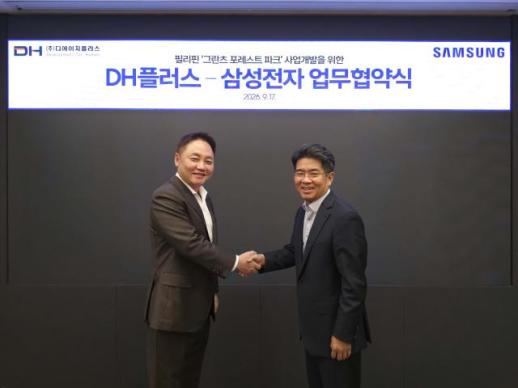 Samsung to power Cebu development with AI systems SEOUL, September 17 (AJP) - Samsung Electronics will supply AI-powered home appliances and building management systems to a mixed-use development in Cebu, the Philippines, as the company expands its business-to-business solutions in Southeast Asia. Samsung said Thursday it signed a memorandum of understanding with South Korean property developer DH Plus to provide AI appliances, SmartThings Pro and its b.IoT building management platform for the Glanz Forest Park project. Scheduled for completion in 2030, the development will span about 66,000 square meters and include three residential buildings, a hotel, private villas, commercial facilities and an international school. Samsung plans to install TVs, air conditioners, refrigerators and washing machines in the residential and hotel facilities and connect them through its SmartThings platform. SmartThings Pro will allow building managers to remotely monitor equipment and manage facilities. The company's b.IoT platform will be used to manage heating, cooling, lighting and power systems across common areas and other facilities. The system can also analyze electricity consumption and costs when linked with SmartThings Pro. Samsung also plans to deploy b.IoT at the project's hotel, commercial facilities and international school, using digital twin technology to monitor equipment and predict maintenance needs. An AI agent will be used to manage systems including air conditioning, lighting, electricity and security. Samsung said the project will serve as a model for expanding its integrated B2B building solutions across Southeast Asia. AJP Takeaways - Samsung will supply AI appliances and building management systems to the Glanz Forest Park mixed-use development in Cebu, the Philippines. - The roughly 66,000-square-meter project is scheduled for completion in 2030 and will include residences, a hotel, villas and an international school. - Samsung will deploy SmartThings Pro, b.IoT and digital twin technology to remotely monitor and manage appliances, energy use and building infrastructure. 2026-09-17 11:26:32
 -
Minister Park Hong-geun: Budget Should Reflect Contribution to Nation and Citizens Park Hong-geun, Minister of the Ministry of Planning and Budget, stated on September 17, "The reason for the establishment of the ministry must be proven," adding that "the budget should be evaluated based on how much it contributes to the future and lives of the nation and its citizens."During a visit to commemorate the opening of the ministry's press room, Minister Park emphasized the significance of the ministry, which has been operational for nine months. He noted that unlike during the previous era of the Ministry of Strategy and Finance, there is now a focus on what role the ministry will play in planning and what achievements it will deliver.In response to a question about how much excess tax revenue will be added to the 162 trillion won Future Response Fund following a reassessment of tax revenue, Minister Park said, "We will determine how to proceed once the final scale is established."He further explained, "The scale cannot be disclosed yet, and once the Ministry of Finance announces the reassessment results, we plan to go through official procedures and discussions with the Blue House and the Ministry of Finance."Regarding whether the additional funds will be allocated as surplus or added to the expenditure account, Minister Park stated, "The scale needs to be determined first, and since it has not been set yet, we cannot decide how much to allocate where."* This article has been translated by AI. 2026-09-17 11:24:10