


Latest by
-
 Jeon Byeong-seo Calls for Joint Development of Microgrids by Korea and China Jeon Byeong-seo, head of the China Economic and Financial Research Institute, proposed that South Korea and China collaborate on the development of microgrids, or small-scale independent power networks.Speaking at the 2026 China Economic and Social Forum held in Hangzhou, Zhejiang Province, on September 15, Jeon emphasized the need for global cooperation to address the climate crisis. The forum, organized by the Chinese People's Political Consultative Conference, focused on 'Global Governance for a Community of Shared Future for Mankind.' It is notable that a South Korean expert in Chinese economics participated in this official international exchange platform.Jeon stressed that the failure of one country to control carbon emissions is akin to overdrawing from the global ecological account, and that innovations in green technology from any one nation contribute to the survival of humanity. He asserted, 'There can be no bystanders in the face of the climate crisis.'He particularly highlighted the potential for cooperation between Korea and China in addressing climate challenges. 'By combining China's algorithm capabilities in artificial intelligence with Korea's advanced manufacturing and precision control technologies, we can develop intelligent microgrids and optimize industrial energy efficiency systems,' he said, adding that this would maximize the value of each unit of electricity produced.Jeon also called for the two countries to establish unified carbon emission accounting standards and certification systems in key sectors such as batteries, automobiles, and electronics. He noted that this would significantly reduce compliance costs for businesses in both countries and provide a foundation for jointly addressing unreasonable 'green trade barriers' from external sources.Furthermore, he suggested that both nations should create a joint research and development fund to foster a 'chemical bond' between Korea's precision technologies and China's vast market. This collaboration could help tackle advanced challenges in areas such as long-duration energy storage and carbon capture, utilization, and storage (CCUS).Jeon concluded by stating, 'When China's wind and solar energy meet Korea's hydrogen energy, and Eastern wisdom is integrated into global governance, we can redesign a clean, prosperous, and peaceful Asia.' 2026-09-16 15:36:00
 -
Opposition Requests Testimony from Heads of Four Major Banks on Employment of Disabled Workers 내달 국정감사를 앞두고 KB국민·신한·하나·우리은행 등 4대 은행장이 증인으로 신청됐다. 은행권의 장애인 고용률이 법정 의무고용률의 절반 안팎에 머물자 국회가 은행장들을 직접 불러 고용 실태와 개선 계획을 따져 묻겠다는 취지다.16일 금융권에 따르면 기후에너지환경노동위원회 소속 김소희 국민의힘 의원실은 이환주 KB국민은행장, 정상혁 신한은행장, 이호성 하나은행장, 정진완 우리은행장을 국정감사 증인으로 신청했다.김 의원실은 주요 은행의 장애인 고용률이 수년째 법정 의무고용률을 밑돌고 있는 점을 점검하기 위한 차원이라고 설명했다. 장애인 고용 확대를 위한 은행별 대책과 고용부담금 납부 실태 등도 살펴볼 것으로 예상된다.4대 은행장이 모두 최종 증인으로 채택되면 2022년 국회 정무위원회 국정감사 이후 4년 만이다. 당시에는 은행권의 대규모 횡령 사고와 내부통제 문제가 주요 쟁점이었다. 다만 이번 증인 신청 역시 여야 간사 협의와 상임위원회 전체회의 의결을 거쳐야 최종 확정된다.올해 1분기 기준 4대 은행의 장애인 고용률은 모두 법정 의무고용률인 3.1%에 크게 못 미쳤다. KB국민은행이 1.63%로 가장 높았고 하나은행 1.48%, 신한은행 1.32%, 우리은행 1.14% 순이었다.장애인 근로자 수는 KB국민은행 231명, 하나은행 169명, 신한은행 155명, 우리은행 147명으로 집계됐다. 고용률이 가장 높은 국민은행도 법정 기준과 1.47%포인트의 격차가 났고, 우리은행의 고용률은 법정 기준의 3분의 1을 조금 넘는 수준에 그쳤다.장애인 의무고용률을 충족하지 못한 사업주는 미달 인원에 따라 장애인 고용부담금을 내야 한다. NH농협은행을 포함한 5대 은행이 최근 5년간 납부한 장애인 고용부담금은 총 994억2000만원에 달했다. 고용률을 충분히 높이지 못한 채 해마다 상당한 부담금을 납부하는 방식으로 의무를 대신해왔다는 지적이 나오는 이유다.은행권은 장애인 고용 확대의 필요성에는 공감하면서 적합 직무 발굴과 근무환경 개선 등을 추진하고 있다는 입장이다. 장애인을 직접 고용하는 것과 별도로 장애인 일자리 창출을 지원하는 사회공헌사업도 운영하고 있다고 설명한다.그러나 국회에서는 대형 은행들이 높은 수익을 내면서도 법정 의무고용률을 장기간 충족하지 못한 만큼 사회공헌사업만으로 책임을 대신하기 어렵다는 지적이 나온다. 이번 국정감사에서는 장애인에게 적합한 직무를 얼마나 발굴했는지와 은행별 고용 확대 목표, 반복적인 고용부담금 납부를 줄이기 위한 구체적인 계획 등이 쟁점이 될 전망이다. 2026-09-16 15:32:10
-
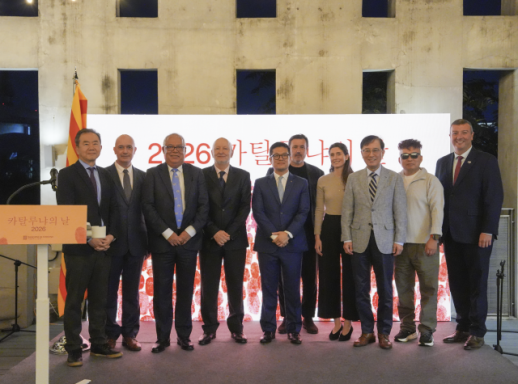 Op-Ed: Catalonia and Korea Editor's Note: The following opinion article is contributed by Choe Chong-dae, a longstanding member of the Royal Asiatic Society Korea and enthusiast of international cultural and historical affairs. The relationship between Spain and South Korea has a surprisingly long history. It dates back to 1593, when Gregorio de Céspedes, a Spanish Jesuit priest, arrived on the Korean Peninsula. What began as a modest cultural encounter has evolved over more than four centuries into a broad and increasingly dynamic partnership. Today, Barcelona—and Catalonia in Spain more broadly plays an important role in that relationship. As one of Europe's most internationally connected regions and a major center of industry, technology, culture, education, and tourism, Catalonia has emerged as an important European partner for Korea. Barcelona, in particular, offers a strategic platform for Korean companies and institutions seeking to expand their presence in Europe. The institutional ties between Catalonia and Korea have developed steadily since the late 1970s, supported by the growth of the Korean community in Catalonia and a shared commitment to international engagement. Several milestones illustrate the depth of this connection. Barcelona and Busan established a sister-city relationship in 1983, while the Korean Consulate General in Barcelona opened in 1988. In 1999, Catalonia and Gyeonggi Province established a regional partnership, further strengthening links between the two societies. Cultural and academic exchanges have developed alongside these institutional connections. The Korean Cultural Week in Catalonia in 1996 and the Gaudí exhibition in Korea in 1997 introduced each society more deeply to the other's cultural heritage. Academic cooperation has since expanded, with more than 20 agreements linking Catalan universities with leading Korean institutions, including Seoul National University, Korea University, and KAIST. A further step came in 2023, when the Government of Catalonia officially inaugurated its delegation in Korea. In October 2024, Bekiu Kim Jung was appointed as the head of the delegation. Its presence in Seoul represents more than an administrative development. It reflects Catalonia's intention to expand cooperation with Korea across a wide range of fields, such as business, technology, education, and culture. Against this backdrop, my enthusiasm for Catalonia led me to attend the celebration of Catalonia's National Day, La Diada, in Seoul on September 11, 2026, at Rezero Seoul. Attending the event, I was struck by the diversity of the guests, including diplomats, corporate executives, academics, and artists—such as Dr. Seong Keun Kim, president of Pohang University of Science & Technology, and Hwang Young-cho, the legendary Korean marathoner best known for winning the gold medal at the 1992 Summer Olympics in Barcelona. Their presence spoke volumes about the strength and breadth of the Catalonia–Korea partnership. It is hard to think about Catalonia without mentioning Pau Casals, the legendary musician. This year's event carried particular significance as part of the Pau Casals Year, commemorating the 150th anniversary of the birth of the internationally acclaimed Catalan cellist, conductor, and humanist. Casals represented far more than musical excellence. His life showed how art can become a language of peace, dignity, and human solidarity. His artistic career and moral convictions made him a cultural figure whose influence extended far beyond Catalonia and Spain. The Seoul celebration offered a meaningful expression of that legacy. The Government of Catalonia's Delegation in Seoul welcomed cellist Taeguk Mun, recipient of the Pau Casals Prize in Hungary, for a special performance. His music brought Catalan heritage into dialogue with Korean artistic achievement. There was a particular power in this encounter: a Korean musician honoring a great Catalan artist in Seoul. It showed how international relationships can grow not only through government agreements or trade, but also through people, shared values, and artistic expression. Running from 2026 to 2027, the Pau Casals Year has been officially recognised by the Generalitat de Catalunya and declared an Event of Exceptional Public Interest by the Spanish government. Bringing the commemoration to Seoul demonstrates the continuing international reach of Casals's ideals—and the enduring ability of music to connect cultures. Remarkably, in 2026, the region is commemorating several major cultural milestones, including the centenary of Antoni Gaudí's passing. The completion of the Sagrada Família's principal architectural vision and the June 2026 papal blessing of the Tower of Jesus Christ have further drawn international attention to Barcelona and Catalonia's distinctive cultural heritage. Gaudí's architecture and Casals's music represent very different forms of creativity, yet both reveal a remarkable Catalan capacity to produce artists whose work transcends geographical and historical boundaries. One shaped stone and space; the other transformed music into an expression of conscience and humanity. Those areas remain essential to the Korea-Catalonia relationship, but the greater potential lies in a broader partnership across technology, education, and cultural exchange. Barcelona is particularly well positioned to support this ambition. Its international reputation, universities, industries, cultural assets, and direct connectivity with Incheon make it a natural bridge between Korea and Europe. While Korean businesses already recognise Catalonia's strategic value, there remains significant potential for deeper cooperation in innovation, education, the arts, sustainability, and emerging industries. The relationship between Catalonia and Korea is therefore more than a history of diplomatic milestones. It is an evolving partnership between two societies united by creativity, education, innovation, and international engagement. As emphasized by Mr. Bekiu Kim Jung, Government Delegate of Catalonia to the Republic of Korea, during the 2026 Catalonia Day celebration in Seoul, the future of Catalonia-Korea relations depends not only on institutions but also on people. Students, researchers, artists, business leaders, and members of the Catalan community in Korea continue to act as bridges between the two societies, helping to keep cultural exchange alive and creating new opportunities for cooperation. As Catalonia and Korea continue to deepen their partnership, their friendship can serve as a powerful example of global connection and mutual understanding, opening new opportunities and fostering shared prosperity for both societies. The views and opinions expressed in this article are solely those of the contributor and do not necessarily reflect the editorial position, analysis, or views of AJP, its editors, or its parent organization. AJP publishes contributed opinion pieces from governments, diplomatic missions, experts, and other external contributors as part of its commitment to presenting diverse international perspectives. Publication does not constitute endorsement of the opinions or factual claims contained in the article. 2026-09-16 15:29:48
 -
Jeju Dream Tower's Grand Kitchen Revamps Menu to Focus on K-Food for Foreign Guests Jeju Dream Tower, where over 80% of guests are foreign, is enhancing its food and beverage offerings. The resort is expanding its menu to include popular Korean dishes, such as Jeju black pork and silver cutlassfish, as well as Korean beef, crab, and dombe meat, to appeal to both domestic and international tourists.Lotte Tour Development announced on September 16 that it has completely revamped the buffet 'Grand Kitchen' at the Grand Hyatt Jeju within the Jeju Dream Tower, centering the menu around K-Food.The focus of this overhaul is to strengthen Korean cuisine and local Jeju delicacies. The menu has been designed to allow visitors to experience local dishes alongside popular Korean foods familiar to foreign tourists.Signature dishes include grilled Jeju black pork belly, premium-grade Korean beef sirloin, fried ribs, LA galbi, and Jeju's traditional dombe meat.The seafood selection has also been diversified, featuring grilled silver cutlassfish, snow crab with soy sauce and seasoned crab, abalone sashimi, and bibimbap. Popular Korean dishes such as various jeon (Korean pancakes), sundae (blood sausage), and fried chicken are also available.Grilled freshwater eel is prepared live by chefs at the kitchen station. Desserts reflect Korean and Jeju flavors, including traditional yakgwa (honey cookies), Jeju carrot cake, and Hallabong scones.The kitchen is led by Executive Chef Kim Young-min, who previously served as the head chef at the Fontana buffet restaurant in the Wynn Palace in Macau. With over 20 years of experience, Chef Kim oversees a team of more than 30 chefs managing seven stations, including Korean hot food, grill, and seafood.A representative from Lotte Tour Development stated, “We have structured the menu to allow guests to enjoy representative Jeju dishes like black pork and grilled silver cutlassfish, as well as popular Korean foods all in one place. We also offer unlimited access to high-quality ingredients such as Korean beef sirloin, snow crab, and abalone sashimi.”* This article has been translated by AI. 2026-09-16 15:28:00
-
Efforts Underway to Restore the Name 'Hankyesan' in Inje County Efforts are underway to restore the name 'Hankyesan' (寒溪山), which was recognized as a separate mountain from Seoraksan during the Joseon Dynasty. Inje County in Gangwon Province plans to secure historical evidence through academic research and develop cultural tourism resources linked to Hankyesanseong and hiking trails.According to Inje County, the county and the Gangwon History and Culture Research Institute will hold an academic conference titled 'Measures for Preserving the Hankyesan Place Name' at the Inje Miracle Library on September 18 at 2 p.m.The event will be attended by over 50 participants, including Park Kwang-woo, director of the Gangwon History and Culture Research Institute, Choi Sang-ki, mayor of Inje County, Kim Do-hyung, chair of the Inje County Council, and experts in place names and history.This conference aims to confirm the historical significance and transmission process of the Hankyesan name and to provide academic support for its restoration. It will also gather the necessary logic and materials for future place name designation.Although the name Hankyesan is currently overshadowed by Seoraksan, historical records from the Joseon Dynasty indicate that it was recognized as an independent mountain. Research shows that during the Joseon period, the area now known as Seoraksan was divided into the Seoraksan and Hankyesan regions. By the late Joseon period, some documents began to use Seoraksan as a representative name encompassing both Hankyesan and Cheonhusan, gradually diminishing the distinctiveness of Hankyesan.The name Hankyesan still exists in areas such as Hankye-ri, Hankye-ryeong, and Hankyesanseong in northern Inje County. Notably, 'Inje Hankyesanseong' was designated as a national cultural heritage site in 2019, recognized as Historic Site No. 553. This medieval fortress, built using the rugged mountain terrain, is a key relic demonstrating the historical transmission of the Hankyesan name.The conference will focus on when the name Hankyesan was established and how it has been transmitted amid changes in the Seoraksan region's place names.Yoo Jae-chun, an emeritus professor at Gangwon University, will present on 'The Formation and Transmission of the Hankyesan Name as Seen from Hankyesanseong.' Professor Lee Sang-kyun from Gangwon University will examine the historical transmission and transformation of the Hankyesan name and its spatial scope. Kim Soon-bae, vice president of the Korean Society of Cultural and Historical Geography, will analyze the background of the name 'Hankye' being maintained amid changes in the Seoraksan region's place names. Professor Shim Bo-kyung from Hallym University will propose directions for the designation of the Hankyesan name based on examples of other mountain place names.A comprehensive discussion will follow, moderated by Emeritus Professor Yang Bo-kyung of Sungshin Women's University, featuring presenters and other experts, including Kim Heung-soo, former director of the Ojukheon Municipal Museum, Lee Sang-soo, curator at the Catholic Kwandong University Museum, Kim Ji-young, research professor at the National Gongju University Institute for Participatory Culture, and Heo Jun-gu, director of the Gangwon Cultural and Arts Research Institute.However, establishing academic evidence does not mean the name will be officially recognized immediately. The designation or change of a place name must go through administrative procedures, including review by the Place Name Committee. The extent to which historical scope, public perception, and the relationship with the existing Seoraksan name are clearly organized during this conference will be crucial for future discussions.Inje County plans to use the research findings as foundational data for restoring the original place name. It will also explore tourism content linked to surrounding historical and cultural resources, including Hankyesanseong and hiking trails.Yoon Hyung-jun, head of the Inje County Cultural Heritage Team, stated, “We will examine the historical transmission and changes of the Hankyesan name and gather various opinions. We plan to use the results of the conference as foundational data for restoring the original place name.”* This article has been translated by AI. 2026-09-16 15:24:20
-
 Chip binge intoxicates Korean Inc. stakeholders, waves of strikes spread SEOUL, September 16 (AJP) - Two years on, the still-strong chip bonanza of the AI-driven economic age has bestowed on South Korea a double-digit growth in national wealth in nominal terms unseen in more than three decades, thrusting stakeholders — employees and shareholders — into brawls for a bigger share of the newfound riches. Strikes and strike threats have become a recurring scene this year, spreading from chipmakers and shipbuilders to digital platforms such as Kakao. A weak Korean won and soaring semiconductor prices fattened the top and bottom lines of major exporters in the first half, encouraging workers to press for a greater share of the windfall while it lasts. A revised labor law that took effect in March has also changed the bargaining terrain, triggering a rush of industrial actions. The latest to join the wave was POSCO, the privatized steel giant long known for labor peace. POSCO's union launched a 120-hour partial strike at hot-rolling mills in Pohang and Gwangyang on Wednesday, just a week after its first walkout ended a 58-year record without a strike dating back to the steelmaker's founding in 1968. HD Hyundai Heavy Industries' union extended its all-member walkouts to seven hours a day through Friday. The union, representing about 8,100 workers, will have staged a combined 33 hours of walkouts since Sept. 11. At the heart of the disputes is no longer simply how much wages should rise. Increasingly, unions want a fixed claim on corporate profits. HD Hyundai Heavy's union is seeking at least 30 percent of operating profit. POSCO says its union's demands would cost about 1.4 trillion won ($1.02 billion), equivalent to roughly 80 percent of the company's operating profit last year. Profit-linked compensation has emerged as a defining issue in South Korea's 2026 bargaining season. The Labor Ministry put the question on the agenda at a July forum examining how gains generated by artificial intelligence should be shared. "Companies with technological prowess can now reap enormous profits as AI reshapes industry, and sharing them has become hard through traditional collective bargaining alone," Jung Heung-jun, a business administration professor at Seoul National University of Science and Technology, said at the forum. "AI and digital transformation create enormous added value, but they are a double-edged sword that accelerates labor market polarization," said Yoon Dong-yeol, a business professor at Konkuk University. The current wave gained momentum at Samsung Electronics, whose chip union threatened a strike in May as it demanded a fixed share of booming semiconductor profits. The union stood down after a government-mediated agreement created a special semiconductor performance bonus tied to 10.5 percent of business performance. Based on profit forecasts, the formula could translate into total bonuses of up to 600 million won for some memory-chip employees. The settlement did not end the argument over who should benefit from Samsung's windfall. A shareholder group said Sept. 7 that it would file an additional breach-of-trust complaint over the bonuses against Samsung Electronics' entire board and the leaders of its largest union. Unions at Hyundai Motor, HD Hyundai Heavy, LG Uplus and Kakao soon pressed similar demands. Hyundai Motor workers staged their first full-day strike in a decade on Aug. 21. The disputes are unfolding under a substantially different labor framework. Business groups say the so-called Yellow Envelope Act, which took effect March 10, has emboldened unions by giving workers greater legal room to pursue industrial action. The revised Trade Union Act recognizes companies that effectively control subcontracted workers' conditions as employers, opening the door for those workers to demand direct bargaining with prime contractors. It also broadens the scope of disputes that can qualify for legal strikes and restricts companies' ability to seek damages from workers involved in industrial action. The law takes its name from a 2014 campaign in which citizens mailed small donations in yellow envelopes to workers at SsangYong Motor, now KG Mobility, who faced massive court-ordered damage claims after a strike. The impact was immediate. Within a month of the law taking effect, 1,011 subcontractor unions had sought negotiations with 372 prime contractors, according to the Labor Ministry. Hyundai Mobis was among them. Walkouts at its subsidiaries idled Hyundai Motor production lines in Ulsan on Aug. 26, showing how a labor dispute deep in a supply chain can quickly reach the final assembly floor. The risks are equally visible at POSCO. Its hot-rolled steel feeds carmakers, shipyards and appliance manufacturers across the country. During a 16-day nationwide truckers' strike in 2022, the Trade Ministry estimated disruptions across five industries at about 3.5 trillion won, with more than 1 trillion won of the losses in steel. POSCO has called the union's demands excessive at a time when its own earnings are deteriorating. First-half operating profit fell 43 percent as the steelmaker grappled with Chinese oversupply and rising trade protectionism. HD Hyundai Heavy faces a different calculation. Its union wants workers to share in a shipbuilding boom that has filled order books for years. Industry officials warn, however, that prolonged walkouts could delay vessel deliveries one after another through a tightly scheduled production chain. A coalition of eight shipbuilding unions has warned of joint action, including a strike, after next week's Chuseok autumn harvest holiday if companies fail to present acceptable offers by Friday. To critics of the wage push, unions are "rowing while the tide is in," as a Korean saying for capitalizing on favorable conditions goes. Yet the tide may be narrower than the headline numbers suggest. The AI-driven semiconductor boom has become so powerful that it increasingly masks weaker conditions across other parts of the economy. "The economy looks good only because Samsung Electronics and SK hynix are pulling it along together," said Cho Dong-geun, professor emeritus of economics at Myongji University. "Take those two out, and things are not so good." Financial markets offer some evidence of that divergence. Hyundai Motor shares, which climbed to 712,000 won in May amid excitement over humanoid robots, have since retreated to trade at 361,500 won on Wednesday. Samsung Biologics, hit by the first strike since its founding in May, has fallen to about 1.4 million won from 1.965 million won in mid-January. The flood of chip dollars has created another complication by lifting the Korean won, eroding some of the currency advantage enjoyed by traditional exporters. The dollar, which touched 1,559.2 won on July 1, traded at 1,365.2 won on Wednesday. The appreciation came as semiconductor exports reached $281.2 billion in the first eight months of the year, accounting for more than 40 percent of South Korea's total exports. "When the won strengthens this much, traditional exporters could see their exports shrink sharply," Cho said. "Put it all together, and the economy is in crisis. It's just hidden, so no one sees it." Cho urged unions to exercise restraint and shore up their fundamentals before pressing for more. "This is no time to strike," he said. As labor action spread across industries, the government moved to draw a line around how far profit-sharing demands could go under the revised labor law. The Labor Ministry issued guidelines on Sept. 3 stating that demands for bonuses fixed to a percentage of corporate profit are not mandatory bargaining items and generally cannot, by themselves, serve as the basis for a legal strike. The guidance clarified the government's interpretation of the law without changing the statute itself. The Federation of Korean Trade Unions called the move an infringement on constitutional labor rights. "Not being a mandatory bargaining item does not mean unions cannot make the demand," Vice Labor Minister Kwon Chang-joon said. The Yellow Envelope Act took its name from envelopes that once carried small donations to striking workers facing financial ruin. Twelve years on, South Korea's labor fight is increasingly about how much goes into the pay envelope. AJP Takeaways - POSCO's union began a 120-hour partial strike on Sept. 16, ending decades of labor peace, while HD Hyundai Heavy Industries' roughly 8,100 union members extended walkouts to seven hours a day. - Profit-linked compensation has emerged as a defining demand of the 2026 bargaining season, with HD Hyundai Heavy's union seeking at least 30 percent of operating profit after Samsung Electronics agreed to a new semiconductor bonus formula in May. - The Yellow Envelope Act, effective March 10, expanded subcontracted workers' bargaining rights, broadened the scope of labor disputes and limited some damage claims against strikers, changing the terrain for industrial action. 2026-09-16 15:23:31
 -
 Seoul deepens ties with Tajikistan, Kyrgyzstan SEOUL, September 16 (AJP) - South Korean President Lee Jae Myung held back-to-back summits with the leaders of Tajikistan and Kyrgyzstan on Wednesday, expanding cooperation in critical minerals, infrastructure and trade as Seoul hosted its first-ever summit with the five Central Asian nations. Lee first met Tajik President Emomali Rahmon at Cheong Wa Dae, where the two countries agreed to establish a “comprehensive partnership” for the first time since establishing diplomatic relations in 1992. The leaders agreed to broaden ties beyond development assistance into trade and investment, rail and transport infrastructure, critical minerals, artificial intelligence, digital transformation and climate issues. The two sides identified Tajikistan’s mineral resources, including antimony, as a promising area for cooperation with South Korea’s exploration and development technology. They also agreed to establish a “Korea Desk” to support Korean companies operating in Tajikistan and signed a total of 17 agreements and memorandums of understanding covering areas ranging from railways and customs to digital technology and public administration. Relations between Seoul and Dushanbe have expanded gradually since diplomatic ties were established in April 1992. South Korea upgraded its diplomatic mission in Tajikistan to a full embassy in 2021, while Tajikistan opened its embassy in Seoul in 2015. Bilateral trade reached about $354 million in 2025, overwhelmingly consisting of South Korean exports such as vehicles, auto parts and construction machinery, according to South Korea’s Foreign Ministry. Lee later met Kyrgyz President Sadyr Zhaparov, agreeing to deepen the comprehensive partnership the two countries established during Zhaparov’s visit to Seoul in December 2024. The leaders discussed cooperation in trade and investment, critical minerals, urban development and infrastructure, food security, public administration, disaster response, AI, climate and education. The two governments agreed to open a Korea Trade-Investment Promotion Agency, or KOTRA, office in Bishkek and establish a Korea Desk within Kyrgyzstan’s National Investment Agency to help companies from both countries. They also agreed to pursue mutual recognition of halal certification to help South Korean food and beauty companies expand into Kyrgyzstan and the broader Central Asian market. A total of 18 agreements and MOUs were signed during the summit. South Korea and Kyrgyzstan established diplomatic relations in January 1992 and have built cooperation particularly in development assistance, public administration, health care and environmental policy. Direct flights between the two countries began in 2023, helping expand travel, education and other people-to-people exchanges. The bilateral meetings came as Lee and the presidents of Uzbekistan, Kazakhstan, Turkmenistan, Tajikistan and Kyrgyzstan gathered in Seoul on Wednesday for the inaugural Korea-Central Asia Summit, the first multilateral leaders’ meeting South Korea has held with the five countries. Opening the summit, Lee said South Korea and Central Asia should build on more than three decades of cooperation to prepare together for the next 30 years, citing supply chains, energy, markets and technology as increasingly intertwined economic and security issues. The summit is intended to elevate a cooperation framework that began with the Korea-Central Asia Cooperation Forum in 2007 from the ministerial to the leaders’ level. Seoul has also sought to set out a longer-term regional partnership through a planned Seoul Declaration, with critical minerals, energy, infrastructure, digital technology and people-to-people exchanges among the main areas of cooperation. AJP Takeaways - South Korea and Tajikistan established a comprehensive partnership, expanding cooperation in critical minerals, infrastructure, digital technology and trade. - President Lee Jae Myung and Kyrgyz President Sadyr Zhaparov agreed to deepen their countries’ comprehensive partnership, including through new business-support mechanisms and cooperation on halal certification. - The bilateral summits came as South Korea hosted the inaugural Korea-Central Asia Summit in Seoul, bringing together the leaders of all five Central Asian nations. 2026-09-16 15:22:33
 -
Danggeun Launches Korea's First Advertising MCP with AI Data Analysis Danggeun has announced the launch of Korea's first advertising Model Context Protocol (MCP) aimed at advertisers.The MCP is a technology that allows artificial intelligence (AI) models or agents to connect with various systems and data to retrieve information or perform actual tasks.The 'Danggeun Advertising MCP' enables users to link their AI with their Danggeun advertising account, allowing them to check and analyze advertising data through conversation with the AI. Users can verify their advertising account balance, the status of ongoing ads, and performance over different periods with just a single question.To use the service, no additional development knowledge or API key is required; users simply need to register the Danggeun Advertising MCP server address with the AI and authenticate with their Danggeun Business account.The AI, having understood the context of the brand or advertisement through previous conversations, can provide specific analyses without needing to repeatedly explain the advertising goals or share data separately.The Danggeun Advertising MCP is currently available on Claude and ChatGPT. The company plans to enhance data retrieval and analysis capabilities and gradually expand the MCP's support for ad creation and modification.A Danggeun representative stated, "We will continue to enhance our services to help advertisers operate their campaigns efficiently and achieve better results."* This article has been translated by AI. 2026-09-16 15:20:00
-
 Defense nominee apologizes over martial law SEOUL, September 16 (AJP) - Defense Minister nominee Kang Shin-chul apologized Tuesday for the military’s role during the Dec. 3, 2024 martial law declaration, while signaling support for the government’s push to overhaul South Korea’s military academies. Speaking at his confirmation hearing at the National Assembly, Kang said he felt a “deep sense of responsibility” as one of the military’s highest-ranking officers at the time and apologized to the public. Kang was serving as deputy commander of the South Korea-U.S. Combined Forces Command and was a four-star Army general when martial law was declared. His remarks came after Rep. Kim Byung-joo of the ruling Democratic Party said Kang could not entirely avoid moral or political responsibility given his senior position in the military. Then-President Yoon Suk Yeol declared emergency martial law on Dec. 3, 2024, sending troops to the National Assembly. Lawmakers voted to lift the decree, and Yoon ended martial law several hours later. The Constitutional Court removed him from office in April 2025. Kang responded that the military had undermined the constitutional order and said he bore responsibility as one of its most senior officers, even though he was outside the chain of command involved in the martial law operation. The presidential office said when Kang was nominated that a government task force and a Defense Ministry audit had found no evidence that he was involved in the martial law operation. Kang also used the hearing to signal that he intends to continue the government’s military education reform agenda, including plans to integrate the Army, Navy and Air Force academies. “I have the will to reform the military academies,” Kang said when asked whether he remained committed to creating an integrated military academy. The Lee Jae Myung administration has proposed creating a four-year integrated military academy at the Jaundae military complex in Daejeon, bringing together the three service academies under a new structure. The proposal has faced opposition from some retired officers and academy alumni. Kang, a graduate of the Korea Military Academy, said the priority should be producing capable officers rather than focusing on criticism of the reform. “The current plan is not complete in my view,” Kang said, adding that there are multiple ways to pursue integration and that different opinions should be considered before a final model is settled. Kang also voiced support for the transfer of wartime operational control, or OPCON, from the United States to South Korea, another major defense issue facing the next minister. He said the process has been pursued by successive governments and that South Korea has made significant progress in meeting the conditions required for the transfer. “The conditions have been substantially met, and I believe the environment is now in place,” Kang said. Kang is among six Cabinet nominees named in President Lee Jae Myung’s Aug. 30 reshuffle, with the National Assembly holding a series of confirmation hearings this week for key ministerial posts. AJP Takeaways - Defense Minister nominee Kang Shin-chul apologized for the military’s role during the Dec. 3, 2024 martial law declaration. - Kang backed military academy reform but said the current merger plan needs further review. - He also supported the conditions-based transfer of wartime operational control to South Korea. 2026-09-16 15:19:39
 -
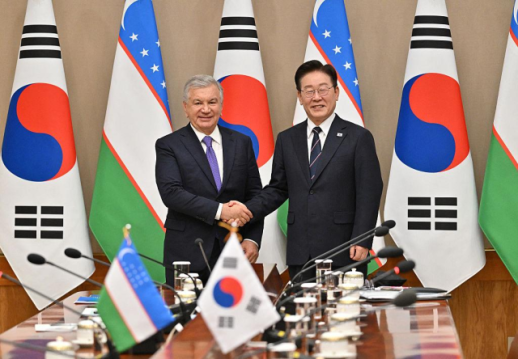 Op-Ed: Uzbekistan in new industrial architecture of C5+1 Editor's Note: The following opinion article was contributed by the Embassy of Uzbekistan in Seoul. The first "Central Asia-Republic of Korea" Summit in Seoul gives the C5+1 format a more substantive economic dimension. The new agenda focuses on industrial modernization, infrastructure, critical minerals and energy, human capital development, and private-sector participation. An important institutional basis for this work is provided by a dedicated consultative mechanism of industry ministers, aimed at maintaining regular sectoral dialogue, identifying joint initiatives, and developing a list of priority projects. In this way, the national industrial priorities of Central Asian countries have an opportunity to be aligned with the technological and investment capabilities of the Republic of Korea at the level of specific production chains. Technology, infrastructure, financing, and markets come together here as an integrated system for implementing major joint initiatives. The potential of this model is particularly evident in the case of Uzbekistan. Relations between Tashkent and Seoul have held the status of a special strategic partnership since 2019, while the accumulated volume of direct Korean investment in Uzbekistan's economy has exceeded USD 8 billion. In January–June 2026, bilateral trade approached USD 1 billion, increasing by 11.5 percent. Behind these figures lies an already established technological foundation for the partnership. Joint centers are operating in Uzbekistan in the textile industry, rare metals and alloys, agricultural machinery, and e-government, while cooperation in chemical technologies and construction is also developing. This network creates sustainable channels for the transfer of engineering solutions, practical knowledge, and production experience. The accumulated foundation makes it possible to focus Uzbekistan's C5+1 agenda on further developing processing, localization, technological upgrading, and the production of high-value-added goods. At the same time, the regional format expands the range of potential partners and connections between enterprises of Central Asian countries and Korean businesses. One of the most promising areas is related to critical minerals. Cooperation covers the entire technological chain - geological exploration, processing, refining, and the development of value-added production. Under such a model, Central Asia's mineral resource base becomes a starting point for deepening technological ties and creating new industries within the region. Uzbekistan already has a concrete foundation in this area. The Uzbek-Korean Scientific and Technological Center for Rare Metals and Alloys is operating in the country. Its potential makes it possible to develop cooperation in materials science, processing technologies, research, and specialist training, with prospects for their further industrial application. The development of more sophisticated industries simultaneously increases infrastructure requirements. Within the C5+1 agenda, this area includes energy, industrial complexes, transport and logistics, urban infrastructure, as well as the entire life cycle of major projects - from planning and construction to modernization and operation. For investors, this means the opportunity to consider an industrial site together with the necessary energy, engineering, and logistics solutions. Uzbek-Korean cooperation already has a financial foundation for implementing projects of this scale. The cooperation program between Uzbekistan and the Economic Development and Cooperation Fund of the Republic of Korea (EDCF) for 2024~2027 has been established at USD 2 billion. At the same time, a new portfolio of initiatives is being developed, and financing mechanisms without state guarantees and on the basis of public-private partnerships are being explored. The expansion of available financial instruments creates greater space for commercially viable projects, private capital, and long-term partnerships between companies. This is particularly important for industrial and infrastructure cooperation with long investment cycles, where the financing structure largely determines the possibilities for project implementation and subsequent expansion. As production becomes increasingly technologically sophisticated, requirements for skilled specialists also grow. The development of professional skills and human capital is among the priorities of the C5+1 industrial mechanism. Uzbekistan already has a practical foundation in this area: four vocational education centers established with the participation of the Korea International Cooperation Agency are operating in Tashkent, Fergana, Shakhrisabz, and Samarkand, while another center is under construction in Urgench. Further development of this model largely moves to the company level. It is here that technologies and accumulated knowledge are transformed into new production facilities, while sectoral priorities become investment decisions and commercial products. Therefore, the private sector, financial institutions, and research organizations play an important role in C5+1 industrial cooperation. The development of a list of priority projects gives this work practical consistency. Such an instrument makes it possible to link promising areas with specific partners and sources of financing and to support their advancement between meetings of the industrial mechanism. Uzbekistan is entering the new regional architecture with a substantial practical foundation: many of its elements are already functioning within bilateral cooperation with Korea. Investment is combined with technological centers, financial programs, a specialist training system, and experience in implementing complex projects. C5+1 makes it possible to bring this foundation to a broader level by connecting the national capabilities of Central Asian countries through new production linkages. This is where the main economic potential of the Seoul Summit for Uzbekistan lies. The special strategic partnership with the Republic of Korea is gaining a regional dimension through deeper processing, technological localization, new production facilities, and access of finished products to new foreign markets. The accumulated Uzbek-Korean experience is becoming one of the practical elements of the industrial architecture of C5+1, strengthening Uzbekistan's role in the Republic of Korea's technological and industrial partnership with Central Asia. The views and opinions expressed in this article are solely those of the contributor and do not necessarily reflect the editorial position, analysis, or views of AJP, its editors, or its parent organization. AJP publishes contributed opinion pieces from governments, diplomatic missions, experts, and other external contributors as part of its commitment to presenting diverse international perspectives. Publication does not constitute endorsement of the opinions or factual claims contained in the article. 2026-09-16 15:19:23