


Latest by
-
 Defense nominee apologizes over martial law SEOUL, September 16 (AJP) - Defense Minister nominee Kang Shin-chul apologized Tuesday for the military’s role during the Dec. 3, 2024 martial law declaration, while signaling support for the government’s push to overhaul South Korea’s military academies. Speaking at his confirmation hearing at the National Assembly, Kang said he felt a “deep sense of responsibility” as one of the military’s highest-ranking officers at the time and apologized to the public. Kang was serving as deputy commander of the South Korea-U.S. Combined Forces Command and was a four-star Army general when martial law was declared. His remarks came after Rep. Kim Byung-joo of the ruling Democratic Party said Kang could not entirely avoid moral or political responsibility given his senior position in the military. Then-President Yoon Suk Yeol declared emergency martial law on Dec. 3, 2024, sending troops to the National Assembly. Lawmakers voted to lift the decree, and Yoon ended martial law several hours later. The Constitutional Court removed him from office in April 2025. Kang responded that the military had undermined the constitutional order and said he bore responsibility as one of its most senior officers, even though he was outside the chain of command involved in the martial law operation. The presidential office said when Kang was nominated that a government task force and a Defense Ministry audit had found no evidence that he was involved in the martial law operation. Kang also used the hearing to signal that he intends to continue the government’s military education reform agenda, including plans to integrate the Army, Navy and Air Force academies. “I have the will to reform the military academies,” Kang said when asked whether he remained committed to creating an integrated military academy. The Lee Jae Myung administration has proposed creating a four-year integrated military academy at the Jaundae military complex in Daejeon, bringing together the three service academies under a new structure. The proposal has faced opposition from some retired officers and academy alumni. Kang, a graduate of the Korea Military Academy, said the priority should be producing capable officers rather than focusing on criticism of the reform. “The current plan is not complete in my view,” Kang said, adding that there are multiple ways to pursue integration and that different opinions should be considered before a final model is settled. Kang also voiced support for the transfer of wartime operational control, or OPCON, from the United States to South Korea, another major defense issue facing the next minister. He said the process has been pursued by successive governments and that South Korea has made significant progress in meeting the conditions required for the transfer. “The conditions have been substantially met, and I believe the environment is now in place,” Kang said. Kang is among six Cabinet nominees named in President Lee Jae Myung’s Aug. 30 reshuffle, with the National Assembly holding a series of confirmation hearings this week for key ministerial posts. AJP Takeaways - Defense Minister nominee Kang Shin-chul apologized for the military’s role during the Dec. 3, 2024 martial law declaration. - Kang backed military academy reform but said the current merger plan needs further review. - He also supported the conditions-based transfer of wartime operational control to South Korea. 2026-09-16 15:19:39
 -
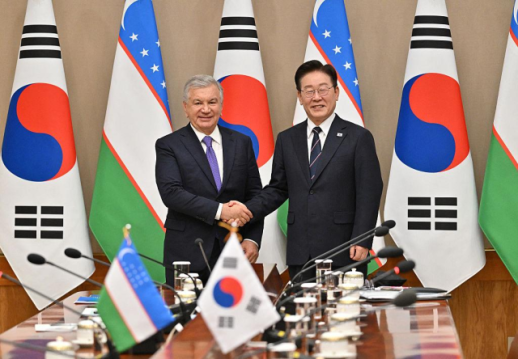 Op-Ed: Uzbekistan in new industrial architecture of C5+1 Editor's Note: The following opinion article was contributed by the Embassy of Uzbekistan in Seoul. The first "Central Asia-Republic of Korea" Summit in Seoul gives the C5+1 format a more substantive economic dimension. The new agenda focuses on industrial modernization, infrastructure, critical minerals and energy, human capital development, and private-sector participation. An important institutional basis for this work is provided by a dedicated consultative mechanism of industry ministers, aimed at maintaining regular sectoral dialogue, identifying joint initiatives, and developing a list of priority projects. In this way, the national industrial priorities of Central Asian countries have an opportunity to be aligned with the technological and investment capabilities of the Republic of Korea at the level of specific production chains. Technology, infrastructure, financing, and markets come together here as an integrated system for implementing major joint initiatives. The potential of this model is particularly evident in the case of Uzbekistan. Relations between Tashkent and Seoul have held the status of a special strategic partnership since 2019, while the accumulated volume of direct Korean investment in Uzbekistan's economy has exceeded USD 8 billion. In January–June 2026, bilateral trade approached USD 1 billion, increasing by 11.5 percent. Behind these figures lies an already established technological foundation for the partnership. Joint centers are operating in Uzbekistan in the textile industry, rare metals and alloys, agricultural machinery, and e-government, while cooperation in chemical technologies and construction is also developing. This network creates sustainable channels for the transfer of engineering solutions, practical knowledge, and production experience. The accumulated foundation makes it possible to focus Uzbekistan's C5+1 agenda on further developing processing, localization, technological upgrading, and the production of high-value-added goods. At the same time, the regional format expands the range of potential partners and connections between enterprises of Central Asian countries and Korean businesses. One of the most promising areas is related to critical minerals. Cooperation covers the entire technological chain - geological exploration, processing, refining, and the development of value-added production. Under such a model, Central Asia's mineral resource base becomes a starting point for deepening technological ties and creating new industries within the region. Uzbekistan already has a concrete foundation in this area. The Uzbek-Korean Scientific and Technological Center for Rare Metals and Alloys is operating in the country. Its potential makes it possible to develop cooperation in materials science, processing technologies, research, and specialist training, with prospects for their further industrial application. The development of more sophisticated industries simultaneously increases infrastructure requirements. Within the C5+1 agenda, this area includes energy, industrial complexes, transport and logistics, urban infrastructure, as well as the entire life cycle of major projects - from planning and construction to modernization and operation. For investors, this means the opportunity to consider an industrial site together with the necessary energy, engineering, and logistics solutions. Uzbek-Korean cooperation already has a financial foundation for implementing projects of this scale. The cooperation program between Uzbekistan and the Economic Development and Cooperation Fund of the Republic of Korea (EDCF) for 2024~2027 has been established at USD 2 billion. At the same time, a new portfolio of initiatives is being developed, and financing mechanisms without state guarantees and on the basis of public-private partnerships are being explored. The expansion of available financial instruments creates greater space for commercially viable projects, private capital, and long-term partnerships between companies. This is particularly important for industrial and infrastructure cooperation with long investment cycles, where the financing structure largely determines the possibilities for project implementation and subsequent expansion. As production becomes increasingly technologically sophisticated, requirements for skilled specialists also grow. The development of professional skills and human capital is among the priorities of the C5+1 industrial mechanism. Uzbekistan already has a practical foundation in this area: four vocational education centers established with the participation of the Korea International Cooperation Agency are operating in Tashkent, Fergana, Shakhrisabz, and Samarkand, while another center is under construction in Urgench. Further development of this model largely moves to the company level. It is here that technologies and accumulated knowledge are transformed into new production facilities, while sectoral priorities become investment decisions and commercial products. Therefore, the private sector, financial institutions, and research organizations play an important role in C5+1 industrial cooperation. The development of a list of priority projects gives this work practical consistency. Such an instrument makes it possible to link promising areas with specific partners and sources of financing and to support their advancement between meetings of the industrial mechanism. Uzbekistan is entering the new regional architecture with a substantial practical foundation: many of its elements are already functioning within bilateral cooperation with Korea. Investment is combined with technological centers, financial programs, a specialist training system, and experience in implementing complex projects. C5+1 makes it possible to bring this foundation to a broader level by connecting the national capabilities of Central Asian countries through new production linkages. This is where the main economic potential of the Seoul Summit for Uzbekistan lies. The special strategic partnership with the Republic of Korea is gaining a regional dimension through deeper processing, technological localization, new production facilities, and access of finished products to new foreign markets. The accumulated Uzbek-Korean experience is becoming one of the practical elements of the industrial architecture of C5+1, strengthening Uzbekistan's role in the Republic of Korea's technological and industrial partnership with Central Asia. The views and opinions expressed in this article are solely those of the contributor and do not necessarily reflect the editorial position, analysis, or views of AJP, its editors, or its parent organization. AJP publishes contributed opinion pieces from governments, diplomatic missions, experts, and other external contributors as part of its commitment to presenting diverse international perspectives. Publication does not constitute endorsement of the opinions or factual claims contained in the article. 2026-09-16 15:19:23
 -
 SK Hynix Negotiates Memory Production with Intel in the U.S. SK Hynix is reportedly in negotiations with Intel regarding the production of memory semiconductors in the United States.According to Reuters on September 16, discussions are underway about SK Hynix leasing part of Intel's semiconductor manufacturing facility currently under construction in Ohio, or establishing a joint venture with Intel and major cloud companies.However, the negotiations are still in the early stages, and no concrete decisions have been made. Sources indicate that SK Hynix is also considering other forms of collaboration.The potential partnership between SK Hynix and Intel arises amid a growing shortage of memory semiconductors, driven by surging investments in artificial intelligence (AI) and data centers. With the U.S. government pressuring semiconductor companies to expand domestic production, a finalized agreement could represent a significant achievement for the Trump administration's push for increased semiconductor manufacturing in the U.S.Nonetheless, the review process by the South Korean government is seen as a variable. In particular, technologies classified as national core technologies, such as high-bandwidth memory (HBM) and DRAM, would require scrutiny under the Industrial Technology Protection Act if transferred to the U.S. or produced locally. Sources suggest that the South Korean government may not rule out the possibility of opposing such moves.In response to Reuters' inquiry, SK Hynix stated, "We are exploring various options, including the establishment of additional production facilities, to enhance our competitiveness in the memory business," but emphasized that no decisions have been made at this stage.Despite high labor and construction costs, along with a significant portion of the semiconductor supply chain concentrated in Asia, the pressure from customers and governments for increased production in the U.S. is prompting SK Hynix to consider domestic manufacturing.Chey Tae-won, chairman of SK Group, noted in July that the pressure and lobbying from customers and governments for more semiconductor supply is "immense," stating, "I believe we need to build a factory in the U.S. If possible, it would be better to do so."Currently, the only semiconductor-related investment SK Hynix is pursuing in the U.S. is a $4 billion AI semiconductor packaging plant under construction in Indiana. This would mark the first instance of building a full semiconductor manufacturing facility in the U.S.However, meeting the demands of both the U.S. and South Korea simultaneously poses challenges. U.S. Secretary of Commerce Gina Raimondo has pressured South Korean and Taiwanese semiconductor companies to expand production in the U.S., warning of potential tariffs of up to 100% if they do not comply. Conversely, the South Korean government is urging SK Hynix and Samsung Electronics to expedite the establishment of semiconductor production clusters domestically.Reuters reports that while the South Korean government aims to leverage SK Hynix's U.S. investment in negotiations with the U.S., the U.S. government is pressuring SK Hynix for rapid expansion of production in the U.S., placing the company in a difficult position. 2026-09-16 15:16:10
 -
Graduate Student Sentenced to Probation for Sending Drone to North Korea A graduate student accused of sending a drone to North Korea without government notification has been sentenced to probation in a first-instance ruling.The Seoul Central District Court's Criminal Division 38-3, presided over by Judges Choi Young-gak, Jang Seong-jin, and Jeong Su-young, sentenced the individual, identified as Oh, to eight months in prison, suspended for two years, for violations of the espionage law and the aviation safety law. Two accomplices received six-month prison sentences, also suspended for two years.The three were charged with sending civilian drones across the military demarcation line (MDL) four times from September last year to January this year to capture images of the North Korean area around Kaesong while evading South Korea's air defense surveillance. Two of the drones reportedly crashed in North Korea and did not return.The court found them guilty of using drones without permission from the Ministry of Land, Infrastructure and Transport. It determined that the drones exceeded the reporting threshold of 2 kilograms and did not qualify for the exemption for research institutions' testing purposes due to the additional components, including imaging devices.However, the court acquitted them of espionage charges, stating that there was no evidence proving the drones were equipped with SD cards. The judges explained, "Without proof of an SD card, we cannot conclude that military-sensitive information regarding flight patterns, altitude, or history was leaked to North Korea."They added, "Even if it provided a pretext for provocations by North Korea or led to military responses from South Korea, it does not necessarily mean that South Korea's military interests were compromised."During the prosecution's closing arguments on September 2, they sought a five-year prison sentence for Oh and three years for the other two individuals.* This article has been translated by AI. 2026-09-16 15:12:00
-
Hwacheon County Supports 615 Households and 237 Residents Ahead of Chuseok Hwacheon County in Gangwon Province will provide support to 615 households receiving basic living and medical benefits, as well as 237 residents of social welfare facilities, ahead of the Chuseok holiday. Additionally, 514 veterans will receive rice and fruit, and measures will be taken to prevent meal gaps for vulnerable children during the holiday period. According to Hwacheon County, the holiday support will take place from September 18 to 23. Each household receiving basic living and medical benefits will receive a 10 kg bag of white rice delivered by courier. Residents in 13 social welfare facilities will receive 500 grams of beef each. This year's support targets have increased compared to last year. The number of beneficiaries has expanded from 543 households and 207 residents in 2024 to 580 households and 217 residents last year, and now to 615 households and 237 residents this year. Over the past two years, the number of beneficiary households has increased by 72, and the number of residents in facilities has risen by 30. The existing support method of providing rice and beef during the holidays will continue. The county has consistently conducted support activities for households receiving basic living and medical benefits and residents of welfare facilities during the Lunar New Year and Chuseok. Earlier this year, during the Lunar New Year, 552 households received 10 kg of rice each, and 217 residents in 13 social welfare facilities were supported. Low-income families, who may easily fall outside the support system, are also being monitored separately. The Gangwon Community Chest has been providing support funds to 308 households recommended by Hwacheon County that fall below the median income threshold since September 14. Support for residents who have sacrificed and dedicated themselves to the nation will also be provided. The county will deliver 10 kg of Chuseok rice and 2 kg of fruit to 514 veterans living in five towns and villages. During the holiday period, meals will be provided to children who may miss meals due to the closure of local child centers or the absence of guardians. Donations from residents and organizations will also be linked to families and welfare facilities in need. To share the festive atmosphere, a cultural event will be held. The county will host the '2026 Hwacheon Community and Military Unity Chuseok Festival' on September 18 at 6:30 PM at the outdoor special stage of the county office. If it rains, the event will take place at the Hwacheon Cultural Arts Center. Composer Lee Ho-seop will host the event, featuring performances by singers Kim Yong-im, Jo Hang-jo, and Moon Hee-ok. Hwacheon County Mayor Kim Se-hoon stated, “We will pay close attention to ensure that all residents can have a safe and enjoyable Chuseok holiday.”* This article has been translated by AI. 2026-09-16 15:08:00
-
Dunamu Targets Kazakhstan Market with Digital Financial Infrastructure Dunamu is exploring the potential for building digital financial infrastructure in Kazakhstan, including the tokenization of real-world assets (RWA) and stablecoins.On September 16, Dunamu announced that it has signed a memorandum of understanding (MOU) with the Alatau City Development Agency and Alatau City Bank to advance digital financial infrastructure in Kazakhstan.The agreement was finalized during a business roundtable held in a hotel in Jongno-gu, Seoul, coinciding with the visit of Kazakhstan President Kassym-Jomart Tokayev.Under the MOU, the three parties will jointly examine the feasibility of tokenizing real-world assets (RWA) and utilizing token securities (STO). They also plan to explore collaboration in the digital finance sector, including stablecoins and payment solutions.Dunamu will provide the technological capabilities necessary for tokenization solutions and digital infrastructure development. The Alatau City Development Agency will assist in analyzing the local regulatory environment and coordinating cooperation with the government and relevant institutions. Alatau City Bank will explore collaboration possibilities in connecting digital assets with the existing financial system.Choi Won-seok, Dunamu's Chief Global Business Officer, stated, "This agreement signifies that Dunamu's digital asset technology can contribute to the development of global financial infrastructure. We will continue to pursue various collaborations to establish new standards for digital asset financial technology in the global market."* This article has been translated by AI. 2026-09-16 15:04:00
-
Court Grants Temporary Release to Lee Man-hee on September 17 Lee Man-hee, the leader of the Shinchonji Church of Jesus, has been granted a temporary release on September 17 after being charged with directing his followers to join the People Power Party.According to legal sources on September 16, the Seoul Central District Court's Criminal Division 27 accepted Lee's request for a temporary release.This temporary release is a provision that allows for short-term release due to urgent circumstances such as serious illness, childbirth, or family funerals. Lee reportedly requested his release on health grounds.As per the court's decision, Lee will be temporarily released from 8 a.m. to 6 p.m. on September 17.Previously, Lee had applied for a temporary release on August 25 due to health issues. The court accepted this request on August 31 and later granted an extension, allowing him to remain free until September 11.Lee has been charged with facilitating the membership of over 56,000 Shinchonji followers in the People Power Party between June 2021 and April 2024, around the time of the 20th presidential election and the 22nd general election.Additionally, he is facing trial for allegedly evading corporate taxes and value-added taxes amounting to approximately 7.57 billion won from 2016 to 2020.* This article has been translated by AI. 2026-09-16 15:04:00
-
South Korea's Upcoming Energy Investment Expected to Benefit LS Cable As South Korea prepares to announce a significant energy investment in the United States, the cable industry is emerging as a key beneficiary, particularly with Gaon Cable, the only domestic cable manufacturer with a power cable production facility in the U.S. The company is well-positioned to respond directly to the expanding local power infrastructure investments.According to industry sources on September 16, the government is actively pursuing investment projects in the U.S., which prominently include large-scale gas combined cycle power plants and nuclear power construction. The expansion of power sources is crucial to meet the rapidly increasing electricity demand driven by the proliferation of artificial intelligence data centers (AIDC) in the U.S.As investments in power generation facilities rise, there will also be a corresponding increase in investments in transmission and distribution networks that connect the generated electricity to data centers and industrial facilities. The demand for power cables is expected to grow as the number of power sources, including solar, nuclear, and gas, increases.Gaon Cable's strength lies in its local production capabilities in the U.S. Its subsidiary, LSCUS, produces power cables in Tarboro, North Carolina. Gaon Cable is the only domestic cable manufacturer with a power cable production facility in the U.S.To meet the rising electricity demand in the U.S., Gaon Cable is investing an additional $50 million in LSCUS and is more than doubling its local power cable production capacity. This local production not only reduces tariffs and logistics burdens but also enhances delivery times and supply stability, adding to its competitive edge.The growth of Gaon Cable's U.S. operations is reflected in its financial performance. LSCUS recorded approximately 470 billion won in revenue last year and is expected to double that figure this year, driven by increased supply of power cables for U.S. solar power plants and AIDC.Gaon Cable supplies underground residential distribution (URD) cables for solar power plants in the U.S., and as solar power expands, the supply volume is also increasing. Exports of cables for AIDC and solar power networks from Gaon Cable's headquarters are projected to rise from about 100 billion won last year to around 200 billion won this year.As solar power becomes a major component of new power generation facilities in the U.S., solar power plants have become a solid foundation for Gaon Cable's growth. With the anticipated acceleration of nuclear and gas power construction through South Korea's investments in the U.S., the potential for expanding demand sources is significant.AIDC represents another growth avenue. Gaon Cable supplies distribution cables for not only global big tech data center power networks but also for its own power plant projects aimed at AIDC power supply. LSCUS's bus duct sales are also expected to increase from hundreds of billions of won last year to thousands of billions this year.For Gaon Cable, the expansion of investments in specific power sources is not the only focus. Whether it is solar, nuclear, or gas power, as power generation facilities increase, investments in power networks to deliver the generated electricity to demand sources must follow.Gaon Cable is expanding its business scope from URD cables for solar power plants to cables for power plants and transmission networks, as well as internal bus ducts for data centers, creating a comprehensive power infrastructure that connects generation, transmission, and AIDC.The expansion of its U.S. operations is also contributing to overall revenue growth. In the first half of this year, consolidated revenue reached 1.633 trillion won, a 27.3% increase compared to the same period last year. Operating profit rose to 64 billion won, marking a 41.8% increase and setting a record for the highest performance in a half-year.A securities industry official stated, "Investments in nuclear and gas power in the U.S. are likely to lead to follow-up investments in transmission and distribution networks. Gaon Cable, being the only domestic cable manufacturer with a local power cable production base in the U.S. and already showing rapid growth in solar and AIDC, should be recognized as a key beneficiary of the expansion in U.S. power infrastructure investments." 2026-09-16 14:56:10
-
Job Openings for AI Positions Surge 128% in First Half of 2026 Hiring for artificial intelligence (AI) roles is rapidly expanding beyond development and data positions to include planning and content areas. On September 16, AI and data-driven HR tech platform Job Korea reported that over 18,000 AI-related job postings were recorded in the first half of this year.Job postings designated as AI specialist roles increased by 128% compared to last year, with experienced positions rising by 140%, surpassing the 55% increase in entry-level postings.Despite the growth in the AI hiring market, there is a notable demand for candidates who can be immediately deployed in practical roles. Among different types of companies, large corporations (including affiliates and subsidiaries) saw a 187% increase in job postings, outpacing mid-sized companies (167%), small businesses (124%), and venture firms (117%).Non-development AI job postings classified by Job Korea surged by 325% year-over-year, increasing their share of total AI job postings from 11.6% in the first half of last year to 21.6% this year. This means that more than one in five AI job postings are for non-development roles.Among non-development AI positions, postings for AI content creators saw the highest growth at 405%. They were followed by AI planners (363%), AI business strategists (313%), and AI education consultants (195%). The demand is shifting towards personnel who can apply AI in business, content, and educational settings, rather than just those who develop AI technologies.The emphasis on AI capabilities is also reflected in corporate hiring practices. Major companies like SK Hynix and LG Electronics have recently added questions about AI skills to their hiring criteria. Kia has also introduced an 'AI problem-solving ability' assessment stage in its recruitment process, becoming the first in the automotive industry to do so.In contrast, job postings for development roles, excluding AI positions, decreased by 6.6% in the first half of this year compared to the same period last year.A representative from Job Korea stated, "In line with the rapidly evolving demand for AI recruitment, we will enhance our matching services that assess both job experience and AI utilization capabilities."* This article has been translated by AI. 2026-09-16 14:56:10
-
 Court orders North Korea to compensate Seoul for blowing up liaison office SEOUL, September 16 (AJP) - The Seoul Central District Court on Wednesday ordered North Korea to pay 44.63 billion won (US$33 million) in damages to South Korea for blowing up the inter-Korean liaison office building in the border town of Kaesong in 2020. The amount covers 10.25 billion won for the cost of the liaison office, which was built with South Korean money, and 34.45 billion for the annexes. The two Koreas opened the liaison office in September 2018 to facilitate inter-Korean cooperation and exchanges amid a thaw in relations spurred by a series of summits between South Korean President Moon Jae-in and North Korean leader Kim Jong-un. North Korea blew up the four-story building on June 16, 2020, just days after warning that the "useless office" should be demolished, criticizing South Korean activists, many of them North Korean defectors, for floating propaganda leaflets across the border. The ruling came three years and three months after the South Korean government filed the lawsuit in June 2023, just before the three-year statute of limitations for its damages claim was set to expire. It was the first such legal action brought by the government here, and the case proceeded without a North Korean representative. Despite the court's cut-and-dried ruling on the facts, it would be impossible to enforce unless the North Korean regime collapses, as South Korea currently has no practical means of forcing North Korea to comply with the judgment. The South Korean government also explained earlier that the purpose of the lawsuit was not to collect compensation immediately, but to prevent the statute of limitations from expiring over North Korea's violation of inter-Korean agreements and its "blatant illegal act which fundamentally undermined the basis of mutual respect and trust" between the two Koreas. AJP Takeaways - The Seoul Central District Court ordered North Korea to pay 44.63 billion won (US$33 million) in damages to South Korea over the 2020 demolition of the inter-Korean liaison office in Kaesong. - The damages cover 10.25 billion won for the liaison office and 34.45 billion won for its annexes, which were built with South Korean funds before North Korea demolished the four-story building on June 16, 2020. - The ruling is unlikely to result in immediate payment, as South Korea currently has no practical means of compelling North Korea to comply with the judgment. 2026-09-16 14:53:45