


Latest by
-
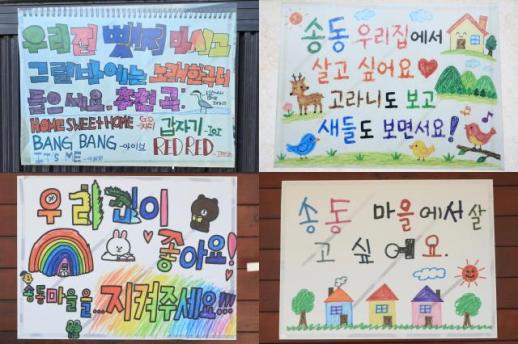 Posters opposing redevelopment line Songdong Village's alleys Posters opposing redevelopment are seen along an alley in Songdong Village, part of Seoripul District 2 in Umyeon-dong, Seocho-gu, Seoul, designated as a new housing site candidate by the government, July 29, 2026. AJP Han Jun-gu 2026-07-29 18:43:44
 -
 Opposition Condemns Rushed Criminal Procedure Law Changes as 'Bad Law' On July 29, lawmakers from the People Power Party, including floor leaders Kim Seung-soo and Kim Mi-ae, gathered in front of the National Assembly's Legislative and Judiciary Committee to condemn the Democratic Party's unilateral handling of amendments to the Criminal Procedure Law. The People Power Party warned that abolishing supplementary investigation rights for prosecutors would leave crime victims inadequately protected.Kim Mi-ae, the party's policy chief, spoke to reporters outside the committee, stating, "The state has an obligation to protect the lives and safety of its citizens, and laws should be made accordingly." She emphasized that many crime victims have relied on state protection within the criminal justice system.She further questioned, "Why is it that only the Democratic Party seeks to completely strip prosecutors of their investigative powers in the safest country in the world, South Korea? Are citizens less important than 'Gaetdal' (a term for strong supporters of the Democratic Party)?"Lawmaker Jo Bae-sook argued that even if the amendment to abolish supplementary investigation rights passes in the National Assembly, President Lee Jae-myung should exercise his right to request reconsideration. He stated, "If the state cannot resolve injustices, then brute force will prevail over the law, leading to a state of 'war of all against all.' How can people feel a sense of community and patriotism? This is the worst of bad laws that will divide and lead our society to ruin."He added, "The President initially said that the abolition of supplementary investigation rights should be considered carefully, but suddenly, just before the party convention, he backed down. How can the nation's criminal justice system be sacrificed for a political party's gain?"Lawmaker Park Chung-kwon also criticized the proposed law, stating, "This is absolutely not a law for the people. It is an unprecedented bad law appealing to the votes of 'Gaetdal' ahead of the Democratic Party's convention." He condemned the Democratic Party's unilateral and reckless actions in the National Assembly as not being in the interest of the public.Meanwhile, the Legislative and Judiciary Committee processed the amendment to the Criminal Procedure Law, which includes the abolition of supplementary investigation rights, under the ruling party's leadership. In response, the People Power Party plans to protest the rushed handling in front of the National Assembly on July 30 and intends to use a filibuster if the amendment is brought to the floor.* This article has been translated by AI. 2026-07-29 18:40:00
 -
Hyundai Workers Begin Partial Strikes Amid Ongoing Wage Negotiations The wage and collective bargaining negotiations at Hyundai Motor Company are likely to extend beyond the summer vacation period. The union has been escalating pressure on management through a series of partial strikes over the past nine days, but significant differences remain between the two sides. As the strike actions spread to Hyundai Group affiliates, labor disputes are intensifying across the domestic automotive industry.According to industry sources, the Hyundai union began a three-day partial strike on July 29, with workers walking out for four hours each day until July 31. This strike involves not only regular day shift workers but also general union members. A general strike resolution meeting is scheduled for 8 p.m. on the lawn of the main building at the Ulsan plant.In the lead-up to the summer vacation, the union is increasing pressure on management. Previously, the union conducted partial strikes for two hours daily from July 13 to 15 and for four hours daily from July 20 to 22, totaling nine days of strike action.The union argues that employee compensation has not kept pace with the company's improved performance. According to the union's analysis, while Hyundai's operating profit index rose to 520 in 2022 compared to a baseline of 100 in 2020, executive compensation increased to only 220, and the average wage for employees reached just 140.The gap between the increase in operating profit and the compensation for executives and average employees is widening, the union claims.There remains a significant divide between the two sides. The company has proposed a monthly base salary increase of 89,000 won, a performance bonus of 350% plus 10 million won, and 15 shares of company stock, but the union has rejected this offer. The union is demanding a base salary increase of 149,600 won (excluding seniority increases), a performance bonus equal to 30% of last year's net profit, the reinstatement of dismissed workers, and an extension of the retirement age to 65.Since the 15th round of negotiations on July 8, there has been little progress in official talks over the past three weeks. With Hyundai's domestic plants scheduled for summer vacation from August 3 to 7, it is likely that this year's wage negotiations will be postponed until after the break. If no dramatic resumption of negotiations or agreement occurs during the partial strike period at the end of this month, labor disputes and strikes may continue for an extended period.Labor tensions are also spreading within the Hyundai Group. Kia secured the right to strike following a decision by the Central Labor Relations Commission to halt mediation on July 27. The union is prioritizing demands such as the introduction of a 4.5-day workweek and plans to hold its first strike committee meeting on July 30 to finalize the timing and intensity of potential strike actions.Hyundai Steel's union has also gained the right to strike following the commission's decision and a successful vote. The union is demanding a base salary increase and a performance bonus that is 150% higher than last year, but management has stated that it is difficult to meet these demands due to the downturn in the steel industry and worsening business conditions.If strikes materialize, production at major facilities such as the Dangjin and Pohang steelworks could be disrupted, impacting the supply of steel products to major customers, including Hyundai Motor Company. 2026-07-29 18:12:00
-
Korea's Communications Commission to Impose Fines Up to 6% for Illegal Spam Violations Businesses that send illegal spam or fail to comply with spam prevention obligations will face fines of up to 6% of their related revenue, depending on the severity of the violation.The Korea Communications Commission (KCC) announced on July 29 that it has prepared a partial amendment to the Enforcement Decree of the 'Act on Promotion of Information and Communications Network Utilization and Information Protection' and a draft of the guidelines for imposing penalties for violations related to the transmission of advertising information.This amendment follows the revision of the Information and Communications Network Act in March. It categorizes violations related to illegal spam into three levels of severity: 'very serious,' 'serious,' and 'normal,' and imposes fines ranging from 1% to 6% of the related revenue based on the level of violation.The fines will be calculated considering factors such as intent, negligence, the degree and type of violation, and the scale of damage. In cases where it is difficult to determine the related revenue, a fixed penalty ranging from 100 million to 2 billion won may be imposed.The obligations of information and communications service providers to prevent illegal spam will also be strengthened. If a service is misused for sending illegal spam, providers must immediately stop the transmission of advertising information, restrict service use, and take necessary actions such as terminating contracts with the sender.Additionally, businesses that outsource the transmission of advertising information for profit without obtaining 'transmitter qualification certification' from bulk SMS providers will face fines of up to 30 million won, depending on the number of violations.The amendment to the enforcement decree and guidelines is expected to be announced and implemented in October after going through legislative notice, review by the Ministry of Government Legislation, and approval by the Cabinet.Meanwhile, the KCC held a meeting on the same day and accepted the Seoul Administrative Court's recommendation for mediation, canceling the appointment of Kim Seong-gun as a provisional director of the Korea Broadcasting Culture Promotion Association, which was made by the former Korea Communications Commission in August 2023. The KCC explained that with the confirmation of the cancellation of Director Kwon Tae-seon's dismissal, it found no benefit in maintaining the appointment of Kim Seong-gun as a provisional director based on that premise.* This article has been translated by AI. 2026-07-29 18:12:00
-
1500 Years of Friendship Between Chungnam Province and Nara Prefecture Highlighted at Cultural Seminar Chungnam Province and Japan's Nara Prefecture are continuing their 1500-year relationship, rooted in the exchanges between Baekje and ancient Japan, through future cooperation centered on world heritage.On July 29, Chungnam Province, in collaboration with the Chungnam History and Culture Research Institute, held the "2026 Korea-Japan Cultural Seminar" at the Lotte Resort in Buyeo, focusing on the theme of "Baekje and the Ancient Capital of Japan."Approximately 250 attendees participated in the seminar, including Chungnam Governor Park Soo-hyun, Nara Governor Yamashita Makoto, and Buyeo County Mayor Lee Yong-woo, along with cultural heritage experts from both domestic and international backgrounds.The seminar aimed to reexamine the historical exchanges between Baekje and ancient Japan, as reflected in Chungnam's "Baekje Historic Areas" and Nara's "Asuka and Fujiwara Ancient Capitals," while exploring future uses of world heritage and cooperation in culture and tourism.In the first lecture, Professor Seo Jeong-seok from Kongju National University stated, "Baekje was an ancient state that led peace and development in East Asia," highlighting the heritage that remains in the Baekje Historic Areas in Gongju and Buyeo.He further explained the historical significance of the Baekje Historic Areas and the implications of its designation as a world heritage site.Takahumi Yamada, a coordinator from Nara's World Heritage Office, introduced the world heritage sites in Nara and the recent designation process and significance of the Asuka and Fujiwara Ancient Capitals.Professor Aihara Yoshiyuki from Nara University presented the 19 sites that make up the Asuka and Fujiwara Ancient Capitals, describing them as important archaeological sites that illustrate the formation of Japan's first ancient state based on active exchanges with the Korean Peninsula and the Chinese mainland.Following the lectures, a discussion was held, moderated by Lee Gwi-young, head of the National Heritage Promotion Agency, featuring Governor Park, Governor Yamashita, and the speakers. Participants broadly discussed the future value of world heritage, the use of artificial intelligence (AI), the activation of night tourism, sustainable cultural exchanges, and the development of joint content.Since signing a friendship cooperation agreement in 2011, Chungnam Province and Nara Prefecture have maintained exchanges in various fields, including culture, education, and tourism.This year marks the 15th anniversary of the agreement, and both regions plan to expand academic exchanges, cultural and tourism cooperation, and joint content development centered on world heritage, setting an example of local diplomacy.Governor Park stated, "Chungnam Province and Nara Prefecture, sharing a historical bond through world heritage, will become even stronger partners," adding, "I hope this seminar serves as a catalyst for mutual development between the two regions and strengthens the ties between Korea and Japan."He emphasized, "World heritage is not just about preserving the past; it is a living force that will shape the future of both Korea and Japan," and expressed a commitment to writing a new chapter in history based on their shared values of world heritage.* This article has been translated by AI. 2026-07-29 18:12:00
-
LG Uplus to Buy Back 90 Billion Won in Shares, Invest 1.3 Trillion Won in AI Data Center LG Uplus announced on July 29 that its board of directors has approved a share buyback worth 90 billion won. The repurchased shares will be used to enhance shareholder value through measures such as retirement.This buyback is part of LG Uplus's 'Value-up Plan,' announced in November 2024, aimed at increasing corporate value. Since the announcement, the company has consistently pursued share buybacks and retirements as part of its medium- to long-term financial goals and shareholder return policy.Previously, LG Uplus retired approximately 100 billion won in shares based on book value in August of last year. In May, the company also retired all of the 80 billion won in shares it had repurchased since last year.The current share buyback continues the company's efforts to expand shareholder returns, and LG Uplus plans to maintain its focus on enhancing shareholder value and strengthening trust with investors.Additionally, LG Uplus has decided to pay an interim dividend of 270 won per share for 2026, marking an increase of about 8% compared to the previous year's interim dividend. The record date for the interim dividend is August 13, and the payment is scheduled for August 28.Furthermore, on the same day, LG Uplus announced an additional investment of approximately 1.3 trillion won for the second phase of its AI Data Center (AIDC) construction in Paju. This investment will fund the construction of Data Center Buildings 2 and 3, as well as related equipment investments and the design of Data Center Building 4.Meanwhile, LG Uplus is set to announce its second-quarter results on August 6.* This article has been translated by AI. 2026-07-29 18:08:10
-
Doosan We’ve the Zenith Daeyeon to Open Gallery on July 31 Doosan We’ve the Zenith Daeyeon, located in Daeyeon-dong, Nam-gu, Busan, will open its gallery on July 31 and begin its sales schedule. Doosan Construction announced on July 29 that the gallery for Doosan We’ve the Zenith Daeyeon, being developed at 1756-9 Daeyeon-dong, will open on July 31. The complex will consist of two buildings with a total of 258 units, rising from five basement levels to a maximum of 42 stories. Of these, 176 units with floor areas ranging from 59 to 84 square meters will be available for general sale. The available units include 34 units of 59 square meters, 37 units of 74 square meters A, 38 units of 74 square meters B, 16 units of 84 square meters A, and 51 units of 84 square meters B. The subscription schedule will begin with special supply on August 10, followed by first priority applications on August 11 and second priority applications on August 12. Winners will be announced on August 19, and contracts will be held from August 31 for three days. For first priority subscriptions in Busan, applicants must be at least 19 years old, have held a subscription account for over six months, and meet the deposit requirements based on region and area. There are no restrictions based on home ownership or household head status. The complex features a curtain wall design and the We’ve the Zenith brand design to differentiate its exterior. The 59 square meter units will have a four-bay structure and a dressing room, while the 84 square meter A units will feature a four-bay cross-ventilation structure and an alpha room. The 84 square meter B units will include a large pantry. Community facilities will include a fitness center, GX room, yoga room, and a reading café. To enhance convenience, the development will incorporate a smart home system based on IoT, a one-pass system, fingerprint recognition digital door locks, parking management and guidance systems, and an unmanned parcel delivery system. Safety features will include motion detectors, emergency bells in the underground parking lot, crime prevention environmental design (CPTED), and high-definition CCTV. The location is also considered a strong point, being within walking distance of both Moggol Station and Daeyeon Station on Busan Subway Line 2, and situated in a relatively flat area, which is rare in Busan. Major urban access is available via Suyeong-ro and UN Peace Road, and residents will have easy access to local amenities such as Nam-gu Office, Moggol Market, Kyungsung University commercial area, Sungso Hospital, and Korea University Hospital. Uryongsan Park and UN Sculpture Park are also nearby. In terms of education, nearby schools include Daeyeon Elementary, Daeyeon Middle, Daeyeon High, and Yemun Girls' High School, with easy access to the Namcheon-dong academy district, Nam-gu Library, Pukyong National University, and Kyungsung University. Future value is also anticipated, as large-scale redevelopment projects are underway in the Daeyeon-dong and Uam-dong areas, which will create a new residential town with approximately 12,000 units upon completion. The proximity to the North Port redevelopment and the Busan International Finance Center (BIFC) is expected to support residential demand. Meanwhile, Doosan Construction announced on July 28 that its brand book series won two main awards at the Red Dot Design Award 2026. According to Doosan Construction, the Red Dot Design Award is considered one of the top three design awards globally, alongside the iF Design Award and the American IDEA.* This article has been translated by AI. 2026-07-29 18:08:00
-
KAI Reports 43% Drop in Q2 Operating Profit Due to Delays in Light Helicopter Deliveries Korea Aerospace Industries (KAI) reported that its operating profit for the second quarter of this year fell by 43.1% compared to the same period last year, due to delays in the delivery of light armed helicopters.KAI announced on July 29 that its consolidated operating profit for Q2 was 48.4 billion won, while sales exceeded 1 trillion won, reaching 1.1679 trillion won, a 41% increase from the previous year. However, net profit dropped by 35.2% to 37 billion won. The significant decline in operating profit is attributed to delays in the delivery of the light armed helicopter (LAH) Miron, which has been halted since April due to a defect found in its engine.Looking ahead, KAI anticipates a recovery in performance in the second half of the year. The mass production of the supersonic fighter KF-21 Boramae is set to begin, along with the sequential resumption of exports of the FA-50 to Malaysia and deliveries of the Miron.A KAI official stated, "Key development projects, including the KF-21, mine-clearing helicopters, amphibious assault helicopters, and the Baekdu system, are progressing smoothly. We expect performance improvements in the second half of the year, driven by increased production and export volumes."* This article has been translated by AI. 2026-07-29 18:08:00
-
Government to Double BRT Exclusive Lanes by 2030, Increasing Bus Speeds by 20% The government plans to double the exclusive lanes for the Bus Rapid Transit (BRT) system by 2030 and increase bus speeds by approximately 20% to enhance the competitiveness of regional public transportation.The Ministry of Land, Infrastructure and Transport's Metropolitan Transport Committee announced on July 29 that it has finalized and published the 'Second Comprehensive BRT Plan (2026-2030).'The BRT comprehensive plan is a statutory plan established every five years to create an efficient BRT system. This plan outlines the policy direction and initiatives for the next five years under the vision of 'Connecting the daily lives of citizens more closely and conveniently with BRT.'The committee aims to expand the nationwide BRT exclusive lanes from the current 351 kilometers to 707 kilometers by 2030. As a result, the average bus speed is expected to increase from 21 kilometers per hour to 25 kilometers per hour.The government is also promoting a transition to an eco-friendly transportation system. The proportion of hydrogen and electric buses will increase from the current 26% to 50%, and the number of autonomous BRT routes will rise from six to 18.To achieve this, the government plans to invest a total of 1.6 trillion won by 2030 to establish 38 BRT routes nationwide, with 530 billion won coming from the national budget.In particular, to address transportation disparities between regions, the investment ratio for local areas has been increased. Of the national budget, 407.6 billion won (77%) will be allocated to local areas, while 120.5 billion won (23%) will go to the metropolitan area.Additionally, the government plans to create an integrated transportation system centered on transfers by connecting BRT with major transportation hubs such as airports, train stations, and bus terminals. Existing urban BRT routes will be linked to adjacent cities to enhance regional mobility.Improvements in transportation accessibility for vulnerable populations will also be pursued. The government aims to create a user-friendly BRT environment through the standardization of barrier-free bus stops, minimizing height differences between platforms and vehicles, expanding low-floor buses, and enhancing AI-based operation and control systems.Kim Yong-seok, chair of the Metropolitan Transport Committee, stated, "The Second Comprehensive BRT Plan is not just about expanding bus infrastructure; it is a key pillar of the metropolitan transportation network connecting five major regions and three special zones. We will enhance inter-regional connectivity and major transfer systems to create a transportation environment where citizens can move more quickly and conveniently."* This article has been translated by AI. 2026-07-29 18:08:00
-
Krafton Moves Beyond PUBG with Subnautica 2 and New IP Development Krafton has alleviated concerns about relying solely on its PUBG intellectual property (IP) by achieving record results in both the first half and second quarter of this year, driven by the performance of PUBG and the new title Subnautica 2. The company plans to launch new games based on Subnautica 2 and other IPs, marking the beginning of a multi-IP era.In the second quarter, Krafton reported revenues of 1.29 trillion won and an operating profit of 410.9 billion won, representing increases of 94.4% and 67%, respectively, compared to the same period last year. For the first half of the year, revenues reached 2.66 trillion won, with an operating profit of 972.5 billion won, both setting records for the company. These figures reflect year-on-year increases of 73.3% and 38.3%.During a conference call on July 29, Krafton CEO Kim Chang-han emphasized, "The second quarter of this year has validated the performance of our core IPs, solidifying our growth framework based on franchise IPs." He expressed confidence in the success of Krafton's franchise growth strategy, supported by the sustained growth of the PUBG franchise and the performance of Subnautica IP.According to Krafton, Subnautica 2 surpassed 5 million copies sold just 22 days after its early access launch in May. CEO Kim noted, "Subnautica 2 has achieved successful launch results in both quantitative metrics and qualitative user feedback through its early access phase, confirming its potential as Krafton's second franchise IP."Krafton's Chief Financial Officer Baek Dong-geun stated, "Subnautica 2 has recorded top-tier initial sales among major global hits," adding that its success has also boosted sales of existing titles like Subnautica and Subnautica: Below Zero. Despite being released in 2018, Subnautica has generated approximately 42 billion won in sales, demonstrating its revenue-generating capability.Kim further stated, "We will continue to scale up the Subnautica IP from a long-term perspective," and emphasized the importance of strengthening a repeatable growth system for securing and nurturing franchise IPs based on the experiences and decision-making capabilities gained during the launch of Subnautica 2.At the same time, the PUBG franchise is set to expand beyond a single game into a platform that combines various gameplay and content.Kim explained, "In the second quarter, PUBG activated its core fandom through well-made modules on the PC platform, demonstrating that content quality can translate into medical metrics and revenue growth. In the third quarter, we will expand the user-generated content (UGC) ecosystem to mobile platforms."Krafton also reported that the PUBG mobile platform has been expanding its creator openness and gameplay ecosystem since the launch of World of Wonder in 2023, surpassing 5.4 million user-created maps and facilitating over 3.3 billion matches played.In August, Krafton will unveil five new titles at Gamescom 2026 in Cologne, targeting a 2027 release. The new titles include one based on the PUBG IP and four based on new IPs: NO LAW, Project Zeta, Age Twister, and Tangle: Unbound. Kim stated, "Through these five new titles, we will rigorously validate the market for the investments Krafton has accumulated."Kim concluded, "Having established multiple growth pillars based on franchise IPs through PUBG and Subnautica, we will enhance our strategic focus on core IPs and secure new franchise IPs through a viable growth system."* This article has been translated by AI. 2026-07-29 18:00:10