


Latest by
-
 Celine Dion Returns to the Stage After Six Years, Overcome with Emotion Pop star Celine Dion made her return to the concert stage after more than six years, performing on September 12 at the Plenitude Arena in Nanterre, just outside Paris. This marked her first regular concert since the 'Courage World Tour' in March 2020.Dion opened the show with her French hit 'On ne change pas.' Overcome with emotion, she shed tears during the performance.Addressing the audience, she said, "Thanks to your support and love, I am standing on the stage of this city I love. The road has been tough and longer than expected, but I persevered." After expressing her emotions, she added, "I promised myself I wouldn’t cry, but these are tears of joy." The concert featured her iconic songs, including 'My Heart Will Go On' and 'All By Myself.'Dion's regular performances were halted in March 2020 due to the COVID-19 pandemic, which forced the cancellation of the 'Courage World Tour' after 52 shows in North America. The resumption of her concerts was delayed multiple times, compounded by health issues.In December 2022, Dion revealed her diagnosis of Stiff-Person Syndrome (SPS), a rare neurological disorder that causes muscle stiffness and spasms, leading her to cancel the remaining dates of the 'Courage World Tour.'This concert was not her first performance since the diagnosis was made public. In July 2024, she sang 'Hymne à l'amour' by Édith Piaf at the opening ceremony of the Paris Olympics, which garnered significant attention, although it was a special performance featuring just one song.On March 30, the day of her 58th birthday, Dion announced her concert plans in Paris. Initially scheduled for ten shows in September and October, the overwhelming interest led to the addition of six more performances. This year's concerts will take place from September 12 to October 17, with ten more shows planned for May next year, bringing the total to 26 performances.* This article has been translated by AI. 2026-09-13 17:08:00
 -
Five Ministerial Nominees Under Scrutiny as Opposition Targets Kim Seung-won Yong Hye-in, the nominee for Minister of Gender Equality and Family, resigned on the 13th, leaving five other ministerial nominees under scrutiny. The National Assembly will hold confirmation hearings this week for nominees from five ministries, including the Ministry of Finance, Ministry of Land, Infrastructure and Transport, Ministry of SMEs and Startups, Ministry of National Defense, and Ministry of Justice.The hearings for Lee Hyung-il (Ministry of Finance), Kim Seung-won (Ministry of Justice), and Lee So-young (Ministry of SMEs and Startups) will take place on the 15th, while those for Kang Shin-cheol (Ministry of National Defense) and Hong Ji-sun (Ministry of Land, Infrastructure and Transport) are scheduled for the 16th. During this confirmation process, both ruling and opposition parties are expected to focus their efforts on attacking or defending Kim Seung-won.Within the Democratic Party, there is a sense of urgency to protect Kim, who was appointed symbolically to complete judicial reform. Members of the party's Legislative and Judiciary Committee held a press conference on the same day, targeting independent lawmaker Han Dong-hoon, who is at the center of the controversy surrounding Kim. They alleged that during Han's tenure as Minister of Justice, the prosecution initiated an investigation into Kim to implicate President Lee Jae-myung.Chairwoman Seo Young-kyo stated, "Immediately after the prosecution began investigating Kim, they prepared a report detailing connections between the president and individuals involved in the Daejang-dong incident," emphasizing that the report was created during a time when the prosecution was allegedly suppressing the president.Kim Eui-gyeom, the ruling party's Legislative and Judiciary Committee member, described the situation as a clear case of targeted investigation, stating that Han actively intervened by changing the investigation leader to someone from the 'Yoon Seok-yeol faction' to find a link between the president and Kim.In response, Han countered, "The Democratic Party has nothing to argue about regarding the investigation, so they revert to the narrative of targeted investigation. Who would target someone like Kim Seung-won, who was unknown at the time?" He also left open the possibility of holding an independent confirmation hearing outside the National Assembly in response to questions from reporters.Political analysts suggest that the growing public opposition to Kim's appointment, as reflected in various opinion polls, could pose a challenge for the ruling party. The People Power Party and other opposition groups are leveraging this sentiment to intensify their allegations against Kim.On the same day, People Power Party lawmaker Joo Jin-woo raised additional allegations regarding a social cooperative related to Kim's family, claiming it received preferential treatment in the selection process for service providers in Suwon, Gyeonggi Province, where Kim's constituency is located. Joo pointed out that the cooperative, which had only been in Suwon for three months, was awarded five points in the re-designation process, while a competing organization that had secured two substitute workers received zero points.He further criticized the process, stating, "The cooperative only mentioned 'replacement upon vacancy' but received full points, while unfair zero points were given to competitors to eliminate them. Investigations into these allegations should be expanded."Additionally, the confirmation hearings for Kang Shin-cheol, Lee Hyung-il, Lee So-young, and Hong Ji-sun are expected to focus heavily on real estate-related allegations. The opposition is set to argue that the nominees have employed loopholes that contradict the housing policies emphasized by the Lee Jae-myung administration. 2026-09-13 17:08:00
-
Recovery Efforts Underway After Freight Train Derailment at Nakdonggang Station The Korea Railroad Corporation (Korail) has completed recovery operations following a freight train derailment at Nakdonggang Station on the Gyeongjeon Line and has resumed some train services. Korail announced on September 13 that the recovery work for the derailment, which occurred around 8:30 PM the previous day, has been finalized. As of 9:45 AM on the same day, train services on the Gyeongjeon Line have resumed, except for certain sections. However, 10 trains, five in each direction between Busan-Bujeon and Mokpo-Suncheon, will restart operations beginning with the first train on September 14. Until the affected section is fully restored, trains will operate alternately on the up line, which may cause delays for some services, according to Korail. There were no reported injuries from the incident. The exact cause of the derailment will be investigated by relevant authorities. While some train services on the Gyeongjeon Line have resumed, passengers are advised to check for potential delays before departure. A Korail representative stated, “We encourage customers to verify the operational status through the Korail app, website, or customer service center. We sincerely apologize for the inconvenience and are committed to ensuring safe train operations and a swift return to normal service across all lines.”* This article has been translated by AI. 2026-09-13 17:04:00
-
Navigating Unpredictable Markets: Asset Management Strategies "Wall Street is the only place where people riding in Rolls Royces ask for advice from those taking the subway." Wealthy individuals seek private banking (PB) services not just for recommendations on good investment products. Many lack the time to monitor the market daily due to their primary occupations, but more importantly, it is often harder than expected to view one’s own finances objectively. When profits are up, everyone trusts their judgment, but losses can change perceptions dramatically. Investors may waver between thoughts of 'Should I wait a little longer?' and 'Should I sell before it drops further?' While numbers are objective, the emotions tied to those numbers are not. Maintaining objectivity in investing and striving to remain rational is crucial. It is essential to avoid getting caught up in the realm of the impossible, which is prediction. Before diving into asset management, the first step is to understand what kind of investor you are. Consider how much loss you can tolerate, the duration you can invest, the assets available for investment apart from living expenses, and the reasons behind your investment. This process is vital because the answers can differ significantly among individuals, even in the same market. Recent concerns surrounding long-term government bond investments exemplify this. With the unexpected end of a prolonged low-interest-rate era and a sharp rise in rates, the prices of long-term bonds have fallen more than anticipated, increasing investor anxiety. It is important not to stop at the question, 'Did I buy long-term bonds incorrectly?' If the outcome is different from expectations, the next question should be, 'How will I respond?' Long-term bonds will recover in price if interest rates decline again, but this process will take considerable time. Conversely, for conservative investors with sufficient investment time, it may be better not to act hastily. Especially if their portfolio is already diversified and they do not urgently need short-term gains, they can leverage the long-term cycle of interest rates and the power of time. Additionally, for asset holders considering the timing of gifts and facing significant gift tax burdens, gifting long-term bonds that have decreased in price can lower the taxable value of the gift. If the price recovers later, the increase in asset value can benefit their children. Thus, a price drop in cyclical investments like long-term bonds can present a good opportunity to reduce tax burdens, turning an investment setback into a chance to minimize taxes. Even in the same loss situation with long-term bond investments, different solutions arise depending on the investor's circumstances and goals. Experiencing an unexpected outcome is not a failure in itself. Since predicting the future in investing is inherently uncertain, there is no need to despair over outcomes that differ from expectations. What matters more is how one accepts those results and chooses the next course of action. When seeking responses to prediction failures, a cold assessment of one’s situation must precede it. Therefore, it is crucial to objectively understand and organize one’s circumstances. Similarly, the AI investment landscape, which has left many investors disheartened since June, should be viewed from this perspective. Describing the essence of AI investment merely as 'AI will change the world and enhance productivity' fails to capture the nature of the capital flowing into the current market. Thus, the questions investors should ask also change. Instead of merely questioning whether 'AI is a bubble' in the face of such volatility and losses, they should shift their focus to 'How can I benefit from this capital influx in the market?' Of course, investors should avoid overextending themselves. If valuations have become excessively high, it is necessary to slow down and ensure that assets are not overly concentrated in one stock or industry. However, viewing the market solely through a pessimistic lens of 'It’s too expensive, so don’t buy' or 'The bubble will burst soon' is also risky, necessitating a shift in questioning. Investors do not need to be either optimists or pessimists; they should acknowledge the direction of change while being cautious of overheating, based on their self-assessment, and determine how to participate within their capacity if that change continues. Whether in long-term bonds or AI investments, experiencing outcomes that differ from expectations is not a failure. Since predicting the future in investing is inherently uncertain, there is no need to despair over unexpected results. What is more important is how one accepts those results and chooses the next actions. If you are a PB, you do not simply tell clients to sell when the market is shaky. Instead, you reassess the client’s preferences, asset structure, and investment duration to find viable options. When circumstances change, you adjust the strategy accordingly. Since predicting every investment scenario is nearly a divine endeavor, predictions can always fail. Therefore, it is essential to remember that the market is always changing and to establish your investment principles. Rather than deeming losses as failures, it is crucial to seek ways to overcome them and participate in opportunities without overextending oneself.* This article has been translated by AI. 2026-09-13 17:00:20
-
Park Bo-kyum Wins First Major Title at KLPGA KB Financial Championship Park Bo-kyum has claimed her first major title since debuting on the Korea Ladies Professional Golf Association (KLPGA) Tour.On September 13, at the Blackstone Icheon Golf Club in Icheon, Park shot a final round of 1-under 71, with three birdies and two bogeys, in the third major tournament of the KLPGA Tour season, the KB Financial Golden Life Championship, which has a total prize pool of 1.5 billion won.With a total score of 5-under 283, Park edged out a group tied for second place at 4-under 284, which included Yoo Seo-yeon2, Bang Sin-sil, and Park Ye-ji, by one stroke to secure the victory.This win marks Park's first major championship since her tour debut in 2021 and her fourth career victory, coming approximately 1 year and 6 months after her last win at the Blue Canyon Ladies Championship in March 2025.Additionally, she has extended her streak of winning at least once each year since 2013. Park has now lifted trophies at the 2023 Kyochon 1991 Ladies Open, the 2024 Sangsangin-Hankyung Wownet Open, and the Blue Canyon Ladies Championship last year, achieving four consecutive years of victories.With this win, Park earned 270 million won in prize money, moving her up to 10th place in the prize money rankings with a total of 497.04 million won. She also climbed to 8th place in the points standings.Starting the final round tied for second, one stroke behind the leader, Park made a long birdie putt from about 14 meters on the first hole (par 5) to tie for the lead. She then engaged in a fierce battle for the top spot with Yoo Seo-yeon2, Park Ye-ji, and Bang Sin-sil.Park took the solo lead with a birdie on the third hole (par 3) but briefly lost it after making bogeys on the fifth hole (par 5) and the seventh hole (par 3). However, she regained momentum with a birdie on the eighth hole (par 4) and took advantage of Yoo Seo-yeon2's bogey on the 14th hole (par 4) to return to a tie for the lead.The turning point came on the 16th hole (par 3), where Park calmly saved par while Yoo Seo-yeon2 made a bogey, allowing Park to take the solo lead. She maintained her composure over the remaining holes, fending off the challengers to secure the win.In a post-victory interview, Park expressed her satisfaction, saying, "I feel fulfilled to have achieved my personal goal of winning a major tournament. Looking back, it was a great day for me."She added, "At the start of this season, my golf wasn't in great shape. I had doubts about whether I could win again this year, but I received a lot of encouragement from those around me. The chairman of Samchully told me, 'If you stay calm, your time will come.' So, I approached this tournament with composure."Regarding her goals for the season, she stated, "I have been winning once a year, but this year I aim to achieve multiple victories. I will do my best."Seo Kyo-rim, who has four wins this season, finished in fifth place with a total score of 3-under 285. She earned 60 million won in this tournament, bringing her season total to 1.38176 billion won, surpassing Kim Min-sol to take the top spot in the prize money rankings.Kim Si-hyun and Jeon Woo-ri tied for sixth place with a total score of 2-under 286.Former LPGA Tour player Jeon In-ji, who participated as an invited player, finished in a tie for 29th place with a total score of 5-over 293.Kim Min-sol ended the tournament in a tie for 47th place with a score of 9-over 297. 2026-09-13 16:40:00
-
KOSPI Surges to 6900, Yet Major Stocks Remain Cheaper Than a Year Ago The KOSPI index has more than doubled over the past year, reaching the 6900 mark, but not all investors are benefiting from this rally. While the index has soared to record highs, some major stocks are trading at lower prices than a year ago.According to the Korea Exchange, the KOSPI closed at 6909.91 on September 11, marking a 106.62% increase compared to the closing price of 3344.20 on the same day last year. This represents more than a twofold rise in the index.However, the performance of individual stocks has varied significantly. NAVER's stock price fell from 233,000 won on September 11 last year to 206,500 won on September 11 this year, resulting in a one-year return of -11.37%. This trend contrasts sharply with the KOSPI's more than 100% increase during the same period.Krafton experienced an even steeper decline, with its stock price dropping from 324,500 won last year to 212,500 won this year, a decrease of 34.51%. If an investor held 10 million won worth of Krafton shares a year ago, their investment would now be valued at approximately 6.55 million won.LG Chem also failed to recover its price from a year ago, falling from 290,000 won to 273,000 won, a decrease of 5.86%.In contrast, semiconductor giants saw significant gains. Samsung Electronics' stock surged from 73,400 won last year to 259,500 won this year, an increase of 253.54%. Similarly, SK Hynix's stock skyrocketed from 307,000 won to 1,812,000 won, marking a staggering 490.23% rise.This disparity can be attributed to the KOSPI being calculated based on a market capitalization-weighted method rather than a simple average of individual stocks. When the prices of larger market-cap stocks rise significantly, the overall index can increase substantially, even if many other stocks perform poorly.It is important to note that just because a stock's price is lower than it was a year ago does not necessarily mean it is undervalued. The appropriate price level can vary based on company performance, growth prospects, market conditions, and valuations.* This article has been translated by AI. 2026-09-13 16:32:00
-
Government Wins Case Against Chinese Investor in ISDS Dispute The South Korean government has won a ruling in an international investment dispute (ISDS) with a Chinese investor, following a previous victory regarding the initial claim amounting to 20 trillion won. According to the Ministry of Justice, on September 12, the government received a favorable decision in the cancellation procedure of the ISDS case filed by Chinese national Peng Jianmin against the South Korean government, based on the Korea-China Investment Agreement. Peng had initiated the case on August 3, 2020. Peng Jianmin established Baekik Investment Co. (Pye Korea) to secure a project financing loan for the purchase of Huafu Building in China. After defaulting on the loan, the financial institution disposed of the shares of the company that served as collateral, leading Peng to file a civil lawsuit, which he lost. Separately, after a criminal investigation and trial resulted in a guilty verdict for bribery involving employees of the financial institution during the loan process, Peng raised issues regarding the execution of collateral and the civil lawsuit, filing for ISDS. The initial claim was approximately 20 trillion won, ultimately reduced to about 2.641 trillion won. The arbitration tribunal ruled in May 2024 that "Pye Korea was established to obtain an unjust project financing loan through bribery, and thus the establishment of the claimant's company and acquisition of shares are considered illegal investments not protected under the agreement," rejecting all of Peng's claims. The tribunal also ordered Peng to pay the government approximately 4.9 billion won in legal costs and interest. In response, Peng filed a request for cancellation with the International Centre for Settlement of Investment Disputes (ICSID) in September of that year. The Ministry of Justice has been collaborating with domestic and international law firms, including Yulchon, and external experts as part of a task force composed of relevant government agencies to address the ISDS case. On September 12, nearly two years later, the ICSID Cancellation Committee ruled to "reject all claims by the claimant" and ordered Peng to pay approximately 1.5 billion won in legal costs and interest to the government. A Ministry of Justice official stated, "This cancellation decision reaffirms the principle that illegal investments under domestic law are not protected under ISDS. Furthermore, we successfully defended against attempts to overturn a case already adjudicated in South Korea's civil and criminal judicial processes through ISDS." The official added, "The original arbitration ruling marked the first time our government won an ISDS case through a full hearing, and with this complete victory in the cancellation procedure, we have effectively blocked any possibility of a second arbitration by the claimant." * This article has been translated by AI. 2026-09-13 16:24:00
-
South Korean Prime Minister Calls for Comprehensive Drug Response Strategy South Korean Prime Minister Han Seong-sook emphasized the need for a comprehensive approach to drug issues, stating on September 13, "Drug response should not only focus on investigation and enforcement but also on rehabilitation and treatment. It is essential to establish a cooperative system among relevant agencies." During the fourth "Open Brunch" event held at the Prime Minister's residence in Jongno, Seoul, Han discussed strategies for addressing drug-related issues, covering areas from investigation and enforcement to prevention, education, treatment, and rehabilitation. The event included participants from law enforcement, prosecutors, customs officials involved in drug crime investigations, as well as practitioners from relevant ministries, addiction treatment specialists, and recovery support workers who assist individuals overcoming drug addiction. The head of the drug crime investigation team at the Northern Police Agency, who investigated Philippine drug lord Park Wang-yeol, expressed optimism about the upcoming undercover investigation system set to be implemented in May 2027, which is expected to enhance evidence collection related to drug crimes. He also highlighted the importance of focusing on the treatment and rehabilitation of drug offenders. Chun Young-hoon, president of Incheon Cham Sarang Hospital, stressed the need for a coordinated approach among various ministries based on field experience. Han Chang-gil, a recovery support worker who has overcome drug addiction, shared his belief that many individuals fail to quit drugs not due to inability but because they lack the right methods, underscoring the importance of rehabilitation education. Participants agreed on the urgent need to strengthen prevention education and social awareness, particularly as drug-related crimes are rapidly spreading among youth and young adults. Han stated, "Education on drug addiction is related to students' survival," and called for expanded educational initiatives targeting both parents and students. The discussion also included rehabilitation programs for released offenders to support their reintegration into society. Attendees suggested that the effectiveness of addiction recovery programs implemented in correctional facilities should continue post-release, necessitating a support system that includes housing and employment opportunities. The role of a control tower to coordinate policies scattered across various ministries was also a key topic. There was consensus on the need to enhance cooperation among relevant agencies, such as through the Drug Policy Council, to ensure seamless connections between prevention, enforcement, treatment, and rehabilitation. Han remarked, "I felt the passion and sense of mission of field personnel in the drug sector during this meeting," and emphasized the need for public campaigns to raise awareness about the importance of rehabilitation and treatment. She also stated, "I will review the tasks being pursued by each ministry to explore ways for the government to implement them promptly." 2026-09-13 16:24:00
-
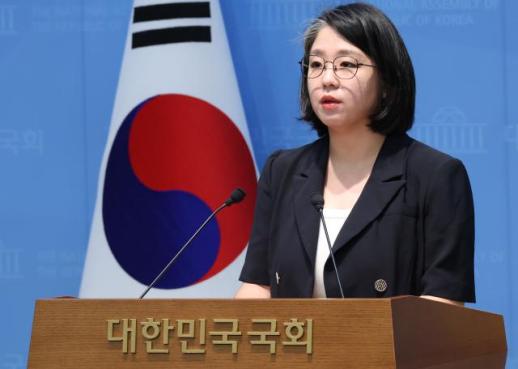 Korea's gender minister nominee quits under pressure SEOUL, September 13 (AJP) - South Korea's nominee for gender equality minister withdrew on Sunday after the governing party asked her to step aside, ending a nomination that had lasted 14 days and, with it, President Lee Jae Myung's first attempt to bring a smaller progressive party into his cabinet. Yong Hye-in announced the decision at a hastily called news conference at the National Assembly, two weeks after Lee named her on Aug. 30 to lead the Ministry of Gender Equality and Family. She never reached a confirmation hearing. What ended the nomination was not opposition resistance. Yong said the Democratic Party of Korea (DP), which governs with the support of her own party, had told her to resolve the matter herself. The message, as she described it, was that the party respected the position she and the Basic Income Party were in, but that public sentiment had not come around to one person holding a proportional seat and a ministry at the same time, and that she should make a decision. "A cabinet member has to connect the National Assembly and the government and draw cooperation out of both," Yong said. "With the governing party also expressing concern, I judged that carrying out the job was realistically difficult." The dual role had been the trouble from the start. South Korean law allows sitting lawmakers to serve as ministers, and district representatives have done so routinely. Proportional representatives, who hold their seats through party lists rather than constituencies, have by custom given the seats up on entering the cabinet. Yong refused, and her reason was arithmetic rather than preference. She is the Basic Income Party's only lawmaker, and she entered parliament in 2020 and again in 2024 through proportional lists run by Democratic Party satellite parties. Had she resigned, the seat would have passed to the next name on the list rather than to her own party, leaving the Basic Income Party with no presence in parliament at all. She tried to defuse the criticism on Aug. 31, writing on Facebook that she had already told her party she would not run as a proportional candidate in the next general election. It changed little, and the complaints kept coming from within the governing camp as well as from the opposition. Allegations about the party itself compounded the problem. Critics pointed to her appointment of her husband to a senior Basic Income Party post and accused her of running the party as a private operation. As recently as Sept. 10, Yong had shown no intention of stepping back. She held a news conference at the National Assembly that day, argued that a lawmaker serving in the cabinet is a principle the law permits, and rebutted the accusations against her one by one. Three days later she explained why that approach had run out of road. "There was nothing I could not stand behind, so I wanted to account for each point before the public and I waited for the confirmation hearing," she said Sunday. "But with false information and speculation pouring in from one side, I had no choice but to convey the truth and my own sincerity to the public directly." The Basic Income Party said the decision was taken over the weekend. Shin Ji-hye, a supreme council member of the party, told reporters after the news conference that the message from the Democratic Party leadership arrived on Saturday and that the final decision followed consultations within the party leadership. Asked whether Cheong Wa Dae had been involved, Shin said that as far as she knew, there had been no contact with the presidential office. Yong also framed the withdrawal as a way of protecting the alliance that had produced the nomination in the first place, saying stopping there was necessary to carry on the spirit of cooperation within the democratic and progressive camp. The ministry now waits again. Won Min-kyong, who took office in September last year and ended a leadership vacancy of one year and seven months, remains in the post until a successor is named. She became the ministry's first head after its Korean name was changed on Oct. 1 to drop the word for women in favor of gender equality. Kang Sun-woo, then a Democratic Party lawmaker, withdrew from the same nomination in July last year over allegations that she mistreated her staff. Yong keeps her National Assembly seat. "I will return to where I started, take a look at myself, and devote myself to my work in parliament with a humble and mature attitude," she said. AJP Takeaways - Yong Hye-in withdrew as South Korea's nominee for gender equality minister on Sunday, 14 days after President Lee Jae Myung named her and before any confirmation hearing was held, ending his first attempt to place a smaller progressive party inside the cabinet. - The Democratic Party of Korea, not the opposition, forced the decision by telling Yong that public sentiment had not come around to one person holding a proportional seat and a ministry at once and that she should decide for herself, three days after she had publicly vowed to fight the accusations point by point. - The Basic Income Party would have lost its only seat in parliament had Yong resigned it, because she entered the National Assembly in 2020 and 2024 through Democratic Party satellite lists and the seat would have passed to the next name on those lists rather than to her own party. AJP established the succession mechanics beyond the original source copy. - Shin Ji-hye said the message from the Democratic Party leadership reached the Basic Income Party on Saturday and that, as far as she knew, Cheong Wa Dae had no contact with the party over Yong's position. 2026-09-13 16:20:14
 -
First U.S. Investment Project Set to Be Revealed Soon Amid Safety Concerns South Korea's first strategic investment project in the United States is expected to take shape this week. As discussions around increasing project costs and early fund disbursement arise, the effectiveness of safety measures for investment recovery and loss mitigation has become a key issue.According to the Ministry of Trade, Industry and Energy, Minister Kim Jeong-kwan met with U.S. Secretary of Commerce Howard Rutnik from September 10 to 12 (local time) in New York to negotiate the target, scale, and conditions of the U.S. investment project.The total investment promised by South Korea amounts to $350 billion, including $150 billion for shipbuilding cooperation and $200 billion for strategic investments. The energy projects currently under discussion, such as the Ensignal gas combined cycle power plant in Texas and nuclear power plants, fall under the strategic investment category.While specific details of the negotiations have not been disclosed, reports indicate that both sides are nearing an agreement centered on large-scale energy investments. The Wall Street Journal, citing multiple sources, reported that South Korea and the U.S. are in the final stages of agreeing to invest over $100 billion in energy projects, including up to eight nuclear power plants and natural gas generation facilities in the U.S. The agreement could be announced as early as this week.The crux of the negotiations lies in how well safety measures to reduce investment risks are maintained amid discussions of increased project costs and early fund disbursement. The Ensignal power plant was initially estimated at around $20 billion but has reportedly been adjusted to about $22 billion due to U.S. demands for cost increases.Last year, South Korea stipulated in a memorandum of understanding (MOU) with the U.S. that only commercially viable projects would be recommended. Commercial viability is assessed based on whether the project can generate sufficient cash flow to repay principal and interest during the investment period. However, even if the investment committee recommends a project after consultations with the South Korean side, the final investment decision rests with President Donald Trump.Measures to alleviate the burden of fund disbursement have also been established. The MOU limits annual remittances to $20 billion and stipulates that funds can only be transferred at least 45 business days after notification of the selected investment destination.However, speculation has arisen that the first investment of $2.2 billion (approximately 3 trillion won) could be transferred by the end of this month, raising questions about the actual application of the 45-business-day clause. The Ministry of Trade has stated that the amount and timing of the first remittance have not yet been confirmed.The operational method of a special purpose vehicle (SPV) for integrated management of profits and losses across projects is also a variable. It has been reported that discussions are underway to settle profits and losses on a project-by-project basis. In this case, the risk diversification function of offsetting losses from one project with profits from another may weaken. However, the revenue distribution structure is still under discussion between South Korea and the U.S., according to government sources.Minister Kim is scheduled to report the results of the negotiations to the National Assembly in a closed session on September 17. When asked about specific negotiation details upon entering the U.S., Minister Kim stated, "I cannot confirm anything yet. I will provide information once the final results are available."* This article has been translated by AI. 2026-09-13 16:12:00