


Latest by
-
 Xiaomi Launches Redmi Watch 6 in South Korea Xiaomi Korea announced the launch of the Redmi Watch 6, a smartwatch featuring a large display and a battery life of up to 24 days.The new product is equipped with a 52.58mm (2.07-inch) AMOLED display and a 550mAh battery. It is compatible with both Apple iPhones and Android smartphones.The Redmi Watch 6 has a slimmer profile at 9.9mm thick and features a 2mm ultra-slim symmetrical bezel, achieving an 82% screen-to-body ratio.It also includes a color Always-On Display (AOD) feature, allowing users to view the time and key information without any interaction, even when the screen is off. The watch is built with a high-strength aluminum alloy frame, enhancing its durability against external shocks and deformation.The battery life can last up to 24 days. With the 550mAh battery, it can operate for up to 24 days under light usage and up to 12 days in typical usage conditions. In high-intensity usage scenarios, such as active exercise and health monitoring, it can last up to 7 days, reducing the need for frequent charging during long trips or outdoor activities.The exercise tracking features have also been improved. The Redmi Watch 6 supports a dual L1 GNSS (Global Navigation Satellite System). The dual L1 antennas automatically select the strongest signal based on the user's wrist position, providing stable location information even while moving. Users can record their routes and exercise data outdoors without a smartphone.The watch will be available in three colors: Obsidian Black, Silver Gray, and Glacier Blue. Xiaomi Korea has begun pre-orders today and will gradually launch official sales through its online and offline stores and major online distribution channels.Promotions will be available for early buyers across various distribution channels. During the pre-order period, which runs until July 12, some channels will offer discounts. From July 13 to 31, the first sales period will include promotions such as free Redmi Buds 6 Play for customers who make a purchase.A Xiaomi Korea representative stated, "As interest in active lifestyles, including running and health management, continues to grow in South Korea, the number of consumers using smartwatches in their daily lives is steadily increasing. The Redmi Watch 6, with its wide and clear display, a battery lasting up to 24 days, and enhanced health and exercise monitoring features, is designed for effortless use in both exercise and daily life."* This article has been translated by AI. 2026-07-09 13:48:00
-
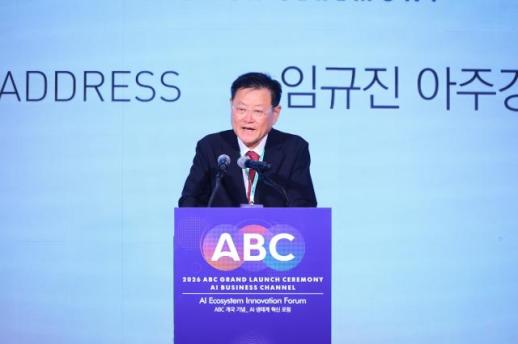 ABC launch forum puts spotlight on Korea's AI ecosystem SEOUL, July 09 (AJP) - Aju Media Group's new AI-focused business channel ABC held the AI Ecosystem Innovation Forum in Seoul on Thursday, bringing together government officials, technology executives and industry experts to discuss South Korea's next steps in artificial intelligence. The forum, held at The Plaza Seoul, followed the official launch of ABC, or AI Business Channel, a day earlier as Aju Media Group expands into television broadcasting with a channel dedicated to artificial intelligence. Key participants included Ryu Je-myung, second vice minister of Science and ICT; Lee Sedol, former professional Go player and special professor at UNIST; Jeong So-young, NVIDIA Korea Country Manager; and Lim Sung-shin, head of AI development at Korea Aerospace Industries. The morning session opened with remarks by Lim Kwu-jin, president of Aju Business Daily, followed by a congratulatory speech from Ryu, a keynote by Lee and a presentation by Jeong. Lim described ABC as South Korea's first AI-focused economic broadcasting channel, launched at a time when artificial intelligence is rapidly changing industry, the economy and everyday life. The channel, Lim said, aims to serve as a media platform linking AI technology, industry, policy and the economy while contributing to the development of South Korea's AI ecosystem. He framed the forum as a starting point for discussions on the strategies and tasks needed for South Korea to become one of the world's three leading AI powers. Ryu said the global AI economy is being reshaped by massive investment and intensifying competition over technologies that will determine the next generation of industrial leadership. South Korea has been building the foundation for its AI ambitions, he said, pointing to the country's rise to third place in the number of notable AI models in Stanford University's AI Index 2026, behind the United States and China. Ryu also cited the implementation of the AI Basic Act and legislation related to AI data centers as part of the government's efforts to support large-scale private investment. The government plans to build a Korean-style AI ecosystem by combining semiconductors, AI data centers and next-generation technologies such as agentic AI and physical AI, he said. AI leadership, Ryu stressed, cannot be achieved through models and infrastructure alone, adding that ordinary citizens, companies and regions must be able to use AI in daily life and work. Lee's keynote, titled "A Decade After AlphaGo: The Age of New Illiteracy," revisited his 2016 match against Google's AlphaGo, which became a turning point in global awareness of artificial intelligence. Lee used the phrase "new illiteracy" to describe a widening gap between people who understand and use AI and those who do not, comparing it to the divide between those who can read and write and those who cannot. When he first received the proposal to play AlphaGo, Lee recalled, he did not view it as a decisive contest between humans and machines, but more as a public event. He believed at the time that Go would eventually be conquered by computers, but did not expect that moment to arrive in 2016. Lee also reflected on his connection with Demis Hassabis, co-founder of Google DeepMind, saying the AlphaGo match helped show how AI could move beyond games into fields such as science and medicine. The match showed both the power and limits of AI, Lee said, arguing that even in a rule-based domain such as Go, the technology could not simply be left to operate without human judgment. The lesson was not that humans had become unnecessary, but that they need to focus on setting direction, planning, designing and making final judgments, he said. AI has since widened the gap within professional Go, Lee noted, because top players have been better able to understand and use AI tools. He added that ABC could play a meaningful role if it goes beyond simply listing AI news and helps viewers understand what fast-moving developments mean for business and society. Jeong framed AI not merely as a large language model, chatbot or software service, but as an entirely new industry. NVIDIA views AI as a broad stack of components that includes energy, high-performance semiconductors, infrastructure, models and applications, with each layer needing to operate without bottlenecks to create new value, he said. Energy, chips and data centers remain key constraints as demand for AI continues to exceed supply, leaving significant room for the technology to expand as those bottlenecks ease, according to Jeong. Jeong described AI factories as revenue-generating infrastructure that can create industrial value by turning electricity and data into intelligence, rather than simply as cost centers. Computing is also moving beyond individual GPUs and servers to the scale of entire data centers, he said, as AI infrastructure shifts from tens or hundreds of megawatts toward gigawatt-scale facilities. NVIDIA is working with partners on platforms for designing, building and operating large-scale AI factories more efficiently, with the economics of AI infrastructure increasingly tied to power use, cooling, networking and system-level optimization, Jeong said. Jeong also pointed to agentic AI as the next phase of software development, where systems can understand user requests, reason through tasks and produce results beyond fixed input-output rules. Physical AI will extend artificial intelligence into the real world through robotics, autonomous vehicles, smart factories, intelligent cameras and digital twins, he said, requiring simulation platforms that can test and validate AI systems before they are deployed in physical environments. The afternoon program is scheduled to feature speakers from AWS Korea, MakinaRocks, Shinhan Bank, Mirae Asset Global Investments and Korea Aerospace Industries, focusing on AI applications across finance, manufacturing and aerospace. 2026-07-09 13:46:43
-
 Police raid Kakao Pay over alleged leak of 40 million users' data to Alipay SEOUL, July 09 (AJP) - South Korean police have raided the headquarters of Kakao Pay over allegations that the fintech firm handed the personal data of about 40 million customers to Chinese payment service Alipay without their consent, escalating a probe that began in March. The Gyeonggi Nambu Provincial Police's anti-corruption and economic crime unit searched Kakao Pay's offices in the Bundang district of Seongnam over two days on Monday and Tuesday, seizing digital records tied to suspected violations of the credit information and electronic financial transaction laws. It marked the first raid since police opened the case in March at the request of the Financial Supervisory Service (FSS). Officers moved in to examine the full decision-making chain behind the firm's data-sharing arrangement, according to the authorities. Kakao Pay is suspected of transferring 54.2 billion pieces of personal data belonging to about 40 million customers to Alipay between 2018 and May 2024. The information was allegedly funneled to build a so-called "NSF score" model that Apple had outsourced to Alipay to gauge the likelihood that a user's account would fall short of payment. Those booked so far are Kakao Pay executives and staff along with the corporate entity, though their identities and number have not been disclosed. Police plan to question witnesses and suspects once analysis of the seized material is complete. The raid lands as South Korean regulators sharpen their response to a run of large-scale data failures. Last month, the Personal Information Protection Commission slapped a record 624.6 billion won ($415.6 million) fine on e-commerce leader Coupang over a breach that exposed the data of more than 33 million people, underscoring the mounting price of lax safeguards in the country's digital economy. Regulators have already come down hard on Kakao Pay. The commission fined the company 5.97 billion won in January last year, and the FSS in February issued an institutional warning, a heavy sanction, along with penalties of 12.98 billion won and 4.8 million won. Kakao Pay, which contends the transfer was lawful outsourcing, lost a related administrative suit on June 11, with the court ruling that data subjects could not be seen to have "clearly and specifically consented" to their information being used as a creditworthiness gauge. The company has appealed. 2026-07-09 13:44:05
-
Before Heading to China, Pandas Louis and Hui Embark on a Tour of Korea The beloved twin pandas at Everland, Louis and Hui, are set to travel across South Korea to promote the country's beautiful tourist destinations. The pandas, who must move to China before turning four, are expected to create lasting memories with fans while invigorating the local economy.On July 9, the Korea Tourism Organization and Samsung C&T's Everland signed a memorandum of understanding (MOU) at the Wonju Tourism Corporation headquarters in Gangwon Province for the joint campaign 'Louis and Hui's Journey Across Korea.' This initiative aims to enhance awareness of domestic tourist sites by leveraging the popularity of the twin pandas.◆ Storytelling of Twin Pandas Meets Local TourismThis campaign is a narrative-driven project where Louis and Hui will travel around the country, creating diverse memories before their departure to China. It features an interactive program that allows the public to join the pandas on their journey, rather than merely introducing various regions.The two organizations will spotlight one of six regions each month: Jeolla (July), Chungcheong (August), Jeju (September), Gyeongsang (October), Gangwon (November), and the Seoul metropolitan area (December). Each region's attractions, festivals, and specialties will be integrated into the pandas' travel stories, promoting them both online and offline.Notably, veteran zookeepers from Everland, including Kang Cheol-won, who has gained fame as 'Panda Grandpa' on the official Everland YouTube channel 'Bbuppa TV,' along with Song Young-kwan and Oh Seung-hee, will serve as regional ambassadors. They will travel with the Louis and Hui dolls, sharing the hidden charms of each area. The first destination will be Jeolla, Kang's hometown, featuring content themed around the refreshing landscapes of Gochang, known for its watermelons, under the concept of 'Countryside Vacation,' which has already generated excitement among fans.◆ Linking Digital Tourist Resident Cards to Encourage VisitorsThe Korea Tourism Organization plans to connect key initiatives aimed at increasing local populations through this campaign. Tourists following the pandas' journey will be offered discounts on accommodations and attractions in areas experiencing population decline through the 'Digital Tourist Resident Card' and 'Half-Price Travel' programs, providing practical incentives for visiting these regions.Various on-site interactive events and limited-edition products will also be available. A stamp rally connecting major tourist spots in the six regions will be held, with participants who visit two or more regions receiving prizes through a lottery. Everland will sequentially release limited-edition panda merchandise that reflects the characteristics of each region. Following the sell-out success of the 'Louis and Hui Companion Dolls' during an online shopping live event, unique products featuring local themes will continue to be unveiled.The content produced will be regularly posted on the Korea Tourism Organization's domestic travel information platform 'Discover Korea,' as well as on social media channels and the official Everland YouTube channel 'Bbuppa TV.'Kim Young-mi, head of the Korea Tourism Organization's Tourism AI Innovation Division, stated, 'This is a great opportunity to widely promote the hidden charms of local tourism through the beloved twin pandas. We will implement diverse promotional strategies to encourage more people to travel across Korea.'Lee Chae-sung, vice president of Everland's Resort Division, also promised, 'Through this campaign, we aim to contribute to the revitalization of local tourism while providing diverse programs that will help fans cherish the precious time spent with the twin pandas in our country.'* This article has been translated by AI. 2026-07-09 13:44:00
-
Trump Switches Planes on Return from NATO Summit Amid Iran Tensions President Donald Trump switched between an old and a new Air Force One while returning from the NATO summit. He explained that the schedule was intended to showcase the new aircraft to U.S. troops stationed in the UK, but concerns about renewed tensions with Iran may have also influenced the decision.According to reports, Trump departed from Ankara, Turkey, on July 8 aboard the older Air Force One and transferred to the new aircraft at Mildenhall Air Force Base in the UK. The new plane, a Boeing 747-8, was gifted to the U.S. by Qatar last year and is valued at approximately $400 million.Before departing, Trump announced on Truth Social that he would send the new plane to Mildenhall so that U.S. service members could see it. He later emphasized that the change in aircraft did not significantly alter his return route.However, questions arose regarding the reasons behind the plane switch. During a press conference in Ankara, Trump acknowledged concerns about security related to Iran, stating, "The life of a president is very dangerous," and noted that he is at the top of Iran's assassination list. Nevertheless, he asserted, "I will continue with my scheduled activities without worrying about threats."The New York Times reported that the aircraft switch was a precautionary measure in light of escalating hostilities between the U.S. and Iran, particularly following attacks on Iranian vessels and U.S. retaliatory strikes during Trump's visit to Turkey.Questions also remain about whether the new plane was adequately prepared for security. Air Force One typically undergoes extensive modifications for missile defense and communication security, which can take considerable time. Concerns have been raised about whether the necessary equipment was sufficiently installed in the aircraft provided by Qatar.The White House dismissed security concerns. Steven Chung, a spokesperson, told the New York Times that the new aircraft is subject to the highest level of security protocols to ensure the safety of the president and his staff. He added that, given the threats from U.S. adversaries, all possible means, including distraction and misdirection, are being utilized.* This article has been translated by AI. 2026-07-09 13:44:00
-
SK Bioscience Passes WHO GMP Review for Four Vaccines SK Bioscience has successfully completed a written review of its four vaccines under the World Health Organization's (WHO) Prequalification (PQ) certification for Good Manufacturing Practices (GMP). The assessment, conducted without an on-site inspection, acknowledges the manufacturing and quality control capabilities of its facility in Andong.On July 9, SK Bioscience announced that the written GMP review for its WHO PQ-certified vaccines has been finalized.The vaccines under review include the Skycellflu and Skycellflu4 influenza vaccines, the Skyvaricella varicella vaccine, and the Skytifo typhoid vaccine. WHO GMP reviews are conducted every three years and typically involve direct visits to production facilities to assess manufacturing and quality control systems.SK Bioscience stated, "The fact that WHO confirmed GMP compliance without an on-site visit demonstrates a high level of trust in our Andong facility." The company noted that the written alternative review is also related to the designation of the Ministry of Food and Drug Safety as a WHO-recognized regulatory authority.The Andong facility, known as L HOUSE, received EU GMP certification in 2021 and has passed GMP verification from various domestic and international regulatory bodies.Additionally, SK Bioscience is collaborating with the Gates Foundation to develop an artificial intelligence (AI)-based vaccine development platform, which is expected to reduce uncertainties in the vaccine development process and enable more scientific and efficient decision-making.* This article has been translated by AI. 2026-07-09 13:44:00
-
Apartment Auction Rates Surge in Seoul Amid National Slowdown The national apartment auction market has shown signs of slowing down due to an increase in listings, while Seoul has experienced a contrasting trend with successful bids exceeding appraised values. Competition has intensified, particularly for small apartments, leading to a bid rate in Seoul that has surpassed 100% for three consecutive months.According to the 'June 2026 Auction Trend Report' released on July 9 by the auction data firm Zigy Auction, the number of apartment auctions nationwide reached 3,701, a 16% increase from the previous month’s 3,204. This marks the highest level in 12 years and 3 months since March 2014, when there were 4,063 auctions.However, auction indicators have shown some signs of decline. The national apartment bid rate fell to 33.5%, down 0.8 percentage points from 34.3% the previous month, while the bid price rate dropped from 87.3% to 86.9%, the lowest level in seven months since November of last year. The average number of bidders remained steady at 5.8.In contrast, Seoul exhibited a different trend. The number of apartment auctions in Seoul rose to 150 in June, a 7% increase from 140 in May. The bid rate decreased to 34.0%, down 6.0 percentage points from 40.0% the previous month, marking the lowest level since December 2023. However, the bid price rate increased from 100.8% to 101.7%, continuing its upward trend for three months.Small apartments have driven the strength of the auction market in Seoul. The bid price rate for apartments with a floor area of 60 square meters or less rose from 105.1% in April to 109.2% in May, and further to 112.8% in June. The average number of bidders increased from 5.9 to 7.2, intensifying competition.In Gyeonggi Province, the number of auctions reached 841, a 21% increase from the previous month. The bid rate remained stable at 41.0%, but the bid price rate slightly decreased from 89.0% to 88.3%. However, in regulated areas such as Seongnam, Anyang, and Gwangmyeong, the average bid price rate exceeded 100%, indicating continued strength.In Incheon, the number of auctions fell to 301, a 13% decrease from the previous month. Both the bid rate and bid price rate dropped to 31.9% and 78.2%, respectively. Regionally, Seo-gu and Yeonsu-gu recorded bid price rates in the 80% range, while Michuhol-gu remained in the 60% range.In regional markets, significant disparities were evident. Ulsan's bid price rate rose to 94.7%, an increase of 6.1 percentage points, reaching its highest level since May 2022. Conversely, Gangwon's rate fell to 71.7%, a drop of 16.3 percentage points, the largest decline in the country. Daegu also saw a decrease, with a bid price rate of 81.1%, down 5.5 percentage points.In June, the highest bid nationwide was for a single-family home in Itaewon-dong, Yongsan District, Seoul, which sold for 196.1 billion won, or 84.2% of its appraised value of 232.8 billion won. The most contested property was an apartment in Godeok-dong, Pyeongtaek, Gyeonggi Province, which attracted 36 bidders and sold for 8.8 billion won, or 108.7% of its appraised value.Joo Hyun, a senior researcher at Zigy Auction, stated, "The auction market is being reshaped around actual demand. Interest has concentrated on small apartments at relatively accessible price points, leading to an increase in bid price rates." He added that while Seoul continues to show strength, there is a noticeable differentiation in demand in regions with well-developed living infrastructure.* This article has been translated by AI. 2026-07-09 13:44:00
-
Japanese Prime Minister's Absence from NATO Summit Criticized Amid Domestic Political Strife Japanese Prime Minister Sanae Takaichi's absence from the NATO summit has drawn criticism in Japan, as it resulted in a missed opportunity to strengthen security cooperation with European leaders. In contrast, South Korean President Lee Jae-myung attended the summit as the only leader from the four Indo-Pacific partners (IP4), promoting expanded defense industry cooperation and announcing additional support for Ukraine.The Nihon Keizai Shimbun reported on July 9 that Takaichi's absence was influenced by the ongoing political deadlock in the National Diet. The Takaichi administration, backed by a two-thirds majority in the House of Representatives, pushed for key legislation, including a reduction in the number of lawmakers. In response, opposition parties refused to attend sessions, halting legislative discussions and disrupting diplomatic schedules. Although Takaichi sent Foreign Minister Toshimitsu Motegi and Defense Minister Shinjiro Koizumi in her place, a planned debate with party leaders was ultimately postponed, raising questions about the benefits of her remaining in Japan.A senior official from Japan's Foreign Ministry stated, "There is no doubt that it would have been better for the Prime Minister to attend the NATO summit," according to the Nihon Keizai Shimbun. However, another official noted that while past summits included expanded meetings with NATO leaders and IP4 representatives, this year's focus shifted more towards discussions among NATO member states. The Asahi Shimbun also reported that discussions among member countries regarding U.S. President Donald Trump's demands for increased defense spending took precedence, resulting in a lower profile for the IP4 at the summit. Some within the Japanese government argue that the diplomatic losses from the Prime Minister's absence are limited.Nevertheless, Japanese media assessed that the diplomatic costs of Takaichi's absence are significant. The Nihon Keizai Shimbun pointed out that the summit was expected to address not only Ukraine and the Middle East but also the security situation in East Asia concerning China and North Korea, marking a missed opportunity for Japan to enhance security cooperation with European leaders. The Asahi Shimbun reported that discussions between NATO Secretary General Jens Stoltenberg and IP4 representatives included military cooperation with Russia and North Korea, cyber and defense industry collaboration, and China's submarine-launched ballistic missile launches. The fact that the Prime Minister lost the chance to meet with leaders from various countries to convey Japan's position is also seen as a considerable setback.Former Prime Minister Fumio Kishida attended NATO summits for three consecutive years from 2022 to 2024. However, following the absence of former Prime Minister Shigeru Ishiba last year, Takaichi's absence marks the second consecutive year without a Japanese Prime Minister at the NATO summit.Lee's Notable First Attendance at NATO SummitMeanwhile, the Nihon Keizai Shimbun highlighted President Lee's participation in the NATO summit, noting that he views the military spending increases by NATO member countries as an opportunity for South Korea's defense industry to expand its market. The report mentioned that while both Lee and former Prime Minister Shigeru Ishiba were absent last year, this year, Takaichi's absence allowed Lee to attend the NATO summit for the first time since taking office. The Yomiuri Shimbun also reported on Lee's significant role as the only leader from the IP4 to attend.President Lee held his first face-to-face meeting with NATO Secretary General Jens Stoltenberg and agreed to initiate negotiations for standardizing weapon systems, enhancing interoperability, and establishing a joint procurement agreement for military supplies. The Yomiuri Shimbun noted that if the agreement is finalized, it would lay the groundwork for South Korean companies to enter the NATO joint procurement market, estimated to be worth around 15 trillion won annually. Additionally, the South Korean government announced $100 million in additional support for Ukraine in conjunction with the summit.Keio University Professor Michito Tsuruoka told the Nihon Keizai Shimbun that the significance of the Japanese Prime Minister attending the NATO summit lies in signaling the seriousness of the Indo-Pacific situation concerning North Korea and China. He emphasized that as awareness of the Chinese threat grows within NATO, this summit represented a valuable opportunity for Japan.* This article has been translated by AI. 2026-07-09 13:40:00
-
Education Ministry Accelerates Talent Development for Semiconductor and AI Mega Projects The South Korean government is ramping up efforts to cultivate talent in advanced fields such as semiconductors, physical AI, and AI data centers, which are crucial for the success of its three major mega projects. The Ministry of Education plans to significantly relax student quota systems at universities to align with large-scale regional investments by companies, aiming to supply skilled professionals within two years. On July 9, the Ministry announced plans to introduce a '(tentative) Regional Agreement Quota System' and a '(tentative) Fast-Track Talent Development System' to expedite the training of high-quality talent. The new Regional Agreement Quota System will allow local universities to recruit students beyond their standard quotas in collaboration with companies that require additional workforce. The accompanying Fast-Track Talent Development System will actively utilize transfers and non-quota admissions to quickly nurture talent that meets industry demands within two years. The Ministry plans to gather feedback from universities and push for related legislative amendments by the end of the year. To support these mega projects, the government has steadily expanded the talent pool in advanced fields. According to the Ministry of Education, from the 2021 academic year to the 2027 academic year, approximately 7,100 additional spots have been created in artificial intelligence, semiconductors, software, and telecommunications through new admissions, transfers, and filling vacancies.As a result, around 94,000 graduates are produced annually in related fields such as machinery, materials, electrical and electronics, and computer communications, ranging from associate degree-level professionals to master's and doctoral-level experts. Additionally, about 24,000 professionals are being trained each year through 'contract departments' tailored to industry needs. Notably, contract departments specifically related to the three mega projects are currently training 3,650 and 2,158 students in semiconductors and artificial intelligence, respectively. Furthermore, the Ministry is operating a talent development support program worth approximately 1 trillion won, nurturing over 23,000 professionals annually. Universities are utilizing support for advanced industry boot camps, specialized universities, and innovative convergence universities to implement industry-linked curricula, secure excellent faculty, and expand practical training opportunities. Additionally, a regional growth talent development system is being promoted to assist local governments and universities in cultivating tailored talent linked to regional mega projects.Deputy Minister Choi Eun-ok stated, "The Ministry of Education is working to provide students with excellent curricula based on industry demand through the flexibility of advanced field quotas, contract departments, and advanced industry talent development boot camps. By swiftly cultivating the talent needed by companies related to the three mega projects, we will actively support the national balanced growth strategy."* This article has been translated by AI. 2026-07-09 13:40:00
-
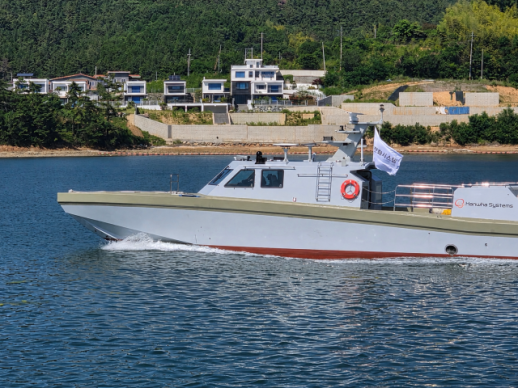 Hanwha Systems begins sea trials for self-developed unmanned vessel SEOUL, July 09 (AJP) - Hanwha Systems seeks to expand its presence in the global maritime unmanned systems market. A 30-ton unmanned surface vessel, developed with the company’s own investment, was successfully launched near Gadeok Bridge in Busan early last month and has begun sea trials while operating between Busan and Jangmok Port in Geoje, South Gyeongsang Province, the company said Thursday. Hanwha Systems said it is investing about 70 billion won ($46.5 million) to develop both the 30-ton vessel and a 140-ton unmanned surface vessel capable of combat missions, in line with the Navy’s push toward a maritime manned-unmanned teaming system known as Navy Sea GHOST. The 30-ton vessel will be used as a key testbed through the end of 2027 to verify advanced AI-based autonomous navigation technology and an open architecture system, the company said. Hanwha Systems said securing software architecture compatible with the U.S. Navy’s Unmanned Maritime Autonomy Architecture (UMAA) standard is essential for entering the global market. The company said testing will focus on difficult operational conditions, including autonomous navigation in narrow and congested waterways, safe operations in high waves and strong winds, and long-range autonomous navigation over hundreds of kilometers. The company plans to launch its 140-ton unmanned surface vessel later this year as it seeks to secure a position in the global market for maritime unmanned systems. Shares of Hanwha Systems were trading at 65,400 won on the Korea Exchange on Thursday, up 500 won, or 0.8 percent. “Hanwha Systems has built unmatched technological capabilities by developing unmanned surface vessels that have gone through strict defense-sector verification, including South Korea’s first unmanned surface vessel and participation in swarm USV development,” said Yoo Moon-ki, head of Hanwha Systems’ naval business division. “We will expand the reach of South Korea’s maritime defense technology globally through Hanwha Systems’ unmanned surface vessels, which integrate global standards, advanced AI autonomous navigation technology and command-and-control technology,” he said. 2026-07-09 13:35:27