


Latest by
-
 Trump Switches Planes on Return from NATO Summit Amid Iran Tensions President Donald Trump switched between an old and a new Air Force One while returning from the NATO summit. He explained that the schedule was intended to showcase the new aircraft to U.S. troops stationed in the UK, but concerns about renewed tensions with Iran may have also influenced the decision.According to reports, Trump departed from Ankara, Turkey, on July 8 aboard the older Air Force One and transferred to the new aircraft at Mildenhall Air Force Base in the UK. The new plane, a Boeing 747-8, was gifted to the U.S. by Qatar last year and is valued at approximately $400 million.Before departing, Trump announced on Truth Social that he would send the new plane to Mildenhall so that U.S. service members could see it. He later emphasized that the change in aircraft did not significantly alter his return route.However, questions arose regarding the reasons behind the plane switch. During a press conference in Ankara, Trump acknowledged concerns about security related to Iran, stating, "The life of a president is very dangerous," and noted that he is at the top of Iran's assassination list. Nevertheless, he asserted, "I will continue with my scheduled activities without worrying about threats."The New York Times reported that the aircraft switch was a precautionary measure in light of escalating hostilities between the U.S. and Iran, particularly following attacks on Iranian vessels and U.S. retaliatory strikes during Trump's visit to Turkey.Questions also remain about whether the new plane was adequately prepared for security. Air Force One typically undergoes extensive modifications for missile defense and communication security, which can take considerable time. Concerns have been raised about whether the necessary equipment was sufficiently installed in the aircraft provided by Qatar.The White House dismissed security concerns. Steven Chung, a spokesperson, told the New York Times that the new aircraft is subject to the highest level of security protocols to ensure the safety of the president and his staff. He added that, given the threats from U.S. adversaries, all possible means, including distraction and misdirection, are being utilized.* This article has been translated by AI. 2026-07-09 13:44:00
-
SK Bioscience Passes WHO GMP Review for Four Vaccines SK Bioscience has successfully completed a written review of its four vaccines under the World Health Organization's (WHO) Prequalification (PQ) certification for Good Manufacturing Practices (GMP). The assessment, conducted without an on-site inspection, acknowledges the manufacturing and quality control capabilities of its facility in Andong.On July 9, SK Bioscience announced that the written GMP review for its WHO PQ-certified vaccines has been finalized.The vaccines under review include the Skycellflu and Skycellflu4 influenza vaccines, the Skyvaricella varicella vaccine, and the Skytifo typhoid vaccine. WHO GMP reviews are conducted every three years and typically involve direct visits to production facilities to assess manufacturing and quality control systems.SK Bioscience stated, "The fact that WHO confirmed GMP compliance without an on-site visit demonstrates a high level of trust in our Andong facility." The company noted that the written alternative review is also related to the designation of the Ministry of Food and Drug Safety as a WHO-recognized regulatory authority.The Andong facility, known as L HOUSE, received EU GMP certification in 2021 and has passed GMP verification from various domestic and international regulatory bodies.Additionally, SK Bioscience is collaborating with the Gates Foundation to develop an artificial intelligence (AI)-based vaccine development platform, which is expected to reduce uncertainties in the vaccine development process and enable more scientific and efficient decision-making.* This article has been translated by AI. 2026-07-09 13:44:00
-
Apartment Auction Rates Surge in Seoul Amid National Slowdown The national apartment auction market has shown signs of slowing down due to an increase in listings, while Seoul has experienced a contrasting trend with successful bids exceeding appraised values. Competition has intensified, particularly for small apartments, leading to a bid rate in Seoul that has surpassed 100% for three consecutive months.According to the 'June 2026 Auction Trend Report' released on July 9 by the auction data firm Zigy Auction, the number of apartment auctions nationwide reached 3,701, a 16% increase from the previous month’s 3,204. This marks the highest level in 12 years and 3 months since March 2014, when there were 4,063 auctions.However, auction indicators have shown some signs of decline. The national apartment bid rate fell to 33.5%, down 0.8 percentage points from 34.3% the previous month, while the bid price rate dropped from 87.3% to 86.9%, the lowest level in seven months since November of last year. The average number of bidders remained steady at 5.8.In contrast, Seoul exhibited a different trend. The number of apartment auctions in Seoul rose to 150 in June, a 7% increase from 140 in May. The bid rate decreased to 34.0%, down 6.0 percentage points from 40.0% the previous month, marking the lowest level since December 2023. However, the bid price rate increased from 100.8% to 101.7%, continuing its upward trend for three months.Small apartments have driven the strength of the auction market in Seoul. The bid price rate for apartments with a floor area of 60 square meters or less rose from 105.1% in April to 109.2% in May, and further to 112.8% in June. The average number of bidders increased from 5.9 to 7.2, intensifying competition.In Gyeonggi Province, the number of auctions reached 841, a 21% increase from the previous month. The bid rate remained stable at 41.0%, but the bid price rate slightly decreased from 89.0% to 88.3%. However, in regulated areas such as Seongnam, Anyang, and Gwangmyeong, the average bid price rate exceeded 100%, indicating continued strength.In Incheon, the number of auctions fell to 301, a 13% decrease from the previous month. Both the bid rate and bid price rate dropped to 31.9% and 78.2%, respectively. Regionally, Seo-gu and Yeonsu-gu recorded bid price rates in the 80% range, while Michuhol-gu remained in the 60% range.In regional markets, significant disparities were evident. Ulsan's bid price rate rose to 94.7%, an increase of 6.1 percentage points, reaching its highest level since May 2022. Conversely, Gangwon's rate fell to 71.7%, a drop of 16.3 percentage points, the largest decline in the country. Daegu also saw a decrease, with a bid price rate of 81.1%, down 5.5 percentage points.In June, the highest bid nationwide was for a single-family home in Itaewon-dong, Yongsan District, Seoul, which sold for 196.1 billion won, or 84.2% of its appraised value of 232.8 billion won. The most contested property was an apartment in Godeok-dong, Pyeongtaek, Gyeonggi Province, which attracted 36 bidders and sold for 8.8 billion won, or 108.7% of its appraised value.Joo Hyun, a senior researcher at Zigy Auction, stated, "The auction market is being reshaped around actual demand. Interest has concentrated on small apartments at relatively accessible price points, leading to an increase in bid price rates." He added that while Seoul continues to show strength, there is a noticeable differentiation in demand in regions with well-developed living infrastructure.* This article has been translated by AI. 2026-07-09 13:44:00
-
Japanese Prime Minister's Absence from NATO Summit Criticized Amid Domestic Political Strife Japanese Prime Minister Sanae Takaichi's absence from the NATO summit has drawn criticism in Japan, as it resulted in a missed opportunity to strengthen security cooperation with European leaders. In contrast, South Korean President Lee Jae-myung attended the summit as the only leader from the four Indo-Pacific partners (IP4), promoting expanded defense industry cooperation and announcing additional support for Ukraine.The Nihon Keizai Shimbun reported on July 9 that Takaichi's absence was influenced by the ongoing political deadlock in the National Diet. The Takaichi administration, backed by a two-thirds majority in the House of Representatives, pushed for key legislation, including a reduction in the number of lawmakers. In response, opposition parties refused to attend sessions, halting legislative discussions and disrupting diplomatic schedules. Although Takaichi sent Foreign Minister Toshimitsu Motegi and Defense Minister Shinjiro Koizumi in her place, a planned debate with party leaders was ultimately postponed, raising questions about the benefits of her remaining in Japan.A senior official from Japan's Foreign Ministry stated, "There is no doubt that it would have been better for the Prime Minister to attend the NATO summit," according to the Nihon Keizai Shimbun. However, another official noted that while past summits included expanded meetings with NATO leaders and IP4 representatives, this year's focus shifted more towards discussions among NATO member states. The Asahi Shimbun also reported that discussions among member countries regarding U.S. President Donald Trump's demands for increased defense spending took precedence, resulting in a lower profile for the IP4 at the summit. Some within the Japanese government argue that the diplomatic losses from the Prime Minister's absence are limited.Nevertheless, Japanese media assessed that the diplomatic costs of Takaichi's absence are significant. The Nihon Keizai Shimbun pointed out that the summit was expected to address not only Ukraine and the Middle East but also the security situation in East Asia concerning China and North Korea, marking a missed opportunity for Japan to enhance security cooperation with European leaders. The Asahi Shimbun reported that discussions between NATO Secretary General Jens Stoltenberg and IP4 representatives included military cooperation with Russia and North Korea, cyber and defense industry collaboration, and China's submarine-launched ballistic missile launches. The fact that the Prime Minister lost the chance to meet with leaders from various countries to convey Japan's position is also seen as a considerable setback.Former Prime Minister Fumio Kishida attended NATO summits for three consecutive years from 2022 to 2024. However, following the absence of former Prime Minister Shigeru Ishiba last year, Takaichi's absence marks the second consecutive year without a Japanese Prime Minister at the NATO summit.Lee's Notable First Attendance at NATO SummitMeanwhile, the Nihon Keizai Shimbun highlighted President Lee's participation in the NATO summit, noting that he views the military spending increases by NATO member countries as an opportunity for South Korea's defense industry to expand its market. The report mentioned that while both Lee and former Prime Minister Shigeru Ishiba were absent last year, this year, Takaichi's absence allowed Lee to attend the NATO summit for the first time since taking office. The Yomiuri Shimbun also reported on Lee's significant role as the only leader from the IP4 to attend.President Lee held his first face-to-face meeting with NATO Secretary General Jens Stoltenberg and agreed to initiate negotiations for standardizing weapon systems, enhancing interoperability, and establishing a joint procurement agreement for military supplies. The Yomiuri Shimbun noted that if the agreement is finalized, it would lay the groundwork for South Korean companies to enter the NATO joint procurement market, estimated to be worth around 15 trillion won annually. Additionally, the South Korean government announced $100 million in additional support for Ukraine in conjunction with the summit.Keio University Professor Michito Tsuruoka told the Nihon Keizai Shimbun that the significance of the Japanese Prime Minister attending the NATO summit lies in signaling the seriousness of the Indo-Pacific situation concerning North Korea and China. He emphasized that as awareness of the Chinese threat grows within NATO, this summit represented a valuable opportunity for Japan.* This article has been translated by AI. 2026-07-09 13:40:00
-
Education Ministry Accelerates Talent Development for Semiconductor and AI Mega Projects The South Korean government is ramping up efforts to cultivate talent in advanced fields such as semiconductors, physical AI, and AI data centers, which are crucial for the success of its three major mega projects. The Ministry of Education plans to significantly relax student quota systems at universities to align with large-scale regional investments by companies, aiming to supply skilled professionals within two years. On July 9, the Ministry announced plans to introduce a '(tentative) Regional Agreement Quota System' and a '(tentative) Fast-Track Talent Development System' to expedite the training of high-quality talent. The new Regional Agreement Quota System will allow local universities to recruit students beyond their standard quotas in collaboration with companies that require additional workforce. The accompanying Fast-Track Talent Development System will actively utilize transfers and non-quota admissions to quickly nurture talent that meets industry demands within two years. The Ministry plans to gather feedback from universities and push for related legislative amendments by the end of the year. To support these mega projects, the government has steadily expanded the talent pool in advanced fields. According to the Ministry of Education, from the 2021 academic year to the 2027 academic year, approximately 7,100 additional spots have been created in artificial intelligence, semiconductors, software, and telecommunications through new admissions, transfers, and filling vacancies.As a result, around 94,000 graduates are produced annually in related fields such as machinery, materials, electrical and electronics, and computer communications, ranging from associate degree-level professionals to master's and doctoral-level experts. Additionally, about 24,000 professionals are being trained each year through 'contract departments' tailored to industry needs. Notably, contract departments specifically related to the three mega projects are currently training 3,650 and 2,158 students in semiconductors and artificial intelligence, respectively. Furthermore, the Ministry is operating a talent development support program worth approximately 1 trillion won, nurturing over 23,000 professionals annually. Universities are utilizing support for advanced industry boot camps, specialized universities, and innovative convergence universities to implement industry-linked curricula, secure excellent faculty, and expand practical training opportunities. Additionally, a regional growth talent development system is being promoted to assist local governments and universities in cultivating tailored talent linked to regional mega projects.Deputy Minister Choi Eun-ok stated, "The Ministry of Education is working to provide students with excellent curricula based on industry demand through the flexibility of advanced field quotas, contract departments, and advanced industry talent development boot camps. By swiftly cultivating the talent needed by companies related to the three mega projects, we will actively support the national balanced growth strategy."* This article has been translated by AI. 2026-07-09 13:40:00
-
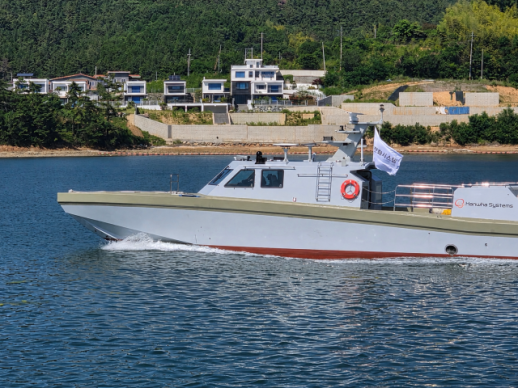 Hanwha Systems begins sea trials for self-developed unmanned vessel SEOUL, July 09 (AJP) - Hanwha Systems seeks to expand its presence in the global maritime unmanned systems market. A 30-ton unmanned surface vessel, developed with the company’s own investment, was successfully launched near Gadeok Bridge in Busan early last month and has begun sea trials while operating between Busan and Jangmok Port in Geoje, South Gyeongsang Province, the company said Thursday. Hanwha Systems said it is investing about 70 billion won ($46.5 million) to develop both the 30-ton vessel and a 140-ton unmanned surface vessel capable of combat missions, in line with the Navy’s push toward a maritime manned-unmanned teaming system known as Navy Sea GHOST. The 30-ton vessel will be used as a key testbed through the end of 2027 to verify advanced AI-based autonomous navigation technology and an open architecture system, the company said. Hanwha Systems said securing software architecture compatible with the U.S. Navy’s Unmanned Maritime Autonomy Architecture (UMAA) standard is essential for entering the global market. The company said testing will focus on difficult operational conditions, including autonomous navigation in narrow and congested waterways, safe operations in high waves and strong winds, and long-range autonomous navigation over hundreds of kilometers. The company plans to launch its 140-ton unmanned surface vessel later this year as it seeks to secure a position in the global market for maritime unmanned systems. Shares of Hanwha Systems were trading at 65,400 won on the Korea Exchange on Thursday, up 500 won, or 0.8 percent. “Hanwha Systems has built unmatched technological capabilities by developing unmanned surface vessels that have gone through strict defense-sector verification, including South Korea’s first unmanned surface vessel and participation in swarm USV development,” said Yoo Moon-ki, head of Hanwha Systems’ naval business division. “We will expand the reach of South Korea’s maritime defense technology globally through Hanwha Systems’ unmanned surface vessels, which integrate global standards, advanced AI autonomous navigation technology and command-and-control technology,” he said. 2026-07-09 13:35:27
-
Iran President Attacked During Khamenei's Funeral Amid Hardliner Pressure The position of moderates supporting U.S. negotiations in Iran is diminishing. During the funeral of former Supreme Leader Ayatollah Ali Khamenei, key figures from the negotiating faction faced attacks from hardliner supporters, revealing internal divisions, according to a report by The New York Times on July 8.Masoud Pezeshkian, the Iranian president, participated in the funeral procession on July 6, where he was threatened by hardliner crowds. Videos circulating online showed some in the crowd shouting, 'Death to the appeasers,' as they surrounded him.Abbas Araghchi, the foreign minister and a key member of Iran's negotiating team, was also attacked during the funeral. The Times reported that Araghchi was pushed into an alley, where he was struck with stones and verbally assaulted by hardliner supporters.These incidents illustrate the intensifying power struggle within Iran following the war. While the negotiating faction once seemed to gain the upper hand in pursuing diplomatic solutions, Khamenei's death and funeral have allowed hardliners to resurface aggressively.Recent military clashes in the Strait of Hormuz have further exacerbated internal conflicts. Following an attack on commercial vessels, believed to be led by the Islamic Revolutionary Guard Corps (IRGC), the U.S. conducted airstrikes on Iranian military facilities in the south for two consecutive days. Iran retaliated with drone and missile strikes targeting U.S. bases in Bahrain and Kuwait.The Times reported that Iranian politics is mired in blame-shifting and internal chaos. It remains uncertain whether Iran will escalate military conflicts or continue diplomatic negotiations.* This article has been translated by AI. 2026-07-09 13:32:00
-
Drone Technology and AI Enhance Workplace Safety Inspections Smart technology is being utilized in safety patrols to identify risks in small businesses vulnerable to industrial accidents, using drones to capture hazards and artificial intelligence (AI) to select high-risk workplaces.The Ministry of Employment and Labor and the Korea Occupational Safety and Health Agency (KOSHA) announced on July 9 that they held the '2026 Safe Workplace Guardians Best Practices Presentation' at KINTEX in Goyang, Gyeonggi Province.The 'Safe Workplace Guardians' program involves retired professionals with safety and health knowledge and practical experience who regularly patrol small businesses at risk of industrial accidents. Launched this year, approximately 1,000 individuals are currently active, aiming for about 280,000 patrols annually since February.During the presentation, examples were shared of how guardians identified hazards through their patrols, leading to actual improvements in working conditions. Guardians teamed up with business managers from 31 frontline KOSHA agencies to participate.In Daegu, a joint drone team of guardians and KOSHA discovered a construction site on a solar panel installation roof that lacked fall prevention measures while patrolling the industrial complex. The drone team urgently alerted a nearby roof guardian, who immediately responded and requested improvements. Subsequently, safety measures were enhanced, allowing the project to be completed without incidents.Another example involved using AI to identify workplaces with high risks of industrial accidents and focus patrol efforts. In Ulsan, a guardian visited a roofing construction site to collect baseline data, which was then analyzed by AI to create a customized map that provided an overview of the construction status.The AI chatbot classified the workplace's risk levels from high to low based on the collected information and selected priority targets for focused management from ranks one to four, allowing guardians to concentrate their patrol efforts on the highest-risk sites.Notably, around 200 guardians are dedicated to overseeing roofing and solar panel construction sites, which are particularly prone to fall accidents.On this day, four teams received awards for excellence and the grand prize, each receiving a certificate from the Minister of Labor and cash prizes of 1 million and 700,000 won, respectively. Four additional teams received certificates from the KOSHA chairman and cash prizes of 500,000 won.The award-winning cases will be produced into short-form videos and case studies for distribution to guardians nationwide and frontline KOSHA agencies. They will also be made available on a website for use by small businesses and local governments.Ryu Hyun-cheol, head of the Ministry of Labor's Industrial Safety and Health Bureau, stated, "The award-winning cases are significant as they contribute to closing the risk gap between small businesses and large corporations by conducting tailored patrol activities targeting small businesses with high fatal accident risks. We will strive to ensure effective patrols in small businesses that are difficult to reach with safety management efforts."* This article has been translated by AI. 2026-07-09 13:32:00
-
Paradise City Boutique Hotel Recognized Among World's Best Paradise City, a complex resort in Incheon, has been recognized for its exceptional hospitality by the global hotel and dining guide, La Liste.On July 8, La Liste announced that Paradise City and its Art Paradiso hotel received three awards at the 'La Liste Hotels 2026' ceremony held at the Le Meurice hotel in Paris. Choi Jong-hwan, CEO of Paradise, attended the event.Both hotels made it onto the 'La Liste World's 1,000 Best Hotels 2026,' which selects the top hotels worldwide. Notably, the adult-only luxury boutique hotel Art Paradiso entered the list for the first time this year, achieving a score of 93.5, tying for sixth place with Paradise City Hotel.This year, the number of South Korean hotels listed in La Liste dropped significantly from 21 to 16. However, Paradise City demonstrated its unique position by having two facilities recognized within a single resort. La Liste evaluates over 7,300 luxury hotels across more than 200 countries and regions, using expert assessments and international indicators to compile its rankings.In the 'Style & Design Hotel Awards 2026,' Art Paradiso was the only hotel in South Korea to receive an award. This year, only six hotels worldwide were selected for this honor, placing Art Paradiso alongside renowned establishments like The Emory in the UK and Capella Kyoto in Japan.La Liste praised Art Paradiso for elevating contemporary art beyond mere decor, making it integral to the hotel's identity. The hotel is described as a unique boutique hotel in Korea, offering a cohesive artistic experience through its dramatic lighting, spatial volume, and high-quality art collection.In addition to these awards, Paradise City has consistently received top ratings in the global hospitality industry, including a four-star rating from Forbes Travel Guide for six consecutive years and a Michelin one-star designation.A representative from Paradise City stated, 'Achieving these three awards demonstrates that our consistently pursued art-centered hospitality strategy has resonated on the global stage. We will continue to lead the enhancement of South Korea's tourism industry through differentiated services that integrate culture, art, and entertainment.'* This article has been translated by AI. 2026-07-09 13:32:00
-
U.S. Strikes 90 Iranian Targets Amid Gulf Tensions and Oil Price Surge The United States has conducted additional airstrikes on Iranian military facilities in response to attacks on commercial vessels in the Strait of Hormuz. Iran has retaliated by targeting U.S. military bases in the Gulf region, escalating the conflict between the two nations.According to U.S. Central Command, approximately 90 military targets in Iran were struck on July 8. This follows airstrikes on over 80 sites the previous day, marking the second consecutive day of military operations.The targets included air defense systems, coastal surveillance assets, missile and drone storage facilities, naval installations, and logistical support infrastructure along Iran's coastline. Central Command described the operation as a measure to weaken Iran's military capabilities that threaten commercial shipping and civilian personnel in the Strait of Hormuz.In response, Iran claimed to have launched missiles and drones at U.S. facilities in Bahrain and Kuwait. The Kuwaiti military reported intercepting incoming drones and missiles, while air raid alerts were issued in Bahrain and Qatar.This renewed conflict has also put the U.S.-Iran memorandum of understanding (MOU) signed last month in jeopardy. Although both countries had agreed to continue discussions for a final agreement following the MOU, the cycle of attacks and retaliatory strikes has diminished the momentum for negotiations.The Strait of Hormuz is a critical corridor for global energy transport. As military clashes extend to the Gulf region and U.S. bases, concerns about the geopolitical situation in the Middle East and international oil prices are rising.In fact, Reuters reported that international oil prices surged by more than $1 per barrel following the U.S. airstrikes.* This article has been translated by AI. 2026-07-09 13:24:00