


Latest by
-
 Samsung Union Leader Suggests Retaliation After Audit Request on Family Business Choi Seung-ho, the leader of the Samsung Group's union at Samsung Electronics, is facing controversy after reportedly notifying his deputy of a job suspension and a return to regular duties following a request for an audit of a contract with a company represented by Choi's father-in-law. Evidence has emerged that Choi directly instructed a staff member to take action 'immediately' and demanded that the union's accommodations and vehicles be organized, raising concerns that he may be using his authority to suppress the audit against him.According to a transcript of a conversation obtained by this agency, when Deputy Lee Song-i stated, 'This is not a resignation; we will conduct an internal audit,' Choi responded, 'Let’s remove your work exemption as soon as possible, and you should go to Gwangju.' He further emphasized, 'I will remove your work exemption by my authority, so please go to Gwangju and respond accordingly.'The work exemption allows union officials to receive a salary while performing union duties. If revoked, Deputy Lee would have to cease his union activities and return to his original workplace at Samsung Electronics' Gwangju facility. This action effectively cuts off the deputy's operational base before the audit even begins. Choi did not stop there; he reportedly called a staff member on the spot, instructing them to ensure the exemption was removed 'by tomorrow.'The demands did not end with the work exemption. Choi also ordered Deputy Lee to vacate the union accommodations and organize vehicles. When Deputy Lee questioned, 'Aren't you going to undergo the audit?' he was told, 'You are currently in a state of job suspension.'The situation arose from a contract between the union and a company represented by Choi's father-in-law. When Deputy Lee pointed out, 'It was wrong for Chairman Choi to enter into a contract with your father-in-law,' Choi retorted, 'We contracted at a low price of 85 million won.' However, the National Samsung Electronics Union countered that the transaction with the company amounts to 370 million won, arguing that Choi's explanation is inaccurate.Choi has previously acknowledged the existence of the transaction but claimed that he selected the company based on price and delivery conditions, asserting that he did not personally gain any financial benefit. However, critics argue that this explanation only addresses the contract price and fails to clarify why a contract with clear conflict of interest was made without a competitive process and why he attempted to obstruct the audit.There are growing calls both within and outside the union to examine whether this action adhered to regulations and procedures. If it is determined that the notification of job suspension was intended to obstruct the audit, it could lead to legal scrutiny for coercion.A labor official stated, 'Choi's remarks revealed in the transcript seriously undermine union democracy,' adding, 'The current leadership, which has completely lost the trust of union members, should resign immediately, and a thorough investigation into all allegations of misconduct should be conducted by an independent committee, including external accounting firms.'* This article has been translated by AI. 2026-09-10 18:20:00
 -
Wando Abalone Products Set for Export to Japan with $430,000 Contract Abalone products produced and processed in Wando, Jeonnam, are set to be exported to Japan. The Jeonnam Marine and Fisheries Startup Investment Center announced on the afternoon of September 10 that a shipping ceremony for abalone products was held at Kyungyoung Fisheries in Wando. Kyungyoung Fisheries participated in the center's export package support program and signed a contract with Japanese partners for a total of $27,655, approximately 430 million won. The export items include live abalone, cooked abalone, and sliced abalone. Kyungyoung Fisheries plans to expand its existing transactions in the Japanese market and explore additional export opportunities. Attendees at the shipping ceremony included officials from the Jeonnam Bio Promotion Institute's Marine Bio Division, the Mokpo Seafood Support Center, and Kyungyoung Fisheries CEO Choi Kyung-young. The event included a report on export status, shipping, and a commemorative photo session, followed by discussions on expanding sales in the Japanese market and additional export strategies. This export marks one of the achievements of a project aimed at supporting overseas market development for marine and fisheries companies in the Jeonnam region. The Jeonnam Marine and Fisheries Startup Investment Center operates an export package program to reduce challenges faced by local companies in entering overseas markets, such as securing distribution channels. Particularly, since abalone is a representative seafood product of Wando, diversifying export items to include processed products like cooked and sliced abalone is considered a key task for expanding into international markets. Jeong Woo-hyuk, head of the Marine Tech Center at the Marine Bio Division, stated, “We hope that Kyungyoung Fisheries' export to Japan will further expand the overseas market for Wando abalone products. We will continue to support Jeonnam marine and fisheries companies with competitive products to enter and expand in overseas markets.” Meanwhile, the Jeonnam Marine and Fisheries Startup Investment Center's project is jointly carried out by the Ministry of Oceans and Fisheries, Jeonnam Province, and Mokpo City, with the Jeonnam Bio Promotion Institute as the lead agency and the Mokpo Seafood Support Center as a participating organization. The project supports local marine and fisheries companies in areas such as startup assistance, technology development, investment attraction, overseas market development, and participation in domestic and international exhibitions.* This article has been translated by AI. 2026-09-10 18:20:00
-
Dyson Enters Oral Care Market with AI-Enhanced Electric Toothbrush Dyson has entered the oral care market with its AI and camera-equipped electric toothbrush. As Oral-B and Philips continue to lead the market, Dyson joins other electronics and IT companies like Xiaomi, expanding the competition to include smart oral care technologies that utilize AI, sensors, and cameras.On September 10, Dyson held a launch event for its first oral care product, the 'CameraJet,' aimed at capturing market share. Developed over six years, the CameraJet combines an electric toothbrush, interdental cleaner, and camera functionality into one device. Utilizing a 100,000-pixel camera and AI machine learning, it identifies gaps between teeth and sprays liquid to those areas in just 0.1 seconds. Unlike traditional electric toothbrushes that focus solely on cleaning, the CameraJet adds a flossing feature by directly recognizing interdental spaces.The electric toothbrush market is showing consistent growth. According to market research firm Grand View Research, the global electric toothbrush market is projected to grow from $4.3 billion in 2024 to $6.82 billion by 2030. The South Korean market is expected to expand from $141.6 million to $221.7 million during the same period, with an average annual growth rate of 7.8%.Competition in the market has intensified recently, particularly around smart features. Philips has integrated sensors that detect pressure, movement, and cleaning range into its premium Sonicare products, analyzing users' brushing habits. Xiaomi also sells electric toothbrushes in South Korea that feature a six-axis gyroscope, display, and smartphone app integration.In South Korea, smaller home appliance companies like Oa, Aquapick, and Coolsha are targeting the electric toothbrush market. Oa reported that as of July, cumulative sales of its oral care products, including electric toothbrushes and oral irrigators, exceeded 3.7 million units.In response, Dyson aims to differentiate its product by incorporating AI technology into its flossing feature. A survey conducted by Korea Research in 2026 found that 77% of 1,000 South Korean adults reported using dental floss or interdental brushes, but only 28% said they use them regularly. Dyson views the low usage rate of dental floss and the unmet consumer demand for gum health and plaque management as opportunities for entering the oral care market.Rich Bacon, head of Dyson's new business division, stated, "Many people still struggle to maintain effective oral care habits consistently, and there is clearly room for innovation based on engineering and design. The Dyson CameraJet integrates various innovative technologies, including imaging, sensing, precise liquid spraying, and advanced motor control, into a single device."The key challenge will be whether the CameraJet can provide differentiated value at its high price point of 749,000 won. With premium electric toothbrushes already established in the market, the added benefits and convenience of the CameraJet's camera and automatic interdental cleaning features will likely determine its competitiveness moving forward.* This article has been translated by AI. 2026-09-10 18:16:10
-
Apple's First Foldable Phone 'iPhone Duo' Boosted by K-Semiconductors and Displays Apple's first foldable phone, the 'iPhone Duo,' is expected to significantly influence the performance of domestic component suppliers in the second half of the year. With a supply chain that encompasses displays, memory, and optical modules, the sales of the iPhone Duo will directly benefit these suppliers.On September 9, Apple unveiled the iPhone Duo, a foldable smartphone, at its Apple Park in Cupertino, California. The flexible organic light-emitting diode (OLED) panels that define the foldable phone's identity will be exclusively supplied by Samsung Display. The company will provide both the 7.8-inch internal screen and the 5.5-inch external screen, securing Apple's leadership in the first generation of foldable ecosystems.Samsung Display has adopted a 'dual UTG' structure, applying ultra-thin glass (UTG) to both the upper and lower panels, significantly improving screen creases. A wrinkle-free prototype showcased at CES 2026 demonstrated a 20% reduction in crease depth compared to the Galaxy Z Fold 7, proving the technology's maturity. Analysts suggest that the durability and production yield accumulated from Samsung's Galaxy Z series since 2019 were decisive factors for Apple's exclusive supply agreement.LG Innotek will handle the camera module, designed to avoid the hinge area with a unique structure that incorporates a periscope-style 'folded zoom.' This design uses a prism to bend light, achieving high optical zoom and image stabilization despite the device's slim profile. Since the iPhone 15 Pro Max in 2023, LG Innotek's precision optical technology has met the demanding specifications for foldable devices.The 'brain' and 'memory' of the device will be managed by Samsung Electronics and SK Hynix. The two companies will jointly supply 70% of the 12GB LPDDR5X DRAM needed for on-device AI processing and multitasking. Samsung has reduced heat resistance by 21.2% and improved power consumption by 25% with its industry-thinnest 0.65mm LPDDR5X. SK Hynix holds the record for the largest capacity in a single package with its 24GB LPDDR5X, utilizing the high-k metal gate (HKMG) process. Both companies will also account for about 45% of the total NAND flash supply.Industry experts agree that Apple's new supply chain structure has once again demonstrated the superior technology of domestic companies compared to their Chinese counterparts. While China's BOE supplies some OLED panels for standard iPhone models, it has not been able to penetrate the premium foldable and flagship segments. Chinese memory firms like CXMT have also failed to enter the supply chain due to gaps in LPDDR5X process miniaturization and unsuccessful negotiations.Lee Jong-hwan, a professor at Sangmyung University’s Department of System Semiconductor Engineering, stated, "Chinese companies are rapidly improving their technology and increasing their competitiveness in the general parts market, but they are revealing limitations in production stability and quality in cutting-edge areas like high-speed, low-power memory and foldable panels."As the iPhone Duo garners global attention in the mobile market, it signals a positive outlook for the second-half performance of major domestic component suppliers. Samsung Display is expected to see a more than 15-20% increase in operating profit in its small and medium-sized panel division due to OLED shipments for the iPhone Duo. LG Innotek is also likely to maximize its fourth-quarter performance momentum from supplying high-priced ultra-slim folded zoom camera modules.A component industry insider noted, "The iPhone Duo is part of a high-end premium lineup, meaning the average selling price (ASP) and profitability are very high. Given the initial yield and quality reliability, we expect a clear growth trend in performance in the second half as production volumes increase." 2026-09-10 18:16:00
-
Dyson Launches $750 Smart Toothbrush with AI Technology The new toothbrush autonomously sprays water between teeth. When the brush head is moved against the teeth, a built-in camera identifies the gaps and sprays liquid toward them within 0.1 seconds. This device combines the functions of brushing and flossing into one product.The 'Dyson Camera Jet,' Dyson's first oral care product developed over six years, was introduced at a press conference on September 10 at Banpo Hangang Park in Seoul. Rich Bacon, head of Dyson's new business division, explained the product's core technology and operation, highlighting the integration of vision systems, artificial intelligence (AI), and precision fluid dynamics."Dyson has focused on addressing everyday inconveniences faced by consumers rather than limiting itself to specific business areas," Bacon said. "We have long recognized the importance of inter-dental cleaning and have been dedicated to developing related technologies."He added, "Our goal is to present a more convenient oral care method by integrating brushing and inter-dental cleaning into a single process. The Dyson Camera Jet embodies various engineering technologies, including vision systems, machine learning, and precision fluid dynamics that Dyson has developed over time."Addressing Unresolved Oral Care Issues with Advanced TechnologyDyson's focus on oral care follows its success in vacuum cleaners and hair care products, driven by the need for effective inter-dental cleaning. Bacon noted, "Oral care has remained a repetitive process for decades, involving squeezing toothpaste, brushing, rinsing, and using floss. Many people understand the importance of flossing but find it tedious and time-consuming, leading to low compliance with recommendations."In South Korea, a 2026 survey by Korea Research found that while 77% of 1,000 adult respondents reported using floss or inter-dental brushes, only 28% did so regularly. Dyson observed that although South Korea has better access to preventive dental care and a well-established brushing culture, the use of floss and inter-dental brushes has not yet become a regular habit.To address this, Dyson developed a key technology called 'Gap Optical Targeting.' This AI machine learning algorithm was trained on 470,000 images of teeth. A 1mm², 100,000-pixel macro camera analyzes 28 images per second to predict gaps between teeth. Once a gap is detected, liquid is sprayed in a cone shape toward the target within 0.1 seconds.Identifying inter-dental spaces accurately while the vibrating toothbrush is in motion posed a significant challenge. Bacon likened it to taking a photo while shaking a smartphone. He explained that the AI algorithm was trained on approximately 500,000 images and that the product contains about 16 million lines of software code. The toothbrush captures images while in motion, combining them to ensure stable video and identify inter-dental spaces.The precise liquid spray is made possible by Dyson's accumulated fluid dynamics technology. Instead of indiscriminately spraying water upon detecting a gap, the device assesses the tooth surface and sprays at the appropriate moment. The liquid is designed to spread in a cone shape, covering the surface between teeth while minimizing pressure on the gums and teeth.Dyson's motor technology is also applied to the toothbrush's cleaning function. The sonic motor driving the three-dimensional sonic brush vibrates 245 times per second. The dual-bristle head is designed to adapt to the contours of uneven teeth, with stiffer bristles in the center and softer bristles on the outer edges to manage the tooth surface and gum line effectively.Enhancing Oral Care with Real-Time MonitoringThe event was designed to allow attendees to experience the Camera Jet's operation firsthand. Upon passing through an entrance shaped like a cone jet spray, participants could see a media art display capturing the camera's ability to identify gaps between teeth. There were also tech zones to explore the product development process and demo zones to try the Camera Jet.In the demo zone, using the actual product, brushing began as the brush head was moved against the teeth, with water automatically spraying each time the camera recognized a gap. A manual mode is also available, allowing users to spray liquid at their discretion.Using a smartphone, users can view their oral cavity in real time. The 'Live View' feature of the MyDyson app allows users to see the inside of their mouth as captured by the toothbrush's camera. The app also provides data on brushing time and habits to help users develop proper brushing practices.Bacon stated, "You can see the same view that a dentist would see while brushing." The camera activates only when using the live view or automatic jet spray functions, and captured images are not stored on the device or in the cloud.Currently, there are no dedicated cleaning solutions or toothpaste for the Camera Jet available in South Korea. To use the device, users must fill the tank with water for inter-dental cleaning and apply regular toothpaste to the brush head.The Camera Jet is priced at 749,000 won in South Korea, including the main unit, two dual-bristle heads, a refill dock, and a USB-C cable.* This article has been translated by AI. 2026-09-10 18:16:00
-
U.S. and China Discuss $30 Billion Tariff Reduction Ahead of Summit The United States and China are in discussions regarding a plan to reduce tariffs.Huang Ling, a spokesperson for China's Ministry of Commerce, stated during a regular briefing on September 10 that "the economic and trade teams of both countries are earnestly implementing the agreements reached during the leaders' meeting in Beijing." She added that they are currently negotiating a reciprocal tariff reduction plan worth $30 billion.In May, during a summit in Beijing, the U.S. and China agreed to reduce tariffs on goods worth $30 billion (approximately 45 trillion won). At that time, China indicated the possibility of applying the most-favored-nation rate or a lower rate to these goods. Since then, both countries have been working on selecting items that fall under this $30 billion category.Notably, Chinese President Xi Jinping is scheduled to visit the United States on September 24 for a summit with President Donald Trump. Ahead of this meeting, the trade negotiation teams from both countries are expected to finalize the list of tariff reductions and announce it in conjunction with the summit.* This article has been translated by AI. 2026-09-10 18:16:00
-
Apple's iPhone Duo vs. Samsung Galaxy Z Fold 8: Key Differences Apple has entered the foldable smartphone market with the launch of its first device, the iPhone Duo, which directly competes with Samsung's Galaxy Z Fold 8.Unveiled on September 9, the iPhone Duo features a 7.6-inch internal display and a 5.4-inch external display. The internal screen utilizes an OLED-based 'Super Retina XDR' display with a nano-texture finish, supporting a variable refresh rate of up to 120Hz on both screens.Both devices are 'book-type' foldable phones that open horizontally. The Galaxy Z Fold 8 has a 7.6-inch (193.2 mm) main display and a 5.5-inch (138.4 mm) cover display. In terms of screen size, the internal displays of both devices are essentially identical.However, notable differences arise in weight and thickness. The iPhone Duo measures 5.2 mm thick when opened and 11.3 mm when closed, weighing 254 grams. In contrast, the Galaxy Z Fold 8 is 4.5 mm thick when opened, 9.7 mm when closed, and weighs 201 grams, making it 53 grams lighter and 1.6 mm thinner than the iPhone Duo.The biometric authentication method on the iPhone Duo has changed from previous iPhones. It now features a Touch ID fingerprint sensor on the side button, with no Face ID included in Apple's official specifications.The iPhone Duo also supports pen input, compatible with the Apple Pencil (USB-C), allowing users to take notes and work on the expansive internal screen.In terms of camera capabilities, the iPhone Duo is equipped with a dual Fusion camera system featuring a 48-megapixel main camera and a 48-megapixel ultra-wide camera. It supports 2x optical zoom and up to 10x digital zoom.The Galaxy Z Fold 8 also boasts a 50-megapixel wide camera and a 50-megapixel ultra-wide camera, with a maximum of 10x digital zoom.Comparing battery life is complex. The Galaxy Z Fold 8 has a 4,800 mAh battery, with Samsung claiming up to 26 hours of video playback. While Apple has not disclosed the battery capacity of the iPhone Duo, it employs a dual battery system, with video playback times of up to 44 hours on the external display and up to 31 hours on the internal display.There is a significant price difference between the two devices. The starting price for the iPhone Duo in South Korea is 3,290,000 won for the 256GB model, while the Galaxy Z Fold 8 starts at 2,278,100 won for the same storage capacity. This makes the iPhone Duo approximately 1,011,900 won, or about 44% more expensive.Storage options also differ. The iPhone Duo offers models with 256GB, 512GB, 1TB, and 2TB, while the Galaxy Z Fold 8 is available in 256GB, 512GB, and 1TB configurations.The iPhone Duo has an IP68 rating for water and dust resistance, with Apple stating it can withstand depths of up to 6 meters for 30 minutes.While both devices share a similar foldable design, they cater to different preferences. The iPhone Duo emphasizes Apple Pencil support, the iOS ecosystem, and a maximum storage capacity of 2TB, whereas the Galaxy Z Fold 8 highlights its lightweight design at 201 grams, a folded thickness of 9.7 mm, and a relatively lower price.Consumers may notice the most significant differences in weight, with the iPhone Duo being 53 grams heavier, and the price gap exceeding 1 million won. As Apple enters the foldable phone market with its first offering, interest grows in how it will compete with Samsung's established Galaxy Z Fold series, now in its eighth generation.* This article has been translated by AI. 2026-09-10 18:12:00
-
Korean Minister Kim Jong-kwan Heads to U.S. for Final Investment Talks Korean Minister of Trade, Industry and Energy Kim Jong-kwan has traveled to the United States for final negotiations ahead of a $350 billion investment plan. Key issues include the first investment project, the scale and timing of investments, and the structure that will affect the recovery of investment funds and loss burdens.According to the Ministry of Trade, Industry and Energy, Kim did not return to Korea after a trip to France and Belgium, instead heading directly to the U.S. He is expected to remain in the U.S. until September 12, engaging in discussions with U.S. officials, including Secretary of Commerce Howard Lutnick, regarding the investment.The $350 billion investment promised by Korea consists of $150 billion for shipbuilding cooperation and $200 billion for strategic investments. Both sides are currently negotiating specific investment conditions, including the first project.The construction of the Ensinal gas combined cycle power plant in Texas is being considered as the first project. Initially, the total project cost was estimated at $19.8 billion, with plans to build a total of 6.4 GW of power generation facilities, including 1.4 GW of gas turbine power and 5 GW of gas combined cycle power. The U.S. side later proposed a $25 billion investment, and recent reports suggest that both sides are negotiating a compromise around $22.3 billion.Subsequent projects may include the construction of large nuclear power plants in the U.S. Both countries have been discussing various options, including the scale of nuclear power construction and the acquisition of shares in Westinghouse.Additionally, the development of liquefied natural gas (LNG) in Alaska is being considered as a follow-up investment candidate. The Alaska LNG project involves transporting natural gas produced from northern Alaska through a 1,300-kilometer pipeline to Nikiski in the south for export to Asia and other markets. The total project cost is estimated at around $44 billion.The investment structure is also a key point of negotiation. The memorandum of understanding (MOU) between Korea and the U.S. includes a plan to manage profits and losses from multiple investment projects through a special purpose vehicle (SPV). Instead of settling the performance of individual projects separately, this structure aims to pool the profits and losses of various projects to distribute overall investment risks.Recently, the U.S. side proposed a plan to settle profits and losses for each project individually, leading to ongoing discussions about how the existing structure will be applied in the actual investment process. The method of settlement could affect Korea's recovery of investment funds and loss burdens, making the final negotiation results particularly significant.The government has stated that specific investment projects and amounts have not yet been finalized. A Ministry official noted, "There are no confirmed details regarding specific investment destinations, announcement timing, or the scale and timing of the first investment remittance related to U.S. investments," adding that while various discussions are ongoing regarding nuclear power investment cooperation, specific details have yet to be determined.The Ministry plans to report on the U.S. investment projects and negotiation progress to the National Assembly in a closed session on the morning of September 17. Given that the detailed investment conditions could impact future negotiations and project implementation, it has been decided that related materials will not be made public. There are also discussions about sharing related information under enhanced security measures during the National Assembly's deliberation process.* This article has been translated by AI. 2026-09-10 18:12:00
-
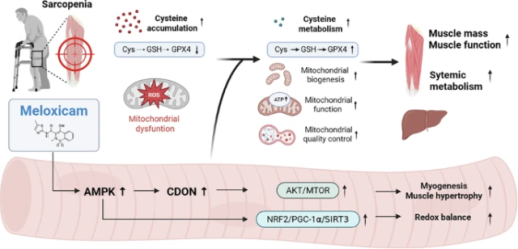 Common painkiller revives fading muscle protein in aging mice SEOUL, September 10 (AJP) - The arthritis painkiller meloxicam slowed muscle wasting in old mice by restoring a protein that muscles lose with age, researchers at two South Korean universities have found. Sarcopenia, the gradual loss of muscle mass and strength that comes with age, contributes to frailty, lost mobility, metabolic problems and higher death rates in older adults, the researchers wrote. The processes that drive it are still not fully understood, they added, which has held back the development of drugs that target it. Bae Gyu-un, a professor in Sookmyung Women's University's Division of Pharmacy, and Kang Jong-sun, a professor at Sungkyunkwan University School of Medicine, led the study, which was published online Aug. 12 in the journal Experimental & Molecular Medicine. The work focused on Cdon, a protein on the surface of muscle cells. Earlier research had shown that it helps muscle stem cells develop into mature muscle and keeps the connections between nerves and muscles stable, but its role in adult muscle and in aging had not been established. The team found that Cdon levels fall in aging human muscle, in people with sarcopenia and in patients with several muscle-wasting diseases, including amyotrophic lateral sclerosis, the nerve disease also known as Lou Gehrig's disease. Across 891 human muscle samples from a public tissue database, lower Cdon went together with higher activity in genes linked to muscle breakdown and with smaller muscle fibers. Muscle cells from a 68-year-old donor carried far less of the protein than cells from a 17-year-old, and old mice showed a similar decline. Bae said in a statement released by Sookmyung Women's University on Monday that the team had confirmed the loss of Cdon as "a major indicator of muscle aging." To look for a way to bring Cdon back, the researchers engineered mouse muscle cells to give off light whenever the Cdon gene switched on. They then tested 2,485 drugs already approved by the U.S. Food and Drug Administration, and the screen singled out meloxicam as a potent activator of the gene. In lab dishes, the drug raised Cdon levels and helped both mouse and human muscle cells grow into larger fibers, including cells from the older donor. The benefit held only within a narrow range, as a dose 100 times higher than the most effective one began to kill cells. Young mice given the drug by mouth every day for two months built more leg muscle, gripped harder and ran farther than untreated mice. Their hearts, livers and kidneys showed no change in weight. The researchers then treated 16-month-old mice for 10 weeks. Untreated old mice kept losing weight over that period, while treated mice lost less and had slightly lower blood sugar. The treated older animals had stronger grips, and nerve signals reached their muscles faster. Their muscles were heavier, with thicker fibers and less scarring, and their livers stored less fat. The drug caused no signs of gut damage at the dose used. The researchers traced part of the muscle damage to cysteine, an amino acid that built up in the muscle and blood of old mice. Previously published data show the same rise in the blood of people with sarcopenia. When the team flooded muscle cells with cysteine, the cells produced less energy and more of the unstable oxygen molecules that damage tissue, a process known as oxidative stress. Meloxicam brought cysteine levels down in old mice and reduced that damage. Meloxicam switched on AMPK, an enzyme that serves as the cell's energy sensor, within five minutes of treatment. When the researchers blocked AMPK, most of the drug's boost to Cdon disappeared, and its protection of mitochondria, the structures that generate a cell's energy, was lost. The mice received 0.02 milligrams of meloxicam per kilogram of body weight each day. At that dose, the drug did not change muscle levels of prostaglandin E2, an inflammation signal that its painkilling action normally suppresses. The researchers said this made it unlikely that the muscle benefits came from the drug's usual painkilling effect. The paper discloses competing interests for Bae and Kang, which it says the two universities reviewed and approved under their conflict-of-interest policies. All of the animal experiments used male mice, and most measurements came from groups of seven or fewer animals. In human samples, the researchers showed an association between low Cdon and muscle decline rather than a direct cause. The authors wrote that they have not yet identified the molecule meloxicam acts on to switch on AMPK, and that the long-term effects and safety of chronic treatment still need study. Whether the same pathway can be restored in aging human muscle will require clinical evaluation, they wrote. Journal/Source: Experimental & Molecular Medicine (IF 17.5, JCR top 2.65%) Title: Meloxicam protects against muscle and metabolic decline in ageing through Cdon restoration and oxidative stress modulation Link/DOI: https://pubmed.ncbi.nlm.nih.gov/42587039/ 2026-09-10 18:11:39
 -
Song Mi-ryung: Next Year's Agricultural Budget Marks a Policy Turning Point Song Mi-ryung, the Minister of Agriculture, Food and Rural Affairs, emphasized that next year's budget proposal for the agricultural sector demonstrates the government's trust and interest in agriculture, potentially marking a turning point in agricultural policy. Ahead of the Chuseok holiday, the government will invest a record 149 billion won in discounts for agricultural and livestock products, while strictly addressing farmland used for speculation. However, she reiterated that unintentional violations by elderly farmers will not be penalized.During a press conference at the Government Sejong Center on September 10, Song stated, "Next year's budget proposal will bring significant changes to the agricultural sector."Next Year's Agricultural Budget at 22.22 Trillion Won; Debt Clearance and Income Safety Net ExpansionThe Ministry of Agriculture's budget proposal for next year is set at 22.2215 trillion won, a 10.4% increase from this year, marking the largest increase in nearly 27 years since 2000. When considering the clearance of accumulated debts in agricultural funds, the actual growth rate reaches 25.7%, according to Song.The government plans to consolidate three funds—the Agricultural and Fisheries Fund, the FTA Fund, and the Farmland Fund—while addressing accumulated deficits and clearing debts from the Livestock Development Fund. Typically, new project budgets increase by about 2%, but next year, this will expand to around 8% of the total budget.Song highlighted the government's allocation of 700 billion won to the Rural Community Cooperation Fund. During the Korea-China FTA negotiations, companies pledged to contribute 1 trillion won over ten years, but actual contributions fell short, leading to dissatisfaction in the agricultural sector. The government has decided to supplement this shortfall with budget funds."This reflects the government's commitment to keeping its promises and shows its interest in the agricultural sector," Song said. "Clearing accumulated debts, securing new projects, and addressing the shortfall in the cooperation fund demonstrate the government's trust in agriculture."Policies aimed at stabilizing farmers' incomes will also be expanded. The budget for the Public Direct Payment System will increase to 3 trillion won, and a 'quasi-insurance crop' system will be introduced to cover gaps in existing disaster insurance. The agricultural product price stabilization system, revised under the Grain Act and Agricultural Management Act, will be reflected in next year's budget.Song also identified the expansion of joint farming as a key change. The government plans to increase the number of joint farming sites from six this year to 30 next year, aiming to overcome the structural limitations of small-scale domestic agriculture. She stated, "This will enhance farmers' incomes and lead to significant productivity improvements. We will design and expand this initiative to open new avenues for our agriculture."Investment in future agricultural responses will also be strengthened. Song explained that the Future Response Fund, which includes basic income for agriculture and physical AI resources, will be fully invested in the agriculture and livestock sectors, as it is funded by the agricultural special tax. She added that the remaining resources will also be earmarked for agricultural use, including interest.149 Billion Won for Chuseok Discounts; Distribution Structure Improvement After the HolidayA budget of 149 billion won will be allocated for discount support to stabilize prices during Chuseok. The government plans to expand the discount support, which previously focused on 13 essential items during the holiday, to include a broader range of domestic agricultural and livestock products, continuing until the end of September. The number of traditional markets participating in the agricultural product purchase refund program will increase from 200 last year to 300 this year, and agricultural product gift certificates will be sold at a 20% discount.After October, the government will pursue improvements in the distribution structure to stabilize prices. The Ministry of Agriculture plans to implement regulatory reforms to enhance wholesale market efficiency and aims to complete 100% electronic shipping by December. The government will also promote the activation of online wholesale markets. A 'Smart Consumption App' will be launched in September, allowing consumers to find affordable agricultural and livestock products in their local areas.Strict Response to Farmland Speculation; Flexible Approach for Elderly FarmersSong addressed concerns regarding the comprehensive farmland survey, stating that the Ministry conducted a basic survey of 1.36 million hectares of farmland from May 18 to the end of July, with approximately 27% classified for in-depth investigation. This in-depth investigation will include hearings and is expected to conclude by December.Targeted for in-depth investigation are suspected illegal rental farmland, unauthorized fallow land, illegal conversions, and violations of ownership restrictions. However, the ministry plans to adopt a flexible approach for farmland that has been fallow due to age or illness, as well as for inherited farmland.Kim Ki-hwan, head of the Farmland Division at the Ministry, explained, "While strict application of farmland laws may indicate illegality, we are considering the on-site circumstances and conditions to devise measures for voluntary correction, legalization, and guidance." The ministry plans to assess issues related to fallow land, rental agreements for elderly farmers, inherited farmland, and the use of farmland for greenhouses and storage that arise during agricultural activities based on local conditions.Song stated, "We will take firm action against speculation, but we do not intend to penalize or crack down on minor violations committed by well-meaning farmers. Our goal is to correct the gap between farmland laws and reality and to create an opportunity for proper farmland management."The ministry is also promoting the institutionalization of farmland leasing. According to the Ministry, the number of written farmland lease contracts this year has increased by about 80% compared to the same period last year. The plan is to improve existing verbal contract practices through written contracts, whether through the Farmland Bank or between individuals, to normalize farmland transactions. The ministry will also prepare consultation and guidance materials addressing frequently asked questions from farmers.Meanwhile, regarding the possibility of joining the Comprehensive and Progressive Agreement for Trans-Pacific Partnership (CPTPP), Song stated, "If it goes against national interests or public sentiment, we will not discuss membership as a premise but will listen to opinions thoroughly." Addressing concerns about the collapse of the agricultural production base, she added, "We need to discuss how to maintain the minimum foundation we must have while balancing openness and support."Song expressed her commitment to focusing on stabilizing the supply and demand of agricultural and livestock products and enhancing agricultural productivity during her remaining term. She remarked, "While low agricultural prices benefit consumers, they create difficulties for farmers. Conversely, when prices rise to a satisfactory level for producers, it can burden consumers. Balancing supply and demand is the most important task for the Ministry of Agriculture."She added, "It is crucial to strengthen price stabilization measures and disaster insurance, as well as to provide material support for production stability, enabling farmers to cultivate their crops reliably. For the future, I want to effectively apply AI in agriculture to significantly enhance productivity."* This article has been translated by AI. 2026-09-10 18:08:00