


Latest by
-
 Anyang Mayor Choi Dae-ho: Business Leaders' Generosity Supports Needy Neighbors Anyang Mayor Choi Dae-ho emphasized on September 3 that "the warm hearts of business leaders provide great strength to those in need."On that afternoon, Mayor Choi held a ceremony at the Anyang Startup Support Center with the Gyeonggi Community Chest to present awards to 'Good Companies' and 'ESG Donation Companies' and to engage in discussions.Attendees included Mayor Choi, Kim Hyo-jin, the executive director of the Gyeonggi Community Chest, and over 20 representatives and executives from various companies.Mayor Choi encouraged local businesses that have practiced community giving through continuous donations and ESG management, expressing gratitude to those involved.This year, three 'Good Companies' and 20 'ESG Donation Companies' were designated in the Anyang area.At the event, two 'Good Companies' and 11 ESG donation companies were recognized, totaling 13 businesses.'Good Companies' are defined as those that have donated an average of over 10 million won annually for more than two years. The awards were presented to Ops Co., Ltd. and Ilgwang Industrial Co., Ltd.ESG Donation Companies are those that donated over 10 million won last year while practicing ESG management, which includes environmental sustainability, social responsibility, and governance improvements.The 11 companies recognized as ESG Donation Companies this year include Kukjeon Co., Ltd., Delta Korea Co., Ltd., Bellution Networks Co., Ltd., Koscom Co., Ltd., Teletron Co., Ltd., HL Holdings, Inchang Electronics Co., Ltd., Intops Co., Ltd., Mimi Co., Ltd., GS Power Co., Ltd., and Pyeongchon Transportation.The donations and goods provided by these companies are being used to support vulnerable groups and local welfare projects in Anyang.The community views this event positively, especially as many citizens are facing economic difficulties due to the recession and rising prices. There is a growing consensus on the need for a virtuous cycle where businesses continuously participate in community giving and the administration encourages such efforts.Citizens express that corporate donations are meaningful not just as financial support but also as tangible help for vulnerable groups and as funding for local welfare projects.Moreover, there is hope that the model of businesses reinvesting their successes back into the community, with the administration linking these efforts to welfare policies, can develop into a public-private partnership that fosters a thriving Anyang.Mayor Choi expressed gratitude for the ongoing donations and social contribution activities of businesses and stated his commitment to fostering an atmosphere where community members participate in giving.Looking ahead, Mayor Choi plans to continue linking corporate social contribution activities with local welfare and to expand the culture of community giving through collaboration with businesses.* This article has been translated by AI. 2026-09-04 11:56:00
 -
NAND Prices Surge 55% in Q2; Samsung and SK Hynix Hold 47% Market Share NAND flash prices surged over 50% in the second quarter of this year, with Samsung Electronics and SK Hynix maintaining their positions as the top two players in the global market, together accounting for nearly half of the market share. According to market research firm Counterpoint Research, Samsung Electronics secured the top spot with a 28% market share based on revenue in the second quarter, down 1 percentage point from 29% in the previous quarter but still leading the market. SK Hynix ranked second with a 19% market share. Combined, the two South Korean companies hold 47% of the global NAND revenue, representing about half of the market. The sharp rise in NAND prices has also heightened expectations for improved profitability in both companies' NAND businesses. Counterpoint Research reported that NAND prices jumped 55% compared to the previous quarter. This price increase contributed to a 70% rise in global NAND market revenue during the same period, following a 90% increase in the first quarter, marking two consecutive quarters of significant growth. Historically, NAND has faced greater oversupply pressure compared to DRAM, but recent investments in AI infrastructure have led to increased demand for high-capacity products, such as enterprise solid-state drives (eSSD), rapidly improving market conditions. Given their substantial market shares, Samsung Electronics and SK Hynix are expected to benefit significantly from the price increases. Notably, as NAND products have a high proportion of general-purpose items, the rise in average selling prices (ASP) directly impacts revenue and profitability. Both companies are also strengthening their responses in the high-value eSSD market, anticipating benefits from the expansion of AI data center investments. Competition from latecomers is intensifying. Micron focused on high-end product sales, increasing its market share from 13% in the first quarter to 15% in the second quarter, securing third place. China's Yangtze Memory Technologies Co. (YMTC) expanded its market share to 14%, closing in on Micron by just 1 percentage point. Notably, YMTC's second-quarter revenue exceeded Counterpoint Research's previous expectations, indicating that the influence of Chinese companies in the market is growing more rapidly than anticipated. * This article has been translated by AI. 2026-09-04 11:52:20
-
Justice Ministry Allocates 840 Billion Won for Historical Victims in 2027 Budget The government has allocated 840 billion won for state compensation related to historical and human rights violations, an increase of nearly 700 billion won from this year.On September 4, the Justice Ministry announced that the total expenditure for the 2027 budget and fund management plan will be 5.4056 trillion won, up 14.9% (701 billion won) from this year's 4.7046 trillion won.By accounting type, the general account increased by 15.2% (689.6 billion won), the special account for prison labor increased by 5.5% (4.3 billion won), and the crime victim protection fund increased by 6.9% (7 billion won).The 2027 budget focuses on three key areas: creating a safer country from crime, fostering a society that respects human rights, and promoting practical legal administration to revitalize the economy.Specifically, an additional 17.16 billion won will be allocated for the improvement of idle detention facilities (12.945 billion won) and the construction of new prison workspaces (6.574 billion won) to normalize correctional and rehabilitation functions.A new allocation of 26.043 billion won has been set aside for the establishment of facilities and educational operations at youth protection institutions aimed at preventing juvenile crime, while 4.847 billion won has been increased to 4.847 billion won for improving educational environments and enhancing mental health management in juvenile detention centers.On August 26, the National Assembly passed a partial amendment to the probation law, which will establish a dedicated agency for juvenile probation, marking the first such institution in 37 years since the introduction of the probation system.The budget for swiftly fulfilling state responsibilities related to major historical and human rights violations, aimed at protecting the rights of victims, has increased to 840.165 billion won, up 695.165 billion won.Additionally, 1.11 billion won has been allocated for the additional placement of public defenders for victims in vulnerable areas, and 2.41 billion won has been added to expand crime victim compensation funds, an increase of 4.983 billion won from this year.The budget also includes 674 million won for the establishment of two information strategy plans, including AI-based high-risk passenger screening and automated immigration inspections, and 14.381 billion won for building an intelligent public service platform for immigration and naturalization administration based on AI.Furthermore, the budget for expanding social integration program education, such as weekend classes for foreigners to learn Korean language and culture, has increased by 3.136 billion won to 16.776 billion won compared to this year.* This article has been translated by AI. 2026-09-04 11:48:00
-
 'AI for All' race begins with SKT, Kakao, KT plans SEOUL, September 04 (AJP) - South Korea's push to homegrown artificial intelligence in daily life gathered pace, as three telecom and internet consortiums led by SK Telecom, Kakao and KT unveiled competing plans to launch "action-oriented" AI services before year-end. The Ministry of Science and ICT presented its rollout preparation plan at a kickoff meeting at the Korea Press Center in Seoul. Each group showed prototypes and video demonstrations of assistants that move beyond answering questions to handling tasks such as searches, applications, and payments on a user's behalf. The Kakao consortium said it would deliver a general chatbot and public-sector AI agents through familiar channels such as KakaoTalk and voice calls, drawing on domestic models including Kakao's Kanana and LG's Exaone. The consortium plans to build a platform that completes tasks within a single conversation, later expanding to personal agents and an open agent marketplace. The KT consortium introduced "Ieum," a real-time search-based agent linking specialized services across about 10 fields spanning public administration, education, and shopping. It runs on an AI operating platform called Token Factory that integrates domestic models with graphics and neural processing chips to route each query to the best-suited model. SK Telecom said its service would carry users from identity verification through application and payment, adding phone and text-based agents so people who struggle with mobile apps or websites can still tap the technology. "The ultimate goal of the AI for All project is for new homegrown AI services to settle naturally into people's daily lives," Science Minister Bae Kyung-hoon said, urging the consortiums to pool their efforts toward a launch this year that opens a fresh domestic market for AI firms. AJP Takeaways - SK Telecom, Kakao and KT consortiums unveiled plans on Sept. 4 to launch homegrown "action-oriented" AI services in South Korea before the end of 2026, under the government's AI for All project. - The services, built on domestic models including Kakao's Kanana and LG's Exaone, aim to handle searches, applications, bookings and payments for users, with KT's "Ieum" agent linking specialized services across about 10 fields. - Deputy Prime Minister Bae Kyung-hoon said the goal is for the services to settle into daily life, calling on the consortiums to meet the year-end launch target. 2026-09-04 11:42:12
 -
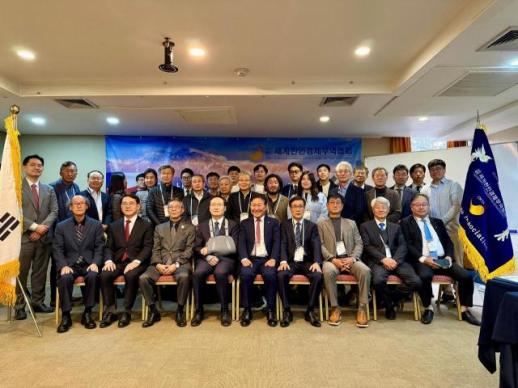 World-OKTA meets in Santiago to revive small Latin American chapters SEOUL, September 04 (AJP) - The World Federation of Overseas Korean Traders Associations, known as World-OKTA, convened a gathering in the Chilean capital this week to shore up its smaller branches across Latin America. The meeting, hosted by the group's Santiago chapter, drew regional officers and branch presidents from across the continent, along with South Korean Ambassador to Chile Kim Hak-jae and other local dignitaries. "Latin America is a land of opportunity, but the sheer distances between countries make it hard for members to meet often," Santiago chapter president Han Bong-rae said in an opening address, expressing hope the gathering would translate shared experience into concrete business. Delegates reviewed the strain on several under resourced chapters and weighed inclusive ways to draw dormant members back, agreeing that a unified regional event could help rebuild networks and tighten organizational bonds. Participants floated pairing a next-generation trade school with a regional business convention in Santiago in mid-2027, an event envisioned to host about 200 to 300 people. The program also featured a lecture on Latin American economic trends by a KOTRA trade official and a talk on deploying artificial intelligence in business, as attendees examined how fast-shifting conditions and emerging technology are reshaping trade in practice. Founded in 1981, World-OKTA is the largest economic body representing ethnic Koreans abroad, linking Korean business figures across 157 chapters in 76 countries to promote exports and overseas expansion for South Korean firms. AJP Takeaways - World-OKTA convened its 2026 gathering for small Latin American chapters in Santiago, Chile, on Sept. 3, 2026, bringing together regional officers and branch presidents to address falling membership and weakening ties across the continent. - Delegates weighed pairing a next-generation trade school with a regional business convention in Santiago in mid-2027, an event envisioned to draw about 200 to 300 participants. - Founded in 1981, World-OKTA is the largest economic organization representing ethnic Koreans abroad, linking business figures across 157 chapters in 76 countries to support South Korean exports and overseas expansion. 2026-09-04 11:42:02
 -
South Korea Considers Military Contribution to Hormuz Strait South Korea's presidential office announced on September 4 that it is reviewing military contributions, including troop deployment, to ensure the free passage of vessels in the Hormuz Strait. A senior official from the presidential office stated during a briefing, "Substantial contributions include military support," but clarified that troop deployment does not necessarily imply combat or large-scale troop mobilization. He noted that even non-combat missions or the deployment of one or two personnel could be classified as troop deployment. However, he emphasized that to make a meaningful contribution in the Hormuz Strait, it is essential to consider the readiness posture on the Korean Peninsula and domestic legal procedures. He mentioned, "We believe we can operate within a range that does not significantly damage our readiness posture," adding that domestic legal procedures would ultimately involve consultation and agreement with the National Assembly, although he indicated that discussions have not yet reached that stage. The official distanced the interpretation that South Korea's review of its contribution is a direct response to U.S. President Donald Trump's public complaints. He stated, "President Trump's remarks are not directly related to our review, as we have been discussing substantial contributions even before those comments were made." He further highlighted that South Korea's dependence on oil from the Hormuz Strait is nearly 70%, and any blockage of the strait would have significant repercussions for economic security and the overall economy. He concluded, "Nothing has been decided yet, and we are continuing necessary reviews."* This article has been translated by AI. 2026-09-04 11:36:20
-
South Korea Posts $42.1 Billion Trade Surplus in July Amid Semiconductor Boom South Korea recorded a $42.1 billion surplus in international trade in July, driven by strong semiconductor exports. This marks the second consecutive month that the surplus has exceeded $40 billion. Exports surpassed $100 billion for the second month in a row, following a historic first-time achievement in June.According to preliminary statistics released by the Bank of Korea on September 4, the current account surplus for July was recorded at $42.08 billion, making it the second-largest surplus on record, following June's $49.73 billion. This marks the 39th consecutive month of surplus since May 2023, and it is the second-longest streak of surpluses since March 2019.The goods balance led the current account surplus, with July's goods surplus reaching $40.43 billion, the second-largest ever recorded. The previous record was set in June at $47.89 billion.Exports totaled $100.45 billion, a 65.3% increase compared to the same month last year. Following June's milestone, exports have continued to exceed $100 billion for two months. Notable increases were seen in the export of computer peripherals (344.5%), semiconductors (176.3%), and wireless communication devices (51.2%). Other categories, including petroleum products (35.7%), chemical products (19.1%), and steel products (11.3%), also saw growth.Imports rose to $60.02 billion, a 21.7% increase. While imports of raw materials (29.1%) and capital goods (36.7%) increased, they did not keep pace with the growth in exports. Consumer goods imports decreased by 3.0%, marking the first decline in 15 months. Yoo Seong-wook, head of the Bank of Korea's financial statistics department, stated, "It is difficult to view the decline in consumer goods imports as a sign of consumption stagnation," adding that while there was a reduction in automobile imports, consumer goods imports have been on the rise again in August.The services balance recorded a deficit of $190.7 million, as the number of outbound travelers increased during the peak travel season, leading to a negative travel balance for the first time in three months. The primary income balance showed a surplus of $4.35 billion, an increase from the previous month's surplus of $3.27 billion, driven by a rise in dividend income surplus to $3.83 billion from $2.56 billion.The financial account net assets (assets minus liabilities) increased by $40.32 billion. Domestic investors' overseas securities investments rose by $13.57 billion, while foreign investments in domestic securities also turned positive with an increase of $8.17 billion. This was influenced by the issuance of American Depositary Receipts (ADRs) by SK Hynix in July. Foreign investments in domestic stocks increased by $5.98 billion, marking a return to net buying for the first time in six months.From January to July, the cumulative current account surplus reached $233.09 billion. For the first half of the year, the current account surplus of $191 billion ranks second in the world, following China. This surpasses the surpluses of Germany ($115 billion), Japan ($122 billion), and Taiwan ($121 billion) from last year.The Bank of Korea raised its annual current account surplus forecast from $250 billion to $450 billion in its economic outlook released in August. The achievement of this $450 billion surplus is expected to depend on the semiconductor market. Yoo noted, "If the current account maintains an average monthly surplus of around $43 billion over the next five months, achieving the projected $450 billion is possible," adding, "Currently, it seems somewhat achievable."The impact of the recent decline in the won-dollar exchange rate on the current account is expected to be limited. The exchange rate recently fell to the 1,350 won range. Yoo explained, "While a decline in the exchange rate theoretically exerts downward pressure on the current account, the recent increase in goods exports, led by semiconductors, is influenced by supply and demand, so the impact of the exchange rate decline is limited."* This article has been translated by AI. 2026-09-04 11:36:00
-
Smartphone-Based Safety Management Wins Top Prize at K-Digital Training Hackathon On September 4, a safety management platform that uses artificial intelligence (AI) to cross-check on-site safety inspection records and automatically generate legal forms won the top prize at the K-Digital Training Hackathon.The Ministry of Employment and Labor announced that the team 'TIMÓN' received the Prime Minister's Award during the awards ceremony for the 8th K-Digital Training Hackathon.The TIMÓN team is composed of young participants from the Smart Talent Development Center in Gwangju-Jeonnam Special City who took part in the K-Digital Training program.Their developed 'AI Agent Safety Management Platform' cross-verifies daily safety inspection records created on-site and automatically generates legal forms based on this data. The platform received high praise for its ability to support safety management using just a smartphone, integrating on-site records and accident response without the need for additional hardware.Additionally, the 'BamMasir' team won the best award in the designated project category, while the 'CACADACA' and 'RE: Work Lab' teams received the best awards in the free project category, each earning the Minister of Employment and Labor's Award. Other awards, including excellence, encouragement, technological innovation, and idea awards, were also presented in both designated and free project categories.During the ceremony, Minister of Employment and Labor Kim Young-hoon presented the Prime Minister's Award and the Minister's Award to the top teams. Following the awards, he engaged with participants to discuss youth employment issues and the vocational training needed to support them.Minister Kim stated, "I commend your efforts to identify challenges in your surroundings and create meaningful solutions using the AI technologies you have learned. We will continue to support young people in utilizing AI to realize their capabilities and potential through K-Digital Training."* This article has been translated by AI. 2026-09-04 11:32:00
-
Democratic Party Discusses Budget in Chungnam, Focusing on AI and Mega Projects The Democratic Party held a budget policy meeting in Chungnam on September 4, discussing the 13 trillion won budget proposal for the region, including funding for AI transformation and other local issues. Party leader Kim Min-seok promised full support for the success of the three mega projects, a key national agenda of the Lee Jae-myung administration.On the morning of the meeting at the Chungnam Provincial Office, the Democratic Party, along with Governor Park Soo-hyun, began efforts to reflect local issues in the upcoming National Assembly budget review.Governor Park Soo-hyun emphasized the need for a budget of 13.5 trillion won, an increase of 2.368 trillion won from the previously allocated 13.2632 trillion won, to realize Chungnam as the AI capital in line with the government's three mega projects."We aim to achieve an AI transformation that allows all residents to enjoy AI as a basic right. We are also pushing for prompt administrative support to ensure this transformation leads to the success of the three mega projects," Park said. He added, "To achieve this, securing 13.5 trillion won in national funding is essential. Given the circumstances, we need generous attention and cooperation to secure the future and new growth engines for South Korea."Lee Jae-gwan, the head of the Chungnam Provincial Party, also noted that while the largest national budget in history has been secured, key funding for transforming Chungnam into the AI capital has not been included. He requested comprehensive support from the central party, stating, "It is not just about securing a budget for Chungnam, but about moving towards an AI-based society for the future growth of Chungnam and a better life for its residents."In response, Kim Min-seok acknowledged the needs of Chungnam and promised party-level backing for the success of the three mega projects. He stated, "The central party will take an interest in the entire Chungcheong region to proactively consider what is needed at the National Assembly level and will closely examine the budget proposal for Chungnam next year."Prior to the meeting, Kim and the Democratic Party leadership held a Supreme Council meeting in Chungnam, discussing the previously stalled administrative integration of Daejeon and Chungnam, as well as the second relocation of public institutions.During that meeting, Kim remarked, "Governor Park provided several suggestions regarding the second relocation of public institutions and the attraction of a unified headquarters for public enterprises during the August 17 party convention. I, along with the Supreme Council members, have listened carefully. We will ensure that the necessary budget exceeding 13 trillion won for Chungnam is reflected. With the important Chungcheong Universiade approaching, we will find ways to support the party comprehensively."Meanwhile, the Democratic Party plans to visit local areas more than twice a week to address regional issues and incorporate them into next year's budget. Starting with Sejong on September 2 and Chungnam on September 4, the party will continue to visit regions including Jeonbuk, Jeonnam-Gwangju, Gangwon, Daejeon-Chungbuk, Jeju, Gyeonggi, Incheon, Daegu-Gyeongbuk, Seoul-Gyeongnam, and Ulsan-Busan.* This article has been translated by AI. 2026-09-04 11:32:00
-
Prosecutors Charge Judge Ji Gwi-yeon Over Allegations of Accepting Bribes The Anti-Corruption and Civil Rights Commission has charged Judge Ji Gwi-yeon of the Seoul Northern District Court with violating the Anti-Corruption Act in connection with allegations of accepting bribes related to room salon entertainment.On September 4, Lee Dae-hwan, a senior prosecutor at the commission, announced that Judge Ji has been indicted without detention on charges of violating the Anti-Corruption Act.According to the commission, Judge Ji is accused of visiting a reservation-only bar in Cheongdam-dong, Gangnam, in August 2013 with two lawyer friends, where they consumed alcohol and had the friends pay a total of 4.09 million won (approximately $3,000). The commission determined that Judge Ji's share of the bill amounted to 1.36 million won (about $1,000).The Anti-Corruption Act stipulates that public officials who receive gifts or entertainment exceeding 1 million won from a single source are subject to punishment, regardless of the relevance to their duties or any expectation of reciprocity.Previously, Judge Ji presided over the first trial of former President Yoon Suk Yeol in a case related to insurrection while working at the Seoul Central District Court last year. During a review of Yoon's detention, Judge Ji calculated the detention period in hours rather than days, leading to Yoon's release. The then-opposition Democratic Party criticized Judge Ji harshly, and in May of the same year, allegations of her involvement in room salon entertainment surfaced, accompanied by related photographs.Civic groups filed a complaint against Judge Ji for violating the Anti-Corruption Act. The commission launched an investigation, confirming payment records from the bar and taxi usage by Judge Ji that matched the timeline of the visit.Subsequently, the commission obtained financial transaction records from witnesses and conducted interviews based on the gathered evidence, leading to the decision to indict Judge Ji.While the commission investigated potential quid pro quo arrangements between Judge Ji and the lawyers, it concluded that mere speculation was insufficient to establish a bribery relationship, resulting in no charges for bribery under the Anti-Corruption Act.Prosecutor Lee stated, "We will continue to rigorously investigate corruption cases involving high-ranking officials to uphold public integrity."* This article has been translated by AI. 2026-09-04 11:28:00