


Latest by
-
 60-Year-Old Woman Missing After Walking at Incheon Beach A 60-year-old woman has gone missing at Hanagae Beach in Incheon, prompting a search by the coast guard.According to the Ministry of the Interior and Safety, a report was received at 1:47 p.m. on September 1, stating that the woman, identified as A, had disappeared while walking in the water at the beach.Coast guard officials are conducting search operations around the beach and the coastline.* This article has been translated by AI. 2026-09-02 13:52:00
 -
Hackathon Showcases AI Innovations for Labor Issues Innovative AI services developed by young participants, ranging from visual assistance for the visually impaired to tools for detecting illegal employment contracts and deepfake fraud, were showcased at a recent event.The Ministry of Employment and Labor announced the start of the '2026 8th K-Digital Training (KDT) Hackathon Finals' on September 2, featuring participants from the KDT program.KDT aims to cultivate practical talent in advanced and digital fields such as AI, robotics, and semiconductors through project-based training that reflects corporate workforce needs. This year's finals include 20 teams selected from preliminary rounds.The theme of the competition is 'Expanding Human Potential with AI.' Participants will present services that address social and industrial challenges using generative AI, large language models (LLM), and data analysis technologies.The 'Bammasil' team developed an AI visual assistance service that alerts visually impaired individuals to their surroundings and potential hazards while walking at night. The 'Beyond Facade' team proposed a service that analyzes employment contracts written by new employees against legal standards and public data to identify potential violations. The 'Dual Lens' team presented an AI fraud prevention service that combines voice analysis technology with deepfake video and fake voice detection capabilities.Over the course of three days, participants will receive expert mentoring to refine their services before the final presentations. The Ministry will evaluate the projects based on completeness, creativity, and practical applicability, with awards including the Prime Minister's Award and the Minister of Labor's Award to be presented on September 4.This year, the Ministry introduced the KDT AI Campus, selecting 44 organizations, including 21 companies, seven universities, and 16 training institutions, as operational partners. The AI campus program incorporates project-based learning that reflects real-world corporate challenges, constituting over 30% of the overall training.Minister of Employment and Labor Kim Young-hoon expressed hope that the initiative would provide young people with opportunities to propose new solutions to societal and industrial issues using AI, while also expanding quality AI training for youth outside the capital region.* This article has been translated by AI. 2026-09-02 13:32:00
-
Italy at Frieze Exhibition Opens at Italian Embassy in Seoul The Italian Embassy in Seoul and the Italian Cultural Institute hosted the opening of the exhibition Italy at Frieze: The Golden Trace on September 1 at the Italian ambassador's residence in Hannam-dong, Yongsan-gu. This year marks the third iteration of Italy at Frieze, which is part of the global art fair Frieze Seoul 2026, running from September 2 to 5.This year's exhibition is curated by Valentina Bucci, who has worked in both Europe and Korea, and features a collaboration with renowned contemporary art galleries Massimo De Carlo and Mazzoleni. The works of Italian artist Andrea Francolino and Korean artist Lee Soo-kyung are on display.Emilia Gatto, the Italian ambassador to Korea, emphasized the significance of the event in her speech, stating, "Italy at Frieze represents a friendly meeting between Korean and Italian art." Davide Scalmani, director of the Italian Cultural Institute, remarked, "Italian and Korean artists are moving in the same direction, which is a form of cultural diplomacy we cherish most."Jung Hyang-mi, director of the Cultural and Arts Policy Office at the Ministry of Culture, Sports and Tourism, noted that the bilateral relationship between Korea and Italy was elevated to a special strategic partnership in June. She affirmed the Korean government's commitment to expanding cultural exchanges across all fields, including the arts.The theme of this year's Italy at Frieze, The Golden Trace, refers to the aesthetic and symbolic possibilities of 'crack' and 'gold,' viewed as a space for ethical reflection, change, regeneration, and cultural resonance. Featured works include Lee Soo-kyung's Translated Vase series, which uses gold to mend broken pottery, and Francolino's M series, created with broken concrete and gold.Curator Bucci explained, "Gold in Korean means both 'gold' and 'crack' in objects. It is a trace of what has already happened and an open gap guiding us toward the future."During the event, Ambassador Gatto awarded the 'Order of the Star of Italy' medal to Lee Jeong-hak, representative of Bulgari Korea, for his contributions to the development of Korea-Italy relations. Lee emphasized the historical significance of the 142nd anniversary of diplomatic relations between Korea and Italy, stating, "I will strive to contribute to cultural exchanges between Korea and Italy."Following the visits of Italian Prime Minister Giorgia Meloni to Korea in January and President Yoon Suk Yeol to Italy in June, the Italian Embassy in Korea has organized various friendly events. 2026-09-02 13:08:00
-
Damyang County Mayor Park Jong-won: Government Achievements Must Be Tangible for Residents The city of Damyang, located in Gwangju, has reorganized its projects to identify feasible new initiatives. Recently, a policy discovery meeting was held under the leadership of Park Jong-won, where 103 new projects were identified and 27 existing projects deemed ineffective were eliminated. The new initiatives focus on expanding the resident population, establishing a foundation for future education, enhancing year-round tourism, preparing for the development of a high-tech district, connecting with metropolitan urban rail, and expanding smart agriculture. Additionally, a long-term development strategy was discussed to foster tourism, high-tech industries, and agriculture as new growth engines in response to population decline and regional extinction. In particular, it was decided to discard 27 initiatives that had low effectiveness or diminished necessity due to changes in policy environments. This move is expected to save approximately 1 billion won and focus limited resources on pressing projects and new policies. Damyang County plans to further specify new initiatives based on the feasibility of addressing local issues and the connectivity of promises, while also preparing strategies for securing external funding from national and city budgets and enhancing inter-departmental collaboration. Park Jong-won emphasized, "The achievements of the government should not just be numbers in reports but should manifest as tangible changes felt by the residents," urging for the swift implementation of confirmed initiatives to lead to practical results.* This article has been translated by AI. 2026-09-02 13:08:00
-
Power Struggles Intensify in 'Made in Korea 2' Starring Hyun Bin and Jung Woo-sung The Disney+ original series 'Made in Korea' returns with an expanded scale and a deeper storyline. Set against the backdrop of South Korea's tumultuous modern history in 1979, the series depicts an inevitable clash between those at the pinnacle of power and those who have fallen to the bottom.On September 2, a production presentation for 'Made in Korea Season 2' (referred to as 'Mainco2') was held at the Conrad Seoul Hotel in Yeouido, Seoul. The event featured director Woo Min-ho and cast members Hyun Bin, Jung Woo-sung, Woo Do-hwan, Seo Eun-soo, Won Ji-an, Jung Sung-il, Noh Jae-won, and Cha Hee, who discussed the project.Set to premiere on September 9, 'Mainco2' takes place nine years after the first season, which achieved the highest global viewership last year. The series is a noir drama that captures the chaotic period leading up to the 10·26 incident and the 12·12 military coup, focusing on the reckless ambitions of Baek Gi-tae (played by Hyun Bin) and the counteractions of Jang Geon-young (played by Jung Woo-sung), along with the perilous journeys of characters pursuing their own desires.Director Woo Min-ho noted, "While Season 1 featured different stories in each episode, Season 2 follows a single narrative from start to finish. If the previous season was a 'children's fight,' this one is an 'adult's fight.'" He added, "Whereas 'The Man Standing Next' and 'Seoul's Spring' focused on the perspectives of those deeply involved in historical events, 'Mainco2' captures the viewpoints of fictional characters and bystanders, using historical events as a backdrop to explore the characters' desires and choices."Hyun Bin reprises his role as Baek Gi-tae, the acting head of the Central Intelligence Agency. He explained, "Despite having achieved a higher position and greater wealth than in Season 1, Baek Gi-tae is driven by even greater ambitions. He faces loneliness as he confronts forces trying to stop his unchecked power and finds himself in danger due to bold choices."Jung Woo-sung, who plays Jang Geon-young, a special advisor who lost everything in Season 1, is fueled by a desire for personal revenge. He stated, "Having been thrown to the ground, Jang Geon-young rationalizes his personal vendetta under the guise of public justice as he seeks to bring down Baek Gi-tae." He added that portraying a similar era to his previous work, 'Seoul's Spring,' was refreshing and liberating as it delves into individual desires and nature within a nationalistic system.Woo Do-hwan, portraying Colonel Baek Gi-hyun of the Security Command, hinted at a more mature character. He remarked, "In Season 1, Gi-hyun was like a 'middle schooler,' but in Season 2, he has become an adult with firm beliefs. He will confront his brother Gi-tae more fiercely to protect his family."The series also highlights the roles of female characters. Seo Eun-soo plays Oh Ye-jin, the first female prosecutor in South Korea's drug investigation unit. He expressed confidence in portraying a strong and determined character who fights against the world, transcending the limitations of being a woman.Won Ji-an, who plays Ikeda Yuji, a key figure in the Japanese underworld, urged viewers to look forward to intense action and confrontations as her character pursues her goals without hesitation.Additionally, Jung Sung-il joins the cast as Cheon Seok-jung, the chief of staff at the Blue House, while Noh Jae-won plays Pyo Hak-soo, the head of the Busan branch of the Central Intelligence Agency, who undergoes significant changes. Cha Hee portrays Baek So-young, who becomes deeply involved in her brother Gi-tae's business, adding depth to the narrative.Finally, Director Woo expressed confidence in the cast's performances, stating, "The actors have delivered their roles exceptionally well, making it a pleasure to watch." Hyun Bin encouraged viewers, saying, "We have returned with a story that is deeper and broader, so please stay tuned until the end." 'Made in Korea Season 2,' which promises intense power struggles among adults, consists of six episodes and will premiere on Disney+ on September 9, releasing two episodes weekly.* This article has been translated by AI. 2026-09-02 13:04:10
-
CXMT Begins Production of HBM3E Memory, Sources TC Bonders Amid Supply Challenges China's largest DRAM manufacturer, CXMT (Changxin Memory Technologies), has reportedly started production of its high-bandwidth memory (HBM) product, HBM3E. This news has garnered global attention, especially considering that just a few months ago, CXMT struggled to produce the previous generation, HBM3, reliably.According to a report by the U.S. technology news outlet The Information on August 31, citing two sources familiar with the matter, CXMT has begun small-scale production of HBM3E and plans to expand production next year. The produced HBM3E is currently undergoing quality testing by two clients: Alibaba's AI semiconductor design firm, Pingtouge, and Chinese AI semiconductor company Cambrian. If the tests are successful, CXMT's HBM could be included in products as early as 2027.As of April this year, CXMT faced uncertainty regarding the commercialization schedule for HBM3. Taiwanese media outlet DigiTimes reported that mass production of HBM3 could remain challenging in 2026, with industry analysts in China citing issues with heat generation and low yield rates as barriers to stable production. HBM has evolved through several generations, including HBM2, HBM2E, HBM3, HBM3E, and HBM4. HBM3E is an enhanced version of HBM3, and CXMT appears to have leveraged accumulated technology to reach the small-scale production stage of HBM3E without going through mass production of HBM3.Attention has naturally shifted to the equipment used in production. The production of HBM requires thermal compression bonders (TC bonders) that stack DRAM vertically. The TC bonder market has been effectively monopolized by Hanmi Semiconductor. In December 2024, the U.S. tightened semiconductor equipment regulations, prohibiting the import of advanced semiconductor equipment to Chinese companies. Subsequently, in May 2025, reports emerged that Hanmi Semiconductor had notified its Chinese customers of a halt in TC bonder shipments.IT blogger Nomad Semi analyzed in a June 2025 post that CXMT likely preemptively purchased and stockpiled TC bonders from Hanmi Semiconductor. Semiconductor analysis firm SEMI Analysis confirmed in June 2026 that Hanmi Semiconductor had delivered several TC bonders to CXMT in 2024.Combining these reports suggests that CXMT may have secured TC bonders from Hanmi Semiconductor before the export controls and shipment halts took effect, utilizing them for the current small-scale production of HBM3E. However, it has not been officially confirmed whether Hanmi Semiconductor's equipment is currently operational on the HBM3E production line. Both CXMT and Hanmi Semiconductor have declined to comment on related inquiries.Meanwhile, CXMT was listed on the Shanghai Stock Exchange's Sci-Tech Innovation Board on the 27th, raising 66.6 billion yuan (approximately $9.2 billion). The company stated that the funds will be used to expand production capacity and enhance research and development, with a significant portion expected to be allocated to HBM development.* This article has been translated by AI. 2026-09-02 12:52:00
-
Naju City Launches Investment Promotion Team to Attract Semiconductor Companies Naju City has launched an 'Investment Promotion Team' to actively attract companies related to the semiconductor cluster in the Honam region.This initiative aims to connect large-scale investment opportunities in advanced strategic industries, such as semiconductors and energy, to regional growth.On September 2, Naju City announced that it held the first meeting of the 'Investment Promotion Team' at the city hall, chaired by Mayor Yoon Byeong-tae, to kick off inter-departmental collaboration for attracting advanced strategic industry companies.Key officials, including the vice mayor and department heads, participated in discussions focused on proactive measures to create tangible investment attraction results, including expanding industrial complex infrastructure, securing available land, addressing corporate challenges, and post-investment management.The 'Investment Promotion Team' is a dedicated one-stop system that supports the entire investment process, from corporate inquiries and signing memorandums of understanding (MOUs) to land supply, permits, construction, and factory operations through inter-departmental collaboration.In particular, the team plans to enhance the speed of corporate investment decisions and project implementation by establishing a 'One-Stop Fast Track' administrative support system, which allows relevant departments to simultaneously review and share key infrastructure needs such as permits, power, water, sewage, and roads during the industrial complex development and investment process.Naju City aims to leverage its energy infrastructure and industrial base to attract large anchor companies, focusing on semiconductors and energy as key sectors for investment, in line with the promotion of the semiconductor industry in the Honam region centered around Gwangju and Naju.To proactively respond to the significant power and water demands required for the Honam semiconductor industry, the city plans to expedite the attraction of energy and power semiconductor-related companies, utilizing its total energy potential of 10GW, which includes 2GW of gas power, 2.5GW of pumped storage, and 5.5GW of renewable energy.The city is also actively working to secure industrial land, a key foundation for attracting companies. It is systematically managing available land by conducting a comprehensive survey of unsold and closed industrial sites within existing industrial complexes, currently managing a total of 14 plots of land available for supply in the Innovation Industrial Complex and the New Town Industrial Complex.Naju City plans to gradually secure new industrial land, including the Nam-pyeong Industrial Complex, Noan 2 Industrial Complex, Energy National Industrial Complex, and Noan General Industrial Complex, to proactively meet corporate demand.To attract large-scale companies with significant economic ripple effects, the city is also considering utilizing vacant land from the LG Chem factory as space for advanced industries.A 'Feedback Management Card' will be introduced to systematically manage the progress and challenges of corporate investments. This will ensure continuous oversight of each company's status and suggestions from the inquiry stage through to occupancy and operation, preventing interruptions in administrative support or delays in inter-departmental collaboration.Additionally, the city is exploring ways to link policy financing, such as the National Growth Fund, to local conditions to reduce the costs of developing new industrial complex infrastructure and to utilize direct investment methods.Naju City envisions enhancing its competitiveness in attracting companies in advanced strategic industries, such as semiconductors and energy, by timely securing industrial land and infrastructure, thereby creating conditions for companies to make actual investment decisions.Mayor Yoon Byeong-tae stated, “We will promote Naju's strengths through various networks and create a vibrant Naju where quality jobs and companies grow together.”* This article has been translated by AI. 2026-09-02 12:48:00
-
SK Telecom CEO Jeong Jae-hun Highlights Insight and Empathy as Key Competencies in AI Era Jeong Jae-hun, CEO of SK Telecom, emphasized that in the age of artificial intelligence (AI), "insight and empathy, which allow individuals to set their own direction, are key competitive advantages."According to SK Telecom, Jeong made these remarks during a lecture titled "Choices and Opportunities in the AI Era" held on September 1 at Seoul National University's Engineering Building, where he addressed approximately 300 graduate students.This lecture marked the first class in a joint AI program that SK Telecom and Seoul National University have been running for a decade. Jeong returned to his alma mater nearly 40 years after enrolling in the university's Department of Public Law in 1987.Jeong explained that AI has changed the density of time. He stated, "With the emergence of AI, a person's day can feel like 240 hours or even 2,400 hours. The principles we once knew are being disrupted by the density of time that AI has created."He added, "Just as oil and semiconductors once did, AI is now extending competition beyond companies to nations. Relying on others' technology means you cannot set your own prices or conditions, which is why 'sovereign AI' is crucial."Sovereign AI refers to a strategy where nations or companies build independent AI capabilities using their own infrastructure and data. Jeong stressed the importance of developing unique AI capabilities.Having led SK Telecom's AI transformation over the past year, Jeong introduced the concept of the 'AX's J-Curve.' Originally an economic theory explaining the relationship between exchange rates and trade balances, the J-Curve suggests that while an increase in exchange rates may initially worsen trade balances due to adjustment lags, it eventually improves.Jeong applied this concept to AI, noting that while one might expect immediate efficiency gains from AI adoption, there is often a lag due to the need for retraining, redesigning workflows, and reorganizing data and teams. Organizations that endure this initial stagnation will see a steep rise in productivity.He remarked, "If you turn back in front of the valley of discomfort, you will remain on the left side of the curve forever. However, organizations that endure will eventually see a J-shaped rise." He advised that "looking at things differently, confronting extremes, and embracing discomfort" are ways to cross this valley.In the AI era, Jeong stressed the importance of developing one's own domain expertise and maximizing productivity through AI, adding that connecting technology, industries, and people across domain boundaries can create new opportunities.* This article has been translated by AI. 2026-09-02 12:40:00
-
KT Expands Network Capacity Ahead of Fireworks Festival KT has implemented special communication measures in preparation for the expected crowds at the fireworks festival scheduled for September 5. On September 2, KT announced that it has taken proactive steps to address the surge in high-volume data transmission that typically occurs during the event. The company has assessed communication quality around Yeouido Hangang Park and nearby subway stations, increasing the capacity of surrounding base stations. Additionally, mobile base stations have been deployed to enhance network capacity. On the day of the festival, KT will operate a 24-hour response system centered in a comprehensive control room, increasing support staff to address any unusual occurrences. KT plans to utilize '5G network slicing technology' to ensure that the event organizers can receive real-time closed-circuit television (CCTV) feeds without congestion. This technology divides a single 5G network into multiple segments to provide stable communication quality for specific services. Jung Seon-il, head of KT's Network Operations Innovation Division, stated, "The fireworks festival is a representative event where large-scale traffic concentrates in a short period. We will ensure that attendees can smoothly share their experiences with family and friends."* This article has been translated by AI. 2026-09-02 12:40:00
-
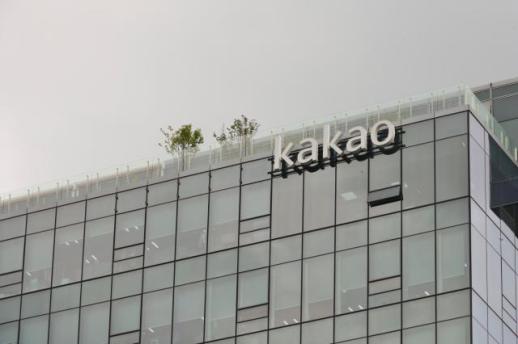 Kakao restructuring delays Kakao Mobility's US listing SEOUL, September 02 (AJP) - South Korea's Kakao has set in motion a sweeping corporate overhaul that is likely to push back Kakao Mobility's planned US share listing, leaving private equity backer TPG waiting longer to cash out of an investment it made nearly a decade ago. According to industry reports on Wednesday, Kakao Mobility's American depositary receipt (ADR) offering counts as a duplicate listing, which requires shareholder-protection procedures by parent Kakao and cannot be finalized until the corporate split settles the ownership structure. TPG recently met with officials at the Financial Services Commission and the Financial Supervisory Service to walk them through the state of the ADR plan. The firm told regulators it needs cooperation from Kakao, the majority owner with a 57.18 percent stake, but that talks have stalled, making the listing hard to advance. TPG's consortium first put about 500 billion won ($364 million) into Kakao Mobility in 2017 and added 130.7 billion won in 2021, yet has been unable to recoup either sum more than nine years on. Under a duplicate-listing guideline introduced in July, Kakao must assess how a Kakao Mobility offering would affect existing shareholders and draw up safeguards before the deal can proceed. Kakao must also top off an F-1 filing with the U.S. Securities and Exchange Commission and a separate securities filing at home. The company plans to divide into Kakao AI and Kakao X on Jan. 1 after an extraordinary shareholder meeting on Dec. 17, with the two entities relisting on Jan. 27, a sequence that all but rules out an ADR debut this year. The two sides broadly agree TPG should be able to exit, but they remain at odds over timing and shareholder terms. Ryu Geung-seon, Kakao Mobility's chief executive, has resisted pinning down a listing schedule even after backing the SEC registration itself, and the industry expects the tug-of-war to run on. AJP Takeaways • Kakao split into Kakao AI and Kakao X, to complete on Jan. 1, 2027, is expected to delay Kakao Mobility's planned US ADR listing, frustrating private equity backer TPG. • Kakao holds a 57.18 percent stake in Kakao Mobility, and a July 2026 duplicate-listing guideline requires the parent to complete shareholder-protection procedures before any overseas offering can proceed. • TPG invested about 500 billion won in Kakao Mobility in 2017 and a further 130.7 billion won in 2021 but has yet to recoup either after more than nine years, deepening its pressure to exit. 2026-09-02 12:34:50