


Latest by
-
 Full Moon to Rise on September 25, but Roundest Moment is Two Days Later While there will be no issue enjoying the full moon on Chuseok night, those wanting to see the moon at its roundest will need to wait an extra day.This year, Chuseok falls on September 25, which is the 15th day of the 8th month in the lunar calendar. In Seoul, the moon will rise at approximately 5:34 PM on that day.However, the moment when the moon is at its roundest, known as 'mang' (望), will occur not on Chuseok itself but at 1:49 AM on September 27. 'Mang' refers to the time when the sun and moon are positioned directly opposite each other from Earth, typically indicating when the moon appears most circular.Therefore, to catch the closest appearance of a full moon during Chuseok, it is advisable to look at the sky between the night of September 26 and the early morning of September 27. In Seoul, the moon will rise at 5:59 PM on September 26 and will reach its roundest point at 1:49 AM on September 27. The moon rising again on the evening of the 27th will have already passed this peak.The reason the roundest moment of the moon occurs about two days after the 15th day of the lunar month is due to the way lunar dates are determined and the actual movement of the moon not aligning perfectly. The lunar calendar includes days when the moon is not visible, counting the first day of each month from the new moon. However, the time it takes for the moon to transition from the new moon to the full moon varies due to the elliptical nature of its orbit. As a result, 'mang' does not always align precisely with the 15th day of the lunar month, leading to a discrepancy of a day or more.In celebration of Chuseok, events will be held in Seoul for direct moon observation. According to the city, the 'Full Moon Over Nanjido Pond' program will take place at Peace Park in World Cup Park from 6:30 PM to 9:30 PM on September 24 and 25. The event will accommodate both pre-registration and on-site registration.* This article has been translated by AI. 2026-09-17 15:28:00
 -
Mayor Myung Hyun-kwan Proposes 'Balanced Development Strategy' to President Myung Hyun-kwan, the mayor of Haenam, has sent a letter to the president urging the development of Solar City as a national hub for artificial intelligence (AI) and renewable energy. In his proposal, he outlined four key initiatives aimed at transforming Haenam's industrial structure and accessibility, including the designation of a national AI demonstration city and a renewable energy mega zone, the construction of a high-speed highway connecting Gwangju, Yeongam, and Haenam, and the establishment of large-scale power and water infrastructure. According to Haenam County on September 17, Mayor Myung delivered the letter titled 'A Letter to the President' on September 16, presenting his vision for regional balanced development centered around Solar City. In the letter, he stated, "Haenam has been preparing Solar City as a RE100 and AI advanced industry hub for the past six years," expressing his intention to materialize national balanced development policies in response to the concentration of resources in the capital region and the issue of local extinction. The first initiative he proposed is the designation of Solar City as a 'national AI demonstration city' and a 'renewable energy mega zone.' He suggested that with a site spanning 6.32 million square meters, Solar City should be developed into a strategic space connecting research and development to commercialization in the fields of AI, data centers, and renewable energy. The second initiative involves the construction of a high-speed highway connecting Gwangju, Yeongam, and Haenam, along with a high-speed rail link. Mayor Myung emphasized that improving accessibility and living conditions is essential for attracting businesses and talent. He requested that the construction of the highway and the inclusion of a high-speed rail line from Mokpo Station or Muan International Airport to Haenam be reflected in the national railway network plan. This initiative aims to establish a regional industrial axis connecting Gwangju's semiconductor industry and the energy and industrial base of the southwestern region. The third initiative proposes the national-level establishment of power and water infrastructure in preparation for the concentration of AI data centers and the creation of RE100 industrial complexes. He called for the construction of additional substations and transmission lines, as well as the establishment of water treatment facilities and pipelines necessary for large-scale industrial facilities to be pursued as national projects. Mayor Myung stressed that securing these infrastructures in advance is crucial for creating favorable investment conditions for domestic and international AI data centers and advanced companies. The fourth initiative focuses on attracting anchor companies in the renewable energy and power sectors. He proposed that the government actively identify and attract key companies in areas such as AI data centers, power equipment, energy storage systems (ESS), hydrogen production, and future mobility to Solar City, fostering an industrial ecosystem centered around these sectors. Mayor Myung also conveyed the need for the national and local governments to take proactive measures in attracting strategic industries and key companies, rather than simply waiting for businesses to choose the industrial complex. Myung Hyun-kwan stated, "We aim to transform the renewable energy of Honam into a competitive advantage for national AI and advanced industries, and Haenam will play a leading role in creating a successful model of regional balanced development. I ask for the president's attention and support to make Haenam's vision a reality." Meanwhile, through this letter, Mayor Myung proposed the development of Solar City as a balanced development strategy that integrates the cultivation of AI and renewable energy industries, expansion of transportation networks, national infrastructure investment, and business attraction, rather than viewing it as an isolated regional project. Haenam County plans to continue advocating for the inclusion of these four key initiatives in national plans and related policies with the government and relevant ministries.* This article has been translated by AI. 2026-09-17 15:24:00
-
National Intelligence Service Updates Cloud Policy for AI Era The National Intelligence Service (NIS) is revamping its national cybersecurity policies, including cloud, network, and software vulnerability management, to align with the rise of artificial intelligence (AI). The updates aim to support AI utilization in the public sector and enhance responses to AI security threats.On September 17, the NIS opened the Cyber Summit Korea 2026 at COEX in Seoul, where it unveiled the direction for revising national cybersecurity and AI security policies.First established 14 years ago, the 'National Cloud Computing Security Guidelines' will be updated to reflect changes in AI and cloud technology environments. Security standards applied when introducing private clouds in the public sector will also be improved to align with international standards and technological advancements.The cloud rating system will shift from a focus on systems to data. Currently categorized by importance as high, medium, or low, the revised guidelines will classify data based on the National Network Security Framework (N2SF) into confidential (C), sensitive (S), and public (D) information.Exceptions for cloud validation will be established for new technology services like AI. This includes cases where only public information is processed, such as in public institutions, or cloud services tied to specialized equipment like medical robots.The cloud security validation system will also be restructured. Instead of relying on evaluations and certifications from the Ministry of Science and ICT, the NIS plans to integrate and operate a verification system centered on its own assessments.By 2028, the NIS aims to establish a national vulnerability database, collecting information on vulnerabilities in commercial and open-source software distributed domestically and internationally. A system for reporting, addressing, and disclosing vulnerabilities will undergo pilot testing this year before being expanded to national public institutions by 2028.The network security framework will transition from a focus on network separation to the N2SF. This will enhance the security level application system based on the revised national cybersecurity guidelines established in May.Additionally, the NIS is developing security policies specifically for AI. Last year, it launched the National AI Security Center to address AI security threats. In the first half of this year, the NIS surveyed over 290 national and public institutions regarding AI implementation and security management, conducting security assessments and validation activities (red teaming) for 17 of those institutions. 2026-09-17 15:24:00
-
 The world of K-beauty, pulled into one Seoul office SEOUL, September 17 (AJP) — K-beauty spent years carrying Seoul to bathroom shelves, beauty counters and social-media feeds around the world. Inside one skincare office in southern Seoul, that current is running the other way: the world has come to work. At Mary&May, a Korean skincare brand sold in more than 60 countries, employees from 15 nationalities sit inside the machinery of K-beauty's global expansion — choosing products, creators, words and images for markets thousands of miles from Seoul. Among them are a Kenyan former beauty influencer working on Europe, an Ecuadorian K-pop fan turned Latin America marketer, an American overseeing North America and an Indonesian shaping the brand's global voice. Together, they offer a glimpse of how far K-beauty's reach has stretched. What began as an export story about creams, serums and sheet masks is increasingly becoming a talent story, drawing young professionals to Korea not simply to consume its culture but to build careers inside it. South Korea's cosmetics exports topped the $10 billion mark last year, cementing the country as a global beauty powerhouse second only to France. Stores such as Olive Young have become fixtures on foreign visitors' itineraries. Now some of those consumers are crossing a different threshold — from fan to professional. Daisy Jemutai Rutto, a Kenyan in her 20s, once worked as a K-beauty influencer. She now sits on the brand side, handling TikTok, influencer marketing, European partnerships and product seeding for Mary&May. Maria Cristina Guayasamín Urquizo, an Ecuadorian in her 20s, traces her route into the industry back about 15 years to Girls' Generation. Korean cosmetics were difficult to find in Ecuador then. Through K-pop and the internet, she discovered brands including Tony Moly and Etude House, first drawn to their packaging and later to the rituals and products of Korean skincare. “I started as a K-Pop fan, then became a skincare fan, and eventually it became part of my career,” Guayasamín said. Her route to Korea took a more unexpected turn at university. While studying TV production and digital media in Ecuador, she made a documentary about a Korean woman who had lived there for about two decades. “At that time, I had only just started learning Korean, so editing the documentary was quite difficult. That experience motivated me to apply for a scholarship to study Korean in Korea,” she said. She arrived in 2020, later received the Global Korea Scholarship and eventually encountered Mary&May at an event for foreign K-beauty creators. She now handles creator and partner communications, regional campaigns and content across Latin America. Rutto also arrived in 2020 to study Korean and later pursued a master's degree in anthropology at Seoul National University. Along the way, she joined Korean skincare projects and built the experience that eventually took her from promoting K-beauty to helping shape how it is marketed. Octavia Grace VanHecke, an American in her 20s who handles North America, first came to Korea as a student in 2021. While studying media and communication at Korea University, she became interested in cross-border advertising and marketing. Korean YouTube makeup tutorials had already introduced her to the industry. “The K-beauty industry is growing at a rapid pace, and to drive that global growth from the source you must be here in Korea,” she said. “Being a part of this growth and shift in the beauty market is exciting.” Claire Lee, an Indonesian in her 20s, took yet another route into the business. Her work spans newsletters, advertising content and brand development. What appealed to her was the chance to move upstream — to see how a product and its identity are built before they are repackaged for consumers overseas. “Working in the country itself allows me to understand the intention behind product development and the brand philosophy up close, and to think from the planning stage about how to express that through language and visuals,” Lee said. Proximity matters because beauty does not travel as neatly as a bottle in a shipping box. A toner can be routine in Seoul and unfamiliar in another market. An ingredient that excites U.S. consumers may require explanation elsewhere. An advertisement that looks polished in Korea may feel distant, overly controlled or simply off-key abroad. And that is where Mary&May's international staff come in. “We were looking for colleagues who could see the market through the eyes of local consumers and build the business together with us,” said Kim Sue-min, the company's co-founder and chief marketing officer. The structure grew out of the company's early overseas expansion. Good formulas alone were not enough, Kim said. Consumers in different countries respond to different ingredients, creators, aesthetics and shopping habits. Guayasamín sees that gap every day in Latin America. “In Korea, concepts like toner, serum, and sunscreen are already very familiar, while in many Latin American markets, consumers are still learning about different skincare steps and why they need them,” she said. “That’s why we can't just translate Korean content into Spanish. Sometimes we need to educate consumers first and explain K-Beauty in a way that fits their culture and familiarity.” For Rutto, cultural translation can begin with a single phrase or campaign concept. Part of her job is to flag language or ideas that could be misunderstood or considered inappropriate elsewhere. “My perspective is taken into account when we decide how to word messages or present products to international audiences,” she said. VanHecke has pushed Mary&May's U.S. marketing in a looser, more candid direction. She manages influencers and TikTok Shop affiliate marketing, where creators earn commissions on sales generated through their content. In the U.S., she said, audiences increasingly respond to unvarnished product opinions rather than carefully staged brand films. “Candid content and honest brand opinions are becoming more popular than aesthetic brand videos in the U.S.,” VanHecke said. She adjusted Mary&May's guidelines for U.S. TikTok affiliates, giving creators more room to use products in their own style and show real results. Several videos subsequently went viral, she said. “What works in Korea doesn't always translate across borders,” VanHecke said. “I know what kind of messages will and won't work for my region, because I grew up seeing what kind of advertising gets praised and which gets backlash.” Lee brought a similar instinct to the company's newsletter. The publication had largely concentrated on products and company news. She proposed adding a section on trends unfolding inside Korea, reasoning that overseas K-beauty followers were interested in the culture surrounding the products as much as the products themselves. “I thought overseas subscribers who are interested in K-beauty would be curious not only about products, but also about what trends are attracting attention in Korea,” she said. The company adopted the idea. International staff are also reaching deeper into the business, influencing not only how Mary&May talks about products but which products it pushes. “They understand what part of a product should be emphasized, which influencers consumers genuinely trust and what kinds of promotions feel natural in that market,” Kim said. In the Middle East, local staff highlighted demand around the eye area among women who wear hijab, leading Mary&May to put its eye cream forward. In Turkey, a colleague pointed to the cultural familiarity of roses, encouraging the company to make its rose wash-off pack a key product. Staff covering North America and Southeast Asia pushed for greater emphasis on retinol, the vitamin A derivative widely used in anti-aging skincare, reflecting demand for ingredients associated with more visible results. “Ultimately, foreign talent helps determine which products to sell in each market,” Kim said. It is a notable shift for an industry whose first wave of globalization largely meant making products in Korea and finding ways to sell them abroad. At Mary&May, overseas markets are now represented inside the Seoul office before a campaign reaches a screen or a product reaches a shelf. The shift is also visible in job applicants, Kim said. “More applicants now see K-beauty itself as a professional field, seeking experience in global marketing, overseas sales, e-commerce and brand operations,” she said. “They want to become active participants in growing the brands, not just consumers.” The transition from foreign consumer to industry insider is not always seamless. “One challenge is finding your place and making sure your perspective is understood as a foreigner,” Rutto said. “Even when you understand the language, cultural differences can affect how people communicate and work together.” Lee described a subtler layer of adjustment: learning the unspoken language of a Korean workplace. “You have to understand what is expected, how an idea should be presented and what someone means beyond what they literally say,” she said. Those frictions will matter more if Korea wants global talent not merely to arrive but to remain, gain authority and build long-term careers. Kim said international employees should not be treated simply as translators or support staff assigned to their home markets. “We should not limit them to language-support roles for a particular market,” she said. “They should be able to develop market strategies, take responsibility for budgets and performance, and eventually grow into leaders.” Guayasamín hopes to remain in Korea for the next several years and move deeper into visual storytelling, content production and eventually creative direction. Rutto wants to expand her expertise in influencer marketing and partnerships. VanHecke hopes to continue introducing Korean products to North American consumers, whether in beauty or another Korean industry. Lee plans to build further expertise in K-beauty brand marketing. Their ambitions mirror the industry's own evolution. For years, K-beauty's defining movement was outward Korean formulas, packaging and beauty rituals traveling from Seoul into shopping carts around the globe. Now, in one office in southern Seoul, the world is being pulled into the room. “K-beauty’s next step is not simply to export Korean cosmetics,” Kim said. “It is to bring global talent to Korea and build global brands together.” 2026-09-17 15:23:07
 -
North Korea Goods Require Government Approval for Import, Constitutional Court Rules North Korean goods must receive government approval for importation, and violations will result in penalties, according to a ruling by the Constitutional Court. This is the first time the court has addressed the constitutionality of this provision.On September 17, the court ruled 8-1 that the provisions regarding the import of goods in Article 13, Section 1, and Article 27, Section 1, Item 3 of the Inter-Korean Exchange and Cooperation Act are constitutional.Jin Cheon-kyu, the head of Unification TV, was fined 3 million won in March 2020 for attempting to import 146 items, including 19 books purchased in North Korea, through Incheon International Airport without the approval of the Minister of Unification. He subsequently requested a formal trial.The first trial court imposed the fine in May 2022, and Jin has appealed, with the case still ongoing. During the first trial, he sought a constitutional review of the relevant provisions but was denied, leading him to file a constitutional appeal in June 2022.Jin argued that the requirement for approval to import goods, which are not subject to the Foreign Trade Act, discriminates against inter-Korean trade compared to trade with other countries, violating his right to equality and general freedom of action, and contravening the constitutional provisions on peaceful unification.The Inter-Korean Exchange and Cooperation Act states, "Anyone wishing to export or import goods must obtain approval from the Minister of Unification regarding the type of goods, transaction method, and payment method as prescribed by presidential decree. Those who export or import goods without such approval may face up to three years in prison or a fine of up to 30 million won."The Constitutional Court found that the provisions regarding the import of goods do not violate the constitution.The court stated, "The provisions in question require approval from the Minister of Unification for the import of goods, ensuring that trade with North Korea is conducted under certain standards in a comprehensive, systematic, and stable manner. This centralizes the import process between South and North Korea under the Ministry of Unification, promoting public benefit and facilitating inter-Korean exchanges in line with policy consistency."It also noted, "Even if a person returning from North Korea acquires goods not previously planned, it is difficult to monitor the import of such goods without prior approval. Given the sensitive and unique nature of inter-Korean relations and the complexities of international relations, it is not unreasonable to regulate unauthorized imports through criminal penalties."The court concluded that the provisions do not violate the constitutional preamble, which proclaims the mission of peaceful unification, nor the principles outlined in Article 4 of the constitution.The court emphasized that the Inter-Korean Exchange and Cooperation Act fundamentally recognizes North Korea as a partner for dialogue and cooperation aimed at peaceful unification, moving away from confrontation and allowing previously prohibited exchanges with North Korea, thus aligning with the constitutional goal of peaceful unification.However, Justice Jeong Gye-seon expressed dissent, stating that the provisions could penalize unauthorized imports regardless of the inherent harmfulness of the goods, arguing that the focus on the lack of approval is excessive and that imposing criminal penalties is disproportionate.A Constitutional Court official remarked, "This decision marks the first time the court has ruled on the constitutionality of the provisions requiring approval from the Minister of Unification for importing goods from North Korea and the penalties for violations."The official added, "Considering the sensitivity of international relations and inter-Korean relations, the court found that the provisions do not violate the principle of proportionality or infringe upon general freedom of action, leading to the 8-1 ruling in favor of constitutionality."* This article has been translated by AI. 2026-09-17 15:20:00
-
Hampyeong County Seeks National Budget for 2027, Including Rural Basic Income Hampyeong County is actively working with local lawmakers to secure national funding for 2027, focusing on key issues including a pilot program for rural basic income.On September 16, Hampyeong County held a "Democratic Party-Hampyeong County Budget and Policy Council" meeting in the county office's small conference room to discuss major issues related to the 2027 government budget and proposed national projects. The current county mayor is Lee Nam-o.Attendees included National Assembly member Lee Gae-ho, Mayor Lee Nam-o, Jeonnam-Gwangju Integrated Special City Council member Mo Jeong-hwan, Hampyeong County Council Chair Kim Young-in, and other county council members along with local Democratic Party officials.During the meeting, Hampyeong County outlined 13 key projects aimed at securing future growth and improving living conditions, requesting support to ensure necessary funding is included in the government budget and the upcoming National Assembly review process.Key proposed projects include the selection of a pilot program for rural basic income, the development of eco-friendly tire technology in response to Euro 7 standards, the designation and expansion of the Bitgreen National Industrial Complex as a renewable energy self-sufficient city, the establishment of a genetic resource and breeding center for Hampyeong Hanwoo cattle, and improvements to connecting roads for marine tourism in Hampyeong.The expansion of industrial infrastructure centered around the Bitgreen National Industrial Complex is particularly crucial for Hampyeong County's future growth. The county envisions the complex as a growth hub focused on the automotive, advanced materials, and research and development industries.The county plans to continuously explain the necessity and urgency of these projects to central government agencies and the National Assembly to ensure timely implementation across agriculture, industry, tourism, and living conditions.Lee Gae-ho stated, "I will actively support the smooth progress of Hampyeong's key projects at the National Assembly level to contribute to regional development. I will work closely with Hampyeong County to ensure that necessary national funding is maximized."Mayor Lee Nam-o emphasized, "It is essential to maintain consistent interest and support from the National Assembly and local political circles to create new growth engines for Hampyeong and improve the lives of residents. We will actively consult with central government agencies to ensure that the discussed projects proceed without delay and focus all administrative efforts on securing national funding."He added, "In the future, we will continue to communicate closely with the party to address the issues for Hampyeong's future one by one."Meanwhile, Hampyeong County plans to continue visiting central government agencies and the National Assembly to explain the necessity of the 13 projects discussed in this council meeting and to pursue national funding activities in line with the government budget formulation and National Assembly review stages for 2027.* This article has been translated by AI. 2026-09-17 15:16:00
-
LS Group Expands Energy and Mineral Cooperation in Central Asia LS Group is expanding its telecommunications infrastructure and key mineral and rare metal businesses in three Central Asian countries. LS Cable is working on establishing a communication network in Turkmenistan, while LS MnM is focusing on mineral development in Tajikistan and building a rare metal industry ecosystem in Kazakhstan. The plan aims to combine power and communication infrastructure with Central Asia's resources to secure new markets and supply chains.On September 17, LS announced that it signed three business cooperation memorandums of understanding (MOUs) with the three Central Asian countries during the Korea-Central Asia five-nation summit and business summit.On September 15, LS Cable signed an MOU with the Turkmenistan Ministry of Communications to establish local telecommunications infrastructure. The two sides have been discussing plans for a local optical cable manufacturing facility and large-scale cable supply starting in 2024. They will further discuss specific business plans and timelines.As the project progresses, the scope of cooperation could expand from cable supply to construction. LS Cable will supply submarine and communication cables, while its affiliate LS Marine Solutions has the capability for cable installation, potentially leading to large-scale infrastructure projects.LS MnM is focused on securing Central Asia's abundant mineral resources. On September 14, it signed an MOU with the Tajikistan Ministry of Industry and New Technologies to develop minerals and create added value. Both parties will explore local mineral resource development and investment possibilities and promote information exchange for commercialization.On September 16, LS MnM signed a multilateral MOU with the Korea Institute of Industrial Technology's National Rare Metal Center and the Satbayev University Metallurgy and Ore Beneficiation Research Institute in Kazakhstan for long-term cooperation in the rare metal sector. The plan is to establish a Korea-Kazakhstan rare metal industry ecosystem based on the cooperation center and expand technological and industrial collaboration.Currently, LS MnM produces selenium, tellurium, and rhenium-based rare metals at its Onsan smelter and is also pursuing battery material projects involving nickel sulfate, cobalt sulfate, manganese sulfate, and lithium hydroxide. If mineral development in Central Asia translates into actual projects, it could broaden the supply chain from raw material procurement to smelting and material production.This collaboration represents a shift in viewing Central Asia not just as a source of resources but as a market for local production, processing, and infrastructure projects. LS plans to expand business opportunities starting with telecommunications infrastructure and mineral development into the energy and materials sectors.An LS official stated, "Central Asia has significant growth potential in energy infrastructure and key minerals, based on advanced telecommunications infrastructure and abundant mineral resources. We aim to leverage our expertise in power, telecommunications infrastructure, and resource and material technology to expand new market avenues and contribute to strengthening supply chains and industrial cooperation between Korea and Central Asia." 2026-09-17 15:16:00
-
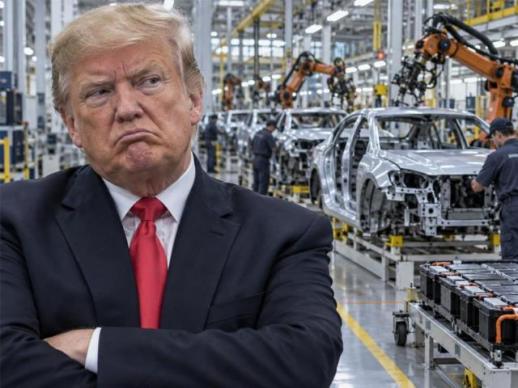 Korean battery makers under Trump whims – from EV retreat to datacenters SEOUL, September 17 (AJP) - U.S. President Donald Trump's retreat from Biden-era electric-vehicle policies has upended the American growth plans of South Korean battery makers, leaving factories built for an EV boom idled, scaled back or searching for a new purpose. Now, some are finding one in the power-hungry data-center boom. Canceled U.S. EV and battery projects between January 2025 and August this year had promised about 27,000 jobs, according to a Reuters analysis of Atlas Public Policy data. About four-fifths of the canceled investment was in Republican-leaning states. The reversal has hit a string of multibillion-dollar ventures involving LG Energy Solution, SK On and Samsung SDI. Ultium Cells, the $2.3 billion battery plant in Lordstown, Ohio, owned by General Motors and LG Energy Solution, halted production in January after weakening EV demand and initially placed about 480 workers on indefinite layoff. Cell production resumed in mid-August, bringing back about 700 workers, but roughly 600 remained on indefinite layoff, the company told Reuters. In Glendale, Kentucky, about 1,500 workers were laid off in December at the $5.8 billion battery complex originally built by Ford and SK On. The project had once been pitched as creating about 5,000 jobs. Part of the roughly $6 billion, 2,800-job battery complex planned by Stellantis and Samsung SDI in Kokomo, Indiana, has also stalled. The retrenchment accelerated after the $7,500 federal EV purchase tax credit expired on Sept. 30, 2025, following legislation backed by Trump and congressional Republicans. The administration also eased vehicle-emissions rules and other policies that had supported EV adoption. Automakers have cited those policy changes, together with softer-than-expected consumer demand, in reassessing EV investment. "Electric cars are fine, but not everyone should be forced to own one," Trump wrote on Truth Social in July 2025, calling what he described as the EV mandate "ridiculous." U.S. EV sales fell 20.5 percent from a year earlier to 247,226 vehicles in the second quarter, according to Cox Automotive. EVs accounted for about 5.8 percent of total new-vehicle sales, down sharply from a record 10.6 percent in the third quarter of 2025, when buyers rushed to qualify for expiring incentives. Ford has been among the most aggressive in resetting its EV ambitions. The automaker booked a $19.5 billion writedown in December, ended plans for several electric models and dissolved its battery joint venture with SK On. Ford also terminated a large battery-supply agreement with LG Energy Solution as it shifted capital away from some EV programs. Its unopened Tennessee assembly plant, once intended to build electric pickups, is being redirected toward gasoline-powered trucks. But the battery factories built to power cars are not necessarily being abandoned. Increasingly, they are being retooled to power something else: artificial intelligence. The explosive construction of data centers is creating a new market for energy-storage systems, or ESS, which absorb electricity and release it when grids or facilities need additional power. Ford plans to hire about 2,100 workers at its Glendale battery complex from late 2027 to produce energy-storage batteries — less than half the workforce originally projected for the site when it was built around EV demand. LG Energy Solution is making a similar pivot. The company is expanding lithium iron phosphate, or LFP, battery production for stationary storage and aims to have more than 50 gigawatt-hours of ESS production capacity across North America by the end of this year. Its North American network includes plants in Michigan and Ontario as well as joint-venture facilities in Ohio and Tennessee. Samsung SDI is also pushing deeper into storage. Its StarPlus Energy venture in Indiana is producing batteries for U.S. ESS contracts, and the company has signed large supply deals aimed at the North American market. Samsung SDI said in August that another Indiana plant would also be used for energy-storage batteries as market demand changes. SK On, meanwhile, has been reviewing ways to redirect underused U.S. production capacity as EV demand softens. The shift toward storage is already showing up in Korean battery makers' earnings. All three major Korean battery companies returned to operating profit in the second quarter, though for different reasons. Samsung SDI posted a 203.8 billion won operating profit, its first in seven quarters, with demand for batteries used in energy storage and AI-related backup-power applications helping the rebound. LG Energy Solution posted a 113.3 billion won operating profit as ESS revenue surged. LG Energy Solution’s underlying business, however, remained in the red. Excluding 241 billion won in U.S. production tax credits, it recorded an operating loss of about 127.7 billion won. SK On also returned to profit after seven quarters, helped by increased Asian battery sales, customer compensation and U.S. production incentives rather than storage alone. The new market offers relief, but not a full replacement for the EV boom the plants were designed to serve. Converting battery lines can take months or years because stationary-storage batteries often use different chemistries and specifications. Storage demand is also not expected to absorb all of the EV capacity now sitting idle or underused. For Korean battery makers, the U.S. bet has therefore changed more quickly than the factories themselves. Plants built to ride America's EV transition are being forced to chase its next power-hungry growth engine — the data centers feeding the artificial-intelligence boom. "Because subsidies expired on Sept. 30, 2025, pull-forward demand concentrated sales between July and September, meaning this year's third quarter will face a much steeper year-on-year comparison," said Kim Hyun-soo, an analyst at Hana Securities. "From October, the base effect eases, making a return to year-on-year growth likely." AJP Takeaways - Canceled U.S. EV and battery projects between January 2025 and August 2026 had promised about 27,000 jobs, according to a Reuters analysis of Atlas Public Policy data. About four-fifths of canceled investment was in Republican-leaning states. - U.S. facilities involving LG Energy Solution, SK On and Samsung SDI have been idled, scaled back or reworked as EV demand weakened following the expiry of the $7,500 federal tax credit. - Korean battery makers are increasingly redirecting U.S. capacity toward energy-storage batteries serving utilities and the fast-growing AI and data-center market. Ford plans to hire 2,100 workers for storage-battery production at its Glendale, Kentucky, complex from late 2027. 2026-09-17 15:12:30
 -
Huawei to Launch Two New AI Chips Next Year Chinese tech giant Huawei plans to release two new artificial intelligence (AI) semiconductor products next year. As U.S. export controls make it difficult for the company to secure advanced AI chips from NVIDIA, Huawei is accelerating the development of its own chip and system technologies.According to reports from the China Securities Journal, Huawei's rotating chairman, Wang Tao, announced at the Huawei Connect conference in Shanghai on September 17 that the Ascend 960 series will include the 960DT chip, set for release in the first quarter of 2027, and the 960PR chip, expected in the third quarter.Wang stated that the Ascend chips will evolve annually, with plans to launch the Ascend 970 and 980 chips in 2028 and 2029, respectively. He also emphasized ongoing improvements in processing power, memory capacity, and data transfer speeds between chips.According to the South China Morning Post, Huawei is also speeding up the development of its interconnect technology, UnifiedBus, which connects multiple AI chips into a single system. This technology allows for rapid data exchange among AI chips, enabling them to function as a massive computing system, comparable to NVIDIA's NVLink technology.Wang revealed that 11 semiconductor products utilizing UnifiedBus technology have been developed, allowing Huawei's so-called 'supercluster' AI systems to connect up to one million AI processors.Huawei has already shipped over 1,000 'supernode' systems, which combine multiple AI semiconductors for processing tasks, to more than 370 customers. Supernodes are smaller AI computing systems compared to superclusters.This announcement comes amid heightened competition between the U.S. and China over semiconductor, data center, and software technologies, which are crucial for AI. As U.S. export controls hinder Chinese companies from adequately securing NVIDIA's latest AI chips, the importance of technologies that connect domestic chips into a single system is increasing.Guo Ping, chairman of Huawei's supervisory board, also stated at a recent meeting that the company's goal in the ICT and computing sectors is to become like NVIDIA. He acknowledged that while individual chips may lag behind NVIDIA, the ability to integrate chips into a cohesive system will help overcome this disadvantage. 2026-09-17 15:12:20
-
Financial Authority Revises Penalty System for Credit Information Law Violations 금융당국이 신용정보법 과징금 산정 체계를 손질한다. 동양생명에 대한 과징금이 금감원 단계의 1400억원대에서 금융위 의결을 거쳐 70억원대로 줄어든 데 이어 제도 개선까지 추진되면서 신한라이프와 라이나생명에 대한 제재에도 영향을 미칠지 주목된다.17일 금융권에 따르면 금융위는 전날 ‘신용정보법 과징금 산정기준 개선 태스크포스(TF)’ 회의를 열고 신용정보법 위반행위의 특성을 반영한 별도 산정 기준을 마련하기로 했다.현행 과징금은 전체 매출액의 3%를 법정 상한으로 두고 위반행위의 중대성에 따라 50%·75%·100% 부과기준율을 적용한다. 가장 경미한 위반에도 50% 기준율이 적용돼 제재의 비례성이 떨어진다는 지적이 제기돼왔다. 금융위는 부과기준율을 세분화하고 정보의 성격과 고객 수, 피해 규모 등을 반영할 방침이다.금융위 관계자는 “개정 완료 시점을 밝히기는 이르지만 의견이 모인 만큼 최대한 빠르게 개정해 혼란이 없도록 하겠다”고 말했다.보험업계는 전체 매출액을 기준으로 삼는 현행 방식이 업종 특성을 충분히 반영하지 못한다고 주장해왔다. 보험사 매출에는 향후 보험금 지급 재원이 되는 수입보험료가 포함돼 위반 정도보다 회사의 영업 규모가 과징금에 더 큰 영향을 줄 수 있다는 것이다.동양생명이 대표적인 사례다. 금감원은 동양생명이 고객 동의 없이 개인신용정보를 자회사 법인보험대리점(GA)에 제공한 사실을 적발하고 제재심 단계에서 1400억원대 과징금을 산정했다. 그러나 금융위는 정보 제공이 자회사 GA에 대한 업무위탁 과정에서 이뤄진 점과 위반 정도 등을 반영해 최근 과징금을 70억원대로 확정했다.이에 관심은 유사한 사안으로 제재 절차가 진행 중인 신한라이프와 라이나생명으로 옮겨가고 있다. 전체 매출액에 법정 최고한도인 3%를 단순 적용하면 신한라이프는 약 2096억원, 라이나생명은 약 962억원에 달한다. 다만 이는 가중·감경 등을 반영하지 않은 최대한도 추산액이다.회사마다 정보 제공의 대상과 목적, 고객 수와 정보 범위, 피해 여부가 달라 동양생명과 같은 수준의 감경을 기대하기는 어렵다. 새 기준을 진행 중인 제재에 적용할지도 정해지지 않았다. 금감원 관계자는 “제재 절차가 진행 중인 사안인 만큼 향후 제도 개편이 어떻게 반영될지는 현재로서는 알 수 없다”고 말했다. 2026-09-17 15:12:20