


Latest by
-
 Two in three South Koreans back nuclear armament, poll shows SEOUL, August 28 (AJP) - Nearly two-thirds of South Koreans support the country possessing its own nuclear weapons, while a majority oppose the government's push to merge the Army, Navy and Air Force academies, a Gallup Korea poll showed Friday. The survey of 1,001 adults conducted from Tuesday to Thursday found that 65 percent supported South Korea possessing nuclear weapons, compared with 30 percent who opposed the idea. Support reached 78 percent among supporters of the main opposition People Power Party, 60 percent among supporters of the ruling Democratic Party and 64 percent among politically unaffiliated respondents. The result suggests support for an independent nuclear capability has become a persistent feature of South Korean public opinion. Gallup Korea surveys conducted after North Korea's fifth nuclear test in 2016 and sixth test in 2017 found support at 58 percent and 60 percent, respectively. The Stockholm International Peace Research Institute estimated in June that North Korea had assembled around 60 nuclear warheads and possessed enough fissile material for at least 30 more. Despite strong public support for nuclear armament, Seoul remains a non-nuclear weapons state and relies on U.S. extended deterrence, including Washington's nuclear umbrella. The poll also showed that support for nuclear weapons is not driven solely by fears of imminent conflict. Only 39 percent said they believed North Korea could actually start a war, while 55 percent said it could not. Even among those who saw no real risk of war, 58 percent still supported South Korea possessing nuclear weapons. Gallup Korea said the findings suggest many respondents may view nuclear weapons primarily as a deterrent rather than as weapons intended for actual use. Academy integration faces resistance On the government's plan to integrate the three service academies, 58 percent said they should remain separate, while 30 percent supported integration. The issue showed a sharp partisan divide. Among Democratic Party supporters, 54 percent backed integration, while 85 percent of People Power Party supporters and 70 percent of unaffiliated respondents opposed it. The government and ruling party agreed in July to establish a four-year integrated National Military Academy at Jaundae in Daejeon, replacing the existing service-specific academy structure. Defense Minister Ahn Gyu-back has argued that the reform would reduce institutional silos and better prepare officers for joint and all-domain warfare. Alumni groups and other critics, however, say integration could weaken the distinct expertise and traditions of each service. Public split over OPCON timeline South Koreans were more evenly divided over the transfer of wartime operational control, or OPCON, from the United States. Forty-six percent said the transfer should be completed during President Lee Jae Myung's term, which ends in 2030, while 41 percent favored delaying it. Among self-described progressives, 74 percent supported completing the transfer during Lee's term, compared with 27 percent among conservatives. Among moderates, 48 percent supported the move and 43 percent opposed it. Seoul and Washington have agreed that OPCON transfer should be conditions-based rather than tied solely to a fixed date. The allies are currently in the second stage of a three-phase verification process, known as full operational capability. The Lee government has made completing the transition during his term a major defense objective. 70 percent see South Korean military as stronger Seventy percent of respondents said South Korea's military was stronger than North Korea's, while 21 percent viewed the North as superior. The latest South Korean defense white paper, published in 2023 using 2022 data, put North Korea's active-duty force at about 1.28 million troops, compared with about 500,000 in the South at the time. But the Defense Ministry has cautioned that numerical comparisons alone do not capture differences in equipment quality, training, operational concepts and allied capabilities. South Korea's active-duty force has since fallen to about 450,000 amid demographic decline, while Seoul has sought to compensate through advanced weapons, unmanned systems and its alliance with the United States. North Korea, meanwhile, retains major asymmetric capabilities, including nuclear weapons, ballistic missiles and long-range artillery. Younger Koreans see greater risk of war Perceptions of the likelihood of conflict varied sharply by age. While 39 percent overall said North Korea could actually start a war, the figure rose to 54 percent among those aged 18 to 29 and 53 percent among people in their 30s. Only 29 percent of respondents in their 40s saw such a possibility, the lowest among all age groups. The overall result was similar to a Gallup Korea survey conducted after North Korea's sixth nuclear test in 2017, when 37 percent said there was a possibility of war on the Korean Peninsula. The latest poll was conducted through telephone interviews using randomly selected mobile phone numbers. It has a margin of error of plus or minus 3.1 percentage points at the 95 percent confidence level, with a contact rate of 44.5 percent and a response rate of 9.5 percent. AJP Takeaways · 65% of South Koreans support possessing nuclear weapons. · 58% oppose merging the Army, Navy and Air Force academies. · 70% believe South Korea’s military is stronger than North Korea’s. 2026-08-28 17:49:12
 -
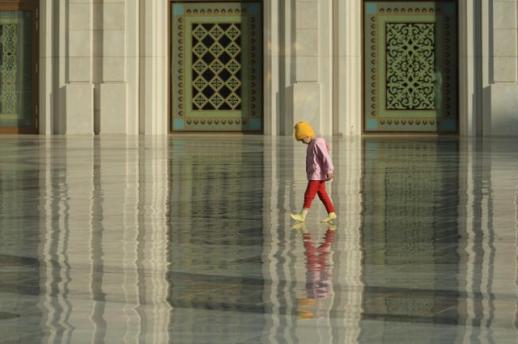 Kazakhstan feels familiar. Family duty runs in reverse SEOUL, August 28 (AJP) - Kazakhstan can feel unexpectedly familiar to a Korean visitor. Across Astana, there are faces that at first glance would not look out of place in Seoul. Dark hair, familiar facial contours and gestures of deference toward older people can create fleeting moments of recognition in a country separated from the Korean Peninsula by thousands of kilometers of mountains, desert and steppe. The sense of familiarity runs deeper around the family table. Younger people wait for elders to eat. Ancestry matters. Family identity stretches backward through generations. Parents retain a powerful place in the lives of their adult children. Yet one of the strongest parallels contains an almost perfect reversal. In the traditional Korean family, responsibility for carrying the household forward fell disproportionately on the eldest son. Among Kazakhs, it was traditionally the youngest son. "We have a tradition where the youngest son takes care of the parents," said Aruzan Alim, a 22-year-old office worker in Astana. Alim has an older sister and a younger brother. Her parents, she said, are noticeably more generous toward their youngest child, an indulgence she connects to the obligation that traditionally awaits him. Thousands of kilometers to the east, Korean families arrived at a strikingly similar arrangement from the opposite end of the birth order. For centuries, the eldest son increasingly became the keeper of the ancestral line, the principal performer of family rites and, in many households, the child expected to remain most responsible for aging parents. Different sons inherited the burden. The underlying idea was much the same: one child remained more firmly attached than the others to the house from which the family spread. Familiarity and the danger of easy history Physical and cultural resemblance between Koreans and Central Asians has long encouraged broader theories about common origins. Some Korean scholars and writers have looked toward the Eurasian steppe for traces of ancient Korea. Among the most intriguing is the word Tengri, the ancient Turkic term associated with the sky and the supreme sky deity of Central Asian nomadic peoples. Khan Tengri, the great peak on the Kazakhstan-Kyrgyzstan-China frontier, preserves the name today. The historical existence and meaning of Tengri are well established in studies of ancient Turkic culture. Korean intellectual Choi Nam-sun was among those who proposed a connection between Tengri and Dangun, the legendary founder of Korea's first kingdom. The theory remains an interpretation rather than an established linguistic genealogy. The resemblance between Astana and Asadal, the legendary capital associated with Dangun, has inspired similar speculation. But Astana means "capital" in Kazakh, while the etymology and location of ancient Asadal remain uncertain. A similarity in sound is not evidence that the two places share an origin. The attraction of such theories is understandable. A Korean traveling through Kazakhstan can encounter enough visual and cultural familiarity to make distant historical connections seem almost intuitive. Family life offers firmer ground for comparison. The youngest son keeps the house In traditional Kazakh society, the parental home carried a special status embodied in the idea of qara shanyraq, the ancestral household. Older sons traditionally received their share of family property and established households of their own. The youngest son, or kenzhe, generally remained with his parents longest. He eventually became custodian of the parental home and assumed a particular responsibility for caring for his mother and father as they aged. The house did not simply become his. It remained the family's house — a place to which older siblings and relatives could return and which retained symbolic importance across the extended family. Kazakh accounts of the tradition continue to describe caring for elderly parents as a particular duty of the youngest son, without absolving other children of responsibility. "As the sons grew up and got married, they would gradually move out," Alim said. "The youngest son stayed in the parental home the longest and eventually inherited it, along with the responsibility of caring for the parents." The custom remains recognizable well beyond historical memory. A 2023 study by the Kazakhstan Institute of Public Development involving 2,400 respondents found strong support among ethnic Kazakhs for the idea that one son, usually the youngest, should live with his parents. Among 1,721 ethnic Kazakh respondents asked the tradition-related questions, 77.3 percent expressed support. Generational differences were visible but hardly overwhelming. Among ethnic Kazakhs aged 18 to 28, 73.6 percent viewed the practice positively or somewhat positively, compared with 84.4 percent among respondents aged 61 and older. Support in Astana stood at 68.8 percent. Korea constructed its family hierarchy differently. Korea chose the eldest The Korean eldest son's position can appear ancient and immutable. It was neither. Earlier in the Joseon Dynasty, inheritance could be distributed relatively evenly among sons and daughters, and responsibility for ancestral rites could rotate among children. The increasingly rigid patrilineal order familiar to modern Koreans developed over centuries as Neo-Confucian family principles became more deeply embedded. By later Joseon, the eldest son occupied a privileged position in the paternal line. He was increasingly entrusted with ancestral rites and often favored in inheritance, particularly property associated with the ancestral household. Historical research shows that primogeniture strengthened gradually rather than appearing fully formed at the beginning of the dynasty. For Kang Myung-jo, a 35-year-old office worker in western Seoul, traces of the old arrangement remain. "In Korea, traditionally it is the eldest son who takes care of the parents," Kang said. The expectation can still create "an unspoken pressure," he said, although he no longer interprets caring for his parents primarily as a duty assigned by birth. "They are my parents and they raised me well," he said. "When I think of it as giving something back to them, I feel taking care of them is the right thing to do." Kang gives his parents a regular allowance, lives nearby and tries to visit often. The contrast with Kazakhstan is revealing. The Korean eldest son inherited greater authority precisely because he remained at the head of the senior family line. The Kazakh youngest son inherited the parental household partly because his older brothers had already left to create households of their own. One system privileged seniority. The other made the last son at home the keeper of the original house. Both placed continuity above individual choice. The table knows your age The similarities become more visible at meals. When Kang's family eats with his grandfather, he said, nobody needs to announce the order. "We basically wait until my grandfather picks up his spoon," he said. "Then the rest of us start eating." The practice remains familiar to Koreans even in households where many other Confucian rituals have disappeared. Alim immediately recognized it. "When we eat traditional food, we follow the rule," she said. "We won't eat it unless the elder eats first." Kazakh dining customs are different in form but equally capable of making hierarchy visible. At ceremonial meals, a boiled sheep's head may traditionally be presented to the eldest or most honored guest. Particular cuts of meat can be assigned according to age, kinship and status. In Korea, hierarchy historically determined who began eating. At a Kazakh feast, it could determine who received which part of the animal. Seven generations behind you Kazakh family identity also reaches unusually far backward. Alim can recite her zheti ata — seven generations of paternal ancestors. "I do. I can memorize them all," she said. The knowledge can have consequences far beyond remembering family names. Kazakh tradition prohibited marriage among relatives within seven generations of the paternal line. The system helped organize kinship across nomadic communities while also creating a clear boundary around permissible marriage. Scholars describe zheti ata as an important mechanism of both genealogy and exogamy in traditional Kazakh society. Alim said the rule would still matter to her. If she discovered that a romantic partner fell within the traditionally prohibited ancestral boundary, she said, the relationship would end. "We would part ways and live on with our lives." Korea once imposed its own powerful connection between paternal ancestry and marriage. Under the former dongseong dongbon system, a man and woman sharing both a surname and the same ancestral origin, or bon-gwan, could not legally marry. Korea's Constitutional Court ruled the blanket restriction unconstitutional in 1997, and it disappeared from the Civil Act in 2005. Current Korean restrictions instead apply according to legally defined degrees of kinship. When obligation becomes choice The more consequential parallel today may be how both systems are loosening. "When we are taking part in a traditional event, we tend to follow it," Alim said. "But during more casual outings or get-togethers, we are more liberal." Kang described much the same negotiation in Korea. "The culture of taking care of one's parents is still there, but things are changing," he said. "There are many families that no longer hold ancestral rites, and I think people are placing more importance on living their own lives." In Korea, the statistical change has been dramatic. The share of people saying the family should bear responsibility for supporting elderly parents fell to 18.2 percent in Statistics Korea's 2024 Social Survey from 70.7 percent in 2002. The eldest son's special burden had eroded even faster. The share identifying the eldest son as responsible for parental support dropped to just 1.3 percent in 2018 from 15.1 percent in 2002. Households themselves are giving the old system less room to operate. One-person households made up 36.1 percent of Korean households in 2024 and 39.9 percent in Seoul. Kazakhstan is urbanizing from a different family structure. Its 2021 census counted about 1.56 million extended households, representing 27.8 percent of all households and containing more than 7 million people. The share had declined from 29.9 percent in 2009, while nuclear families edged higher. Astana remained unusually family-dense for a rapidly expanding capital, with extended families accounting for 32.6 percent of its households. A national study of 2,000 people aged 14 to 34 found 80.1 percent regarded family as their most important value, a result researchers said had remained broadly stable for several years. Family remains important in both societies. What is weakening is the old certainty over who owes what to whom. Kazakhstan traditionally looked toward the youngest son and the qara shanyraq. Korea looked toward the eldest son and the ancestral line. For younger Kazakhs and Koreans, those obligations have not vanished. They are increasingly being renegotiated — transformed from rules inherited at birth into choices made within the family. AJP Takeaways • Korean and Kazakh family traditions show striking parallels despite reversing birth order: Korea historically placed greater filial and ritual responsibility on the eldest son, while Kazakh tradition centers the youngest son as keeper of the parental household. • Kazakhstan's qara shanyraq and Korea's ancestral household both tied property to responsibility, preserving a family center even after other children established households of their own. • Respect for elders and paternal ancestry remain visible in both cultures, from dining hierarchy to traditions governing ancestral knowledge and marriage. • Urbanization and smaller households are weakening fixed family roles in both countries, although surveys show family itself remains a powerful value, particularly among young Kazakhs. 2026-08-28 17:47:14
 -
 Credit Union to Provide $8.5 Billion in Inclusive Finance Annually The Credit Union Central Association will provide $8.5 billion annually in inclusive finance targeted at low and middle-credit borrowers and low-income individuals. To alleviate the burden on local credit unions, a separate support fund of $38 million will also be established. On August 28, the Credit Union Central Association announced its plans to expand inclusive finance during a vision declaration ceremony and policy discussion held at the National Assembly Library. The association aims to launch specialized inclusive finance products under the vision of 'Finance Together, Inclusive Credit Unions.' The annual supply targets include $1.5 billion for low and middle-credit borrowers, $2.3 billion for low-income individuals, $750 million for online microloans, and $1.5 billion for online Sunshine Loans. Additionally, $1.5 billion will be allocated for social finance aimed at social solidarity economy enterprises and Sunshine Income Villages. A $38 million 'Credit Union Inclusive Finance Support Fund' will also be established. This fund will be used to support principal and interest subsidies, thereby reducing the burden on individual credit unions and managing their financial health. During the event, participants discussed measures to improve the system supporting the expansion of inclusive finance. They agreed on the need for a framework that encourages the provision of inclusive finance resources, rationalizes regulations related to policy finance, and promotes evaluations and incentives that expand regional and low-income finance. Go Young-cheol, chairman of the Credit Union Central Association, stated, "We will proceed with concrete actions such as launching specialized products and establishing the inclusive finance support fund. We will work with the National Assembly and financial authorities to create a regulatory framework that harmonizes inclusive finance with soundness and sustainability." With this vision declaration, the Credit Union Central Association plans to actively expand its inclusive finance initiatives and specify related system improvement tasks while continuing discussions with the National Assembly and financial authorities.* This article has been translated by AI. 2026-08-28 17:44:00
 -
Election Commission Special Prosecutor Recommends 10 Candidates for Deputy Prosecutor Lee Tae-han, the special prosecutor investigating allegations of a shortage of ballots during the June 3 local elections, requested on August 28 that President Lee Jae-myung appoint 10 candidates for deputy prosecutor positions. The special prosecutor announced through a media release that it has selected 10 candidates and requested the president to appoint them as deputy prosecutors. Deputy prosecutors are responsible for investigating cases, maintaining prosecutions, supervising special investigators and dispatched officials, and handling media communications, receiving treatment equivalent to that of a chief prosecutor. According to the special prosecutor law, the president must appoint five deputy prosecutors within five days of the request. If the president fails to make the appointments within the specified time, the oldest recommended candidate will be considered appointed. The special prosecutor has been reviewing the qualifications of the candidates after receiving recommendations for six deputy prosecutor candidates from the Korean Bar Association on August 25. Previously, the special prosecutor indicated that it would prioritize forensic and investigative skills as the main criteria for selecting deputy prosecutors, while also considering political neutrality, objectivity, and personal integrity. Once the five deputy prosecutors are appointed, preparations for the special prosecutor's office will begin in earnest. The special prosecutor has sent a request to the Ministry of Justice and the National Police Agency to complete the deployment of 60 investigators, including 20 prosecutors, by September 4. As of today, an additional dispatched prosecutor has reported to the temporary office, bringing the total to 14 personnel, including three dispatched prosecutors, five special investigators, and six dispatched police officers. The special prosecutor also requested the joint investigation team of the police and prosecutors to transfer all records and seized evidence related to the ongoing investigation to the special prosecutor's office. On August 31, the special prosecutor plans to receive and review digitized case records and establish an investigation plan to commence full-scale investigations on September 7.* This article has been translated by AI. 2026-08-28 17:40:00
-
 PARU extends rally after share consolidation SEOUL, August 28 (AJP) - South Korean renewable energy company PARU surged for a second straight session Friday after trading resumed following a two-for-one share consolidation. Shares of PARU closed 10.82 percent higher at 1,475 won ($1.08) on the KOSDAQ on Friday, after rising as high as 1,630 won in early trading. The gains followed a 29.98 percent surge Thursday, when the stock hit its daily upper limit on the first session after trading resumed. According to a regulatory filing on DART, trading resumed Thursday after the company completed the listing procedures related to the consolidation. PARU consolidated every two common shares into one, raising the face value of each share to 1,000 won from 500 won and reducing the number of issued shares to 20.90 million from 41.80 million. The company said the move was aimed at stabilizing its share price and enhancing shareholder value. Trading had been suspended since Aug. 4 while the consolidation process was completed. PARU, founded in 1993, develops renewable energy equipment and printed electronics technologies. Its solar business includes tracking systems that adjust the position of solar panels to follow the sun and improve power generation efficiency. The company has spent more than three decades developing technologies in renewable energy and related fields. It has expanded its business both at home and overseas, drawing on experience in clean energy projects and advanced manufacturing technologies. PARU said it aims to strengthen its renewable energy business while pursuing new technologies focused on cleaner energy and improved efficiency. The company has also emphasized responsible management and environmental, social and governance practices as part of its long-term growth strategy. AJP Takeaways • PARU closed 10.82 percent higher Friday, extending its rally to a second session after trading resumed following a share consolidation. • The company combined every two common shares into one, halving the number of issued shares to 20.90 million while raising the face value per share to 1,000 won. • Founded in 1993, PARU develops renewable energy and printed electronics technologies, including solar tracking systems designed to improve power generation efficiency. 2026-08-28 17:37:51
 -
 Marado drone flop exposes Korea's unmanned warfare gap SEOUL, August 28 (AJP) - Unmanned ground vehicles rolled down Kyiv's main boulevard, drone boats moved along the Dnipro River and bomber and interceptor drones filled the sky as Ukraine marked 35 years of independence from the Soviet Union this week, putting on public display its power behind sustaining its resistance against Russia into a fourth year. The unconventional military parade underscored how drones — rather than foot soldiers, spectacular warships or tanks — have come to define modern warfare. For South Korea, the contrast was uncomfortable. Two domestically developed suicide drones plunged into the sea within seconds of takeoff from the amphibious assault ship ROKS Marado during a publicly watched maritime combat test earlier this week, turning what was meant to showcase a new capability into an embarrassing flop. The failure also stirred concern in a country facing nuclear-armed North Korea, which has been expanding its own drone arsenal and has gained exposure to Iranian-made drones and battlefield tactics through closer military cooperation with Russia. A simple defect in the launcher, rather than a problem with the drones themselves, caused the two South Korean aircraft to crash during their first maritime combat test, the country's state-run defense research agency said Friday. The Agency for Defense Development (ADD) said an initial investigation found that a misaligned door on one of the launch tubes created an imbalance as the drones were fired from the Marado on Tuesday. "The unmanned aircraft and the overall system were confirmed to be operating normally," an ADD official told reporters Friday. "As developers, we are more disappointed than anyone that such a simple defect led to the worst possible outcome," the official said. The launcher consisted of two levels of launch tubes. According to ADD, a door on the left side of a lower tube had been installed slightly out of alignment. When a drone was fired from the upper tube, the force generated during launch briefly pushed the misaligned lower door inward. The resulting uneven reaction force pushed the departing aircraft to the right and destabilized it immediately after takeoff. The drone turned sharply to the right, became unable to maintain flight and fell into the sea. The deformation lasted only an instant before the door returned to its original position, making the problem difficult to detect during an inspection after the first crash, ADD said. A second drone launched from the same system shortly afterward also crashed. ADD said it had conducted dozens of previous launches without encountering the same problem. "We believe the misalignment may have occurred while moving the launcher, loading cargo or during the assembly process," the official said, adding that investigators were still trying to determine exactly when the launcher became distorted. The finding shifts attention away from initial questions over whether maritime conditions, ship movement or problems with the drones' flight-control systems had caused the accident. Still, shipboard operations pose challenges that do not arise during launches from land. "Launching drones from a ship is fundamentally different from doing so on land, given factors such as weather conditions and the limited space aboard a vessel," said Chae Woo-seok, chairman of the Korea Defense Industry Association. Both aircraft crashed within seconds of launch, before they could begin the main part of the demonstration, which was intended to test their ability to identify and strike a high-speed unmanned surface target about two kilometers away. ADD said it does not plan another maritime launch before the research project ends next month. The agency said the project's core technologies have already been demonstrated through dozens of successful ground launches, while the shipboard test was an additional experiment aimed at assessing the possibility of maritime operation. More than a flying bomb The accident has also drawn attention to what South Korea is trying to build as suicide drones increasingly shape wars from Ukraine to the Middle East. Broadly, suicide drones are unmanned aircraft carrying explosives that are destroyed along with their targets. They are also commonly described as one-way attack drones or, in systems capable of searching an area before striking, loitering munitions. The category covers weapons with dramatically different costs and capabilities. Iran's Shahed-136 represents one end of that spectrum. The roughly 200-kilogram aircraft is designed primarily as a relatively inexpensive, long-range one-way attack weapon. The system has an estimated range of between 1,000 and 2,500 kilometers and carries roughly 20 to 50 kilograms of payload, according to the Center for Strategic and International Studies. Its main advantage is affordability and scale rather than technological sophistication. Analysts estimate a Shahed costs roughly $20,000 to $50,000, allowing large numbers to be launched simultaneously to exhaust or overwhelm much more expensive air defenses. Russia has demonstrated the concept extensively in Ukraine, using thousands of Shahed-type drones in repeated waves against infrastructure and other targets. The Center for Strategic and International Studies described their operational logic as one of attrition, in which even a relatively low individual success rate can be offset by low cost and mass deployment. Russia launched more than 14,700 one-way attack drones against Ukraine between September 2022 and the end of 2024, according to a CSIS analysis. Although roughly 90 percent of Shahed-type drones in the dataset were intercepted or otherwise failed to reach their targets, CSIS estimated that their relatively low unit cost of about $35,000 still made them Russia's most cost-effective long-range strike weapon. Russia was deploying more than 5,000 drones per month on average by early 2026, according to CSIS, allowing Moscow to sustain repeated attack waves despite heavy losses. The medium-sized drone tested aboard the Marado is intended to fill a different role. Defense officials have characterized the Korean system as a more "high-end" suicide drone. The ADD research program, launched in 2024, is aimed at securing technologies including integrated communications with low-Earth-orbit satellites and automatic target recognition. Those capabilities are intended to allow the drone to operate as part of a more sophisticated network, identify targets and alter its mission rather than simply fly toward a predetermined coordinate. Tuesday's planned experiment illustrated that distinction. Instead of attacking a fixed target whose location was already known, the drones were supposed to launch from a moving ship, identify a fast-moving unmanned vessel at sea and strike it. The project's stated goals include automatic target recognition and data exchange through low-Earth-orbit satellites. A direct comparison with the Shahed is therefore difficult. The Iranian drone is optimized largely around low cost, range and mass, while the Korean medium-sized system emphasizes sensors, communications, target recognition and precision. The added sophistication also raises the cost of a suicide drone designed to be destroyed after a single mission. The experience of the war in Ukraine suggests cost can directly affect combat power by determining how many drones a military can afford to expend and replace. The U.S. Defense Department has emphasized what it calls "attritable" autonomous systems, platforms built affordably enough that commanders can accept a greater risk of losing them, while pursuing deployment in large numbers. That does not necessarily mean every suicide drone should be built as cheaply as possible. A Defense Acquisition Program Administration (DAPA) official said the drone tested aboard the Marado falls toward the more sophisticated end of that spectrum. "The drone was developed with the goal of directly identifying targets using electro-optical and infrared cameras and changing its flight path in real time while in flight before striking," the official said. "That requires a number of different components to operate together, and integrating them into a single system inevitably adds considerable cost." The official stressed that South Korea is developing unmanned systems across a range of prices and capabilities rather than pursuing only high-end weapons. "We are not developing just a single type, but dozens of different types," the official said. "Just as there are low-cost cars and high-end, expensive cars on the market, it would be helpful to understand our drone development in the same way." AJP Takeaways • Two South Korean suicide drones crashed into the sea during a shipboard combat test after a misaligned launch-tube door destabilized them seconds after takeoff, according to ADD. • The failure came as Ukraine publicly showcased aerial, ground and maritime drones during its Independence Day military display, underscoring the growing role of unmanned weapons in modern warfare. • South Korea's medium-sized attack drone is designed with satellite communications, automatic target recognition and real-time course adjustment, placing it at the more sophisticated end of the one-way attack drone spectrum. • Seoul is developing unmanned weapons across a range of prices and capabilities as cheaper mass-produced drones and more advanced networked systems take on growing roles in modern conflicts. 2026-08-28 17:28:22
 -
Free Tuition for Local National Universities Begins Next Year Amid Private College Backlash Starting next year, new students enrolling in local national universities will not have to pay any tuition, regardless of their income level or financial aid eligibility. This initiative aims to alleviate the growing concentration of students in the capital region and foster local talent. Additionally, a new large-scale project will provide university students with 2.3 million won per month to support their first career internships. However, private universities, which feel excluded from these benefits, have expressed their opposition, arguing that the policy promotes discrimination among students. Full Tuition Waiver for New Students at Local National Universities Starting Next Year On August 28, during the 'Youth Budget Unboxing 2027' event, the Education Ministry announced the '2027 Core Support Projects for Youth,' which includes this initiative. The centerpiece of the plan is the establishment of a 'Regional Balanced Development Scholarship' with a budget of 328 billion won. This scholarship will fully cover tuition for all new students (excluding medical, dental, pharmacy, and veterinary students) at 30 local national universities starting in the 2027 academic year. Any student who completes at least 12 credits in the previous semester with a grade of B or higher will be eligible, regardless of their income level. The Education Ministry plans to gradually expand this support to include second-year students in 2028, third-year students in 2029, and fourth-year students in 2030, starting with an investment of 213 billion won for first-year students next year. To prevent misuse of the full tuition support, known as 'reckless re-enrollment,' the ministry will require the full repayment of any additional support received if a student withdraws or drops out. Scholarships for local private university students will also be expanded. The number of recipients will increase from 4,000 to 10,000, with the budget raised to 115 billion won. Notably, the restriction on high school graduates from specific regions has been lifted, allowing students from the capital region to receive support if they enroll in local private universities. Monthly 2.3 Million Won Internship Support for 60,000 Students A new 'First Career Project' will also be launched, aimed at bridging the gap between youth unemployment and companies' preference for experienced workers, with a budget of 465 billion won. This initiative will provide approximately 60,000 university and college students with opportunities for internships lasting around five months, allowing them to earn academic credits while gaining practical experience. Each participating student will receive a monthly internship stipend of 2.3 million won, split equally between the government and the companies. Additionally, students will receive an extra 100,000 won per month for transportation and accommodation costs, while participating companies will receive 100,000 won per month for mentoring costs, and universities will receive about 900,000 won per student for safety management and monitoring expenses to ensure a quality internship environment. Education Minister Kim Kyung-jin stated, "What young people need amid concerns over tuition and employment is realistic support that can directly change their lives. We will fully support youth initiatives to help them achieve their dreams and confidently enter society, even in their local areas." Private University Presidents Protest, Calling for Fair Scholarship Redesign However, private universities have expressed strong dissatisfaction with the Education Ministry's focus on national universities in its support policies. The Korean Council for University Education (KCUE) issued a statement, acknowledging the intention to reduce the financial burden on local youth but criticizing the differential support based on the type of institution (national vs. private) as unfair. They are calling for a redesign of the policy. Referencing survey results, the KCUE noted that 64.5% of prospective high school seniors agree with providing full national scholarships without distinction between national and private universities. They warned that if benefits are concentrated solely on national universities, private institutions will face direct challenges in student recruitment ahead of the 2027 admissions cycle. They emphasized the need for new higher education funding to be distributed fairly among students and regions, rather than being concentrated on specific universities.* This article has been translated by AI. 2026-08-28 17:28:00
-
Korean Industry Expands into Vietnam with Accelerated Economic Cooperation Korea and Vietnam are accelerating their economic cooperation, aiming for a trade target of $150 billion (approximately 207 trillion won) by 2030. Government-level discussions on trade, industry, and energy are coinciding with the K-Brand Expo in Ho Chi Minh City, expanding collaboration beyond mere trade to include technology, investment, supply chains, and talent development.On August 26, the 15th Korea-Vietnam Joint Committee on Trade, Industry, and Energy was co-chaired by Kim Jeong-kwan, South Korea's Minister of Trade, Industry and Energy, and Le Minh Khai, Vietnam's Minister of Industry and Trade. Both sides agreed that the economic relationship between Korea and Vietnam is positively developing within the framework of a comprehensive strategic partnership, with Korea recognized as a key partner in investment, trade, industry, and technology transfer.The ministers committed to pursuing measures to increase bilateral trade to $150 billion by 2030 in a balanced and sustainable manner. They discussed ways to facilitate easier access for each country's products to the other's market and to help businesses connect with distribution networks. The meeting also addressed how to effectively utilize existing economic cooperation frameworks.Vietnam requested to expand the entry of its competitive products into the Korean market, particularly in agricultural products, seafood, and processed foods. The Vietnamese side proposed enhancing trade promotion, eliminating technical barriers, and strengthening connections between businesses. The Korean side acknowledged these requests and expressed readiness to cooperate for a more balanced development of bilateral trade.In the industrial sector, cooperation directions were proposed to enhance the capabilities of Vietnamese companies. Both sides agreed to expand collaboration in workforce training, support industry development, technological innovation, and strengthening the competitiveness of Vietnamese firms. They also committed to continuously promoting connections between Vietnamese and Korean companies to provide opportunities for Vietnamese firms to participate more deeply in global production and supply chains.Energy cooperation was discussed with a focus on reflecting both stability and transition needs. The two countries exchanged cooperation plans in energy security, clean energy development, gas power, smart grids, and workforce training. They also agreed to continue exploring new areas of cooperation in line with each country's demands, development strategies, and legal regulations.Supply chain cooperation was another key agenda item. Korea and Vietnam confirmed the importance of maintaining stable, diverse, and adaptable supply chains. They agreed to strengthen cooperation in basic industries, new materials, and promising technologies to contribute to the sustainable development of both economies. After the meeting, the two ministers signed the minutes of the 15th meeting, with the 16th meeting scheduled to be held in Vietnam in 2027.On the same day, Minister Le Minh Khai and the Vietnamese delegation held a working meeting at the Vietnamese Embassy in South Korea. The embassy reported on the status of economic relations, business support, trade promotion, and investment attraction between the two countries, and proposed directions for strengthening cooperation between the Ministry of Industry and Trade and the Vietnamese representative office in South Korea. Minister Khai praised the embassy's efforts in economic diplomacy and business support, requesting that they actively identify local market policies and demands to ensure that trade, industry, and energy cooperation between the two countries becomes more practical and effective.Private Exchange Events Also UnderwayIn conjunction with government cooperation, private exchange events continued in Vietnam. The previous day, the Ho Chi Minh City K-Brand Expo 2026, a trade promotion event connecting the Korean and Vietnamese markets, opened with participation from South Korea's Ministry of SMEs and Startups, the Ho Chi Minh City Department of Science and Technology, and the Jeonbuk Creative Economy Innovation Center.The event featured approximately 200 booths, with participation from institutions and companies from 18 major industrial cities in Korea. Notably, sectors such as artificial intelligence technology, data and smart security, healthcare, energy, smart transportation, and construction and industry accounted for over 40% of the total booths. Organizers noted that this was the highest proportion seen in the five-year history of the event.The nature of the K-Brand Expo is shifting from a focus on product sales to connecting high-value solutions. Tran Trong Tuyen, Deputy Director of the Ho Chi Minh City Department of Science and Technology, stated at the opening ceremony that this year's event holds special significance as it marks the fifth anniversary of building a platform for trade, investment, and innovation ecosystems between Ho Chi Minh City and Korean partners from 2022 to 2026.The event has established itself as a gateway connecting Korean startups with the Vietnamese market. According to organizers, over 700 Korean startups have participated in the program, resulting in more than 5,000 business consultations and hundreds of memorandums of understanding being signed. The K-Brand Expo has evolved beyond a simple exhibition to become a collaborative platform linking Ho Chi Minh City's innovative startup ecosystem with Korean partners.This year's event focuses on integrating trade, investment, innovation, and talent development into a single space. Organizers believe that when these four elements converge within one ecosystem, the value of the event can extend beyond the three days of meetings to foster ongoing collaborative relationships.In this context, Ryu Seung-ho, the SME officer at the Korean Consulate General in Ho Chi Minh City, emphasized that if Korea's technology and execution capabilities combine with Vietnam's development speed and potential, bilateral cooperation can advance beyond mere trade to create new markets and brands together. This event is expected to provide opportunities for innovative brands in K-beauty, K-food, artificial intelligence, and technology to meet key buyers and consumers in Vietnam.Meanwhile, the expo is being held from August 27 to 29 at the White Palace on Huang Phan Tu Street in District 7, Ho Chi Minh City.* This article has been translated by AI. 2026-08-28 17:20:00
-
Petition for Two-Year Delay in Cryptocurrency Taxation Gains Support As the implementation of taxation on virtual asset income approaches, investor backlash is growing. Critics argue that while capital gains from domestic stocks remain tax-exempt, imposing taxes solely on virtual assets is inequitable.According to the National Assembly's petition website, a petition requesting a two-year delay in cryptocurrency taxation has received over 17,000 signatures.Investors are raising concerns about the disparity in tax treatment between domestic stocks and virtual assets. With the abolition of the financial investment income tax, general investors, excluding major shareholders, are not subject to capital gains tax on domestic stock transactions. In contrast, starting next year, cryptocurrency investors will face a 22% tax rate on annual capital gains exceeding a basic deduction of 2.5 million won, including local income tax.Many investors find it unreasonable to classify only virtual assets as a separate taxable category. According to the Financial Supervisory Service, as of the end of last year, there were 11.13 million individual cryptocurrency investors in South Korea, with those in their 20s and 30s making up 45.8% of that number. They argue that imposing a separate tax could hinder asset accumulation opportunities for younger investors.The timing of the tax implementation coincides with political events, adding to the controversy. If taxation begins next year, investors will be required to report and pay taxes on cryptocurrency income earned in 2027 by May 2028. Notably, the 22nd National Assembly elections are scheduled for April 2028, meaning the first cryptocurrency tax will take effect shortly after the general elections.Petitioners are highlighting this timeline, suggesting that backlash from younger voters could create political pressure. They warn that the issue of cryptocurrency taxation may evolve from a simple tax matter into a broader policy issue related to asset formation for the youth.Within the cryptocurrency industry, there are calls to consider the coherence of the tax system and its acceptability to investors rather than opposing taxation outright. An industry representative stated, “It is important to establish criteria that investors can accept rather than simply opposing taxation. We should also consider reviewing the establishment of a legal framework for the industry and investor protection through legislation like the Digital Asset Basic Act before refining the tax system.”* This article has been translated by AI. 2026-08-28 17:20:00
-
Jangheung's Happiness Sharing Center Becomes a Community Welfare Hub In Jangheung County's Gwanseon-eup, the 'Happiness Sharing Center' has evolved into a community welfare space that not only delivers essential items to those in need but also checks on their well-being.The Jangheung County Gwanseon-eup Community Service Council announced that it has been operating the 'Happiness Sharing Center,' a community-driven welfare space, on the first floor of the Gwanseon-eup Administrative Welfare Center since December of last year.The Happiness Sharing Center operates by distributing essential goods and food items donated by the community to residents in need, while also collaborating with private volunteer organizations to monitor the living conditions and well-being of vulnerable groups.In August, the Sunanilgu Hanwoo Agricultural Cooperative participated by donating goods worth 1 million won, including essentials and food items, to the Happiness Sharing Center. Representative Lee Gi-young expressed hope that the donation would help the local community.The distribution of donated items involved the Gwanseon-eup Saemaul Women's Association, village leaders, welfare mobile teams, and support workers.Volunteers collected necessary items from the Happiness Sharing Center and personally visited households to deliver the goods. During these visits, they also checked on residents' health, living conditions, and any inconveniences they might be facing.This approach, which goes beyond simply distributing items at the Administrative Welfare Center, allows local residents and volunteers who are familiar with the community to identify neighbors who may be in need of assistance.Lee Gi-young, representative of the Sunanilgu Hanwoo Agricultural Cooperative, stated, "I hope this donation can provide some help to our neighbors in the community. I wish for the Happiness Sharing Center to become a warm welfare space where residents share kindness with one another."Jang Chan-seok, the head of Gwanseon-eup, expressed gratitude to the Sunanilgu Hanwoo Agricultural Cooperative for their generous donation and to the local volunteers who visited homes to deliver goods and check on residents' well-being.He added, "We will continue to work with the community to build a robust welfare safety net and ensure that no neighbor is left behind."Meanwhile, the Gwanseon-eup Community Service Council continues its public-private partnership activities to identify local welfare resources and connect them with residents in need. The Happiness Sharing Center aims to strengthen its role as a community welfare safety net by encouraging participation from residents and local organizations, ensuring that it goes beyond one-time support to also check on the well-being of vulnerable households.* This article has been translated by AI. 2026-08-28 17:12:00